


Analysis of a Two-Stage Reverse Osmosis Ultrapure Water System
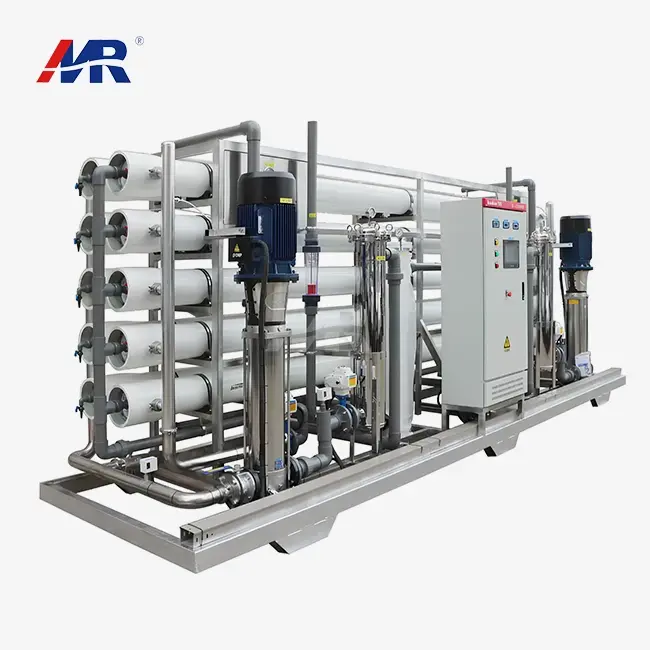
An analysis of a two-stage reverse osmosis ultrapure water system starts with one point. A 2 stage reverse osmosis system passes water through two membrane steps to cut dissolved salts, microbes, and particles far below raw-water levels. Membranes alone rarely reach true ultrapure grade, so most plants add polishing such as EDI or deionization. I wrote this guide for engineers, buyers, and integrators who want clear numbers before requesting a quote. I use our MR-BWRO-50TH, a Morui skid built for drinking water production, as the working example.
What Is a Two-Stage Reverse Osmosis Ultrapure Water System?
Two Membrane Steps, Not Two Filters
In business, the phrase "2-stage reverse osmosis system" can be used in two different ways. In one plan, the second array gets more permeate from the same feed as the first array's reject. As part of the second design, also called a "two-pass" design, the first-stage permeate is changed again to make it less conductive. But a "two-stage water filter" is not the same thing. That sign typically talks about two cartridges, which are also known as media filters. They catch particles but can't get rid of salts that have been dissolved. When I see a quote, I always look to see what kind of arrangement it is about.
Why Ultrapure Water Needs More Than RO
There is a clear standard for water that is very pure. ASTM D1193 Type I reagent water has a resistivity of at least 18 MΩ·cm at 25°C, which is close to the 18.2 MΩ·cm value that clean water should have. RO filters get rid of most of the dissolved ions, but some are still carried by the permeate. Also known as mixed-bed deionization, EDI comes after the membranes for plants that want to meet that standard. UV comes after that for final filtration for microbes. I see RO as the step that gets rid of most of the salts. This makes the resin used for cleaning work less hard.
Who Uses It and What Buyers Must Define
Each home unit has a cooking sink. Industrial skids are used in steel, food and beverage, medicine, power plants, electroplating, PCB, textile dyeing, and the coloring of clothes. On the other hand, utilities use them for groundwater that is salty. Partners who are OEMs can add their own settings or labels. There are six things I need to know before I can give you a quote: the feedwater analysis, the needed flow, the goal purity, the working hours, the amount of automation, and the conditions of the installation. These things help decide what kind of membrane, pump size, and materials to use. It's just a guess if someone quotes without them.
How a Two-Stage RO System Works
The Treatment Sequence
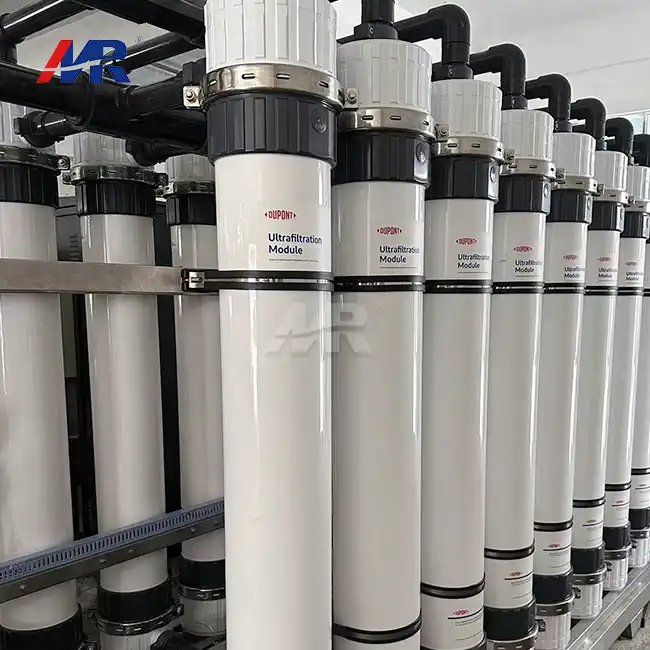
The water moves straight ahead through a 2 stage reverse osmosis system. In the preparation step, particles, chlorine, and scale-forming substances are removed from the raw water by multimedia and carbon filters, a softener or antiscalant dose, and cartridge filters. A high-pressure pump then forces the water into the Stage 1 membranes. Water goes through a transfer tank, and concentrate comes out of a different line to get to Stage 2. Sensors all along the line keep an eye on the pressure, flow, and conductivity. It is possible to finish the line by adding polishing and a storage tank. If you skip the pretreatment step, the barrier won't last as long because each step covers the next.
What Drives Performance
The outcomes depend on four things. The osmotic pressure goes up when the water is salty, so the feed pressure needs to be higher. In the winter, the same skid lets less water through because cold water moves more slowly through sheets. Water that you drink shouldn't have more than 500 mg/L of TDS, but water that is brackish should have 1,000 to 10,000 mg/L. Scaling and fouling are more likely to happen when there is more recovery, or when feed turns into permeate. To avoid this, I always use a real water study to figure out the size of a system, never a claim of a theoretical capacity.
Concentrate Management
Since concentrate carries the salts that were turned down, it needs a plan. The best way is to drain to a sewer or an approved discharge place. In your area, there may be fees and rules that you need to follow. Once you know the quality of the water, use the concentrate again for things that can handle more salt, like washdown or cooling make-up. The overall recovery goes up when some of the concentrate is used in the feed again, but the salt level in the feed goes up, so this needs to be worked into the design. Before the extra permeate is released, it is concentrated, which means that the reject from one array is fed to another. I add the concentrate amount to the cost line next to the energy when there are strict rules about release.
Components, Capacity, and Efficiency of the MR-BWRO-50TH
Core Components
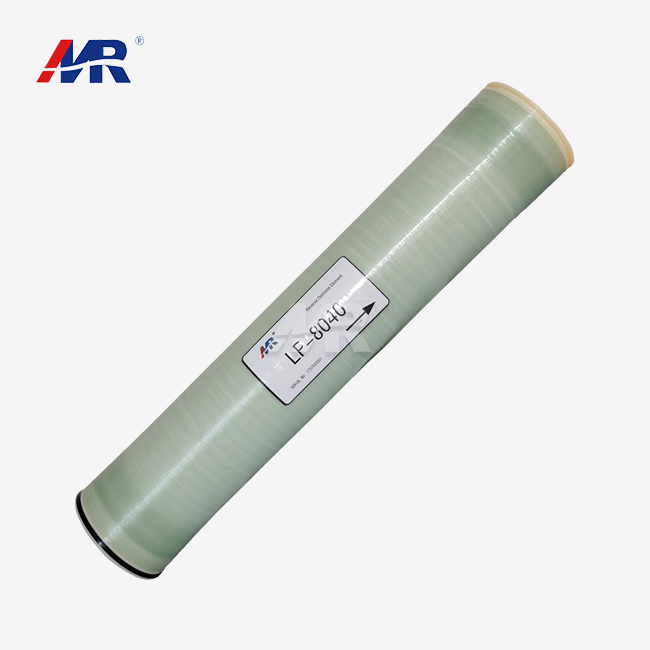
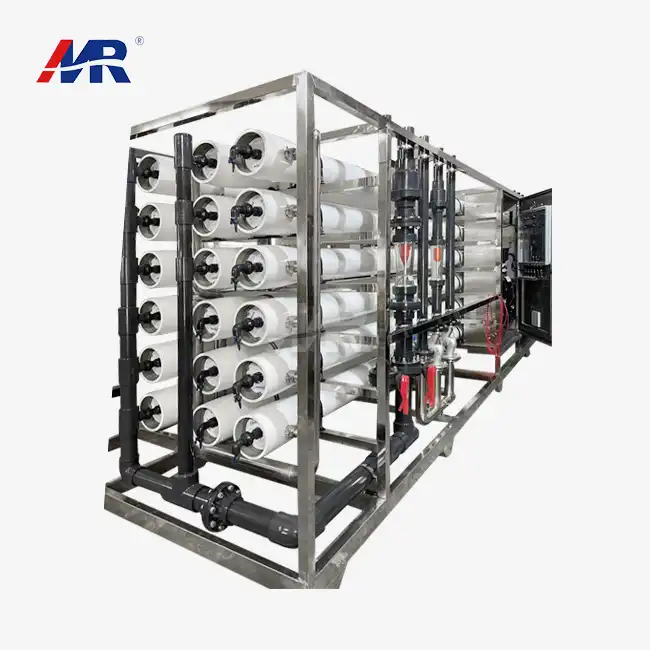
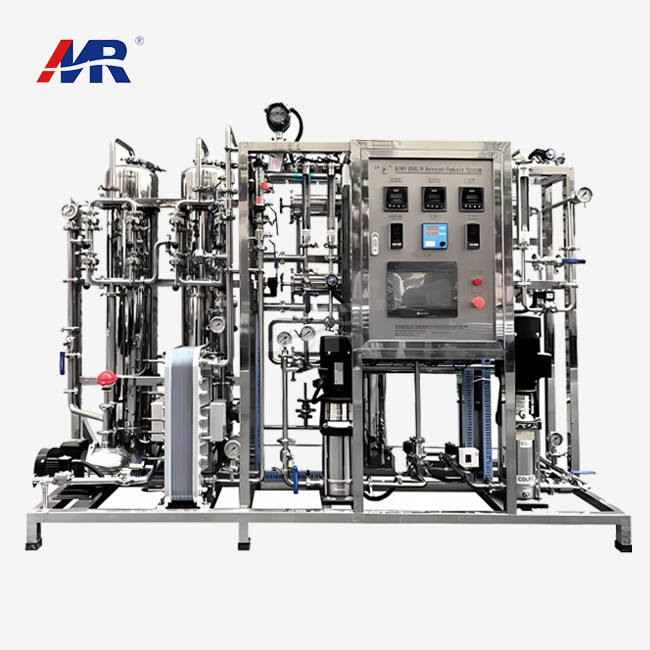
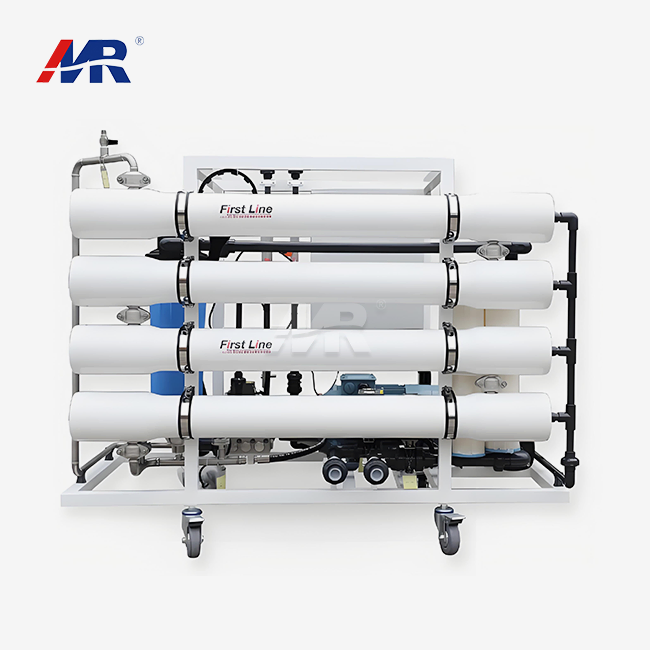
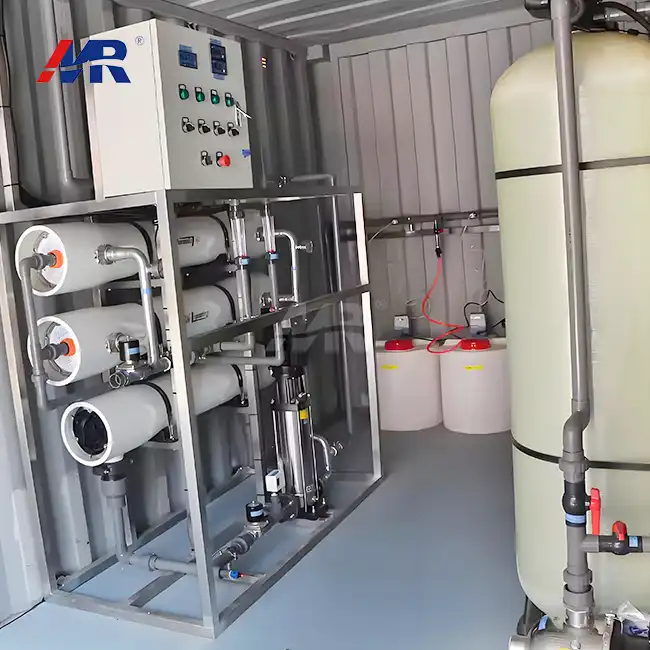
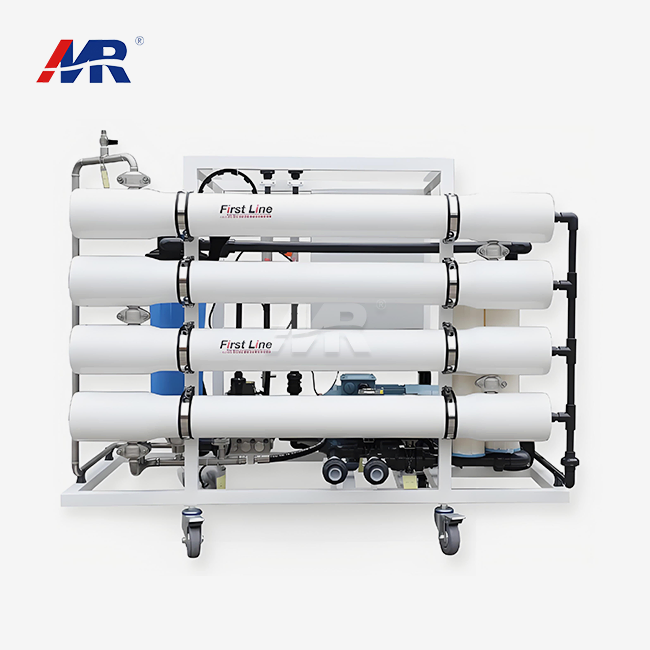
Strong skids make everything perform better for a 2 stage reverse osmosis system. The pretreatment is to protect the spirally wrapped membranes within the pressure tanks, and the high-pressure pump supplies the driving force. The low-pressure lines are manufactured from PVC or UPVC pipe. Stainless steel pipe is utilized when strength, cleanliness, or exposure to chemicals are necessary. Things are controlled by a PLC and an HMI. The controls can inform the pH level, the temperature, the flow, the conductivity, and the level of the tank. And there are alarms and flushing that happen on their own. You can monitor remotely, too. Morui also carries Shimge pumps, Runxin valves, and Createc fittings. Pumps, controllers, and instruments are easy to add or delete.
Capacity, Units, and the Recovery Formula
Capacity starts with permeate flow, followed by daily output, peak demand, and storage amount. In the US, different units are used: LPH, LPD, m³/h, and GPD. The calculation is Permeate Flow ÷ Feed Flow × 100 = Recovery (%). For example, 100 gallons of feed per minute that produces 60 gallons of permeate per minute suggests the recovery rate is 60 percent. Energy efficiency compares the energy consumed with the quantity of water generated. This is different from salt rejection, which measures how much dissolved salt the membrane can exclude. These terms are commonly confused by individuals employing quotations.
MR-BWRO-50TH at a Glance
Our RO system for companies and towns that wish to create drinking water from saline or groundwater sources. MR-BWRO-50TH. It can remove 99% of salt, achieve 55-65% recovery, and consume 55 kW of electricity. With a 99% rejection, a feed of 2,000 mg/L TDS ideally would leave roughly 20 mg/L in the permeate. Actual results depend on the membrane condition, temperature, and pressure. Now, with Morui having its own facilities for membrane manufacturing, we can stage and recover membranes depending on the water report from a client. If there was any skid, I would suggest asking for confirmation that the plant acceptance and commissioning are documented.
Choosing, Installing, and Maintaining a Two-Stage RO System
Choosing and Comparing Quotes
See quotes matching identical keywords for a 2-stage reverse osmosis system. The target conductivity, actual permeate flow, recovery, CIP capabilities, materials, controls, and site utility requirements are critical to consider. Then, consider the overall cost of ownership, including wastewater, energy, labor, downtime, membranes, and supplies. The two-stage design is more expensive to construct and operate than a single-pass RO system. This is advised when feed TDS is high or when quality must be maintained. If you simply require extremely pure water with minimal TDS, a single-pass RO may be sufficient. More steps won't make it better if the prep or the finishing isn't excellent.
Installation and Commissioning
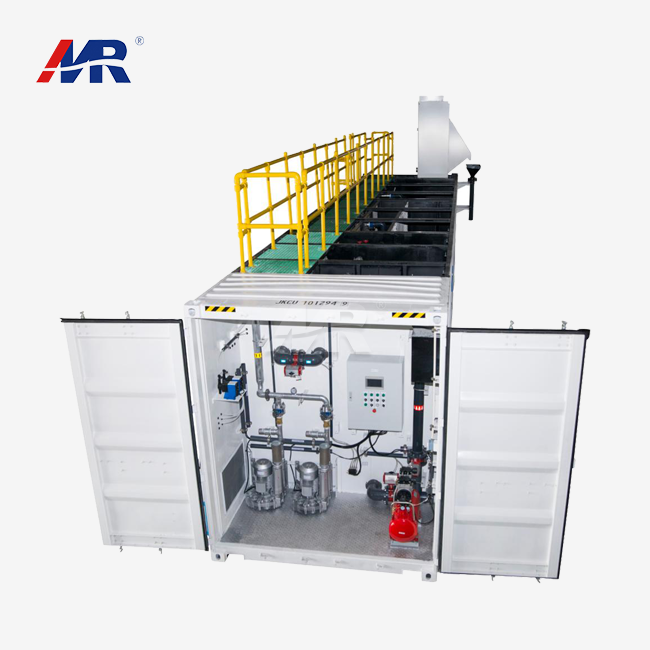
Make sure the site is ready. That means a flat floor for weight-bearing, drains, air movement, water and power lines, storage space, chemical handling area, and service access. Then the skid is installed, the pipes are connected, the pre-treatment is set up, and controls and sensors are wired. Then cleanse the medium, wet the membrane, check for leaks, start at low pressure, vary the pressure, and send the first permeate to drain. Trained personnel should examine flow, pressure, conductivity, recovery, alarms, shutdowns, and leak detection. This is the basis for any further troubleshooting.
Maintenance and Troubleshooting
You should check the system daily for leaks, pressure, flow, conductivity, and tank levels. Filters, softeners, UV lamps, and sensors are maintained on time. I don't have a calendar to tell me when to clean or replace the membrane. So I look at normalized performance, like when the differential pressure increases or the permeate flow decreases. A poor permeate flow is frequently indicative of fouling or cold input water. If the membrane is torn or a seal is broken, or a sensor is not working, excessive conductivity may occur. Good pretreatment lowers chemical and replacement costs during the life of the system. Plan for calibration, personnel, materials, and scheduled breaks.
Conclusion
A 2 stage reverse osmosis system has two membrane processes to remove dissolved salts. The membranes are safe during pre-treatment, and they have to be cleansed with EDI for the true ultrapure grade. When designing, it is vital to complete an actual water study first since feed pressure, temperature, TDS, and recovery all have an impact on performance. Different approaches exist to quantify recovery, salt rejection, and energy usage. Concentrate requires a disposal or reuse plan. The MR-BWRO-50TH may achieve 99% salt rejection, 55%-65% recovery, and 55 kW power consumption. It is used to transform salty water into safe drinking water. The main techniques for purchasers looking to get the best price are total ownership cost, baseline readings, and normalized performance.
FAQ
1. Is a two-stage RO design better than a three-stage design?
Quality is not based on the number of steps. What is found depends on the type of chemicals in the feedwater, preparation, recovery, and cleaning. A well-matched 2-stage reverse osmosis system can do better than one with more stages that isn't well protected.
2. Can RO alone produce ultrapure water?
Not very often. The RO process gets rid of most dissolved ions, but to meet the ASTM D1193 Type I resistance of 18 MΩ·cm, EDI or deionization is often needed afterward, along with UV for final filtering.
3. What information does a supplier need for a quotation?
Send an analysis of the feedwater including TDS, hardness, iron, manganese, silica, and pH. To help engineers build the right-sized system, include the flow rate needed, the purity level you want, operating hours, and installation details.
Request a Quote for a 2 Stage Reverse Osmosis System from Morui
Morui has its own plant that makes membranes. The business has been around for 25 years and has 14 branches, 500 employees, and 20 engineers. Are you looking for a manufacturer of the MR-BWRO-50TH OEM/ODM skid or a 2 stage reverse osmosis system? Email benson@guangdongmorui.com with your water report, capacity, and cleanliness goals, and our engineers will reply with a process proposal.
References
1. Water Treatment: Principles and Design, 2012
2. FilmTec Reverse Osmosis Membranes Technical Manual, 2016
3. ASTM D1193 Standard Specification for Reagent Water, 2006
4. Secondary Drinking Water Standards: Guidance for Nuisance Chemicals, U.S. Environmental Protection Agency, 1992
5. Desalination: A National Perspective, National Research Council, 2008
6. AWWA M46 Reverse Osmosis and Nanofiltration, 2007