



Why 2 stage reverse osmosis system Suitable for High-Requirement Industrial Water Treatment?
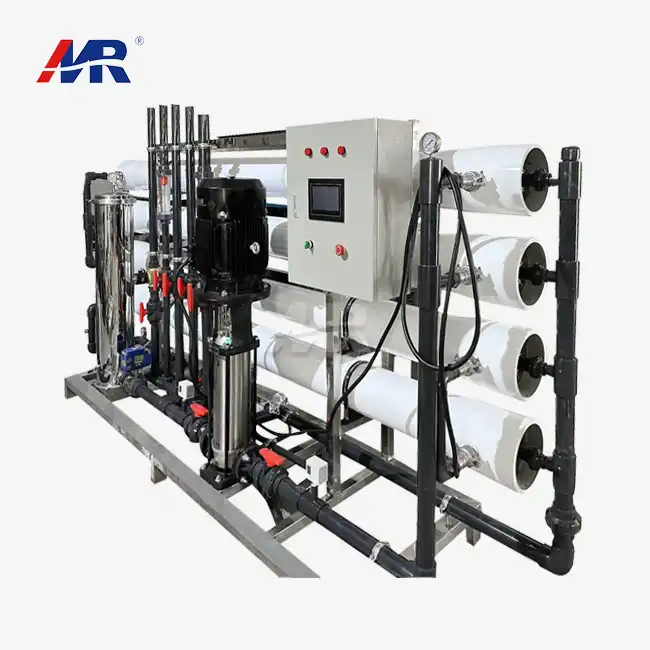
A 2 stage reverse osmosis system suits high-requirement industrial water treatment because it gives you tighter control over dissolved salts, recovery, and product-water consistency than a basic single-pass unit. Two membrane stages let the plant handle shifting feed-water quality while keeping conductivity steady for boilers, process lines, and potable water production. At Morui, we build the MR-BWRO-50TH for brackish and groundwater sources, with a rated salt rejection of 99% and recovery of 55–65%. Suitability still depends on feed chemistry, pretreatment, and your target water specification, so this guide shows how to judge each factor before you request a quote.
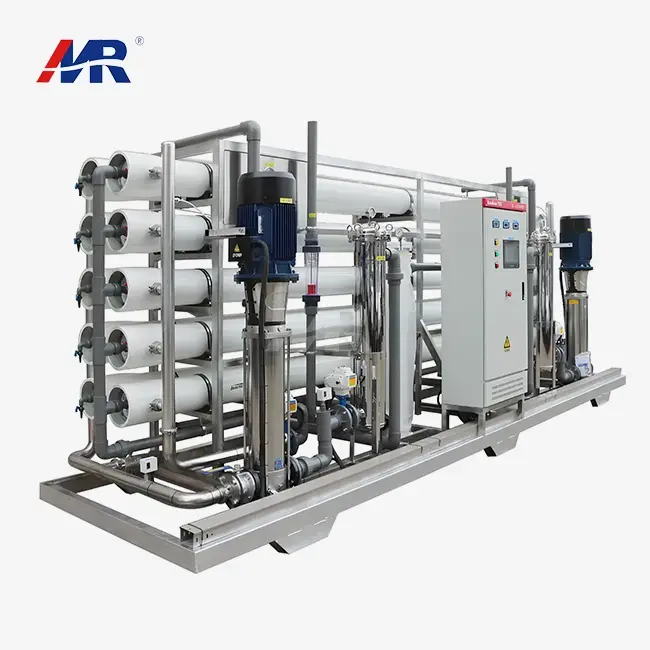
What Is a 2-stage reverse osmosis system?
Two Meanings of "Two-Stage"
That's why I always ask buyers what they mean by the word. Two groups of pressure tanks are used because of this. Raw water is thrown away by the first bank, but the second bank gets more from it. The first membrane pass in a permeate-staged design, which is also called a two-pass design, lets permeato pass. The permeate is made less conductive by the second pass, which makes it smoother. Carbon and silt cartridges are the only parts of a simple home unit with two filters. These two are not the same. There are barriers that only let some things through when industrial RO systems are under pressure. This means that dissolved ions can't get in. You need to know this because the two layouts are different and serve different purposes. Make a plan before you look at the quotes.
How Water Moves Through the Plant
In order to get to the last step, the raw water has to go through several stages of filtration, cooling, antiscalant doses, and capsule screens that catch small particles. A high-pressure pump then forces the water into membrane tubes. In the first stage, some of the flow goes through the wall. That's where the salts stay. On to the second stage, where it is either cleaned up even more or fixed up even more. There are tools on a skid that can measure flow, conductivity, and pressure. An end line then takes away the last concentrate. Water can't get through filters that are clogged, but more salt can get through filters that are clean. The line after this is now safer.
Terms You Will See in Every Quote
Most business plans have these five words in them. Permeate is the word for the clean water that comes out of the membranes. "Concentrate" is the word for the salty stream that is left over. Find out how much of the feed water changes into permeate. We call this getting better. There are barriers that let some dissolved salts through but not all of them. This process is known as salt rejection. To find out how much salt is still in the water, you can look at its conductivity or total dissolved solids (TDS). The U.S. EPA doesn't need to make a new standard for drinking water that is 500 mg/L TDS. This could help you figure out the real limit. As always, read each number along with the test settings that went with it. Feed salt, temperature, and pressure can change the result.
Why Two Stages Suit High-Requirement Water Treatment
Steadier Water Quality
In business, being able to get more than one good reading is more important than getting just one. Through a second barrier stage, the plant can get rid of the ions that have been released. Now is the time for the layout to finish. This makes the conductivity of the product more stable, even if the salt level in the feed changes. This is important because adding solids to the water used to fill the boiler can make scale and rust form. It's also important for technology, coatings, and materials because different minerals can change how things work. The MR-BWRO-50TH is said to be able to cut down on 99% of salt. I can't promise that number will be true for all water sources because it was based on a certain test setting. This is what will happen based on your raw-water report.
Recovery and Concentrate Control
It tells you how much water to get, clean, and let go of. If you use a concentrate-staged method, you can get more saturation from the same feed. Calcite, CaSO4, and silica are some of the salts that cause scaling. As recovery goes up, they are pushed into the last membranes. The MR-BWRO-50TH can work with a lot of different brackish sources as long as the recovery rate is between 55 and 65%. The less raw water you use, the more recovery you get. But you also have to use more chemicals, and there is a higher chance of scaling. In this case, more isn't always better. You need to find a cleaning setting that works for the shock, silica, and roughness that you can handle. This will help you make sure the membrane is the right size.
Comparison with Other Options
With silt and carbon filters, you can get rid of particles and chlorine all at once. The dissolved salts can be kept, though. It's often done before RO treatment because it gets rid of a lot of the solids and microorganisms that are floating in the water. Ion exchange can clean water, but it needs chemicals to do its job again. Electrodeionization (EDI), on the other hand, doesn't make a lot of energy. It needs RO drip to work. You can get a RO machine with two steps or one without any. If your process needs more, it can send the water to UV, EDI, or deionization to get rid of the rest of the salts. I will tell you to get a three- or four-stage 2 stage reverse osmosis system if a water test shows that you need one.
MR-BWRO-50TH Specifications and Applications
Rated Performance at a Glance
Our MR-BWRO-50TH two-stage brackish water RO machine can make salty water safe to drink. It should have 55 kW of power, and 99% of the salt should be thrown away. The other 55% to 65% should be brought back. Get these numbers before you choose the project's goal. I always ask for the feed water's TDS, temperature, and pH. Now you know what instruments are out there and what they can do. You can also make lists of them with how many membranes and pumps they have. For this reason, our engineers can make parts that work with your water instead of tools that shape it. This is because we make our own process equipment and filters.
Where the System Works
People often use brackish water and groundwater to make drinking water by getting rid of the salt in it. Reusing a lot of factory wastewater to make boiler and cooling water, clean raw water for soda and beer plants, and clean water at mines and power plants is another way. RO extract is used to clean wastewater and put it back into factories that make chemicals, electronics, PCBs, steel, textile dyes, and chemicals. It also makes process water less mineral-rich. The sediment, iron, manganese, sulfur, and hardness need to leave the well water before the membranes do. This means you need to be extra careful. After making food, drinks, and drugs, plants test them to make sure they are good. We'll find the best pretreatment for you based on what you want to do.
OEM and ODM Customization
Morui can make OEM and ODM RO skids for you, including a 2 stage reverse osmosis system. There are 20 engineers and 14 branch companies that work for our company. About 500 people work for us. It's been around for 25 years. Our Team can add or take away online tracking, pumps, controls, instruments, and pipe materials based on your needs. You can also draw it and send it to us to be made. If your project needs them, we can put Shimge pumps, Runxin valves, and Createc instruments on a skid. If you need to keep designs secret, we can handle NDAs. We can also talk to marketing and developers about private-label options and how to add skids or bins.
How to Select, Install, and Maintain Your System
Start with Water Analysis and Pretreatment
As the first step in the selection process, a full feed-water report is made. This report has indicators for temperature, hardness, pH, turbidity, iron, manganese, silica, chlorine, temperature, and microbiological matters. Next, write down what you need from the water in terms of how it moves, how well it heals, and how much it flows. You can use it every day, but you can also back it up, store it, grow, and handle high demand. After the report is read, the water is made ready. When water is too hard or chlorinated, it needs to be softened or descaled. When water is too high in iron or manganese, it needs to be oxidized and filtered. It is up to the person making the membrane to choose how hot, how dense, and how much chlorine to use. It will not last as long if you do these things. In the long run, a weak pre-treatment plan costs more than a good one.
Installation and Maintenance
The feed pressure should stay the same, and the power source should match it. There should also be airflow, a safe place to store drugs and product water, and room to pull membranes. As soon as the system is turned on for the first time, write down the average flow of permeate, concentrate, recovery, conductivity, salt rejection, and pump current. Write down the same numbers while the process is going on. A lot of the time, you should check the difference in pressure, set the instruments, and look for leaks. The membranes should be changed or cleaned at times other than the dates on the calendar. During these times, standardized flow goes down, product conductivity goes up, differential pressure goes up, or salt rejection goes down. Before you order new membranes, this is to make sure that nothing has changed. Once more, look over the instruments, records, pretreatment, flow, pressure, and instruments.
Procurement and Supplier Questions
Some of the most important parts of a good RFQ are the delivery date, operating hours, recovery goal, feed-water analysis, voltage standard, automation level, needed approvals (NSF, UL, or CE as needed), and product quality. A lot of service providers will give you prices. Ask each one if they can help you pick the right size system, set it up, and handle service calls and orders for extra parts. It's not enough to just look at how much the machine costs. Find out how much it costs to set up, run, clean, and take down. Two steps are usually enough for sources with moderate mineralization, since the first step works well. How clean is the water? Does it have a lot of calcium in it? Is the TDS very high? It might need more work if that's the case. Before you decide, a lab test can tell you for sure.
Conclusion
An 2 stage reverse osmosis system with two stages gives industry users more control over the salts that are mixed in, the amount of water that is recovered, and the quality of the water that is made. This can be used for heating, process water, and drinking water in the house. That's why the guide said "two-stage" could mean "concentrate staging for recovery" or "permeate staging for polishing." Before they buy, people who want to should make sure they understand the plan. To do heavy work in two stages, the pretreatment must match the feed water, the recovery must not go over the scaling limits, and UV or EDI units further downstream must meet any needs for extra purity. About 55 to 65% of the salt in salty sources can be kept by the MR-BWRO-50TH. To do this, it needs 55 kW of power. The number of steps is not the only thing that affects success. It also checks for problems, analyzes the water, treats it first, and figures out how much it will cost over its whole life.
FAQ
1. How is a 2-stage reverse osmosis system different from a two-filter unit?
It comes with two cartridges, one for salt and one for carbon. It gets rid of dirt and chlorine, but not salts that have been broken down. For a 2-stage reverse osmosis system with membranes, pressure is used to move water through membranes that are only partially permeable. This gets rid of most of the salts that are in the water.
2. Can it make drinking water from well water?
Yes. With the MR-BWRO-50TH, you can drink water that is salty or from the ground. First, we check your water report to make sure the plan is in line with the rules in your area and the feed quality.
3. When should I replace membranes?
You should look for things like reduced permeate flow, higher product conductivity, rising differential pressure, and loss of salt. From the first day on, keep these amounts and other information in mind.
4. What affects the price?
Prices change depending on how much material is used, how it is treated before it is used, what tools and pumps are used, and how far someone can track. Tell us what you need, and we'll give you a price. Because OEM or private-label work broadens the range of expert tasks that need to be done.
Talk to Morui About Your 2-Stage Reverse Osmosis System
Tell us what your goals are for flow and conductivity, and we'll help you choose the best 2 stage reverse osmosis system kit for your spot. Your 2-stage reverse osmosis system can be customized; parts can be chosen, or the system's size can be determined. We have our own membrane plant, so we can do OEM and ODM work for you. Email benson@guangdongmorui.com to talk about your idea.
References
1. Wilf, M. et al. The Guidebook to Membrane Desalination Technology, 2007.
2. American Water Works Association. Manual M46: Reverse Osmosis and Nanofiltration, 2007.
3. Crittenden, J. et al. MWH's Water Treatment: Principles and Design, 2012.
4. U.S. Bureau of Reclamation. Desalting Handbook for Planners, 2003.
5. Baker, R. Membrane Technology and Applications, 2012.
6. Elimelech, M., and Phillip, W. "The Future of Seawater Desalination: Energy, Technology, and the Environment," Science, 2011.
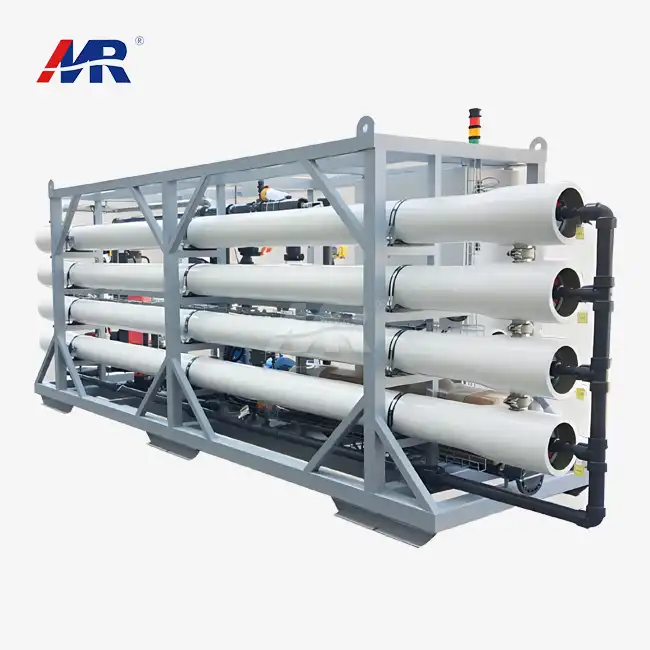 VIEW MORE12m3/hour seawater desalination equipment
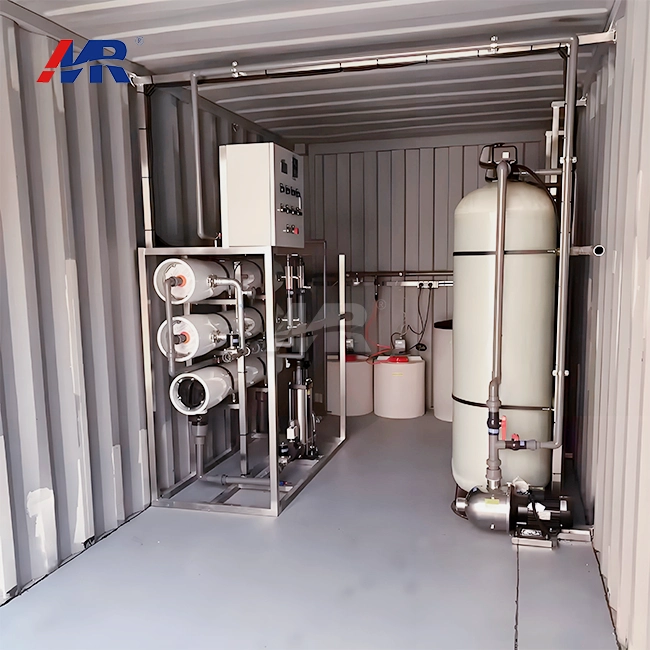 VIEW MOREcontainerized water treatment systems
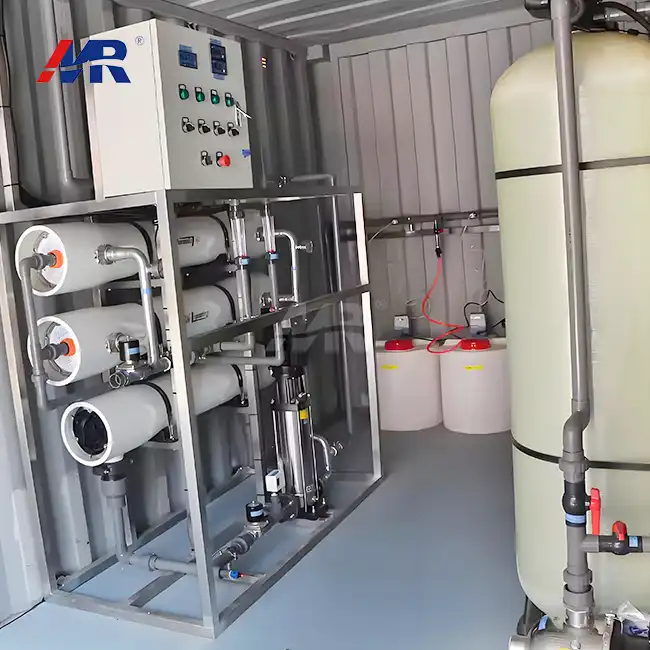 VIEW MOREcontainer 3m3/hour RO equipment
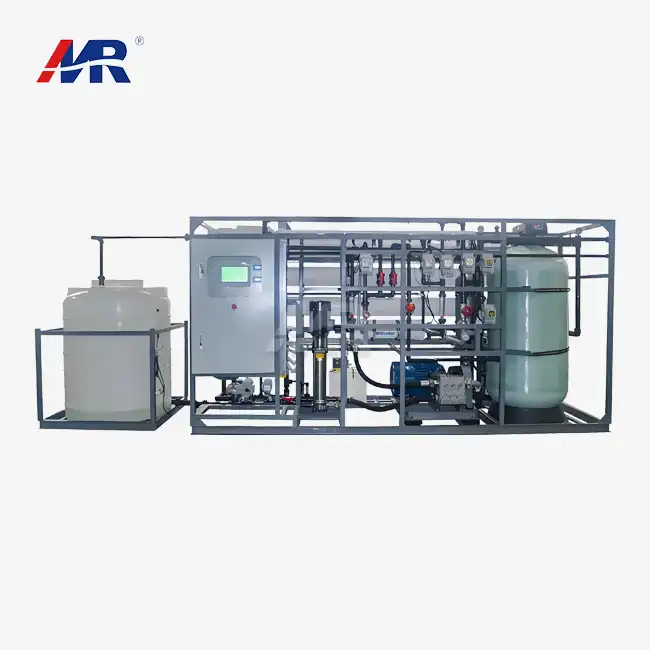 VIEW MORE5m3/hour seawater desalination equipment
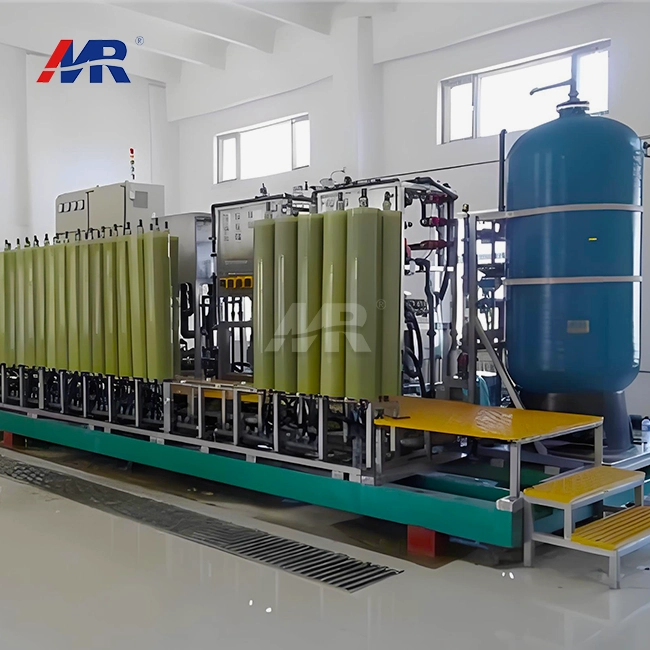 VIEW MOREDTRO system
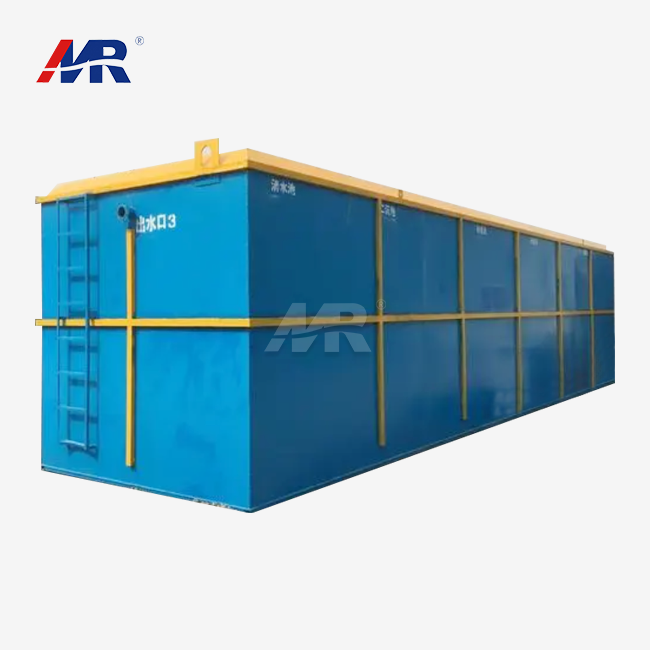 VIEW MOREwaste water treatment plant
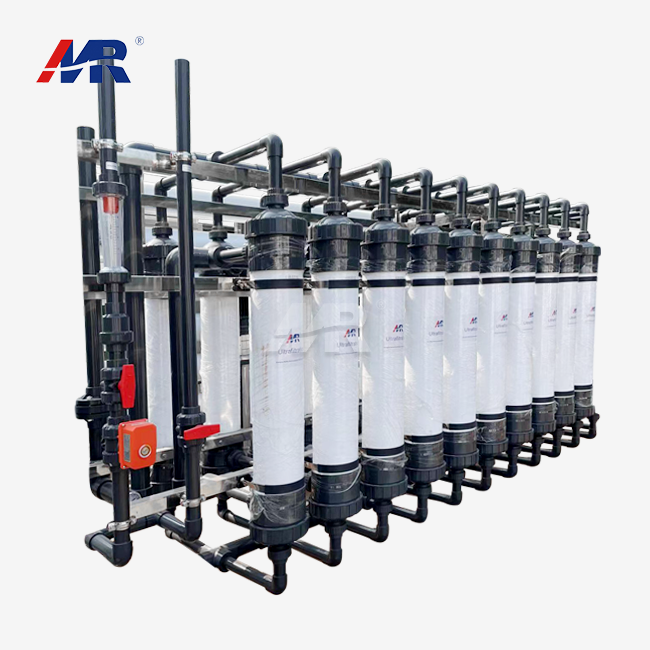 VIEW MOREultrafiltration drinking water system
 VIEW MORE12m3/hour reverse osmosis BWRO system
