_1745823981883.webp)

Where to buy 50m3/hour reverse osmosis equipment?
When you buy a 50m3/hour reverse osmosis system, you should get it from a company that can analyze your raw water and create a system that works, not just give you a box with a flow rate written on it. This guide walks you through the specs, price, checking your sources, and compliance so that you can compare quotes that are similar. I made it after years of planning and setting up industrial RO skids in Asia, Africa, and South America, where the feed water and grid power are different from block to block.50m3/hour reverse osmosis equipment from manufacturers, distributors, or turnkey integrators, based on the analysis of your feed water and the quality of the permeate you need. Before you sign anything, get several quotes that compare the recovery rate, energy use, materials, shipping conditions, help with setup, and guarantee.
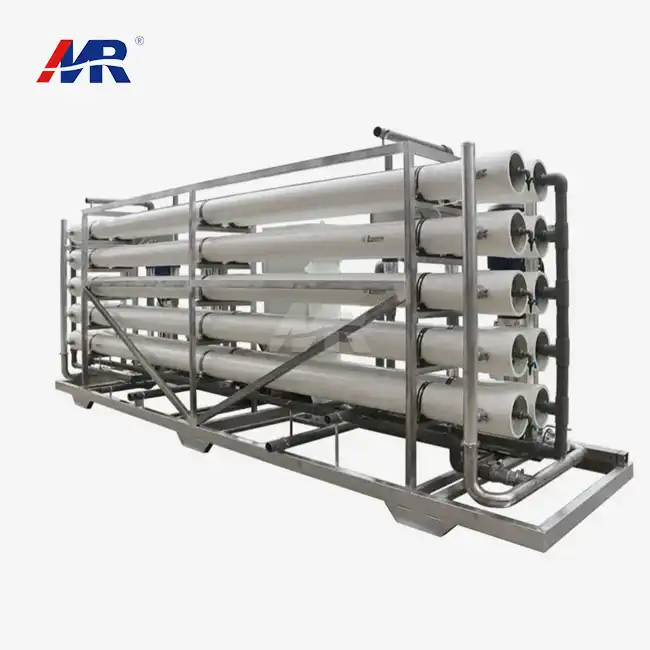
What Is 50m3/Hour Reverse Osmosis Equipment?
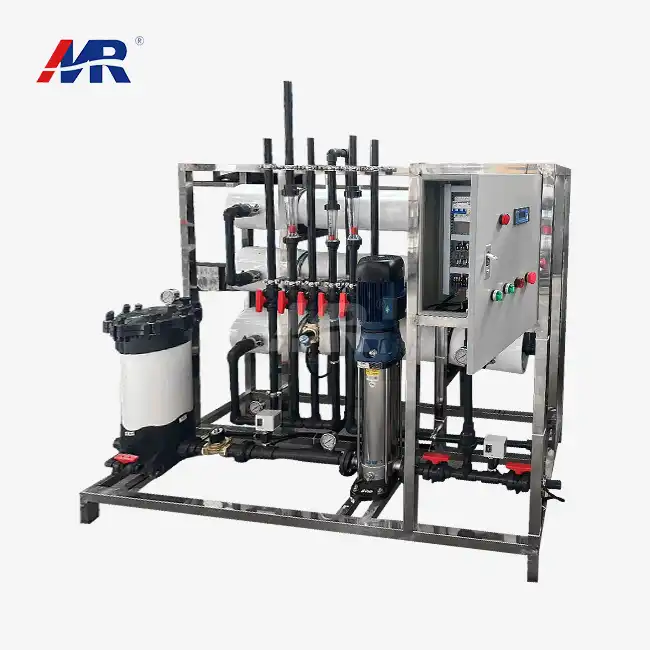
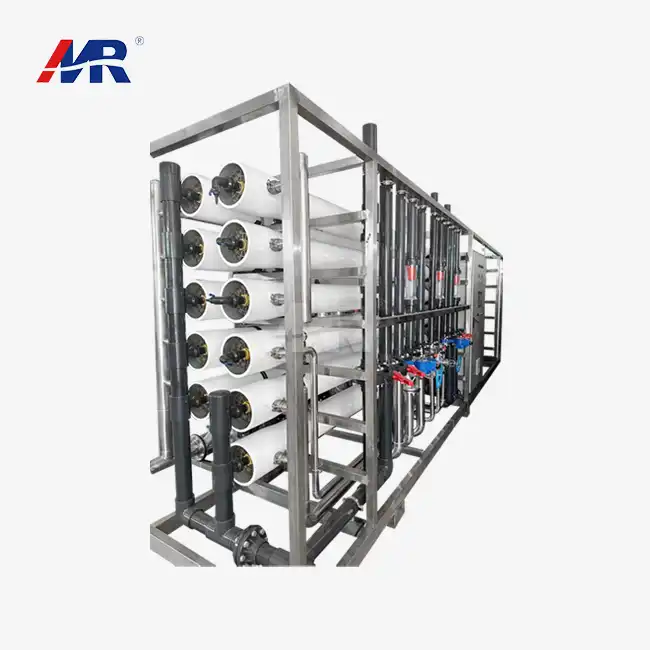
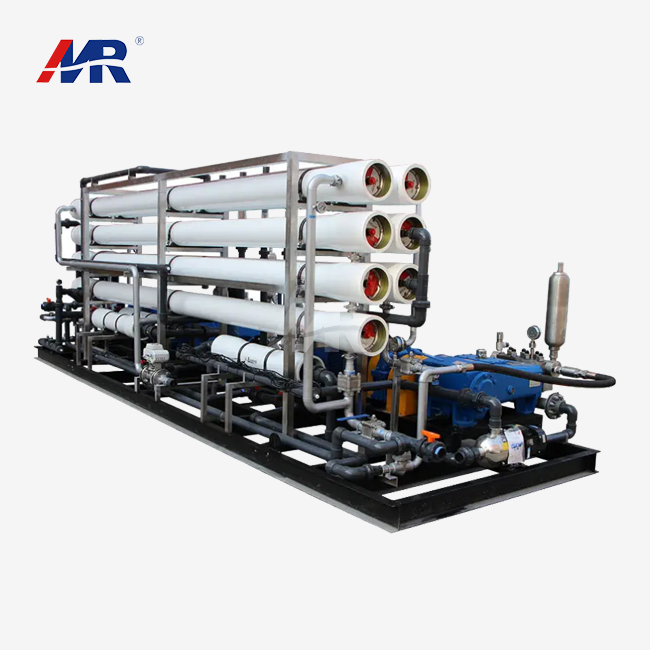
The 50m3/hour reverse osmosis machine has a pressure-driven membrane system that can clean 50 cubic meters of water an hour if everything works the way it is supposed to. This flow of water is called permeation. That number shows how much product was made, not how much raw water was put onto the skid. The feed flow is higher because some of the water is sent away as concentrate.
The plan is not a full wastewater treatment plant on its own. It's only one if you count handling the concentrate before treatment, during treatment, and after treatment. Up to 99.8% of dissolved salts, microorganisms, and suspended particles can be removed by an industrial 50m3/hour reverse osmosis equipment system in this size class (WQA, 2024) over a semi-permeable membrane barrier.
Permeate, Feed, and Concentrate Explained
Always, three flow words are confused in quotations. Getting them correct now saves you a lot of money in the long term.
- The treated water you actually utilize is called permeate flow – the aim is 50 m³/h.
- Feed flow is the raw water entering the skid and is generally 65-100 m³/h depending on the recovery rate.
- The concentrate stream is the rejected stream, which contains the salts and solids that are removed and requires a disposal or reuse strategy.
How 50m3/Hour Reverse Osmosis Equipment Works
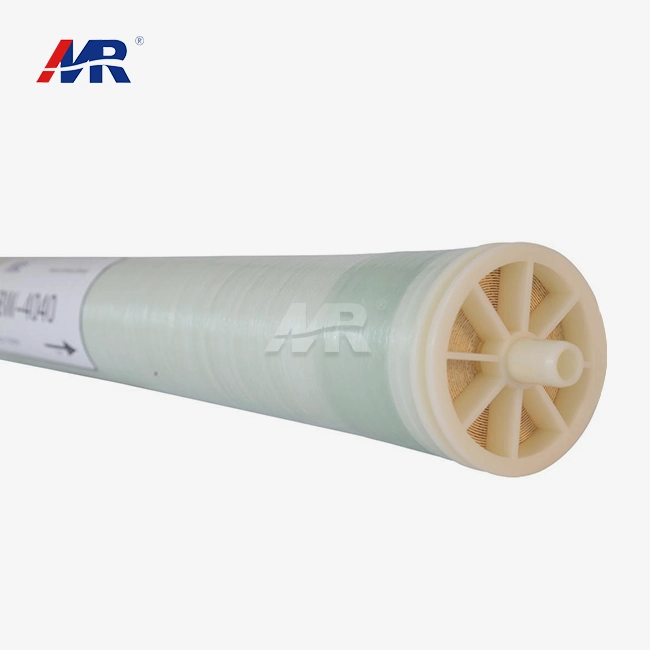
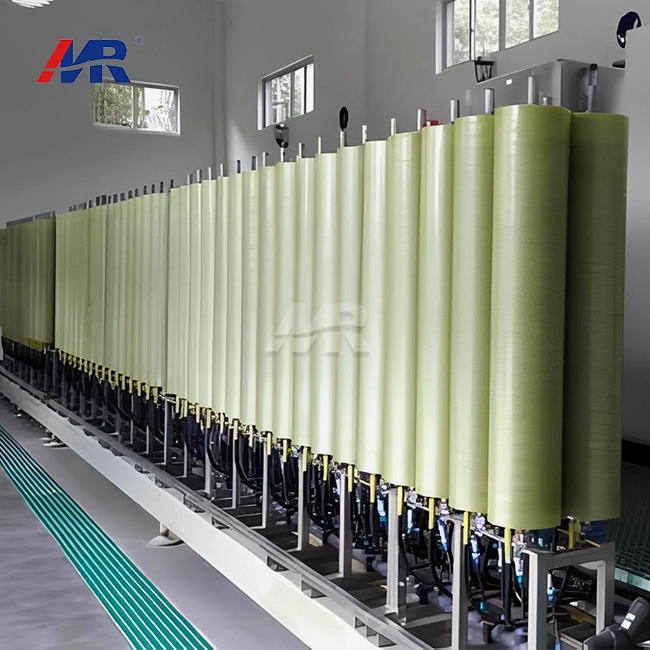
The process usually happens in this order: raw water travels through pre-treatment, then via cartridge filters, is forced through membrane elements by high-pressure pumps, and finally splits into permeate and concentrate.
The processes are as follows: from raw water to pre-treatment, to cartridge filtration, to high-pressure pumps, to ro membranes, to permeate tanks and post-treatment, to distribution.
| Parameter | Typical value for 50m3/hour reverse osmosis equipment |
|---|---|
| Product flow | 50 m³/h design permeate |
| Recovery rate | Up to 75%, project-specific |
| Power consumption | 0.8–1.2 kWh/m³ |
| Salt rejection | 99.2%–99.7% |
| Operating pressure | 150–1200 psi, feed-dependent |
| Control mode | PLC with touchscreen HMI |
What Applications Need 50m3/Hour Reverse Osmosis Equipment?
In this capacity range, the customers are most of the time from industrial process water, municipal expansion, or EPC procurement companies. Once you know what bucket you're in, the entire spec sheet is different.
Industrial and Municipal Use Cases
There are, in fact, three quite distinct jobs that may be performed with the same nominal capacity:
- Southeast Asia’s electroplating and PCB factories employ 50m3/hour reverse osmosis equipment technology to achieve deep wastewater reuse, therefore reducing freshwater input and satisfying discharge restrictions under local environmental rules.
- Municipal utilities in the Middle East and Africa use this capability in brackish groundwater areas to transform well water into potable supply for settlements of 5,000–15,000 persons.
- This size is used in food and beverage industries for constant process water. Bottled water and beverage lines require consistent conductivity across the year.
Other facilities in this range include power plants, mines, and medicine manufacturers that need boiler feed and clean process water.
Three Procurement Paths for This Capacity
| Buyer type | Main requirement | Best supplier match |
|---|---|---|
| OEM/private-label buyer | Custom drawings, branding, interface compatibility | Manufacturer with in-house engineering team |
| Trader or regional agent | Fixed specs, stock availability, short lead time | Export-ready manufacturer with parts inventory |
| End user or EPC contractor | Site survey, install, commissioning, service | Turnkey integrator with regional support |
How Does the Treatment Process Work Inside the Skid?
You can question a supplier's design and find savings before they cost you if you know how the internal process works.
Pretreatment Stages
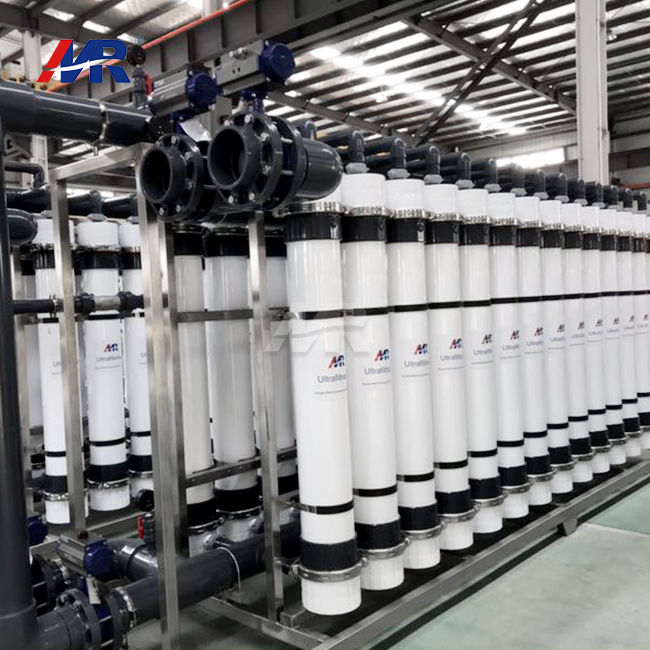
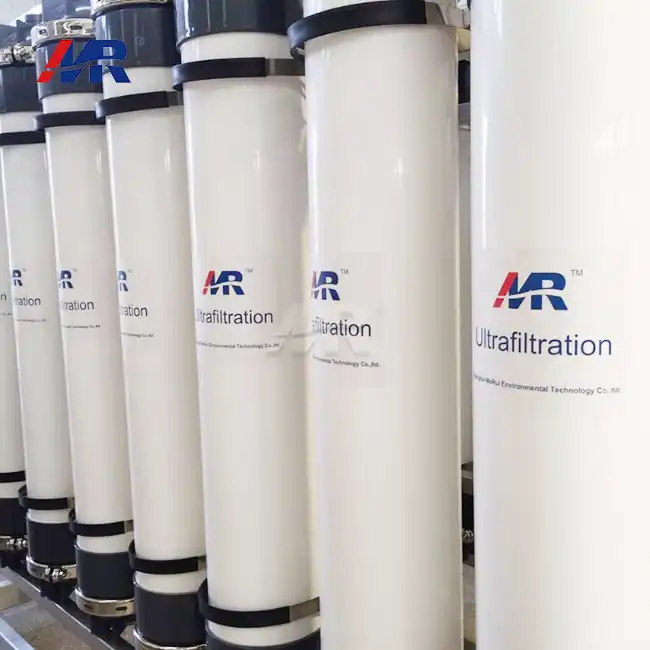
Raw water doesn't usually go straight to membranes. First, filters for multimedia or ultrafiltration get rid of solids that are suspended in the water. Activated carbon gets rid of Cl2 and organics when polyamide membranes are used, since chlorine is bad for them. It is not possible for scale to form on membrane surfaces when antiscalant is dosed or softened. The 5-micron capsule filter is the last line of defense before the high-pressure pump for 50m3/hour reverse osmosis equipment.
Single-Pass vs Double-Pass Configurations
| Configuration | Best for | Trade-off |
|---|---|---|
| Single-pass RO | General industrial and irrigation water | Lower cost, simpler operation |
| Double-pass RO | Boiler feed, high-purity process water | Higher capital and energy use |
| RO + EDI | Pharmaceutical, electronics-grade water | Needs stable pretreatment upstream |
Recovery Rate and Water Balance
Recovery tells you how much of the feed water can be used as permeate.
Return on investment (%) = Feed flow / Permeate flow / 100
For a system that can handle 50 m³/h of permeate and 70% recovery, the feed flow needs to be close to 71 m³/h. Ask each supplier to write down the feed flow, permeate flow, concentrate flow, recovery percentage, and how the concentrate is disposed of or used again on site for 50m3/hour reverse osmosis equipment.
What Specifications Should You Check Before Buying?
The most important thing in this purchase is a lab study on raw water. No supplier can make membranes or pumps that are the right size without it.
Feed-Water Data to Provide
Please share the most current test data for TDS, conductivity, pH, temperature, turbidity, SDI, hardness, alkalinity, iron, manganese, silica, chloride, sulfate, and free chlorine. Take note of yearly changes if your source is a river or well, as salt often changes when it rains or when it doesn't rain.
Buyer Checklist Before Signing
- Confirm that the 50 m³/h stated in the technical proposal relates to the permeate output and not to the feed flow.
- Verify that the design temperature range and minimum winter output are properly mentioned.
- Recovery rate and concentrate flow are guaranteed in the contract, not merely stated.
- Check that the permeate conductivity or TDS target fulfills your demands for your process.
- See the data sheet for membrane flux rate and array arrangement.
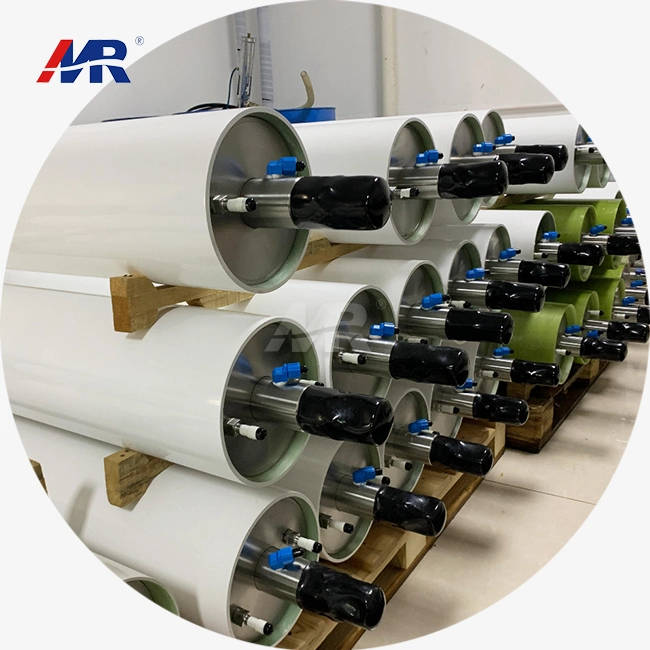
- Confirm materials: Wetted parts to be 304 or 316L stainless steel, vessels to be FRP.
- Review PLC brand, HMI language choices, and remote monitoring capabilities.
How Much Does 50m3/Hour Reverse Osmosis Equipment Cost?
This type of equipment doesn't have a set price because quotes vary so much in what they cover. A full total price and a skid-only quote can be 40% or more different.
What Drives the Price
The number changes based on the brand and count of the membrane, the grade of the pump's material, the level of automation, and the handling. At the same flow rate, systems that can handle seawater cost more than systems that can handle brackish water. This is because they need higher pressure ratings and energy recovery devices. After the treatment, extras like EDI, UV, or remineralization are added on their own.
Capital Cost vs Total Cost of Ownership
| Cost category | Question to ask your supplier |
|---|---|
| Base equipment | What exactly is included in the skid price? |
| Energy | What is the guaranteed kWh/m³ figure? |
| Membranes | What service life is expected under my water chemistry? |
| Consumables | What do cartridges, antiscalant, and CIP chemicals cost yearly? |
| Installation | Are piping, electrical, and civil works in scope? |
According to the U.S. Department of Energy (2023), well-designed 50m3/hour reverse osmosis equipment usually uses between 0.8 and 1.2 kWh/m³ of power. This is a number that should be written into the contract as a promise, not a suggestion.
Where Can You Buy 50m3/Hour Reverse Osmosis Equipment?
There are four places to buy from: direct manufacturers, OEM/ODM factories, authorized distributors, and turnkey EPC integrators. Each is good for a different type of buyer.
Supplier Evaluation Criteria
A supplier's experience with systems that can handle this much power should be looked at, not just their brochure range. Get examples from projects that used feed water that is similar to yours. Find out if they do Factory Acceptance Testing (FAT) before sending the goods and if they keep spare parts in stock in your area.
| Evaluation point | Evidence to request |
|---|---|
| Technical capability | Process flow diagram, membrane projection software output |
| Manufacturing quality | Factory photos, quality-control inspection records |
| Performance guarantee | Stated flow, recovery, and rejection under test conditions |
| Project support | Installation method statement, commissioning plan |
| Lifecycle service | Spare-parts list, service response time by region |
Why Manufacturer-Direct Sourcing Reduces Risk
If you purchase from a facility that has its own membrane manufacturing line, you’ll have greater control over the lead time and quality than if you buy from a business that sells parts created by other firms. It has its own membrane plant and equipment processing facilities. Guangdong Morui Environmental Technology Co., Ltd. group has 500 workers, 20 engineers, and 14 branch enterprises, and has existed for 25 years. Morui is also an authorized dealer for Shimge water pumps, Runxin valves, and Createc meters. This allows purchasers to choose the part names and does not put the duty onto a single supplier.
Talk to an Engineer Before You Commit to a Spec
If your raw water report indicates uncommon impurities or you are deciding between containerized and skid-mounted delivery, send Morui your data before you execute a purchase order. When queries come in regarding 50m3/hour reverse osmosis equipment manufacturers, our specialists look at the chemistry of the water and give back a matching process design instead of generic pricing. Get a strategy in days, not weeks. Call our experts at benson@guangdongmorui.com.
What Certifications Should This Equipment Carry?
Where you're going changes what kind of Certifications you need. Buyers in the West demand paperwork up front, while buyers in the Middle East and Africa often put speed, cost-effectiveness, and baseline compliance ahead of turnkey delivery.
Standards to Verify
The International Organization for Standardization (ISO) 9001 covers the quality management system of the manufacturer. For EU-bound equipment, CE marking refers to machinery, electrical, and EMC rules. However, it is not a general RO system certificate; check to see which parts it covers. NSF/ANSI 58 applies to certain RO drinking-water components; confirm the certificate matches your exact configuration, not a similar model (NSF International, 2024).
Documentation to Request Before Shipment
Request Factory Acceptance Test results, hydraulic pressure test records, membrane performance estimates, material certifications for wetted metal parts, and pump curves with motor certificates for 50m3/hour reverse osmosis equipment. If the performance changes later on, the serial number that can be monitored on membranes protects your warranty claim.
How Do You Request a Quote for This Equipment?
If you make a good RFQ, you can get similar bids from all of them without having to go back and forth for weeks.
Information Every RFQ Should Include
Write down the permeate flow rate that needs to be 50 m³/h, the full raw water lab analysis, the target product water quality, the daily operating hours, and the recovery target. Indicate where the site is, the weather, the elevation, the standard voltage for electricity, and whether you need containerized transport. Write down what language the HMI needs to be in and any local safety papers that will be needed at customs.
Installation and Commissioning Checklist
- Compare the accepted plans to the layout of your site's utilities.
- Make sure the tanks, foundations, drainage, and electricity are all ready for when you get there.
- Right away, check the skid for shipping damage and missing parts.
- Before the first start-up, flush the pipes and recalibrate the sensors.
- Do commissioning tests with and without loads.
- Keep track of the flow, pressure, conductivity, and energy draw at the start.
- From the first day, make a plan for preventative upkeep and cleaning the membrane.
Conclusion
When picking 50m3/hour reverse osmosis equipment, it's more about matching feed-water data that can be checked with a scientific answer from a seller than it is about how much it costs. The system will either work for ten years or give you problems within twelve months, depending on its recovery rate, energy use, material quality, and the ease of getting extra parts after the sale. Ask for FAT reports. Check the guarantee agreements. Get a list of all the items in each quote before you wire any money.
FAQ
1. Where can I buy 50m3/hour reverse osmosis equipment?
Source it from RO manufacturers with in-house membrane production, OEM/ODM factories, authorized regional distributors, or turnkey EPC integrators. Pick suppliers with project references matching your feed water and application, plus documented factory testing.
2. How much does 50m3/hour reverse osmosis equipment cost?
Price depends on feed-water type, pretreatment scope, membrane brand, materials, and automation level. Request an itemized quote separating base equipment, optional add-ons, freight, and commissioning so you can compare suppliers fairly.
3. What feed-water data do I need before requesting a quote?
Provide TDS, conductivity, pH, temperature, turbidity, SDI, hardness, alkalinity, silica, chloride, sulfate, iron, manganese, and chlorine levels at minimum. Add oil, organics, boron, or nitrate data if your source is industrial or agricultural runoff.
4. What is the difference between brackish and seawater RO at this capacity?
Brackish-water systems run at lower pressure, generally under 400 psi, and use less energy. Seawater systems need pressure up to 1200 psi, corrosion-resistant materials, and often energy-recovery devices to control operating costs (Water Quality Association, 2024).
5. Does 50m3/hour reverse osmosis equipment need EDI polishing?
Not always. EDI gets added when the application needs higher-purity water, such as pharmaceutical processing or electronics manufacturing. Standard industrial and municipal uses often run fine on single-pass or double-pass RO alone.
6. How often do membranes need replacement in this size system?
Membrane life depends on pretreatment quality, cleaning frequency, and feed-water chemistry, typically 3-7 years. Track normalized permeate flow and salt passage trends rather than replacing on a fixed calendar alone.
Ready to Move Forward With a Verified Supplier?
The lifespan of the membrane is typically between three and seven years; however, this lifespan is contingent upon the degree to which the water was treated prior to the membrane being employed and the frequency with which it is cleaned. The membrane has a lifespan that is ordinarily between three and seven years. It is of the utmost importance to maintain a careful check on the way in which the patterns of salt passage and adjusted permeate flow alter over the course of time with 50m3/hour reverse osmosis equipment. To put this into perspective, this is in contrast to just making adjustments in accordance with a predetermined timetable.
References
1. World Health Organization, Guidelines for Drinking-water Quality, 2022 — cited in permeate quality and potable-water standards discussion. https://www.who.int/publications/i/item/9789241549950
2. NSF International, NSF/ANSI 58: Reverse Osmosis Drinking Water Treatment Systems, 2024 — cited in certifications section. https://www.nsf.org/knowledge-library/nsf-ansi-58-reverse-osmosis-drinking-water-treatment-systems
3. International Organization for Standardization, ISO 9001: Quality Management Systems, 2015 — cited in supplier certification discussion. https://www.iso.org/iso-9001-quality-management.html
4. Water Quality Association, Reverse Osmosis Treatment Method Overview, 2024 — cited in definition and brackish/seawater comparison sections. https://www.wqa.org/learn-about-water/treatment-methods/reverse-osmosis
5. U.S. Department of Energy, Pumping Systems Efficiency Resources, 2023 — cited in energy consumption and cost section. https://www.energy.gov/eere/amo/articles/pumping-systems
6. European Commission, CE Marking Guidance for Machinery and Electrical Equipment, 2023 — cited in certifications and compliance section. https://single-market-economy.ec.europa.eu/single-market/ce-marking_en
About the Author
Bin Liu is Senior Overseas Water Treatment Technical Manager at Guangdong Morui Environmental Technology Co., Ltd. He has spent over a decade specifying industrial RO systems for clients across Asia, Africa, and South America, working directly on membrane selection, pretreatment design, and site commissioning. His work focuses on matching raw-water chemistry to practical, field-proven equipment configurations for municipal and industrial buyers.