_1745823981883.webp)

How to Size a Reverse Osmosis Tank for Commercial Water Systems
When constructing a commercial water treatment system, one of the most important considerations to make is the appropriate size of a reverse osmosis tank. You run the risk of experiencing pressure dips, membrane stress, or water shortages during times of high demand if you get it wrong. In the event that everything is done correctly, the complete system will operate in the background, silently giving water that is consistently cleansed without any interruptions. Before defining an RO storage tank for any commercial application, engineers, project managers, and procurement teams need to take into account a number of important aspects, including sizing methodologies, procurement considerations, and crucial criteria. This article covers all of these elements.
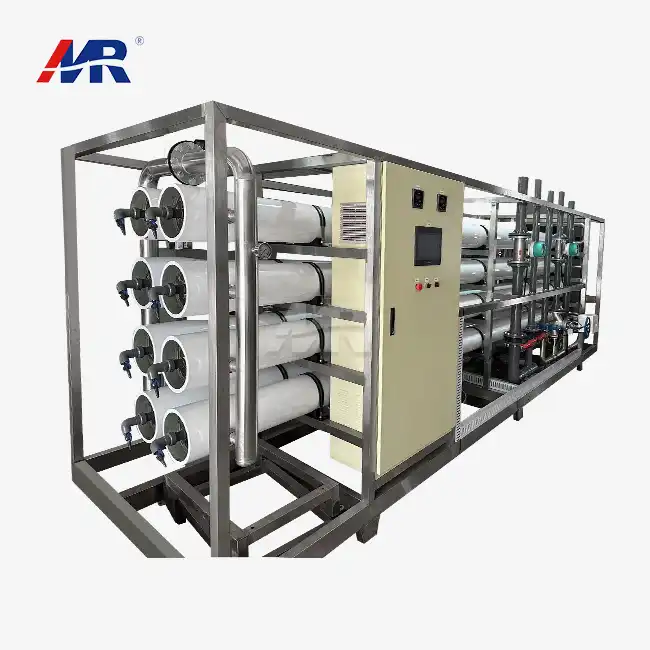
Understanding the Role of RO Tanks in Commercial Systems
A hydro-pneumatic pressure vessel that holds cleaned permeate water between production cycles is referred to as a reverse osmosis tank. The tank functions as an on-demand buffer with the ability to offer high flow rates the instant a tap or process line is opened. This is due to the fact that ro membranes create water slowly, drop by drop.
How the Bladder Works
Pressurised air and water that has been kept are separated from one another within the tank by a diaphragm made of chlorobutyl or EPDM and a liner made of food-grade polypropylene. When water is introduced, it causes the air charge to become compressed; when a valve is opened, the air pressure causes water to be expelled immediately. With this design, air pollution is avoided, and the membrane is freed from the permeate backpressure that often exists.
Why Sizing Affects Membrane Life
The RO pump is forced to cycle on and off frequently due to the tank's insufficient capacity, which results in a pattern known as short cycling. The membrane is subjected to pressure stress on each cycle. Studies that have been published in the field of water treatment engineering have shown that frequent pressure fluctuations hasten the deterioration of membranes and reduce the amount of time between service intervals.
Commercial vs. Residential Demands
The normal capacity of residential tanks is from 3.2 to 4.5 gallons. Hotels, food processing lines, and hospitals are examples of commercial systems that may need hundreds or thousands of gallons of storage capacity that is dispersed over several vessels. These vessels must have varying pressure ratings and connection configurations to satisfy the requirements of the commercial system.
Key Considerations for Sizing in Commercial Settings
Choose the appropriate file size without having to make any educated guesses. The patterns of demand, the output of the system, and the limitations of the physical installation need to be examined within a systematic framework.
Daily and Peak Demand Calculation
Instead of beginning with the typical daily demand for the facility, begin with the hourly demand that is the highest. A restaurant may use eighty percent of its daily RO water supply during the three hours around lunchtime. A sufficient amount of water must be stored in the reverse osmosis tank in order to compensate for the difference in the rate at which the membrane begins to produce water and the rate at which it begins to drain.
Membrane Recovery Rate and Production Speed
The majority of RO filters are capable of recovering between 50 and 75 percent of the input water as permeate. About 0.7 GPM is produced by a membrane that is capable of handling 1,000 GPD. It is necessary for the tank to be able to cover the 4.3 GPM gap while you are operating at a peak capacity of 5 GPM. Simply multiplying that gap by the duration of the busiest moment will provide you with the bare minimum quantity of storage space that you need.
Pressure, Space, and Material Constraints
The operational pressure ratings for commercial-grade vessels typically range up to 100 PSI, and the supply pressure of the system must be equal to or higher than those specifications. Choosing the appropriate material is another crucial consideration. Stainless steel containers are able to withstand greater pressures and are compliant with the NSF/ANSI 58 criteria for usage that includes food contact. Fiber-wound composite tanks, on the other hand, need less space to install when there is a restricted amount of space available.
Common Sizing Methods and Best Practices
Examples of Common Sizing Methods and Best Practices: "Two times the daily output" is still a rough estimate that many builders employ; however, it often does not work in large commercial environments where demand fluctuates throughout the day.
The Gap-Flow Formula
When it comes to determining the appropriate size, this method is the most precise approach: Required Storage equals the Peak Flow Rate (GPM) minus the Membrane Output (GPM) multiplied by the Peak Duration (minutes). For example, a hospital wing that consumes 8 GPM at peak and a membrane that only uses 2 GPM throughout a 30-minute peak window requires at least 180 gallons of storage space that is easily accessible. In order to account for pressure loss and the quantity of pre-charged air, you need to always allow for an additional 20%.
Pressure Pre-Charge Settings
A manufacturer pre-charge for household tanks typically ranges between 5 and 7 pounds per square inch (PSI). It is possible that commercial ships may need pre-charge adjustments when they are installed. It is necessary to adjust the pre-charge to around two-thirds of the system's supply pressure in order to maintain the usefulness of the drawdown amount. The incorrect pre-charge of tanks is one of the most prevalent causes of tanks losing air at an excessively rapid rate in the field.
Multi-Tank Configurations
In order to accommodate high-capacity industrial systems, engineers often choose to position many tanks in close proximity to one another rather than a single large tank. This strategy makes the system more stable, since it allows the system to continue operating even if one of the tanks requires maintenance. Additionally, it provides procurement teams with additional alternatives when purchasing standard-size units in bulk.
Comparing Commercial RO Tank Options
There are a variety of business environments in which reverse osmosis tank pressure vessels operate differently from one another. These are the primary factors that differentiate one product category from another, together with the manner in which they are manufactured and the purposes for which they are used.
The following are the primary considerations that procurement teams take into account when evaluating the various commercial RO tank options:
- Tanks made of stainless steel have higher initial costs, but they have a longer service life. This is especially beneficial in applications involving food and beverages or pharmaceuticals, where compliance with NSF/ANSI 58 and hygiene documentation are strictly required. Because of their resistance to corrosion, they are an excellent investment for the long run.
- There is a compromise between the decrease in weight and the tolerance of solid pressure in fiber-wound composite tanks. It is common practice to specify them in packaged RO equipment and skid-mounted systems, both of which are situations in which the overall weight influences the cost of shipping and installation.
- For commercial drinking water systems, such as those found in hotels, schools, and office buildings, polypropylene-lined steel tanks are the most frequent mid-range alternative. These tanks give acceptable pressure ratings at price ranges that are affordable.
Compared to purchasing a conventional storage box, these distinctions are of more significance when purchasing a tank that is designed to be compatible with a particular RO system. There is a reduction in the number of installation errors and the expenses of long-term maintenance when the appropriate match is obtained.
Procurement and Installation Guidelines
As soon as the size estimations have been completed, the process of purchasing carries with it its own unique set of technical and logistical requirements.
Supplier Qualification and Documentation
When it comes to business-to-business transactions, proof is required. Request NSF/ANSI 58 approval letters, material safety data for all wet parts, records of pressure testing, and quality inspection reports. Also request that these documents be provided. When it comes to EPC contractors and system developers, these documents are often required prior to the distribution of a purchase order.
Installation and Pressure Calibration
It is essential that the pre-charge pressure be appropriately adjusted before the tank is connected to the system. The first step in a successful installation is to complete this stage. Applying a standard tyre gauge to the Schrader valve while the water pressure is turned off is advised. To ensure that the supply and exit lines are connected correctly, the manufacturer will provide you with torque instructions. Before reintroducing air into the system, it is important to inspect each connection for any signs of leakage.
After-Sales Support and Spare Parts Access
It is essential to have access to replacement diaphragms, valve assemblies, and service manuals in order to ensure long-term reliability that is maintained. Finding out how long it takes to receive replacement parts and whether or not there is skilled assistance for correcting difficulties is something you should do before committing to a service. Systems installed in distant locations, such as farms and resorts, function more effectively when they are partnered with providers that possess robust logistics and rapid service networks.
Conclusion
It takes more than just picking a reverse osmosis tank that fits in the utility room to size a pressure storage vessel for a commercial RO system. It needs an honest look at peak demand, membrane output rates, pressure parameters, and how well the materials work together. Any commercial system can work well as long as the gap-flow formula is used, the right pre-charge settings are made, and the right materials are chosen for the job. The rules are the same whether you're working on a 50-room hotel or an industrial process water line: be sure to do your math correctly, be clear about what you want, and only buy from suppliers who can back up their goods with paperwork and support.
Frequently Asked Questions
1. How often should the bladder in a commercial RO tank be inspected?
In high-demand commercial settings, inspect the diaphragm annually at minimum. Signs of failure include waterlogged tanks (water flowing from the air valve), sudden pressure drops, or erratic pump cycling. Replacing a worn diaphragm early prevents contamination of stored permeate.
2. What is the standard working pressure for commercial RO tanks?
Most commercial-grade pressure vessels are rated up to 100 PSI. Always verify the tank's pressure rating against your system's maximum operating pressure before installation.
3. Can I use multiple smaller tanks instead of one large vessel?
Yes, and this is common practice in industrial systems. Parallel tank configurations improve redundancy and simplify maintenance without requiring a single oversized unit.
4. What certifications should I look for when sourcing a commercial RO tank?
NSF/ANSI 58 is the primary standard for material safety and structural integrity in RO water contact applications. Food and beverage and pharmaceutical buyers should confirm this certification is current.
Get the Right RO Tank for Your Commercial System — Contact Morui Today
For many years, Morui has helped water treatment engineers, EPC contractors, and procurement managers find pressure vessels that are perfect for their projects. We are a reliable supplier and manufacturer of reverse osmosis tanks, and we back up every product with full NSF/ANSI 58 documentation, technical specifications, and quick customer service after the sale. For big projects, our engineering team can help with validating sizes, making changes, and figuring out volume pricing. Please email benson@guangdongmorui.com to get a price.
References
1. AWWA (American Water Works Association). Water Treatment: Principles and Practices of Water Supply Operations. 4th ed., 2018.
2. Crittenden, J. C., et al. MWH's Water Treatment: Principles and Design. 3rd ed., John Wiley & Sons, 2012.
3. NSF International. NSF/ANSI 58: Reverse Osmosis Drinking Water Treatment Systems. NSF International, 2021.
4. Metcalf & Eddy. Water Reuse: Issues, Technologies, and Applications. McGraw-Hill, 2007.
5. Mickley, M. C. Membrane Concentrate Disposal: Practices and Regulation. U.S. Bureau of Reclamation, 2006.
6. WQA (Water Quality Association). Reverse Osmosis Systems: Technical Application Bulletin. Water Quality Association, 2019.