_1745823981883.webp)

How to Optimize Submerged Membrane Bioreactor Performance
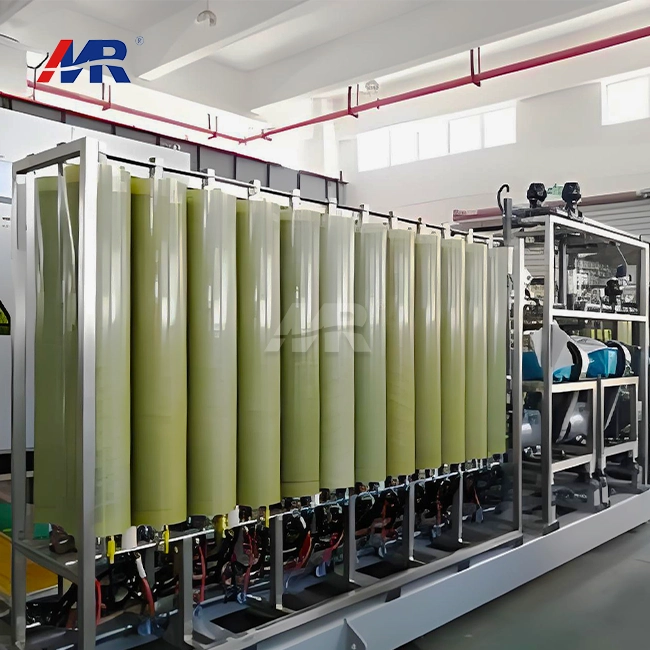
Optimizing a membrane/bioreactor-wastewater-treatment">submerged membrane bioreactor starts with understanding how biological treatment and membrane filtration interact inside the same tank. In this system, activated sludge breaks down organic matter while PVDF hollow-fiber or flat-sheet membranes retain solids under vacuum suction, producing effluent that meets reuse or discharge standards. To keep performance steady, operators must control mixed liquor suspended solids (MLSS), manage aeration patterns, follow scheduled cleaning protocols, and monitor transmembrane pressure (TMP) in real time. These steps together reduce fouling, lower energy draw, and protect membrane service life.
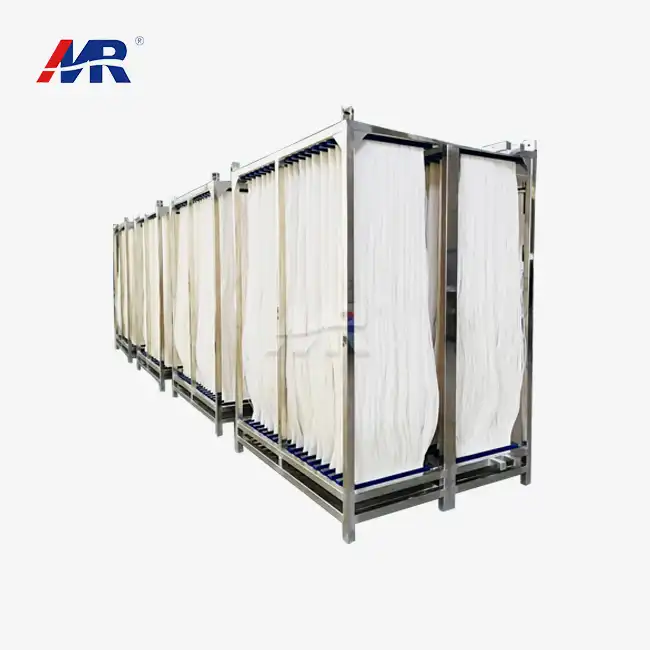
Understanding Submerged Membrane Bioreactor Technology
In an immersed MBR, the membrane module is put right inside the biological reactor, so there are no more additional clarifiers. The membrane wall lets water pass through, but the solids stay in the mixed liquor. This design reduces the treatment area by up to 50% compared to regular activated sludge (CAS) systems and gets rid of the sludge-bulking issues that happen in settling tanks for good.
Core Membrane Types Used in MBR Systems
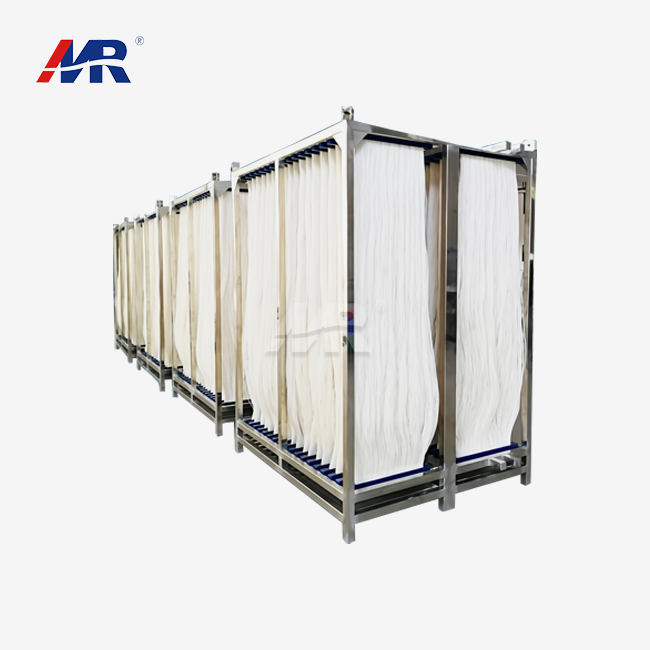
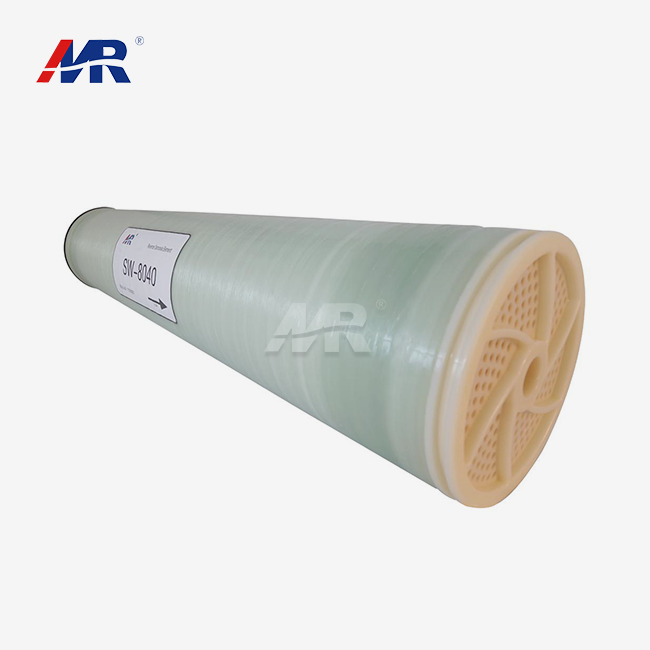
In this field, flat-sheet, hollow-fiber, and tubular membranes are the most common types. Hollow-fiber modules, like the ones in Morui's MR-MBR-18 (PVDF, 0.2 µm, 18 m², 1300×1250×30 mm), have a lot of surface area for their size and don't need to be cleaned with chemicals very often. It's easier to change a single flat-sheet section. More sludge can pass through tubular barriers, but they use more energy.
How SMBR Differs from Conventional Activated Sludge
The quality of a CAS system's wastewater rests a lot on the sludge settling, which doesn't always happen when there is a lot of flow. The hydraulic retention time (HRT) and sludge retention time (SRT) are not connected in a submerged bioreactor. This means that operators can control both of them separately. This split keeps the bacteria that break down nitrogen in the reactor longer, which improves the removal of nitrogen without making the reactor bigger.
Energy and Effluent Quality Trade-offs
The coarse-bubble aeration device that scrubs the membrane surface uses the most energy in a buried MBR. Studies in the journal Water Research show that new low-energy diffuser designs can lower the specific aeration demand for membranes (SADm) to less than 0.2 Nm³/m³·h. This means that the total lifecycle energy costs are about the same as for CAS systems in plants that handle more than 500 m³/day.
Identifying Performance Bottlenecks in SMBR Systems
It's helpful to know exactly where the system is losing performance before you try to fix it. Most problems with how membrane bioreactors work can be traced back to three main causes.
Membrane Fouling Mechanisms
Getting fouled is the main problem. There are three stages of fouling: cake fouling, which is caused by solids floating on the membrane's surface; pore blocking by fine colloids; and biofouling, which is caused by microbes sticking to the membrane. When TMP goes above 30 kPa without a corresponding rise in flux, it's likely that fouling has reached a point where it needs chemical cleaning instead of just relaxation.
Aeration Imbalance and Oxygen Transfer Deficits
If the dissolved oxygen (DO) level is below 1.5 mg/L, filamentous bacteria can take over the mixed liquor in a submerged membrane bioreactor. This makes the sludge thicker and speeds up clogging. On the other hand, too much air raises running costs without adding any value. Fouling and fan energy can be cut down by keeping DO between 2.0 and 4.0 mg/L and timing membrane-scouring air with biological ventilation air.
MLSS Concentration and Sludge Properties
When MLSS is above 15,000 mg/L, the mixed liquor viscosity goes up a lot, which makes air-scouring less effective and TMP go up. Between 8,000 and 12,000 mg/L is where most submerged membrane bioreactor systems work best. It doesn't matter what the MLSS level is; fouling is worse in sludge with bad floc structure, which is often caused by short SRT or toxic influent jumps.
Proven Strategies and Techniques to Improve MBR Efficiency
To fix bottlenecks, you need to use a multilayered method that includes biology, hydraulics, and control systems. The following strategies have been tried and tested in both public and private settings.
Here are the main operational methods that companies use to keep MBR performance stable:
- Control SRT between 15 and 30 days. Longer SRT reduces excess sludge production and improves floc stability. A 2021 study in Bioresource Technology confirmed that SRT above 20 days cut excess sludge output by roughly 40% compared with CAS at the same organic loading.
- Run intermittent filtration cycles. A standard 9-minute filtration/1-minute relaxation cycle allows deposited cake to detach before it compacts. This practice alone can extend membrane cleaning intervals by two to three times compared with continuous filtration.
- Schedule chemical cleaning before TMP hits critical limits. Maintenance cleaning with 500 mg/L sodium hypochlorite every two to four weeks, combined with citric acid soaks for inorganic scaling, keeps PVDF membranes in the MR-MBR-18 performing within design flux for five years or longer.
- Install real-time TMP and DO monitoring. Automated PLC control adjusts aeration rates and filtration duty cycles based on live sensor data, reducing human error and catching fouling events before they cause downtime.
When used together, these four techniques take care of the chemical, physical, and biological aspects of MBR function. If a facility doesn't pay attention to any one dimension, fouling will usually come back faster than expected, even after replacing the membrane.
Case Studies: SMBR Optimization in Real Applications
When results in real plants back up a theory, it becomes more likely to be true. Two types of applications show how focused changes can lead to effects that can be measured.
Municipal Wastewater Upgrade Project
A wastewater treatment plant in a city in southern China switched from a CAS system to a buried MBR system. The secondary clarifier was not needed because the new layout used Morui MR-MBR-18 flat-sheet modules set up in parallel cassettes inside the existing aeration tank. After three months of operation, the BOD level in the wastewater dropped below 5 mg/L, and the TSS level stayed below 3 mg/L, both levels meeting China's Class 1A discharge standard for reuse uses.
Food Processing Effluent Treatment
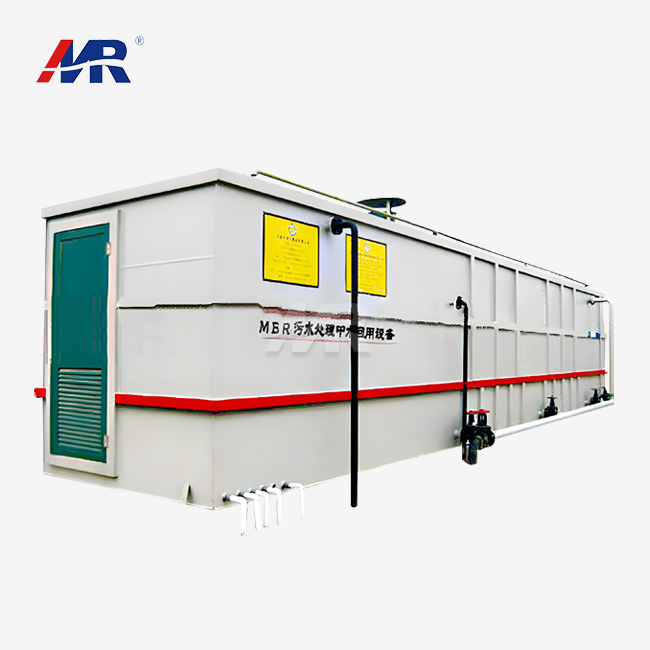
A food factory that makes high-strength organic wastewater (influent COD = 1,800 mg/L) put in a containerized submerged membrane bioreactor system that is automated by a PLC and can be monitored from afar. By keeping the SRT at 25 days and using an automated cleaning process, the plant regularly got the COD in the effluent below 50 mg/L, which meant it met local discharge limits without having to do any extra polishing steps. The containerized style also cut down on the costs of getting the site ready by a large amount.
Insights on Turnkey System Value
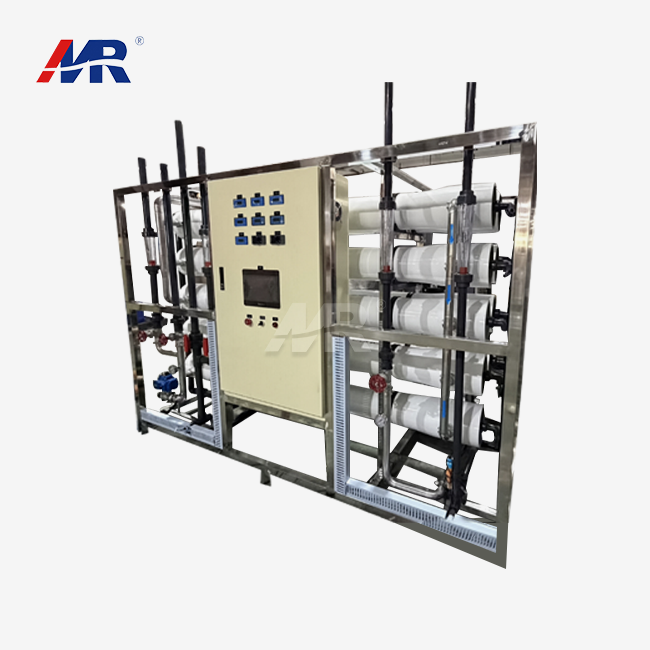
Operators who bought complete MBR kits that included membrane modules, control panels, and commissioning help had fewer problems with startup than operators who bought parts separately. Integrated system design makes sure that the aeration rates, tank geometry, and membrane flux are all already matched. This cuts down on the time needed for trial and error, which can take up to twelve months of operation.
Procurement and Selection Considerations for MBR Systems
To pick the best MBR system, you need to look at technology, provider capabilities, and the overall cost of ownership.
SMBR vs. CAS and Alternative Filtration Methods
Because membrane retention doesn't depend on sludge settling, a submerged membrane bioreactor produces more uniform wastewater than CAS. Because the membrane works at low suction pressure instead of high cross-flow velocity, submerged systems use less pumping energy than sidestream MBR setups. That being said, submerged MBR is the better choice for projects that care about footprint, effluent quality, and automation.
Supplier Evaluation Criteria
Ask a submerged membrane bioreactor supplier for documented membrane flux data, TMP performance curves, and chemical resistance test reports when you are looking at them. Check to see if the seller has the right approvals for the market you want to reach (NSF, CE, or something similar). It's just as important to have access to spare parts, remote diagnosis, and on-site setup after the sale as it was to specify the equipment in the first place. This is especially true for sites that are far away or on islands.
Cost of Ownership: Installation, Maintenance, and Membrane Replacement
The most expensive part of running an MBR is replacing the membrane. If you take good care of them, PVDF membranes with pores that are 0.2 µm in size, like the ones in the MR-MBR-18, should last between five and ten years. By planning ahead for yearly chemical cleaning supplies and regular blower service, operators can correctly predict lifetime costs and avoid unplanned shutdowns that raise the total cost of ownership.
Conclusion
Keeping the biology, the membrane, and the control system under control as a single process is what makes the MBR work well. The three best ways to protect membrane service life and effluent quality are to keep MLSS levels between 8,000 and 12,000 mg/L, run intermittent filter processes, and stick to a cleaning plan. Picking a supplier with checked membrane data, approved equipment, and dependable customer service after the sale is what separates a system that works well for ten years from one that needs a lot of repairs in just two years. If you have the right design and the right partner, a submerged membrane bioreactor can give you reliable, compliant waste with a smaller size and more automation than any other type of treatment.
FAQ
1. What routine maintenance keeps an MBR membrane performing well?
Every day, you should check the DO levels, TMP trends, and the evenness of the aeration. Diffusers should be checked once a week to make sure they are not blocked. Sodium hypochlorite maintenance cleanings once a month get rid of organic fouling, and citric acid soaks every three months get rid of mineral deposits. By keeping these records, workers can see when performance is dropping before it leads to a replacement event.
2. How can operators reduce energy consumption in a membrane bioreactor?
By improving the membrane-scouring ventilation, the most energy is saved. It is possible to cut energy use by 15–25% by using irregular air-scour cycles instead of continuous flow and adjusting the blower output to match the real oxygen demand through DO feedback control. It is best to keep fine-bubble diffusers for biological aeration and coarse-bubble diffusers for membrane scouring on separate circuits so that they can be controlled separately.
3. When should I choose a submerged MBR over a sidestream configuration?
You should choose a submerged MBR if your site doesn't have a lot of room, you want to save money on energy, and you need to make sure that the suspended solids level in the effluent stays below 5 mg/L. Sidestream MBR works well with very strong industrial waste streams that need higher cross-flow speeds to keep the membrane surface from getting clogged and where the cost of pumps is reasonable.
Contact Morui for Your MBR Project
Morui is a reliable company that makes submerged membrane bioreactors. It has its own PVDF membrane factory, several equipment processing factories, and more than 20 engineers working on projects in the municipal, industrial, and decentralized treatment sectors. There is a full range of Products, including the MR-MBR-18 (18 m² PVDF module at 0.2 µm), which can be bought in bulk or in fully designed OEM configurations. You can email benson@guangdongmorui.com to talk about the details of your project, ask for test data, or get a quote.
References
1. Judd, S. (2011). The MBR Book: Principles and Applications of Membrane Bioreactors for Water and Wastewater Treatment (2nd ed.). Elsevier.
2. Meng, F., Chae, S.-R., Drews, A., Kraume, M., Shin, H.-S., & Yang, F. (2009). Recent advances in membrane bioreactors: Configuration, operation, and application. Water Research, 43(6), 1489–1512.
3. Krzeminski, P., Leverette, L., Malamis, S., & Katsou, E. (2017). Membrane bioreactors — A review on recent developments in energy reduction, fouling control, novel configurations, LCA and market prospects. Journal of Membrane Science, 527, 207–227.
4. Drews, A. (2010). Membrane fouling in membrane bioreactors — Characterisation, contradictions, cause and cures. Journal of Membrane Science, 363(1–2), 1–28.
5. Hai, F. I., Yamamoto, K., & Lee, C.-H. (Eds.). (2013). Membrane Biological Reactors: Theory, Modeling, Design, Management and Applications to Wastewater Reuse. IWA Publishing.
6. Subtil, E. L., Hespanhol, I., & Mierzwa, J. C. (2014). Comparison between a conventional activated sludge system and a submerged membrane bioreactor for domestic wastewater treatment. Brazilian Journal of Chemical Engineering, 31(1), 83–93.