



How Does an 8 Stage Reverse Osmosis System Work?
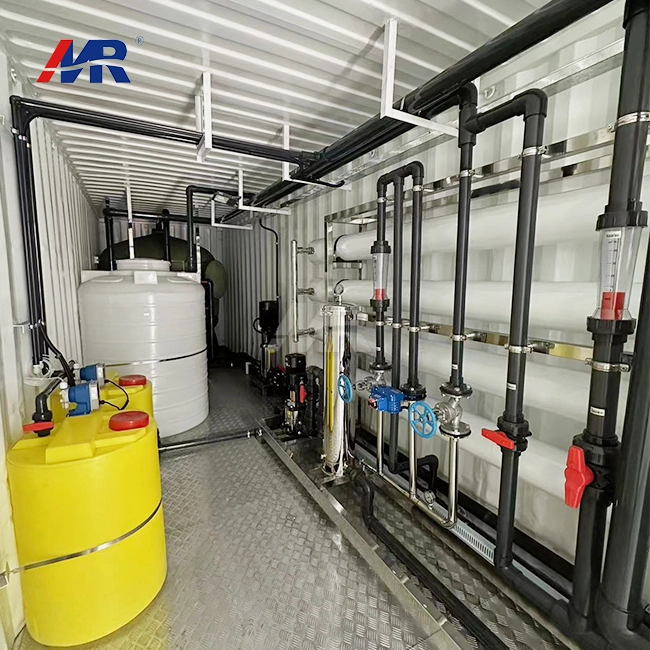
An 8 stage reverse osmosis system works by sending water through eight treatment steps in a fixed order. The early stages remove sand, silt, chlorine, and scale-forming minerals. A high-pressure pump then pushes the clean feed water through a semi-permeable membrane, which rejects dissolved salts and sends them out as concentrate. The final stages polish the treated water and add disinfection before delivery. The exact stages vary by manufacturer and raw-water quality. Our MR-BWRO-10TH is a brackish water unit built for drinking water production, with a 98% salt rejection rate and a 55–65% recovery rate.
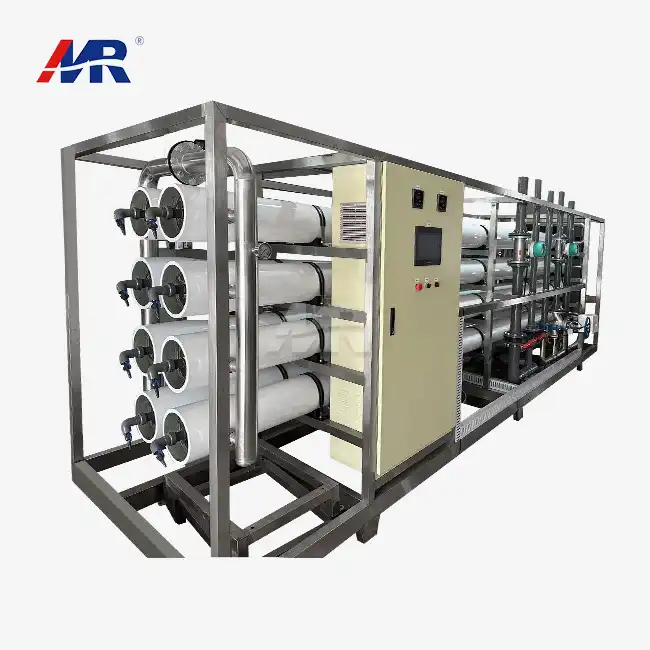
The 8 Stage Reverse Osmosis Water Filtration Process Explained
Let me go through the flow in the same order that the water does. "Eight stages" isn't always the case in the industrial world, so I explain how most factories are set up and point out where things are different.
Stages 1 to 4: Pretreatment
The pretreatment keeps the membrane safe and has a big impact on how long the membrane lasts. There is a raw water pump and a multimedia filter that catch sand and silt at the beginning of a normal train. Then activated carbon is added to get rid of the chlorine and organic compounds. Chlorine is bad for polyamide membranes, so this is the next step. Next, a softener or antiscalant dosing step keeps the membrane surface from getting crusty with calcium and magnesium. Then, before the high-pressure pump, small particles are caught by a capsule filter that is usually rated at 5 microns. A silt density number below 5 at the feed is what many membrane makers say should be there. We change these stages after reading your water report if your water has iron, manganese, or a high hardness level.
Stages 5 and 6: High-Pressure Pumping and Membrane Separation
The high-pressure pump is the fifth stage. It raises the feed pressure above the osmotic pressure of the water, which lets the flow go in the opposite direction. It takes less energy to treat brackish water, which usually has between 1,000 and 10,000 mg/L of dissolved solids. This is because it has a lower osmotic pressure than seawater. In step six, only water goes through the barrier. Most of the salts stay behind. It is possible for the MR-BWRO-10TH to reject 98% of salt. A rough guess is that feed water at 2,000 mg/L makes permeate around 40 mg/L. Fifty-five to sixty-five percent of the water that is fed in is turned into product water. The rest goes away as concentrate.
Stages 7 and 8: Post-Treatment and Delivery
The product water after the membrane may have a lower pH and be low in elements. As needed for the project, stage seven changes the pH or remineralizes the water to take care of this. In the eighth stage, the water is cleaned and polished using ultraviolet light or chlorine dosing. After this, it is stored and distributed. For water that people drink, this last step keeps bacteria out of the tank and lines. We set it based on the rules in your area and how you plan to use it. You can add or take away pumps, instruments, pipes, controls, and remote monitoring as needed. This way, the final stages can be customized to fit your site instead of following a set template.
Performance, Contaminants, and Specifications of the MR-BWRO-10TH
The next thing to know is what the 8 stage reverse osmosis system gives you once you know the flow path. This part talks about getting rid of contaminants, confirmed model data, and how reverse osmosis stacks up against other choices.
What the System Can Remove
Reverse osmosis membranes get rid of most of the ions that are dissolved in water. This means that they lower the amount of sodium, chloride, sulfate, nitrate, and many heavy metals that are dissolved. The U.S. EPA sets an additional standard for total dissolved solids at 500 mg/L, which has to do with taste and scale. Many brackish feeds can get close to that level with a 98% rejection rate, but the results depend on the chemistry of the feed, the temperature, and the pressure. Ultraviolet light or chlorine kills microbes but doesn't get rid of chemicals that are dissolved, and reverse osmosis doesn't replace disinfection. I always say that the cleaned water should be tested in a lab. You should send us the analysis first if there is a legal limit on a certain contaminant at your site.
MR-BWRO-10TH Specifications at a Glance
These are the numbers we confirm for this model. It is made to get drinking water from groundwater and brackish water. 15 kW of power is used. 55% to 65% of the feed is recovered, and 98% of the salt is thrown away. Recovery is important because it tells you how much feed to turn into product and how much concentrate to dump. Rejection sets the quality of the finished water. The high-pressure pump in a reverse osmosis plant uses most of the energy, so power costs make up a big part of your running costs. We make sure you understand other details in the technical proposal, like the brand of the pump, the instruments, and the controls. These details depend on your project.
How It Compares with Other Water Filtration Solutions
Most five-stage units end after the membrane and the polishing filter. In extra stages, post-treatment, disinfection, or more pretreatment are added. Only an alkaline or carbon filter can't get rid of dissolved salts. Only reverse osmosis can do that. Microbes are killed by a UV unit, but salts are not. It is not the total dissolved solids that softeners lower, but the hardness. A 5-stage system that is well put together can beat an 8 stage reverse osmosis system that is not well put together, so I rate any system by how well it works for testing rejection, recovery, and service access, not by the number of stages it has. A skid-mounted brackish water reverse osmosis plant is better for large amounts of water used by cities and businesses than a home unit.
Choosing, Maintaining, and Sourcing an 8 Stage RO System
The right equipment for your water and site is what makes a good purchase. Choosing, maintaining, and asking questions of the supplier are all covered in these three steps.
How to Choose the Right Configuration
Take a full look at the raw water to start: TDS, hardness, iron, manganese, silica, chlorine, temperature, and germs. Then choose your daily need and the type of water you want. Check your rules for letting concentrate out next, because a recovery rate of 55–65% means that 35–45% of the feed goes out as concentrate. Not only the purchase price, but also the total cost of ownership, which includes things like electricity, cartridges, membranes, chemicals, labor, and so on. People in the U.S. also often want test reports and approvals for items that will come into contact with water, so make sure you include those needs early on. Let us know what you need, and we'll make sure we can record it.
Installation and Maintenance Basics
A good system starts with a steady feed pressure, clean pipes, a way for concentrate to drain, and an electrical source that can handle the 15 kW load. Before you start up, flush the cartridges and check every fitting for leaks. On the first day, write down the pressure, flow, and conductivity. These will help you figure out what's wrong later. Most of the time, fouling or scaling is the cause of a rising pressure drop across the membrane. Salt rejection that goes down can be a sign of membrane wear or chlorine damage. The best way to decide when to replace something is to look at the quality of the feed and the number of hours it has been used. Operators can be warned early by remote monitoring.
Working with a Manufacturer on OEM and ODM Projects
For 25 years, Morui has been a group. It has 500 employees, 20 engineers, 14 branch companies, its own membrane production plant, and a number of equipment processing plants. That lets us choose the process, give help on the parts, and put them together ourselves. We also sell Shimge water pumps, Runxin valves, and Createc tools. If you order from us as an OEM or ODM, we can make a finished skid from your own design or use your water report to suggest pretreatment, membrane staging, and recovery rate. We can also help with installation and commissioning. Get a written copy of the lead time, warranty terms, and spare parts policy from every supplier you deal with.
Conclusion
With an 8 stage reverse osmosis system, the unit cleans the water, separates dissolved salts under high pressure, and guards the membrane. The water is then post-treated and disinfected to finish the process. Since there is no set number of stages, performance is based on the analysis of the feed water, the rate of rejection, the rate of recovery, the pressure, and the amount of power used. The MR-BWRO-10TH was made to produce drinking water. It has a 98% salt rejection rate, a recovery rate of 55–65%, and a 15 kW power usage. The two steps are not the same because disinfection gets rid of microbes and reverse osmosis gets rid of dissolved solids. For best results, match the setup to a water report, concentrate release rules, and the total cost of operation. Then, keep the unit in good shape by keeping an eye on its condition. A shorter train that is well-designed can work better than a longer train that is poorly designed.
FAQ
1. Does an 8-stage RO system waste a lot of water?
The MR-BWRO-10TH gets back 55–65% of the feed as product water, and 35–45% of it leaves as concentrate. Recovery is based on the design of the membrane and how it is operated, not the number of stages.
2. Can it treat well water?
Yes, if the source is right for pretreatment. Iron, manganese, hardness, and silt foul membranes. Send us your lab report, and we'll tell you which stages to use.
3. How long does a membrane last?
Because run hours, feed quality, pretreatment, cleaning, and life depend on each other, I can't promise a set number. Monitoring pressure drop and salt rejection lets you know when it's time to clean or replace.
4. Does RO remove bacteria?
Even though membranes keep out most bacteria, they are not a cleaning barrier. That job is done in the last stage of disinfection.
Talk to Morui About Your 8 Stage Reverse Osmosis System Project
In-house, Morui makes brackish water reverse osmosis skids. The MR-BWRO-10TH has a 98% salt rejection rate and a25-yearp history of 25 years. If you want to compare 8 stage reverse osmosis system manufacturers for a government, business, or OEM project, email your water report to benson@guangdongmorui.com. We'll suggest a configuration and give you a quote for either the standard model or a custom build.
References
1. Crittenden, J. et al. MWH's Water Treatment: Principles and Design, 3rd Edition, 2012.
2. American Water Works Association. Reverse Osmosis and Nanofiltration: Manual of Water Supply Practices M46, 2nd Edition, 2007.
3. Wilf, M. The Guidebook to Membrane Desalination Technology, 2007.
4. Greenlee, L. F. et al. Reverse Osmosis Desalination: Water Sources, Technology, and Today's Challenges, Water Research, 2009.
5. U.S. Environmental Protection Agency. Secondary Drinking Water Regulations: Guidance for Nuisance Chemicals, 1992.
6. Baker, R. W. Membrane Technology and Applications, 3rd Edition, 2012.
 VIEW MOREwaste water treatment system
 VIEW MOREDTRO membrane
 VIEW MORE150m3/hour reverse osmosis plant
 VIEW MOREultrafiltration machine
 VIEW MOREultrafiltration water treatment system
 VIEW MOREcommercial sewage treatment plant
 VIEW MOREro reverse osmosis water filter
 VIEW MOREcontainerized desalination plant