


What Pore Size Defines RO Filtration and Rejection Limits?
Commercial reverse osmosis membranes are usually described as having an effective pore size of about 0.0001 micron, or 0.1 nanometer. That number only loosely defines ro filtration, because a thin-film composite membrane does not work like a mesh screen. It separates dissolved salts and other contaminants through solution-diffusion, so rejection depends on membrane chemistry, pressure, temperature, and feedwater quality as much as on size. I wrote this guide for engineers, buyers, OEM integrators, distributors, and operators who want to read a datasheet correctly and choose a system, such as our MR-BWRO-10TH, with fewer surprises.
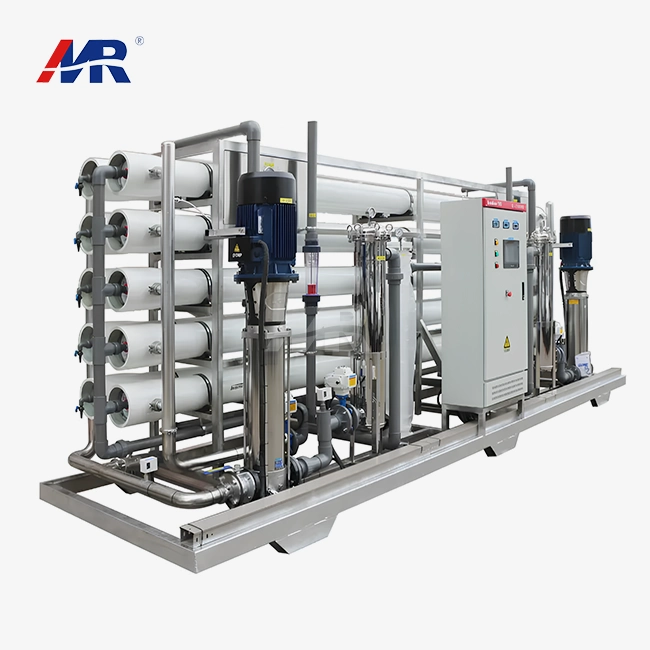
How RO Pore Size and Separation Work?
What Is the Typical Pore Size of an RO Membrane?
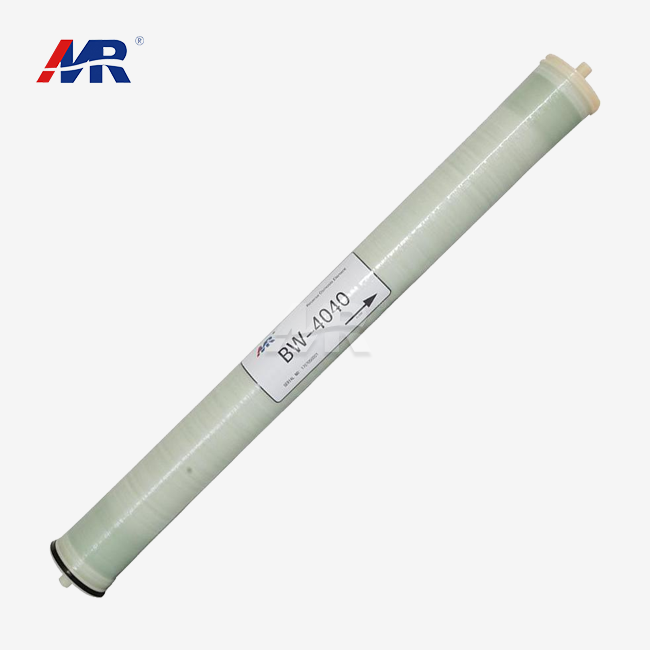
An industrial ro membrane is thought to have holes that are 0.1 nanometers wide, or 0.0001 microns wide. For me, that number is just a rough technical guide; it's not a hard line for particles. Because the holes in a thin-film composite membrane are not all the same shape, it is not possible to figure out how wide a single pore is. This filter is not the same as a ceramic filter. In order to rate these membranes, experts check how well they block salt, how much water they let through, the temperature, the pressure, and how quickly they rebound. How well a membrane stops molecules of a certain size can be judged by how heavy those molecules are. Pore size is not the same thing. I also tell people not to just match the micron numbers on sediment cartridges, bag filters, microfiltration, or ultrafiltration Products with the RO grade.
How Does RO Filtration Work?
The process of RO is driven by pressure. The feedwater's pressure is raised above its osmotic pressure by a pump. This blocks some water from getting through. The clean stream is known as permeate. The feedwater that seeps through and is used again is called recovery. The stream that takes away the salts that are more concentrated is called the concentrate. When water mixes with the membrane polymer, it moves through it. But contaminants can't get through because of the way they are chemically and physically made. Since it has more salt than ocean water, it doesn't need as much power and pressure. When there is more feed pressure, the permeate runs faster, but that can't take the place of good preparation.
What Does RO Reject and What Can Pass Through?
An RO system gets rid of a lot of organic chemicals, bacteria, viruses, colloids, floating solids, and inorganic ions that don't belong in water. But not every contaminant is the same. What happens can be changed by the molecules' charge, polarity, pH, temperature, and size. More boron, silica, carbon dioxide, flammable chemicals, and small neutral molecules can fit inside. If you want to reach your goal, you may need to add UV, antiscalant, activated carbon, degasification, ion exchange, or pH adjustment after these. It is also important to do this before taking medicine. Don't forget to dose with carbon, softener, antiscalant, or sediment filtration. This will keep the membrane clean and free of scale.
What Sets RO Rejection Limits, and How Do I Verify Them?
Which Factors Determine RO Rejection Limits?
There are two barriers that can let different amounts of water through, even though their holes are the same in theory. First, the type of chemical and how it is made are looked at. It changes because of the water that comes in after that. Temp, hardness, turbidity, organic load, microbial content, silica, iron, and pH are some of the things that can change this.
When operating pressure and recovery change for an RO filter, so do the amount of flow, salt that passes, energy used, and the chance of scaling. The membrane gets dirty, biofoul, mineral scale, rust, and old over time, all of which make it work less well. Workers should pay attention to the standardized permeate flow, salt passage, differential pressure, feed and permeate conductivity, and how often the filter needs to be cleaned. Based on those readings, we can tell that the membranes are damaged long before the water quality gets worse.
How to Verify RO Rejection Performance?
Write down the conductivity for the feed, filtrate, and concentrate, as well as the pressure, flow, temperature, and recovery, at the start of the job. After that, here's how to find salt rejection:
Salt Rejection (%) = [1 − (Permeate Conductivity ÷ Feed Conductivity)] × 100
A feed of 2,000 µS/cm and a concentrate of 40 µS/cm will always stop the flow in this case. Conductivity is a sign, but you still need to test in a lab for boron, silica, TOC, and trace organics. You can find drift early if you keep track of the same numbers at the same times. I think that pilot tests should be done before the final plan is made for projects that aren't clear, are hard to understand, or have a high recovery rate.
Common Misconceptions About Pore Size and Rejection
Most bad decisions are based on four assumptions. RO doesn't always get rid of all toxins because the science and how the system is used change the amount that is rejected. It's also not always better to have a smaller micron grade because getting rid of particles and solids that have been dissolved are not the same thing. Third, if the feedwater isn't treated quickly, the membrane will get dirty, scale up, lose pressure, and fail early. Fourth, the numbers given for rejection depend on how well the test was done, so they aren't always right. How well the membrane works in your own water is what matters, not how well it worked in the lab. That's written in your report number. People who buy from us are told that they can ask any supplier for data that is specific to their needs.
Choosing an RO System: Comparison, Design, and the MR-BWRO-10TH
How Does RO Compare With Other Filtration Methods?
A lot of bacteria and bigger bits are removed by microfiltration. Ultrafiltration can get rid of colloids, bacteria, viruses, and large molecules. The nanofiltration method can make things smooth, get rid of color, and get rid of some minerals. Activated carbon can get rid of chlorine, taste, smell, and some organics. Sand and cartridge filters can get rid of particles in the water. Some ions can be taken away by ion exchange, but it needs to be done again. These can't be used instead of RO filtration for salts that have already been broken down. A lot of the time, systems have more than one step. For example, carbon, antiscalant dosing, cartridge filtration, RO, and then UV or EDI coating. The end train is picked based on the chemical make-up of the feedwater and the product that needs to be made.
What Should I Check Before Selecting a System?
I use facts to help me decide what to do. Buyers need to know where the water comes from, how much flows every day, and how much flows at its peak. They also need to know the goals for conductivity and recovery, the operating hours, the discharge limits, and any standards that apply. The next step is to compare various designs, including single-pass, double-pass, brackish, and ocean designs.
The footprint, speed, temperature change, and pump capacity are also things we look at. The total cost of ownership includes things like energy, chemicals, consumables, cleaning, changing membranes, work, getting rid of concentrates, and downtime. It's possible that the price of a RO filter doesn't tell you everything you need to know. In the U.S., people should also make sure they have all the licenses and test results they need for their project, since NSF/ANSI 58 only covers drinking water systems with point-of-use reverse osmosis and not all industrial skids.
What Does the MR-BWRO-10TH Offer?
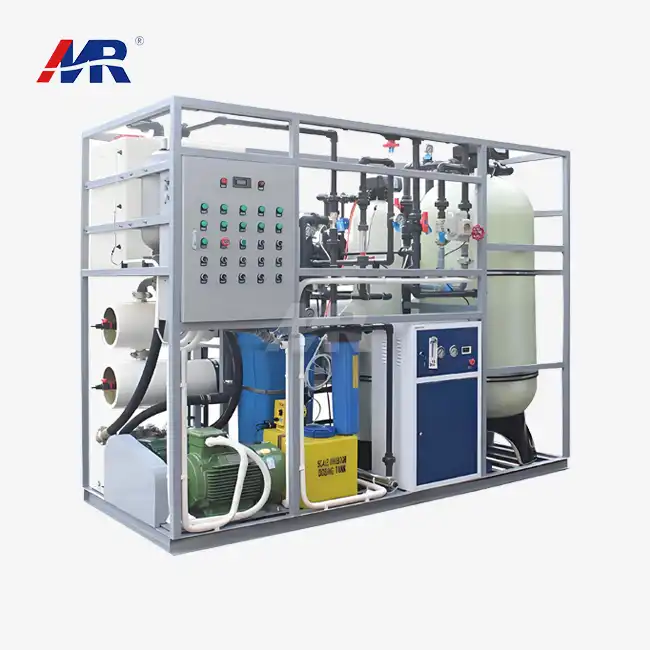
Here are the scores for this type. Its job is to make water for drinking, and it needs 15 kW of power. About five to six fifths of the water that goes through it is returned. This means that fifty to sixty-five liters of feedwater are lost for every hundred liters that go through it. In a lab, it can get rid of 98% of salt, but I still think you should check the feedwater before you buy it. BWRO means that the service is for brackish water. We have our own membrane plant, official Shimge pumps and Runxin valves, and Createc instruments at Morui to back up this model. They set everything up and turned it on. Dealers, OEM buyers, and service shops can easily get the machine and all of its parts from this deal.
Conclusion
You can buy RO membranes in stores for ro filtration. The pores on these membranes are about 0.0001 microns wide, but that's just a rough guess. The quality of the feedwater, the pressure, the temperature, the contaminants, and the chemistry of the membrane all play a role in the rejection. Solution diffusion is what separates things. RO can get rid of dirt, germs, and salts that have dissolved. It might take more steps to get rid of boron, silica, gases, and small neutral molecules. Performance is safe over time as long as pretreatment is done and normalized flow, salt passage, and differential pressure are monitored. You can use conductivity tests to see if something won't reject salt, and lab tests can see what pollutants are present. CO, ultrafiltration, nanofiltration, and ion exchange are not the same as RO. This is one reason why trains often work together. You can choose a system based on more than just price or pore size. Analysis of the water, data that is specific to the use, and the total cost of ownership are also considered.
FAQ
Q1: What is the pore size of an RO membrane?
A: The size of it is 0.1 nanometer, which is equal to 0.0001 micron. It's not a real number because thin-film composite membranes don't have holes that are all the same distance apart.
Q2: Does a smaller pore size guarantee higher salt rejection?
A: Rejection is affected by the feedwater quality, the pressure, the temperature, the pH, and the chemistry of the membrane. Don't say what you think about the pore size; instead, compare the results of tests that were done in certain ways.
Q3: How often should I replace an RO membrane?
A: The date hasn't been set. Salt can go through once the flow is back to normal. How clean the membrane was, how good the feedwater is, and whether the membrane is broken in any way all play a role in this. Keep an eye on those numbers and do something when cleaning doesn't help.
Request an RO Filtration Quote From Morui
If you give Morui information about your feedwater, they can look it over and give you advice on how to set up your RO filtration project. The RO filtration company we work with has its own membrane plant, so we can give you a price on the MR-BWRO-10TH or a custom setup. We also sell Shimge pumps and Runxin valves and help with installation. Tell benson@guangdongmorui.com how much water you need, how fast you want it to flow, and what the conductivity limits are in an email.
References
1. Basic Principles of Membrane Technology, 1996
2. The Solution-Diffusion Model: A Review, Journal of Membrane Science, 1995
3. The Guidebook to Membrane Desalination Technology, 2007
4. Water Treatment: Principles and Design, 2012
5. Water Quality and Treatment: A Handbook on Drinking Water, 2011
6. FilmTec Reverse Osmosis Membranes Technical Manual, 2005