

_1745823981883.webp)

Osmosis Water Purification System vs Carbon Filter: Which Is Better?
membrane chemistry hardly matters to a plant manager reading a failed water quality report. “They want the fix that keeps the production going. That solution is provided by reverse osmosis water treatment technology, including an osmosis water purification system, which forces raw water through a semi-permeable membrane under pressure, removing salts, bacteria, and dissolved particles at rates from 1,000 to over 100,000 gallons per day. This article covers what goes on within the membrane, how water sources function, how recovery and fouling affect performance, and what data operators should be tracking to maintain consistent output year after year. It also covers a real-world deployment that shows how correctly designed reverse osmosis water treatment equipment addressed a recurring compliance issue at a power production facility.
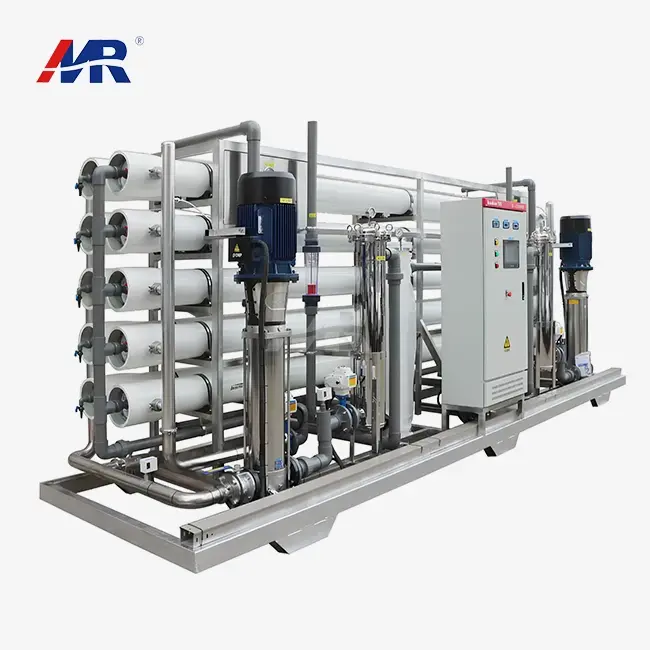
Why Is RO Effective for Industrial Water Purification?
Reverse osmosis eliminates more pollutants in a single pass than practically any other filtering technology available at the industrial scale. It removes dissolved salts, heavy metals, microorganisms, and numerous organic substances without chemical precipitation or heat distillation.
The Physics Behind the Process
Osmosis is the movement of water across a membrane to a saltier solution. If you put pressure higher than the normal osmotic pressure, the flow is reversed. The pure water is forced one way, while the impurities are concentrated on the other side. This is the basis of operation of all the reverse osmosis water treatment equipment packages, no matter what their capacity.
Why Does This Guide Use Real Deployment Data?
Generic buyer guides regurgitate the same bullet points about efficiency and dependability, without demonstrating what those promises look like in an actual facility. Instead, this book details an actual reverse osmosis water treatment equipment installation, with exact before-and-after numbers that a consumer may compare to their own circumstances, rather than adopting a marketing promise on trust.
Why Do Factories Prefer It Over Older Methods?
Ion exchange resin beds need regular chemical renewal, while thermal distillation requires significantly more energy per litre processed. An osmosis water purification system offers the same level of purity at a fraction of the operating cost. This is why reverse osmosis has become the default option in industrial, food and beverage, and pharmaceutical facilities throughout the globe.
Where Does This Technology Rank Among Filtration Options?
Sediment and carbon filtering just takes away particles and chlorine but does nothing for dissolved salts. So they are out for anything that requires real desalination. Ultrafiltration eliminates bacteria and bigger organic molecules, but most dissolved salts flow directly through the membrane. Reverse osmosis water treatment equipment is the only mid-cost alternative that can handle both particulate and dissolved impurities in a single continuous operation.
What Happens Inside an Industrial RO Membrane?
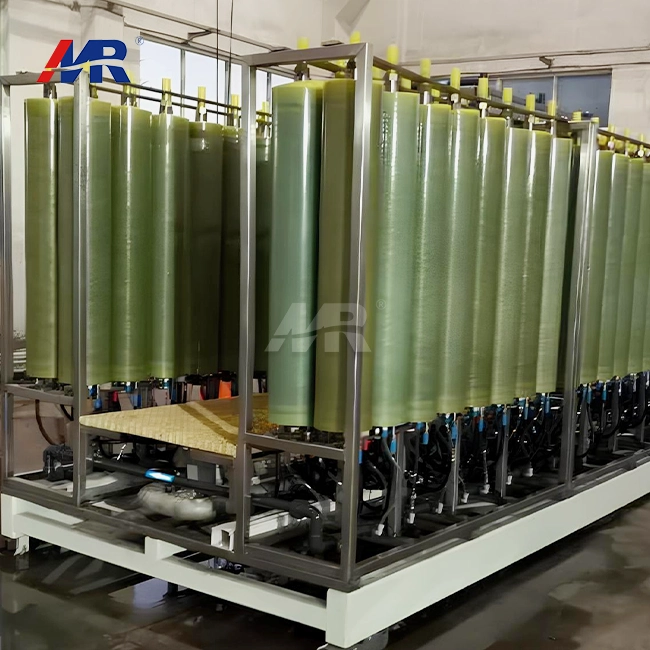
The membrane is a spiral, coiled sheet of thin-film composite material curled around a central collecting tube. The membrane is packed in a pressure vessel. Knowing this structure helps explain why pretreatment is so important.
Membrane Structure and Material
Water molecules can pass through the polyamide barrier layer, but the technology of the advanced membrane prevents dissolved ions and bigger organic molecules from passing through. The barrier layer is mounted atop a support structure that offers the membrane mechanical strength against operating pressure.
Why Element Count and Housing Design Matter
Several membrane elements are loaded into a single pressure vessel. The vessels are linked in succession such that the water rejected by one element becomes the feed water for the next. In an osmosis water purification system, well-constructed reverse osmosis water treatment equipment housings try to balance the number of elements with the pressure drop. Having too many elements in one vessel will limit the flow uniformly across the bank and diminish the life of the elements closest to the concentrate exit.
How do water and Contaminants Separate?
Pressurised feed water is forced into the membrane element. Water molecules are transported through the membrane barrier layer, while salts and bigger pollutants are rejected and flow away from the membrane surface to the concentrate output. The constant flushing prevents impurities from just sitting on the surface of the membrane, yet it does not remove the possibility of fouling gradually over time.
Why Modular Construction Matters at This Stage?
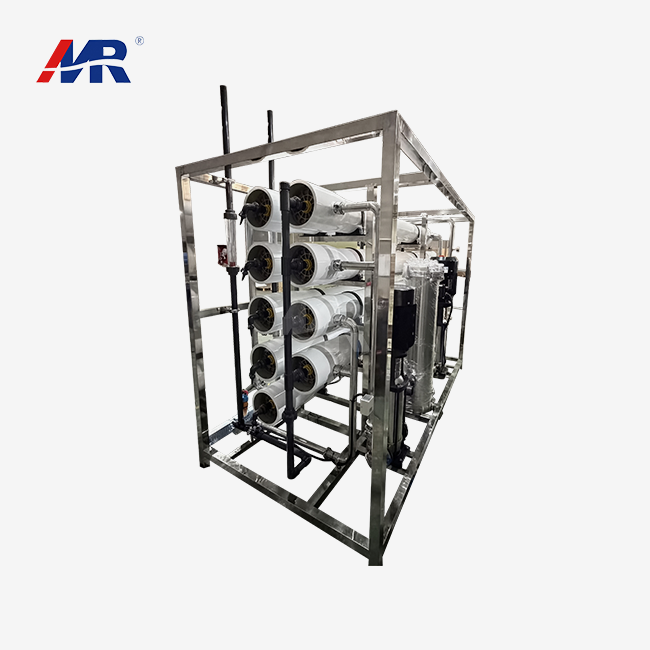
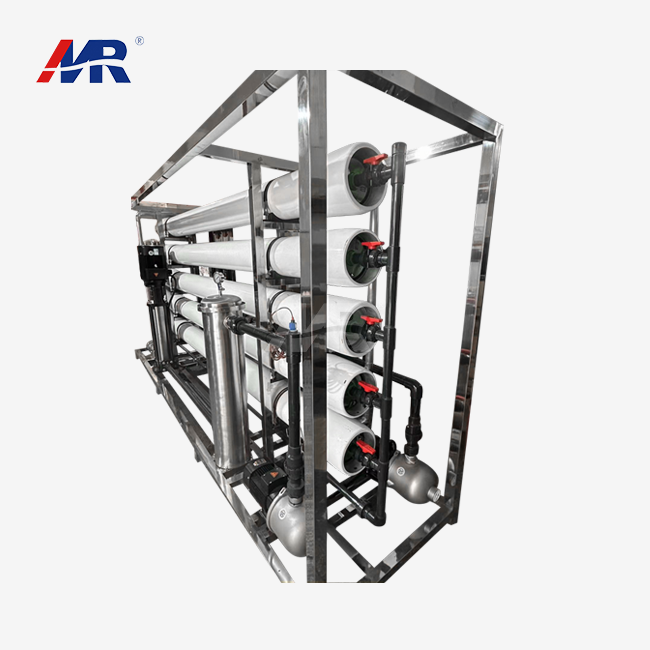
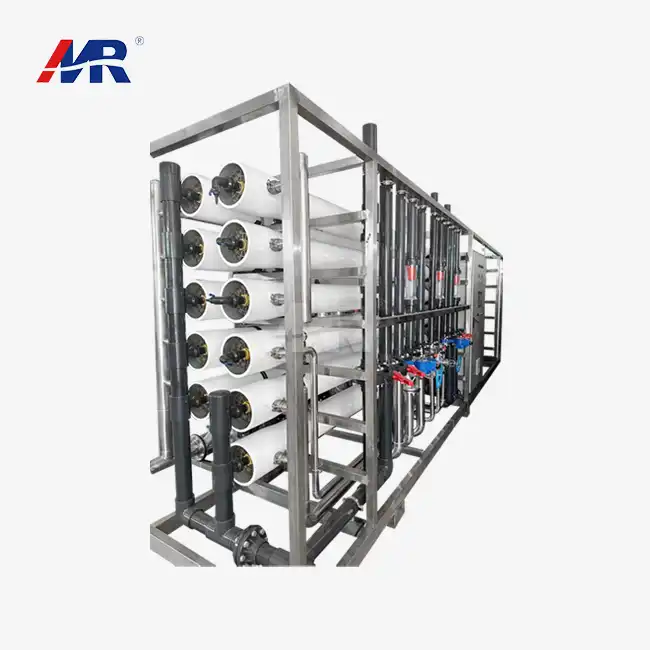
Membrane elements are loaded into pressure vessels that are organised in banks. Modular architecture enables a facility to add vessels later without rebuilding the whole skid. This is especially important for customers who are unsure of future production volume, as a reverse osmosis water treatment equipment package that can be expanded is cheaper to scale up than one that will need to be replaced entirely when demand outstrips the initial specification.
Which Water Sources Are Suitable for Industrial RO?
Municipal water, well water, brackish groundwater, and even prepared wastewater may all feed an RO system, but each source has a distinct preparation load. Most buyers do not recognise that matching the equipment configuration to the actual source is more important during the first procurement.
Municipal and Surface Water Sources
Municipal feedwater has previously been through a public treatment procedure; thus, it is usually less turbid and has more stable chemistry. Still, seasonal chlorination fluctuations and pipe network variability may alter feed water quality enough to damage a poorly monitored osmosis water purification system. Municipal water typically requires little preparation, and facilities that presume otherwise are often disabused of that notion when a reverse osmosis water treatment equipment membrane fouls sooner than its recommended cleaning interval.
Groundwater and Well Water Variability
Groundwater quality varies greatly from place to place, and continuing monitoring reveals that in many aquifers such conditions are constantly changing over time due to variables ranging from patterns of recharge to adjacent land use. Well water sources that include high iron, manganese, or hardness may need extra oxidation or softening stages before the water gets to the ro membrane, since this phase is bypassed and fouling occurs faster in the first year of operation.
| Feed Water Source | Common Challenges | Typical Pretreatment Needed |
|---|---|---|
| Municipal Supply | Chlorine, minor turbidity swings | Carbon filtration |
| Well/Groundwater | Iron, manganese, hardness | Oxidation, softening, multimedia filtration |
| Surface Water | Seasonal turbidity, organics | Coagulation, multimedia filtration |
| Pretreated Wastewater | Variable organics, biofouling risk | UF/MBR pre-stage, antiscalant dosing |
Ready to Match Equipment to Your Water Source?
Pretreatment needs are guesswork and a loss of money and membrane life. Morui designs and builds reverse osmosis water treatment equipment based on your particular raw water analysis, not a generic template. Contact the engineering team at benson@guangdongmorui.com for a site-specific price from a manufacturer and supplier that produces its own membranes in-house.
When Should Factories Choose RO Over Other Methods?
RO isn’t always the ideal tool. Buyers looking at it vs ion exchange, ultrafiltration alone, or distillation need to relate the technology to the real water quality objective, not just whichever system a salesman is pitching the hardest.
When is RO the Clear Choice?
RO provides a high rejection rate and low operating cost that helps any osmosis water purification system application requiring broad-spectrum dissolved solids reduction, from bottled water manufacturing to boiler feed water. Feed water TDS up to 10,000 mg/L is within the range of ordinary reverse osmosis water treatment equipment and covers the great majority of brackish and municipal sources that companies actually face.
When does a Hybrid System Make More Sense?
In electronics production, chip cleaning generally uses RO, then a polishing step using electrodeionization or mixed-bed ion exchange, since RO alone cannot achieve the high purity required for precision semiconductor operations. A similar trend is followed in pharmaceutical plants, where RO is the main step ahead of ultrafiltration or EDI for GMP-compliant filtered water.
How Does Feed Water Quality Affect RO Operation?
Differing raw water chemistry between two facilities with the same equipment may lead to highly varied performance. This understanding allows purchasers to establish reasonable expectations before commissioning.
Turbidity and Suspended Solids
High turbidity feed water clogs the pre-treatment filters more quickly and raises the danger of particle fouling at the membrane surface itself. Facilities using surface water sources with seasonal peaks in turbidity must be designed with pretreatment capacity for worst-case, not average, circumstances.
pH Range and Its Practical Impact
Standard thin-film composite membranes used in an osmosis water purification system may operate at a pH range of 3 to 11, which gives operators flexibility in dealing with moderately acidic or alkaline feed water without considerable pretreatment. Feed water beyond that range must be neutralized before it reaches the membrane. This is frequent in certain industrial effluent streams. Operating outside the authorized pH window can degrade membrane life substantially quicker than any other single cause.
Hardness, Silica, and Scaling Potential
The amounts of calcium, magnesium, and silica will decide the aggressiveness of the system to dose antiscalant to prevent the development of scale on the membrane. In the literature review of reverse osmosis scaling in 2025, it was found that among the most common causes of membrane performance decline, there is the inorganic precipitation of compounds such as calcium carbonate and silica. This reinforces why feed water testing should happen before equipment selection and not after installation problems appear.
What Role Does Membrane Recovery Play in RO Treatment?
Recovery rate is the measure of the amount of input water that becomes useful permeate as opposed to concentrate outflow. This is at the heart of both the economics and the engineering of any RO system.
Balancing Recovery Against Fouling Risk
The greater the recovery rate, the higher the level of pollutant concentration on the reject side and the higher the danger of scaling, unless antiscalant dosage and pretreatment are adjusted accordingly. Morui’s typical design may provide a recovery rate as high as 75 percent, a value selected to balance water efficiency with the long-term health of the membrane, rather than pursuing the greatest number attainable at all costs.
Recovery Rate and Water Cost
The enhancement of every percentage of recovery directly affects raw water consumption and the volume of wastewater discharge, which is especially critical in water-stressed areas throughout the target markets that this equipment addresses. In dry agricultural areas or coastal towns with water constraints, buyers should consider the recovery rate as much as the purchasing price when evaluating supplier quotations. An osmosis water purification system, such as a reverse osmosis water treatment equipment set custom-tuned to a particular feed source rather than being sold from a generic catalogue sheet, will usually provide a much superior recovery figure during its inaugural working year.
| Recovery Rate | Feed Water Needed per m³ Permeate | Typical Trade-off |
|---|---|---|
| 50% | 2.0 m³ | Lower scaling risk, higher water use |
| 65% | 1.5 m³ | Balanced for most municipal and food-grade sources |
| 75% | 1.3 m³ | Standard target for well-pretreated brackish sources |
| 85%+ | 1.2 m³ | Requires strong pretreatment and monitoring discipline |
Buyers should treat this table as a starting reference rather than a guarantee, since actual achievable recovery always depends on the specific feedwater chemistry and pretreatment quality at a given site.
Which RO Configuration Fits Different Industrial Processes?
Not every factory needs the same skid layout. Configuration choices around stage count, automation depth, and post-treatment shape how well the equipment matches its intended use.
Single-Pass Versus Two-Pass Systems
A single-pass configuration suits most food and beverage, municipal, and general manufacturing applications where a rejection rate of up to 99.5 per cent already meets the target. A two-pass configuration, where permeate from the initial pass feeds an additional RO stage, reaches the extreme purity that electronics and select pharmaceutical processes require.
Automation and Control Depth
Automated control systems reduce the operator burden considerably, particularly for facilities running unattended shifts. A modular osmosis water purification system also lets factories add capacity later without replacing the entire system, which matters for growing operations that cannot predict exact future demand at the time of initial purchase.
Here is what buyers should weigh when specifying configuration for their particular process:
- Post-treatment requirements. Applications needing remineralisation for taste, like bottled water, need pH adjustment and mineral dosing after the membrane stage, while boiler feed water applications typically skip remineralisation entirely since mineral content is exactly what the process needs to prevent.
- Redundancy needs. Facilities that cannot tolerate any water supply interruption should specify dual-train configurations allowing one train to run maintenance while the other continues production, rather than accepting a single point of failure to save on upfront capital cost.
These configuration choices compound over the equipment's service life, since retrofitting automation or redundancy after installation costs considerably more than specifying it correctly from the start.
How Can Factories Prevent Membrane Fouling and Scaling?
Fouling and scaling account for the overwhelming majority of unplanned downtime in a reverse osmosis plant. Prevention costs far less than remediation once a membrane has already lost significant performance.
Pretreatment as the Primary Defence
Removal of large particles and contaminants at the pretreatment stage protects the membrane from the physical damage that leads to premature fouling. A comprehensive 2025 review of RO membrane fouling mechanisms found that controlling feed water quality through pretreatment, combined with scale inhibitor dosing and scheduled cleaning, remains the most effective combination of strategies available to operators.
Chemical Cleaning and Monitoring
Scheduled chemical cleaning-in-place restores membrane performance before fouling becomes severe enough to require replacement. Tracking normalised pressure and flow data against a baseline gives operators an early warning system, catching a developing fouling problem weeks before it would otherwise show up as a production quality issue.
Why Does Component Quality Affect Fouling Resistance?
High-quality components across the pretreatment train, pump, and membrane housings reduce the frequency of unplanned cleaning cycles in a reverse osmosis plant compared with budget alternatives that wear unevenly under continuous pressure cycling. Guangdong Morui pairs its own membrane production with authorised agent relationships for established brands, including Shimge water pumps, Runxin valves, and Createc instruments, giving buyers a documented parts chain rather than mismatched components sourced from wherever was cheapest at the time of assembly.
What Operating Data Should Industrial RO Systems Track?
Data collection separates facilities that catch problems early from those that discover them only after output quality has already suffered. A user-friendly interface makes this discipline realistic for operators without a dedicated water treatment specialist on staff.
Core Metrics Worth Daily Logging
Feed pressure, permeate flow, conductivity, and recovery rate together paint a complete picture of system health. A sudden pressure increase alongside falling flow typically signals fouling, while rising permeate conductivity points toward membrane degradation or a seal failure somewhere in the system.
Building Long-Term Performance Trends
Normalising daily readings against feed water temperature removes seasonal noise and reveals genuine performance trends that operators of a reverse osmosis plant would otherwise miss. Facilities that maintain this discipline over several years typically extend membrane life well beyond facilities relying on reactive maintenance triggered only by visible output problems.
Case Study: Coal-Fired Power Plant Boiler Feed Water in South Africa
A regional power generation facility outside Johannesburg approached Morui after its existing softening-only pretreatment could not consistently meet boiler feedwater silica limits during the dry season, when raw water hardness and silica concentration both climbed. Morui installed a reverse osmosis water treatment equipment package sized to the plant's peak demand, paired with multimedia pretreatment and antiscalant dosing calibrated to the site's specific water chemistry.
Measured Results After Commissioning
Across the following dry season, the plant recorded rejection performance holding above 99 per cent on continuous monitoring, with silica levels in the treated water staying well under the boiler manufacturer's specified threshold throughout the entire period. Unplanned boiler chemistry excursions requiring an emergency blowdown dropped from four incidents in the prior dry season to zero, based on the plant's own operating logs reviewed with Morui's engineering team during a scheduled follow-up visit.
How Can RO Treatment Support Consistent Process Water Quality?
Consistency matters more than peak performance for most industrial buyers. A reverse osmosis system that runs at a dependable, documented output beats one that occasionally exceeds specification but fails unpredictably.
Documentation for Compliance and Audits
Quality managers across food, pharmaceutical, and municipal sectors need documented, repeatable water quality data to satisfy regulatory audits. Reverse osmosis systems built to recognised standards, including NSF/ANSI 58 design and performance criteria, give buyers a documented reference point when demonstrating compliance to inspectors or customers.
Why a Single Manufacturer Relationship Simplify Compliance?
Guangdong Morui Environmental Technology Co., Ltd. operates more than 14 branches with over 500 employees and roughly 20 in-house engineers, backed by its own membrane production factory and several equipment processing facilities. A quality manager preparing for an audit benefits from working with one accountable manufacturer that can supply documentation for the entire reverse osmosis system and water treatment equipment package, rather than chasing paperwork from three separate component vendors during a compliance deadline.
Scalability for Growing Operations
A customisable capacity range from 1,000 to over 100,000 gallons per day means a single manufacturer relationship can support a factory from its initial installation through several rounds of expansion, rather than forcing a buyer to switch suppliers every time production scales. This scalability, combined with a compact footprint that fits existing utility space, explains why reverse osmosis water treatment equipment remains the default choice as factories across Asia, South America, and Africa continue expanding capacity.
What Buyers Consistently Underestimate?
Procurement teams frequently underestimate how much post-purchase support affects the total cost of ownership over an equipment's service life. A supplier offering locally accessible spare parts, responsive engineering support, and documented maintenance guidance saves far more money across five years than a marginally lower purchase price ever could, particularly for facilities operating in regions where shipping delays on speciality parts can stretch into weeks.
Conclusion
Reverse osmosis earns its position as the default industrial water purification technology by combining broad contaminant removal, manageable operating costs, and configuration flexibility that few alternatives can match. An osmosis water purification system can deliver reliable performance when feed water testing, pretreatment design, and ongoing monitoring are properly managed, helping determine whether the technology provides a decade of consistent output or a string of avoidable fouling incidents. Buyers who treat equipment selection as a data-driven decision, not a catalogue purchase, consistently see better long-term results.
FAQ
1. What is the typical lifespan of reverse osmosis water treatment equipment?
The core skid and control system commonly run well over a decade with proper maintenance, while membranes themselves typically need replacement every three to five years, depending on feedwater quality and cleaning discipline.
2. Can reverse osmosis remove all bacteria and viruses from water?
RO membranes reject the large majority of bacteria and viruses due to their size relative to membrane pore structure, though systems intended for microbiologically sensitive applications often add UV disinfection as an additional safeguard.
3. How much feed water does an RO system waste as concentrate?
At a 75 per cent recovery rate, roughly one litre of concentrate is generated for every three litres of permeate produced, though this ratio shifts with feed water salinity and system configuration.
4. Does reverse osmosis remove beneficial minerals from drinking water?
Yes, RO removes both harmful and beneficial dissolved minerals, which is why many drinking water applications add a remineralisation stage after treatment to restore taste and mineral content.
5. How often should industrial RO membranes be cleaned?
Industrial RO membranes should typically be cleaned when normalized flow drops by 10%–15%, salt passage increases, or pressure loss rises significantly. Actual cleaning frequency depends on feed water quality, pretreatment effectiveness, operating conditions, and fouling levels.
Request a Configured Proposal for Your Facility
Every raw water source behaves differently, and generic equipment sizing leads to underperformance more often than buyers expect. Morui reviews your feedwater analysis and proposes an osmosis water purification system and reverse osmosis water treatment equipment as a manufacturer and supplier, not a reseller passing along fixed catalogue specs. Contact benson@guangdongmorui.com with your water quality data to begin a formal proposal.
References
1. NSF, "NSF/ANSI 58: Reverse Osmosis Drinking Water Treatment Systems." Referenced for design, material, and performance standards applicable to RO equipment. https://www.nsf.org/knowledge-library/nsf-ansi-58-reverse-osmosis-drinking-water-treatment-systems
2. U.S. Geological Survey, "Groundwater Quality—Current Conditions and Changes Through Time." Referenced for groundwater feed water variability relevant to RO pretreatment planning. https://www.usgs.gov/mission-areas/water-resources/science/groundwater-quality-current-conditions-and-changes-through
3. Shen, X. et al., "Scaling in reverse osmosis seawater desalination: Mechanism and prevention—A literature review," The Canadian Journal of Chemical Engineering, 2025. Referenced for inorganic scaling mechanisms and prevention strategies. https://onlinelibrary.wiley.com/doi/10.1002/cjce.25427
4. "Critical review of membrane fouling in reverse osmosis treatment: Characterizations, models, mechanisms, and controls," ScienceDirect, 2025. Referenced for fouling prevention and pretreatment strategy. https://www.sciencedirect.com/science/article/abs/pii/S1383586625007166
5. U.S. Department of Energy, "Best Management Practice #8: Steam Boiler Systems." Referenced for boiler feed water treatment and blowdown practices in power generation. https://www.energy.gov/cmei/femp/best-management-practice-8-steam-boiler-systems
6. Food and Agriculture Organization of the United Nations, "Water Desalination for Agricultural Applications." Referenced for RO applications in irrigation and brackish water treatment. https://openknowledge.fao.org/server/api/core/bitstreams/a8dec691-369e-481d-8164-e26f83e50010/content
About the Author
Renjie Kuang, Industrial Water Treatment Engineer. Renjie has spent over a decade designing and commissioning RO, UF, and pretreatment systems for manufacturing, power, and municipal clients across Asia, South America, and Africa. His work focuses on matching feed water chemistry to system design rather than applying a single standard configuration to every site.
 VIEW MOREedi water treatment system
 VIEW MORE50m3/hour reverse osmosis equipment
 VIEW MORE8 stage reverse osmosis system
 VIEW MOREDTRO for Wastewater Treatment
 VIEW MOREcommercial sewage treatment plant
 VIEW MOREro reverse osmosis water filter
 VIEW MOREreverse osmosis water treatment equipment
 VIEW MORE60m3/hour reverse osmosis plant
