

_1745823981883.webp)

SWRO Plant Design: Key Components and Best Practices
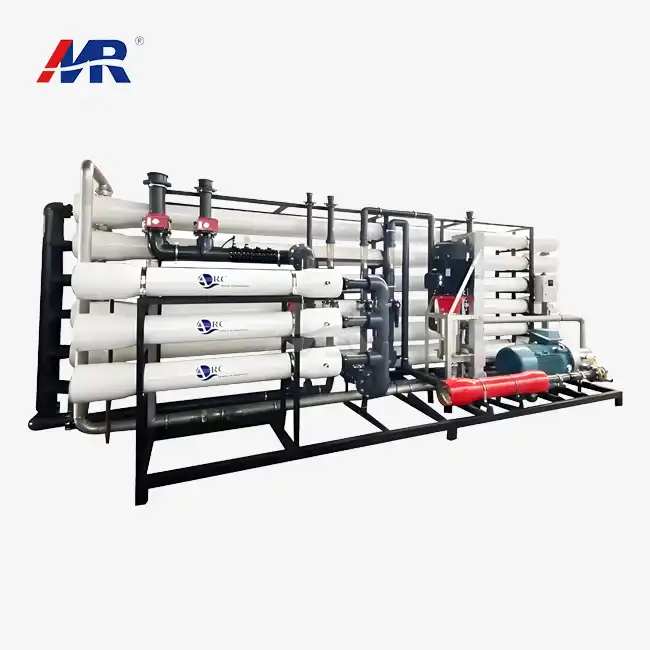
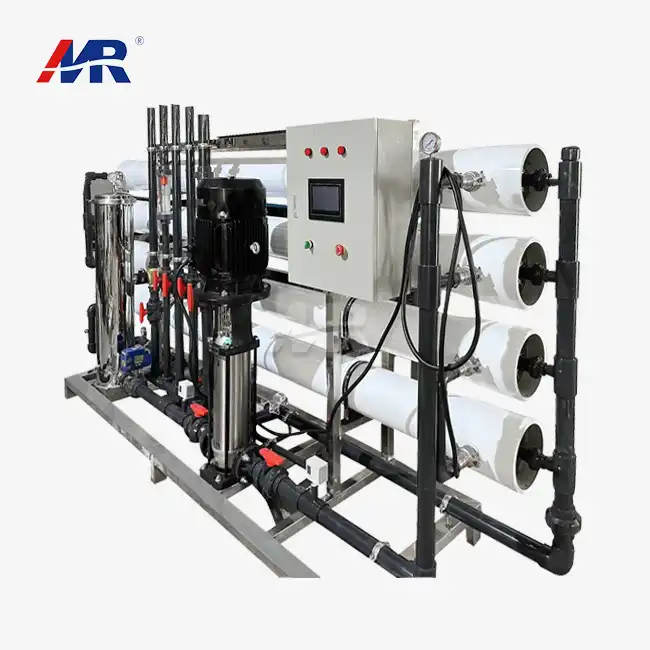
Designing an effective seawater reverse osmosis swro plant requires careful attention to core components and operational strategies that ensure long-term reliability and cost efficiency. An SWRO plant converts high-salinity seawater into potable or industrial-grade water through semi-permeable membrane technology under high pressure. This process addresses critical water scarcity challenges in coastal regions while meeting stringent quality standards required across pharmaceutical, food and beverage, municipal, and energy sectors. Proper design integrates pretreatment systems, high-efficiency membrane modules, energy recovery mechanisms, and automation controls to optimize performance and minimize lifecycle costs.
Understanding Core Components of SWRO Plants
To make a strong desalination system, you must first understand how each part affects the system's general performance and the quality of the water it produces. The right mix of pretreatment, membrane technology, pumping systems, and tracking gear determines both how well the SWRO plant works right away and how much it costs to run in the long run.
Pretreatment Systems That Protect Membrane Integrity
There are microorganisms, scaling compounds, suspended solids, and organic matter in raw seawater that can quickly damage reverse osmosis membranes. Multimedia filtration, container filters, and chemical dosing systems are common types of preparation that work well. Multimedia filters get rid of particles as small as 10 to 20 microns, and cartridge filters polish the sound even more, down to 5 microns or less.
Chemical dosing adds antiscalants to stop the precipitation of calcium carbonate and calcium sulfate, as well as chemicals that change the pH to make the membrane work better. Some advanced systems use ultrafiltration as a pretreatment step, which lowers the turbidity to less than 0.1 NTU and gets rid of the need for regular filtration completely. Investing in thorough preparation lowers the number of times the membrane needs to be cleaned by 40–60%. This lowers care costs by a large amount and increases the membrane's life from three to five years or longer.
Membrane Modules: The Heart of Desalination
The choice of membrane has a direct effect on how much salt is rejected, how much water is recovered, and how much energy is used. Modern spiral-wound membranes are most often used in business because they are cheap and can pack a lot of information into a small space. Most of the time, these membranes can handle working pressures between 5.5 and 7.0 MPa and reject 99.4 to 99.8% of salt.
Configuration is very important. Multiple membrane elements are stacked in series inside pressure vessels. In industrial settings, 6 to 8 elements are usually used per vessel. The two-pass configuration, in which permeate from the first membrane stage feeds a second stage, makes ultrapure water that meets USP standards for pharmaceuticals or requirements for semiconductor manufacturing. Membrane materials have changed over time from cellulose acetate to thin-film composite polyamide, which can handle chlorine better and work in a wider pH range. When choosing membranes, making sure that the fouling resistance characteristics match the quality of the feed water stops performance from dropping too quickly.
High-Pressure Pumps and Energy Recovery Systems
High-pressure pumps work behind membrane separation by providing the 55–80 bar pressure needed to overcome the osmotic pressure of the seawater. Horizontal multistage centrifugal pumps that can handle amounts of more than 220 cubic meters per hour are usually used in large plants. For precise pressure control, smaller plants may use positive displacement pumps.
One of the most important improvements in the economy of desalination is the use of energy recovery devices. It is possible for these systems to recover more than 94% of the pressure energy from the concentrated brine discharge and send it back to the incoming feed water. Isobaric technology pressure exchangers have become normal in the business. They use 2.5 to 3.5 kWh per cubic meter of space instead of 5 to 6 kWh per cubic meter, which is a big difference. The savings are big: an energy recovery system that works well at a 10,000-cubic-meter-per-day plant can cut its yearly energy costs by $300,000 to $500,000. To find the best combination of pump and energy recovery, you should look at the total lifecycle costs instead of just the initial capital costs.
Control and Monitoring Equipment for Operational Excellence
Modern desalination plants depend on high-tech instruments and automation to keep their performance stable. Key factors like feed pressure, difference pressure across membrane stages, conductivity, pH, temperature, and flow rates can be monitored in real time so that conditions can be changed right away.
Programmable logic controllers use sensor data to change the amounts of chemicals used, control cleaning processes, and make the energy recovery device work better. Advanced systems use predictive analytics to find small changes in performance that point to membrane fouling or scale before they become big problems. Operators can keep an eye on multiple facilities from a central control room thanks to remote monitoring. This cuts down on labor costs and speeds up response times. Putting money into full automation pays off by lowering the amount of chemicals needed, increasing the life of the membranes, and lowering the amount of unexpected downtime.
Best Practices in SWRO Plant Design
During the planning phase, strategic design decisions are made that affect how well a desalination plant will work and how much it will cost to run. The tips below are based on what we've learned from installing things correctly in a variety of settings.
Flow Balancing and Pressure Optimization Strategies
The right hydraulic design makes sure that the flow is evenly spread across all of the membrane's elements. This stops premature fouling in high-velocity areas and concentration polarization in low-velocity areas. As water recovery goes on, the best flow rates are kept by arranging the membranes in a tapered array, where fewer elements show up in each stage.
Pressure adjustment finds a balance between the rate of healing and the amount of energy used in swro plant operations. Higher recovery rates lower the amount of feed water needed, but they also raise the saltiness and risk of scaling of the brine. Most systems for seawater recover between 35 and 50 percent of the water, but plants for brackish water recover 75 to 85 percent. Using booster pumps to control the pressure between stages keeps the driving force the same across each membrane bank. This increases production without going over the membrane pressure limits. Using computational fluid dynamics models during the planning phase helps find dead zones and channeling problems before the building starts in the SWRO plant.
Scalable Design Elements for Future Expansion
Demand for water rarely stays the same. By planning for modular expansion, buildings can get bigger without having to go through major renovations. This method starts with intake structures and pretreatment systems that are too big to handle the maximum flow requirements. At first, only the membrane trains needed for current demand are installed.
Setting aside space for more pressure tanks, bigger high-pressure pumps, and electrical equipment that is big enough for future loads makes it possible for capacity to grow without any problems. Skid-mounted membrane units make it easy to move them quickly and connect them to other devices. Phased building that matches capital spending to population growth is especially helpful for municipal projects because it avoids the financial burden of having too much capacity at the start. We've made systems where the second and third phases each added 50% capacity with only three months of installation time. This shows how important it is to plan for the future.
Integration of Automation and Smart Control Systems
When a plant switches from manual to automated operation, the costs and dependability change. Smart control systems constantly find the best working conditions based on changes in the quality of the feed water. They do this by changing the pressure, recovery rate, and chemical dosing to keep the product water standards while using as little energy as possible.
Instead of using set schedules, predictive maintenance algorithms look at performance data to plan cleaning cycles based on exactly when they are needed. This cuts down on chemical use and membrane stress. Automated cleaning-in-place systems follow standard procedures that make sure the membrane is fully restored without any variation from operator to operator. Mobile apps give plant state reports and danger alerts, so staff can act quickly no matter where they are. The information gathered by these systems also helps with efforts to keep getting better, showing areas where improvements can be made that will save a lot of money over time.
Addressing Common Challenges in SWRO Plant Operation
There are operational problems that can happen with even the best-designed systems, which can hurt performance and raise costs. Understanding these problems and using tried-and-true solutions is what separates good installs from ones that go wrong in SWRO plant operation.
Membrane Fouling and Scaling Prevention Techniques
When particles, organic substances, or biological growth build up on the surfaces of membranes, fouling happens. This makes the pressure drop higher and the flow lower. Biofouling is the most common problem, especially in warm seas where there is a lot of life. Regularly checking the normalized pressure drop and salt passage can find fouling early on.
Some ways to stop this from happening are to do the right pretreatment, choose the right antiscalant and dose, and keep the cross-flow speeds above 0.15 meters per second. Periodic membrane biopsies show certain types of foulants, which help make changes to the chemicals used for preparation or the cleaning methods. Pay close attention to the pH, temperature, and concentration limits when scaling from calcium carbonate, calcium sulfate, or silica precipitation. Using antiscalants that are made to work with your water chemistry stops scale buildup better than using generic goods. When fouling does happen, cleaning it right away with the right chemicals improves function while limiting damage to the membrane.
Effective Cleaning Protocols and Maintenance Schedules
Cleaning with a membrane gets rid of built-up foulants that pretreatment and operating controls can't stop fully. How often you clean it varies on the quality of the feed water and how the machine is being used, but it's usually done once every month to three months. If you wait to clean the membrane until the pressure drop is more than 15% of the baseline values, damage is often done that can't be fixed.
Cleaning Products need to match the chemistry of the foulant. Cleaners that are alkaline and contain EDTA are good at getting rid of biofilms and organic fouling, while acidic solutions break down inorganic scales. Two-step cleaning routines that deal with both types of foulants work better than single-solution methods. Controlling the temperature during cleaning affects both how well the membrane works and how safe it is. Solutions that are between 25°C and 35°C work best without putting too much pressure on the membrane. Keeping detailed cleaning logs that show changes in salt passage, pressure drop reduction, and flux recovery makes a performance past that helps with decision-making for future maintenance.
Water Quality Consistency and Monitoring Standards
The quality of the water that is used for different purposes is very different. EPA standards say that TDS must be less than 500 ppm in municipal drinking water. For pharmaceutical uses, conductivity must be less than 1.3 μS/cm and total organic carbon must be less than 500 ppb. For making semiconductors, even stricter requirements are needed, with resistivity levels above 18 M·cm.
Continuous monitoring of electrical conductivity provides real-time quality assurance, and water that doesn't meet specifications is automatically sent back to the feed system. Conductivity readings are checked regularly in a lab, which also finds small amounts of contaminants that online monitors miss. Putting in two tracking points—one after the first pass of membranes and the other after the final polishing—allows for exact troubleshooting when quality changes happen. A lot of businesses keep statistical process control charts that show patterns before violations happen. This lets them make changes before they happen instead of after the fact.
Comparing SWRO Plant Solutions and Market Options
Choosing the right partners and tools is just as important to the success of a project as the design choices you make. Procurement teams have to look at more than just the initial purchase price of a swro plant.
Performance Metrics and Cost Efficiency Analysis
To compare systems, you need to look at a number of key success factors. The amount of energy used, in kilowatt-hours per cubic meter of product water, shows how cost-effective the operation is. Recovery rate tells you how much of the feed water turns into product water and how much turns into waste brine. How long a membrane lasts affects how much it costs to replace, which can add up to 15–20% of the initial investment over ten years.
To find the total cost of ownership, you should add up the costs of energy, chemicals, membrane replacements, maintenance labor, and lost time due to equipment breakdowns over the expected life of the equipment. Systems that cost 10% more to install but use 20% less energy usually pay for themselves in two to three years and then keep saving money. Unplanned downtime costs that often go above direct repair costs are affected by warranty terms, the availability of extra parts, and how quickly technical help responds. By asking potential suppliers for detailed lifecycle cost projections, you can see which options really offer value.
Evaluating Supplier Credentials and Certifications
Reputable manufacturers show what they can do by getting industry Certifications and keeping records of their past projects. An ISO 9001 quality management certification shows that the manufacturing process is consistent, and an NSF/ANSI Standard 61 certification shows that the products meet the safety standards for drinking water. Following the rules in ASME Section VIII for pressure vessels ensures that the structure stays strong while it's working.
Asking for examples from similar uses that match your water chemistry, capacity needs, and quality standards can give you an idea of how the product will work in real life. Site visits to sites that are already running show what care is needed and how much they really cost to run. Implementation risks are greatly reduced when suppliers offer full support, such as process engineering, installation supervision, operator training, and ongoing technical assistance. Installing and starting up equipment correctly is often more important for how long it lasts than the quality of the manufacturing, which is why seller support is so essential.
Practical Guidelines for SWRO Plant Procurement and Implementation
It takes careful planning and execution to turn design ideas into working systems. The following tips will help you get through the SWRO plant purchase and deployment process smoothly.
Defining Project Requirements and Specifications
Clear specifications keep people from misunderstanding each other and make sure that proposals meet real needs. First, write down the results of a study of the feed water that includes at least 20 factors, such as salt, temperature, pH, turbidity, TOC, and fouling indices. Set clear limits for conductivity, TDS, and any contaminants that need to be controlled in the product water.
The specs for capacity should list the minimum and maximum flow rates, as well as the number of hours the system will be used each day and the expected capacity factors. Include information about the site's utilities, environmental restrictions, available space, and any special needs, such as the need for resistance to earthquakes or an explosion-proof electrical classification. Regulatory compliance needs vary by area and purpose. For example, pharmaceutical projects need to follow GMP guidelines, while municipal buildings need to meet Safe Drinking Water Act standards. Giving this information up front makes it possible for accurate bids and stops expensive change orders from happening during building.
Assessing Supplier Capabilities and Negotiating Contracts
When looking at potential suppliers, you should make sure they are financially stable and check their technical knowledge, manufacturing capacity, and after-sales support infrastructure. Companies with a wide range of projects show that they can meet different needs, while companies that focus on certain fields may give more in-depth application knowledge.
When negotiating a contract, the parties should talk about the equipment warranties (which usually last between 12 and 24 months), performance guarantees with clear acceptance criteria, the price and availability of spare parts, and the terms of Technical support. Payment schedules should match up with project milestones to protect your interests and give the supplier cash flow. By planning for initial and ongoing operator training, you can be sure that yOur Team can keep the system running smoothly. Costly downtime can be avoided by setting reaction times for technical help and emergency parts delivery in service level agreements. By taking the time to write thorough contracts, disagreements can be avoided, and clear goals can be set.
Installation Best Practices and Commissioning Procedures
A good installation starts with preparing the site carefully, making sure the supports meet the manufacturer's requirements, installing utilities to the right levels, and leaving enough room for upkeep access. Coordinating between site contractors, equipment sellers, and system designers keeps things on schedule and makes sure that the connections between parts work right.
There should be a structured order to the commissioning process. It should include pressure testing all the pipes, checking the electrical installations and control logic, flushing the systems well, loading and protecting the membranes correctly, and testing the performance under different operating conditions. When membranes are first used at slower healing rates for 24 to 48 hours, they are gradually conditioned. Performance tests should compare the real amounts of energy used, the quality of the water, the rate of recovery, and the amount of chemicals used to the values that were promised. Creating detailed operating procedures and maintenance schedules during commissioning ensures that the system will work the same way in the future.
Conclusion
To make a swro plant that works, you need to think about how to choose the parts, how to build the system, how to run the plant, and how to work with suppliers. The main parts—pretreatment, membranes, high-pressure pumps, energy recovery, and automation—need to work together to get consistent water quality at the lowest cost over the whole lifecycle. Performance and dependability are greatly improved by using best practices such as proper hydraulic design, flexible scalability, and smart automation. Protecting your investment means learning about common problems like membrane fouling and using tried-and-true ways to stop them. Long-term success comes from thorough procurement methods that look at the total cost of ownership and the skills of the seller. Organizations in the commercial, industrial, and municipal sectors can get reliable, low-cost water supplies that help them meet their operational and sustainability goals by following these guidelines.
FAQ
1. What industries benefit most from SWRO plant installations?
Coastal cities and towns that are having trouble getting enough fresh water make up the biggest part of the market, providing drinking water to millions of people. Industrial uses include making food and drinks, which need filtered process water, making pharmaceutical and biotechnology water that meets GMP standards, and making electronics, which need ultrapure water for making semiconductors. Desalinated water is used to feed boilers in power plants, and produced water is treated so that it can be used again in industrial plants. Compact desalination units are used in marine applications like ships and platforms that work underwater. More and more farms along dry coastal areas are using desalinated water to water valuable crops. All of these different uses have one thing in common: they need stable, high-quality water when normal freshwater sources aren't enough or aren't available in the SWRO plant market.
2. How long do SWRO membranes typically last before replacement?
How long a membrane lasts depends a lot on the quality of the feed water, how well the preparation works, and how the system is used. Membranes usually last three to five years in well-designed systems that get all the wastewater cleaned and maintained properly. If the feed water is hard to treat or the pretreatment isn't good enough, the installation may need to be replaced in two to three years. In contrast, systems that process very clean feed water and run at their best have been shown to have membranes that last longer than seven years. Regularly checking the performance and keeping an eye on normalized flux, salt passage, and pressure drop can help figure out how long something will still work. Economic replacement timing balances the cost of the membrane with the fact that it uses more energy and produces less as it ages. Keeping detailed records of performance lets you make replacement choices based on data instead of making decisions based on random plans.
Partner with Morui for Your Seawater Desalination Needs
Whether you're increasing the amount of water available to cities, setting up pharmaceutical-grade production, or making sure your industrial process water is reliable, Guangdong Morui Environmental Technology Co., Ltd., an SWRO plant provider, can help you with all of your water treatment needs. Our group of more than 20 expert engineers creates tailored solutions that use the best pretreatment, high-efficiency membrane systems, and the latest energy recovery technology. With 14 regional offices and the ability to make membranes specifically, we offer full turnkey services, from the initial planning to installation, commissioning, and ongoing expert support. Our relationships with top component makers like Shimge Water Pumps, Runxin Valves, and Createc Instruments make sure that the system works well and is reliable. You can email our technical team at benson@guangdongmorui.com to talk about your specific needs to look at our project portfolio, and find technical resources. We're dedicated to providing purification systems that meet your quality standards and reduce your costs over their entire life.
References
1. Greenlee, L.F., Lawler, D.F., Freeman, B.D., Marrot, B., and Moulin, P. (2009). "Reverse osmosis desalination: Water sources, technology, and today's challenges." Water Research, 43(9), 2317-2348.
2. Voutchkov, N. (2018). "Energy use for membrane seawater desalination – current status and trends." Desalination, 431, 2-14.
3. Ghaffour, N., Missimer, T.M., and Amy, G.L. (2013). "Technical review and evaluation of the economics of water desalination: Current and future challenges for better water supply sustainability." Desalination, 309, 197-207.
4. American Water Works Association (2021). "Reverse Osmosis and Nanofiltration Manual of Water Supply Practices M46," Second Edition, Denver, Colorado.
5. Fritzmann, C., Löwenberg, J., Wintgens, T., and Melin, T. (2007). "State-of-the-art of reverse osmosis desalination." Desalination, 216(1-3), 1-76.
6. Kim, J., Park, K., Yang, D.R., and Hong, S. (2019). "A comprehensive review of energy consumption of seawater reverse osmosis desalination plants." Applied Energy, 254, 113652.
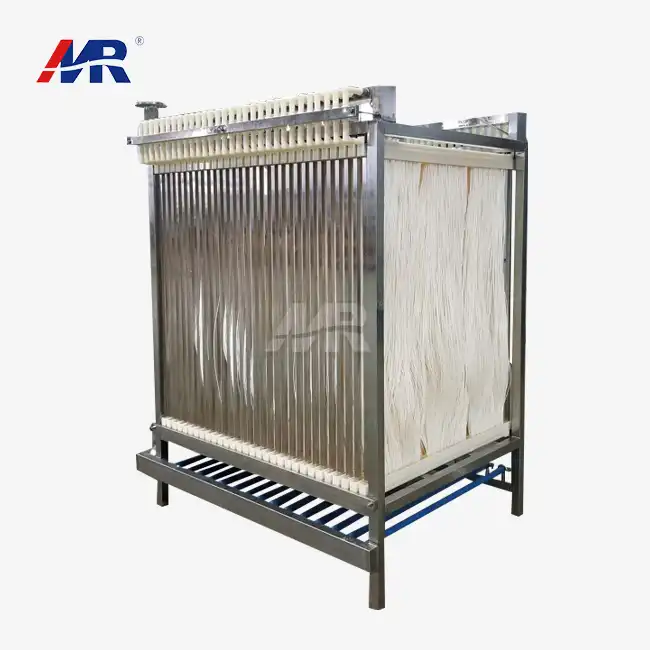 VIEW MOREMBR membrane
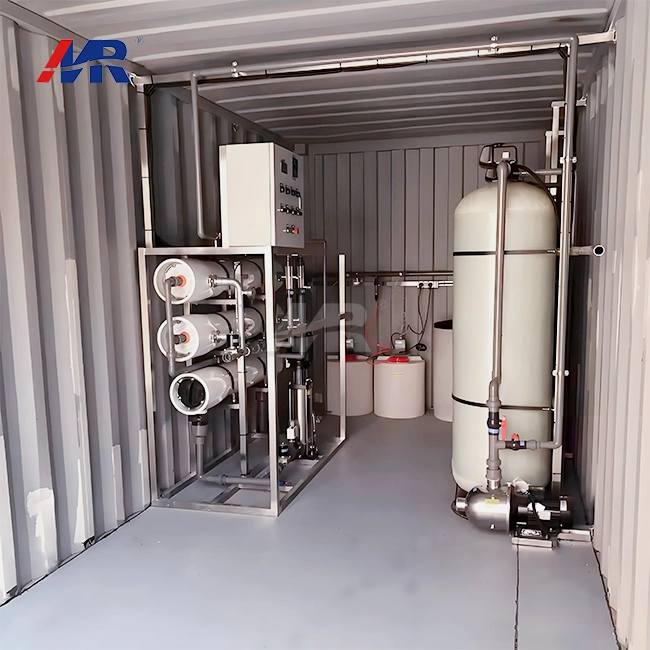 VIEW MOREcontainerized water treatment systems
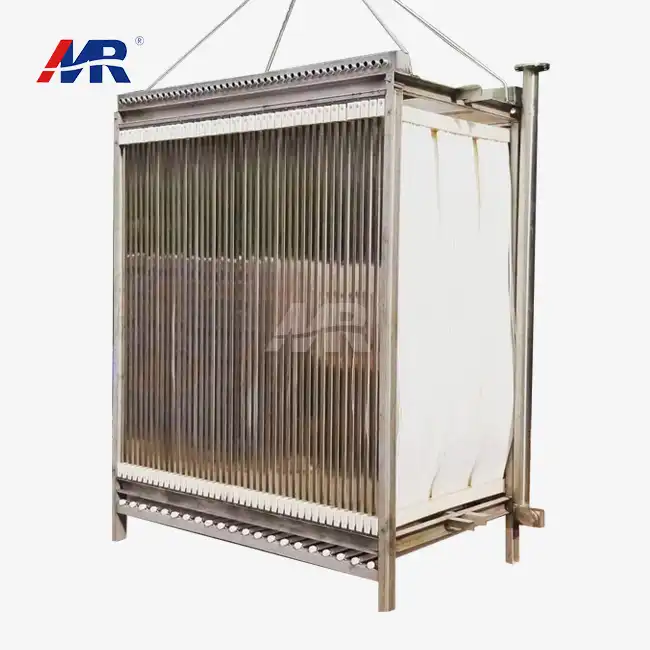 VIEW MOREmembrane bioreactor
 VIEW MOREhome sewage treatment plant
 VIEW MOREcontainerized UF+RO system
 VIEW MOREindustrial reverse osmosis membrane
 VIEW MOREdomestic wastewater treatment plant
 VIEW MORE12m3/hour reverse osmosis BWRO system
