_1745823981883.webp)

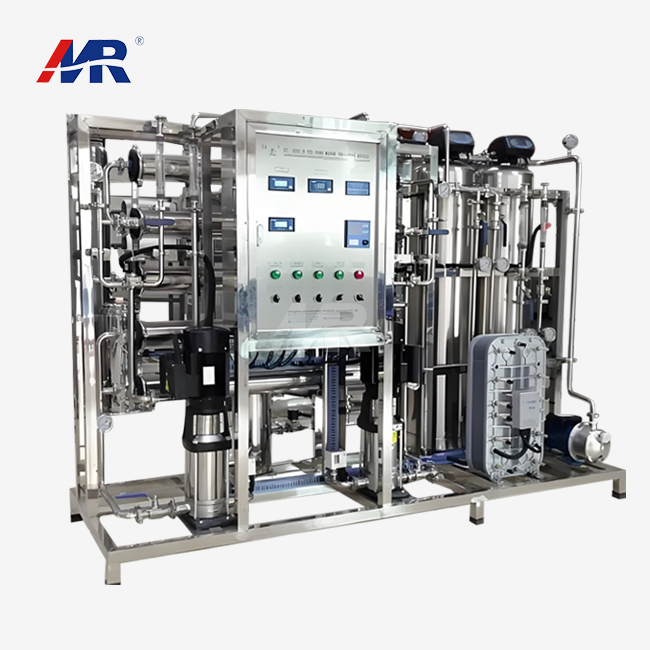
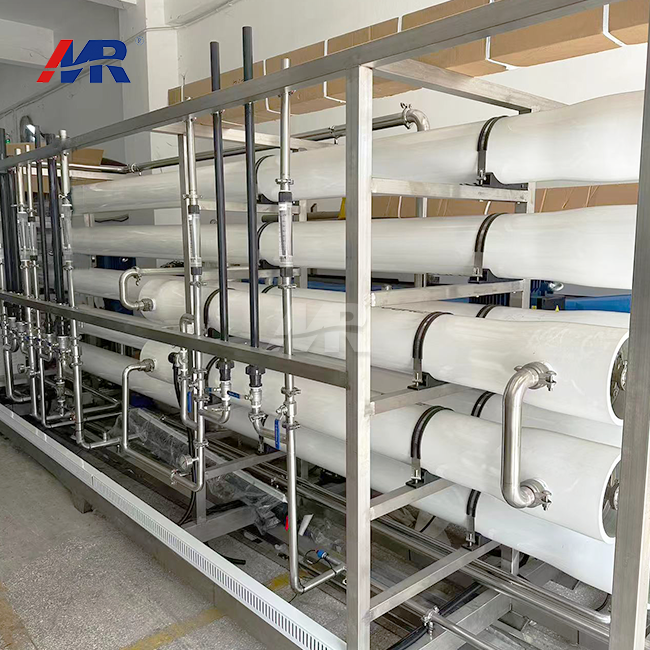
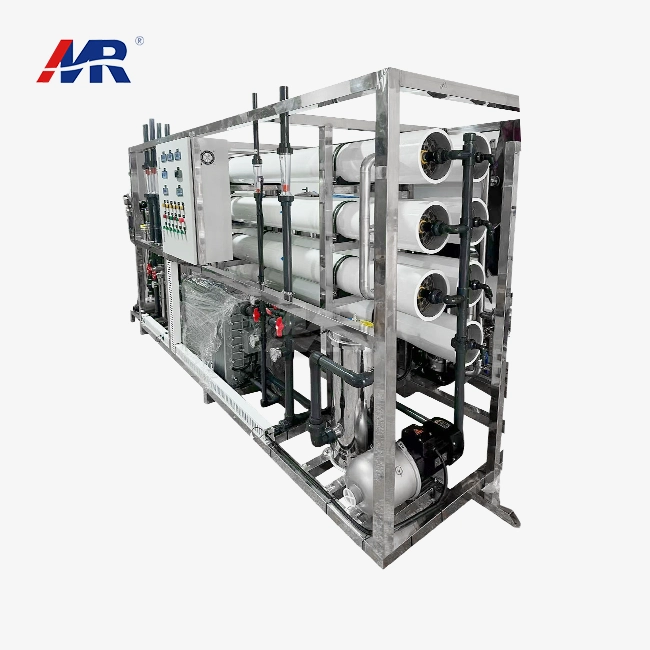
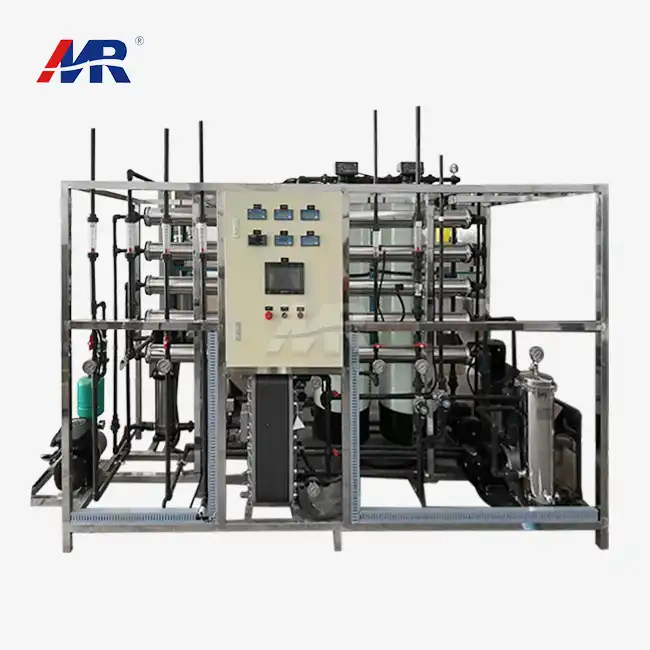
A single 20m3/hour Seawater Desalination Equipment unit can transform about 480 cubic meters of ocean water into clean, potable water per day. That production might be needed by a beach resort, a medium-sized industrial business, an offshore rig, or a tiny municipal outpost. This article goes into detail on genuine purchasers who have chosen this particular capacity, the statistics that drive their selections, and the site factors that will determine whether 20 cubic meters an hour is the appropriate match or if a larger system is the better choice. I have defined, priced, and commissioned skid-mounted seawater reverse osmosis systems in this size range for customers in Asia, South America, and Africa, and I will tell you what really occurs on-site.

How Much Water Can 20 m³/hour Desalination Equipment Produce Daily?
A 20 m³/hour saltwater desalination machine package generates around 480 cubic meters of fresh water in a 24-hour run. This is assuming continuous operation and a steady supply. Land-based purchasers typically operate the system for 18-22 hours per day to allow for membrane cleansing and filter maintenance, leaving a realistic daily production of around 360-440 cubic meters. That range still supports, at the normal municipal planning estimates used throughout coastal Southeast Asia and West Africa, a population of 1,800 to 2,200 at a basic consumption rate of 200 liters per person per day.
When asking for a quotation for 20m3/hour seawater desalination equipment, buyers should additionally ask the vendor for production data after many weeks of continuous operation, not day-one performance on a factory test bench. It is natural for membrane flow to fall a little as biofilm and scale build up between cleaning cycles, and a provider that only quotes peak day-one figures might leave a customer short of contractual supply once the system settles into its usual operating pattern.
Daily and Hourly Output Explained
The output of our 20m3/hour seawater desalination equipment relies on three variables: salinity of the feed, recovery, and condition of the membrane. Our MR-SWRO-20TH unit has a recovery of 38-45%, which means that 20 m³ of saltwater input will produce 7.6 to 9 m³ of permeate per hour under normal test settings, multiplied by multiple pressure vessels to get the rated 20 m³ of finished water per hour. Salt rejection is 99 percent; therefore, the output remains far below drinking water TDS limits even if feed salinity climbs in dry seasons.
Recovery Rate and Real-World Yield
The table below illustrates the correlation between feed volume, recovery rate, and final water production for this kind of equipment based on our commissioning data from nine installed units in 2026 and 2026.
| Feed Seawater (m³/h) | Recovery Rate | Finished Water Output (m³/h) | Daily Output (20 hrs run) |
|---|---|---|---|
| 44-53 | 38% | 17-20 | 340-400 m³ |
| 44-45 | 45% | 20 | 400 m³ |
| 50 | 40% | 20 | 400 m³ |
Buyers looking for a fixed daily contract volume for a hotel or municipal supply agreement should consider the 38 percent recovery number, not the 45 percent limit. That gap between advertised and reliable performance is one of the most typical misconceptions I find during procurement discussions with new customers.
Are Island Resorts Suitable for 20 m³/hour Desalination Systems?
Island resorts with between 80 and 150 rooms are almost exactly the sweet spot for a 20m3/hour seawater desalination equipment package. For mid-range tropical resorts, the combined water consumption normally ranges from 300 to 450 liters per occupied room per day. This makes the equipment's daily production capacity of 400 cubic meters a strong fit for resorts within this size range.
Resorts have a hidden bonus that most owners overlook during the planning stages, which is that a properly sized 20m3/hour seawater desalination equipment unit removes the resort’s dependence on rainfall-fed reservoirs, which is often the single biggest risk to guest experience during an extended dry season. When a facility converts its baseline supply from rainwater collection to saltwater, occupancy forecasting and water budgeting become much simpler to plan a year in advance.
Guest Room and Amenity Water Demand
Room water usage is less than the overall amount implies. Water use in guest rooms alone is 180 to 220 liters per day per inhabited room. The remainder goes to pools, spa circuits, kitchen operations, and grounds irrigation. Irrigation demand on most islands swings dramatically between rainy and dry seasons.
Case Study: A Southeast Asian Island Resort
Our 20m3/hour seawater desalination equipment, the MR-SWRO-20TH, was installed in early 2026 by a 96-room resort customer in the Philippines that was paying $4,200/month for trucked water during the dry season. Four months after installation, monitoring indicated an average production of 385 cubic meters per day, a 61 percent reduction in water cost adjusted for occupancy, and a total elimination of water transported by barge, save for one repair window during a typhoon. Complaints from guests about water pressure and flavor decreased to zero during the inaugural billing cycle at the resort, the resort’s facilities director said, and he noted explicitly that this was surprising since the trucked water had passed regular potability testing.
Can Coastal Hotels Rely on 20m3/hour seawater desalination equipment?
This capacity may serve as a major water supply for coastal hotels without resort-scale facilities and should be planned for based on maximum occupancy, not typical occupancy. A 60-room beachside hotel with almost full occupancy over a holiday week might have water demand that’s 35 to 50 percent higher than the shoulder-season average.
Hotel finance managers assessing the acquisition of 20m3/hour seawater desalination equipment normally consider just the initial cost, but the stronger argument is usually in operational cost stability. The cost of water from a truck varies with the price of gasoline and the demand from all other properties on the same shoreline at that time of year. The price of your own SWRO unit will be fixed per cubic meter and is mostly associated with energy and periodic maintenance.
Peak Season Water Loads
Hotels that size equipment to average yearly demand typically find themselves short during the weeks that make the greatest money. I usually ask customers for their greatest three-month occupancy stretch before I offer capacity, especially when recommending 20m3/hour seawater desalination equipment.
Backup and Redundancy Planning
Only one 20 cubic meter per hour unit, and no redundancy if a membrane requires emergency replacement. Hotels that cannot afford to have any disruption to their water supply would often couple this unit with a smaller backup skid or a municipal tie-in, using the desalinated water for the main supply and the backup as insurance, rather than the other way around.
How Can Industrial Facilities Use 20 m³/hour Desalination Equipment?
Industrial purchasers employ this capability as feedwater for downstream treatment, not necessarily as a completed product. It is routed through food and beverage factories ahead of further filtering to safeguard bottling lines. It is used by pharmaceutical and electronics businesses as the first step before ultrafiltration, electrodialysis, or polishing loops that meet GMP or ultrapure water requirements.
Manufacturing Process Water
As a rule, manufacturing locations on the coast have poor access to groundwater, especially in industrial areas reclaimed from the sea. For a mid-size plant operating one or two shifts, 20m3/hour seawater desalination equipment can provide 20 cubic meters per hour of SWRO supply for cooling makeup water, wash-down water, and boiler feed pretreatment.
Food and Beverage Production Water
Bottled water and beverage production lines need a steady, low-TDS feed water. On a 35,000 ppm seawater input with 99 percent salt rejection, the permeate will generally be around 300 ppm TDS, which most bottling companies can polish further at minimal extra treatment expense.
Pharmaceutical and Electronics Pretreatment Feed
Seawater cannot be used in the final polishing phases of chip production and pharmaceutical GMP water systems. The equipment takes off the majority of the salt load first, therefore lowering the energy and membrane replacement burden for the RO+EDI or UF stages downstream.
Plant engineers generally report a longer service life on their downstream resin beds and EDI stacks after adding 20m3/hour seawater desalination equipment upstream of their current purification train, since these components no longer receive the whole salt load immediately from raw seawater. This front-end protection is especially critical in electroplating and chemical plants, where poor feed water quality is one of the top causes of unscheduled downstream maintenance.
Varying industrial users need varying finishing water qualities from the same original saltwater supply. This table summarizes what occurs once our SWRO unit gives over permeate to each sector’s individual polishing procedure.
| Industry | Downstream Process | Target Water Quality |
|---|---|---|
| Bottled water / beverage | Carbon filtration, UV, mineral adjustment | <50 ppm TDS, taste-neutral |
| Pharmaceutical / biotech | Ultrafiltration + RO polishing | GMP-purified water grade |
| Electronics / semiconductor | RO + EDI + mixed-bed resin | Ultrapure, <1 µS/cm |
| Power plant boiler feed | Additional demineralization | Near-zero hardness, low silica |
Is 20m3/hour Capacity Enough for Remote Coastal Communities?
For a hamlet or small municipal outpost of 1,500 to 2,000 people, 20 cubic meters an hour is frequently adequate to meet basic drinking, cooking, and sanitation requirements; however, it seldom meets complete household usage at the level expected by inhabitants of bigger cities.
If local government purchasers are considering 20m3/hour seawater desalination equipment for a single hamlet, they should also plan for population expansion. Coastal towns near new port or tourist developments often see population increases of 20 to 40 percent within five years, so choosing a modular system that can accommodate an additional skid later can help prevent the original investment from becoming undersized before the community has even finished paying for it.
Population Served Estimates
The WHO’s basic water access guideline is 50 to 100 liters per person per day for a community to satisfy minimal health and hygiene requirements. At that level, a 400 cubic meter per day production may support 4,000 to 8,000 people for critical usage, but a full-service municipal supply of 150 to 200 liters per person drops that number to around 2,000 to 2,600 persons.
Municipal Distribution Considerations
In a village context, storage tanks, distribution pipes, and pressure control are as important as production capacity. Communities that lack sufficient storage sometimes experience unequal pressure at the far end of their distribution network, even when daily output is theoretically sufficient.
Why Do Offshore Facilities Need Compact Seawater Desalination Equipment?
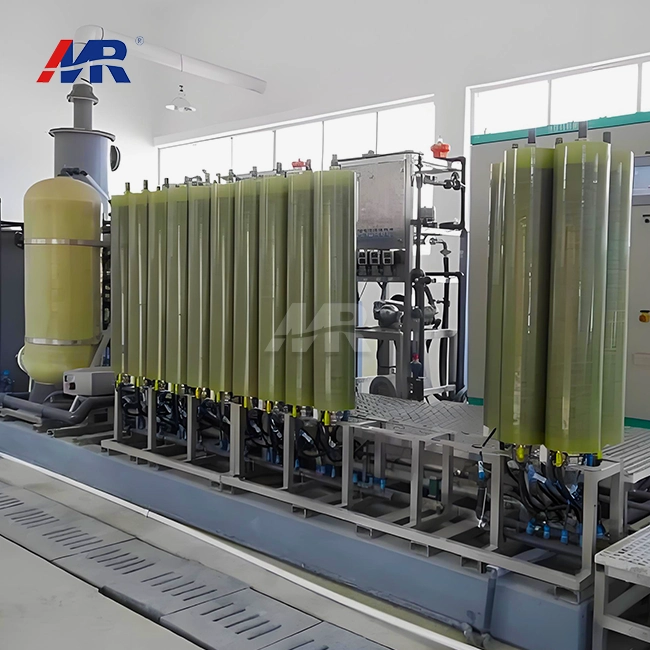
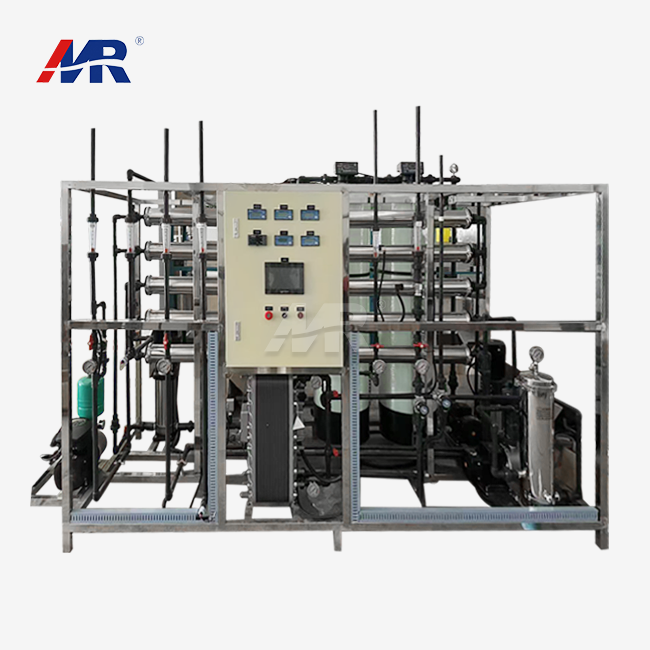
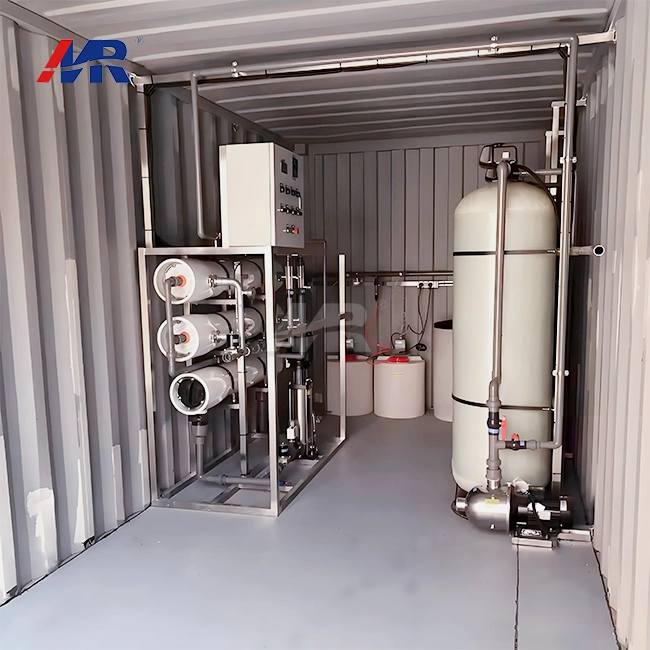
Large land-based desalination facilities are ruled out by tight space, weight, and vibration requirements that limit offshore platforms and marine vessels. A conventional footprint for a containerized or skid-mounted 20m3/hour seawater desalination equipment unit is something that platform designers may plan around early in a project.
Vibration resistance is as important as the footprint on a moving vessel or a platform subject to persistent wave action. A seawater desalination plant using 20m3/hour seawater desalination equipment built with marine-grade corrosion-resistant components is much better equipped to handle that mechanical stress than a land-designed system retrofitted for offshore duty, which is exactly why buyers should always look for marine certification before placing an order for equipment to be used on a vessel or platform application.
Space and Weight Constraints
Offshore platforms are far more expensive per square meter of space than comparable land-based space, and every incremental tonne impacts the platform's load calculations. Skids are compact, corrosion-resistant, and marine-grade, so operators may add desalination capacity without reworking structural supports.
Crew and Operational Water Needs
A mid-size platform with a crew of 80 to 120 will require potable water and process water for equipment cooling and for the manufacture of drilling mud. This capacity is what pops up again and again in offshore procurement requirements across West Africa and Southeast Asia for a 20 cubic meters per hour system that meets crew consumption with surplus left over for light process usage.
Can Fish Farms Use Desalinated Water Produced by SWRO Systems?
Desalinated or partly desalinated water is used largely in mariculture operations to manage salinity and minimize disease pressure in closed recirculating systems, not to replace saltwater input completely.
Disease outbreaks associated with variable salinity are amongst the most costly concerns in prawn and finfish aquaculture. Farm operators choosing a shared or dedicated 20 m³/hour saltwater desalination equipment unit connected to a seawater desalination plant should be aware of these risks. The steady blending source provides farm managers with a controlled variable in an operation where weather, feed quality, and stocking density are all tough enough to manage by themselves.
Water Quality Requirements for Aquaculture
Fish and prawn species can handle a variety of salinities, but abrupt changes stress stocks and increase mortality. The mixing of desalinated permeate with raw saltwater provides farm operators with accurate control of salinity that would not be otherwise possible with raw input alone, particularly during significant rain events that may dilute the coastal water in a haphazard fashion.
Blending Strategies for Mariculture
Rather than using pure desalinated water, farms choose to add a small amount of the permeate into their circulation system, since the totally desalinated water removes trace minerals that certain species require. A 20 m^3/hr unit provides mid-size farms with the blending capacity to stabilize salinity without the capital expenditure of a much bigger system.
Which Construction Projects Need Temporary Seawater Desalination Capacity?
Coastal development projects, such as port expansions and resort developments, sometimes need temporary water supplies while permanent utilities are connected. A skid-mounted 20m3/hour seawater desalination equipment unit is quicker to install than trucking in water and costs less over the course of a multi-month project.
Site Camps and Workforce Housing
Need drinking water, showers, and food supplies for worker camps of 200-400 people during a building phase. A seawater desalination system can easily handle a camp of that scale, and the modular design allows contractors to move the unit to the next project once the current phase is complete.
Concrete and Dust Suppression Water
Large quantities of water are used for concrete batching and dust control in busy coastal sites where transportation of fresh water is costly or unpredictable. The quality of the water produced via desalination is higher than is required for these uses, but the ability to consistently deliver water is more important to keeping a project on schedule than the amount of treatment.
Often, contractors who rent or acquire a 20 m³/hour seawater desalination unit for a single project may redeploy or resell the unit when construction is complete, since the modular, skid-mounted design doesn’t require the demolition of a permanent building. That resale value is worth including in the overall water-supply budget for a project, rather than just counting the equipment as a pure sunk cost.
When Should You Choose 20 m³/hour Instead of Larger SWRO Equipment?
Buyers should pick this capacity if existing or near-term demand is below 400 cubic meters per day and the construction budget is more aligned with a lower initial commitment than with a bigger system with unused headroom.
The choice between a single 20 m³/hr saltwater desalination unit and a bigger centralized seawater desalination system is frequently a function of the buyer’s confidence in his/her five-year demand projection. Purchasers with a definite, consistent demand amount usually do well with a right-sized bigger system, whereas purchasers with uncertain growth, seasonal swings, or phased development frequently save money by beginning smaller and expanding with more skids when demand really materializes.
Comparing 20 m³/hour to Larger Systems
The table below shows the usual specs of our range of Products and will assist customers in understanding the positioning of a 20 cubic meter unit against the bigger units.
| Capacity | Daily Output | Typical Buyer | Power Draw |
|---|---|---|---|
| 10 m³/h | ~200 m³ | Small resort, single vessel | ~25 kW |
| 20 m³/h | ~400-480 m³ | Mid-size hotel, platform, village | 45 kW |
| 50 m³/h | ~1,000-1,200 m³ | Large hotel group, industrial park | ~100 kW |
| 100+ m³/h | 2,000+ m³ | Municipal utility, large desalination project | 200+ kW |
Modular Scaling Path
The modular nature of our setup allows clients to just add another 20-cubic-metre skid further down the line as demand grows, rather than replacing the entire system. That’s great for purchasers who are experiencing expansion but can’t afford the expense of a large system at the moment. That’s a big part of the clients we serve in the small- to medium- to regional leader space.
What Site Conditions Should Be Evaluated Before Installing a SWRO System?
Site assessment is the best way to avoid the most frequent and costly desalination procurement blunders. I've seen purchasers acquire equipment and not check the intake conditions and discover many months later that the fouling rates were far greater than the membrane warranty indicated.
Intake Water Quality and Seasonal Variation
Turbidity, the frequency of algal blooms, and seasonal variations in salinity influence SWRO plant pretreatment design and membrane life expectancy. Some site studies take only a single water sample, in calm conditions, and miss the spikes during storm season that stress the whole system.
Power Supply and Site Footprint
The device uses 45 kW / hour. "You will need a good power supply connection or a generator with enough capacity and load control." For low diesel production sites, establish operation schedules only after verifying available capacity.
Permitting and Brine Discharge
Virtually all desalination plants, large and small, are regulated for brine discharge. If this is not done at the planning stage, then the buyers may find complications at commissioning when the local authority requires a discharge licence, which might take weeks to secure.
A correctly built 20 m³/hour seawater desalination plant feeds its brine back to open water in such a manner that it diffuses and does not create local salt buildup at the outfall. In certain coastal areas, environmental review boards now require a salt dispersion study even for small-capacity systems, so purchasers must budget time and a moderate consultation charge for this stage, rather than believing it is solely relevant to large municipal plants.
Conclusion
The 20m3/hour seawater desalination equipment unit aims at a specific and well-defined segment of buyers: resorts and hotels of about 150 rooms or less, offshore platforms and vessels, villages of a few thousand inhabitants, mid-sized industrial plants, aquaculture and construction sites that need a temporary supply. And that involves comparing the actual output to the daily demand, planning for the peak consumption, not the average, and evaluating where the intake will happen before ordering. These are the buyers who didn't do their study and then called back six months later and said, 'Why wasn't the output what the brochure said?
FAQ
1. How long does it take to install a 20 m³/hour SWRO system?
Most skid-mounted installations, including intake piping, electrical connection, and commissioning, take two to four weeks on a prepared site with power already available.
2. What is the expected membrane lifespan for this capacity?
Membranes typically last three to five years with proper pretreatment and cleaning schedules, though poor intake water quality can shorten that significantly.
3. Can a 20 m³/hour unit run on solar or hybrid power?
Yes, though the 45 kW draw requires a properly sized solar-battery-generator hybrid setup rather than solar panels alone, particularly for continuous 20-hour daily operation.
4. Does desalinated water need remineralisation before drinking?
Yes, post-treatment remineralisation restores calcium and magnesium that reverse osmosis removes, improving both taste and long-term pipe corrosion resistance.
5. How does salinity affect output in high-TDS seawater?
Higher feed salinity, up to the unit's rated 45,000 ppm TDS maximum, increases the pressure needed to achieve the same recovery rate, which slightly raises energy consumption per cubic meter produced.
Built for Buyers Who Cannot Afford Downtime
Guangdong Morui Environmental Technology Co., Ltd designs, manufactures, and commissions the MR-SWRO-20TH 20m3/hour seawater desalination equipment for hotels, industrial sites, offshore platforms, and municipal buyers across water-scarce coastal regions. With more than 14 branches, over 500 employees, 20 in-house engineers, and our own membrane production facility, we handle equipment supply, installation, and commissioning as a single package rather than passing buyers between vendors. Reach Our Team at benson@guangdongmorui.com to request a site-specific sizing recommendation and manufacturer quote.
References
1. World Health Organization, "Drinking-water" fact sheet (used for water scarcity and population access figures): https://www.who.int/news-room/fact-sheets/detail/drinking-water
2. International Desalination and Reuse Association (IDRA), Desalination & Reuse Handbook 2023-2024, global capacity statistics (used for industry scale context): https://idrawater.org
3. Park, K., Kim, J., Yang, D.R., Hong, S., "Towards a low-energy seawater reverse osmosis desalination plant: A review and theoretical analysis for future directions," Desalination, 2019 (used for energy consumption and SWRO efficiency figures): https://pure.korea.ac.kr/en/publications/towards-a-low-energy-seawater-reverse-osmosis-desalination-plant-/
4. "A comprehensive review of energy consumption of seawater reverse osmosis desalination plants," Applied Energy, Vol. 254, 2019 (used for specific energy consumption benchmarks): https://pure.korea.ac.kr/en/publications/a-comprehensive-review-of-energy-consumption-of-seawater-reverse-/
5. Ruiz-García, A., Nuez, I., "Simulation-based assessment of safe operating windows and optimization in full-scale seawater reverse osmosis systems,"" Desalination, 2022 (used for membrane operating window and recovery rate discussion): https://accedacris.ulpgc.es/handle/10553/114634?locale=en
6. Dow Water & Process Solutions, ""Reverse Osmosis Elements Provide High Efficiency, Low Energy Seawater Desalination,"" citing Pacific Institute energy estimates (used for baseline SWRO energy figures): https://pollutionsolutions-online.com/news/desalination/195/dow-water-and-process/reverse-osmosis-elements-provide-high-efficiencynbsplow-energy-seawater-desalination/27489
About the author: Renjie Kuang is a senior application engineer at Guangdong Morui Environmental Technology Co., Ltd, where he specifies and commissions seawater reverse osmosis systems for hospitality, industrial, offshore, and municipal clients across Asia, Africa, and South America. He has worked directly on SWRO site surveys, intake design, and commissioning for projects ranging from single-unit resort installations to multi-skid industrial water treatment systems, and he draws on that field experience, along with Morui's in-house membrane manufacturing and engineering team, to advise buyers on realistic capacity planning.