_1745823981883.webp)

Purified by Reverse Osmosis vs Distilled Water: Key Differences
The choice of water filtration technology influences production productivity, operating costs, and product quality in industrial applications. Filtered across a membrane under pressure to eliminate impurities. Purified by reverse osmosis, water usually contains 95-99 % of dissolved solids, bacteria, and organic compounds. Vaporization of distilled water followed by condensation removes practically all minerals and contaminants. The key distinctions are: energy use, mineral content, production rate, and equipment costs – all of which have direct implications for the production budgets and regulatory requirements of pharmaceutical, food processing, electronic, and laboratory operations.
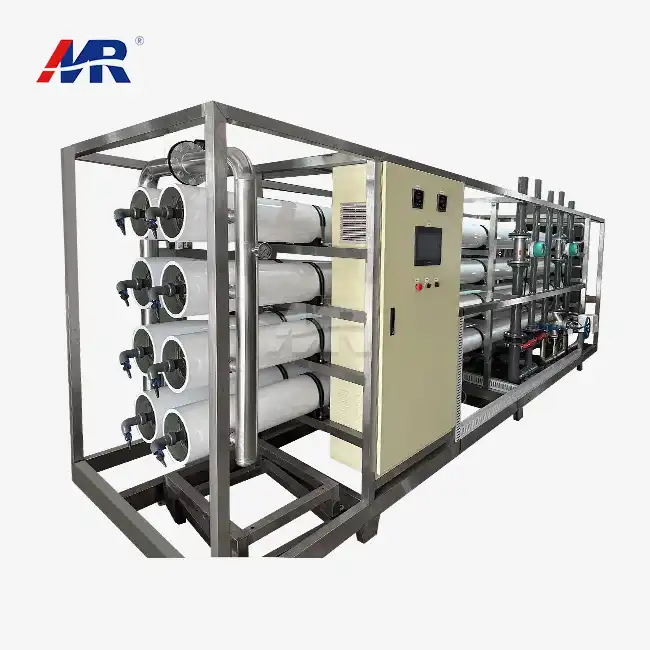
Understanding Reverse Osmosis Purification Technology
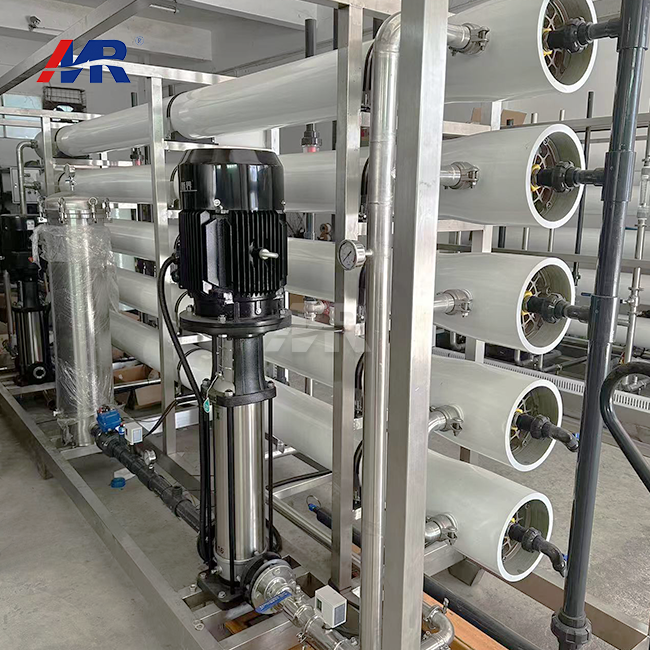
Reverse osmosis systems force water through semi-permeable membranes with pore sizes between 0.0001 and 0.001 microns. This mechanical filtration process removes:
- Dissolved salts (Ca, Na, Cl)
- Heavy metals (lead, arsenic, mercury)
- Microorganisms (bacteria, viruses, protozoa)
- Organic chemicals (pesticides, medicines)
- Particulate matter (PM)
Three core operational advantages:
- Continuous manufacturing capabilities – Systems run 24/7 without shutdown between batches
- Scalable setups — Capacity from 100 liters/day to 1,000,000+ liters/day
- Lower energy usage - Uses 0.3-0.8 kWh/m3 against 10-15 kWh/m3 for distillation
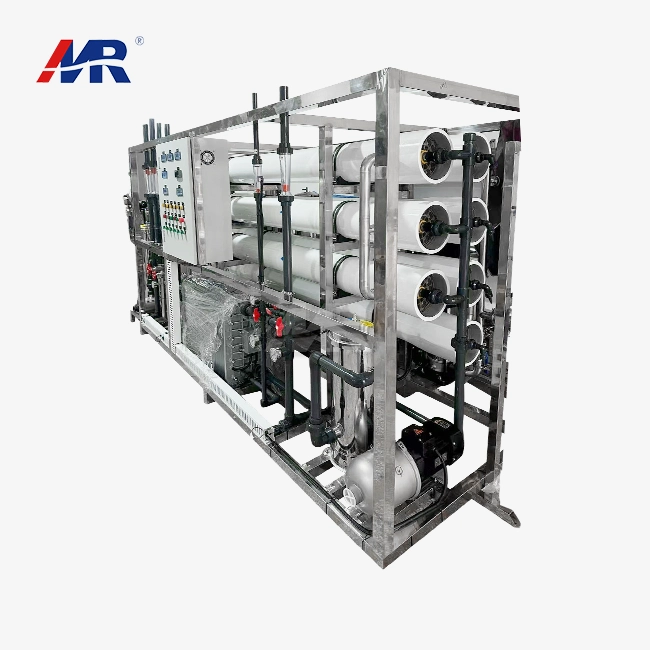
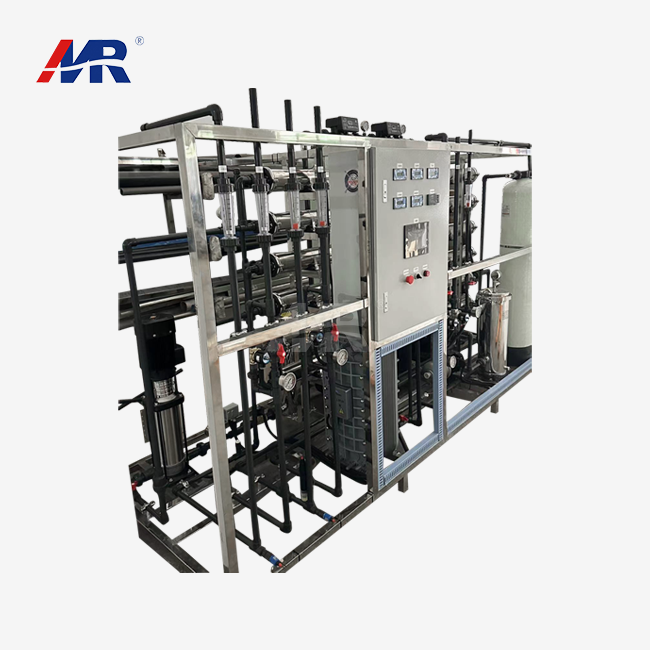
Modern RO equipment integrates pre-filtration stages (sediment filters, carbon absorption) and post-treatment options (UV sterilization, remineralization). The membrane filtration preserves trace beneficial minerals while meeting industrial water quality standards.
If you need high-volume purified water for beverage bottling or pharmaceutical manufacturing, then RO systems deliver superior cost efficiency.
How Distillation Purifies Water
Distillation mimics nature's hydrological cycle through controlled evaporation and condensation. The process involves:
- Heating source water to 100°C (212°F)
- Collecting steam while leaving contaminants behind
- Cooling the vapor back to the liquid state
- Storing distilled water in sterile containers
This thermal treatment eliminates virtually all dissolved solids, achieving purity levels of 0.5-2 ppm TDS (Total Dissolved Solids). Laboratory tests confirm 99.9% removal of inorganic contaminants, including calcium, magnesium, and fluoride.
Primary limitations include:
- High energy requirements (heating large water volumes)
- Slower production rates (typically 1-6 liters/hour for countertop units)
- Equipment maintenance (descaling heating elements)
- Complete mineral removal (requiring remineralization for consumption)
Distillation excels in removing non-volatile compounds but struggles with certain volatile organic chemicals that vaporize alongside water. Additional carbon filtration addresses this gap.
If you need absolute purity for analytical laboratories or sterile medical applications, then distilled water provides uncompromising quality.
Comparative Water Quality Analysis
| Parameter | Reverse Osmosis Water | Distilled Water |
|---|---|---|
| TDS Reduction | 95-99% (10-50 ppm typical) | >99.9% (0.5-2 ppm) |
| Bacterial Removal | 99.99% (log 4 reduction) | 100% (thermal destruction) |
| Mineral Content | Trace minerals retained | Zero minerals |
| pH Level | 5.5-7.5 (slightly acidic) | 5.0-7.0 (neutral to acidic) |
| Production Speed | 50-200 liters/hour (residential) | 1-6 liters/hour (countertop) |
| Energy per Liter | 0.001-0.002 kWh | 0.15-0.25 kWh |
Independent testing by water quality laboratories demonstrates that RO water meets EPA standards for drinking water while maintaining production efficiency. Distilled water achieves pharmaceutical-grade purity (USP standards) but requires substantially longer processing time.
For electronics manufacturing requiring 1-5 megohm resistivity water, RO combined with EDI (Electrodeionization) matches distillation quality at 40% lower operational cost.
Industrial Application Considerations
Food and Beverage Production
Beverage manufacturers want stable mineral profiles and manufacturing throughput. RO systems offer precise control over dissolved solids, generating unique water chemistry for Products. A mid-scale bottling facility producing 10,000 liters a day would require:
- RO system investment: $15K-$45K
- Operating Cost: $200-$400/month (membranes, electricity, pre-filters)
- Area: 3-8 square meters
Industrial boilers, condensers, and cooling systems are 3-5x as energy intensive for distillation at similar capacity. RO is the choice of commercial beverage businesses from an operational standpoint.
Pharmaceutical and Biotechnology
GMP-compliant water systems must be validated for constant purity according to Purified Water or Water for Injection requirements. Pharmaceutical facilities typically use multi-stage purification:
- Stage 1: RO lowers TDS from 300-500ppm to 10-20ppm
- Stage 2: EDI or distillation <1 ppm TDS
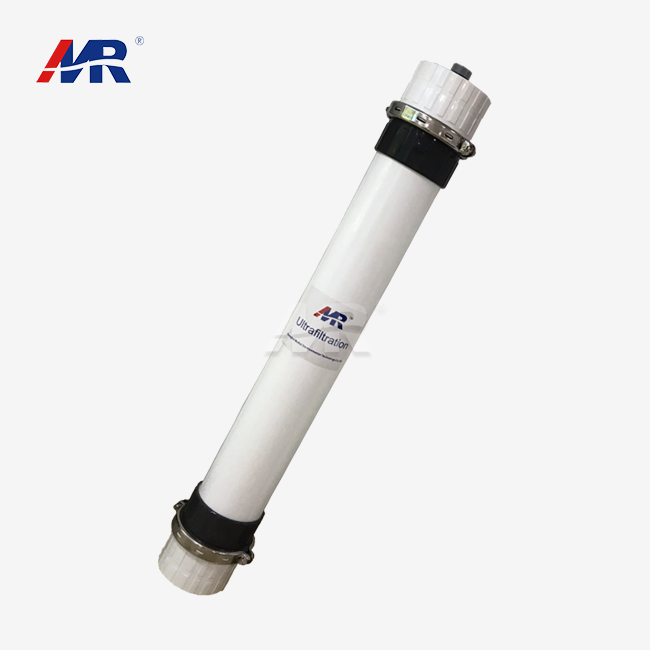
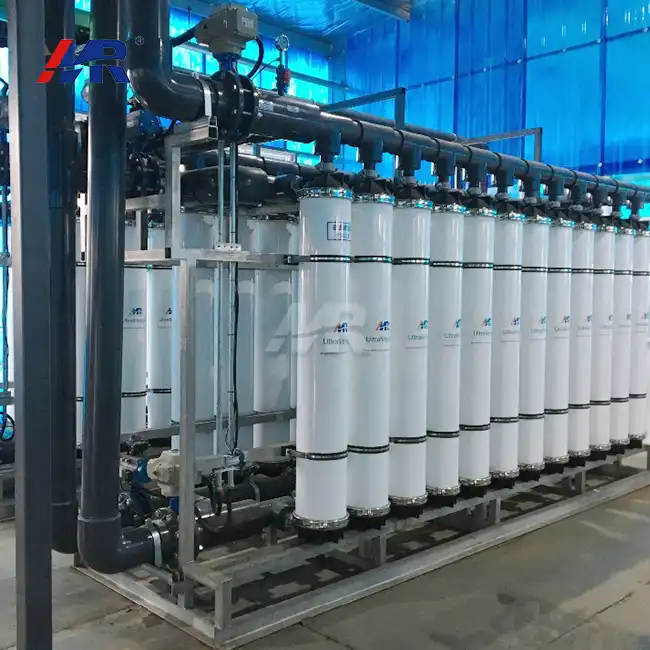
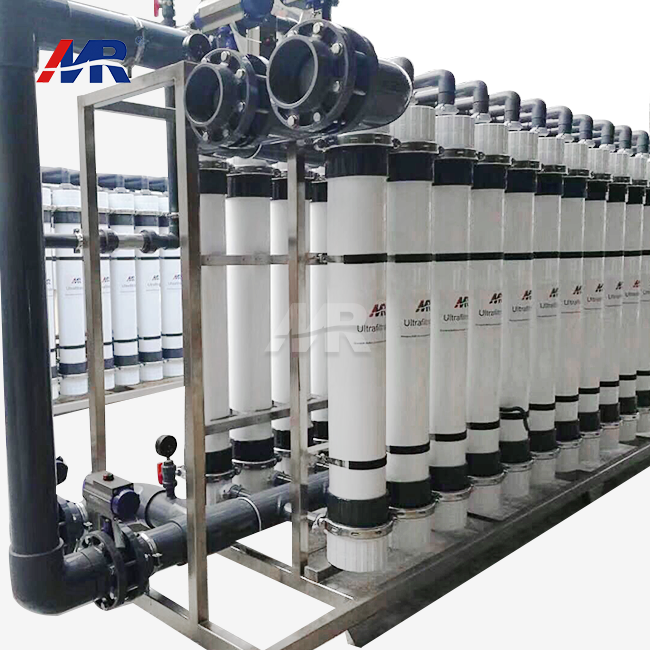
- Stage 3: Microbiological control with UV and ultrafiltration.
Combining RO pre-treatment with final distillation reduces distiller energy use by 60-70%, yet still maintains validation compliance. This hybrid strategy balances regulatory requirements with the economics of operations. If you require certified medicinal water with documentation traceability, then RO+distillation hybrid systems will maximize compliance and efficiency.
Electronics and Semiconductor Manufacturing
To manufacture chips, ultrapure water (UPW) with resistivity > 18.2 megohm-cm is needed. Includes the standard setup of:
- Particulate removal (multimedia filtering)
- Dual-pass reverse osmosis 99.8% rejection rate
- EDI (ion removal) polishing
- UV oxidation (degradation of organics)
- Final filtration (0.05 micron membranes)
The combined method gives water of the same quality as several distillations at 10-15% of the energy cost. Semiconductor factories that process 500 m3/day save $80,000-$120,000 yearly vs distillation-only systems.
Marine and Offshore Applications
Specialized high-pressure RO systems are used on ships and offshore sites to produce potable water from saltwater (35,000 ppm TDS). Vessel power systems efficiently operate compact units generating 5 to 50 cubic metres a day.
Distillation (used in the past on large ships) requires a considerable amount of boiler capacity and heat exchange equipment. Modern maritime RO units use 3-6 kWh/m3 compared to 8-15 kWh/m3 for thermal distillation, which greatly reduces fuel expenses.
RO technology then offers operational flexibility for seawater desalination on vessels or coastal facilities not available with distillation.
Cost-Benefit Comparison for Decision Makers
Initial Investment Analysis
Small-scale comparison (1,000 liters/day):
- RO System: $3,000-$8,000 equipment + $500 installation
- Distillation Unit: $2,000-$5,000 equipment + $300 installation
Commercial scale (50,000 liters/day):
- RO System: $80,000-$200,000 equipment + $15,000 installation
- Distillation Plant: $250,000-$600,000 equipment + $50,000 installation
The capital investment gap widens substantially at industrial capacities, making RO financially attractive for most manufacturing applications.
Operating Expense Projection (5-Year Period)
Medium facility (10,000 liters/day, 300 days/year):
| Expense Category | RO System | Distillation |
|---|---|---|
| Energy consumption | $7,200 | $54,000 |
| Membrane/component replacement | $12,000 | $8,000 |
| Maintenance labor | $6,000 | $9,000 |
| Water pretreatment | $4,000 | $2,000 |
| Total 5-Year Cost | $29,200 | $73,000 |
Financial decision-makers evaluating water purification ROI typically find RO systems recover initial investment within 18-36 months through reduced operating expenses. If you need predictable operational budgets with minimal energy volatility, then RO systems provide superior financial performance.
Maintenance Requirements and Operational Reality
RO System Maintenance Schedule
Monthly tasks:
- Inspect pressure gauges and flow meters
- Test permeate and reject water quality
- Clean pre-filters (sediment, carbon)
Quarterly maintenance:
- Chemical cleaning (membrane scaling prevention)
- Sanitization protocols
- O-ring and seal inspection
Annual replacement:
- Membrane elements (3-5 year lifespan typical)
- Pre-filter cartridges
- UV lamp replacement (if equipped)
Trained operators manage routine RO maintenance in 2-4 hours monthly. Automated monitoring systems alert technical staff to performance deviations, preventing costly downtime.
Distillation Equipment Maintenance
Weekly requirements:
- Descale heating elements (hard water areas)
- Clean condensation chambers
- Verify temperature controls
Monthly protocols:
- Inspect electrical connections and heating elements
- Clean cooling coils
- Test the water purity
Distillation units require more intensive hands-on maintenance due to mineral buildup on heating surfaces. Facilities in regions with hard water face accelerated maintenance cycles and component replacement. If you need minimal maintenance overhead with remote monitoring capability, then RO systems reduce technical labor requirements.
Environmental Impact and Sustainability
Water treatment technology choices affect environmental footprints through energy consumption, reject water production, and chemical usage.
RO Environmental Profile:
- Produces 25-40% reject water (concentrate)
- Minimal chemical usage (periodic membrane cleaning)
- Reject water suitable for non-potable applications (cooling, irrigation)
- Carbon footprint primarily from electricity consumption
Distillation Environmental Profile:
- Zero reject water (100% recovery in closed systems)
- Higher carbon emissions (thermal energy requirements)
- Potential VOC release if the source contains volatile organics
- Greater infrastructure footprint (boilers, cooling towers)
Green manufacturing initiatives increasingly favor RO due to lower energy intensity. Facilities implementing concentrated recovery systems achieve 85-95% overall water recovery, addressing sustainability goals while maintaining production output. For operations with ISO 14001 certification or corporate sustainability mandates, RO systems align better with environmental objectives.
Regulatory Compliance Across Industries
Different sectors mandate specific water quality standards that influence technology selection:
Pharmaceutical Manufacturing (USP <1231>):
- Purified Water: <10 CFU/100mL bacteria, <500 microsiemens/cm conductivity
- Water for Injection: <10 EU/mL endotoxins, produced by distillation or equivalent
Food Processing (FDA 21 CFR Part 117):
- Potable water standards for ingredient water
- HACCP documentation of water treatment
Clinical Laboratories (CLSI, CAP guidelines):
- Type I ultrapure water: <0.1 microsiemens/cm, <5 ppb TOC
- Type II/III water: Suitable for general laboratory procedures
Electronics Industry (SEMI standards):
- Semiconductor-grade UPW: 18.2 megohm resistivity, <1 ppb particles >0.05 micron
RO systems with appropriate post-treatment (EDI, UV, ultrafiltration) meet most regulatory requirements except specific standards mandating distillation. Technical decision-makers should verify equipment specifications against applicable regulations during procurement. If you need audit-ready documentation and validation protocols, then selecting systems with built-in quality monitoring ensures compliance confidence.
Conclusion
The choice between reverse osmosis purified and distilled water will depend on the needs of the application, volume of production, financial plan and purity parameters. RO technology holds a dominant position in commercial and industrial environments due to its higher energy efficiency, expandable capacity, and lower operational costs. Distillation is still relevant for applications that need extreme purity or regulatory mandates. Many complex facilities use both methods, using the effectiveness of RO for first purification and distillation for ultimate polishing. Water treatment infrastructure choices need decision-makers to consider the total cost of ownership, maintenance capabilities, regulatory requirements, and future capacity needs.
Why Morui's Reverse Osmosis Solutions Stand Out
Guangdong Morui Environmental Technology delivers comprehensive water treatment systems tailored to diverse industrial requirements. Our integrated approach combines:
- Engineering Capabilities: Custom system design for 100 L/day to 1,000,000 L/day capacity; Membrane production facility ensuring quality control; Multi-stage configuration options (RO, UF, EDI, UV integration)
- Operational Advantages: One-stop installation and commissioning services; 20+ specialized engineers with industry-specific expertise; 14 regional branches providing localized technical support
- Supply Chain Reliability: Authorized distributor for Shimge Water Pumps, Runxin Valves, Createc Instruments; 500+ team members ensuring rapid response and parts availability; Equipment processing factories enabling customization
- Application Versatility: Pharmaceutical GMP-compliant systems with validation documentation; Food-grade systems meeting HACCP requirements; Industrial wastewater treatment with resource recovery; Seawater desalination for coastal and marine applications; Laboratory ultrapure water for research institutions
Our clients across electronics manufacturing, beverage production, hospital facilities, and municipal utilities benefit from reduced downtime through preventive maintenance programs and technical training. Each system includes performance guarantees and water quality testing protocols.
For businesses seeking an experienced purifier by reverse osmosis system manufacturer, Morui combines proven technology with responsive service infrastructure—contact Our Team at benson@guangdongmorui.com to discuss your specific water purification requirements.
References
1. World Health Organization. "Guidelines for Drinking-Water Quality: Fourth Edition Incorporating the First Addendum." Geneva: WHO Press, 2017.
2. American Water Works Association. "Reverse Osmosis and Nanofiltration: Manual of Water Supply Practices M46." Second Edition. Denver: AWWA, 2007.
3. United States Pharmacopeial Convention. "USP 43-NF 38: General Chapter <1231> Water for Pharmaceutical Purposes." Rockville: USP, 2020.
4. Semiconductor Equipment and Materials International. "SEMI F63-0309: Guide for Ultrapure Water Used in Semiconductor Processing." San Jose: SEMI, 2009.
5. Greenlee, Lauren F., Deshmukh, Akshay, and Elimelech, Menachem. "Reverse Osmosis Desalination: Water Sources, Technology, and Today's Challenges." Water Research Journal, Volume 43, Issue 9, 2009.
6. Food and Drug Administration. "Current Good Manufacturing Practice, Hazard Analysis, and Risk-Based Preventive Controls for Human Food: Final Rule 21 CFR Part 117." Federal Register, Volume 80, 2015.