_1745823981883.webp)

Fouling and Scaling in Reverse Osmosis Plants: Types and Prevention
Operators of reverse osmosis plants in all kinds of businesses around the world have to deal with fouling and scaling all the time. If you don't fix these problems, they will seriously hurt the performance of the membrane, make the system less efficient, and raise the costs of running it. When biological matter, organic molecules, and particles build up on membrane surfaces, this is called fouling. On the other hand, scaling happens when inorganic minerals settle down and make deposits. When facility managers, engineers, and procurement professionals understand these processes, they can put in place focused protection strategies that protect their water treatment investments and keep the quality of the output consistent.

Understanding Fouling and Scaling in Water Treatment Systems
How they work and what they are made of are the main differences between fouling and scaling. Most of the time, fouling happens when biological materials, organic matter, or floating particles stick to membrane surfaces through different chemical and physical reactions. Depending on the feedwater and system factors, this process can happen slowly over time or quickly under certain operating conditions.
The Science Behind Membrane Degradation
Scaling is a completely different problem, because it involves the precipitation of solid chemicals that are dissolved when their concentration is too high for them to dissolve. Scaling agents often include calcium carbonate, calcium sulfate, barium sulfate, and different kinds of silica. These deposits can form crystalline or amorphous structures that can stop membrane holes totally and make it much harder for water to move through.
These problems have effects on the economy that go beyond the price of repairs. According to data from the industry, fouling and scaling that are not managed can shorten the life of a membrane by up to 50% and make it use 15–25% more energy. When fouling is bad, reverse osmosis plants may need to change the membrane every 12 to 18 months instead of the usual 3 to 5 years. This means that facility owners will have to pay a lot of money for new equipment.
Critical Factors Influencing Membrane Performance
Water chemistry is a key factor in determining how likely something is to get dirty or scale. The rate and intensity of membrane breakdown are affected by pH levels, temperature, ionic strength, and the presence of certain contaminants. When operations are carried out at high temperatures, scale reactions happen faster. Low pH levels can make some chemicals dissolve more easily, but they may also make other types of fouling more likely.
Operating conditions have a similar effect on membrane function. To keep concentration polarization effects as low as possible, which makes fouling and scaling worse, recovery rates, flux levels, crossflow speeds, and pressure differences must be carefully managed. Modern monitoring systems can now check these factors in real time, so workers can make changes right away when conditions aren't in the right ranges.
Types of Fouling and Scaling: Identification and Challenges
For prevention tactics to work, it's important to know exactly what kinds of fouling and scaling are hurting system performance. Each group has its own features, ways of forming, and problems with removal that require specific methods for best control.
Biological and Organic Fouling Mechanisms
Biofouling is one of the hardest things about working with membranes. Microorganisms stick to membrane surfaces and multiply, making biofilms that form a protective layer that can't be cleaned normally. These biological layers not only stop water from moving, but they also start the processes of clogging and scaling.
Organic pollution is the buildup of natural organic matter, such as proteins, humic chemicals, and polysaccharides. Most of the time, these chemicals work together with organic growth to make mixed fouling layers that are very hard to get rid of. Chemical cleaning processes can also be slowed down by organic matter, which makes standard anti-fouling methods less effective.
Particulate and Colloidal Deposition
Particulate fouling happens when solids that are floating in the fluid build up on the sides of membranes, creating cake layers that make them less permeable to water. The way particles interact with membranes is affected by their size, form, and surface charge. The rate of accumulation is set by operating conditions. Because they can get deep into barrier layers, fine particles and colloids are especially difficult to deal with.
Inorganic Scaling Phenomena
In reverse osmosis plants, calcium carbonate scaling continues to be the most prevalent type of solid buildup, especially in systems that process hard water or seawater. This type of scaling is strongly affected by temperature and pH, with higher numbers leading to faster precipitation. Because calcium carbonate is solid, it can be cleaned with acid, but it is still better to avoid getting it in the first place.
Silica scaling is hard to get rid of because it leaves behind amorphous, glassy layers that are hard to clean with normal methods. Colloidal silica can stick together on membrane surfaces and cause fouling that can't be fixed. This means that the membrane usually has to be replaced. This kind of growth is especially bad in geothermal uses and some industrial processes where silica levels are naturally high.
Preventive Principles and Best Practices for Fouling and Scaling Control
Comprehensive protection plans use many methods, starting with strong cleaning systems that get rid of certain contaminants before they get to the reverse osmosis membranes. When choosing and designing pretreated parts, the features of the feedwater, the needs of the operation, and the needs of the process further down the line must all be taken into account.
Advanced Pretreatment Technologies
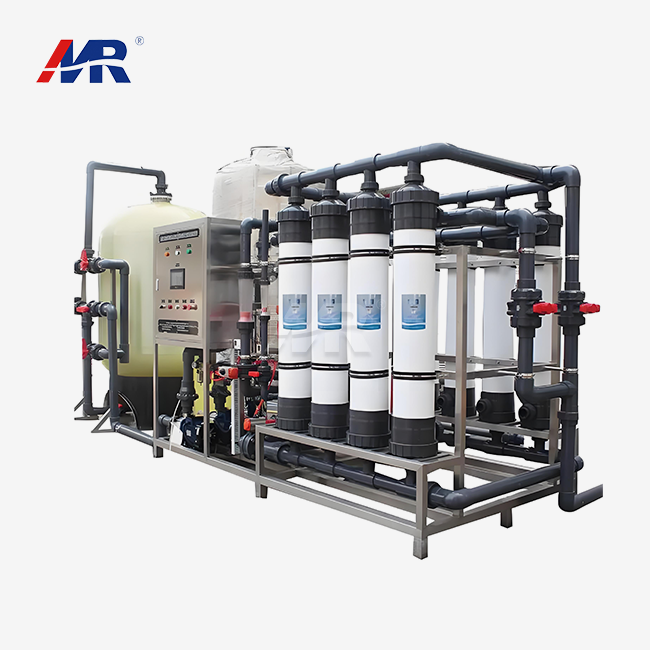
Modern cleaning systems use more than one barrier method to get rid of possible foulants and scalants. Multimedia filtration gets rid of solids and particles that are floating in the water, and activated carbon adsorption gets rid of chlorine and some chemical compounds that could hurt membranes or help bacteria grow. Ultrafiltration preparation has become popular because it can provide steady, high-quality feedwater even if the source water changes.
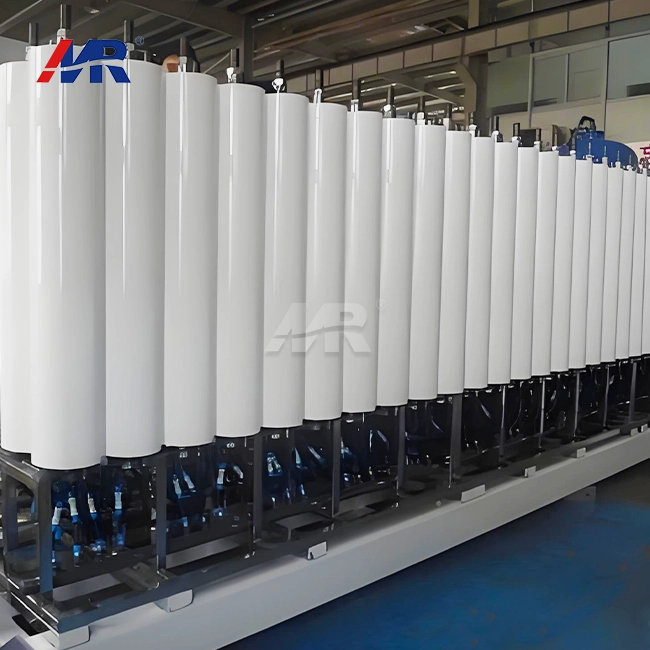
Modern ultrafiltration systems from Morui use cutting-edge membrane technology to get rid of contaminants and make high-quality water for use in businesses and cities. At 20 cubic meters per hour, these systems can handle flow rates that are good for medium-sized activities. With pores that range in size from 0.01 to 0.1 microns, the hollow fiber membrane design can filter up to 99.99% of the water, which is very good for protecting downstream reverse osmosis plants.
The key advantages of Morui's pretreatment solutions include high filter efficiency, low energy use, and a small form that makes them easy to install. These systems feature full automation and are controlled by a PLC. They are also built to last for a long time. The flexible design lets you change things to meet the specific water quality needs of different industry uses.
These advantages effectively address common preparation problems more easil,y while also making operations simpler and lowering the need for upkeep. The automated backwash and clean-in-place systems cut down on the amount of work that needs to be done by hand, and the energy-efficient design lowers the cost of running the system over its entire life.
Chemical Treatment and Conditioning Strategies
An anti-scalant dose is an important part of programs that try to stop scale from happening. Modern anti-scalant mixtures use polymer chemistry to stop crystals from forming and growing, which keeps liquids that are too saturated in a stable state. The right anti-scalant solution should be chosen based on the type of membrane, how it works, and how much scale there is.
Biocide treatment stops the growth of living things in a number of ways, including using oxidizing and non-oxidizing chemicals. It relies on the biological load, the design of the system, and the rules that need to be followed to decide between constant low-level dosing and occasional shock treatments. Biocide programs that work must find a balance between killing microbes and protecting the environment and membranes.
Maintenance Tips and Troubleshooting for Reverse Osmosis Plants
To stop fouling and scaling in reverse osmosis plants, you need to have proactive upkeep plans in place. Routine tracking, planned cleaning, and performance trending must all be built into these programs so that problems can be found before they affect system performance or need emergency help.
Performance Monitoring and Diagnostic Techniques
Systematic performance tracking carefully looks at operational factors to find fouling and scaling trends early on. Normalized flux fall, salt passage increases, and the growth of pressure drop are all quantitative measures of membrane health. Advanced monitoring systems can connect these factors to changes in the quality of the feedwater to find the root reasons and guess when repairs will need to be done.
When performance problems happen, membrane autopsy methods give thorough information about how fouling and scaling work. Samples of damaged membranes are looked at under a microscope, characterized chemically, and evaluated biologically as part of these tests. The information gathered helps improve pretreatment, cleaning methods, and working factors so that the problem doesn't happen again.
Cleaning Protocol Development and Optimization
To be effective, cleaning procedures must deal with certain types of foulants and scales while keeping the membrane's structure. Usually, low-pH solutions are used first to get rid of mineral scales, then high-pH treatments are used to get rid of organic and biological deposits. When choosing the cleaning chemicals, concentrations, temperatures, and contact times, it's important to carefully think about what the membrane maker suggests and what the conditions are at the spot.
Cleaning frequency optimization finds the best mix between chemical prices, system downtime, and maintaining the performance of the membrane. Performance tracking and statistical analysis are used in predictive maintenance methods to find the best cleaning intervals based on real fouling rates instead of making up plans at random. This method increases membrane output while minimizing costs related to cleaning and membrane wear.
Choosing and Procuring the Right Fouling and Scaling Prevention Solutions
To make smart buying choices about technologies that stop fouling and scale, you need to look at their technical performance, cost-effectiveness, and dependability over the long term. The process of choosing must take into account not only the original capital costs but also the ongoing costs, the need for upkeep, and the performance of the system over its entire lifecycle.
Technology Evaluation and Selection Criteria
Performance testing lets you compare different protection technologies in a way that is fair and unbiased under certain operating conditions. Pilot testing lets you check that what the seller says is true and make sure that the operational parameters are just right before the full execution. Multiple performance measures should be included in these evaluations, such as the ability to resist fouling, the efficiency of cleaning, the amount of energy used, and the life of the membrane.
Material compatibility is an important thing to think about when choosing a technology, especially when working with harsh feedwaters or extreme running circumstances. Reverse osmosis plants that handle seawater, industrial wastewater, or geothermal brines need special materials and designs that can work well in harsh conditions for a long time.
Supplier Partnership and Support Considerations
For prevention programs to work, they need ongoing expert help from companies that sell chemicals and tools. The practical success depends a lot on what the vendor can do in areas like system design, startup support, training programs, and troubleshooting help. Long-term relationships with trustworthy providers give you access to new technologies and best practices in the industry, which improve the performance of your system over time.
Documentation and case studies show that the provider has experience and that the technology works well in a variety of settings. The problems faced by reverse osmosis plants in the pharmacy, food processing, power generation, and local sectors are all distinct and call for specialized knowledge and tried-and-true solutions. Suppliers with a lot of experience with a certain application can give you useful information that will help your project go more smoothly and reduce business risks.
Conclusion
To keep fouling and scaling under control in reverse osmosis systems, you need a comprehensive plan that includes strong preparation, the right chemical conditioning, improved operations, and preventative maintenance. Comprehensive prevention plans are much better for business and the environment than reactive upkeep and replacing membranes too soon. As water treatment technologies keep getting better, businesses that invest in tried-and-true prevention tactics and keep working with experienced providers will be able to keep their businesses successful and stay ahead of the competition in their markets.
FAQ
1. What causes membrane fouling in reverse osmosis systems?
When living matter, organic substances, and particles build up on the sides of membranes, this is called fouling. Some common reasons are not properly treating the water before use, biological growth in the feedwater, the presence of natural organic matter, and working conditions that encourage concentration polarization. For protection to work, there needs to be thorough preparation and the right chemical conditioning.
2. How can scaling be prevented in industrial RO applications?
Several methods are used to stop scaling, such as adding anti-scalant chemicals, adjusting the pH, keeping an eye on the temperature, and making the healing rate as fast as possible. The exact method used depends on the nature of the feedwater and how likely it is to scale. Keeping an eye on saturation levels and making changes to operational factors on a regular basis helps keep conditions below the limits for precipitation.
3. What are the signs of membrane fouling or scaling?
Some important signs are a normalized drop in flux, more salt passing through, higher pressure differences between membrane elements, and slower system healing rates. Slowly losing performance is usually a sign of fouling, while sudden changes are usually a sign of scale events. Regularly checking on speed lets problems be found early and fixed quickly.
Partner with Morui for Advanced Reverse Osmosis Plants Solutions
For all kinds of industry uses, Morui Environmental Technology has complete water treatment options that deal with the toughest fouling and scaling problems. To maximize system performance and dependability, we use an integrated method that includes cutting-edge pretreatment systems, carefully designed Reverse Osmosis Plants, and tried-and-true chemical conditioning programs. We offer full turnkey solutions from the initial planning phase through ongoing Technical support. We have over 500 workers, 20 experienced engineers, and our own membrane production plant. Get in touch with Our Team at benson@guangdongmorui.com to talk about your specific needs and find out how our experience as a top provider of reverse osmosis plants can help you improve your water treatment processes while lowering the costs over their entire life.
References
1. Membrane Technology Research Institute. "Fouling Mechanisms and Control Strategies in Reverse Osmosis Systems." Journal of Membrane Science and Technology, 2023.
2. International Water Association. "Best Practices for Scaling Prevention in Industrial Reverse Osmosis Applications." Water Treatment Technology Guidelines, 2023.
3. American Membrane Technology Association. "Comprehensive Guide to ro membrane Fouling: Identification, Prevention, and Remediation." Technical Publication Series, 2022.
4. Global Water Research Council. "Economic Impact Assessment of Fouling and Scaling in Large-Scale Reverse Osmosis Facilities." Industrial Water Treatment Report, 2023.
5. Advanced Materials Research Institute. "Novel Anti-fouling Membrane Technologies and Surface Modifications for Enhanced RO Performance." Materials Science Quarterly, 2022.
6. Water Treatment Equipment Manufacturers Association. "Troubleshooting Guide for Reverse Osmosis Plant Operations: Fouling and Scaling Management." Technical Reference Manual, 2023.