


How to Select a 1000LPH EDI Plant for Industrial Water Production?
A 1,000 LPH edi system produces around 1,000 liters per hour of continuously deionized water if supplied with adequately prepared RO permeate. This manual will lead you through feed-water tests, performance specs, operational expenses, compliance docs, and supplier checks so you can choose a system that really satisfies your plant’s water requirement. Whether you manage a semiconductor fab, a pharma line, or a boiler make-up loop, the selection logic below applies directly to your project.
- Typically, a 1000LPH EDI plant will use RO and remove dissolved ions using an electrically powered ion exchange process.
- EDI requires RO permeate with low hardness and low conductivity and cannot replace core pretreatment processes.
- The quality of the product is affected by feed conductivity, silica, CO2, temperature, flow rate, and module design.
- EDI reduces the amount of chemical regeneration compared to mixed-bed deionization, but requires steady power and feed water.
- Key parameters to watch: product flow, resistivity, recovery rate, power draw, pressure, and temperature range.
- Water quality threshold levels are variable for various customers – pharma, lab, electronics, and food.
- Supplier inspections should include factory testing, traceability, compliance papers, replacement parts, and warranty conditions.
Looking for a fast response before your next supplier call? Morui develops whole RO+EDI trains in our own facility, and our staff at benson@guangdongmorui.com can take your feed-water data and transform it into a definite estimate for a 1000LPH EDI plant in days, not weeks.
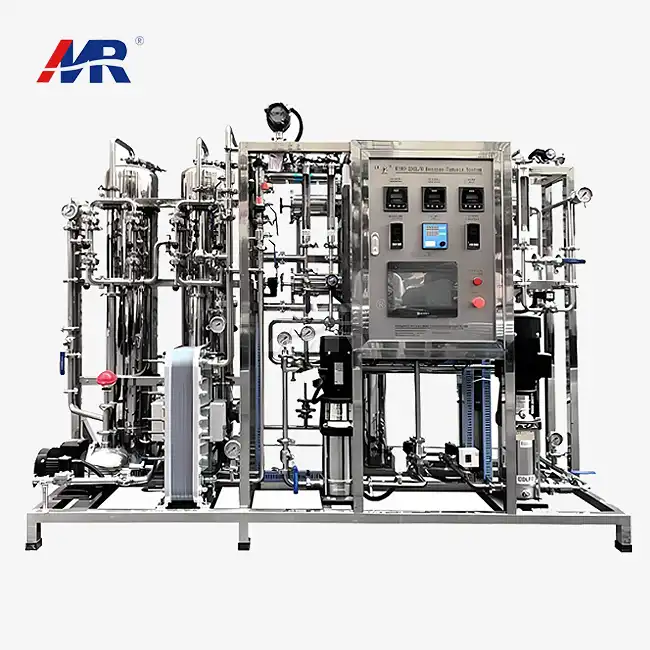
What Is a 1000LPH EDI Plant? — Definition and Core Process
Definition of 1000LPH Capacity
1000 LPH” means a nominal product-water output of approximately 1,000 liters per hour under stated feed conditions. It is not a set number in all circumstances. The minimum, maximum, and guaranteed output statistics might vary with input temperature, conductivity, pressure, and module age.
If a provider quotes you “1000 LPH” without telling you what the feed conductivity or temperature is, they are giving you half a figure. Don’t simply ask about the headline flow rate; ask about the guaranteed operational envelope. This one request bypasses the majority of disagreements after commissioning.
How a 1000LPH EDI Plant Works
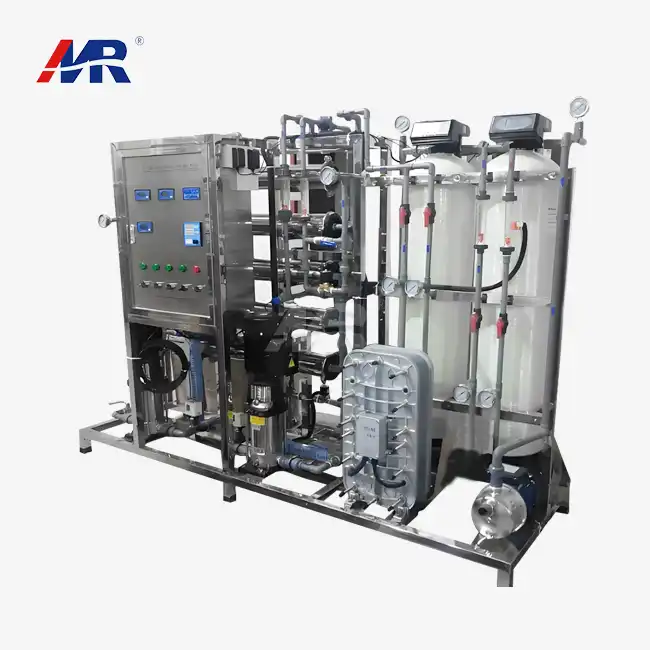
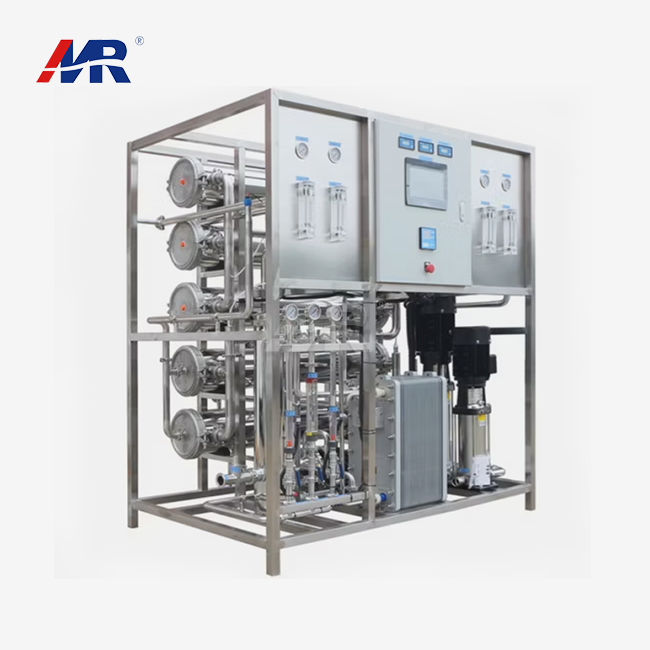
EDI, or electrodeionization, is a process that utilizes ion-exchange resin, selective membranes, and a direct-current field all in one module. As the water travels through resin-filled channels, the electric field drags positive and negative ions through the membranes into distinct concentration streams. No acid or caustic regeneration required.
Unlike a traditional mixed-bed deionizer, where the resin beads hold the ions until they are spent and the deionizer must be chemically regenerated or exchanged offshore. The 1000LPH EDI plant will produce water continuously as long as the quality of the input water is within design limits.
Typical 1000LPH EDI Water Treatment Process
Most systems have a rather predictable flow from raw water to end product. This is the standard flow pattern that we employ throughout our pharma, electronics, and boiler feed projects:
- Feed-water tank storing raw or municipal supply before any treatment begins.
- Multimedia or cartridge filtration for removal of suspended particles and protection of downstream membranes.
- Activated carbon or chemical dechlorination to remove free chlorine before it reaches RO membranes.
- Softening/antiscalant dosage for the management of hardness-associated scaling risks at both RO and EDI phases.
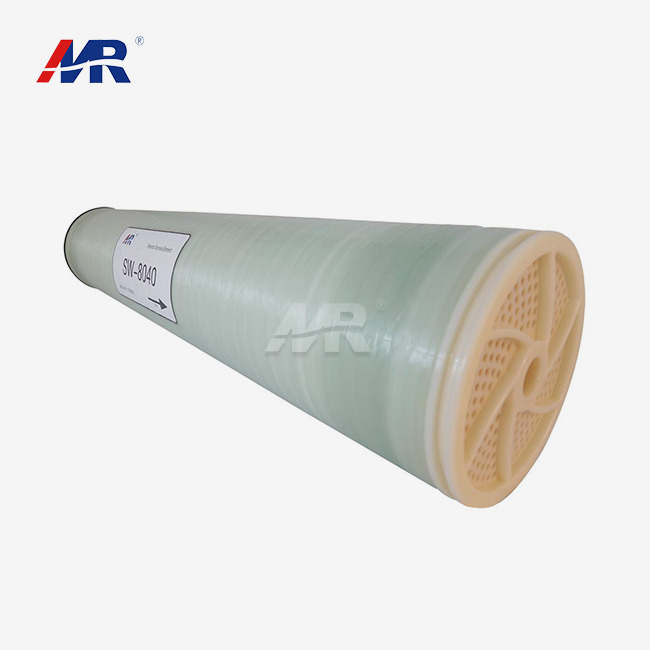
- Reverse osmosis system to reduce total dissolved solids by about 95 to 99 percent prior to EDI polishing.
- EDI module that removes ions to the point of 10 to 18.2 MΩ·cm resistivity.
- UV disinfection or optional ultrafiltration for microbial control applications.
- Product tank and distribution loop feeding point of use.
Not all components are needed. If the lab uses municipal water low in hardness, then you may omit softening. If it is a pharma line, then you nearly always require sanitary plumbing and UV. Confirm which steps are applicable to your feed-water profile before finishing the design.
What Water Quality Can a 1000LPH EDI Plant Produce? — Performance and Compliance Factors
Product-Water Quality Parameters
A comprehensive spec sheet should include conductivity at a set temperature, resistivity, total dissolved solids, silica, total organic carbon (when applicable), and microbial or endotoxin limits for sterile applications. In practice, EDI may provide water of 10 to 18.2 MΩ·cm resistivity from adequately conditioned RO permeate, but that alone does not guarantee pharmaceutical-grade water.
How to State Guaranteed Performance
Request vendors to provide the following for input water parameters, product flow, resistivity, recovery rate, temperature range, test duration, sampling point, and instrument calibration status: A performance figure garnered in excellent lab water is not helpful at a Nigerian brackish-water location or on a humid Southeast Asian 1000LPH EDI plant floor.
Request a clear differentiation between “typical performance” and “contractual guaranteed performance”. The first is sales. The second is part of your purchase order and includes penalty or remedy terms.
Relevant Water-Quality References
ASTM D1193 is commonly used by laboratory users for reagent-water grades (ASTM International, 2024, https://www.astm.org/d1193-99e01.html). Pharmaceutical teams use USP General Chapter <1231>, Water for Pharmaceutical Purposes, with appropriate European Pharmacopeia criteria (USP-NF, 2024, https://www.usp.org). But microbial quality is a function of tank design, pipe slope, sanitization frequency, and loop velocity — not just the EDI module. I have seen a perfectly stated EDI unit fail a bioburden assessment simply because there was a dead leg on the storage tank accumulating biofilm.
Which Feed Water Conditions Suit a 1000LPH EDI Plant? — Technical Selection Factors
Feed-Water Quality Requirements
RO permeate entering an EDI module should carry low conductivity, low hardness, low silica, minimal free chlorine, controlled temperature, and almost no suspended solids. Allowable thresholds vary by module brand, so always confirm project-specific limits rather than relying on generic numbers.
Feed-Water Analysis Checklist
Before ordering a 1000LPH EDI plant, run a complete feed-water analysis. The table below lists what to test and why each parameter matters.
| Parameter | Why It Matters | Verification Method |
|---|---|---|
| Conductivity/TDS | Indicates total ionic loading on the EDI stage | Calibrated meter; lab report |
| Hardness | Creates scaling risk on membranes and resin | Hardness test kit or lab analysis |
| Silica | Reduces performance, raises scaling risk | Laboratory silica test |
| Free chlorine | Damages membranes and ion-exchange resin | DPD test or lab report |
| Iron and manganese | Fouls membranes and resin beds | Laboratory analysis |
| CO₂/alkalinity | Raises EDI ionic load unexpectedly | Water analysis, alkalinity test |
| Temperature | Affects flow rate and conductivity readings | Calibrated sensor |
| Microbiology | Matters for hygienic or pharma applications | Accredited microbiological lab |
Risks of Unsuitable Feed Water
Out-of-spec water fed to an EDI stack will create actual, quantifiable harm. Typical results include worse product quality, calcium carbonate scaling on membranes, premature resin deterioration, increased energy draw per cubic meter, unstable flow rates, and more frequent cleaning cycles. One Indonesian customer had a 35 percent increase in electricity use over four months after a softener resin breakdown remained undetected.
Typical mitigation includes RO optimization, proper softener or antiscalant dosage, degassing for high-CO2 wells, carbon filtering ahead of RO, and constant online monitoring. These measures are a lot cheaper than replacing an emergency module.
How Does 1000LPH EDI Compare With Mixed-Bed Systems? — Comparison Factors
1000LPH EDI Plant vs Mixed-Bed Deionizer
| Criterion | EDI System | Mixed-Bed Deionizer |
|---|---|---|
| Regeneration | Electrical, continuous | Chemical or offsite resin exchange |
| Chemical handling | Minimal | Acid and caustic storage required |
| Feed requirement | Needs stable RO permeate | More tolerant depending on design |
| Product consistency | Stable under control | Declines as resin capacity depletes |
| Footprint | Often integrated with RO skid | Needs resin vessels and storage |
| Operating skill | Electrical plus water-treatment knowledge | Chemical and resin management |
| Waste stream | Concentrate and cleaning waste | Regeneration wastewater |
| Best fit | Continuous, predictable high-purity demand | Intermittent use, polishing, backup |
1000LPH EDI Plant vs RO-DI System
The typical RO-DI train combines reverse osmosis with either disposable or regenerable mixed beds. EDI often wins on recovery rate and chemical usage but is still dependent on RO upstream – it is not a substitute for reverse osmosis, only a polishing step after it. RO-DI may work well in low-volume laboratories if resin cartridges are inexpensive and replaced on a schedule.
Operating Cost and Energy Comparison
The whole lifespan cost includes power, pretreatment consumables, ro membrane replacement, EDI module life, resin or chemical cost, cleaning cycles, wastewater disposal, and labor. A 1000LPH EDI plant with energy consumption less than 0.1 kWh per cubic meter of product water and a 90-percent-plus recovery RO stage often surpasses mixed-bed systems on three-year total cost when chemical freight and disposal costs are included. Compare against your real feed water and yearly operational hours, not just the equipment price tag.
Which EDI Performance Specifications Matter Most? — Specification and Selection Factors
Core Specification Table
Use this table as a request-for-quote template so every supplier answers the same questions.
| Specification | Buyer Requirement or Supplier Declaration |
|---|---|
| Nominal product flow | 1,000 LPH or project-defined range |
| Feed flow | Calculated from recovery and concentrate flow |
| Product-water quality | Resistivity above 10 MΩ·cm, other guaranteed values |
| EDI recovery | Nominal and operating range, typically above 90% |
| Feed pressure | Minimum, normal, maximum |
| Feed temperature | Operating range and compensation method |
| Electrical supply | Voltage, phase, frequency, control voltage |
| EDI power consumption | Rated and typical values, target below 0.1 kWh/m³ |
| Materials of construction | Wetted materials and certificates if required |
| Control system | PLC, HMI, alarms, data logging, remote signals |
| Dimensions and weight | Shipping and footprint values |
| Warranty | Duration, exclusions, response process |
Efficiency, Recovery, and Energy Metrics
Water recovery is defined as the product flow over the total input flow. Report RO recovery, EDI recovery, and total system recovery separately, as combining them obscures the location of water loss. Unless you provide the flow rate, feed quality, and operational hours during the test, "low energy consumption" is meaningless.
Instrumentation and Controls
A well-instrumented 1000LPH EDI plant measures conductivity, pressure, flow, temperature, tank level, leakage, and power use in real time. High product conductivity, low flow, high pressure, module failures, low tank level, and pretreatment failure should all activate alarms. Some businesses are regulated ( drugs, for example) and need data recording that provides historical patterns for audit examination.
How Should 1000LPH Capacity Match Industrial Water Demand? — Capacity and Planning Factors
Demand Calculation for a 1000LPH EDI Plant
A basic working formula aids in right-sizing the system: necessary capacity = peak hourly demand + distribution and operational margin. Take into account typical vs. peak demand, batch production cycles, cleaning downtime, storage-tank volume, shift patterns, and anticipated growth over the next three-to-five years.
Storage and Intermittent Demand
Often, a product-water tank is cheaper than oversizing the EDI stage to cope with brief demand surges. Size the tank for peak demand, production hours, sanitation cycles, and a safety reserve. Beware of stagnation risk – water left too long in a poorly built tank breeds microbes, and frequent start-stop cycling is more taxing on EDI modules than steady-state operation.
Three Use-Case Scenarios
The same 1000 LPH number is used substantially differently by various purchasers. An OEM equipment manufacturer will incorporate the skid into a bigger utility package and requires compact dimensions and clear interface designs. A distributor wants repeatable specs, export documentation, replacement parts on hand, and electrical setups that fit local grid requirements across numerous countries. For an end-user plant, the key concerns are validated water quality, hands-on installation assistance, and a maintenance plan that provides predictable lifetime cost over a ten-year service life.
What Does a Real 1000LPH EDI Plant Deployment Look Like? — Case Study and Field Data
Field Case: Photovoltaic Wafer Plant, Vietnam
In early 2024, a solar wafer producer in northern Vietnam constructed a 1000 LPH Morui RO+EDI train to serve its wafer cleaning facilities. The feed water was of municipal origin with conductivity of around 450 µS/cm and moderate silica concentration. After two-stage RO and EDI polishing, the plant achieved an average product resistivity of 17.6 MΩ·cm over six months, with power consumption maintained at 0.09 kWh per cubic meter. Unplanned downtime was reduced by around 28 percent compared to their previous mixed-bed system, primarily because operators no longer lost production hours to acid and caustic regeneration cycles.
Field Case: Pharma Purified Water Loop, Philippines
A tablet coating process for a contract company in Cebu needs USP grade filtered water. We staged the RO to 92 percent recovery and matched the EDI unit to keep resistivity above 15 MΩ·cm even with 5°C feed-temperature variations between day and night shifts. The hygienic piping was 316L stainless with orbital welds, and the client’s quality team completed IQ/OQ documentation in 18 days – roughly a third faster than their previous vendor’s timeline, according to their internal audit notes. “Buyers underestimate how much feed-water variability changes EDI performance day to day,” says Bin Liu, Senior Overseas Water Treatment Technical Manager at Morui. “The spec sheet is less important than the guaranteed operating envelope behind it.
These two projects both teach the same lesson: A 1000LPH EDI plant will only run to spec if the RO stage upstream is properly designed and managed for the particular site circumstances, not general assumptions.
Which Industries Benefit Most From 1000LPH EDI? — Application and Compliance Factors
Pharmaceutical and Healthcare Manufacturing
Pharma teams employ EDI output for formulation water, equipment rinse, lab reagent prep, and purified water preparation prior to WFI generation. Pharmaceutical applications may need validated systems, sanitary design, documented sanitization methods, and certification records associated with USP and European Pharmacopeia requirements. EDI alone does not meet these criteria; the system architecture and documentation around it bear the burden.
Electronics, Laboratory, Food, and Chemical Applications
Semiconductor and display-panel fabs need minimal ionic contamination and steady resistivity to safeguard wafer yields. “The EDI output is critical for reagent water production and instrument feed in laboratories. It is used in food and beverage factories for ingredient water, boiler feed, and rinsing under process-specific hygiene regulations. It is used by chemical producers for water processing and batch preparation where ionic purity might impact reaction uniformity.
Application-Specific Decision Checklist
Match the system to your real workflow before you sign a purchase order. Define the water grade needed, daily and peak volume, feed-water profile, distribution loop design, microbiological control plan, documentation level desired by your quality team, local electrical and safety requirements, and any formal validation or certification processes your industry wants. This checklist is the most typical cause of costly rework following installation of projects.
What Pretreatment Does a 1000LPH EDI Plant Require? — Installation and Risk-Reduction Factors
Standard Pretreatment Configuration
Most setups require a raw water tank and pump, multimedia filtration, activated carbon or chemical dechlorination, a softener or antiscalant system, cartridge filtration, the RO system itself, and occasionally a degasser for high-CO2 supply sources. The final design must always be based on a feed-water analysis and declared limitations of the EDI module manufacturer, not a generic template.
Installation Requirements
Site prep is as important as the equipment order. Check for a stable floor with clearance for access, drainage and overflows, properly sized feed and product piping, proper electrical grounding, ventilation and ambient temperature control, safe chemical storage where used, accessible calibration points for instruments, and hygienic materials with verified weld quality for sanitary applications.
Maintenance and Troubleshooting Guide
Scheduled maintenance keeps a 1000LPH EDI plant operating at or near its rated specification for years. These are the recurrent tasks that our service teams schedule:
- Change cartridge filters at a regular interval, not just when pressure loss is seen.
- Inspect RO membranes for fouling and compare the rejection rate to baseline measurements.
- Before the water enters the RO step, check for hardness leaking from the softener.
- Calibrate the conductivity sensor regularly. Drift might result in false alarms or missed excursions.
- Check pumps, valves, and seals for wear at each quarterly servicing visit.
- Look at the EDI current and voltage patterns for any early indicators of scaling.
- Sanitize tanks and distribution loops as often as your business requires.
Most of the faults are caught before they may impair product quality. When problems do occur, a simple troubleshooting matrix saves hours: high product conductivity is usually feed quality, flow rate, temperature, scaling, or electrical input; low product flow points to pressure, valve position, membrane fouling, or module condition; high power draw often means rising feed conductivity or scale build-up; frequent alarms usually mean sensor drift or unstable pretreatment upstream.
How Can You Evaluate a 1000LPH EDI Plant Supplier? — Procurement and Supplier-Selection Factors
Supplier Capability and Evaluation
Review a supplier's relevant project history with similar 1000 LPH installations, their in-house engineering depth, EDI module documentation, factory acceptance testing procedures, written water-quality guarantees, component traceability, spare-parts stock, export experience, and warranty response time.
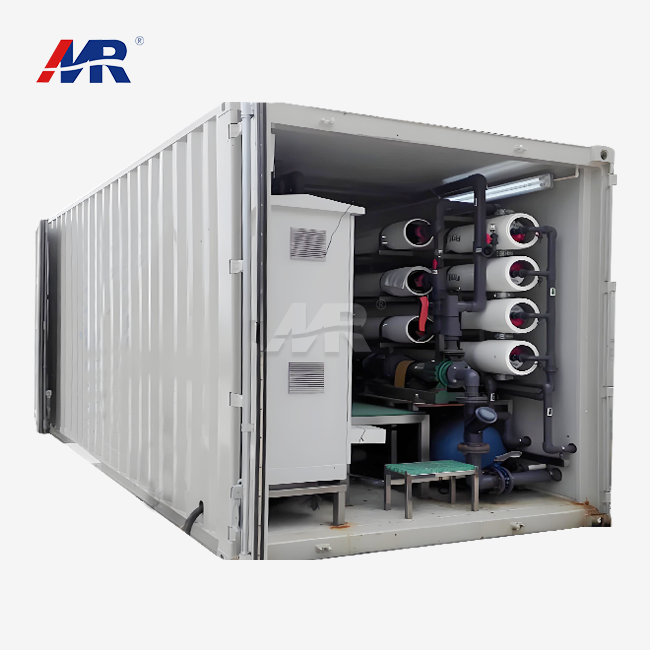
Morui’s single plant has RO, EDI, and UF manufacturing lines, which allow process design, fabrication, and quality control to be managed by one source from membrane to completed skid. That configuration allows us to construct to electronic-grade or pharma-grade, enable remote monitoring, and reduce the handoffs that often drag down multi-vendor projects.
Procurement and Commercial Checklist
Before placing a deposit, request the information in the table below so every quote can be compared on equal terms.
| Factor | Information to Request |
|---|---|
| Price | Equipment scope, excluded items, taxes, freight, installation |
| MOQ | Standard unit quantity or customization minimum |
| Lead time | Manufacturing, testing, packing, shipping timeline |
| Payment terms | Deposit, balance, letter of credit, staged payment |
| Incoterms | EXW, FOB, CIF, DAP, or agreed alternative |
| Warranty | Coverage, duration, exclusions, spare-part policy |
| Documentation | Manuals, drawings, P&IDs, datasheets, FAT report |
| Customization | Voltage, materials, PLC language, layout, piping |
| After-sales support | Remote support, commissioning, training, response time |
| Spares | EDI modules, membranes, cartridges, sensors, pumps |
Quality Verification and Risk Mitigation
A factory inspection, either in person or by video chat, should verify component model and serial numbers, quality of skid construction, pipe and electrical panel labeling, pressure and leakage test results, and calibration Certifications for test equipment. Ask for the documentation that is worth having: ISO 9001 certificate in scope, CE compliance for machines headed for the EU, RoHS and REACH declarations if applicable, and material certifications that fit your exact setup, not a generic catalog sheet.
It is important to identify common hazards and their remedies in straightforward language. A quoted capacity not accompanied by indicated feed conditions requires a guaranteed operational envelope to be provided in writing. The use of "pharmaceutical grade" informally should generate a request for the actual standard, sanitization procedure, and qualifying scope. Installation of EDI without proper preparation of RO nearly invariably causes early failure of the module. So, always ask for a comprehensive study of the feed water beforehand. If the headline price is low because it excludes controls or tanks, get a comprehensive scope-of-supply list before comparing. The inspections take a day or two but save months of argument afterward.
Conclusion
Choosing a 1000LPH EDI plant is not just a matter of copying a flow number on a datasheet. Begin by determining what water quality you want, then test and record your current feed-water parameters. Design RO and pre-treatment based on that data; compare EDI with mixed-bed and RO-DI lifespan costs; and evaluate capacity, recovery, power draw, and controls against a written guarantee. Finally, choose a source that offers factory test records and true after-sales service. OEMs require clear integration designs, distributors need repeatable standards and replacement parts, and end users need confirmed water purity with a 10-year service contract.
FAQ
1. What is a 1000LPH EDI plant?
A 1000LPH EDI plant is an electrically driven deionization system built to produce roughly 1,000 liters of high-purity water per hour. It typically runs after reverse osmosis and matched pretreatment stages.
2. Can an EDI plant operate without RO pretreatment?
Most EDI systems need RO permeate or similarly conditioned feed water. High hardness, silica, chlorine, suspended solids, or excess conductivity causes scaling, fouling, unstable output, and early module failure.
3. What water quality can a 1000LPH EDI plant produce?
The system can reach 10 to 18.2 MΩ·cm resistivity, but the actual result depends on feed-water quality, module design, operating temperature, and downstream storage. Specify conductivity, silica, TOC, and microbial limits separately in your purchase order.
4. Is EDI better than a mixed-bed deionizer?
EDI cuts chemical regeneration and runs continuously, which suits stable industrial demand well. Mixed-bed systems can still make sense for intermittent use, polishing duty, backup service, or feed water that varies too much for EDI's tighter tolerances.
5. How much does a 1000LPH EDI plant cost?
Price depends on RO capacity, pretreatment scope, EDI module brand, control system, tank materials, electrical configuration, testing, documentation, and shipping terms. Compare quotes using the same scope of supply and Incoterm to get an accurate apples-to-apples number.
6. What maintenance does a 1000LPH EDI plant require?
Expect cartridge replacement, RO membrane checks, pretreatment monitoring, conductivity sensor calibration, pump and valve inspection, and periodic review of EDI current and voltage trends. Hygienic applications also need scheduled tank and loop sanitization.
7. What information should go into a quotation request?
Provide feed-water analysis results, required product-water quality, hourly and daily demand figures, operating schedule, site location, electrical supply details, preferred materials, compliance needs, storage requirements, delivery terms, and documentation expectations.
Get a Site-Specific Quote for Your 1000LPH EDI Plant
Choosing between suppliers gets a lot easier once you have a firm quote tied to your actual feed water instead of a catalog number. Morui, acting as a direct 1000LPH EDI plant manufacturer, can turn your water analysis into a documented proposal with guaranteed resistivity, recovery rate, and power draw within days. Send your feed-water report and target application to benson@guangdongmorui.com, and our engineering team will reply with a scope-of-supply breakdown, lead time, and spare-parts list — no generic brochure, just numbers matched to your site.
References
1. ASTM International — ASTM D1193, Standard Specification for Reagent Water (2024). Referenced in the water-quality parameters section. https://www.astm.org/d1193-99e01.html
2. ASTM International — ASTM D1125, Standard Test Methods for Electrical Conductivity and Resistivity of Water (2024). Referenced when defining resistivity measurement practice. https://www.astm.org/d1125-14r19.html
3. United States Pharmacopeia (USP) — General Chapter <1231>, Water for Pharmaceutical Purposes (2024). Referenced in pharmaceutical application guidance. https://www.usp.org/harmonization-standards/pharmacopeial-discussion-group
4. European Directorate for the Quality of Medicines & HealthCare (EDQM) — European Pharmacopoeia, 11th Edition (2023). Referenced alongside USP standards for purified-water guidance. https://www.edqm.eu/en/european-pharmacopoeia-ph-eur-11th-edition
5. U.S. Food and Drug Administration (FDA) — Guide to Inspection of High Purity Water Systems (2023 update). Referenced in the microbial and loop-design discussion. https://www.fda.gov/inspections-compliance-enforcement-and-criminal-investigations/inspection-guides/high-purity-water-systems
6. International Organization for Standardization (ISO) — ISO 9001:2015, Quality Management Systems — Requirements. Referenced in the supplier-evaluation section. https://www.iso.org/standard/62085.html
About the Author
Bin Liu is Senior Overseas Water Treatment Technical Manager at Guangdong Morui Environmental Technology Co., Ltd. He has spent over a decade specifying RO, EDI, and UF systems for pharmaceutical, electronics, and power-plant clients across Asia, South America, and Africa. His work focuses on matching feed-water data to real-world EDI performance, not catalog specifications. Morui operates its own membrane production line alongside multiple equipment fabrication facilities, with over 500 employees and 20 engineers supporting projects from design through commissioning.