RO EDI Water System Maintenance Intervals: Modules, Filters and CIP
A well-run ro edi water system follows a condition-based maintenance plan. Operators log key readings daily, replace cartridge filters when differential pressure climbs (often within three to twelve months), and clean RO membranes when normalized permeate flow falls roughly 10–15%. Each month, they compare EDI voltage, current, and resistivity with commissioning data. With proper RO pretreatment, EDI modules often last three to five years. I wrote this guide to help plant managers, engineers, and buyers set realistic intervals, catch problems early, and plan spare parts before downtime becomes expensive.
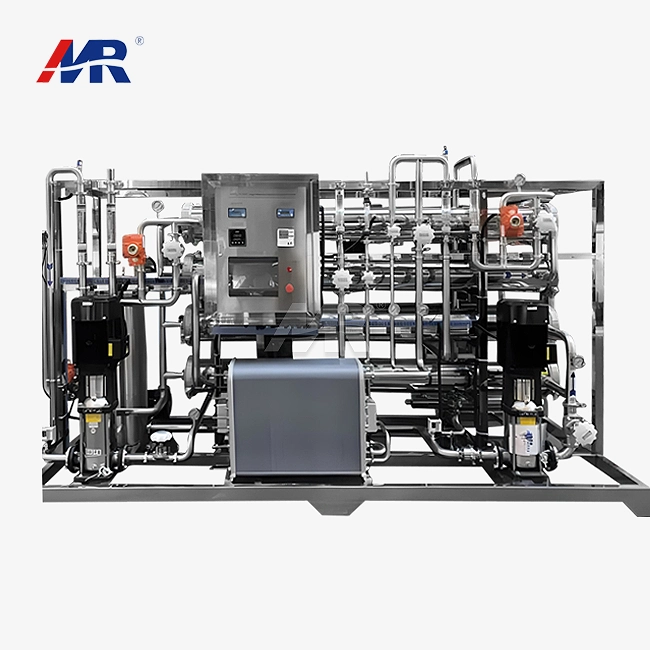
RO EDI Water System Maintenance Schedule at a Glance
Daily and Weekly Checks
The least expensive insurance an operator can get is to log every day. You should write down the temperature, flow, conductivity, recovery, warnings, feed and permeate pressure, and the pressure in the flow at the start of each shift. In the EDI step, you need to add the product's voltage, current, concentration, and electrode flow. Walk the skid once a week. Keep an eye out for leaks, movements, strange sounds coming from the pump, and dose issues. A handheld meter lets you compare the numbers you get from the pump and the ones you get from the internet. What's better than reading one book? You can keep an eye on trends with these quick jobs.
Monthly, Quarterly, and Annual Tasks
Check the filter differential pressure, valves, and tubes once a month. Write down the numbers you find and then compare them to the values you used to start the system. Every three months, make sure that the instruments are properly set up. Check the electrical connections and control panels as well. To see how well the preparation is working, look for hardness leaks and chlorine removal. Check the RO filters, EDI modules, UV equipment, distribution loops, and tanks for damage every year. Drug plants and other places that have to follow the rules keep service records and calibration papers for inspectors. In this general plan as well as the owner's guidebook, the things that have been agreed upon for your spot always come first.
Why Condition-Based Intervals Beat a Fixed Calendar?
Even if two plants use the same tools, they may have very different service needs. If the city feed doesn't change, carriage screens can last for months. But if the haze changes with the seasons, they might need to be changed every two weeks. Real time is set by goals for the quality of the feedwater, working hours, healing, and the water that is made. This is the reason I don't just use dates to connect replacement with changed performance, quality trends, and differential pressure. With this method, parts aren't wasted, and mistakes don't happen out of the blue. Buying teams can also use it to make good budgets for spare parts.
Filter, Pretreatment, and RO Membrane Maintenance Intervals
Cartridge Filters and Multimedia Filters
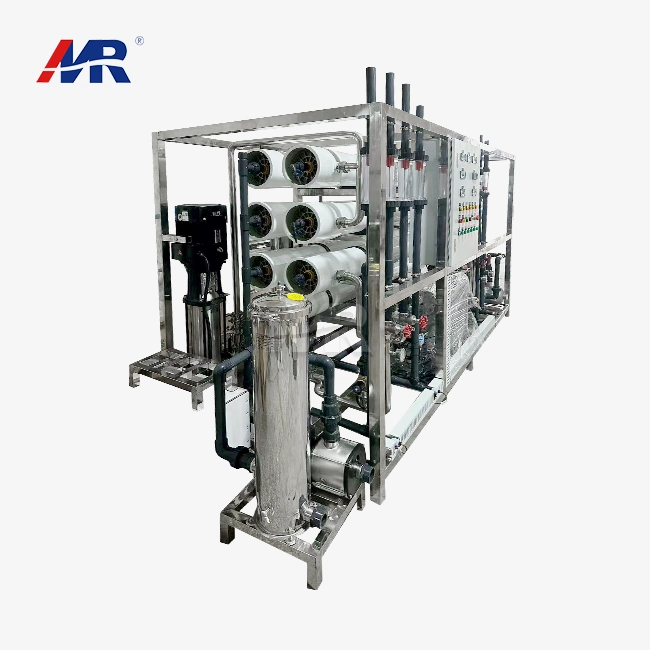
It stops particles that would have reached the ro membranes but got past filters further up the line in an ro edi water system. Differential pressure decides the exact date, but many plants plan for changes to happen in three to twelve months. A lot of providers put a mark above the clean number, which is between 0.7 and 1 bar (10 to 15 psi). As soon as the flow or trash stops, you should change them. This is done to make sure that the multimedia filters have the right flow and bed state. Make sure you have extra refills on hand in case the high-pressure pump stops working. That's because the filter could get clogged up and stop working.
Carbon Filters, Softeners, and Antiscalant Dosing
Chlorine and hardness are the things that hurt things the most over time. Check the amount of chlorine at the carbon exit every so often of course. Activated carbon gets rid of chlorine, which could hurt polyamide RO membranes, so this has to be done. RO membranes and EDI concentrate tubes get a lot of calcium and magnesium stuck on them. To handle this, softeners or antiscalant dosing are used. Check how much salt is in the tank, how much hardness is leaking out, how many times the system regenerates, and how much a dosing pump can produce. Plus, iron, calcium, and organics should be checked often, since changes in the seasons can undo work that was done well at first. Normal ways of analyzing things can help you make good test plans.
RO Membrane Monitoring and Replacement
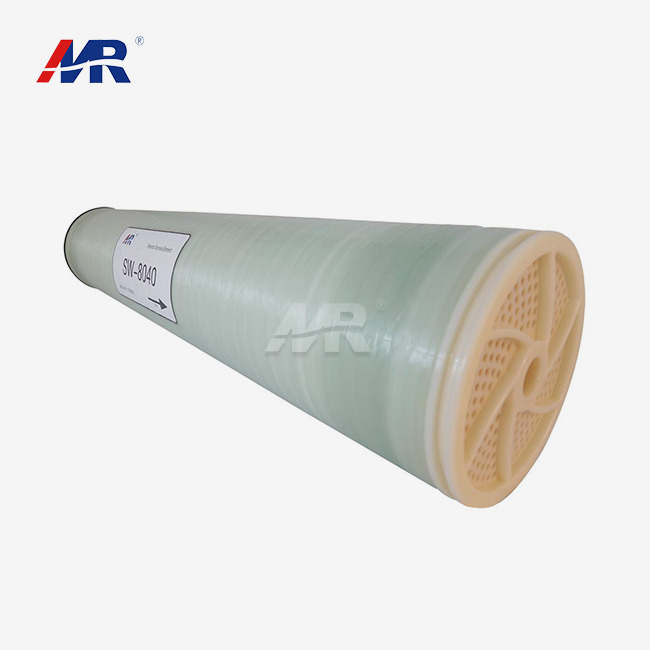
RO membranes don't usually break on a certain date. They slowly fall. Look at data from when the system was first put into use and compare it to the normal permeate flow, salt rejection, differential pressure, and recovery. In order to clean the membranes, DuPont and other membrane makers say that the normalized flow should drop about 10%, the salt passage should rise 5–10%, or the pressure drop should rise about 15%. If cleaning it doesn't work anymore or rust, damage, or permanent scaling show up, you have to get a new one. If you act quickly, you can also protect the EDI module, which needs RO permeate that doesn't conduct electricity well.
EDI Module Maintenance and CIP Control
EDI Operating Limits and Monthly Reviews
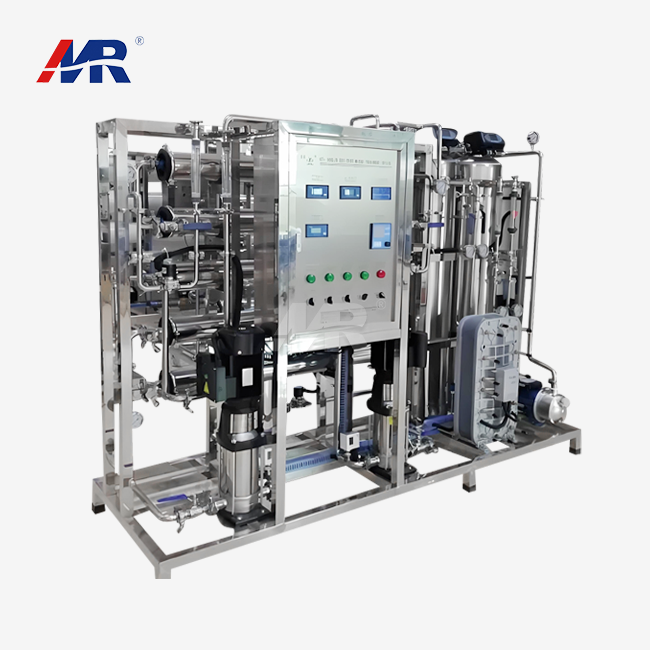
A direct-current field, membranes, and ion-exchange resin are used by an EDI module in an ro edi water system to get rid of any ions that are still in the RO permeate. So you don't have to use acid or caustic to make it grow back. The feed must have the right amount of carbon dioxide, silica, chlorine, organics, hardness, temperature, flow, and pressure for it to stay healthy. Sometimes, the feed conductivity is kept below 40 µS/cm. A degasser can help when there is a lot of CO2 in the air. When you look at the rates of voltage, current, pressure drop, product flow, and resistance every month, compare the starting point to them. A slow shift is the first sign.
Warning Signs and First Troubleshooting Steps
There are a lot of things that need to be looked at, like alarms that keep going off, rising product conductivity, and resistivity that changes a lot. First, make sure the RO permeate is good. Often, the problem is further upstream, where an RO stage is jammed or broken. As soon as you're done, make sure the instrument is set up correctly and that the temperature, electricity, flow of concentrate, and electrodes are all correct. Leaks caused by hardness that lead to scaling can change the drop in pressure. It could be filters, pumps, valves, or cold feedwater that are slowing down the flow of product. If the RO stage is fine but the numbers are still going off, don't open the module yourself. Call them instead for help.
When and How to Run CIP
Fix the proof, not the date. Some of the things that happen are normalized flow going down, salt rejection going down, conductivity going up, and EDI current going up. Before you start, it's important to set the right temperature, flow rate, concentration, and touch time. Keep the chemicals and tools separate and make sure they can handle both. Flushing, soaking, recirculating, emptying, and washing are some of the steps that are usually used to clean RO. Your supplier should tell you exactly what to do before you can use a RO recipe on an EDI module. After the cleaning, write down the details and chemicals that were used to show that they worked and to help you figure out what went wrong.
Spare Parts, Metrics, and Choosing a Maintainable System
Building a Checklist and Spares List
Having a list of the different kinds of tools, how they work, the chemicals used, the water quality, the filter differential pressure, the technician's name, and any other unique information is helpful for an ro edi water system. Don't forget to keep extra sensors, gauges, valves, pump parts, O-rings, and membrane seals on hand. How long it takes to get the plant and how important it is will determine this. People in the US who are allowed to use a machine should also keep training logs, calibration certificates, records of cleaning, and papers for change control. Nothing goes wrong when the customer, the service partner, and the person who made it all know what their jobs are.
Metrics That Prove Maintenance Pays Off
Find out about how salt is rejected, how the flow is changed, how the pressure drops in RO and EDI, the product's resistivity, the voltage and current in EDI, the cartridge's life, how often it needs to be cleaned, how much energy it uses, and any break that comes up out of the blue. Choose how many tips and alarms you want based on what the seller says and what you see on the site. You can look at trends and compare maintenance costs with downtime, goods that aren't brought in, emergency service calls, and chemical use once a week or once a month. That helps the finance team understand why it costs less to do work before something goes wrong than after something goes wrong.
Choosing a Maintainable System, Including Morui Options
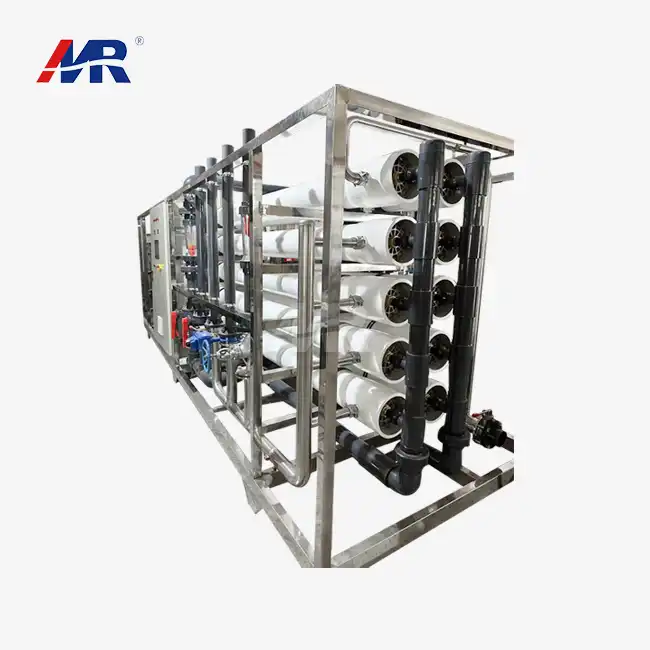
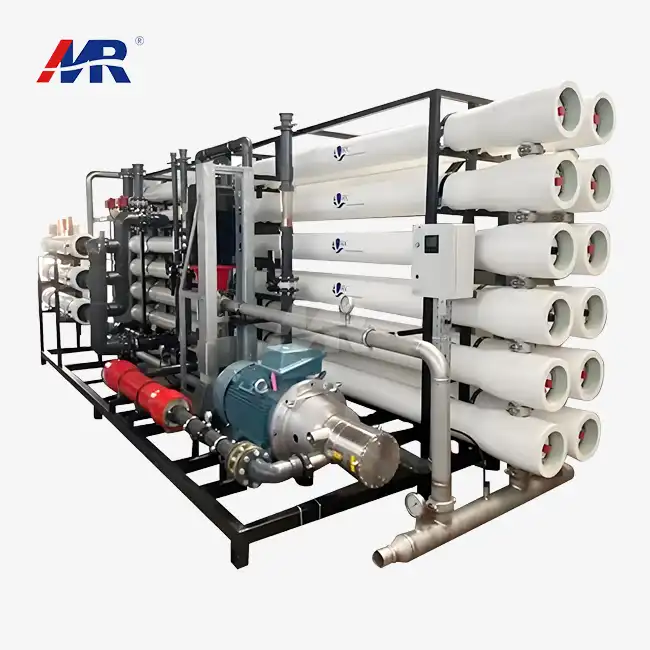
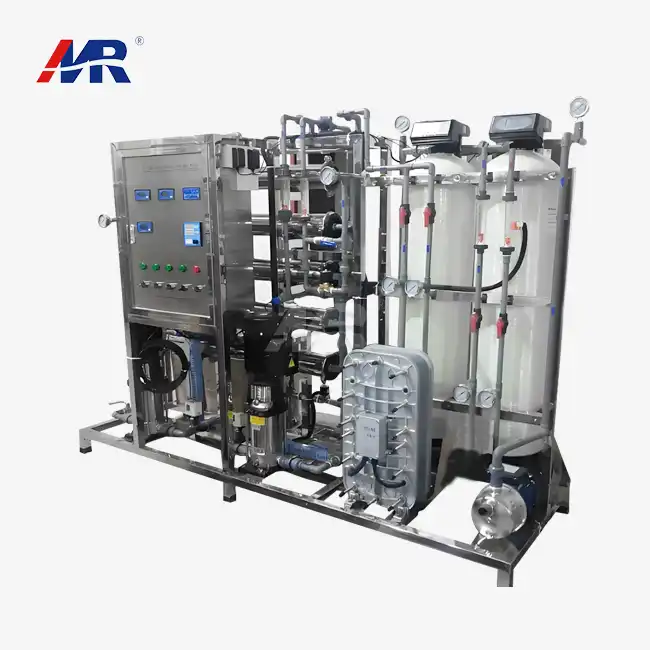
What is a ro edi water system? The two are not the same because it doesn't use resin regeneration or the acids and caustics that come with it. It needs RO permeate that is in good shape and electricity that works well. Morui's EDI water plant covers 1 to 100 m³/h, has a resistance of more than 18 MΩ·cm, uses less than 0.1 kWh/m³, and works at 2 to 6 bar. Plus, it can recover up to 95% of the water. How much it can hold depends on the size. Before the process starts, the water is treated, then it goes through reverse osmosis, electrodeionization, final cleaning, storage, and delivery. Some of the spare parts we sell are Shimge pumps, Runxin valves, and Createc instruments. The membranes we use are also our own.
Conclusion
When it comes to taking care of a ro edi water system, choices are made right then and there, not at set times. Everyday logs, standard measurements done once a month, and calibration checks done every three months all show early signs of change. Differences in pressure are kept track of by carriage screens. Cation exchange and relaxing steps protect RO membranes from chlorine and scale. It starts to clean itself when the normalized flow, salt rejection, or pressure drop goes above what the supplier allows. If you treat the water right, most EDI units last between three and five years. They need the RO permeate to be stable for them to work. You can find problems faster if you first check the quality of the RO. To cut down on downtime and show how important it is to get work done ahead of time, make plans for spare parts, records, and performance metrics.
FAQ
Q1: How often should I replace cartridge filters?
A: Every three to twelve months, a lot of plants will get new parts. There is a gap between the real date and the highest set by the maker.
Q2: How long do EDI modules last?
A: With ion-exchange resin, it doesn't last as long as you would expect. There are ways to clean an EDI module so that it lasts three to five years, far longer than traditional ion-exchange resin.
Q3: When should I clean RO membranes?
A: The standardized permeate flow must drop by about 10 to 15 percent, the salt passage must go up, or the difference pressure must rise above baseline in a way that can be seen.
Q4: How do I tell an RO fault from an EDI fault?
A: The first thing to do is try the RO permeate. The EDI line should only have 40 µS/cm of flow. To make sure the RO stage is healthy, you should check the EDI flow, voltage, current, and temperature.
Request a Maintenance Plan for Your RO EDI Water System from Morui
Want a fix plan that is based on how much water you use? Over 500 people work for Guangdong Morui Environmental Technology Co., Ltd., which has 14 offices. Also, each ro edi water system has its own membranes that are made by the company. Email benson@guangdongmorui.com with your water analysis, capacity, and goal resistance. Get in touch with us to find out more about the parts we sell and the ro edi water system services we set up.
References
1. DuPont, FILMTEC Reverse Osmosis Membranes Technical Manual, 2023
2. Wood, J., Gifford, J., Arba, J., and Shaw, M., Production of Ultrapure Water by Continuous Electrodeionization, Desalination, 2010
3. ASTM International, ASTM D5127 Standard Guide for Ultra-Pure Water Used in the Electronics and Semiconductor Industries, 2013
4. United States Pharmacopeia, General Chapter <1231> Water for Pharmaceutical Purposes, 2023
5. Baker, R.W., Membrane Technology and Applications, Wiley, 2012
6. American Public Health Association, Standard Methods for the Examination of Water and Wastewater, 2017