


Inside a Reverse Osmosis RO Membrane: PET, Polysulfone, Polyamide
Inside a membrane/8040-reverse-osmosis-membrane">reverse osmosis ro membrane, three layers share the work. A PET polyester fabric gives strength, a porous polysulfone layer gives stable support, and an ultra-thin polyamide film rejects dissolved salts. Under pressure, water passes through the polyamide while salt stays in the concentrate stream. Understanding each layer helps you read a datasheet with confidence, because layer quality shapes salt rejection, flow, and service life. Below, I explain the construction, compare the materials, and show how they apply to our MR-8040 seawater element.
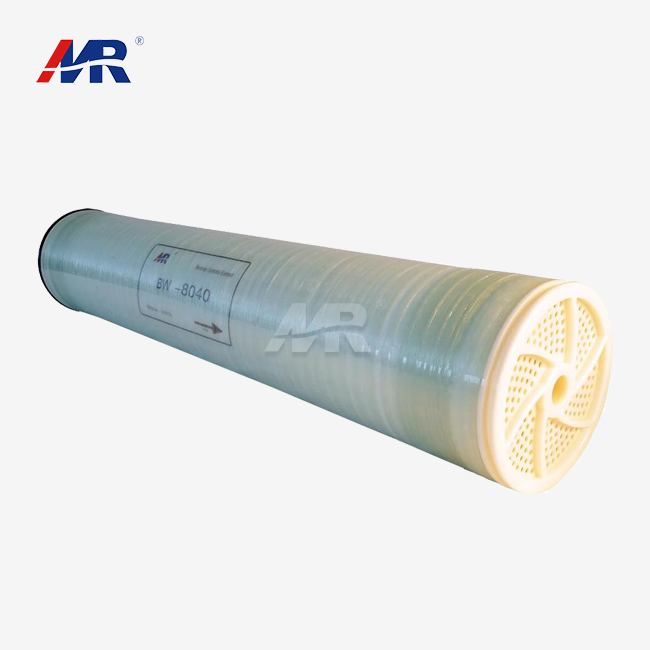
How Does a Reverse Osmosis RO Membrane Work and How Is It Built?
Let us first look at the breakdown. We will now look at how the element is put together.
What Does an RO Membrane Do?
The reverse osmosis ro membrane is one of the most important parts of the system. There is a barrier that is only partially permeable. It lets water through but not dissolved salts, metals, or bacteria. This is not possible with carbon or sediment filters since they do not remove dissolved solids. Water moves toward the saltier side because of osmosis. To change the flow direction, the feed pressure must be higher than the osmotic pressure. The osmotic pressure of seawater close to 35,000 mg/L TDS is around 2.5 to 2.7 MPa. This means that the parts of seawater have to work under a lot of pressure. The process makes three streams: feed, permeate, and concentrate.
Thin-Film Composite Construction
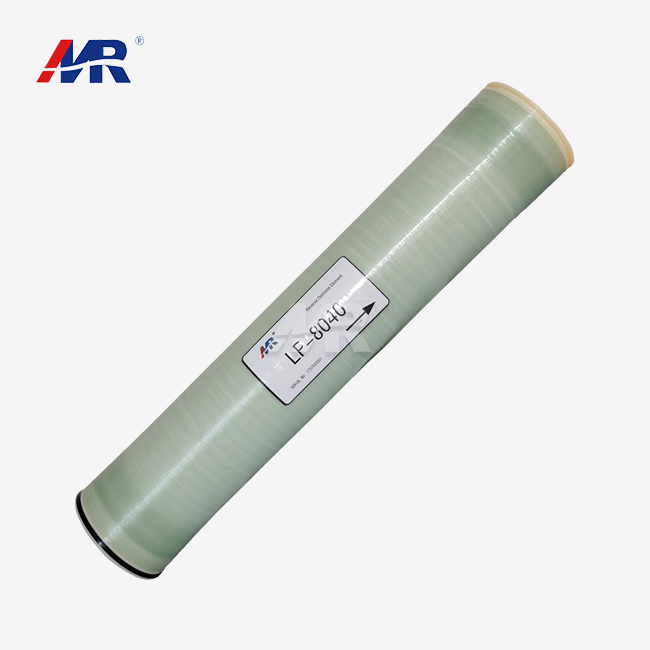
A thin-film composite (TFC) form is used to make most membranes these days. Researchers came up with the interfacial polymerization method in the 1970s. Polyamide membranes still use it today. Flat membrane sheets are wound in a spiral around a central permeate tube. The sheets are split up by feed spacers and permeate carriers. There are glue lines on each leaf that keep the feed water and product water from mixing. A lot of surface area can be packed into this small tube. Our MR-8040, which comes in the usual 8-inch by 40-inch size, gives you 400 ft² (37.2 m²) of active space. A mistake in the coating, gluing, or winding can shorten the life, reduce flow, and increase rejection.
What Controls Flow and Rejection?
When numbers for a reverse osmosis ro membrane are made public, they don't mean much without test settings. As the temperature, feed TDS, recovery, cross-flow, pH, fouling, and age of the membrane change, so does the amount of flow and rejection. But salt concentration can rise a little because it's easier for warmer water to pass through. The concentration of salt goes up when recovery is higher. The osmotic pressure goes up, which takes more power. Elimelech and Phillip (Science, 2011) say that about 1 kWh per cubic meter of seawater is the theoretically least amount of energy needed to remove the salt from it. In real life, though, plants need more power. The first thing I do when I compare two datasheets is look at the temperature, pressure, and salt that are behind each rejection number.
PET vs. Polysulfone vs. Polyamide: What Each Layer Contributes
All three of these things work together as a single unit. It's not as strong in the end if you raise one layer while lowering another, like raising porosity while lowering rejection.
PET Backing: Strength and Stability
The PET layer is made of polyester fabric that isn't knitted together. It's at the bottom of the page. It holds the membrane's weight while it is being dressed, cut, rolled, shipped, and put in place. The small pieces on top don't tear either when you press on them. PET doesn't take away salt. Its job is to keep the polysulfone's size stable and give it a smooth surface to sit on. You might notice weak spots in the layers on top of a fabric that isn't smooth over time. These may show up as less rejection. The backing is what every other layer sits on, so it needs to be even.
Polysulfone Support: The Porous Middle
Polysulfone is put on top of the PET and creates a layer of microporous material that is a few tens of microns thick. It's strong enough that heavy pressure won't crush it, but it's also porous enough that water can easily pass through. It also gives the cotton film a strong base. Polysulfone holes are too small for hydrated ions, so it can't really get rid of salt on its own. The polyamide will form evenly if the pores are spread out evenly. When the pressure goes up, flow can stop if the pores are not structured well. One thousand pounds per square inch (8.27 MPa) is the maximum pressure that our MR-8040 can handle. For saltwater use, the support layer needs to be very strong.
Polyamide Selective Layer: Where Salt Is Rejected
In order to make the polyamide film for a reverse osmosis ro membrane, m-phenylenediamine and trimesoyl chloride are mixed on the polysulfone's surface. The film is very thin—often only a few hundred nanometers thick—but it keeps most of the things apart. When salt ions are present, they are pushed away from the dense polymer, but water molecules can pass through it. Newer cellulose acetate membranes don't work with as much salt, but polyamide TFC membranes can. They also work with a wider pH range. The price is that bleach can damage it. Ozone and other free chlorine can hurt polyamide and make it stop rejecting over time. The MR-8040 can handle less than 0.1 ppm of chlorine, so during cleaning, get rid of any chlorine that is still there.
Choosing, Verifying, and Maintaining an 8040 Seawater Membrane
It's helpful to know about the materials, but what you buy will depend on how well it fits your plant. This is how I help buyers decide.
Match the Element to the Application
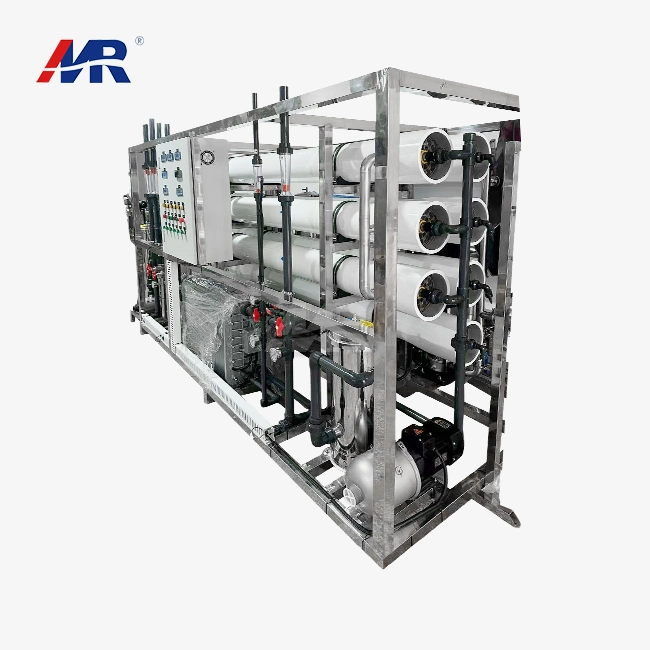
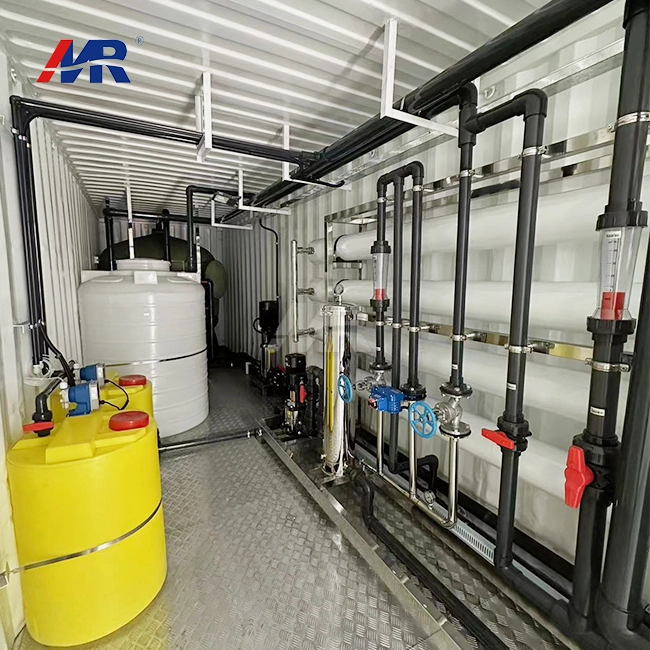
First, you should look at more than just the number of gallons per day. You should also look at the feed water, the target permeate volume, the system pressure, and the size of the housing. For seawater, you need an element with a lot of pressure. You need a lower-pressure part for salty water and small home systems. The MR-8040 can be used in cooling systems for power plants, desalination plants for cities, oil and gas platforms at sea, hotels and resorts along the coast, and emergency water supply systems. First, the water is treated with chemicals and high pressure. Then, it goes through reverse osmosis, remineralization, and disinfection. Finally, the brine is thrown away. It is important to do pretreatment because a membrane can't fix feed water that hasn't been set up correctly.
MR-8040 Specifications to Verify
The reverse osmosis ro membrane MR-8040 can work in 400 ft² (37.2 m²) of space, lets 6,000 GPD (22.7 m³/d) of fluid through, and keeps 99.8% of salt out. It can handle up to 8.27 MPa of pressure, 45°C (113°F) of temperature, and a pH range of 2 to 11 right now. It's okay to have less than 0.1 mg of chlorine. You can ask us or any other supplier for the test conditions used to get flow and rejection numbers. You can also ask for test reports and the ability to keep track of a lot. Check with your city or town to see what rules, such as NSF/ANSI standards, you need to follow for projects that involve drinking water. US sellers often put a lot of stock in paperwork, and clear paperwork speeds up the process of getting approved.
Lifespan, Troubleshooting, and Cleaning
The length of time it works depends on the feed, preparation, pressure, recovery, cleaning, chlorine control, and how it is turned off. Rather than just making changes to the calendar, you should also keep an eye on the output rate, differential pressure, salt refusal, and permeate TDS. Most of the time, the cleaning process starts when the standardized permeate flow drops by 10% or the differential pressure rises by 15%. If rejection drops all of a sudden, it's likely that chlorine or an O-ring bypass has caused damage. If the output is low, it could be because of scale, fouling, cold feed water, or cartridge filters that are blocked. Before you change an element, check how well the feed and permeate lines conduct electricity. Check the temperature, pressure, housing, and O-rings as well.
Supplier and Procurement Checklist
You need to know what you want to do, the flow, the pressure, the temperature, the rejection goal, and the recovery you want to achieve. The size of the element, its container, its end links, and where the brine seal is placed must all match. You need to add up the price, the freight, the duties, the pretreatment, the energy, the cleaning, the warranty, and the number of times you need to replace it. Take samples, get test reports, and write down the flow, rejection, and size criteria you need before you place a large order. People who buy OEM and private labels should also look at the packaging, the code, and the batch supply. Morui makes its own desalination equipment and membranes in its own plant. This helps with OEM private marking and full-system projects. Fifteen parts of our group work together with 500 people and 20 engineers. The lowest unit price doesn't always mean the lowest total cost. Check out the delivery and how consistent it is too.
Conclusion
There are different layers that make up a reverse osmosis ro membrane. Polysulfone gives the support an open and stable structure, PET gives it strength, and polyamide keeps the salts apart. Any layer that is weak can make rejection, flow, or life worse. When the feed pressure is stronger than the osmotic pressure, the two separate. The test conditions on every datasheet are very important because they can change the results. These conditions include temperature, salinity, recovery, and fouling. Chelamine should not come in contact with polyamide, and performance stays the same when it is prepared, tracked, and cleaned at regular times. MR-8040 has a 99.8% rejection rate and a 1,200 psi rating. If you want to use it for saltwater service, you should match its specs with feed-water analysis, paperwork, and total cost, not just price.
FAQ
Q1: Is polyamide the whole RO membrane?
A: Thin polyamide is what makes the difference. The PET and polysulfone keep it in place and make the sheet strong.
Q2: Can the MR-8040 handle chlorine?
A: It can handle chlorine that is less than 0.1 mg. Get rid of any chlorine that is still there before the membrane to protect the polyamide.
Q3: When should I clean or replace an element?
A: You might need to clean the system if the pressure difference goes up by 15% or the standardized permeate flow goes down by 10%. Don't just use a set date to decide when to replace something. Look at how well it works as well.
Q4: What should a quote request include?
A: Type of use, model, size, performance goals, feed-water analysis, amount, final destination, and any OEM needs should all be shared.
Contact Morui for a Reverse Osmosis RO Membrane Quote
Reverse osmosis ro membranes are sold by Morui. As well as its own membrane plant and desalination equipment, it also helps OEMs make their own private labels. Please send an email to benson@guangdongmorui.com with your feed-water analysis, the amount, pressure, and shipping address you want to use. Our engineers will help you find a matching MR-8040 setup, samples, or prices for buying a lot of them.
References
1. Science, 2011. Elimelech, M., and Phillip, W. A., "The Future of Seawater Desalination: Energy, Technology, and the Environment."
2. Water Research, 2009. Greenlee, L. F., et al., "Reverse Osmosis Desalination: Water Sources, Technology, and Today's Challenges."
3. Journal of Membrane Science, 1993. Petersen, R. J., "Composite Reverse Osmosis and Nanofiltration Membranes."
4. Water Research, 2012. Lau, W. J., et al., "A Review on Polyamide Thin Film Nanocomposite (TFN) Membranes."
5. Science of the Total Environment, 2017. Jiang, S., Li, Y., and Ladewig, B. P., "A Review of Reverse Osmosis Membrane Fouling and Control Strategies."
6. Wiley-Scrivener, 2015. Kucera, J., "Reverse Osmosis: Industrial Processes and Applications," 2nd Edition.