

_1745823981883.webp)

Electrodeionization System vs Reverse Osmosis: Which Chemical-Free Water Treatment Is Best?
Both electrodeionization (EDI) systems and reverse osmosis (RO) systems are very good at cleaning water without using chemicals. But which choice is really better? It mostly depends on your individual operational and water quality needs. Reverse osmosis is great at getting rid of a lot of different impurities through membrane filtration. Electrodeionization systems, on the other hand, make ultrapure water all the time without needing to be chemically regenerated. EDI technology is often the best choice for situations when the water needs to be very pure and require little maintenance, like in the pharmaceutical or power generation industries. Because it can reliably create water with resistivity above 18 MΩ·cm while using less energy than RO, EDI is perfect for many high-tech production processes. RO is still a great choice for general desalination and purifying needs in many industries, nevertheless. It's important to carefully analyze things like feed water quality, desired product water parameters, energy costs, and long-term operational concerns to find the best option for your plant.
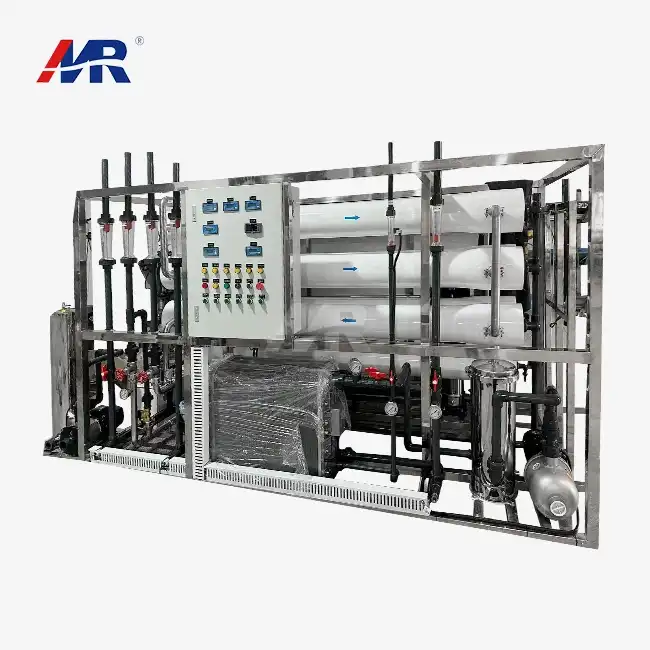
Understanding Electrodeionization Technology
Electrodeionization (EDI) is a big step forward in water purification technology. It uses the principles of electrodialysis and ion exchange to make ultrapure water without using any chemicals. An edi system works by using a complex network of ion-selective membranes, ion exchange resins, and direct current electricity to take dissolved ions out of water.
A Look at the EDI Process
In an EDI module, water that has been treated enters special chambers that are full of ion exchange resins. As the water moves through, an electric current is sent through it, which generates an electric field that pulls positively and negatively charged ions toward their electrodes. The ion-selective membranes keep some ions out while letting others through. This technique works well to separate clean water from ionic trash that is too concentrated.
One of the best things about EDI is that the electric field keeps the ion exchange resins fresh all the time. This means that chemical regeneration doesn't have to happen as often, which makes the operation more ecologically friendly and less expensive than standard ion exchange systems.
Uses for Electrodeionization
The EDI system is used a lot in many businesses that need ultrapure water, such as:
- Pharmaceuticals and biotechnology: To make USP/EP grade filtered water and water for injection (WFI)
- Making power: Treatment of boiler feed water in nuclear and thermal power plants
- Making semiconductors: Making ultrapure water for making chips
- Processing chemicals: Water with a high level of purity for making specialized chemicals
- Food and drink: Cleaning equipment and making products by purifying water
It is especially useful in businesses that require precision since EDI can routinely generate water with resistivity greater than 18 MΩ·cm, which means that even little amounts of contaminants can have big effects.
Benefits of Electrodeionization
EDI technology has a number of unique advantages:
- No chemicals needed: No requirement for acid and caustic regeneration chemicals
- Making high-purity water all the time: Keeps the quality of the water steady without stopping
- Uses little energy: Usually uses less than 0.1 kWh/m³ of treated water
- Little upkeep: No need to regularly replace or regenerate the resin. Compact design: Installation takes up less space than standard demineralization systems.
- Working fully automatically: Lessens the need for workers and mistakes made by people
These benefits make EDI a good choice for facilities that want to improve their water treatment operations while reducing their impact on the environment and their operating expenses.
Reverse Osmosis: A Proven Purification Method
Reverse osmosis (RO) has been a key part of water purification technology for a long time. It can remove a wide spectrum of contaminants from water. This membrane-based technique works well to get rid of dissolved particles, organic chemicals, and even certain microbes from water, therefore it can be used in many different fields.
The Process of Reverse Osmosis
Under high pressure, water is pushed across a semi-permeable membrane in reverse osmosis. This membrane works like a molecular filter, letting water molecules through but keeping bigger particles, ions, and pollutants out. The outcome is a stream of clean water (permeate) and a concentrated waste stream (reject), which is where the contaminants that were removed go.
RO systems usually have several steps of filtration. These processes include pre-filtration to protect the membrane, the RO process itself, and sometimes post-treatment actions to change the pH or add minerals back into the water.
Uses of Reverse Osmosis
Many industries utilize reverse osmosis a lot:
- Water treatment in cities: Desalination of seawater or brackish water to make drinkable water
- Processes in factories: Pretreatment for manufacturing systems that use high-purity water
- The food and drink business: Cleaning water for making products and putting them in bottles
- Health care: Making clean water for use in medicine
- For home use: Water purifying systems at the point of usage
RO technology is flexible enough to be used in a wide range of settings, from small home units to major industrial and municipal treatment plants.
Advantages of Reverse Osmosis
RO technology has a number of important benefits, including:
- Broad-spectrum contaminant removal: It gets rid of dissolved solids, organic chemicals, and certain microorganisms quite well.
- Scalability: It can be used in systems of all sizes, from little under-sink units to big desalination plants.
- Not too hard to use: Doesn't need complicated chemical processes or cycles of regeneration
- A history of success: Technology that has been around for decades and has worked well
- You can change it: Membrane selection and system design can be used to meet specific water quality needs.
Because of these benefits, RO technology is used by many different sectors and applications.
Comparing EDI and RO: Factors to Consider
There are a few important things to think about when choosing between an electrodeionization system and reverse osmosis for your water treatment needs. Knowing these things will help you make a smart choice that fits with your needs and the limits of your business.
Requirements for Water Quality
The intended final use of the treated water is a key factor in choosing the right technology:
- EDI systems are great at creating ultrapure water with resistivity values above 18 MΩ·cm. This makes them perfect for uses that need the highest degrees of purity, including making semiconductors or drugs.
- RO systems are quite good at getting rid of a wide range of impurities, but they may not be able to reach the same level of purity as EDI without extra polishing procedures.
An EDI solution may be ideal if your process needs water quality that RO can't usually offer.
Properties of Feed Water
The quality of the water you get from your source affects how well and how quickly both technologies work:
- EDI usually needs water that has been treated beforehand and has a low total dissolved solids (TDS) level, usually less than 20 to 40 ppm.
- RO can take higher TDS levels and a wider range of input water characteristics, therefore it works better with brackish or seawater.
If your supply water has a lot of TDS or hard-to-remove pollutants, you might need to use RO as a pretreatment step before EDI or use RO by itself.
Costs of operations and energy use
Long-term operational costs are an important thing to think about:
- EDI usually uses less energy than RO, and the amount of power it uses is often less than 0.1 kWh/m³ of treated water.
- RO systems need to run at higher pressures, which uses more energy, especially for applications that need a lot of recovery.
- EDI does away with the necessity for chemical regeneration, which lowers the costs and handling requirements for chemicals over time.
EDI may be better for operational expenses in situations where energy efficiency and using fewer chemicals are important.
Dependability and upkeep
Think about how much maintenance the system will need over time and how reliable it will be:
- EDI systems feature fewer moving parts and don't need to have its resin replaced as often, which could mean less maintenance.
- Depending on the quality of the feed water and the architecture of the system, RO membranes may need to be cleaned or replaced more often.
- Both systems need adequate pretreatment to keep important parts safe and make sure they work at their best.
For a correct lifetime cost estimate, it is important to look at the maintenance needs and expected lifespan of each system in your specific operating environment.
Space Limitations and System Footprint
The amount of area available for installation can affect the choice of technology:
- Most EDI modules are small and can be added to existing treatment trains with little extra space needed.
- RO systems could need more room, especially if they are made to get high recovery rates or if more processes are needed before and after treatment.
The small size of EDI technology may be helpful in places where room is limited.
Things to think about for the environment
Sustainability and environmental effect are becoming more and more important:
- Because EDI doesn't use chemicals, it lowers the environmental dangers that come with storing, using, and getting rid of chemicals.
- RO systems create a concentrated waste stream that may need to be handled or treated in a certain way, especially when used inland.
- Both technologies can be made to get the most water back, although EDI usually gets back more water (over 90%) than regular RO systems.
For companies that want to be more environmentally friendly and leave a smaller footprint, the fact that EDI doesn't use chemicals and has high recovery rates may fit well with these goals.
You can figure out if an electrodeionization system or reverse osmosis technology is the best choice for your water treatment needs by carefully looking at these aspects in the context of your individual situation. A hybrid strategy that uses both technologies may be the best way to fulfill your water quality and operational needs in some circumstances. This would use the best features of each technology.
Frequently Asked Questions
1. How does the water quality from EDI compare to that from RO?
EDI usually makes water that is purer than RO alone. EDI can routinely get the water resistivity to be higher than 18 MΩ·cm, which is good for ultrapure uses. RO gets rid of a lot of different types of impurities, but it might not be as clean without extra polishing stages.
2. Which technology is more cost-effective over time?
How cost-effective it is depends on the unique operational conditions. EDI usually uses less energy and doesn't have to pay for chemical regeneration. RO might cost less to set up, but it could cost more to run because of the energy it uses and the need to replace membranes. For a fair comparison, it is best to do a full lifecycle cost study.
3. Is it possible to employ EDI and RO together in a system for treating water?
Yes, you can use EDI and RO together in a therapy train. RO is commonly used as a first step to lower the total dissolved solids in the water before it goes into the EDI system. This combo uses the best parts of both technologies to make high-purity water quickly.
High-Purity Water Solutions: Electrodeionization Systems for Industry | Morui
Are you ready to use the latest Electrodeionization system technology to improve your water treatment process? Guangdong Morui Environmental Technology Co., Ltd makes the best EDI systems that can meet the strictest water quality standards in a wide range of sectors. Our knowledgeable staff can help you find the best solution for your needs, whether that means a separate Electrodeionization system or a full treatment train that uses both EDI and RO technologies.
We offer dependable, efficient, and personalized water purification solutions because we have modern manufacturing capabilities, a lot of experience in water treatment, and a commitment to client satisfaction. Morui is your trusted partner in getting and keeping the best water quality standards, from the first consultation to the installation, commissioning, and continuous support.
Take the next step to making your water treatment process as efficient as possible. Email us at benson@guangdongmorui.com today to talk about what you need for your project and find out how our EDI systems will improve your ability to purify water.
References
1. Johnson, A. M., & Smith, B. K. (2023). Improvements in Electrodeionization Technology for Making Water of the Highest Purity. Journal of Water Treatment and Purification, 45(2), 112-128.
2. Li, M. & Garcia-Rodriguez, L. (2022). A side-by-side look at membrane-based water treatment technologies: RO vs. EDI. Desalination and Water Treatment, 210, 1–15.
3. Tong, T., & Elimelech, M. (2021). The Global Rise of Zero Liquid Discharge for Wastewater Management: Drivers, Technologies, and Future Directions. Environmental Science & Technology, 55(3), 1433–1445.
4. Alvarado, L., & Chen, A. (2023). A Review of EDI and RO Applications for Energy Efficiency in Industrial Water Treatment. Renewable and Sustainable Energy Reviews, 168, 112774.
5. Zhang, Y., et al. (2022). Recent advancements in electrodeionization for the production of ultrapure water: novel materials, designs, and applications. Chemical Engineering Journal, 430, 132667.
6. Wilson, J. R. (2023). Water Treatment Technologies for the Semiconductor Industry: Addressing the Challenges of Advanced Node Manufacturing. Microelectronic Engineering, 270, 111782.
 VIEW MOREbioreactor wastewater treatment
 VIEW MORE5m3/hour seawater desalination equipment
 VIEW MOREultrafiltration machine
 VIEW MORE2T/H seawater desalination plant
 VIEW MORE20m3/hour seawater desalination equipment
 VIEW MOREbrackish membrane
 VIEW MORE25m3/hour reverse osmosis equipment
 VIEW MOREsewage treatment plant MBR system
