_1745823981883.webp)

How to Choose the Right Sewage Treatment Plant for Industrial and Commercial Needs?
Choosing the right Sewage Treatment Plant for business and industrial use is a very important choice that can have a big effect on how well things run, how well they follow the rules, and how long they last. The best decision depends on a number of things, such as the type and amount of wastewater, the rules that must be followed, the area that is available, and the budget. A well designed sewage treatment system not only follows environmental rules, but it also helps save water and can even offer chances to reuse water. This complete guide will help you choose the best sewage treatment solution for your needs by going over all the important factors and stages. It will help you make a smart choice that balances performance, cost-effectiveness, and environmental responsibility.
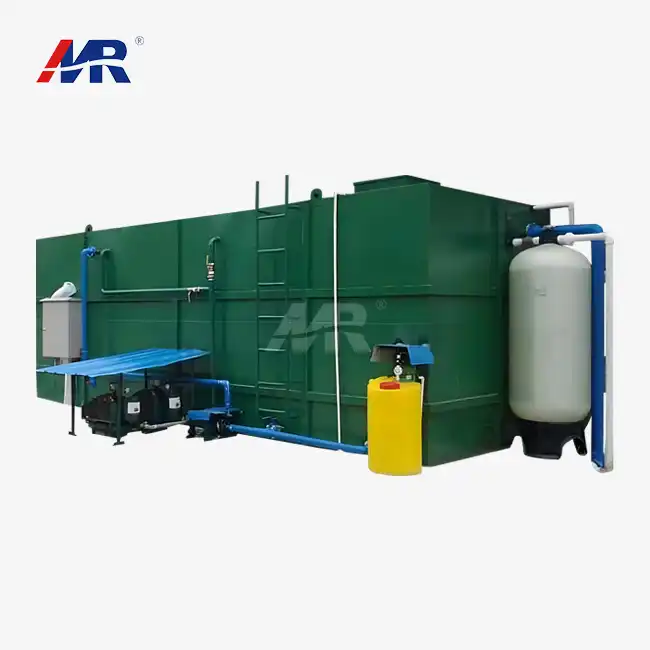
Understanding Sewage Treatment Plant Types and Technologies
Before getting into the selection process, it's important to know about the many kinds of sewage treatment plants and the technology they use. This information is what you need to make a smart option that meets your needs.
The Activated Sludge Process
One of the most prevalent ways to treat sewage biologically is the activated sludge technique. Microorganisms that break down organic debris are present when wastewater is aerated. This method works very well to get rid of suspended particles and biological oxygen demand (BOD) in wastewater.
Systems for Membrane Bioreactors (MBR)
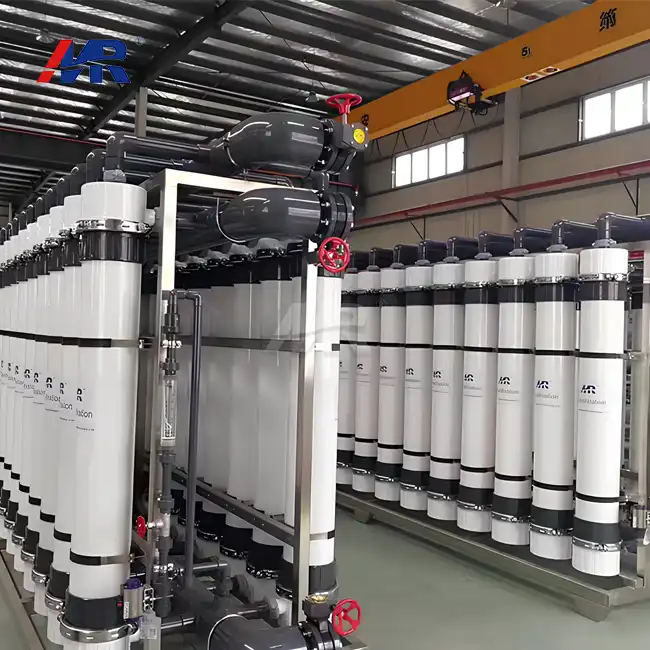
MBR systems use both biological treatment and membrane filtration to make the effluent better. These systems are quite helpful when there isn't much room or when you need high-quality treated water for reuse. MBR technology can get rid of contaminants very well, such as fertilizers and germs.
Sequencing Batch Reactors (SBR)
SBR systems work by filling and drawing, with all treatment steps happening in a single tank in a set order. This technology is great for places where the flow rates change, and it is noted for being flexible and taking up little space.
Reactor for Moving Bed Biofilm (MBBR)
MBBR technique uses small plastic carriers to help biofilm form. This lets a lot of microorganisms live in a small reactor volume. This technique works well for both removing BOD and nitrifying, therefore it can be used in industries with a lot of organic waste.
Key Factors to Consider When Choosing a Sewage Treatment Plant
You need to think carefully about a number of critical factors while choosing the finest sewage treatment method. To get the ideal system for your business or industrial needs, you need to take all of these things into account.
What wastewater is like
When picking a sewage treatment plant, the kind and amount of your wastewater are the most crucial elements to keep in mind. Take a look at these:
- Amount per day and flow rate
- The amount of organic matter (BOD and COD values)
- Changes in temperature and pH levels, as well as the presence of toxic compounds or heavy metals
- Amount of nutrients (nitrogen and phosphorus)
If you know these things, you'll be able to pick the right treatment technology and plant size.
What the government wants
It is not up for dispute whether or not you should follow the rules set by the state, local, and federal governments. Find out what the exact regulations are for the quality of effluent in your location and sector. These rules will determine how much treatment is necessary and may influence the choice of technology.
Open Space
The size of your sewage treatment plant is quite significant, especially in cities or places with a lot of industry where space is restricted. Some technologies, including MBR systems, are smaller than traditional activated sludge processes yet can do the same work.
How well energy works
How much it costs to run a sewage treatment system can have a big effect on its long-term success. Check out how much energy different systems use, and consider about utilizing technology that can save energy, like producing biogas from anaerobic digestion.
Ability to grow and change
Choose a system that can be easily altered or added to if the amount or type of wastewater changes. Modular systems are easier to change or add to in the future.
Hard to Operate
Learn what skills are needed to run and keep the sewage treatment plant working. Some new technology may require specialized training or full-time employees, whilst others can be more automated and necessitate less direct oversight.
Things to consider about when it comes to the weather
The effectiveness of biological therapeutic approaches can be affected by temperature. If your firm is in a place where the weather is very hot or very cold, you might want to look into a system that works well at a wide range of temperatures.
Steps to Select the Optimal Sewage Treatment Plant
Having a plan could help you make sure you pick the best sewage treatment option for your business or industrial needs. Follow these steps to help you choose:
Look at the wastewater in detail
Look closely at all of your wastewater sources to begin. This should have:
- Numbers for measuring flow rates and amounts
- Chemical testing to find out how much BOD, COD, TSS, and nutrients there are
- Finding any dangerous compounds or heavy metals
- Checking the temperature variations and the pH levels
This information will help us pick the best way to treat the problem.
Read the rules and regulations again
To find out what the exact effluent quality criteria are for your location and industry, talk to local environmental officials. Choose a sewage treatment system that can always meet or exceed these standards.
Check out the space and site conditions that are available
Check out the area where the sewage treatment plant can be erected. Think about how much space you could need in the future, not just how big it is now. Also, think about aspects that are special to the location, such the soil conditions, the level of groundwater, and how close the facility is to sensitive regions that could effect its design and construction.
Research Treatment Technologies
Check out and compare different treatment technologies based on the kind of wastewater you have and the rules you have to follow. Think about items like:
- How well and how often the treatment works
- How much energy is wasted and how much may be saved
- The necessity for upkeep and the difficulty of running things
- Able to change and grow with the times
- Able to handle fluctuations in the quality and flow of influent
Think about the costs of the complete life cycle
Don't simply think about the initial capital cost of the sewage treatment facility; think about all of its costs over its lifetime. This should have:
- Capital spending (CAPEX) on tools and setting them up
- Costs of doing business (OPEX) such as chemicals, energy, and labor
- Costs of upkeep and replacement over the expected life span
- Possible money from resource recovery, including biogas and water that has been reclaimed
Ask an expert for help
Talk to licensed specialists or consultants who work with wastewater treatment. They may give you helpful information and solutions based on your specific needs. They can help you choose the best technical solution that works effectively and doesn't cost too much.
Visit Reference Sites
If you can, go check how the sewage treatment system you're thinking of works in the real world. This can help you learn about how different systems work, how to maintain them operating, and how well they work in the real world.
Write a Detailed Request for Proposal (RFP)
Make a thorough RFP that outlines everything you need, like:
- Properties of wastewater and treatment objectives
- The site's and the environment's limits
- Rules for compliance and promises of performance
- What you should expect from operations and maintenance
- Ways to pay for items and how much you can spend
Read the proposals and pick a vendor
Carefully read and think about bids from different providers. When picking a solution, don't just consider about how well it works. You should also think about how much experience the vendor has, how well-known they are, and whether they can help you after the sale. To receive the best bargain, talk to the vendors on your short list in detail to clear up any questions you may have.
Plan how to put it into action and give it the go-ahead
When you've picked a sewage treatment option, make a clear plan for how to use it. There should be due dates for building, installing, and starting up. Make sure your workers know how to utilize and take care of the new system properly.
Frequently Asked Questions
1. How long do sewage treatment plants generally last?
The length of time a sewage treatment plant lasts vary depend on the technology utilized, how well it is maintained, and how it is used. If you take good care of your plants, they can live for 20 to 30 years. However, you may need to add or modify some parts over that time. If you take care of the plant and change it often, it will survive a lot longer.
2. How can I be sure that my sewage treatment plant will follow the rules in the future?
You might want to choose a waste treatment plant system that is flexible and modular so that it can be readily changed or added to in the future. Stay on top of changes to the rules and collaborate with tech providers who can help you satisfy the new requirements. Modern tracking and control technologies can also help things run more smoothly and meet new needs.
3. Are there any grants or other incentives that can assist individuals employ modern sewage treatment technologies?
A lot of states and environmental groups provide businesses money, tax exemptions, or low-interest loans to assist them employ new wastewater treatment technologies. These technology should let us use water again or get energy back. Check for local and national initiatives and talk to environmentalists or business groups to find out how to acquire money for your project.
Conclusion
It is important to carefully think about a number of things while choosing the correct sewage treatment plant for business and industrial applications. You can choose a solution that not only meets your current needs but also sets your business up for future success by carefully looking at your wastewater's properties, understanding the rules, and comparing different technologies based on their performance, cost-effectiveness, and long-term viability.
Keep in mind that the best sewage treatment systems are ones that are built for your needs and run with care and knowledge. Taking the time and money to choose the correct system can have big benefits for operational efficiency, following environmental rules, and even saving money by recovering and reusing resources.
As you start this critical decision-making process, think about working with specialists who have experience and can help you navigate the complexity of choosing and setting up a sewage treatment plant. If you know what you're doing and have the correct mindset, you can turn your wastewater problems into chances for new ideas and long-term progress.
Expert Sewage Treatment Solutions | Morui
We at Guangdong Morui Environmental Technology Co., Ltd know how hard it can be to choose the best sewage treatment plant for your business or industry. Our Team of professionals is committed to giving you personalized solutions that match your needs while also following environmental rules and making your business run more smoothly.
We are your one-stop shop for all your water treatment needs. We have the latest technology and a full range of services, such as industrial wastewater treatment, home sewage treatment, and innovative water purifying systems. Our designs are modular and adaptable, so your sewage treatment plant can expand with your business and meet new needs and rules.
Don't let problems with managing wastewater get in the way of your business. Email us at benson@guangdongmorui.com today to talk about how we can help you put in place a state-of-the-art sewage treatment system that promotes sustainability and operational excellence. Guangdong Morui can help you make your business and the environment cleaner and more efficient in the future.
References
1. Environmental Protection Agency. (2021). "Wastewater Technology Fact Sheet: Sequencing Batch Reactors." EPA Office of Water.
2. Water Environment Federation. (2020). "Design of Municipal Wastewater Treatment Plants." WEF Manual of Practice No. 8, 6th Edition.
3. Metcalf & Eddy. (2019). "Wastewater Engineering: Treatment and Resource Recovery." McGraw-Hill Education, 5th Edition.
4. International Water Association. (2022). "Activated Sludge - 100 Years and Counting." IWA Publishing.
5. Journal of Environmental Management. (2021). "Comparative analysis of energy efficiency in wastewater treatment plants." Volume 283.
6.Water Research. (2020). "Membrane bioreactors for industrial wastewater treatment: A critical review." Volume 187.