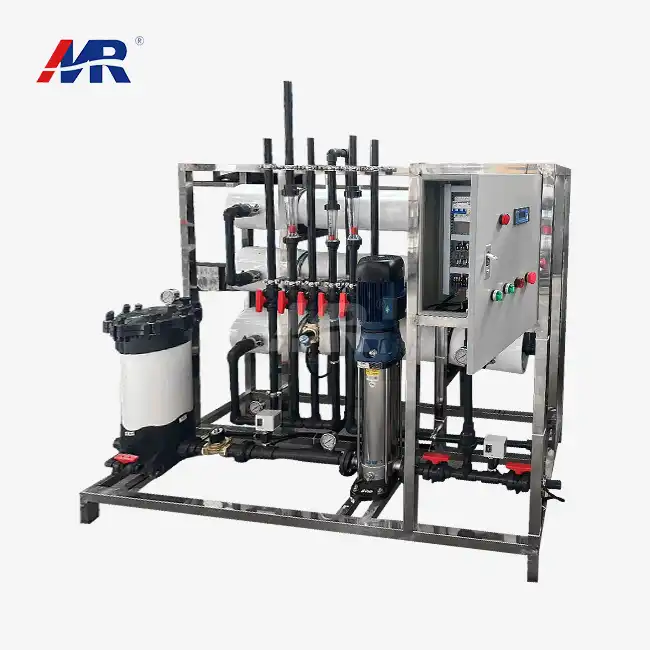
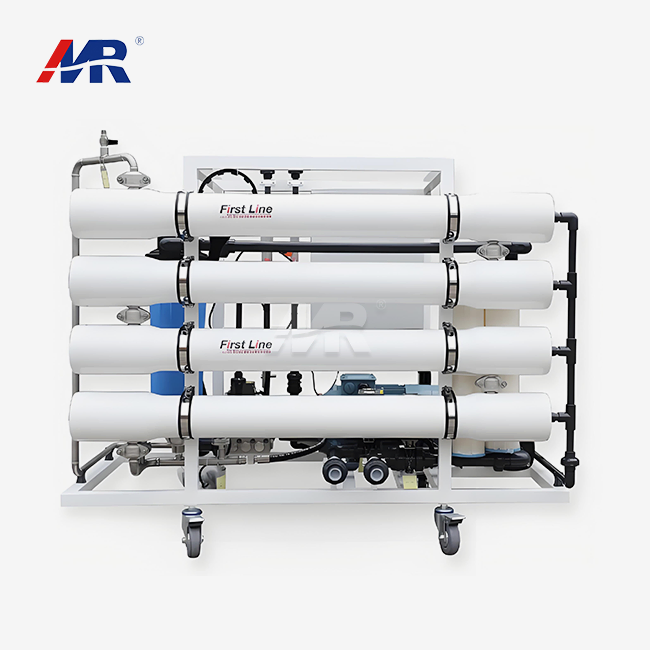
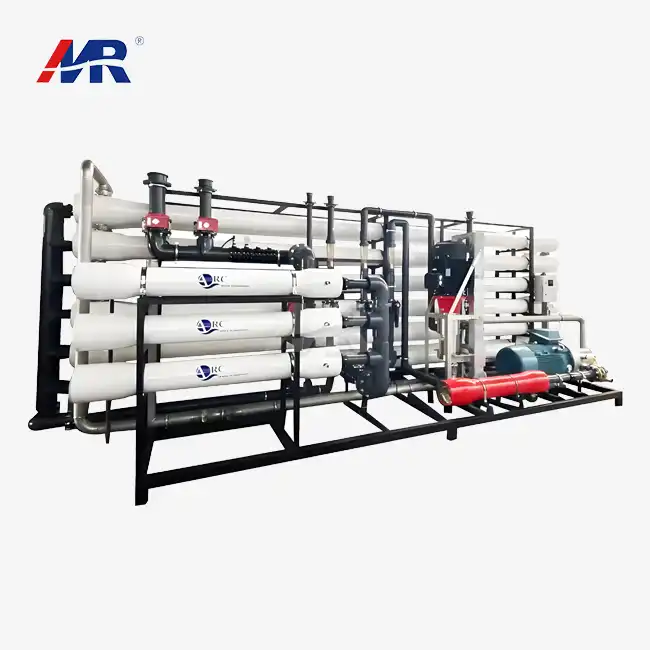
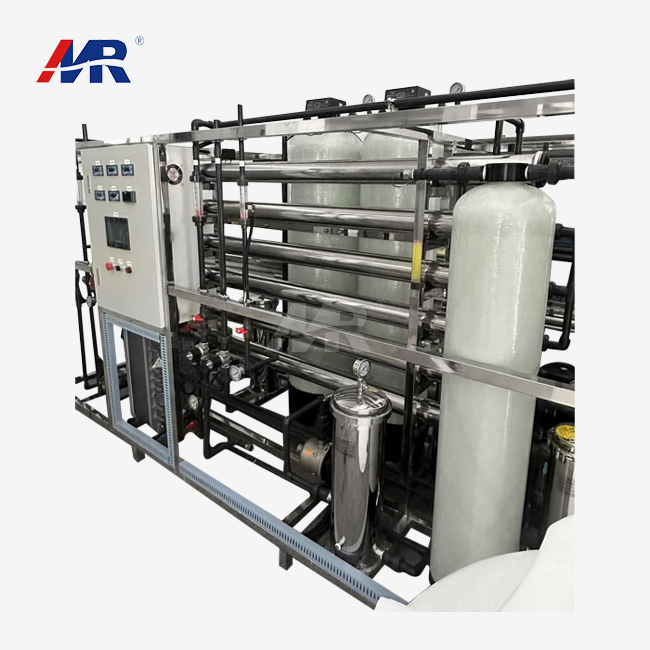
_1745823981883.webp)

The DTRO modules manage the wastewater that traditional reverse osmosis cannot process using an open disc-and-tube channel that is not subject to clogging from oils, particles, and heavy salt loads. This book lays down the three-layer membrane construction, the turbulent flow route that maintains the surface clean, the pressure ranges that match various waste streams, and the maintenance plan that keeps a system functioning for years instead of months. For those selecting industrial wastewater equipment for the first time, the mechanics will be presented in clear words with published performance statistics and one unique case study to back it up.
Plant managers addressing electroplating rinse water, landfill leachate, or high-COD chemical effluent often find that spiral-wound RO cartridges are used up quicker than their budgets allow. Guangdong Morui Environmental Technology Co., Ltd. has been manufacturing membrane systems since 2005. The technical team behind our DTRO Modules develops each unit to the exact fouling profile of the waste stream, not a general catalogue standard. Just send your water analysis to benson@guangdongmorui.com, and we will provide you with simple module sizing comments.
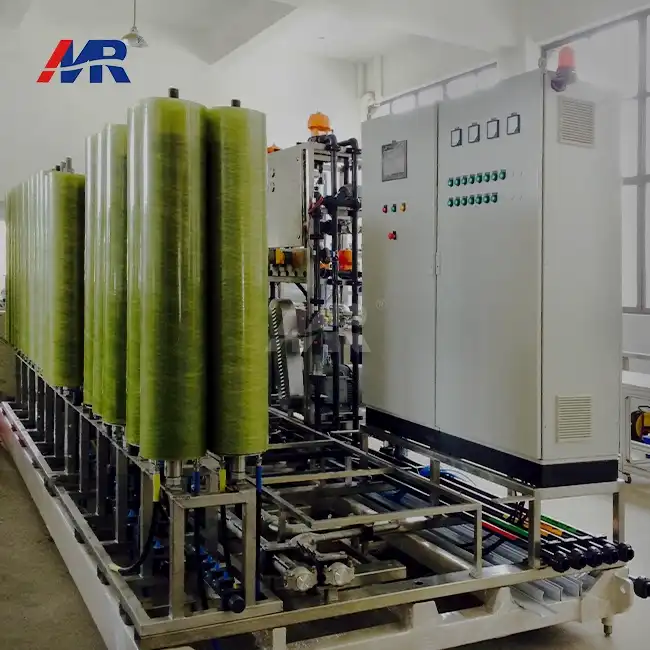
What Is a DTRO Module and How Does It Work?
Standard RO uses a tightly wrapped spiral membrane sheet, but a DTRO module substitutes this with circular membrane cushions placed between hydraulic guide plates along a central tension rod. The feed liquid enters the pressure vessel and flows via broad open channels between the discs. Under pressure, the feed is forced through the membrane surface while the concentrate escapes at the far end. This mechanical difference is the whole rationale for the existence of DTRO Modules as a separate product category and not simply another RO element variation, and why they cost more per unit of membrane area, but still win on total operating cost for tough water.
Origins of the Disc Tube Design
Disc tube technology was developed in the late 1990s as a saltwater desalination option for ships, with DTRO modules later finding their true calling in landfill leachate treatment in Germany. The open-channel shape, which worked well for sloshing shipboard tanks, was precisely what heavy industrial wastewater required since the design could handle suspended materials that would blind a spiral element in days.
Where DTRO Modules Fit in a Treatment Train?
DTRO Modules are normally located after primary screening and pH correction, before any polishing step. They are unique in that they provide double duty against organic load and dissolved salts in one pass, which decreases the number of process steps a plant needs to deal with.
Today, three industries depend most on this setup. Here’s how each one does it:
- Electronics and battery manufacturing: Nickel and cadmium plating baths produce rinse water that must be more than 95 percent heavy metal rejection before discharge, and DTRO modules can accommodate that load in one pass, eliminating the multi-stage ion-exchange train that previous facilities required.
- Landfill leachate management: Mature leachate contains refractory organics and high ammonia nitrogen that biological treatment alone cannot handle, and disc tube systems typically achieve COD and ammonia removal rates exceeding 98 percent in full-size facilities.
- Power and petrochemical boiler feed: Reinjection water and process condensate frequently have high total dissolved solids, and a DTRO polishing step protects downstream ion-exchange or EDI equipment from premature fouling and scaling.
The unifying thread between all three situations is that each waste stream has enough suspended particles or salinity to overwhelm a standard spiral-wound RO cartridge in days. And that is precisely the gap that disc tube design was meant to bridge.
How Does DTRO Membrane Design Affect Performance?
The rejection that a system gives and the lifespan of a system against chemical assault are determined by membrane chemistry. A DTro membrane cushion used in DTRO modules is composed of a three-layer composite, rather than a single sheet, with each layer having a particular function.
The Three-Layer Composite Structure
A polyester backing web provides the membrane with its mechanical strength and something to bind to. Above this is a microporous interlayer, usually polysulfone or polyethersulfone, which offers a robust support surface. In fact, a thick, ultra-thin polyamide barrier layer on the top prevents salts and organic pollutants from getting through. It serves as a thin-film composite that rejects dissolved particles but allows water molecules to pass.
Why Polyamide/Polysulfone Blends Improve Rejection?
The study on the modified polyamide and polysulfone DTRO membranes showed that the blend had good mechanical qualities, long-term stability, and a high water recovery rate when compared with the conventional membrane substrates. This membrane chemistry is rated for pH levels from 0 to 14 and operating temperatures up to 50°C, which is important when a plant’s wastewater swings between acidic rinse cycles and alkaline cleaning batches. Morui’s MR-DTRO-60TD platform utilises this membrane chemistry.
How Does Feed Flow Through a DTRO Module?
DTRO has a reputation for managing rough water in the flow channel. DTRO modules don't force feed into a tightly spiralled channel, but instead guide liquid over a broad gap that enables suspended particles to keep moving rather than settling.
The Open Channel Path
Liquid feed is introduced at the bottom of the vessel and runs up through the annulus between the discs and vessel housing before entering each disc via inlet holes in the top flange. The permeate passes through the membrane for a short distance, then makes a 180-degree turn to leave via the middle draw rod. The concentrate continues along the disc stack. This configuration means the laser has a virtually equal travel distance for each disc in the module, which explains why DTRO Modules provide constant output when the stack grows from a few discs to a complete production skid.
Turbulence as a Built-In Cleaning Mechanism
The hydraulic guide discs are moulded with small convex bumps that compel the liquid going through to form a turbulent cross-flow pattern rather than a clean laminar stream. That turbulence breaks concentration polarisation, when rejected salts stack up at the membrane surface and pull down flux, and constantly scours loose particles off the membrane before they can link into a fouling layer.
What Pressure Does a DTRO Module Require?
Feed salinity and desired recovery rate nearly completely determine the operating pressure of DTRO modules. Higher dissolved particles increase the osmotic pressure the pump needs to overcome; thus, a system treating weak rinse water operates significantly lower than one polishing rich brine.
Typical Pressure Ranges by Application
Well-matched DTRO Modules normally operate with light industrial effluent of mild salinity from 40 to 60 bar. Landfill leachate and high-salinity concentrate often need 80 to 120 bar to overcome the high osmotic pressure, and certain applications involving ultrahigh-concentration brine polishing need to go beyond that range for additional volume reduction.
Matching Pressure Rating to Waste Stream Chemistry
DTRO Modules for these higher pressure ranges need strengthened housings and support rings. Operating an undersized vessel at high pressure reduces seal life and increases the danger of catastrophic failure. Standard modules are rated up to 120 bar, sufficient for landfill leachate concentration and most industrial brine streams without bespoke pressure vessel modification.
DTRO vs Conventional RO Modules: What Differs?
Spiral-wound RO and DTRO employ the same basic membrane chemistry, but the mechanical design surrounding that membrane determines the kind of water each can handle without continual intervention when using DTRO modules.
Feed Channel Geometry and Solids Tolerance
Spiral-wrapped elements densely pack membrane sheets around a central tube to provide maximum surface area per module, but that creates small gaps that capture suspended particulates very instantly. DTRO can take a significantly higher silt density index right out of equalization since it trades some packing density for a channel large enough to carry solids straight through.
Maintenance Burden and Total Operating Cost
The spiral RO system had to be cleaned every three days on a reported field case of the same high-COD effluent, around 25,000 mg/L. Switching to a two-stage disc tube system at 75 bar extended this to once every three weeks. That difference in how often you’re cleaning adds up quickly in a facility that’s continuous production.”
| Factor | DTRO Modules | Spiral-Wound RO |
|---|---|---|
| Feed channel width | Wide, open design | Narrow, tightly wound |
| Suspended solids tolerance | High | Low |
| Typical cleaning interval | Weeks under heavy fouling | Days under the same conditions |
| Pretreatment requirement | Basic screening + pH adjustment | Multi-stage clarification, UF, cartridge filters |
| Best fit | High-solids, high-salinity industrial streams | Pre-clarified, low-solids permeate polishing |
Which Membrane Materials Suit DTRO Applications?
The chemical resistance of DTRO modules is a function of the material of construction. This is a more relevant consideration for industrial wastewater than for municipal water treatment because of the much more predictable chemistry of the influent.
Polyamide Composite Membranes
The most widely utilised membranes for DTRO applications treating landfill leachate and chemical process wastewater are polyamide thin film composite membranes because of their excellent salt rejection and stability across a wide pH range. Their main disadvantage is the sensitivity to free chlorine, and consequently, any pretreatment procedure involving chlorine-based disinfection must be preceded by dechlorination before the input water reaches the membrane.
Polysulfone and Polyethersulfone Support Layers
The support layer beneath the polyamide barrier is typically polysulfone or polyethersulfone, selected for thermal stability and resistance to aromatic solvents. The supporting parts provide the membrane with the strength to withstand several high-pressure cycles without delaminating from the polyester backing.
| Specification | Value |
|---|---|
| Application | Landfill leachate and industrial wastewater treatment |
| Power consumption | 40 kW/hour |
| Recovery rate | 50-70% |
| Inlet COD tolerance | Under 25,000 mg/L |
| Operating pressure range | Up to 120 bar |
| Membrane materials | Polyamide / polysulfone |
How Does DTRO Handle Fouling and Scaling?
All membrane processes must contend with some degree of fouling and scaling, and DTRO modules address these challenges through mechanical design rather than relying solely on chemistry.
Mechanical Scour vs Chemical Antiscalants
The crossflow velocity and turbulence promoters physically restrict the amount of material that may settle on the surface of the membrane, decreasing the load that antiscalant chemicals have to deal with. From studies on crossflow membrane systems, it is known that the increase of the crossflow velocity and the use of turbulence promoters are well-known techniques for managing concentration polarisation and decreasing the accumulation of fouling.
Why do Modular Discs Simplify Fouling Response?
The membrane is not one big continuous spiral, but in individual disc cushions, so a worker can pull and check a single disc without dismantling the whole module. This becomes critical when uneven fouling occurs close to the feed intake, since a targeted disc replacement requires far less downtime than replacing the whole cartridge.
Across industrial sites, Morui’s facilities, which use DTRO modules and follow the recorded pretreatment and disc-inspection process specified in this guide report, have brought online plants that run around 20 percent longer intervals between chemical cleanings than locations that do not have the weekly pressure and flux log. On high-fouling streams, such as electroplating rinse water, the gap is more likely to open even further, where uneven scaling at the feed entrance is the most typical early failure spot.
What Signs Indicate a DTRO Module Needs Maintenance?
Early warning indications may help avoid an emergency shutdown during a typical cleaning cycle. Most operators overlook the same few signs until performance is already down considerably.
Pressure and Flux Trends to Watch
An increase in feed pressure for the same amount of permeate flow is an indication of fouling buildup on the membrane surface. A steady pressure dropping permeate flow from the other side indicates the same issue. Either pattern, prolonged over a period of many days rather than one measurement, requires a cleaning cycle.
Water Quality and Noise Indicators
If salt rejection falls, as seen by increasing conductivity in the permeate, it is frequently because the DTRO module's membrane or DTRO modules have scaled, or a tiny hole has occurred. A partly clogged feed channel causing cavitation might be indicated by unusual vibration or noise from the high-pressure pump and should be attended to before it destroys the pump seals.
How Often Should DTRO Modules Be Cleaned?
How often to clean is more dependent on the chemistry of the feed water than on any calendar timetable, but most operators find a regular rhythm after a system stabilises.
Standard Cleaning Intervals
Most full-scale disc tube systems perform a lighter acid cleaning cycle about every 100 hours of operation with a more comprehensive alkaline cleaning cycle around every 500 hours. Adjustments are made depending on raw water quality and the observed rate of fouling.
Adjusting Frequency for High-Fouling Streams
Streams with oils, strong organic loads, or high hardness need cycling more often than the usual period. Properly configured DTRO modules can help address these demanding feed conditions, while a field retrofit case study demonstrated a reduction in cleaning frequency from every three days on a fouled spiral system to once every three weeks after converting to a correctly sized two-stage DTRO unit, indicating how significantly design fit impacts real-world maintenance burden.
A general cleaning cadence worth using as a starting reference before a site-specific schedule gets established is: Acid cleaning roughly every 100 operating hours to strip mineral scale before it hardens, Alkaline cleaning around every 500 hours to remove organic and biological fouling layers, A full visual disc inspection during each alkaline cycle to catch uneven wear early, and A pressure and flux log reviewed weekly so drift gets caught before it becomes a shutdown. Sites that do not do the weekly log are likely to find fouling issues only after production has already fallen.
| Cleaning Type | Typical Interval | Purpose |
|---|---|---|
| Acid cleaning | Every ~100 hours | Removes mineral scale |
| Alkaline cleaning | Every ~500 hours | Removes organic film and biological fouling |
| Disc inspection | Each alkaline cycle | Catches localized wear before it spreads |
How Can You Extend DTRO Module Service Life?
A well-managed disc tube system can run 3 to 5 years before membrane replacement, against an industry-standard 2 years for membranes running under heavier fouling stress without design or maintenance support.
Pretreatment Consistency
Even a fouling-resistant DTRO membrane benefits from stable pH and basic screening ahead of the module. Consistent pretreatment reduces the swing in feed chemistry that stresses the polyamide barrier layer and shortens membrane life over repeated cycles.
Documented Cleaning Protocols Over Guesswork
A cleaning schedule tuned to the specific site, rather than a generic template copied from a different waste stream, extends service life meaningfully. Tracking pressure and flux data over time lets an operator catch a developing fouling trend early enough to intervene before permanent scaling sets in. Plants that treat DTRO modules as a set-and-forget purchase, skipping the logging step entirely, tend to see membrane replacement come due a full year earlier than sites running a documented monitoring routine.
Case Study: Electroplating Wastewater Retrofit in Johor, Malaysia
An electronics component manufacturer running an electroplating line near Johor Bahru approached Guangdong Morui Environmental Technology Co., Ltd in late 2025 after its existing spiral-wound RO system needed cleaning every four days, driving unplanned downtime that delayed production runs. Rinse water testing showed nickel and cadmium concentrations exceeding local discharge limits, along with COD near 4,500 mg/L from process additives and a high scaling tendency from calcium-rich rinse baths.
Morui's team ran an onsite water analysis, then specified a single-stage DTRO Modules package built around the MR-DTRO-60TD platform with polyamide/polysulfone membranes rated for the site's pH swings between 3 and 11. The system reached stable operation within ten days of commissioning. Post-startup data recorded nickel and cadmium rejection above 96 percent, a sustained recovery rate of 68 percent, and cleaning intervals stretching from four days to roughly eighteen days under normal production load. The plant's maintenance supervisor confirmed the switch cut membrane-related downtime by more than 70 percent across the initial six months, freeing staff hours previously spent on emergency cartridge swaps for other production support work.
Conclusion
DTRO modules deliver their advantage through mechanical design, not exotic chemistry alone. The open disc-and-tube channel, turbulent cross-flow, and three-layer polyamide composite membrane work together to handle waste streams that would foul a spiral-wound RO cartridge within days. Matching pressure rating, membrane material, and cleaning schedule to the actual feed chemistry, rather than a generic spec sheet, is what separates a system running reliably for five years from one needing constant emergency attention.
FAQ
1. What makes DTRO Modules different from standard RO membranes?
DTRO Modules use round membrane cushions stacked in an open channel instead of a tightly spiraled sheet, which lets them tolerate suspended solids, oils, and high salinity that would clog a conventional spiral-wound RO element within days.
2. How long do DTRO membranes typically last?
A properly maintained DTRO membrane running on well-matched pretreatment commonly lasts 3 to 5 years, compared with roughly 2 years for standard membranes under the same heavy fouling conditions.
3. What operating pressure do DTRO Modules need?
Pressure requirements range from about 40 to 60 bar for lighter industrial wastewater up to 80 to 120 bar for landfill leachate and high-salinity concentrate, depending on feed osmotic pressure and target recovery rate.
4. Can DTRO Modules handle heavy metal wastewater?
Yes. Polyamide composite DTRO membranes reject nickel, cadmium, and similar dissolved metal ions at rates above 95 percent in properly designed systems, making them well suited to electroplating and battery manufacturing effluent.
5. How often should a DTRO system be chemically cleaned?
Most full-scale systems run acid cleaning roughly every 100 operating hours and alkaline cleaning around every 500 hours, though high-fouling streams may need a tighter schedule until the plant's actual fouling rate gets established.
Ready to Upgrade Your Wastewater Membrane System?
Guangdong Morui Environmental Technology Co., Ltd manufactures DTRO modules in-house, from membrane sheet casting through skid assembly, across 15-plus production workshops. As a direct DTRO Modules manufacturer serving clients across Asia, South America, and Africa, we offer free water sample testing, 20-35-day lead times, and a 3-year warranty with global spare parts support. Send a recent water analysis to benson@guangdongmorui.com for a module sizing recommendation.
Guangdong Morui Environmental Technology Co., Ltd runs more than 14 branches with 500 employees and 20 engineers, and holds ISO 9001, CE, and RoHS Certifications across its product lines. That in-house production depth is why our DTRO Modules can be customized in membrane material, flow rate, and housing configuration rather than shipped as a fixed catalog unit that may not fit a specific wastewater profile.
References
1. "Performance of landfill leachate treatment system with disc-tube reverse osmosis units." Frontiers of Environmental Science & Engineering, Springer, 2008. https://link.springer.com/article/10.1007/s11783-008-0024-x
2. "Development of novel high anti-pollution polyamide/polysulfate disk tubular reverse osmosis membrane modules and their application in simulated space bathing wastewater." ScienceDirect, 2024. https://www.sciencedirect.com/science/article/abs/pii/S2214714424003519
3. Shanghai CM. "Disc-Tube Reverse Osmosis: Engineered for Landfill Leachate & ZLD." 2026. Products/reverse-osmosis-membranes/dtro/">https://shanghai-cm.com/products/reverse-osmosis-membranes/dtro/
4. "High-Frequency Pulsatile Parameterization Study for Membrane Fouling Mitigation Using Box-Behnken Response Surface Methodology." National Library of Medicine, PMC, 2022. https://www.ncbi.nlm.nih.gov/pmc/articles/PMC9788362/
5. Zhu, W. et al. "Application of disk tube reverse osmosis in wastewater treatment: A review." Science of the Total Environment, ScienceDirect, 2021. https://www.sciencedirect.com/science/article/abs/pii/S0048969721033623
6. "Characteristics of organic matter removed from highly saline mature landfill leachate by an emergency disk tube-reverse osmosis treatment system." Chemosphere, ScienceDirect, 2020. https://www.sciencedirect.com/science/article/abs/pii/S004565352032542X
About the Author
Renjie Kuang is a Lead Membrane Systems Engineer at Guangdong Morui Environmental Technology Co., Ltd., where he specializes in DTRO and reverse osmosis module design for industrial wastewater, landfill leachate, and desalination applications. He has overseen module selection and commissioning for manufacturing, electronics, and municipal clients across Asia, South America, and Africa, working directly with ISO 9001 and CE-certified membrane platforms. His work centers on matching membrane material and flow design to each site's actual wastewater chemistry.