_1745823981883.webp)


Send your raw water report to Morui at benson@guangdongmorui.com. As a 12m3/hour reverse osmosis BWRO system manufacturer, we size the skid, pretreatment, and pumps to your water chemistry. Our group has more than 14 branches and 20 engineers, so a technical proposal reaches you quickly. Share your TDS, silica level, and daily operating hours to start.
What Makes a 12m³/h BWRO System Supplier Reliable?
A reliable supplier asks about your water before naming a price. The USGS defines brackish water as water with 1,000 to 10,000 mg/L of dissolved solids. Two wells five kilometers apart can need different pretreatment, antiscalant doses, and membranes. A supplier who quotes without a water analysis is guessing with your money.
What Is a 12m3/hour Reverse Osmosis BWRO System?
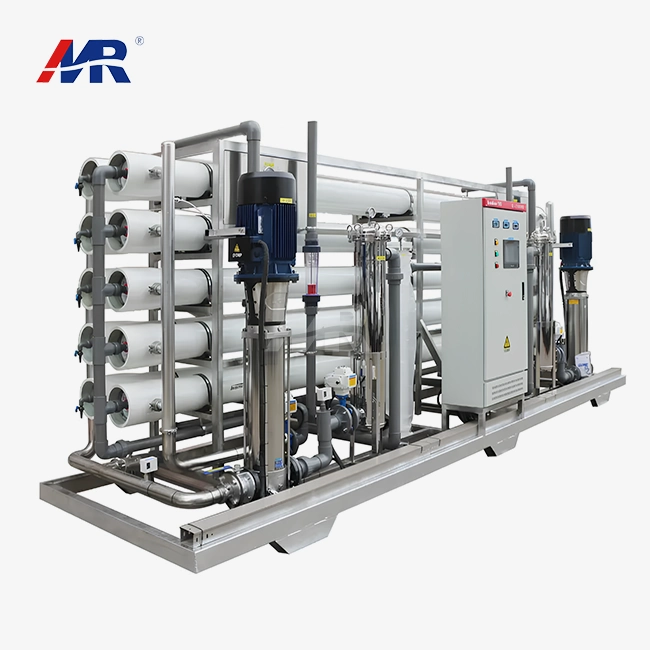
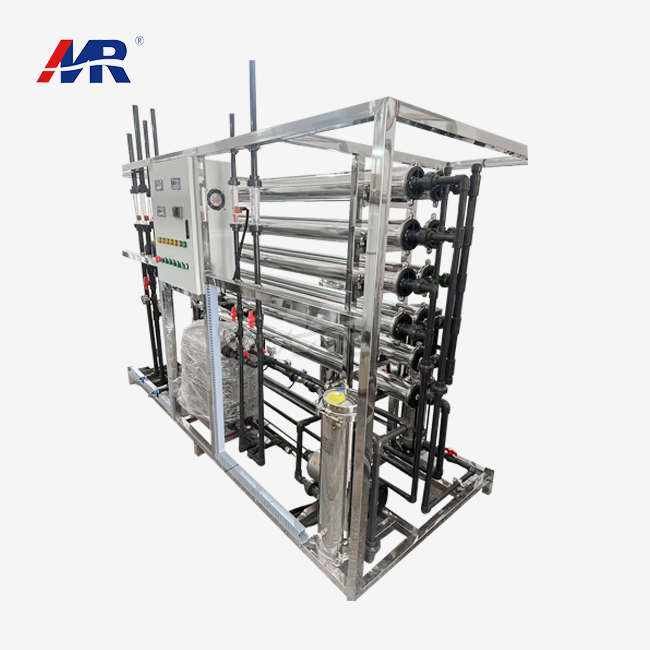
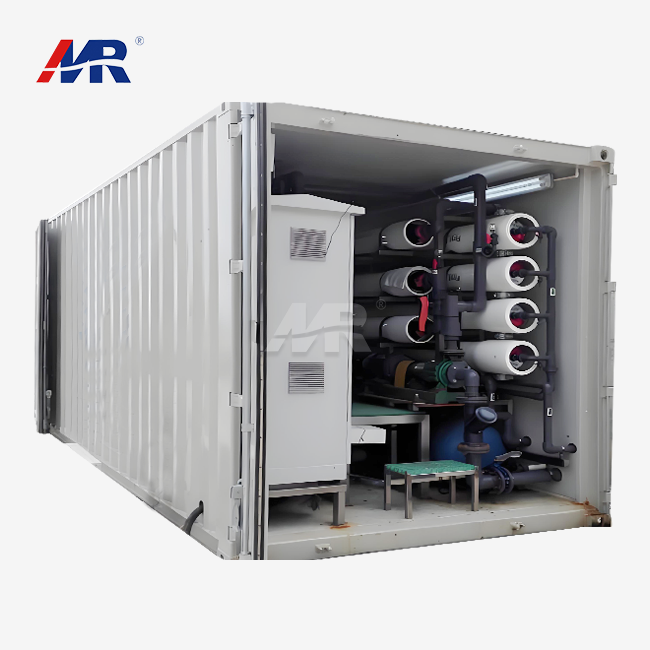
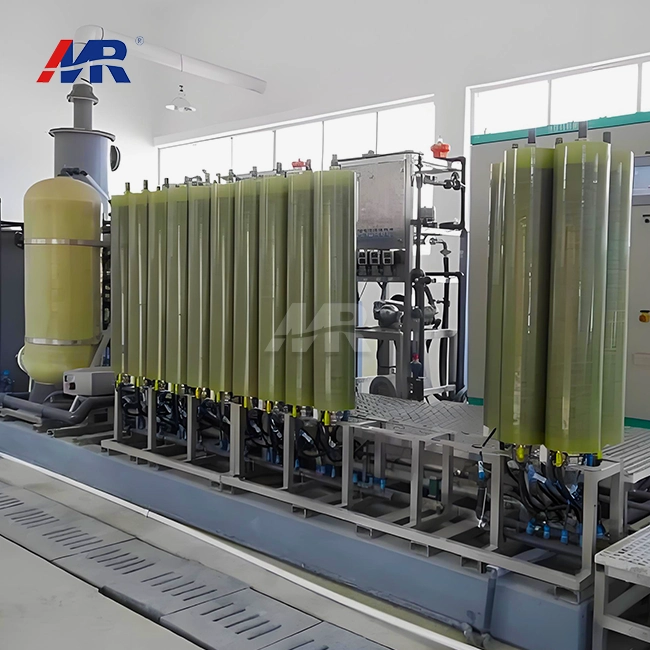
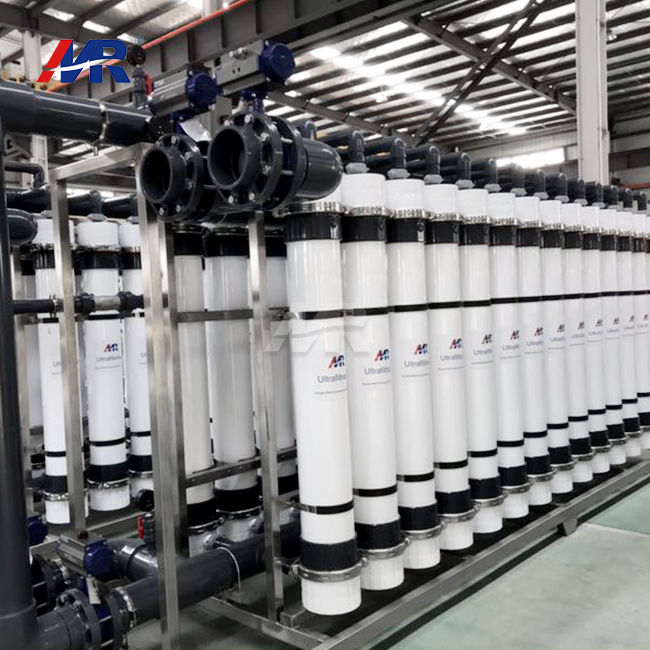
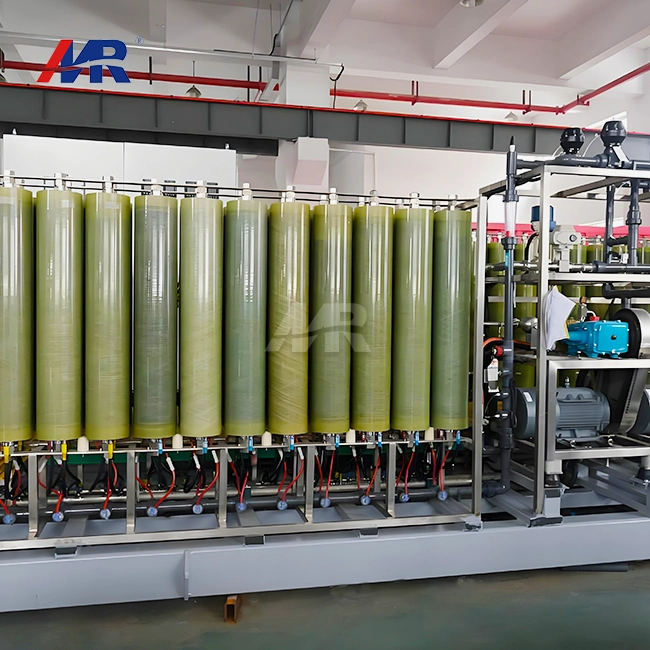
A 12m3/hour reverse osmosis BWRO system is a packaged brackish water reverse osmosis plant that produces 12 cubic meters of treated water per hour. The unit pushes pretreated water through spiral-wound membranes at high pressure. The membranes hold back salts, and clean permeate passes through. RO is the most common municipal desalination technology in the United States. The letters BWRO mean the unit is built for brackish feed, not seawater.
What Does a Reliable Supplier Do Before Quoting?
A serious supplier asks for TDS, pH, temperature, hardness, silica, iron, and turbidity. It also asks how many hours per day you run the plant and what quality you need at the outlet. At Morui, our engineers request a full raw water analysis before they choose the pretreatment train. That train usually pairs multimedia filtration with antiscalant dosing.
Which BWRO Specifications Matter at 12m³/h?
Ask each supplier to fill in the same table, then compare line by line. Table 1 lists the parameters of our 12m3/hour reverse osmosis BWRO system and explains why each one affects your budget.
| Parameter | Morui value | Why it matters |
|---|---|---|
| Capacity | 12 m³/hour | Sets output: 288 m³ per day at 24-hour operation |
| Recovery rate | Up to 75% | Cuts raw water use and concentrate volume, but raises scaling risk |
| Salt rejection | Above 98% | Defines permeate quality for process, drinking, or irrigation use |
| Power consumption | Under 1 kWh/m³ | Drives the largest share of daily operating cost |
| Membrane type | High-rejection, low-fouling TFC | Low fouling means fewer cleanings and longer membrane life |
| Pretreatment | Multimedia filtration and antiscalant dosing | Protects membranes from particles and mineral scale |
| Control system | PLC with touch screen | Enables automated operation and remote monitoring |
How Do Recovery, Rejection, and Power Use Affect Cost?
Recovery decides how much raw water your 12m3/hour reverse osmosis BWRO system pumps. At 75% recovery, a 12 m³/h permeate flow needs 16 m³/h of feed and sends 4 m³/h to concentrate. Many quotes hide that math. Push recovery higher without proper antiscalant, and scale follows. The USGS found barite oversaturation in 48 to 74 percent of brackish samples, a scale that damages ro membranes. Match recovery to your water, not to a brochure.
Which Components Deserve a Brand Check?
Ask for the brand and model of every major part in the 12m3/hour reverse osmosis BWRO system: membranes, high-pressure pump, valves, and instruments. Recognized membrane names include DuPont FilmTec, Hydranautics, Toray, and Vontron. Pump names such as Grundfos, CNP, and Ebara signal long-term hydraulic efficiency. Morui makes its own membranes and acts as an agent for Shimge water pumps, Runxin valves, and Createc instruments. Whatever the brand, write it into the contract. Also confirm the unit includes a Clean-in-Place system for routine membrane cleaning.
How Does BWRO Compare With Other RO Systems?
BWRO, seawater RO, and nanofiltration all use membranes, yet each fits a different salinity band. The wrong type wastes energy or leaves salts in your water. Seawater sits far above the 10,000 mg/L brackish ceiling, so it needs more pressure. The Congressional Research Service notes that seawater desalination may rank among the more energy-intensive options for municipal supply. Table 2 sets the three side by side.
| System | Typical feed water | Best fit | Main watch-out |
|---|---|---|---|
| BWRO (12 m³/h class) | Brackish water, 1,000 to 10,000 mg/L | Factories, hotels, irrigation, small municipal supply | Pretreatment must match scaling ions |
| SWRO | Seawater and other highly saline water | Coastal cities, ships, offshore platforms, islands | Higher energy use and brine discharge |
| NF | Lower-salinity water needing partial salt removal | Softening and hardness removal | Passes some salts, so it is not full desalination |
Most inland factories and resorts with brackish wells find a 12m3/hour reverse osmosis BWRO system the best balance of cost and quality. Morui also supplies Seawater Desalination Equipment, so we recommend the type that fits your water.
What Feedwater Conditions Affect BWRO Supplier Selection?
Why Do TDS, Silica, and Scaling Ions Matter?
TDS sets pressure and energy. Silica and barium-type scalants set the risk of permanent damage. The USGS warns that removing silica before RO is difficult, and scale may be impossible to clean off once it forms on a membrane. Its review also shows that most municipal desalination plants treat feed below 3,000 mg/L, because cost climbs with salinity. Ask every supplier how its 12m3/hour reverse osmosis BWRO system will handle your silica figure.
How Should Pretreatment Match Your Water?
DuPont's data sheet for FilmTec brackish elements sets a maximum feed Silt Density Index of 5 and a free chlorine limit under 0.1 ppm. Multimedia filters lower SDI. Carbon or bisulfite steps remove chlorine. Antiscalant dosing stops mineral scale. Softeners help when hardness runs high. Drinking water projects need one more check, because USGS data show arsenic, nitrate, fluoride, and uranium can exceed drinking-water standards in some brackish wells. A good supplier shows which steps your 12m3/hour reverse osmosis BWRO system needs and why.
How Can You Compare BWRO Suppliers and System Costs?
Compare total cost of ownership, not the ex-works price. Power, antiscalant, cartridge filters, membrane replacement, and cleaning chemicals add up over the years. Table 3 shows an illustrative calculation for a 12m3/hour reverse osmosis BWRO system using our published parameters. Your figures will change with local tariffs and operating hours.
| Item | Calculation | Result |
|---|---|---|
| Permeate flow | Rated capacity | 12 m³/h |
| Feed water needed | 12 ÷ 0.75 recovery | 16 m³/h |
| Concentrate flow | 16 − 12 | 4 m³/h |
| Daily output | 12 m³/h × 20 hours | 240 m³/day |
| Annual output | 240 m³ × 350 days | 84,000 m³/year |
| Annual energy | 84,000 m³ × under 1 kWh/m³ | Under 84,000 kWh |
| Annual power cost | 84,000 kWh × $0.10 | Under $8,400 |
What Belongs in a Fair Quotation?
A fair quote lists the scope line by line. Look for the pretreatment train, membrane brand and count, high-pressure pump, CIP system, PLC panel, instruments, and spare parts. Check whether installation and commissioning are included. Morui quotes each 12m3/hour reverse osmosis BWRO system together with one-stop installation and commissioning, which closes the gap between vendor and site contractor. Add concentrate disposal to the scope, since the CRS flags brine management as a major challenge. Ask about lead time, warranty, and the price of a replacement membrane set.
Which Certifications Should a BWRO Supplier Provide?
Certificates prove process, so ask for test data too. ISO 9001:2015 is the most widely used quality management standard, with more than one million certificates issued in 189 countries. It shows that a supplier of a reverse osmosis plant controls design, purchasing, and complaints through documented steps.
NSF/ANSI 61 sets health-effects requirements for chemicals that Products release into drinking water, and it covers valves, filters, pipes, and gaskets. Your target water quality matters too. The WHO drinking-water guidelines form the basis for many national standards. Send Morui your country's requirements, and we will confirm which documents apply to your 12m3/hour reverse osmosis BWRO system.
How Can You Verify a BWRO Supplier Before Ordering?
Paper claims are easy to write. Use the four checks below before you release a deposit.
- Audit the factory. Visit the plant or request a live video tour of welding, skid assembly, and testing. Look for organized inventory, calibrated instruments, and written test records. Morui owns a membrane factory and several equipment processing factories, so buyers can inspect how membranes and skids come together inside one group.
- Request references and site data. Ask for projects of similar size and water type, especially those using a reverse osmosis system, then call the operators. Ask about recovery, cleaning frequency, and membrane life after one full year of running. Ask for at least two contacts. Real users give real numbers, and a confident supplier will connect you without delay.
- Witness the factory test. Ask for a documented test run with flow, pressure, conductivity, and PLC alarms recorded. Compare the results with the contract sheet line by line. Confirm that the touch screen and remote monitoring work before the unit ships, not after it reaches your site and every fix costs more.
- Test after-sales strength. Ask where spare parts are kept, who answers service calls, and how fast. A group with more than 14 branches and 20 engineers, like Morui, can place support closer to your site. Request operating manuals, P&ID drawings, and a spare parts list together with the quote, and get the service response time in writing.
Strong answers on all four points show a supplier that will still support your 12m3/hour reverse osmosis BWRO system after commissioning. Guangdong Morui Environmental Technology Co., Ltd covers industrial wastewater, domestic sewage, seawater desalination, and drinking water production. We deliver equipment, installation, and commissioning as one package. Product details are listed at moruiwater.com.
What Should You Confirm Before Buying a 12m³/h BWRO System?
Confirm the water data, scope, site, and support plan for your 12m3/hour reverse osmosis BWRO system and BWRO plant in writing. Share your latest raw water analysis and update it if the source changes by season. Agree on guaranteed permeate flow, recovery, and salt rejection at a stated temperature and feed TDS. Check footprint, power supply, and the concentrate disposal route. Our 12m3/hour reverse osmosis BWRO system uses a compact, modular skid, so you can add capacity later.
Which Real-World Uses Fit a 12m3/hour BWRO Skid?
Hotels and resorts use a 12m3/hour reverse osmosis BWRO system to turn brackish well water into supply for rooms, laundry, and pools. Continuous operation yields 288 m³ per day. Food and beverage plants use it for process and beverage water, where stable quality protects the product.
Agriculture is a third fit for a 12m3/hour reverse osmosis BWRO system. The USGS notes that water up to about 1,500 mg/L of dissolved solids can irrigate most crops. A grower can blend permeate with raw brackish water to reach a safe salinity. Small towns and remote sites are a fourth fit for a 12m3/hour reverse osmosis BWRO system. The federal desalination plan named small, modular systems for rural and remote areas as a priority.
Conclusion
The best supplier for a 12m3/hour reverse osmosis BWRO system studies your water, publishes clear specifications, and names its components. It holds recognized certificates and lets you verify every claim. Use the three tables above to compare bids line by line. Reject any quote that skips your water analysis. Follow that path, and your 12m3/hour reverse osmosis BWRO system will deliver steady water at a predictable cost for years.
FAQ
1. How much does a 12m3/hour reverse osmosis BWRO system cost?
Price depends on pretreatment, membranes, pumps, materials, automation, and the installation scope. No honest supplier quotes a fixed figure without your water analysis. Compare quotes on the same scope, then add operating costs. Table 3 shows that power for our 12m3/hour reverse osmosis BWRO system stays under $8,400 per year in the stated example.
2. How much water does a 12 m³/h BWRO system reject?
At 75% recovery, the 12m3/hour reverse osmosis BWRO system rejects 25% of the feed as concentrate. That means 4 m³/h leaves the system while 12 m³/h becomes permeate. Plan the concentrate disposal or recycling route before you order, because it affects permits and cost.
3. How often do BWRO membranes need cleaning?
No fixed schedule fits every site. Track permeate flow, salt passage, and pressure drop, then clean when performance drifts. DuPont lists a short-term cleaning pH window of 1 to 13 for 30 minutes on its FilmTec elements. Good pretreatment and a built-in CIP system keep cleanings on a 12m3/hour reverse osmosis BWRO system rare and simple.
4. Can a 12m3/hour reverse osmosis BWRO system treat seawater?
No. A 12m3/hour reverse osmosis BWRO system is designed for brackish feed between 1,000 and 10,000 mg/L. Seawater needs an SWRO design with higher pressure and different membranes. Morui supplies seawater desalination equipment, so tell us your source, and we will recommend the right system.
5. What water data should I send to a supplier?
Send TDS, pH, temperature, hardness, silica, iron, turbidity, SDI, and free chlorine. Add your daily operating hours and the outlet quality you need. If your source changes with the seasons, share results from wet and dry periods.
Ready to Size Your 12m3/hour BWRO Skid? Talk to Morui's Engineers
Morui builds each 12m3/hour reverse osmosis BWRO system for sale with pretreatment, high-pressure pumping, PLC control, installation, and commissioning. Email benson@guangdongmorui.com with your water report and daily output target. Our engineers will reply with a sized proposal and a clear price.
References
1. Congressional Research Service (2025). Desalination: Converting Saline Water into a Municipal Water Source, Insight IN12378. Cited in the definition, comparison, and quotation sections. https://www.everycrsreport.com/files/2025-11-21_IN12378_f667edaa4ac4f641d01b49cdd6915adcc7ea39ad.pdf
2. World Health Organization (2022). Guidelines for drinking-water quality: fourth edition incorporating addenda. Cited in certifications. https://who.int/publications/i/item/9789240045064
3. NSF International (2016 public edition). NSF/ANSI 61: Drinking Water System Components – Health Effects. Cited in certifications. https://www.nsf.org/knowledge-library/nsf-ansi-standard-61-drinking-water-system-components-health-effects
4. International Organization for Standardization (2015). ISO 9001:2015 Quality management systems – Requirements. Cited in certifications. https://www.iso.org/standard/62085.html
About the author. Renjie Kuang is a Water Treatment Technical Writer at Guangdong Morui Environmental Technology Co., Ltd. Renjie writes technical guidance on brackish water treatment, reverse osmosis sizing, and supplier evaluation for industrial, municipal, and hospitality buyers. Working alongside Morui's engineers, who design, install, and commission RO systems, Renjie checks every figure against a listed source or Morui's published specifications.