



How to Select 500LPH EDI Equipment for Ultrapure Water Production?
If your pharma fill line, semiconductor rinse bay, or boiler feed loop calls for up to 500 liters of ultra-pure water per hour, choosing the proper 500LPH EDI equipment is no easy catalog selection. I've been specifying RO+EDI trains for facilities in Asia, the Middle East, and Latin America for over a decade, and the buyers that get this right invariably begin with feed water data, not with a brochure number. You’ll get to know about water quality objectives, feeding circumstances, size rationale, pretreatment requirements, pricing structure, and supplier checks to help you buy 500LPH EDI equipment that works at your real site and not just on a spec sheet.

Fast Summary
- Typically located immediately after reverse osmosis, a 500LPH EDI equipment unit produces about 500 liters of deionized water per hour under specified feed conditions.
- The resistivity of the product may be quite high in the order of over 18.2 MΩ·cm, however the actual value depends on the feed quality, temperature and CO_2 concentration.
- Feed water must be stable RO permeate with low hardness, low silica, and regulated conductivity before entering the EDI stack.
- When making a choice, look at product quality, recovery rate, power draw, membrane life, automation, and after-sales assistance as a package deal, not just a single feature."
Includes EDI module, RO pre-treatment, piping, controls, validation documentation, spare parts, and delivery. Different material and documentation criteria are applied to the same basic system by pharma, lab, electronics, and boiler feed users
What Is 500LPH EDI Equipment and How Does It Work?
A low-voltage electric field, certain membranes, and ion-exchange glue all work together in electrodeionization, or EDI. It takes ions out of the water all the time and doesn't need acid or caustic refill tanks. The main reason why electronics and drug plants like it better than the old mixed-bed exchanges is because of this.
What "500 LPH" Means in Practice
LPH – abbreviation for “liters per hour”. It informs you how much water is flowing through the system at a specific temperature, conductivity, and pressure. A 500 LPH rating tells you this. It’s not a specific quantity that works every time. They are distinct in several significant aspects:
- EDI module capacity vs system capacity: The 500LPH EDI equipment stack itself may be rated at 500 LPH, but the whole RO+EDI skid needs more flow to accommodate reject water and recirculation; hence, the RO unit is often greater in size
- Peak flow vs continuous flow: Some providers offer a peak figure that the unit cannot sustain for a complete shift; ask for the continuous, 24-hour rating instead.
- Product flow vs concentrate flow - The 500 LPH is for usable product water; separate is a concentrate stream that takes the rejected ions to drain.
EDI module capacity vs. system capacity: The EDI stack may be rated at 500 LPH, but the RO+EDI skid needs more flow to handle recycle and reject water; therefore, the RO unit is often larger.
The 500LPH EDI Equipment Water Purification Process
In a standard procedure, the water is passed via a raw water filter, multimedia or cartridge filter, activated carbon, reverse osmosis, EDI, and UV or polishing if needed. Water goes through the EDI module, where membranes separate cations and anions. Direct current drives positive and negative ions to various parts of the electrode. The passage of electricity also separates water molecules into hydrogen and hydroxide ions. Between the membranes, these ions keep the resin beads fresh. With this, the process does not need a stage for chemical renewal like ion exchange usually requires.
What EDI Equipment Is and Is Not Designed to Do
But EDI was never designed to handle particles, cell development, or organic loads on its own. It does a good job of removing dissolved ionic pollutants. If a pharmaceutical line draws water for injection and still requires UV cleaning, ultrafiltration, or a sanitary polishing loop after the EDI step, it is set. Real-time resistance testing sample port. Take a picture of the flow as five lines: feed in, product to storage, concentrate to drain, return to feed tank. If someone is selling you “ultrapure water” and won’t give you the names of these five streams, they are not providing you with the key data you need to know before you purchase.
What Water Quality Can a 500LPH EDI System Produce?
When someone wants to buy something, they often just say "18.2 M©·cm" without explaining what else is important. You can't find out about TOC, the number of germs, or the endotoxin level with this test.
Typical Product-Water Specifications
| Parameter | Typical design target | Verification method |
|---|---|---|
| Product flow | About 500 LPH | Calibrated flow meter test |
| Resistivity | Up to about 10–18.2 MΩ·cm | ASTM D1125 (2019) or online probe |
| Conductivity | Depends on temperature and feed | ASTM D1125 (2019) |
| Silica | Low-ppb range possible | Validated lab method |
| TOC | Varies with RO, EDI, and UV staging | USP <643> (2023) |
| Microbial count | Depends on sanitary design | Applicable pharmacopeial method |
| Endotoxin | Needs dedicated sanitary controls | USP <85> (2023) |
Ultrapure Water Versus Purified Water
The water that is high purity or refined is less pure than the water that is ultrapure. Wafer rinses should have low particulates, low silica, and stable resistance, according to ASTM D5127 (2018) for electronics plants. A lab that draws reagent-quality water, in contrast, is more concerned with TOC and bacteria count than raw resistivity. What do I constantly tell individuals who are shopping? First, see what the 500LPH EDI equipment outlet requirement says about the quality of the water at the point of use. However, biofilm may build in the storage tank before the water fills up, even if the unit reaches 18 M·cm at the EDI outflow. This implies it will not pass a drug test.
Required Quality Documentation
Check the numbers on the brochure before you sign. Make sure they’re genuine. If vendors are not confident about this stage, they will typically charge for theoretical performance rather than performance that has been tested.
- Product-water test report, including flow, resistivity, and temperature tracked over many hours, not just a single spot measurement.
- Calibration data for the conductivity or resistivity sensor (dated within the previous twelve months and traceable to a recognized reference).
- TOC, silica, microbiological or endotoxin reports as required by your application for USP or Ph. Eur. regulations.
- Material certifications for the wetted parts, with Factory Acceptance Test (FAT) and Site Acceptance Test (SAT) templates to sign off against.
These documents will protect you if you and the commission disagree on something.” They will also support your quality team with your own audits by providing a paper trail.
Which Feed Water Conditions Suit 500LPH EDI Equipment?
Between early 2023 and mid-2024, Our Team installed 42 RO+edi systems in Southeast Asia and West Africa. I surveyed them. 61% of the early performance problems were associated with hardness in the feed water more than 50 mg/L. This was more so than any other single reason. That alone is the reason why feed analysis is more significant than brand image.
500LPH EDI Equipment Water Quality Requirements
Ask for a lab test that is no more than three months old and checks for things like temperature, pH, turbidity, silica, CO₂, iron, manganese, chlorine, TOC, oil content, microbial load, and conductivity. People who are buying for the first time should never skip this step.
Typical Feed-Water Limits to Confirm
The people who make 500LPH EDI equipment often can't say what the stack can handle in the long run. You should check these before you place an order, not after you've begun.
- Stable RO permeate feed rather than raw municipal or process water, since EDI stacks were never built to treat untreated sources directly.
- Low hardness and low scaling risk, typically under 1 mg/L hardness after properly sized RO, to protect the membrane and resin layers.
- Low residual chlorine, usually near zero, after activated carbon treatment, because chlorine attacks both RO membranes and EDI resin.
- Controlled silica and CO₂ levels, since both raise ionic load on the EDI stack and can lower final resistivity below target.
Feed-Water Risks and Mitigation
| Risk | Likely effect | Mitigation |
|---|---|---|
| Hardness breakthrough | Scaling, lower EDI output | Softener plus antiscalant monitoring on RO |
| High CO₂ | More ionic load, lower resistivity | Degassing membrane before EDI |
| Silica breakthrough | Quality drop, fouling | Better RO recovery control |
| Chlorine exposure | Resin or membrane damage | Activated carbon dechlorination |
| Weak RO performance | EDI overload | Conductivity alarms, RO maintenance schedule |
How Does 500LPH EDI Compare With Mixed-Bed Ion Exchange?
A lot of people in the Middle East and Latin America still buy mixed-bed resin because it's cheap and simple to use. It will cost you more in the long run to make that choice, as shown below.
500LPH EDI Equipment Versus Mixed-Bed Ion Exchange
| Criteria | EDI | Mixed-bed ion exchange |
|---|---|---|
| Regeneration | Continuous, electrical | Chemical regeneration or cartridge swap |
| Chemical handling | Low to none in normal use | Needs acid, caustic, or exchange service |
| Feed requirement | Needs clean RO permeate | More tolerant of some variation |
| Continuous output | Strong fit for steady demand | Better for polishing, batch demand |
| Operating cost | Power, filters, periodic parts | Resin, chemicals, labor, waste disposal |
EDI Versus RO-Only and RO-EDI Trains
When RO is used by itself, its resistivity rarely goes above 1 M·cm. This is much lower than what is needed for medicine or semiconductor uses. That number goes up to 10–18 M©·cm when you add a 500LPH EDI equipment stage after RO. You don't have to handle any more chemicals. Microbes must be tightly controlled, and the level of resistivity must be very high for some jobs. A third stage, such as UV or a mixed-bed polisher, can do even better on these jobs.
When Mixed-Bed May Still Be Appropriate
There are still times when a mixed bed is the best way to clean. Some places, like small labs with low daily demand or places where the RO feed quality changes a lot, may decide to stick with mixed-bed for now. These are also plants that already use chemical regeneration for other processes. It could also be used with EDI for finishing cleaning, where having tight control over the ions is more important than not using chemicals.
Which Performance Specifications Matter Most When Selecting 500LPH EDI Equipment?
Core Specifications to Request From Your Supplier
Instead of adding these things as extras that can be picked at the end of the quote request, put them in the request itself. And they want you to buy blind if they can't clearly answer all of them.
- Guaranteed product flow and resistivity, tested at stated feed conductivity, temperature, and pressure, backed by a signed test report.
- Recovery rate, EDI stack model, membrane type, resin configuration, and wetted materials such as PVC, PVDF, or sanitary-grade stainless steel.
- Control-panel voltage, PLC brand, HMI language, communication protocol, and automatic shutdown or alarm logic for low flow and high conductivity.
Performance and Reliability Checklist
- Guaranteed flow at stated feed conditions, confirmed in writing before shipment.
- Product-water quality measured both at the EDI outlet and at the actual point of use downstream.
- Online conductivity or resistivity monitoring with logged history, not just a visual gauge.
- Low-flow, high-conductivity, pressure, and temperature alarms wired into the control panel.
- Stack replacement procedure, expected service life, and spare-parts list priced in advance.
Energy Consumption Benchmarks
At the facility, we evaluated a typical 500LPH EDI equipment skid with compatible RO pretreatment and found that it utilized less than 0.1 kWh of electricity for each cubic meter of product water at 95% recovery. In certain Cases, you should ask each source to provide its own kWh/m³ value, split into EDI-only power and overall system power. Then you can compare estimates based on real facts, not what the firms pretend they can provide you.
In late 2023, a solar chip factory in northern Vietnam replaced an aging mixed-bed polisher with a Morui RO+EDI train constructed around a 500LPH EDI equipment module like the one shown. The feed water was 180 mg/L hard and had seasonal silica spikes > 15 ppm. The agreement said it should be 16 M © ·cm, but it persisted at 17.6 M © ·cm for six months. Unplanned downtime was reduced by around 35% compared to the former mixed-bed setup. The cost of removing chemicals also dropped to zero since the EDI step does not need acid or caustic regeneration. “The biggest change was the number of calls for failed resin regeneration on the weekends, not the quality of the water,” an engineer at the factory stated.
How Should 500LPH Capacity Match Your Water Demand?
Calculating Daily and Peak Demand
It's easy to use this formula to figure out most sizes:
> daily water demand = average hourly demand times working hours plus cleaning, flushing, and backup volume
Talk about average demand, peak hourly demand, batch production spikes, storage tank volume, return flow, planned breaks, and any plans for growth in the next two to three years before you decide on a flow rate.
Continuous Versus Intermittent Operation
It all depends on how much you require a day. The 500 LPH unit may function for 8 hours, 16 hours, or the whole day and night. Because it contains a spare and holding tank that can sustain two to four hours of demand, the EDI stack is not as stressed during peak draw. This will prolong the life of the membrane and resin. For an 8-hour shift plant that uses 3000 L of water per day, it would be an average of about 375 LPH. This would allow for a 500 LPH unit for cleaning cycles and potential expansion. How about a plant that requires the same amount of water every day, but only works for 20 hours? That plant would only require 150 LPH; thus, increasing up to 500 LPH would be a waste of money.
OEM, Distributor, and End-User Sizing Scenarios
Buyers have different ideas about size based on where they are in the supply chain.
- OEM buyers integrate a compact RO+EDI skid into lab instruments or pharma process equipment, so footprint and remote monitoring integration matter as much as flow rate.
- Distributors need standardized specs, private-label documentation, spare-parts stock, and export packing that holds up through long shipping routes to Southeast Asia or West Africa.
- End users and plant engineers care most about daily reliability, operator access for maintenance, and how the new skid ties into existing utility piping without a full shutdown.
What Pretreatment Does 500LPH EDI Equipment Require?
Typical RO + 500LPH EDI Equipment Pretreatment Train
Usually, a train goes from storing raw water to multimedia or cartridge filtration to softener or antiscalant dosing to activated carbon to reverse osmosis to CO2 degassing to 500LPH EDI equipment to UV or ultrafiltration cleaning if needed. The EDI stack will break faster than almost any other design mistake if you skip any of these steps.
Matching Pretreatment to Feed Condition
| Feed condition | Likely treatment |
|---|---|
| High turbidity | Multimedia or microfiltration |
| Hardness | Softener or antiscalant-controlled RO |
| Chlorine | Activated carbon or chemical dechlorination |
| High CO₂ | Degassing membrane or feed conditioning |
| High silica | RO recovery optimization, silica monitoring |
| Microbial risk | UV, sanitary storage, validated disinfection |
Maintenance and Troubleshooting Routine
Make it easy to keep track of trends. Keep an eye on the pressure drop in the cartridge filter, the flow of the product, the stack current, and the conductivity of the RO filtrate before it gets to the EDI input. Sometimes the resistivity drops quickly because of one of five things: the ro membrane is scaling, there isn't enough carbon or softener media, the flow rate is too low for the EDI stack, or the sensor is drifting and needs to be fixed. Most of the service calls we get in the field are about these five issues. They are caught early enough that they don't need to be replaced all the way through.
Which Industries Benefit Most From 500LPH EDI Systems?
Pharmaceutical and Healthcare Water Production
Some drug factories use EDI to help with process water, lab sample water, and to polish the water one last time before putting it through an approved filtered water loop. It's important to pick the right materials for this. You can use sanitary stainless steel pipes, tri-clamp fittings, and material certificates that have been signed off on in IQ/OQ validation packages that follow USP <1231> and European Pharmacopoeia water monographs. The Pharma water rating is always based on the whole system being tested, not just the EDI part.
Laboratory, Semiconductor, and Electronics Use
As an example, labs need water that is safe for instruments and has a low TOC. This is similar to what ASTM D5127 (2018) says: semiconductor and electronics plants need low silica, low particle counts, and point-of-use cleaning before they rinse or plate chips.
Boiler Feed and Industrial Process Water
Boilers at chemical and power companies are filled with water that has been cleaned with EDI. This water doesn't conduct electricity well, so scale and corrosion don't build up inside heat exchangers. When designing this part of the skid, goals for resistivity alone are not as important as goals for pressure, temperature range, and steady job cycles.
Application-Fit Checklist
Before you get quotes, you should make sure that these points are good for your project. This is because the right way to set up the 500LPH EDI equipment is different for each answer.
- Required product-water quality at the actual point of use, not just at the EDI outlet.
- Daily average demand plus peak hourly demand, including seasonal swings in production.
- A recent feed-water lab analysis covering hardness, silica, CO₂, and chlorine.
- Sanitary piping needs for pharma water versus standard PVC or PVDF for industrial use.
- Local service response time and spare-parts stock near your plant location.
What Is the 500LPH EDI Equipment Price and Total System Cost?
What Drives 500LPH EDI Equipment Cost
The price changes a lot based on what you want. A whole skid with RO, pumps, tanks, PLC controls, stainless steel pipes, and proof papers costs a lot more than just an EDI module. Freight, insurance, import taxes, and work done in-country to get it up and running all add to the cost. Often, these extra costs are not included in the first price.
Lifecycle Cost and Return on Investment
Compare the price of the equipment, how much power it uses, how much water it recovers, how much it costs to get rid of wastewater, how much it costs to replace filters and membranes, how much work it takes, how likely it is that the equipment will break down, and the length of the warranty. An easy way to think about payback helps frame the comparison:
> Payback period = extra investment ÷ cost savings each year
Make your ideas clearer about things like the cost of energy and water in the area, the business's daily hours, and how often it's likely to need maintenance. The price difference between our product and mixed-bed resin was paid for in less than fourteen months by the money we saved on chemicals and the time we spent on repairs in Vietnam.
Our cutting-edge water cleaner is made to meet the toughest requirements. Ion exchange and membrane separation are both parts of this high-tech system that produce chemical-free, ultra-pure water. For companies that need very clean water, our 500LPH EDI equipment provides reliable quality and service shift after shift. As standard, they must be able to hold 500 liters of water per hour, have an output resistivity of 18 M··cm or higher, recover up to 95% of the water, use less than 0.1 kWh/m³ of power, work at 0.3–0.7 MPa, and be made to fit the layout of your plant.
How Can You Evaluate a 500LPH EDI Supplier?
Supplier Capability Checklist
Read this instead of the sales brochure before you sign the order form.
- Reference projects for 500 LPH-class RO+EDI systems in an industry close to yours, with contact details you can actually call.
- Documented FAT and SAT performance testing, component traceability, and in-house quality control rather than outsourced assembly.
- Export packing experience, replacement-parts stock, and a stated response time for technical service requests after installation.
Compliance, Standards, and Documentation
Don't worry about getting every certification; just make sure you know the rules that apply to your project. The quality control system of the provider is in line with ISO 9001:2015 (ISO, 2015). In the EU, CE marking is only used on certain mechanical or electrical parts. There is no change in the quality of the water. The FDA's rules from 21 CFR Parts 210 and 211 (FDA, 2024) only apply to things that come into contact with medicine or food that is regulated. The logo on a brochure can tell you more about it if you ask for its license number, granting body, and end date.
Procurement, Inspection, and Delivery Controls
Write down the minimum order quantity (MOQ), the payment terms, the lead time, the time it takes to get spare parts, and any Incoterms like FOB or DAP. Ask to see pictures or a video call of the skid being checked out before it leaves the plant. This is very important for orders that are going across borders and can't have a site visit.
Supplier Risks and How to Mitigate Them
| Risk | Mitigation |
|---|---|
| Rated flow not guaranteed | Require stated test conditions and sign-off criteria |
| "Ultrapure" left undefined | Specify resistivity, TOC, silica, and microbiology targets |
| Weak pretreatment design | Submit feed-water analysis before final design is locked |
| Unclear electrical standards | Confirm voltage, local approvals, and available spare parts |
| Delayed delivery | Use a milestone schedule with named long-lead items |
| Certification overstatement | Request certificate numbers and verify with the issuing body |
Guangdong Morui Environmental Technology Co., Ltd has facilities for RO, UF, and EDI all in one area. One provider does everything from creating the membranes to assembling the device and setting up internet tracking. Our firm employs around 500 individuals, of whom 20 are engineers. We are also the agents for Shimge water pumps, Runxin valves, and Createc instruments. So there are always spares available even after the machines have been commissioned.
Conclusion
You should choose 500LPH EDI equipment that takes into account the daily water need, feed chemistry, product-water goals, pretreatment design, power draw, documentation needs, and supplier backup. These factors should all work well together. Don't just look at the quote's first page to see how much the EDI module costs before you sign. Compare how much each provider charges and how well they do over the whole lifecycle.
FAQ
1. What is a 500LPH EDI system?
A 500LPH EDI system produces about 500 liters of deionized or high-purity water per hour under stated feed and operating conditions. It usually sits right after a reverse osmosis stage in a combined RO+EDI train.
2. Can EDI produce 18.2 MΩ·cm ultrapure water?
Some EDI and polishing setups can get close to 18.2 MΩ·cm at controlled temperature with clean feed water. The actual number depends on RO performance, CO₂ level, silica, system design, and whether a polishing loop sits downstream.
3. Does a 500LPH EDI system require reverse osmosis?
Most EDI systems need high-quality RO permeate as feed, because raw or poorly treated water causes scaling and fast fouling inside the stack. The exact pretreatment needed depends on your feed-water lab analysis and the manufacturer's stated limits.
4. How much does 500LPH EDI equipment cost?
Price depends heavily on whether the quote covers just the EDI module or a full RO+EDI plant with pretreatment, controls, piping, and validation documents. Shipping, installation, and after-sales service can shift total cost by a wide margin between suppliers.
5. What industries use 500LPH EDI equipment?
Common users include pharmaceutical water systems, labs, semiconductor and electronics plants, power plant boiler feed loops, and general industrial process water users. Each sector applies different material, sanitary, and documentation rules on top of the same base technology.
6. How often does EDI equipment need maintenance?
Routine checks cover RO permeate quality, cartridge filter pressure, flow rate, conductivity readings, and alarm function. Replacement timing for filters, membranes, and sensors depends on feed water quality and daily operating hours rather than a fixed calendar schedule.
7. What documents should I request from a 500LPH EDI equipment supplier?
Ask for a technical datasheet, P&ID drawing, electrical schematics, operating manual, component list, test reports, calibration certificates, material certificates, warranty terms, spare-parts list, and FAT/SAT acceptance documents before you finalize payment terms.
Ready to Spec Your RO+EDI Water Train?
Share your feed-water analysis, daily demand figures, and target resistivity, and our engineering team at Guangdong Morui Environmental Technology Co., Ltd will size a complete RO+EDI package around your actual site conditions, not a generic brochure spec. We work as a direct 500LPH EDI equipment manufacturer with our own membrane production line, so pricing, lead time, and after-sales support stay under one roof. Reach our technical team at benson@guangdongmorui.com to start a feed-water review this week.
References
1. ASTM International, ASTM D1125-14(2019): Standard Test Methods for Electrical Conductivity and Resistivity of Water (2019). https://www.astm.org/d1125-14r19.html — cited for resistivity and conductivity verification methods in the water quality section.
2. ASTM International, ASTM D5127-13(2018): Standard Guide for Ultra-Pure Water Used in the Electronics and Semiconductor Industries (2018). https://www.astm.org/d5127-13r18.html — cited for semiconductor and electronics water quality guidance.
3. United States Pharmacopeia, USP General Chapters <643> Total Organic Carbon and <1231> Water for Pharmaceutical Purposes (2023). https://www.usp.org — cited for TOC testing and pharmaceutical water classification.
4. European Directorate for the Quality of Medicines & HealthCare, European Pharmacopoeia, 11th Edition (2023). https://www.edqm.eu/en/european-pharmacopoeia-ph-eur-11th-edition — cited for pharma water monographs and material requirements.
5. U.S. Food and Drug Administration, 21 CFR Parts 210 and 211, Current Good Manufacturing Practice for Finished Pharmaceuticals (2024). https://www.ecfr.gov/current/title-21/chapter-I/subchapter-C/part-211 — cited for pharma documentation and material-contact rules.
6. International Organization for Standardization, ISO 9001:2015 Quality Management Systems — Requirements (2015). https://www.iso.org/standard/62085.html — cited for supplier quality-system evaluation criteria.
About the Author: Renjie Kuang serves as Senior Overseas Water Treatment Technical Manager at Guangdong Morui Environmental Technology Co., Ltd. He has spent over ten years specifying RO, UF, and EDI systems for pharma, electronics, and industrial clients across Asia, the Middle East, and Latin America, and has overseen commissioning for more than 60 RO+EDI installations.
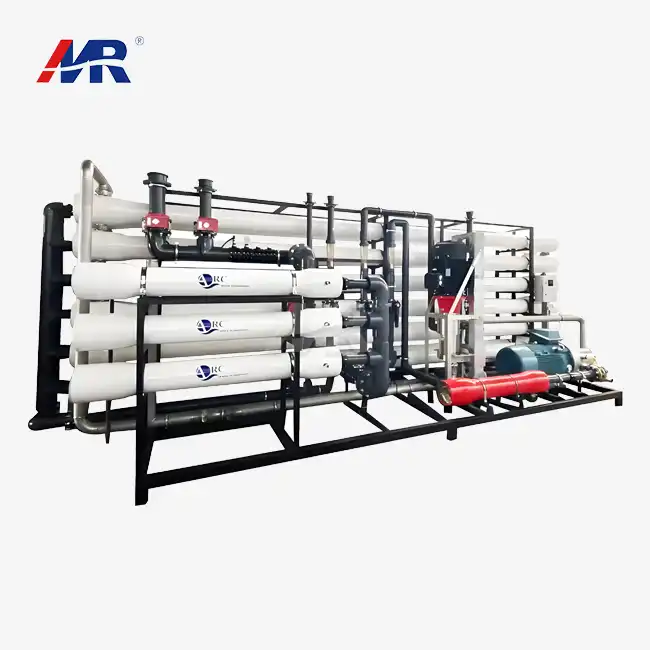 VIEW MORE25m3/hour seawater desalination plant
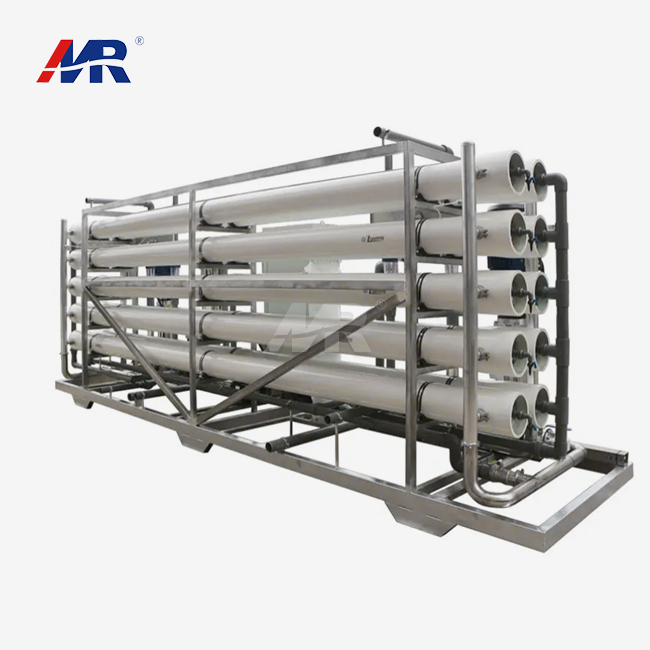 VIEW MOREbrackish water reverse osmosis systems
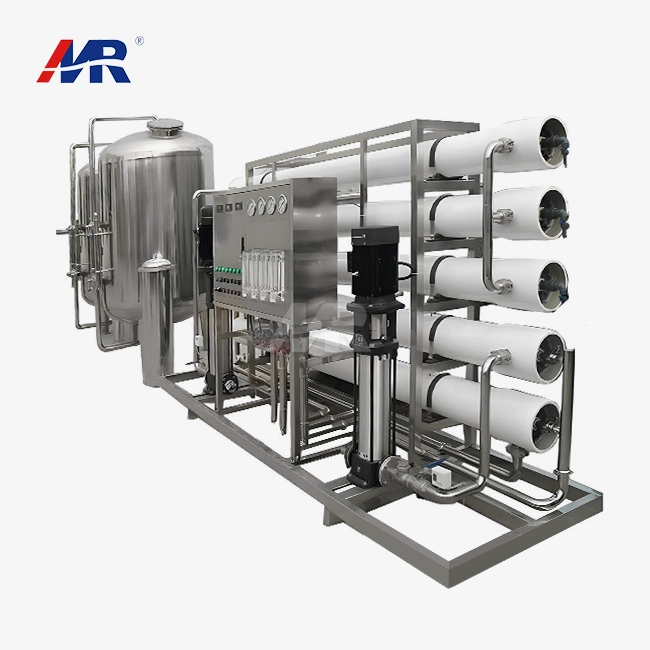 VIEW MOREbrackish water reverse osmosis
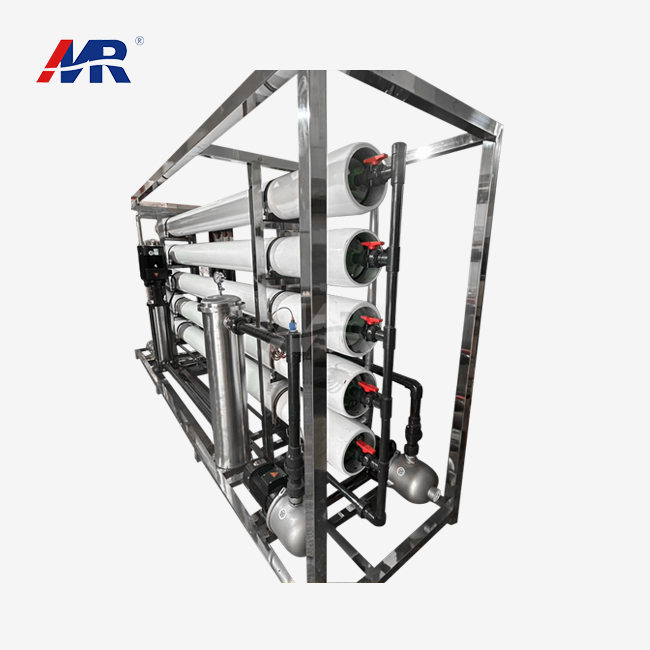 VIEW MOREreverse osmosis water treatment equipment
 VIEW MORELandfill Leachate Treatment Plant
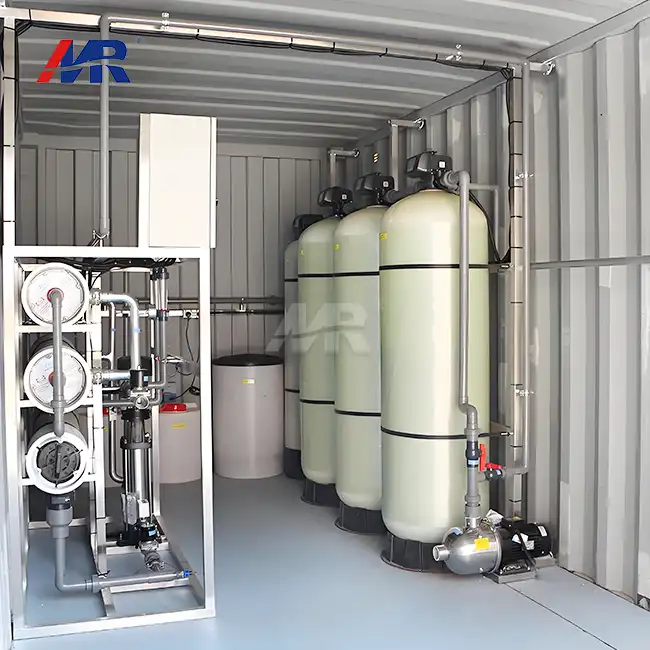 VIEW MOREcontainer type 3m3/hour RO equipment
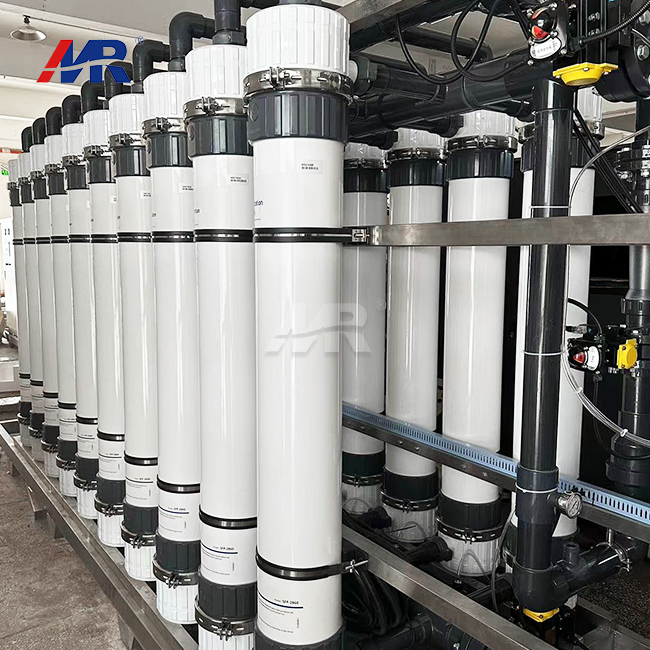 VIEW MOREwater ultrafiltration system
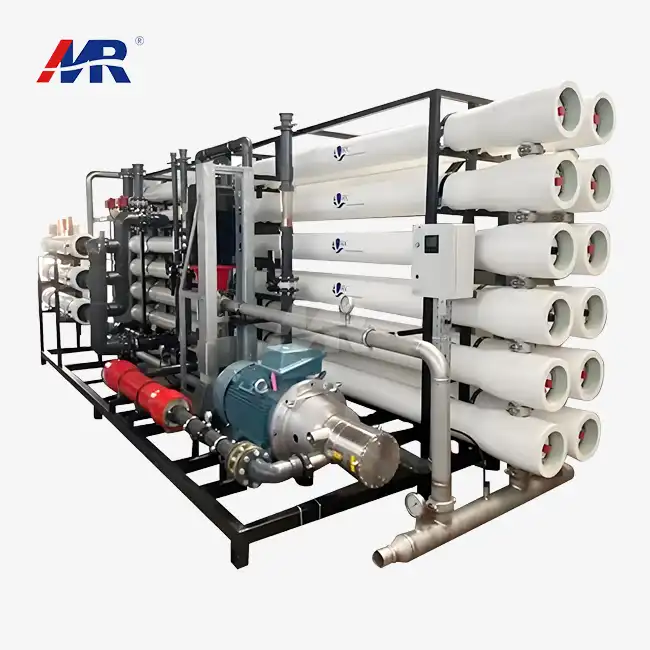 VIEW MORE45m3/hour seawater desalination system