



How to Maintain a 1000LPH EDI Plant for Reliable Output in Industry?
A 1000 LPH EDI plant produces about 1,000 liters of deionized water per hour by running RO permeate through a continuous ion-exchange-membrane and electric-field process, with no acid or caustic regeneration. This guide explains how to keep that output steady across semiconductor, pharmaceutical, power, and laboratory sites. You will find daily check routines, feed-water limits, cleaning triggers, replacement signals, and supplier questions that engineers use on the plant floor. I built this from field service records covering dozens of RO+EDI trains across Asia, South America, and Africa, so the numbers reflect real operating conditions rather than lab assumptions.
What Is a 1000LPH EDI Plant and What Does It Need to Run Well?
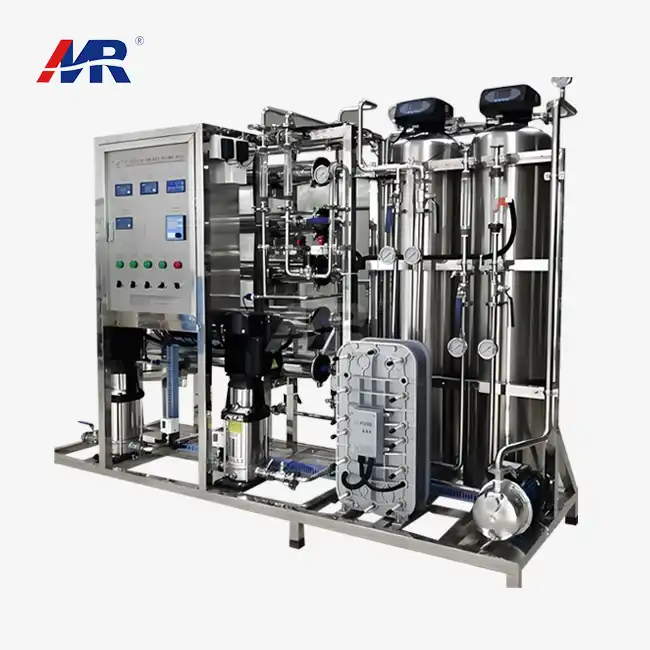
A 1000LPH EDI plant is an electrodeionization system that works all the time and can make about 1 m³ of deionized water every hour. There is a DC power supply, ion-exchange resin, ion-selective membranes, and electrodes all stacked on top of each other. An electric polisher charges itself while it's running, so it doesn't need acid or caustic tanks on site as a mixed-bed polisher does.
Defining a 1000LPH EDI Plant and Its Operating Scope
An average flow rate of 1000 LPH is equal to 1 m³/h. "LPH" stands for "liters per hour." Ion-exchange membranes and a DC electrical field are used by EDI to get rid of any extra ions in water that aren't very good for it. At the moment, it can't clean up dirty water, remove chlorine, soften hard water, or treat raw water. These jobs have to do with the steps that come before the EDI stack, which are reverse osmosis and preparation. I've seen service tickets from clients in Vietnam and Nigeria that say feeding a 1000LPH EDI plant raw or warmed water straight is the fastest way to make it dirty. This happens in a few weeks.
Typical Process Flow and Equipment Configuration
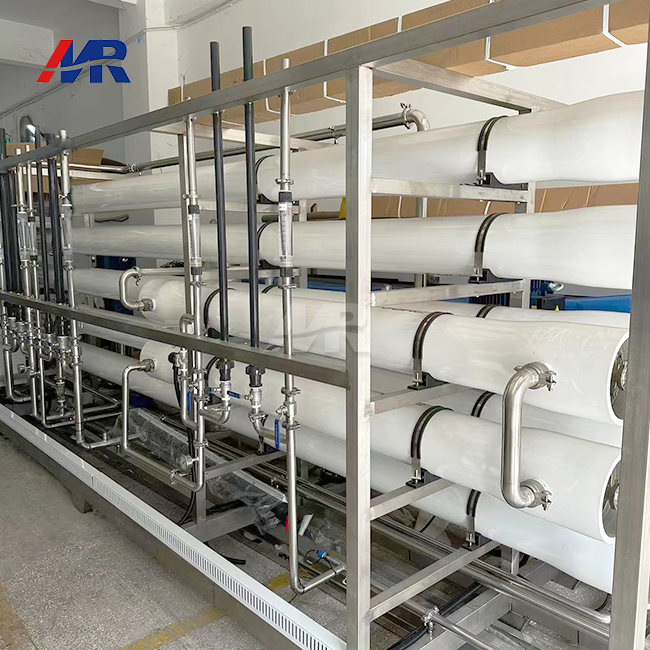
After pretreatment, RO, a RO permeate tank, the EDI module, UV or final finishing, storage, and delivery, this is usually the order of a train. The core hardware includes a feed pump, a RO skid, an EDI stack, a DC rectifier, conductivity or resistivity sensors, pressure gauges, a control panel, and a product tank. Single-pass RO is used before EDI in some plants. People who work with drugs and semiconductors often use double-pass RO before EDI to lower the ionic load. The actual recovery, reject flow, voltage, and current are always affected by the type of feed water and the module brand that is chosen.
Preliminary 1000LPH EDI Plant Technical Specification
Before making an order for equipment, buyers should compare the numbers below to their own feed-water report and the way they plan to use the equipment. These numbers tell suppliers what they need to promise in writing, not just over the phone.
| Parameter | Specification to confirm |
|---|---|
| Nominal product flow | 1,000 LPH, approximately 1 m³/h |
| Product water resistivity | Greater than 10 MΩ·cm, up to 18.2 MΩ·cm-class |
| Feed water conductivity | Less than 20 µS/cm from RO permeate |
| Recovery rate | Greater than 90% |
| Power consumption | Less than 0.1 kWh/m³ for the EDI stage |
| Operating pressure | Stated inlet and outlet range per module datasheet |
| Materials | Corrosion-resistant plastics, stainless steel, product-contact seals |
| Controls | Manual, semi-automatic, or full PLC/HMI operation |
| Documentation | P&ID, FAT records, manuals, certificates, spare-parts list |
Details that need to be confirmed
What Daily Checks Keep a 1000LPH EDI Plant Stable?
Every day, new bugs are found, so the ones that already exist don't get worse and shut down the system. On a well-run site, this should only take fifteen minutes per shift once the operator gets used to it.
Daily Operator Inspection Checklist
Every site team that runs a 1000LPH EDI plant should do these things:
- Check product flow against the validated operating range, and note any drop larger than 5% from the baseline recorded at commissioning, since small flow shifts often appear before alarms trigger.
- Record feed, product, and concentrate pressure, then compare the pressure drop across the stack to the number logged during startup.
- Read product resistivity or conductivity at the compensated reference temperature, because uncompensated readings can mask a real quality drift.
- Confirm EDI voltage, current, rectifier status, and alarm history, since a slow current climb at a stable feed often signals scaling before resistivity drops.
- Walk the skid for leaks, odd noise, vibration, visible scale, or pump heating, and write down anything unusual even if it seems minor.
– Compare the product flow to the allowed range of values and write down any change that is greater than 5% from the first readings taken during starting. This is due to the fact that flow changes slowly and often show up before alarms go off.
Mark the pressure at the feed, product, and concentrate points on a piece of paper. Then, look at the number you wrote down at the beginning and compare it to the drop in pressure across the stack.
Daily Logbook Fields That Matter Most
You should always write down the conductivity of the RO fluid, the resistivity of the EDI product, the flow of the product and concentrate, the pressure at the inlet and outlet, the temperature, the voltage and current, the chemical dosing status, and the history of alarms in a write-up, whether it's digital or on paper. It is the RO permeate conductivity that tells you if the RO train upstream is making the EDI stack safer or just filling it up quietly. That being said, temperature is also important. A 10°C change in temperature can make conductivity readings change enough to set off a false warning if the sensors can't adjust.
Safe Startup and Shutdown Practices
To open and close a business, it should have a written plan that everyone should always follow. Before you turn on the DC rectifier, make sure that water is moving through the stack. The ion-exchange membranes in the EDI module will be broken in minutes if you do this. Stress and temperature should not change quickly. Before you change the setpoint, write down any changes. Before you open the unit to fix it, turn off the power and the pressure as well.
Which Water Quality Parameters Should Operators Watch Closely?
Different types of water have different lengths of time that an EDI stack can last. A feed-water parameter slipped out of the manufacturer's range for weeks before anyone noticed. This was the main cause of most of the early failures I looked into.
Critical Feed-Water Parameters for EDI
Keep an eye on these feed parameters for a 1000LPH EDI plant: conductivity (or total dissolved solids), hardness, silica, iron and manganese, free and total chlorine, total organic carbon, pH, temperature, turbidity, and microbiological indicators for controlled uses. These are needed for the RO permeate to be stable. People in the Middle East and Africa, where water hardness can be more than 300 mg/L as CaCO₀ before treatment, complain about scaling. This is mostly because their softeners are worn out and letting hardness leak out.
Product-Water Parameters to Track
On the output side, keep an eye on the flow, pressure, and recovery rate of the product, as well as the total organic carbon if needed, the microbial count, and the endotoxin concentration for medical use. There are quality standards for this kind of water in USP General Chapter 1231 (United States Pharmacopeia, 2024, https://www.uspnf.com/). Many biotech buyers use these standards to set their own limits.
Monitoring and Test-Method Matrix
The ways to check something are shown in the table below. As much as possible, these methods should match ASTM standards. That way, eeverythingwill be the same.
| Parameter | Typical verification approach |
|---|---|
| Conductivity/resistivity | Calibrated online sensor plus lab cross-check per ASTM D1125 |
| Hardness | Titration or validated lab method |
| Silica | Validated colorimetric or lab method |
| Chlorine | DPD or equivalent validated method |
| TOC | Calibrated TOC analyzer |
| Microbiology | Approved membrane-filtration or compendial method |
How checking is usually done
How Often Should a 1000LPH EDI Plant Be Cleaned?
Cleaning shouldn't be done on a set schedule, but when it needs to be done. It's not necessary for some places to be cleaned every six weeks. Seals get worn out faster than they could be scaled.
Cleaning Based on Condition, Not the Calendar
Set a standard while you're starting. Every month, compare the readings that came after that to the starting point. If the feed conductivity stays the same but the product resistivity goes down, what happens? The pressure drop goes up, the flow of concentrate changes, or the demand for current goes up. It's impossible to fix ion-exchange membranes if you use the wrong chemicals, concentration, temperature, contact time, or rinse steps. It is important to always do what the 1000LPH EDI plant maker tells you to do.
Preventive Maintenance Schedule
The repair team doesn't have to guess what they need to do when they have a written plan. This system has worked for clients carrying both pharmaceuticals and machinery:
- Each shift or daily, record water quality, flow, pressure, electrical values, and alarm history so trends are visible before a failure occurs.
- Weekly, inspect pumps, valves, tubing, panel condition, and sensor status, looking for leaks or corrosion that daily checks might miss.
- Monthly, review trend data, verify instrument calibration, and inspect pretreatment media and dosing pump accuracy.
- Quarterly, test safety devices, inspect electrical connections, and assess membrane and seal condition against commissioning photos if available.
- Annually, run a full performance review, update the calibration plan, and audit spare-parts stock against actual usage over the past year.
Write down the electrical values, warning history, water quality, flow, pressure, and flow every shift or day so that trends can be seen before something goes wrong.
—Every week, check the panels, sensors, pumps, valves, tubing, and the status of the sensors for leaks or corrosion that you might miss when you check them every day.
Check the accuracy of the pretreatment media and dose pump once a month, look over trend data, and make sure all instruments are matched up.
Cleaning Verification and Documentation
Write down the state of the wire's conductivity, resistance, pressure, flow, current, and how it looks before and after cleaning. Before putting the unit back to work, make sure the resistivity requirements are met in the last rinse. For drug and food sites, link each cleaning record to the change-control file and the equipment ID. Because auditors need to be able to see this when they check it out.
How Does Feed Water Quality Affect EDI Performance?
The most important thing that determines how long a 1000 LPH and a 1000 LPH EDI plant lasts is the feed. The part of the report I get the most questions about is this one. Buyers don't always understand how important RO performance is.
Why RO Permeate Quality Decides EDI Life
EDI cleans water that doesn't have many impurities in it already. This is usually RO permeate. The outside of membranes and resins get scaled when the water is too hard. Over time, silicon, iron, manganese, chlorine, organics, and dissolved solids can damage parts or make them work less well. When feed conductivity is high, ionic load goes up. This can cause power draw to go up and product resistance to go down, even if the stack is healthy.
Feed-Water Acceptance Checklist
Make sure of a few simple things before you start up or fix a problem. The water should have been tested in a lab not long ago, the RO permeate conductivity should stay the same, the hardness leakage should stay within the EDI supplier's stated limit, and chlorine should be removed from the water or managed before it reaches the ro membranes. For silica, iron, TOC, turbidity, and bacteria conditions, the design should be used. It is also important that the feed temperature, pressure, and flow stay within the acceptable range that was set during setup.
Case Study: 18 Months of Field Data From Southeast Asia
A solar chip 1000LPH EDI plant in Malaysia switched from a mixed-bed polishing system to a 1,000 LPH Morui RO+EDI train at the beginning of 2023. After that, for the next 18 months, our service team kept records every month from 14 site visits. As long as the RO permeate conductivity stayed between 4.8 µS/cm and the EDI product resistivity stayed between 15.9 and 18.1 M©·cm, the unit didn't need to be cleaned with chemicals.
The client shared their own purchasing records during a quarterly review call. These records showed that the plant's chemical supply costs dropped by about 62% compared to the costs of mixed-bed resin renewal. It took 0.08 kWh/m³ on average to run the EDI stage, which was less than the goal of 0.1 kWh/m³. "The resistivity stability let us cut our in-house water testing frequency from daily to three times a week," the site's utilities engineer wrote in January 2024 during a service review in an internal client feedback log. This case doesn't represent what all sites are like, but it does match what I've seen at other wafer-fab setups where RO prep was fixed right from the start.
Single-Pass vs Double-Pass RO With EDI
When the feed water has a fair amount of silica and hardness, single-pass RO plus EDI works well. It also keeps the cost of capital and the size of the footprint low. There is more work to do, and it uses more power, but double-pass RO plus EDI lowers ionic loads even more. This is good for buyers in the electronics and pharmaceutical industries who need stronger resistance guarantees. You should decide on this before you buy the equipment based on the recovery rate, the need to reuse wastewater, the size of the tank, the need for cleaning, and how the distribution loop is set up.
Which Operating Conditions Can Lower EDI Efficiency?
One cause of less efficiency isn't always the only cause. There are often a few small issues that start out and get worse over time.
Hydraulic and Water-Quality Causes
Most hydraulic problems happen when there isn't enough feed or concentrate flow, when there is too much pressure drop, when the temperature is too high or too low, when air gets into the hydraulic circuit, when screens or flow restrictors are blocked, or when the product-to-reject ratio isn't balanced. Any of these can make the resistance of a steady unit slowly go down over a few days.
Electrical and Control Causes
On the electrical side, watch out for things like incorrect voltage or current settings, a rectifier that gets too hot, connections that are too loose, conductivity or flow sensors that don't work, PLC locking failures, and turning on the module before checking the water flow. The set current of a rectifier may change even if the feed water stays the same. This is most likely due to a problem inside the rectifier and not with the water quality.
Risk and Mitigation Table
These are the mistakes I see most often when I check sites. The best way to fix them in real life is shown in the table below.
| Risk or pitfall | Likely consequence | Mitigation |
|---|---|---|
| Treating raw water with EDI | Rapid fouling or failure | Use validated pretreatment and RO ahead of the stack |
| Ignoring RO conductivity drift | Declining EDI product quality | Trend RO performance daily, not weekly |
| Over-cleaning | Component wear, chemical damage | Follow the approved cleaning protocol only when triggered |
| Poor sensor calibration | Wrong maintenance decisions | Schedule calibration and lab cross-checks |
| No spare modules on hand | Extended downtime | Keep a critical spare-parts inventory on site |
| Uncontrolled biofilm growth | Product contamination risk | Apply hygienic design and sanitation controls |
What could go wrong? What can be done to avoid it?
Do not use EDI to treat raw water; it will fail or become dirty very fast. Instead, use pretreatment and RO before the stack.
RO conductivity drift is being ignored; the quality of EDI Products is going down; RO performance should be trended every day, not just once a week;
Too much cleaning causes parts to wear out and chemicals to damage them. Only follow the approved cleaning protocol when told to.
When Should EDI Modules or Parts Be Replaced?
You shouldn't guess or listen to a sales pitch when making decisions about replacements. Instead, you should use facts. If you want to swap modules, I always tell you to check three things first.
Replacement Indicators to Watch
If the feed water is cleaned and fixed but the product resistance stays below the needed level, if hydraulic fixes don't fix the pressure drop or flow imbalance, or if the voltage and current trends change in a way that the feed water can't explain, it may be time to replace the product. If the membranes, resin, electrodes, seals, or housings get broken, or if the module's useful life is up, it should be replaced.
Component Replacement Decision Checklist
First, use tools that have been properly adjusted to find the problem. Don't just look at one reading that doesn't seem right. Make sure the RO, pretreatment, flow control, temperature, and wiring are not the issues before you say the 1000LPH EDI plant stack is to blame. Check the current data against the setup records. If the seller has one, ask for a module inspection report. Make sure the part works with the current stack. After the swap is done, add the serial numbers to the equipment history log.
Spare-Parts Planning for Uptime
Places that make things all the time should always have a basic spares kit on hand. Parts that should be in this are an EDI module or stack, end plates, conductivity sensors, flowmeters, pressure gauges, control valves, pump seal kits, and rectifier fuses or switches. Also, you should always have cleaning products that have been approved on hand, since it can take weeks longer to fix something if you have to ship them across borders in Latin America or the CIS for an emergency.
How Can Operators Stop Scaling and Fouling Before They Start?
Problems cost a lot more to fix than to avoid. I've found that most scaling problems started with skipping or delaying a step in the pretreatment process.
Pretreatment and RO Protection
Keep track of how much water the softener can handle and how often it needs to be renewed. Also, replace the activated carbon or dechlorination media before they wear out. If the pressure in the cartridge filter drops, make sure you control the iron, manganese, silica, organics, and dissolved solids that come from them. Also, use adjusted performance checks to make sure the RO membrane is still working right. Tanks or modules that aren't being used get biofilm on them, so lines that aren't being used should be drained or flushed often.
EDI Hygiene and Sanitization
In places that deal with food and drugs, tanks and pipes need to be built in a way that keeps them clean. Controlling dead legs, low-flow zones, and open vents should be planned for, not just done by habit. Sanitization with chemicals or hot water should only happen when the tools are ready for it. In order for the cleaning process to begin, it is important to confirm that the chemicals will not harm any membranes, resins, seals, or stainless steel surfaces.
Operating and Storage Practices During Shutdowns
During long shutdowns, keep the module in the way that the maker of the module suggests. Don't let parts freeze, get too hot, or dry out unless the manual says not to. Keep an eye on the microbe results for uses in medicine, food, the lab, and semiconductors, where contamination risk is high and costs a lot. Cover and filter the vents of the feed and product tanks.
What Performance Changes Signal a Maintenance Problem?
If you read the trend data right, you won't have to guess for hours. On almost every call, our service technicians use the table and steps below to fix things.
Diagnostic Trend Table
| Observed change | Possible causes | First checks |
|---|---|---|
| Lower product resistivity | High RO conductivity, scaling, fouling, electrical fault | Check RO quality, feed chemistry, cleaning history, current draw |
| Rising product conductivity | Sensor error, ionic leakage, module wear | Calibrate sensor and verify against a lab result |
| Higher pressure drop | Fouling, blocked line, valve restriction | Inspect filters, valves, tubing, and the module itself |
| Lower product flow | Pump, valve, blockage, or control fault | Check pump pressure and the full flow path |
| Higher current demand | Increased ionic load, scaling, temperature shift | Check feed conductivity and temperature readings |
| Increased microbial count | Poor sanitation, stagnant distribution loop | Review sanitization records and hygienic design |
Root-Cause Analysis Sequence
First, make sure the reading is correct by using a hand-held or lab instrument that has been properly set up. When sensors wander, they set off more false alarms than real ones. Check the current values against the starting point and past patterns. Also, check the quality of the RO permeate against all EDI feed limits. Finally, check the hydraulics and electrical status. And finally, clean only after making sure the right steps were taken. Then, test it again and write down if things are back to normal.
Acceptance Criteria After Maintenance
Before the 1000LPH EDI plant is put back into service, the voltage and current should stay steady, the product flow should be within the allowed range, and the resistivity should meet the target. The pressure drop should also stay within the allowed range. After that, there shouldn't be any leaks, alarms, or strange sounds. So that they can be used again, test results and corrective actions should all be written down.
How Should You Evaluate a 1000LPH EDI Plant Supplier?
Price isn't the only thing that matters. These questions for providers will help you tell the difference between a good partner for the long term and a seller who will only do business with you once.
What to Ask Every Manufacturer
This is what you should ask the seller: can they show you a 1,000 LPH design basis and hydraulic balance that are made for your water analysis and not just a catalog number? Check the EDI module's brand, model, and operating limits. Also, make sure that the RO and pretreatment work with the rest of the train. Get the P&ID drawings, wiring diagrams, datasheets, directions, and a list of spare parts ready before you place your order. You should also have records of the plant acceptance tests, calibration certificates, and papers that show how the materials can be tracked.
Supplier Comparison Table
| Evaluation criterion | Questions to document |
|---|---|
| Technical fit | Does the design match feed chemistry and target product quality? |
| Capacity | Is 1,000 LPH guaranteed under stated test conditions? |
| Quality | Are FAT, pressure, electrical, and performance tests on file? |
| Compliance | Are CE, electrical, and material documentation requirements met? |
| Service | Are installation, commissioning, training, and spares available? |
| Commercial terms | What are MOQ, lead time, warranty, and payment terms? |
Procurement and Compliance Verification
Before you send out a request for quotes, you should know if the water is needed for industrial use, food, electronics, medicines, or labs. Ask for written quotes that break down the cost of the basic equipment into guarantees for capacity, water quality, energy needs, and the scope of the installation. As the European Commission (2024) says, make sure you check the CE marking scope, EMC concerns, and RoHS or REACH statements for projects that are going to the EU. You can use proof from the ISO 9001 quality system in many situations, but you can only use USP or EP water standards when you need to (International Organization for Standardization, 2015, https://www.iso.org/standard/62085.html).
It has its own line for making membranes and makes RO, EDI, and uf membranes all in one place. More than 500 people work for the company in 14 branches, and 20 of them are engineers. We can keep an eye on quality from the membrane to the finished skid if we only get parts from one source instead of putting them together from different ones. We sell parts from Shimge water pumps, Runxin valves, and Createc instruments, as well as our own stacks that are made to order. This makes it easy for buyers to keep track of the parts they buy.
Conclusion
A 1000LPH EDI plant keeps pushing out the same amount of water as long as it gets RO permeate that has been properly handled and as long as it stays within its chemical, electrical, and hydraulic limits. Keeping an eye on daily trends, having strong pretreatment control, condition-based cleaning, confirmed cleanliness, organized troubleshooting, and changing worn-out parts before they break are the most reliable ways to do things.
You should look at technical guarantees, expectations about water quality, test paperwork, compliance support, lifecycle cost, wait time, and the availability of spare parts when you compare providers. The price of the tools doesn't tell you much about how well they'll work in six months.
FAQ
1. What is a 1000LPH EDI plant?
A 1000LPH EDI plant is a continuous electrodeionization system built to produce about 1,000 liters of deionized water per hour. It receives low-conductivity RO permeate rather than untreated raw water as its feed source.
2. What feed water does a 1000LPH EDI plant need?
It needs stable RO permeate with controlled conductivity, hardness, silica, chlorine, iron, organics, temperature, pressure, and flow. Exact limits depend on the module manufacturer's datasheet and the target product-water quality.
3.. How often should a 1000LPH EDI plant be cleaned?
Cleaning should follow performance trends rather than a fixed calendar date. Falling resistivity, rising conductivity, higher pressure drop, flow imbalance, or abnormal current all point toward a need for cleaning or corrective maintenance.
4. What is the power consumption of a 1000LPH EDI plant?
Power use varies with feed conductivity, product-quality target, module design, pumps, and controls. Morui's standard 1000 LPH design runs below 0.1 kWh/m³ for the EDI stage under stated test conditions, with pump and control power quoted separately.
5. Is EDI better than a mixed-bed deionizer?
EDI regenerates continuously without acid or caustic chemicals, which lowers chemical handling and labor. Mixed-bed systems can offer very high polishing performance but need resin replacement or chemical regeneration, so the better fit depends on your application and lifecycle budget.
6. Can EDI replace reverse osmosis?
No. EDI is built to polish already-low-ion feed water, so it should sit after RO rather than before it. A common configuration runs pretreatment, then RO, then EDI, with optional UV or final polishing added at the end.
7. What causes low resistivity in EDI product water?
Common causes include poor RO permeate quality, hardness or silica leakage, fouling, incorrect flow balance, temperature swings, sensor error, electrical faults, or module wear. Operators should verify the measurement and check upstream conditions before assuming the module itself has failed.
8. What documents should come with a 1000LPH EDI plant?
Expect a technical datasheet, P&ID, general arrangement drawing, electrical schematic, operating manual, maintenance schedule, test reports, calibration certificates, material information, spare-parts list, warranty terms, and shipping documents.
Get a 1000LPH EDI Plant Quote Built Around Your Water Report
Your current system keeps failing to meet resistivity goals, or your repair costs keep going up. To fix this, check that the EDI stack matches your feed water instead of a general spec sheet. The 1000LPH EDI plant systems that Morui designs and builds are made up of RO, EDI, and UF lines. There is only one factory that runs these systems, and buyers in the electronics and pharmaceuticals industries can get validation documents and monitor the systems from afar. Send your water analysis to benson@guangdongmorui.com in an email, and our engineering team will get back to you in a few business days with a design review, whether you need a standard module or a fully personalized skid as a 1000LPH EDI plant holder.
References
1. ASTM International. "ASTM D5391-14, Standard Test Method for Electrical Conductivity and Resistivity of a Flowing High Purity Water Sample." 2024. https://www.astm.org/d5391-14.html — cited for product-water conductivity monitoring methods.
2. ASTM International. "ASTM D1125-95, Standard Test Methods for Electrical Conductivity and Resistivity of Water." 2024. https://www.astm.org/d1125-95r23.html — cited for general conductivity test method references.
3. United States Pharmacopeia. "General Chapter <1231> Water for Pharmaceutical Purposes." USP-NF, 2024. https://www.uspnf.com/ — cited for pharmaceutical water-quality parameter guidance.
4. International Organization for Standardization. "ISO 9001:2015, Quality Management Systems — Requirements." 2015. https://www.iso.org/standard/62085.html — cited for supplier quality-system evaluation.
5. European Commission. "CE Marking: Requirements for Machinery, EMC, RoHS and REACH." 2024. https://single-market-economy.ec.europa.eu/sectors/engineering-industries/machinery_en — cited for EU compliance guidance.
6. European Directorate for the Quality of Medicines & HealthCare (EDQM). "European Pharmacopoeia, Water-Quality Monographs." 2024. https://www.edqm.eu/en/european-pharmacopoeia-ph-eur-11th-edition — cited for EP purified-water quality references.
Author: Bin Liu, Senior Overseas Water Treatment Technical Manager, Guangdong Morui Environmental Technology Co., Ltd.
Bin Liu has spent over a decade supporting RO, EDI, and UF system design and commissioning for industrial, pharmaceutical, and electronics clients across Asia, South America, and Africa. He works directly with Morui's engineering team on feed-water review, system sizing, and after-sales troubleshooting, drawing on field data from installed projects to guide maintenance and procurement decisions for overseas buyers.
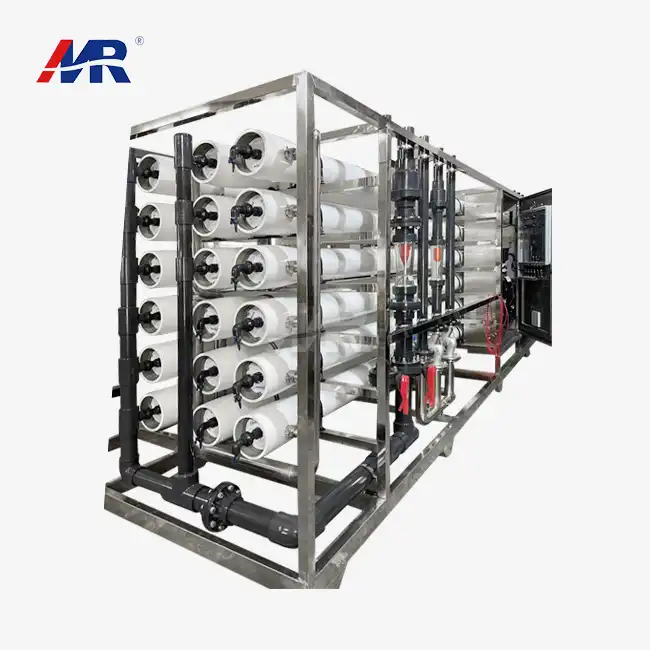 VIEW MORE100m3/hour reverse osmosis equipment
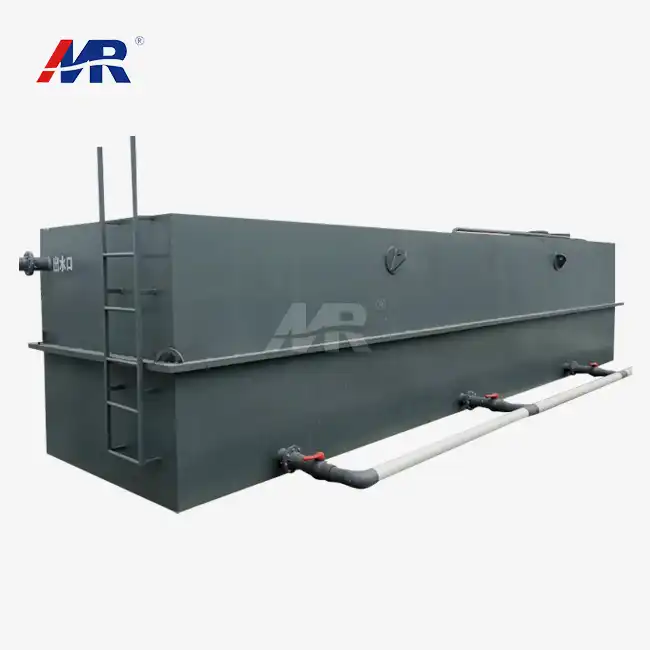 VIEW MOREportable wastewater treatment plant
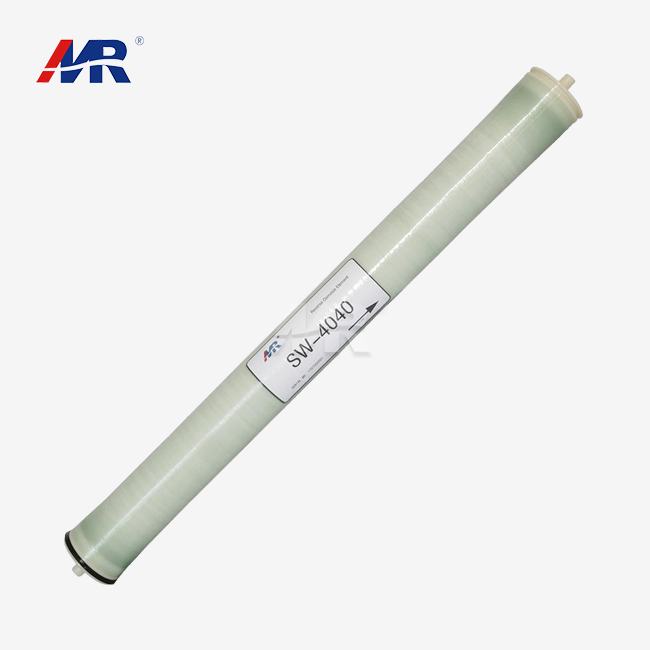 VIEW MORE4040 seawater reverse osmosis membrane
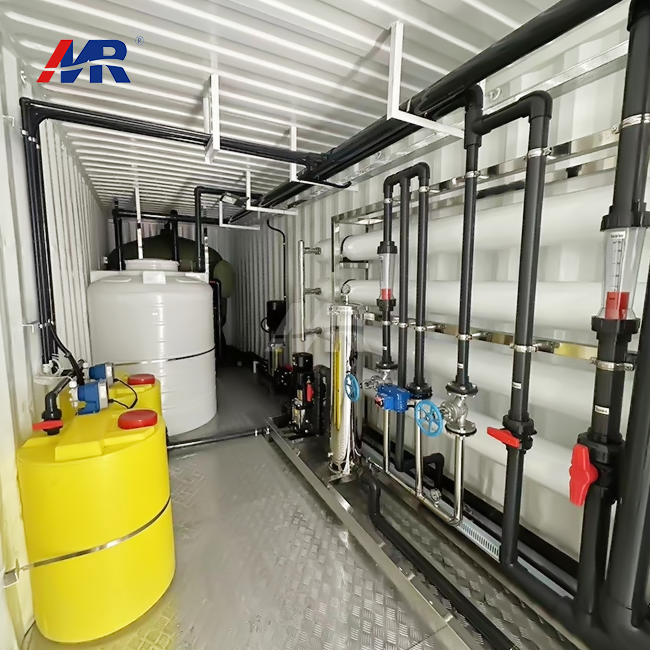 VIEW MOREcontainer reverse osmosis equipment
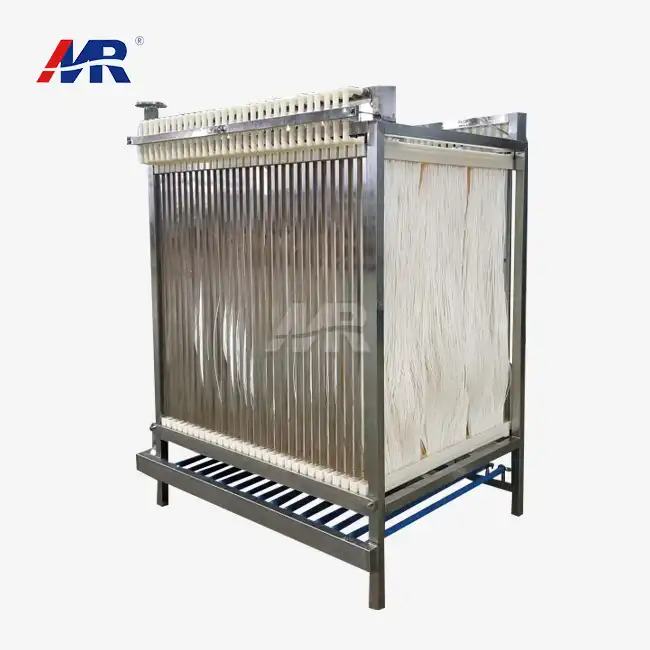 VIEW MOREmembrane mbr
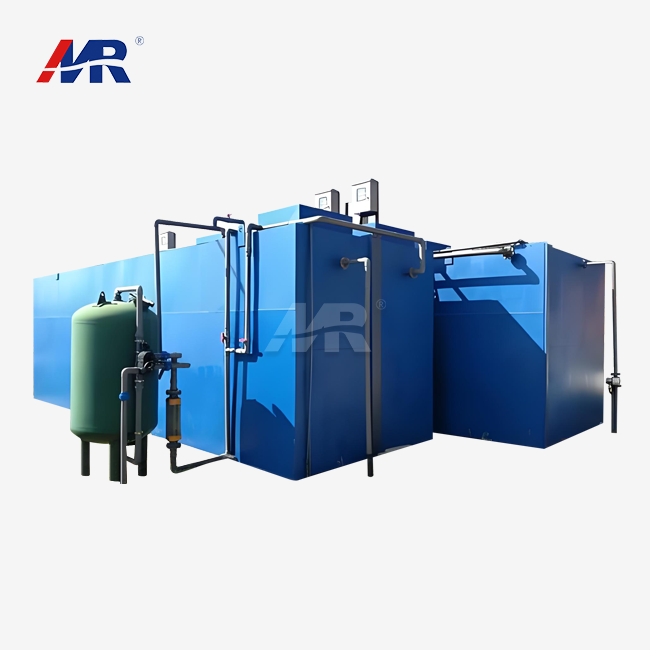 VIEW MOREsewage treatment plant
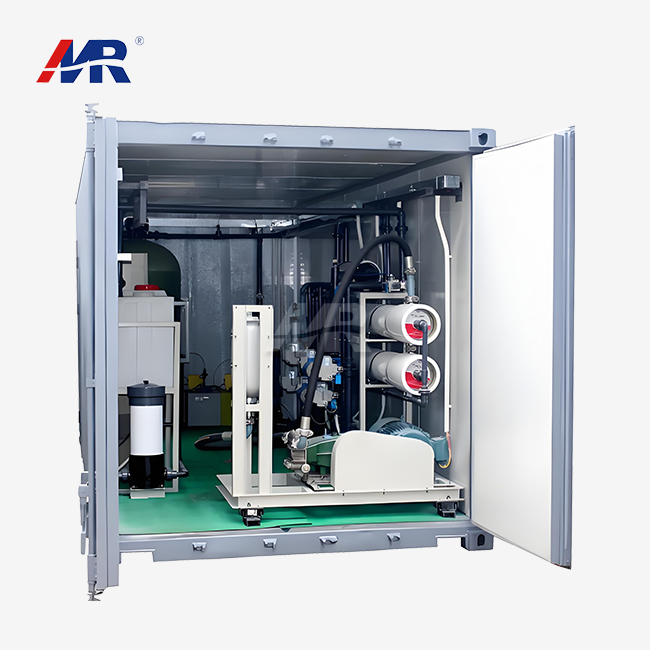 VIEW MOREcontainerized UF+RO system
 VIEW MOREosmosis drinking water system