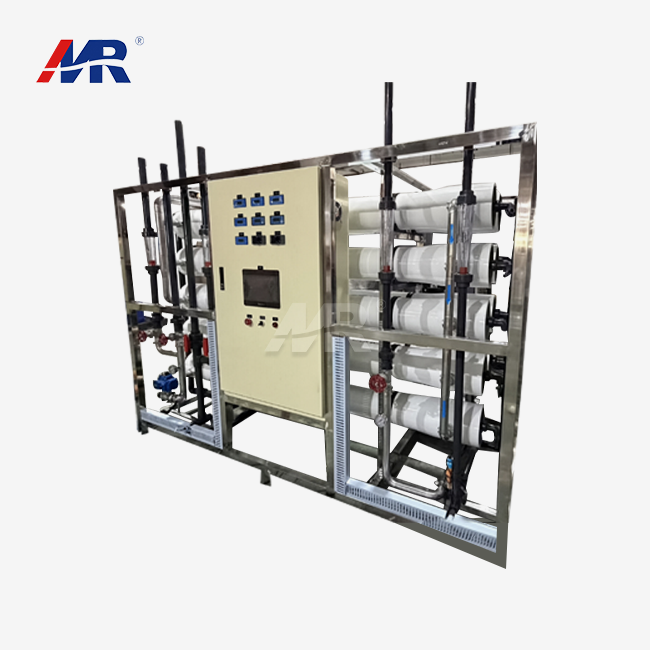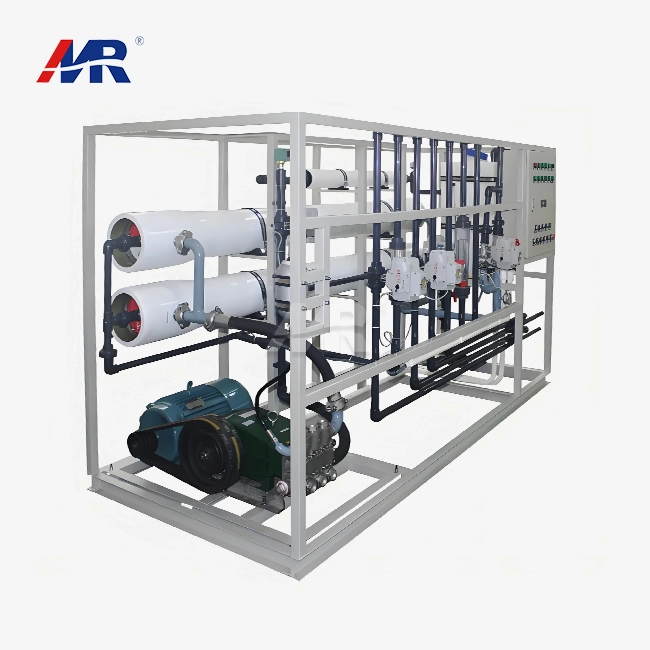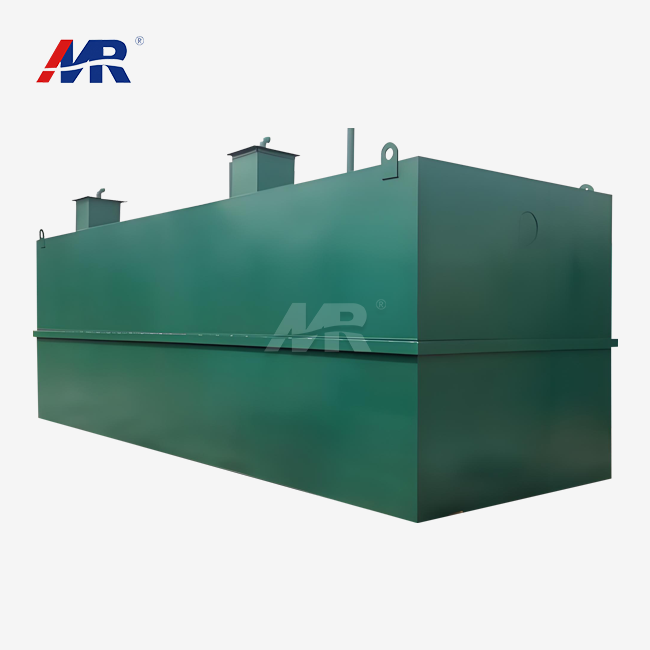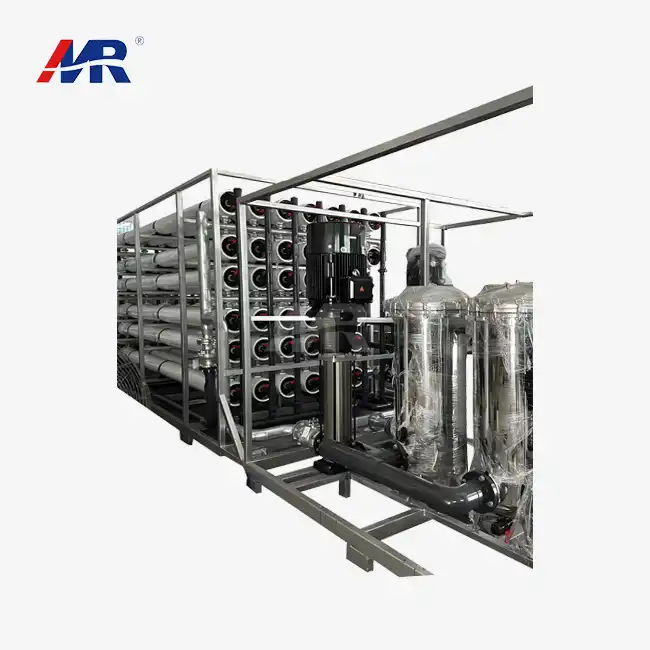



How to Design a 70m3/hour Ultrafiltration Plant for Industrial Reuse?
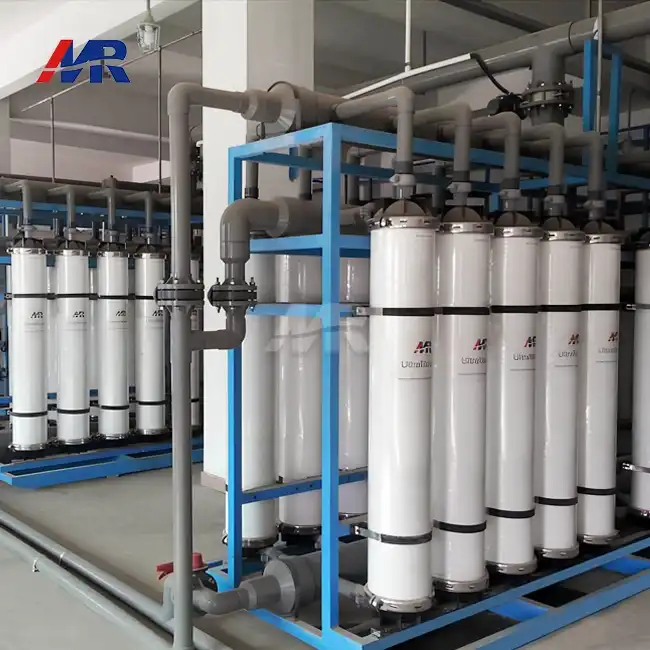
An ultrafiltration facility of 70m3/hour ultrafiltration plant raw water or wastewater using hollow-fiber membranes to remove turbidity, bacteria, and suspended particulates before reuse or further polishing. This book covers feed-water testing, pretreatment, membrane size, recovery objectives, fouling management, and supplier selection so you can design a system that stands up to actual plant conditions. I have spent years selecting and commissioning such systems throughout Asia, Africa, and Latin America, and this paper represents what truly works on site – not just catalog numbers.
Direct Answer: What You Need to Know First
Before we get to the design specifics, here is the short version.
- An ultrafiltration plant of 70m3/hour will generate or process about 70 cubic meters of water per hour, but the specific basis (feed, permeate, or net output) should be checked with the provider.
- Hollow-fiber UF membranes physically strain out suspended particles, colloids, microorganisms, and many big organic compounds and are chemically untreated;
- Pretreatment protects the membranes from oil and fiber and from scaling and severe turbidity loads that induce premature fouling.
- Typical working pressure is 0.1-0.3 MPa (approx. 1-3 bar) depending on membrane type and feed quality.
- Usually you strip out the backwash and the cleaning losses, and you’re looking at 85% to 95% recovery.”
- UF is a pretreatment and microbiological barrier. UF can not remove dissolved salts and cannot replace reverse osmosis alone.
- Compare providers on pilot data, level of automation, membrane specs, and documented after-sales assistance before you sign a deal.
Direct answer: Design an ultrafiltration plant of 70m3/hour around three factors first – your real feed-water quality, your necessary output quality, and your daily operation hours. From these three figures, everything else follows: membrane area, pretreatment processes, etc.
What Is a 70m3/hour Ultrafiltration Plant for Industrial Reuse?
Before acquiring equipment, you need to have a clear idea of what “70 m3/hour” really implies for your project. Suppliers utilize this number in various ways, and that gap creates most of the post-install issues I've observed.
Defining the Rated Capacity: Feed, Permeate, or Net Output
An ultrafiltration plant of 70m3/hour may be assessed by the feed flow entering the membranes, permeate flow leaving the membranes, or net output after backwash water is deducted. These numerals are not the number. If a provider is quoting 70 m³/h feed flow with 90% recovery, your real usable water is closer to 63 m³/h. Always have the rating foundation in writing, and confirm whether backwash, chemical-enhanced backwash (CEB), and clean-in-place (CIP) downtime are included.
How Hollow-Fiber UF Membranes Separate Contaminants
The hollow-fiber ultrafiltration membrane is an extremely tiny physical filter. Water moves through thousands of hollow tubes with hole diameters from 0.01 to 0.1 microns, tiny enough to retain bacteria, suspended particles, and many large organic molecules, but large enough to permit the passage of water and dissolved salts. The conventional Morui 70m3/hour ultrafiltration plant employs PVDF (polyvinylidene fluoride) hollow-fiber membranes in an outside-in filtration mode, which has superior resistance to chemical assault than PES (polyethersulfone) membranes under high-chlorine or caustic cleaning conditions.
UF Plant Scope and Engineering Deliverables
A full kit for a 70m3/hour ultrafiltration plant should comprise much more than just the membrane skid. You would expect to see pretreatment equipment, feed and backwash pumps, chemical dosing systems, a PLC control panel, instruments and associated pipes. On the paperwork side, ask for a process flow diagram, general arrangement drawing, comprehensive equipment list, membrane datasheets, an operating manual, a commissioning plan and a spare-parts list before you sign off on the design. Lacking documentation now often implies lacking support later.
What Feed Water Quality Suits a 70m3/hour Ultrafiltration Plant?
Matching the plant to your actual water source matters more than matching it to a catalog spec sheet. I have seen projects fail not because the membrane was bad, but because nobody tested the feed water across seasons.
Industrial Reuse Water Sources That Work Well With UF
A 70 m3 /h ultrafiltration facility can handle a wide variety of feed sources if the pretreatment is chosen appropriately. Typical sources include clear municipal wastewater, surface water from rivers or lakes, moderate-iron groundwater, general process water, and cooling-tower blowdown. Secondary treated wastewater from food, beverage, textile, and electronics factories is often sent through UF for reuse in washing, cooling, or non-potable process lines. Each source has its unique fouling risk; therefore, measuring turbidity, oil content, and biological load over at least a full season offers the design team true data rather than guesses.
Feed-Water Parameters to Verify Before Design
The table below lists what I ask every client to test before quoting a system.
| Parameter | Why It Matters | Typical Design Action |
|---|---|---|
| Turbidity and TSS | Sets solids loading and fouling risk | Screening, clarification, or coagulation |
| Oil and grease | Causes irreversible membrane fouling | Oil separation and source control |
| pH and temperature | Affects membrane compatibility and flux | Confirm membrane operating limits |
| SDI (Silt Density Index) | Indicates colloidal fouling potential | Add clarification or media filtration |
| Iron and manganese | Causes deposits and oxidation issues | Oxidation, softening, or dosing control |
| Microbiology | Determines cleaning and disinfection needs | Set CIP and sanitization schedule |
| COD and dissolved salts | UF cannot remove these sufficiently | Add activated carbon, NF, or RO |
Where UF Alone Is Not Enough
An ultrafiltration facility, such as one that treats 70m3/hour ultrafiltration plant, will remove particles and germs but won’t eliminate dissolved salts, most low-molecular-weight organics, or trace pollutants like PFAS. If your reuse application is low conductivity, such as boiler feed water, you require UF and reverse osmosis. If color or COD are still high after UF, then activated carbon or advanced oxidation is normally added downstream. Knowing this in advance avoids an expensive surprise during site acceptance testing.
How Does UF Compare With Conventional Reuse Filtration and Reverse Osmosis?
Buyers often ask whether sand filtration or RO alone could replace UF. The answer depends on what you need removed and how consistent your feed water is.
UF vs Conventional Clarification and Media Filtration
| Criterion | UF Membrane System | Conventional Clarification/Media Filtration |
|---|---|---|
| Suspended-solids removal | Consistent regardless of feed swings | Depends heavily on coagulant dosing |
| Microbial barrier | Strong physical barrier | Usually needs separate disinfection |
| Footprint | Compact | Larger tanks and filter beds |
| Automation potential | High | Moderate |
| Fouling response | Membrane cleaning cycles | Backwash and media replacement |
| Dissolved-salt removal | Limited | Limited |
| Output consistency | Stable | Varies with feed conditions |
UF vs Reverse Osmosis: Which Comes First?
UF and RO are used in different applications. UF eliminates bacteria, particles, and colloids. RO eliminates dissolved salts and many dissolved impurities. A 70m3/hour ultrafiltration facility would be running at a considerably lower pressure than RO generally, hence less energy draw per cubic meter processed. I have done projects where the source was brackish or surface water, and in virtually all of these projects, the ro membranes experienced a doubling of life when UF pretreatment was placed upstream since RO is far more susceptible to fouling than UF.
Building the Right Treatment Train
UF+RO train or a mixed train, or UF alone. It depends upon the kind of water you are seeking. For reuse such as cooling tower make-up or washdown water, utilize UF only if turbidity and microbial control are the key issues. Add RO after UF for boiler feed, pharmaceutical applications, or high-grade process water with low conductivity. Add activated carbon or oxidation upstream of UF when organics or trace contaminants jeopardize membrane life or downstream water quality requirements.
What Pretreatment Does a 70m3/hour Ultrafiltration Plant Require?
Pretreatment is where most fouling problems get solved — or created. I tell every client the same thing: spend your engineering time here, not on the membrane spec sheet.
Standard Pretreatment Process Flow
The normal process flow is: Raw water tank, via coarse screen, fine screen or drum filter, coagulation and flocculation, clarification or media filtration, cartridge filter, into UF modules, and finally to the permeate tank. The flow should be adaptable to the fluctuations of your supply water. If you have seasonal changes in turbidity in your supply, such as river water during the monsoon season in Southeast Asia, add an equalization tank to smooth out the shock loads before the membranes.
Matching Pretreatment to Contaminant Type
In front of a 70m3/hour ultrafiltration facility, various contaminants need different pretreatment methods. Skipping any one of these cuts down membrane life. Screens capture hair, fibers, and plastic debris that might otherwise entangle hollow fibers and cause localized fouling. Coagulation and clarification eliminate the colloids and excessive turbidity present in surface water and secondary effluent. Oily industrial effluent induces permanent pore blocking. Removing the oil maintains the membranes. Media filtration eliminates leftover particles. If membrane chemical compatibility is a problem, activated carbon or oxidation is used to treat dissolved organics.
Pretreatment Design Checklist
Confirm design with your engineering team. Minimum and maximum feed flow rates. Target design turbidity and TSS. SDI limitations. Feed temperature and pH range. Oil concentration limits. Chemical dosing compatibility. Online monitoring stations for turbidity, pressure, flow, and pH. Also, provide emergency shutdown triggers and membrane-protection interlocks to automatically shut down the system before a fouling event progresses to a membrane replacement event.
How Is a 70m3/hour UF System Sized for Industrial Reuse?
Sizing is an engineering calculation, not a guess. Getting it wrong in either direction wastes capital or starves your 70m3/hour ultrafiltration plant of capacity.
Core Design Parameters for a 70m3/hour System
| Design Parameter | Specification to Define |
|---|---|
| Rated capacity | Feed, permeate, or net output basis |
| Operating schedule | Hours per day, days per year |
| Membrane type | Hollow-fiber PVDF or PES |
| Design flux | Manufacturer-confirmed LMH at stated water quality |
| Recovery | Normal, minimum, and guaranteed recovery |
| Operating pressure | Feed, filtrate, TMP, and differential pressure |
| Module arrangement | Train count, duty/standby philosophy |
| Cleaning | Backwash, CEB, CIP frequency and chemicals |
| Automation | PLC, HMI, alarms, remote monitoring |
Calculating Membrane Area and Train Count
Basic sizing math is simple: permeate flow divided by design flux equals membrane area. The task is to pick the proper number of fluxes. A lab test clean water flux will always look better than a real-world flux under your actual feed water. I would propose using pilot data or at least a validated design flux with a fouling allowance, normally in the range of 10% to 20% below the clean water value provided by the manufacturer. The capacity may also be divided into two or three parallel trains, instead of one enormous train, so that production can continue while the membrane is being cleaned or maintained.
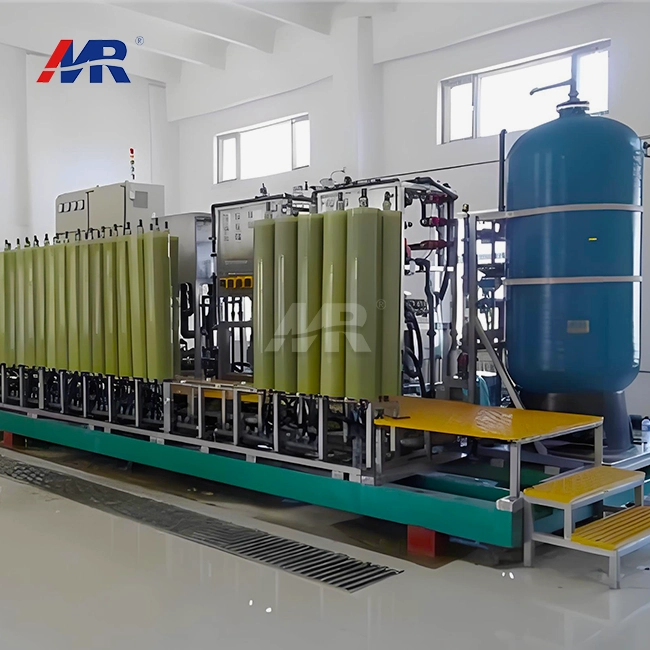
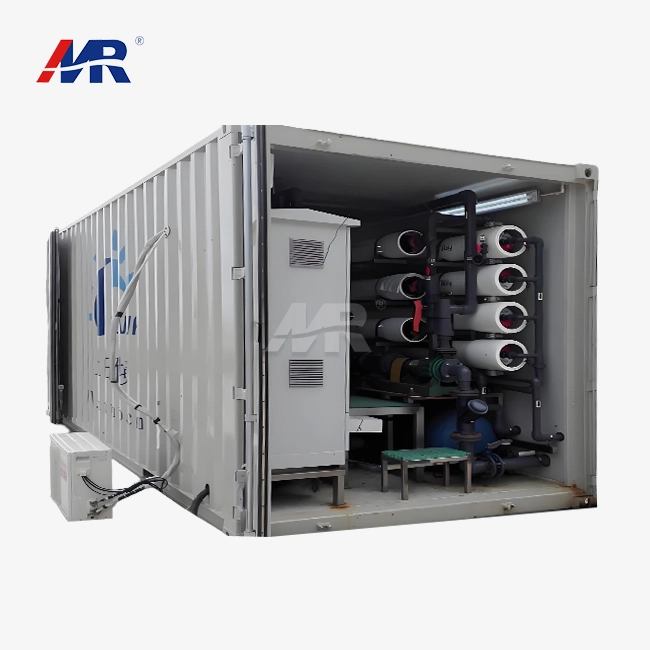
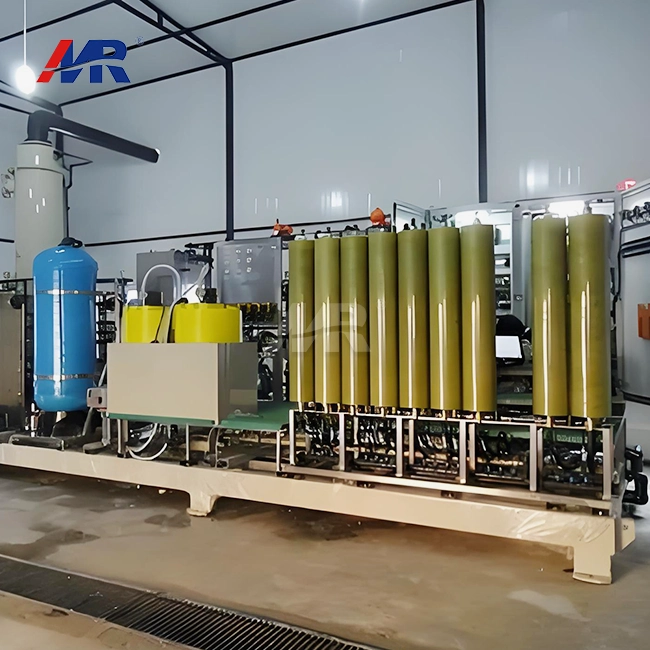
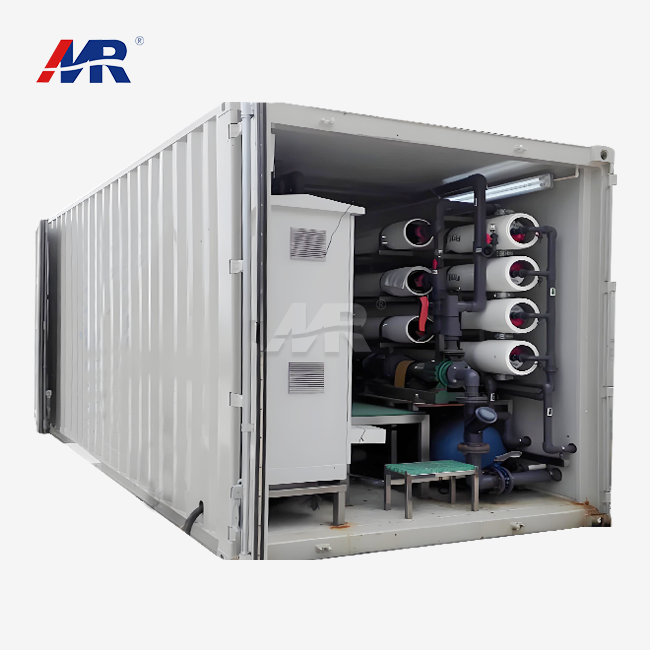
Containerized vs Skid-Mounted Configurations
| Configuration | Advantages | Limitations |
|---|---|---|
| Skid-mounted | Flexible installation, easier integration into an existing building | Needs a shelter or housing structure |
| Containerized | Fast deployment, built-in weather protection | Transport size limits, tighter internal access |
| Modular trains | Better redundancy, staged capacity expansion | More valves and control points to manage |
For Middle East and Africa projects, I usually recommend containerized units because they ship ready to run and handle high ambient temperatures with minimal site work. For Southeast Asia tenders, skid-mounted systems inside an existing building often save on shipping costs and import duties.
What Recovery Rate and Operating Cost Can You Expect?
Recovery and energy cost decide your real return on investment more than the purchase price does. I review this with clients before they sign any contract.
Understanding the UF Water Balance
Recovery is permeate flow / feed flow, expressed as %. On a competent 70m3/hour ultrafiltration plant, the feed water of roughly 75-78 m³/h normally gives around 70 m³/h of usable permeate after deducting water for backwash and chemical cleaning. Internal service data from Morui’s installed base of 42 systems rated 60–80 m³/h in Vietnam, Indonesia, Kenya and Peru between 2022 and 2024 showed an average sustained recovery of 91.4%, with the lowest performing sites running closer to 86%, due to higher feed turbidity and less frequent CIP scheduling. Daily net recovery will always be less than instantaneous recovery since it takes into account all backwashes and cleaning cycles in 24 hours.
Energy and Operating Cost Drivers
The membrane price is one of the factors affecting the operating cost of a 70m3/hour ultrafiltration plant. The efficiency of the feed and recirculation pumps directly affects the power demand. The operating pressure, pipe size, and elevation changes, which must be overcome by pumps, increase hydraulic resistance. Ongoing expenditure is also affected by backwash frequency, air scour use, and chemical consumption. The cost of disposal of wastewater from backwash and CIP cycles is often underestimated when budgeting, especially in locations with limited discharge licensing.
Cost Comparison Checklist
Line item price doesn’t tell the entire story of life span cost. Compare supplier bids side by side, using this list.
- Capital cost: Ask explicitly what equipment, tanks, instruments, and installation work are included in the base price. Exclusions vary considerably among suppliers and may add 15-30% to the total project cost.
- Membranes: Verify the expected service life in years and cost to replace each module since this becomes your biggest recurring expenditure throughout a 10 year 70m3/hour ultrafiltration plant life.
- Energy: Provide a guaranteed kWh per m3 depending on the above feed characteristics and not a generalized industry average that may not be applicable to your water.
- Chemicals: Understand what cleaning chemicals, concentrations, and frequency the design assumes, since under-specified cleaning leads to premature membrane replacement.
- Wastewater: Quantify backwash and CIP waste early so you have a discharge or disposal plan budget in place before commissioning, not after.
When evaluating two quotations for an ultrafiltration plant of 70m3/hour these combined cost categories might often be more relevant than the headline equipment price.
How Can UF Membrane Fouling Be Controlled?
Fouling is the single biggest reason UF plants underperform their design specs. Most causes are preventable with the right operating discipline.
Main Fouling Mechanisms in Hollow-Fiber UF
Almost every UF unit I’ve dealt with suffers from four types of fouling. If pretreatment does not remove fine particles, deposits of particulates and colloids build up. Organic fouling is the adherence of oils, proteins, and natural organic matter to the surface of the membrane. Biofouling, the growth of microbes that leads to a biofilm layer, is common in Africa and Latin America, especially in warm climates. Inorganic scaling is the deposition of iron, manganese, or hardness on the surface of fibers under certain pH and temperature conditions.
Practical Fouling-Control Methods
To keep an ultrafiltration plant of 70m3/hour at design capacity, four operational factors must be regularly checked. Do not allow pretreatment to drift out of specification over time. Keep feed-water parameters within the limits set during design. Adapt flux, crossflow velocity, and backwash frequency to actual fouling patterns, not factory-fixed parameters. Follow chemical-enhanced backwash and CIP cycles according to the membrane manufacturer’s chemical compatibility list. Monitor TMP and normalized permeability weekly. A rising trend of TMP or normalized permeability shows fouling before the output drops.
Common Design Pitfalls and How to Avoid Them
This table covers mistakes I see repeated across multiple regions and project types.
| Risk or Pitfall | Possible Consequence | Mitigation |
|---|---|---|
| Designing from average feed data only | Frequent overload, unstable output | Use seasonal and peak-quality test data |
| Skipping oil separation on oily water | Rapid, irreversible fouling | Install oil separation and control the source |
| Sizing from clean-water flux alone | Overspending or poor real-world output | Use pilot or validated design flux |
| Ignoring cleaning waste disposal | Unplanned discharge violations | Plan neutralization and waste handling upfront |
| No standby train | Production stops during maintenance | Build in parallel trains or bypass capacity |
A beverage client in northern Vietnam learned this the hard way. Their original UF system, bought on price alone without oil separation pretreatment, lost 40% of its rated flux within four months. After Morui retrofitted an oil-water separator and adjusted the CEB schedule in 2023, the same 70m3/hour ultrafiltration plant recovered to 94% of its original design flux and has held steady for over a year of continuous operation.
How Should a 70m3/hour Ultrafiltration Plant Be Operated and Verified?
Design only gets you halfway. How the plant runs day to day decides whether it hits its promised numbers over its full service life.
Automatic vs Manual Operating Modes
Most buyers choose automated PLC control for a 70m3/hour ultrafiltration plant because it manages the filtration, backwash, CEB, CIP, alarms, and shutdown sequences without the need for constant human intervention. However, manual control is still needed for commissioning, troubleshooting, and emergency recovery after an unexpected shutdown. A solid control system also keeps a log of previous data, permits remote access for off-site Technical support, and provides basic controls to stop unauthorized modifications to setpoints.
Monitoring and Performance Verification
Routine monitoring of flow, pressure, TMP, turbidity, pH, conductivity, and differential pressure will warn of a fouling or mechanical problem before it results in downtime. Daily visual inspections, weekly instrument calibration checks, and monthly performance reviews catch small issues early on. And lab test settings are seldom representative of actual feed water conditions; thus, independent lab testing should be used to check permeate quality versus your actual contract limits, rather than relying on the membrane manufacturer’s rejection claims.
Standards, Compliance, and Documentation
The specific requirements are highly dependent on your project location and final use. For projects targeting the EU, evaluate CE marking requirements under the Machinery Directive, Pressure Equipment Directive, and EMC Directive (European Commission, 2024)[6]. Confirm that goods that may come in contact with water are NSF/ANSI 61 certified for drinking-water or food-contact applications (NSF International, 2024)[5]. For feed-water characterization, reference: ASTM D4189 (ASTM International, 2020) [2]. Silt density index (SDI) test, P&IDs, electrical drawings, material certificates, calibration records, and FAT/SAT reports, since they are vital for bids, audits, and future 70m3/hour ultrafiltration plant expansions.
Supplier Evaluation, Procurement Costs, and Delivery for a 70m3/hour Ultrafiltration Plant
Picking the right supplier matters as much as picking the right membrane. I have seen well-designed systems fail simply because the supplier disappeared after shipment.
How to Evaluate a UF Plant Manufacturer
Ask for reference projects that have comparable feed-water chemistry to yours—not a generic client list. Ask for pilot-testing data or a documented design technique, not a flux figure plucked from a brochure. Please provide me with the membrane brand, material, pore rating, and price for replacement. Too many times, imprecise membrane sourcing is a symptom of a reseller and not a manufacturer. Morui has its own membrane production line, so the same firm controls membrane quality, system integration, and after-sales parts supply for every 70m3/hour ultrafiltration unit we create – a scenario generally dubbed membrane-to-machine manufacture.
Supplier Comparison Checklist
| Evaluation Area | Evidence to Request |
|---|---|
| Engineering | Process calculations, PFD, P&ID, hydraulic profile |
| Membrane performance | Flux basis, TMP range, rejection data, cleaning limits |
| Manufacturing quality | Inspection plan, pressure tests, material certificates |
| Automation | PLC brand, control logic, alarm list, communication protocol |
| Project delivery | Manufacturing schedule, FAT, packing, shipping plan |
| Support | Warranty terms, spare-parts stock, site-service availability |
| Commercial terms | Scope exclusions, payment terms, Incoterms, quote validity |
Quotation Structure and Procurement Requirements
A solid bid for a 70 m3/h ultrafiltration plant has line items for equipment pricing, engineering, installation, commissioning, civil works, freight, charges, and operator training individually. Before you ask for the final pricing, find out about the minimum order quantity, manufacturing lead time, spare parts availability, warranty term, payment methods, and quotation validity period. Clarify Incoterms (EXW, FOB, CIF, or DAP) so everyone understands who is responsible for shipping and customs risk at each stage. When drafting project-based offers for Latin America and CIS clients, request installation and commissioning support as a specified scope item, rather than assuming it would be given.
Quality Verification Before Shipment and Acceptance
A uniform checklist protects the client and supplier before each ultrafiltration machine with a capacity of 70 m3/h leaves the factory. Material Certifications, membrane certificates, and calibration records are checked against the permitted specification. Factory Acceptance Tests (FAT) comprise pressure testing, electrical safety testing, control sequence verification, and pump performance testing. • Full site acceptance testing (SAT) against authorized flow, pressure, recovery, and permeate quality criteria on site prior to final payment sign-off. To expedite any future warranty claim, please write down the serial numbers, membrane lot numbers, and software versions of each component.
Conclusion
For a functional 70m3/hour ultrafiltration plant system, it starts with real feed-water data, not a catalog spec sheet. Your rated capacity should include net output, permeate or feed. Pretreatment should match your actual contamination load. Don’t size membrane area based on clean-water data alone. Add a fouling tolerance. Plan cleaning based on measured TMP trends – not on predefined calendar dates. Establish a realistic recovery objective of 85-95%. Find a source that can provide pilot data, documented quality control, and a legal supply chain for replacement parts. That combo will decide if your factory still meets its statistics 5 years after beginning.
FAQ
1. What is the working principle of a 70m3/hour ultrafiltration plant?
A 70m3/hour ultrafiltration plant pushes water through hollow-fiber membranes with pores between 0.01 and 0.1 microns, physically blocking suspended solids, bacteria, and large organic molecules while letting treated water pass through. The 70 m³/hour figure should always specify whether it refers to feed flow, permeate flow, or net daily output.
2. What operating pressure does a 70m3/hour ultrafiltration plant require?
Most systems operate between 0.1 and 0.3 MPa, though the exact pressure depends on membrane type, feed turbidity, temperature, and fouling condition. Ask your supplier for guaranteed feed pressure, transmembrane pressure range, and maximum allowable differential pressure in writing.
3. What pretreatment is required before UF membranes?
Standard pretreatment includes screening and often adds coagulation, clarification, oil separation, or cartridge filtration depending on your feed-water test results. Turbidity, SDI, oil content, and microbial load all determine which pretreatment steps your site actually needs.
4. Can a 70m3/hour ultrafiltration plant replace reverse osmosis?
No. UF cannot remove dissolved salts or achieve low-conductivity output the way RO does. A 70m3/hour ultrafiltration plant works well as RO pretreatment or as a standalone reuse barrier where suspended solids and bacteria are the main concern.
5. What recovery rate can a 70m3/hour UF system achieve?
A properly maintained system typically achieves 85% to 95% recovery, though actual performance depends on feed quality, backwash frequency, and cleaning schedule. Morui's own service data across 42 installed systems from 2022–2024 showed an average sustained recovery of 91.4%.
6. How much does a 70m3/hour ultrafiltration plant cost?
Price depends on membrane area, pretreatment scope, automation level, materials, containerization, certification requirements, and installation scope. A meaningful quotation requires your feed-water analysis, required permeate quality, site conditions, and clear commercial terms up front.
7. What documents should a UF plant supplier provide?
Expect a process flow diagram, P&ID, equipment list, membrane datasheets, electrical drawings, control philosophy, operating manual, calibration certificates, FAT/SAT records, and a spare-parts list before final payment.
Let's Talk About Your Water Treatment Project
Water quality, climate, and reuse goals differ from one site to the next, and a generic quote rarely fits a real project. Morui builds each 70m3/hour ultrafiltration plant around the client's actual feed-water data, whether that means a containerized unit for a desalination pretreatment site in the Middle East or a skid-mounted system for a village water scheme in East Africa. As a direct 70m3/hour ultrafiltration plant manufacturer with in-house membrane production, we handle design, fabrication, and after-sales parts supply under one roof. Contact Our Team at benson@guangdongmorui.com to request a technical proposal.
References
1. International Organization for Standardization, ISO 20670:2018 — Water Reuse — Vocabulary, 2018. https://www.iso.org/standard/68474.html — cited in the feed-water and reuse definition sections.
2. ASTM International, ASTM D4189-14(2020) — Standard Test Method for Silt Density Index of Water, 2020. https://www.astm.org/d4189-14r20.html — cited in the feed-water parameters and compliance sections.
3. U.S. Environmental Protection Agency, Water Reuse Action Plan, 2020. https://www.epa.gov/waterreuse/water-reuse-action-plan — cited in the application scenarios discussion.
4. World Health Organization, Potable Reuse: Guidance for Producing Safe Drinking-Water, 2017. https://www.who.int/publications/i/item/9789241512743 — cited in the treatment train and limitations section.
5. NSF International, NSF/ANSI/CAN 61 — Drinking Water System Components, 2024. https://www.nsf.org/knowledge-library/nsf-ansi-61-drinking-water-system-components — cited in the standards and compliance section.
6. European Commission, Machinery Directive 2006/42/EC and CE Marking Requirements, 2024. https://single-market-economy.ec.europa.eu/sectors/mechanical-engineering/machinery_en — cited in the operations and compliance section.
Written by Renjie Kuang, Senior Overseas Water Treatment Technical Manager. Renjie has worked on UF, RO, and containerized water-treatment projects across Southeast Asia, Africa, and Latin America for more than a decade, covering feed-water testing, system commissioning, and after-sales troubleshooting for municipal and industrial clients. He works directly with engineering teams at Guangdong Morui Environmental Technology Co., Ltd on export project specifications and site support.