

Containerized RO Lead Time From PO to Shipment for 20ft and 40ft Units
The lead time for a containerized RO unit from purchase order to shipment is not a single fixed number. It depends on design confirmation, component availability, container conversion, assembly, factory testing, and export paperwork. A compact 20ft unit built on a proven design often moves faster than a 40ft system with several RO trains, larger pretreatment, or custom controls. Yet a heavily customized 20ft unit can take longer than a standard 40ft one. At Morui, we confirm a written production schedule after reviewing your feedwater analysis, capacity, and destination. Ocean freight and U.S. customs clearance follow shipment, so we plan them as separate milestones.
Containerized RO Lead Time From PO to Shipment—The Complete Process
Technical Clarification and Design Basis
The clock starts out with a clear design. To make sure everything is right, we check the feedwater TDS, flow rate, goal recovery, product-water conductivity, daily working hours, and scope of supply as soon as we get the order. These tell the Morui units how many membranes to use, what size pump to use, and what steps need to be taken before the treatment. If the water analysis isn't done right, the whole process has to be done again, which takes more time than the analysis itself. In the US, people should begin by putting in power and frequency. The power can be changed from 380V/50Hz to something else. Engineering has to start over if you want to change the plan after it has been set in stone.
Procurement and Assembly
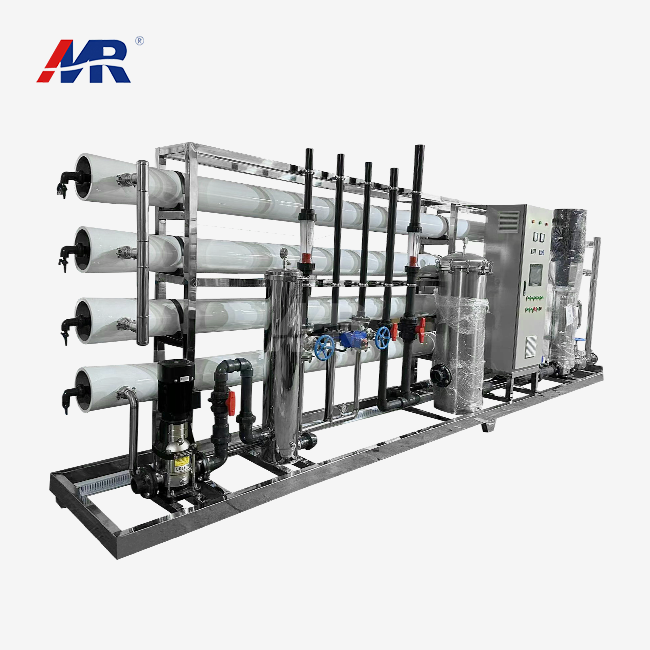
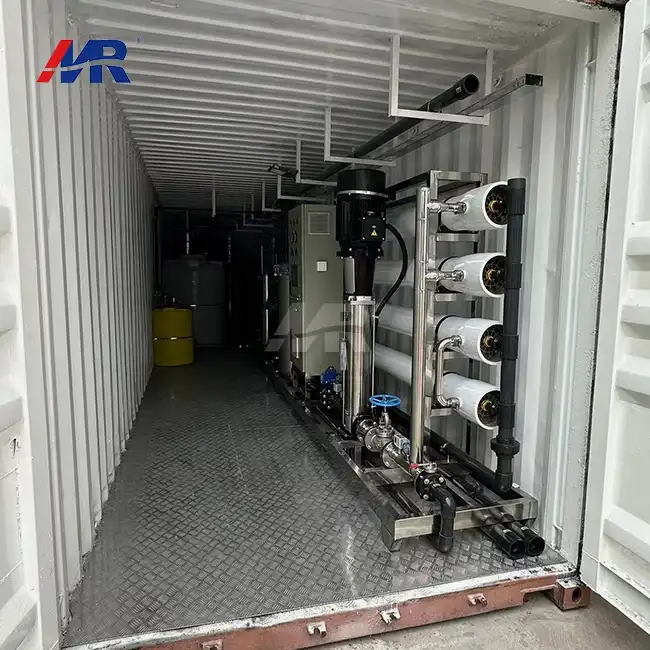
Long-lead items usually have more control over the plan than the steel box. It needs high-pressure pumps, pressure tanks, PLC parts, and special valves before it can be put together. The company Morui has its own factory that makes membranes and also works with other factories that make tools. This helps us find what we need because it stands for Shimge pumps, Runxin valves, and Createc instruments. The team puts the corrosion-resistant stainless steel skid, pipes, and electrical panel inside the container as soon as the parts arrive. This way, the unit is ready to connect to water and power when it gets to the port.
Testing, Documentation, and Export Release
Everything is put through a factory acceptance test, electrical checks, and pressure tests before it is sent out. This is when we tell the buyer what happened. In the U.S., projects that need to follow state rules often need NSF/ANSI/CAN 61 for parts that come into contact with water and UL 508A for industrial control panels. In the beginning, make sure that one of these is true, as certificates and instructions need to be agreed upon before they can be sent. Please also pay attention to the rules. At least 24 hours before the goods are loaded on a ship going to the U.S., the importer must file a security filing with U.S. Customs and Border Protection.
Typical Lead-Time Structure for 20ft and 40ft Containerized RO Units
What a 20ft Unit Usually Involves?
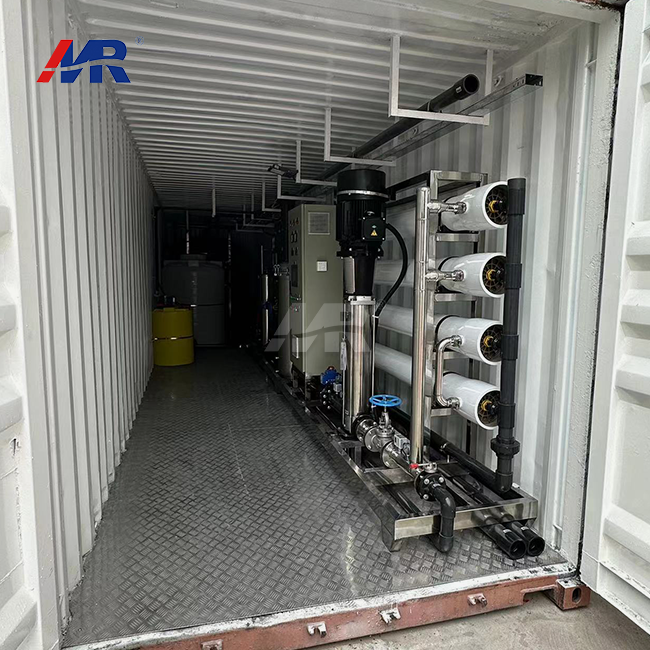
According to ISO 668, a standard 20-foot container for a containerized ro system's outside measures 6.06 m in length and 2.44 m in width. For things that don't need a lot of space, like construction camps, emergency kits, and towns that are far away, that small room works well. This takes less time to put together and test when all the parts are on hand and the plan has been tried. There are fewer trains and a smaller prep skid. A 20-foot plan is something else that won't fit inside. It's possible to make the project bigger by adding more tanks, dosing systems, or a generator, so we first look at how much it can hold.
What a 40ft Unit Usually Adds?
A 40-foot container, which is about 12.19 meters long, can hold more than one RO train, bigger pretreatment and dosing skids, and make it easier to get to service. In that area, there will be more tests, pipes, etc. If you use a 40-foot unit in salt or muddy water, it might need more time for high-pressure parts and automation. Still, a standard 40-foot plan with known parts can be sent out faster than a 20-foot build that is made just for the customer. Size isn't as important as scope, approvals, and the number of parts. It's not a surprise at the end because we tell you what's included, like tanks and wires.
Working Backward From Commissioning
Plan ahead based on when you need clean water. Remove the time it takes to connect to the site, clear customs, carry items by truck, ship, and handle cargo at the port from the date of commissioning. Remember to allow time for reviews as well. The only thing that's left is the film window. Assembling, factory testing, port transfer, vessel departure, and site delivery are all milestones that have their own page. The design freeze is the first one. You can't control delays at ports and on the water, but a realistic buffer will protect you. Running from the factory to the job site should be seen as two separate events.
What Determines Containerized RO Delivery Time?
Process Complexity and Pretreatment
There are changes in each step of a containerized ro system that depend on the feedwater quality, volume, and recovery. It's different how the container is set up for a low-TDS source because it needs less pressure and is easier to prepare than seawater. First, we clean the water and pump it under high pressure. Next, we do reverse osmosis, change the pH, add minerals, store, and distribute the water. The amount of solids and scaling ions in the raw water determines whether multimodal filters, cartridge filters, or antiscalant dosing are needed. Once the bid process starts and you get a full lab report early on, you can't change the plan.
Controls, Electrical, and Inspection Requirements
Engineers need more time to meet custom PLC, HMI, remote monitoring, VFD, voltage, and frequency needs. It takes even more time for them to get ratings for dangerous areas. Early on, we check the power source to make sure it works with the 60Hz power that most places in North America use. The plan needs to include dates for material records, third-party checks, and pressure-test results. When buyers agree on these things before the shipments are made, we don't have to hold them up. An almost-done container can wait in the yard for the papers if they are late.
Common Risks and How to Cut Them
Lack of feedwater data, an unclear scope of supply, late design changes, and export or import papers that don't match are the four things that can cause times to change. It might take longer to accept something if there isn't a tank, wire run, or extra parts list on site. We set a date for the design to be frozen and made a list of who is in charge of each thing. Please pick one technical contact person, send comments on the drawings all at once, and get the papers ready for the pad, drainage, power, crane, and imports while we build. Trouble spots can be found quickly if you set separate goals for factory completion, port dispatch, ocean freight, customs, and site delivery.
20ft vs 40ft Containerized RO Systems—Which Format Supports Faster Deployment?
Transport, Lifting, and Road Access
The project won't get done faster just because the factory is faster with a containerized ro system. Regular ISO freight can be used to ship both types of units, but a 40-foot unit that is full needs a longer truck with more room to turn and a crane that can lift and reach the unit. For mine camps, islands, and disaster sites, a 20-foot machine is useful because it can get in through shorter doors and carry lighter items. Make sure you know the bridge limits, gate widths, and how to get from the port to the site before you choose how to print.
Foundations, Drainage, and Utilities
There isn't much civil work that needs to be done because it's plug-and-play, but the site still needs a level pad or a base that has been packed down, a feedwater line, a drain for the concentrate, and a power connection. There are rules in your area about where heavy waste can go, so you might not notice it. Most of the time, the product water tanks are outside the container. Make sure there is space around the doors for them and for service workers to enter and leave. Getting these things ready while we build the unit will make it easy for you to join and get it going when you get there.
Choosing the Format and the Supplier
This is what you should do: choose a 20-foot unit that is easy to move, has little storage room, and a good amount of space, like for temporary camps or event water stations. It is best to use a 40-foot unit for brackish or salt water work if you need more tanks, a bigger pretreatment area, chemical systems, or a room for maintenance. Standard designs make it easier to plan spare parts and speed up production.
Custom builds, on the other hand, are better for places with a lot of salt, harsh weather, or limited access. When you compare suppliers, make sure they all give you the same kinds of references, layout drawings, test reports, and proof that the work has been completed. Then, ask for prices on shipping, warranty terms, capacity, recovery, filters, electrical scope, extra parts, and Incoterms for each item. The Morui company has 14 locations, 500 workers, and 20 engineers who help with setup, testing, and customer service after the sale.
Conclusion
When you place an order for a containerized RO unit, you have to wait until the plan is accepted, the parts are found, the unit is put together, and it is checked before it can be sent to another country. When something ships, it doesn't always match when it arrives. It doesn't matter what size the container is as long as it can be customized and parts are easy to get. This means that a standard 40-foot design can ship sooner than a custom 20-foot build. A full feedwater dataset, an early design freeze, a clear scope, and agreed-upon electrical and paperwork needs all make it less likely that work will need to be redone. It takes time to get to the site, lift heavy things, lay foundations, fix drainage problems, and file with U.S. customs, so each milestone needs its own date. Buyers can speed up engineering and testing without lowering the quality of the work if they get these things ready at the same time and compare providers based on scope and proof.
FAQ
Q1: Is a 20ft unit always faster than a 40ft unit?
A: Not at all. A regular 40-foot plan with known parts can ship faster than a 20-foot build that is made just for you. More than the size of the container, the schedule is set by the work that needs to be done, getting approvals, and getting parts.
Q2: What information do you need for a lead-time estimate?
A: The study of the feedwater, the capacity, the quality of the product water, the working hours, the power source, the use, the location, the need for pretreatment, and the goal date for commissioning are all things we need to know. The size of our units helps us make sure the format is right because they cover 10–500 m³/day.
Q3: Does factory lead time include ocean freight?
A: Not very often; no. The wait time stops when the factory sends out the package. Ocean freight, clearing customs, and delivery to the spot are the next steps, which are done in order.
Q4: Can a project be accelerated for emergency use?
A: Sometimes. It's more likely if there is a standard design, all the data, and the parts are easy to get. After looking over your idea, we can say for sure that it's possible.
Request a Containerized RO Lead-Time and Shipping Plan From Morui
Send Morui your feedwater analysis, production schedule, target start date, container size, destination, and the quality of the product water. Our engineers will respond with a process design, equipment list, container layout, shipping estimate, and production schedule. We can rent you a containerized RO for a single 20-foot unit or for a group of people. Email benson@guangdongmorui.com to learn more.
References
1. ISO 668:2020, Series 1 Freight Containers – Classification, Dimensions and Ratings, International Organization for Standardization, 2020
2. NSF/ANSI/CAN 61: Drinking Water System Components – Health Effects, NSF International, 2023
3. UL 508A: Standard for Industrial Control Panels, UL Standards, 2018
4. AWWA Manual M46: Reverse Osmosis and Nanofiltration, American Water Works Association, 2007
5. Membrane Technology and Applications, Richard W. Baker, Wiley, 2012
6. Importer Security Filing and Additional Carrier Requirements, Federal Register, 2008