

_1745823981883.webp)

Best RO Reverse Osmosis Water Filter for Home Use
If you are searching for the best ro reverse osmosis water filter for home use, the answer depends on your water source, daily output needs, and long-term maintenance budget. A reverse osmosis system forces feed water through a semi-permeable membrane with a pore size of approximately 0.0001 microns, removing up to 99% of dissolved solids, heavy metals, PFAS, and microbial contaminants that carbon filters routinely miss. For B2B buyers—distributors, facility managers, and OEM partners—choosing the right system means balancing purification performance, operational cost, and supply chain reliability from the start.
What Is Reverse Osmosis and Why Does It Outperform Other Filtration Methods?
Outside pressure, usually between 40 and 100 psi, pushes water molecules through a Polyamide Thin-Film Composite (TFC) barrier. This separates clean permeate water from a concentrated brine waste stream. This method is very different from UV sterilization or carbon block filtration.
How RO Compares to Alternative Purification Technologies
The following table shows the specific areas where reverse osmosis is clearly better than other methods:
| Technology | TDS Removal | Heavy Metals | PFAS and Microplastics | Energy Use |
|---|---|---|---|---|
| Reverse Osmosis | 95–99.7% | Yes | Yes | Moderate |
| Activated Carbon | <20% | No | No | Low |
| UV Sterilization | 0% | No | No | Low |
| Distillation | 99% | Yes | Partially | High |
NSF International says that at the membrane stage, only systems certified under NSF/ANSI 58 have been shown to get rid of contaminants such as barium, radium, and volatile organic compounds. That standard cannot be met just by carbon filtration. This difference has a direct effect on compliance and product liability for B2B clients who supply clean water to food processing lines, dialysis units, or laboratories.
What Key Factors Should B2B Buyers Evaluate Before Purchasing?
Buying a ro reverse osmosis water filter system for use in a business setting is not a simple choice. Before committing to a supplier or model, a number of practical factors must match up.
Water Source and Feed Water Quality
The types of contaminants in municipal water and well water are different. Water from city sources often has chloramine and disinfectant leftovers in it, while water from wells may have nitrates, arsenic, iron, and hardness minerals in it. Matching the pre-filtration stage (sediment filter, carbon block, or antiscalant doses) to the specific feed water chemistry keeps the membrane from getting clogged too quickly and increases the time between service calls.
Capacity, Recovery Rate, and Power Efficiency
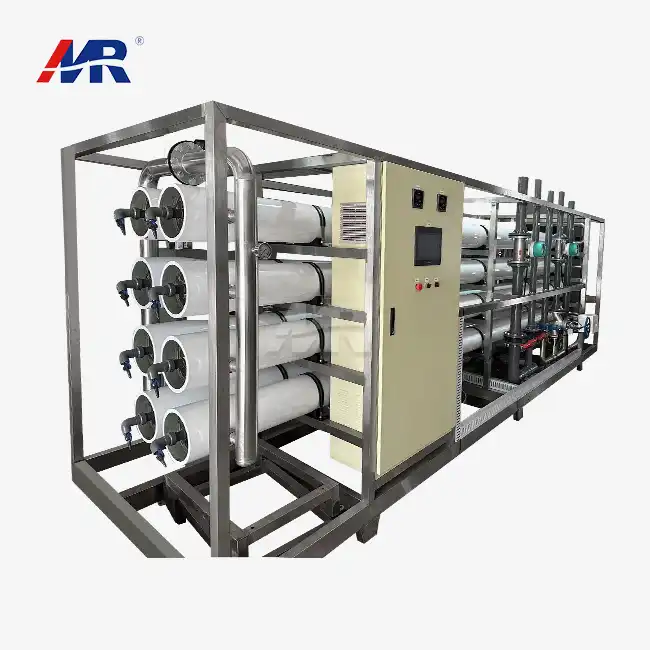
The operational cost of a system is based on its gallons-per-day (GPD) output and water recovery rate. Utility bills go up, and water is wasted when recovery rates are low. The Morui MR-BWRO-10TH is designed to make potable water. It has a recovery rate of 55–65% and a salt rejection rate of 98%, and it only uses 15 kW per hour. Because of these features, it can be used in small businesses, as mobile water stations, or as temporary production sites where saving energy and water is important for the bottom line.
Here are a few quick facts about this unit's main performance specs:
- Model: MR-BWRO-10TH
- Application: Making drinking water on the go
- Power Consumption: 15 kW per hour
- Recovery Rate: 55–65%
- Salt Rejection Rate: 98%
Because of these features, the MR-BWRO-10TH is perfect for procurement teams that need a small, mobile unit that doesn't lose its ability to purify. The 98% salt rejection rate is higher than what is needed by most food-grade and pharmaceutical-adjacent water standards. This gives procurement managers a good floor for compliance.
Which RO Systems Are Most Suitable for Home and Light Commercial Use in 2026?
In the United States, the residential and small industrial RO market has grown a lot. Buyers now want multi-stage designs, smart TDS tracking, and wastewater ratios that are closer to 1:1 than the old 1:4 standard.
Comparing Configuration Options for Different Deployment Scenarios
| Use Case | Recommended Configuration | Daily Output | Key Feature |
|---|---|---|---|
| Urban apartment | 5-stage under-sink | 50–75 GPD | Small size |
| Small office / café | 7-stage with remineralization | 100–150 GPD | Alkaline post-filter |
| Mobile water station | Portable RO unit (like MR-BWRO-10TH) | Scalable | 55–65% recovery |
| Light manufacturing | Industrial under-counter RO | 200+ GPD | High TDS tolerance |
B2B buyers should make sure that the system meets all of the necessary requirements, is certified by NSF/ANSI 58, uses TFC membranes instead of cellulose acetate, and has a built-in booster pump for low-pressure input settings. Wastewater-saving technology that improves the pure-to-drain ratio is no longer an extra that you have to pay extra for; it is now expected when buying systems that care about the environment.
How Should B2B Buyers Structure Their Procurement Process?
When buying a ro reverse osmosis water filter system for a business, you need to do more research than when buying one for your home. Price-per-unit comparisons don't take into account the total cost of ownership, the availability of spare parts, or Technical support after the system has been installed.
Evaluating Suppliers: OEM Partnerships vs. Platform Sourcing
When you buy directly from a company that makes membranes in-house, you get real benefits like shorter wait times, quality control of the parts, and the chance to negotiate OEM specifications. Platform-based shopping through platforms may give you lower quotes at first, but it is often hard to hold them accountable after the sale.
The Guangdong Morui Environmental Technology Co., Ltd. has its own factory for making membranes and 14 branches in China, where it processes different kinds of equipment. Twenty engineers and 500 technical staff work for the company. Morui is also an approved distributor for Shimge Water Pumps, Runxin Valves, and Createc Instruments. This means that buying teams can get system parts from a single responsible source instead of having to deal with three different vendors.
When you place a bulk order with Morui, you can get services like custom filter replacement plans, longer warranties, and on-site commissioning support. These services lower operational risk for sellers who are in charge of multiple client sites at the same time.
How Do You Maintain an RO System for Maximum Lifespan?
If repair intervals aren't followed, even a well-designed machine will break down. With the right feed water quality and flow rate, ro membranes can last anywhere from two to five years. To keep the membrane safe from particulate fouling and chlorine decay, sediment and carbon pre-filters need to be changed every six to twelve months.
Some common performance problems and their causes are a drop in pressure across the membrane (which could mean fouling or scaling), an off-taste in the permeate (which could mean the post-carbon stage is full), and high TDS levels in the product water, which could mean the membrane has been breached or bypassed. An accurate TDS meter placed after the membrane acts as a reliable early warning sign that doesn't require samples to be taken in a lab.
To be compliant, systems used in food-grade or medical-adjacent areas should keep written repair logs that are in line with NSF and, if necessary, GMP standards. Getting rid of used membranes and filter cartridges in a responsible way—by using certified waste handlers instead of regular trash cans—reflects environmental responsibility standards that are becoming more and more a part of US corporate procurement policies.
Conclusion
It takes more than just looking through product listings to find the best ro reverse osmosis water filter for home or light business use. When making a purchase choice that will affect operations for months or years, it is important to think about the chemistry of the feed water, how well the membrane works, how certified it is, and how responsible the seller is. At 15 kW/hour, the Morui MR-BWRO-10TH has a 98% salt rejection rate and a 55–65% recovery ratio, making it a good choice for temporary and permanent installations where performance and mobility must combine. With Morui's vertically integrated manufacturing and multi-branch service network, this is a sourcing choice based on quality that can be tracked instead of guesswork from a catalog.
FAQ
1. How often should RO filters be replaced in a commercial setting?
The sediment and carbon stages of the pre-filter need to be changed every six to twelve months, depending on how cloudy the feed water is and how much chlorine is in it. Most of the time, the TFC membrane lasts between two and five years. Instead of just looking at calendars, the most accurate way to figure out when to replace something is to use an inline meter to measure the permeate TDS.
2. What contaminants does a reverse osmosis system actually remove?
Lead, arsenic, nitrates, fluoride, PFAS chemicals, chloramine, barium, radium, and most microbial diseases can be removed from water by an approved RO system. The NSF/ANSI 58 approval backs up claims of reduction at the membrane step. Before the membrane, volatile organic compounds and chlorine are dealt with by carbon pre-filters, which make the membrane last longer.
3. Is professional installation required for business deployments?
People who know what they are doing can install under-sink units themselves by following the manufacturer's instructions. Certified expert commissioning is very helpful for commercial installations, especially those with booster pumps, pressurized storage tanks, or multi-outlet distribution lines. For clients who need verified setup documents, Morui offers all-in-one installation and commissioning services.
Partner With Morui for Your Next RO Procurement
The engineering team at Morui is ready to help you find the best ro reverse osmosis water filter supplier for your needs in terms of volume, water quality, and compliance. Whether you need a single portable unit like the MR-BWRO-10TH or a bulk OEM setup for distribution, Morui's vertically integrated supply chain takes away all the doubt in the buying process at every stage, from making the RO reverse osmosis water filter membranes to installing them on-site. To start your question right away, email benson@guangdongmorui.com.
References
1. NSF International. NSF/ANSI 58: Reverse Osmosis Drinking Water Treatment Systems. NSF International, 2023.
2. Crittenden, J. C., et al. MWH's Water Treatment: Principles and Design. John Wiley & Sons, 2012.
3. World Health Organization. Guidelines for Drinking-Water Quality, 4th ed. WHO Press, 2022.
4. Metcalf & Eddy. Wastewater Engineering: Treatment and Resource Recovery, 5th ed. McGraw-Hill Education, 2014.
5. Shannon, M. A., et al. "Science and technology for water purification in the coming decades." Nature, vol. 452, 2008, pp. 301–310.
6. American Water Works Association. Reverse Osmosis and Nanofiltration: AWWA Manual M46, 2nd ed. AWWA, 2007.
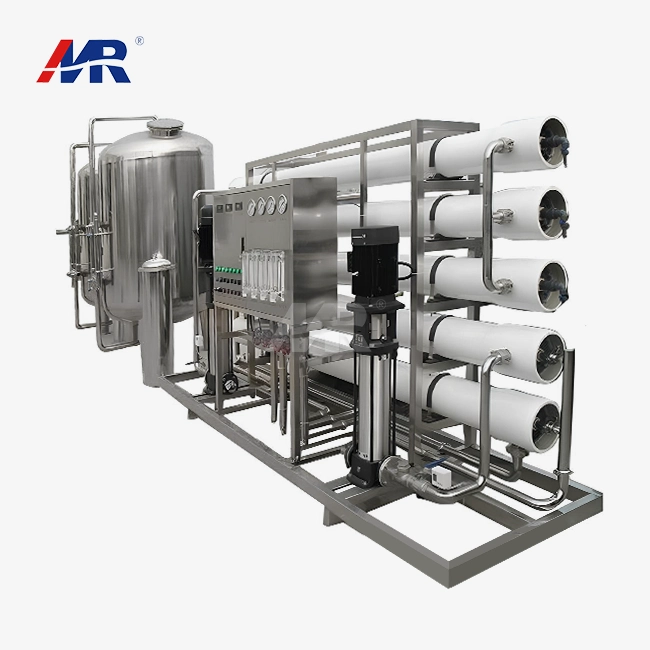 VIEW MOREbrackish water reverse osmosis
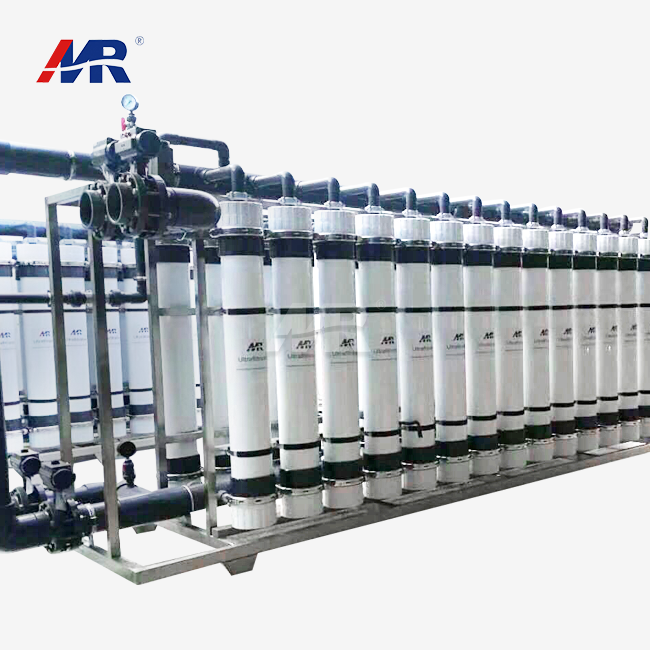 VIEW MOREUltrafiltration Systems
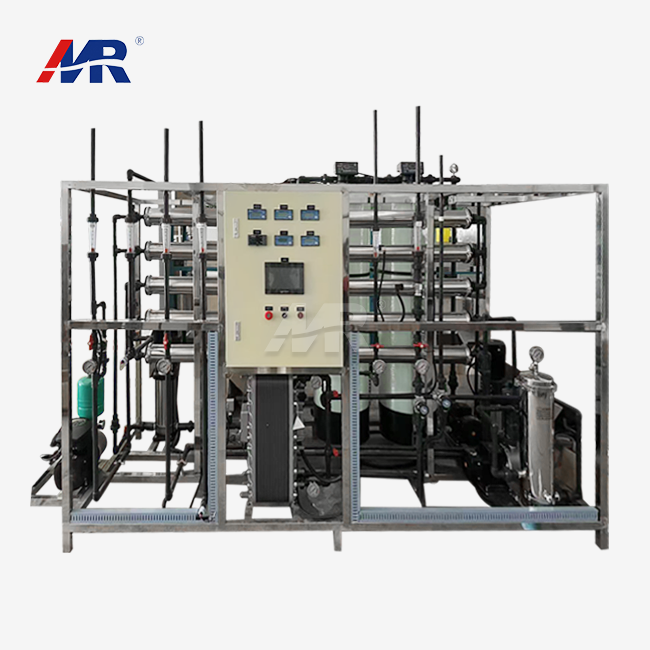 VIEW MOREedi purified water system
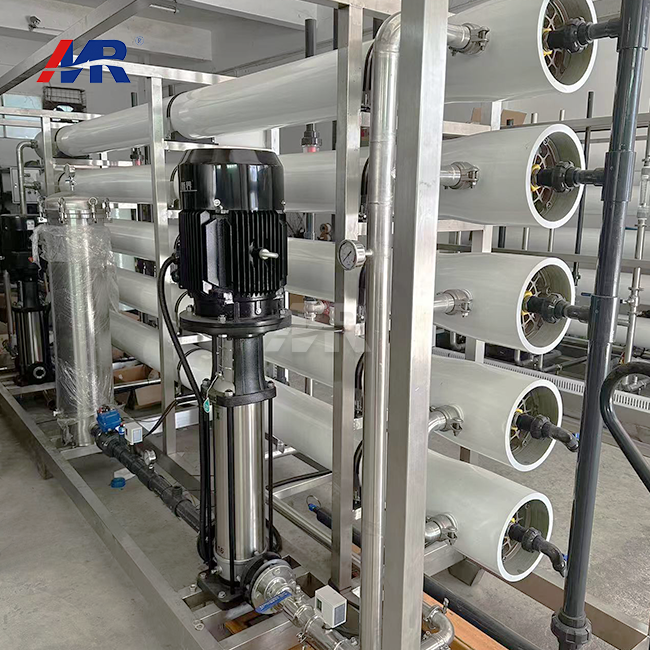 VIEW MOREosmosis water purification system
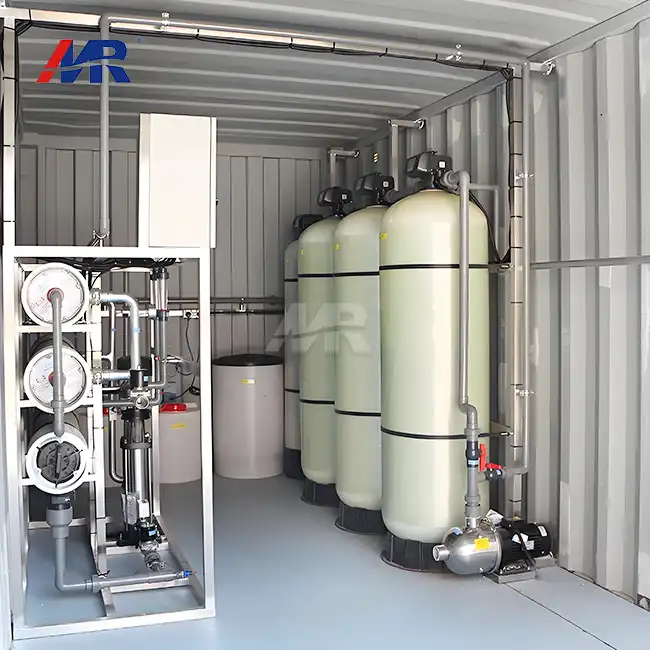 VIEW MOREcontainer type 3m3/hour RO equipment
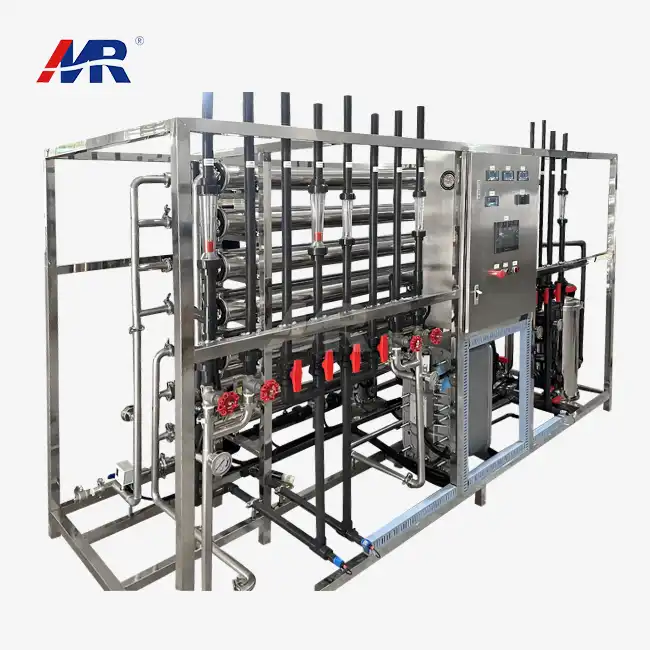 VIEW MORE2m3/hour EDI system
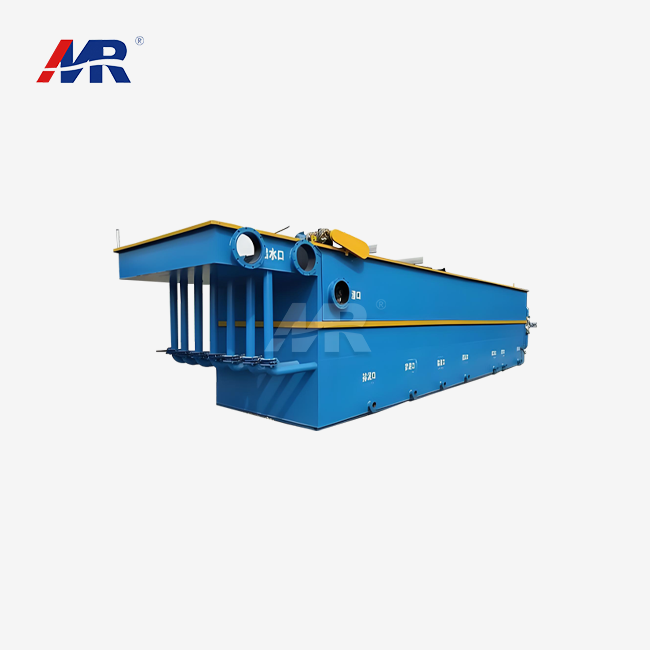 VIEW MOREadvanced wastewater treatment system
 VIEW MOREultrafiltration membrane system
