


How Does 200m3/hour Ultrafiltration Equipment Control Membrane Fouling?
The major cause of a decline in production over time in a hollow-fiber UF line is membrane fouling. I have worked with water utilities, beverage plants, and desalination projects in Asia, Africa, and South America, and the management of fouling is the first issue practically every purchaser asks about. This article illustrates in clear terms how 200m3/hour Ultrafiltration Equipment prevents fouling via pretreatment, flux control, automated backwash, air scour, and chemical cleaning. There’s a real-world case study from a village water project, scaling calculations you can do yourself, and a supplier checklist to use before signing a purchase order.
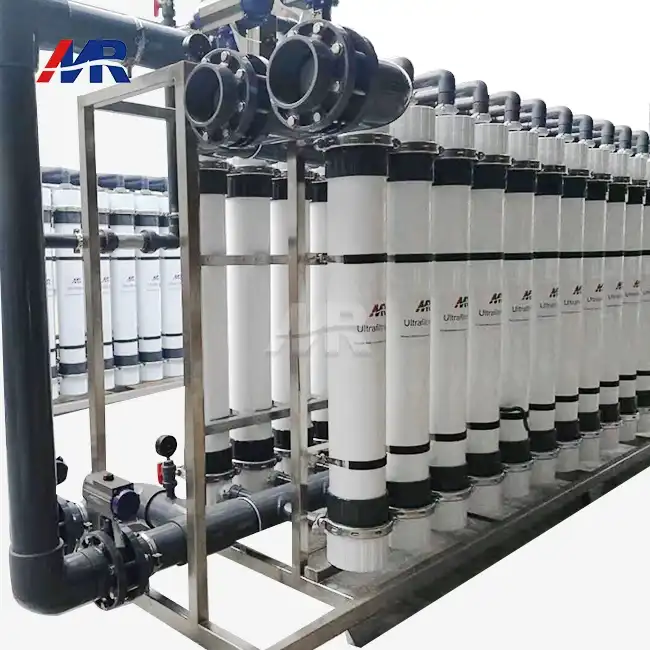
Quick Answer: How a 200m3/hour UF System Stops Fouling
The fouling management strategy of the 200m3/hour ultrafiltration equipment set includes feed pretreatment, conservative flux design, automated backwash, air scour, scheduled chemical cleaning, real-time monitoring of transmembrane pressure (TMP) and normalized permeability. The best time to clean is dependent on your raw water, temperature, and recovery goal, not some predetermined figure on a brochure.
That response is driven by this:
- Fouling of hollow-fiber membranes is caused by suspended particles, colloids, organic debris, bacteria, and inorganic scale, each of which requires a separate management strategy; there is no one cure-all.
- Pretreatment reduces the sediment load before water ever contacts the membrane fiber, protecting permeability and extending the interval between chemical cleanings.
- The automatic backwash is triggered by a timer or pressure trigger to prevent loose, reversible fouling from being compacted into a substance that only acid or caustic can remove.
- If physical cleaning is not sufficient to return the TMP to normal, chemically enhanced backwash and complete clean-in-place (CIP) are used to restore flux.
- A reported flow of 200 m3/hour must specify whether this is feed flow or permeate flow, since the difference impacts membrane area and cost.
- I’ll have Morui’s technical team send you a feed-water review for any project you’re sizing – reach us at benson@guangdongmorui.com with your water analysis and target output, and we’ll map a 200m3/hour ultrafiltration equipment configuration against your actual raw water before you commit to a quote.
What Causes Membrane Fouling in 200 m³/hour UF Equipment?
What membrane fouling actually means
Membrane fouling is the accumulation of material on or within a hollow fiber, which decreases permeability and boosts the pressure required to drive water through. It is unlike the regular resistance that every clean membrane has. Fouling is categorized into 2 types. Reversible fouling is lightly attached to the fiber surface and may be removed by backwash or air scour. Irreversible fouling is attached to the membrane and requires chemical cleaning or, in difficult situations, replacement. A 200m3/hour ultrafiltration equipment skid must be able to manage the typical daily flow and also the brief peak demand surges without either becoming out of control.
Main fouling drivers at this flow rate
At 200 m³/hour, five material categories produce the greatest fouling occurrences. Suspended particles and colloids from rivers, wells, or even plant effluent develop a cake layer quickly. Natural organic materials, oils, fats, and proteins foul the walls of PVDF or PES fibers, which cannot be removed by simple washing. "If you don't disinfect properly, you might have regrowth from the bacteria and algae that can build a biofilm. Iron, manganese, calcium carbonate, and silica scale onto fibers if there is no control on the pH or oxidation state. An overdose of coagulant from an upstream clarifier may likewise dirty membranes more quickly than raw water would.
How fouling shows up in your operating data
Operators usually see fouling before they see failure, if they watch the right numbers. TMP increases slowly, or during a biofouling event quite quickly. Normalized permeability — flux adjusted for temperature and pressure — moves lower even while raw flux seems unchanged. Backwash frequency increases, and so does chemical consumption. The pressure difference begins to propagate amongst modules of the same train. Following AWWA Manual M53, the typical technique to differentiate true fouling from the flow variations caused by temperature is to monitor normalized permeability rather than raw flux.
Which Fouling Types Affect UF Membranes Most?
Comparing the six fouling mechanisms
various raw waters foul membranes in various ways, and tailoring the control approach to the mechanism reduces chemical expense. The following table is what I see most regularly on municipal and industrial UF trains.
| Fouling type | Typical sources | Operating symptoms | Primary control |
|---|---|---|---|
| Particulate | Sand, silt, clay, TSS | Rapid TMP rise, short cycles | Screening, clarification, backwash |
| Colloidal | Fine particles, organics | Slow permeability decline | Coagulation, flux limits, cleaning |
| Organic | Oils, proteins, humics | Rising cleaning demand | Oil removal, carbon, alkaline clean |
| Biofouling | Bacteria, algae, biofilm | Steady TMP rise, odor | Disinfection, chlorination strategy |
| Inorganic scale | Calcium, iron, silica | Hard deposits, resists backwash | pH control, acid cleaning |
| Chemical fouling | Bad coagulant dosing | Sudden permeability loss | Dosing control, compatibility check |
Reversible fouling versus the irreversible kind
Reversible fouling is a race against the clock. If the backwash is performed on time, loose cake layers never have the opportunity to dry out or chemically attach to the fabric. Deposits compacted under pressure or that have undergone several filtering cycles without cleaning may frequently transition to irreversible status. “By monitoring normalized permeability after every backwash, not just after CIP, you get an early warning sign that something is becoming a harder problem than a simple rinse can fix.
Fouling risk by membrane configuration
Membrane geometry changes how a system handles solids. The table below compares options relevant to a 200m3/hour ultrafiltration equipment train.
| Configuration | Strengths | Fouling considerations | Typical selection logic |
|---|---|---|---|
| Hollow-fiber UF | High packing density, efficient backwash | Sensitive to sharp particles, fiber damage | Municipal and surface water |
| Tubular UF | Handles higher solids and viscous feeds | Larger footprint, higher energy use | Difficult industrial wastewater |
| Inside-out hollow fiber | Good feed-side filtration control | Needs good pretreatment and integrity checks | Compact skid designs |
| Outside-in hollow fiber | Manages moderate suspended solids | Needs strong air scour and backwash design | Robust municipal plants |
How Does UF Control Organic and Suspended Solids Fouling?
Pretreatment requirements before water reaches the membrane
Most fouling issues are solved in pretreatment before they begin. A common design for high-turbidity river water comprises input screening, an automated self-cleaning filter, and coagulation or flocculation before reaching the UF skid. Oil-water separators are necessary for industrial feeds that include oil or grease. Usually, iron and manganese in the groundwater require oxidation and pH correction before the UF stage, not after. Equalization tanks level off spikes in flow and load from batch industrial discharges, so the membrane does not encounter unexpected shocks that it was not designed for.
Getting coagulation right without overdoing it
Coagulation improves the UF performance; however, an excess of coagulant is also a fouling cause. I usually advocate jar testing prior to establishing a full-scale dosage since the proper amount on paper doesn't always translate to what the membrane tolerates in reality. Operators should monitor turbidity, dissolved organic carbon, and residual coagulant on a regular basis during startup. Checking chemical compatibility with the membrane material – PVDF can handle a broader pH and oxidant range than other PES membranes – can prevent damage that appears weeks after commissioning rather than on day one.
Pretreatment decision checklist
I ask each customer to clarify these items before concluding a pretreatment train:
- The feed turbidity and TSS were obtained throughout both normal and peak season conditions, not one sample taken on a dry day.
- Oil, grease, COD, TOC, and microbiological indicators are characterized for industrial or wastewater reuse feeds.
- Chemical Compatibility of coagulant, disinfectant, and membrane material in the given skid is proven.
- The membrane is protected against upstream upset conditions by automatic separation and bypass valves.
- Backwash water and sludge disposal routes are specified before commissioning, not after.
How Does Backwashing Reduce UF Membrane Fouling?
Backwash cycle design for high-flow systems
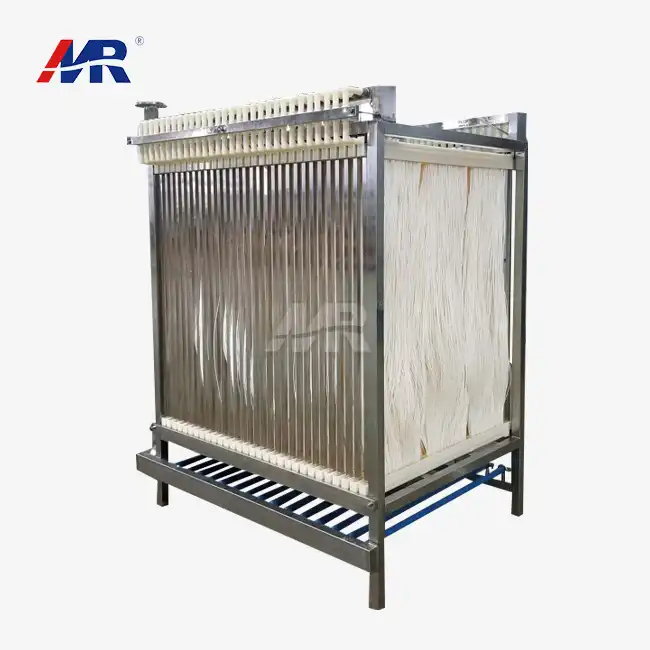
A typical backwash of a 200m3/hour ultrafiltration equipment train consists of many phases. Reverse permeate flush forces clean water through the fiber in the other direction to take loose cake from the surface. Then an air scour with bubbles is sent through to loosen the particles from the fiber bundle. A forward flush is then used to push the material out of the module before the next cycle of filtering is started. Short relaxation intervals in cycles enable the fibers to settle down and release tension on the membrane material. The duration, pressure, and flow direction should be based on pilot data and not on the manual of another project.
Letting the control system decide when to clean
A PLC-controlled skid doesn’t have to wait for a preset clock if properly set up. It may start backwash depending on filtration time, TMP threshold, permeability decrease, or an inline turbidity sensor water-quality warning. This is more important than it sounds—a system that backwashes just on a timer would backwash either too often when the water is pure, or not frequently enough when the water is turbid. Remote monitoring allows an operator at a regional office to see trend charts on a telephone instead of having to go out to a remote facility to read a pressure gauge.
Where backwash falls short
Backwash has significant boundaries, and I tell every customer that up front. It eliminates loose particles and some biofilm, but seldom clears organic fouling or mineral scale by itself. Frequent backwashing results in wasted product water and increased energy costs without solving the main issue. Running it too slowly merely pushes solids about in the module and doesn't flush them out. A legal discharge method is also needed for backwash waste, and this is more commonly disregarded in budget planning than it ought to be.
When Should Chemical Cleaning Be Used in UF Systems?
Chemical-enhanced backwash versus full CIP
These two strategies address distinct difficulties. Chemical-enhanced backwash (CEB) is a brief, low-concentration chemical rinse that is applied often, daily or every few days, to prevent fouling from accumulating. Clean-in-place (CIP) is a lengthier soak with stronger alkaline, acidic, or oxidizing chemicals, conducted every few weeks to months depending on feed quality. Membrane replacement is the final resort and is utilized only when CIP cannot restore permeability, or when an integrity test fails, and the fiber bundle is unsalvageable.
Matching cleaning chemistry to the fouling type
Different deposits need different chemistry, and mixing them in the wrong order can waste a cleaning cycle entirely.
| Fouling concern | Common cleaning approach | Verification requirement |
|---|---|---|
| Organic deposits | Alkaline cleaner or compatible surfactant | Confirm pH and material limits |
| Biofilm | Approved oxidant or biocide | Verify membrane oxidation resistance |
| Inorganic scale | Acidic cleaner | Confirm acid compatibility, metal removal |
| Iron or manganese | Acid or reducing treatment | Test deposit composition first |
| Mixed fouling | Sequential alkaline then acid | Set order through pilot or supplier data |
What triggers a cleaning cycle and how to run it safely
You should start cleaning before the fouling becomes terrible, not after the production has fallen down severely. Common triggers include normalized permeability dropping below a design threshold, TMP exceeding the operational limit, or failure to regain performance following a routine backwash. Real safety measures are also needed to deal with chemicals – operator PPE, neutralization tanks before discharge, and lockout protocols on pumps during dosing. I have seen factories bypass the neutralization stage to save a tank, only to flunk a discharge inspection months later.
How Does Feed Water Quality Affect UF Fouling?
Parameters worth measuring before you order equipment
A good water analysis makes a world of difference in how to build a 200m3/hour ultrafiltration equipment system. I ask for, at a minimum, flow range, temperature, pH, turbidity, TSS, conductivity, and alkalinity. If organics are a problem, I ask for TOC, oil and grease, and UV254. The iron, manganese, calcium, and silica levels will inform you whether scaling management has to be designed in from day one. The industrial feeds also require their own set of pollutants mentioned – colors, proteins, solvents, or heavy metals – since the assumptions of a general municipal design don’t apply to a textile or dairy discharge stream.
Field case: a rural water project in Southeast Asia
One project I worked on provided a 200 m³/hour hollow-fiber UF train to a village treatment improvement, drawing in river water with turbidity from 35 NTU in dry season to over 120 NTU during monsoon flow. Treated-water turbidity was less than 0.1 NTU even during peak turbidity occurrences after installation of PVDF hollow-fiber modules with coagulation pretreatment. The facility operated its backwash cycle every 40 to 45 minutes, with a sustained recovery rate of about 92 percent. The first complete CIP didn’t come until month 14 of continuous operation – far over the six-to-nine-month window the facility had planned for, based on an earlier filter technology.
How different buyers apply the same equipment
The system integrator cares about different details than the plant owner, even on the same skid. Here’s what I observe the three major buyer types doing on the same project.
OEM and system integrator purchasers require skid dimensions, nozzle positions, electrical load, PLC communication protocol, and membrane datasheets to incorporate the UF train into their bigger plant design without having to redraw everything from scratch.
Distributors and engineering contractors sell to someone else or install for someone else and require paperwork, such as spare-parts lists, packaging information, warranty conditions, and manuals, standardized and translated for the local market.
For plant owners and operators, the most important issue is the issue of constant daily production, the amount of operator time required for cleaning, water recovery percentage, and overall lifespan cost over five or 10 years of operation.
Fouling patterns across common applications
The fouling behavior changes with application. The main problems of municipal drinking water facilities are seasonal turbidity and bacterial load. Wastewater reuse systems cope with larger organic loads and more variable feed quality on an hour-to-hour basis. Warm coastal water may pose a danger of algal blooms and biofouling; hence, seawater pretreatment is a must for RO desalination. In food and beverage factories, protein and fat fouling is common and requires specialized alkaline cleaning, rather than the acid-heavy technique utilized for scale-prone waters. Even before 200m3/hour ultrafiltration equipment is sent, you will know the cleaning timetable since you know the category of your project.
Which Operating Parameters Best Control UF Fouling?
Flux, TMP, recovery, and temperature work together
Flux is the volume of permeate per hour per square meter of membrane. The pretreatment may be fine, but if the push flux is too large, fouling will be accelerated. TMP is the pressure drop driving filtration – an increasing TMP at constant flux is the most obvious indicator of fouling build-up. Recovery is the proportion of feed water that is turned into usable permeate. Running recovery too high concentrates solids on the reject side and increases the danger of scaling. Since temperature influences the viscosity of water, permeability numbers always have to be corrected for temperature before you can compare one day's numbers with another's.
The fundamental sizing formula is still simple:
Membrane area = Required permeate flow / Design flux
The value still has to be corrected for temperature, fouling allowance, aging of membrane during the warranty term, and anticipated downtime for backwash and CIP. This is the number one reason a " 200 m³/hour" system underperforms once it is up and operating on actual water instead of a spec sheet.
Instrumentation that actually catches fouling early
Sensors are the most important part of a control system. A fully automated 200m3/hour ultrafiltration equipment skid must contain flow meters on the feed, permeate, concentrate, and backwash lines, pressure transmitters before and after each module, and a turbidity or particle sensor on the permeate side. The TMP should be calculated and logged automatically, not written down in a notebook by an operator. Rounding out the image are PH, conductivity, and chemical-dose feedback, all flowing into PLC alarms that indicate an issue hours before an operator would see it with their eyes.
Where the operating cost actually goes
Energy and chemical cost on a UF train breaks down into a few line items. Feed pump head, air-scour blower power, backwash pump energy, chemical usage for CEB and CIP, and labor for regular maintenance. Utilities in Asia and Africa are expanding pretreatment capacity ahead of RO and desalination facilities, driving down membrane and automation costs as production scales, leading to increasing worldwide demand for ultrafiltration membrane systems. A 2024 industry market assessment states this reduces blower and pump energy demand and directly reduces the main recurrent expense on most installed systems.
How Can 200 m³/hour UF Equipment Maintain Stable Flux?
A practical operating sequence
Stable flux is not a random event; it’s a reproducible series. Characterize the feed water throughout regular and peak seasons before deciding on the design. Select pretreatment based on real solids and organic load measurements, not on general assumptions. Use a conservative design flux, not the maximum allowable flux from the membrane datasheet. Run programmed filtration, relaxation, backwash, and air-scour cycles on the PLC without the need for human triggers. “Monitor normalized permeability and TMP weekly and initiate chemical cleaning before fouling becomes too severe, rather than after output drops.”
Bin Liu, senior overseas water treatment technical manager at Morui, adds that facilities that don’t get emergency CIP calls are usually the ones that are checking normalized permeability weekly, not just TMP at month-end. A quick 10-minute look at trends will identify issues a monthly report would overlook.
Setting your own acceptance criteria
Every quotation should spell out these numbers for your specific project rather than leaving them generic:
| Indicator | Specification placeholder |
|---|---|
| Rated permeate flow | ___ m³/hour |
| Feed flow | ___ m³/hour |
| Design flux | ___ L/m²·hour |
| Recovery | ___ % |
| Maximum operating TMP | ___ bar |
| Turbidity target | ___ NTU |
| Backwash frequency | Every ___ minutes |
| CIP interval | Every ___ weeks |
Common mistakes that shorten membrane life
A few design faults keep appearing in underperforming systems. Sizing for average flow means no buffer for seasonal surges, instead of peak demand. Seasonal feed variations are ignored, leading to unstable flux and unexpected cleaning occurrences. If the design flow is too high for the raw water, the TMP increase will be accelerated in the first year. Weak instrumentation delays fouling detection until output has decreased significantly. These flaws are all easy to address in the design stage and costly to repair after installation.
How Should a 200 m³/hour UF System Be Sized and Specified?
Clarifying what "200 m³/hour" actually means
This one clarification causes more arguments than any other element of a UF quote. Nominal flow, average flow, and peak flow are 3 distinct figures. Feed capacity is not the same as permeate capacity after subtracting backwash water. A facility requiring 200 m3/hour of continuous permeate usually requires installed membrane capacity in excess of that number since backwash, CIP downtime, and stand-by trains all affect available output hours. “This is the first question I ask every client. The answer varies; membrane area in most Cases is 10 to 20 percent.”
Specification checklist for your quotation
A complete specification for 200m3/hour ultrafiltration equipment should include membrane manufacturer and model, membrane material and pore size, hollow-fiber or tubular configuration, membrane total area and design flux, number of modules and trains, skid dimensions and weight, and connection sizes for feed, permeate, backwash, and chemical lines. Pump types and motor ratings. PLC brand and communication protocol. HMI language choices. Design pressure and temperature range. Recovery rate, turbidity goal, and integrity-test criteria complete a specification that protects both customer and supplier from subsequent misaligned expectations.
UF versus RO: where each one fits
UF and RO solve different problems, and confusing them leads to poor system design.
| Criterion | Ultrafiltration | Reverse osmosis |
|---|---|---|
| Primary separation | Solids, colloids, bacteria, macromolecules | Dissolved salts and small ions |
| Typical pressure | Lower than RO | Higher than UF |
| Pretreatment role | Can serve as RO pretreatment | Needs effective pretreatment itself |
| Fouling profile | Solids, organics, biofouling, scale | Scaling, colloidal and organic fouling |
| Product goal | Clarification, microbial reduction | Desalination, dissolved-solids removal |
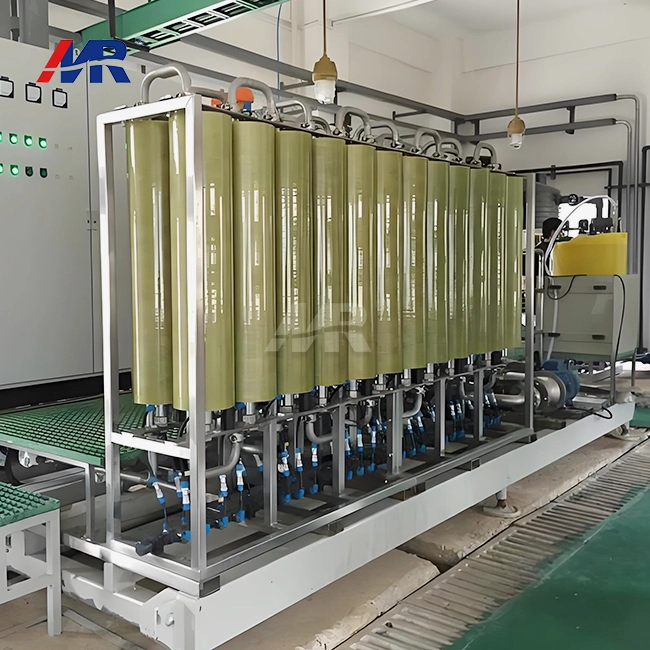
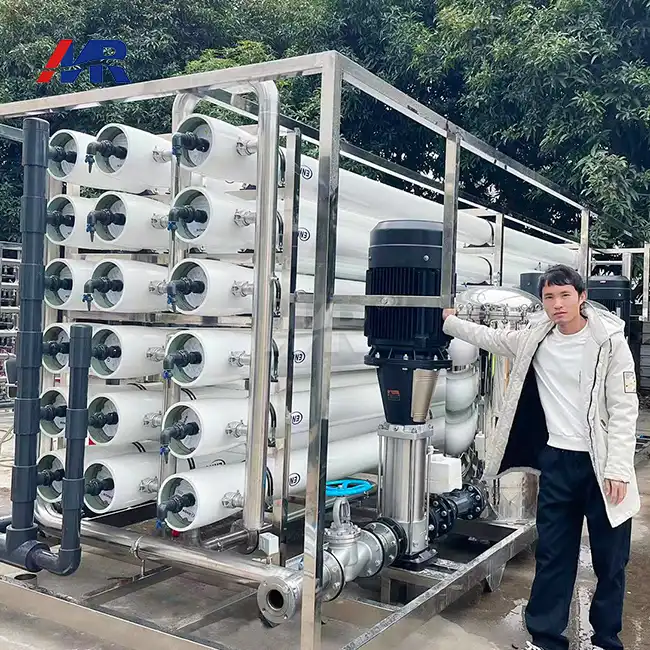
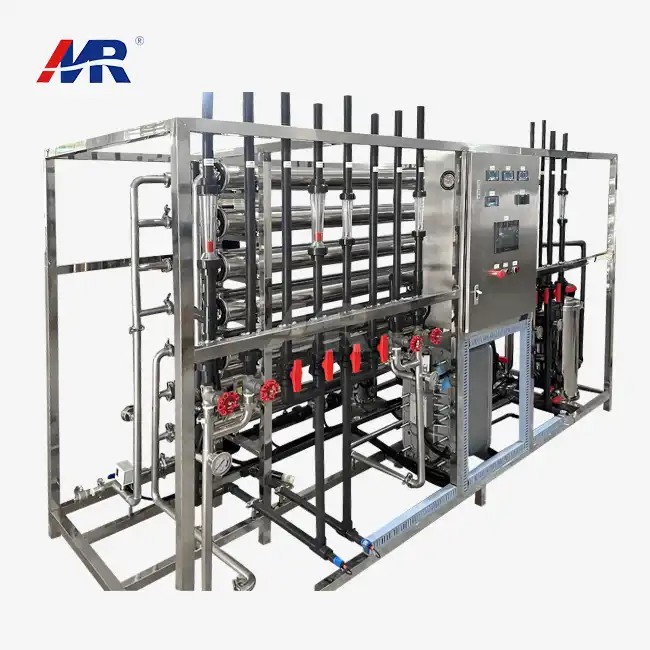
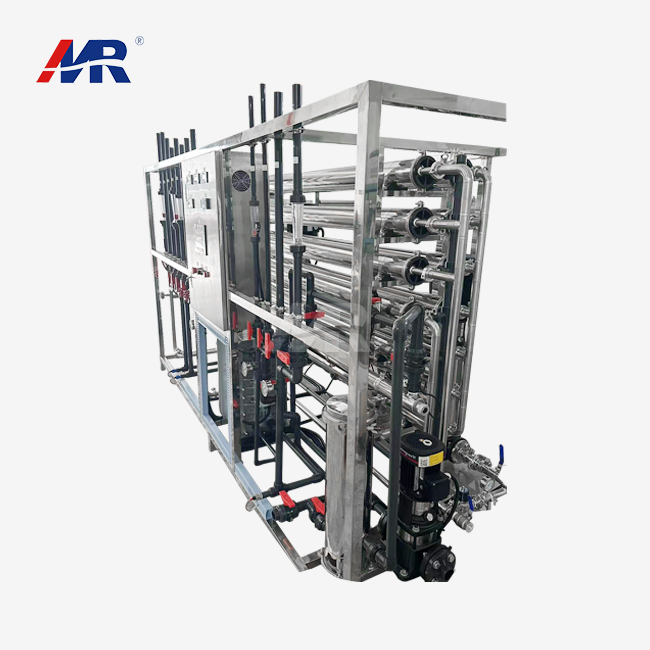
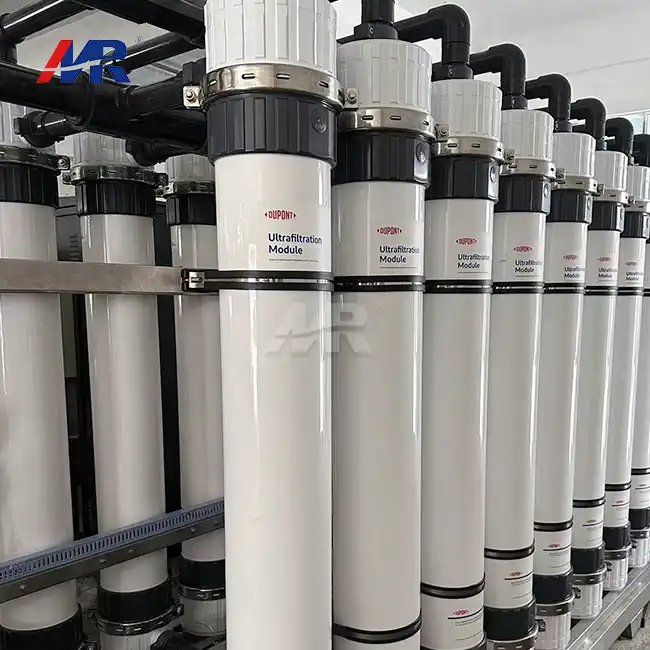
We can manufacture our own membrane manufacturing line and construct an ultrafiltration equipment train (200m3/hour) with PVDF hollow-fiber membranes (pore size 0.01-0.1 micron, filtration area 1000-1500 m²) working at a pressure of 0.1- 0.3 MPa with complete PLC automation. It is the membrane-to-machine control that allows us to customize pore size, module count, and automation level to a given raw-water profile, rather than offer the identical setup to every customer.
Supplier Capability and Evaluation for 200 m³/hour UF Equipment
How to evaluate a UF manufacturer before signing
Price should never be the primary filter when evaluating vendors of equipment this size. I would suggest starting with looking at reference projects with a comparable flow and feed-water profile, and looking at clear membrane performance data and design calculations instead of marketing promises. Ask about pilot-testing technique, processes for factory acceptance testing, and availability of spare parts in your area. A provider that has a membrane factory of its own rather than assembling bought-in modules is likely to have greater flexibility when your raw water doesn’t fit a typical arrangement.
Questions worth putting directly into your RFQ
A good quotation request answers these questions before the supplier even responds:
| Evaluation category | Question to include |
|---|---|
| Technical scope | Is 200 m³/hour feed flow or permeate flow? |
| Membrane design | What membrane area, flux, and standby arrangement are included? |
| Fouling control | Are backwash, air scour, CEB, and CIP tanks included in the quote? |
| Automation | What PLC, sensors, and remote-monitoring functions are supplied? |
| Commercial terms | What are the lead time, payment terms, Incoterms, and warranty period? |
| Support | Are commissioning, operator training, and spare parts included? |
Documentation worth requesting before shipment
Before you approve a factory acceptance test, ask for general arrangement drawings and P&IDs, membrane datasheets with chemical-compatibility limits, pressure and leakage test records, instrument calibration Certifications, and operating and chemical-cleaning instructions. Verify CE documents required for ventures into the EU. For drinking water or food contact applications, ensure NSF/ANSI 61 or similar local approval for the individual membrane and wetted sections, not only the entire system. ISO 9001 accreditation is a good quality-management reference point, but says nothing about actual membrane performance on your water.
Who builds this equipment?
Guangdong Morui Environmental Technology Co., Ltd. is involved in the treatment of industrial wastewater, home sewage, saltwater desalination, and production of drinking water, supplying equipment, installation, and commissioning as a complete package. Our company has more than 14 branches and around 500 people, including 20 engineers; we have our own membrane manufacturing facility and many equipment processing lines. We are also the regional representative for a number of Products such as Shimge water pumps, Runxin valves, and Createc instrumentation. This means we can provide a whole skid, not just a membrane module.
Conclusion
To control fouling on a 200m3/hour ultrafiltration equipment train is a whole operational plan, not a smart gimmick. The most important considerations are precise feed-water testing, pretreatment scaled to your actual solids load, cautious flux selection, automated backwash with genuine instrumentation behind it, and a documented chemical cleaning strategy. Before comparing the price, compare the bids by evaluating the membrane area, the recovery rate, the automation depth, and whether the 200 m³/hour refers to the feed or the permeate flow.
FAQ
1. How does 200m3/hour ultrafiltration equipment prevent membrane fouling?
It combines pretreatment, controlled flux, automatic backwash, air scour, chemical-enhanced cleaning, and TMP monitoring. Exact settings depend on feed turbidity, organic load, temperature, and membrane type.
2. What is the best membrane type for 200m3/hour ultrafiltration equipment?
Hollow-fiber membranes work well for high-flow municipal and surface-water projects because of their compact packing density. Tubular membranes often suit feeds with high solids or difficult industrial contaminants better.
3. How often should a 200 m³/hour UF system be backwashed?
Backwash frequency is specific to each project and can be triggered by time, TMP, or permeability decline. Most automated systems run cycles every 30 to 60 minutes, but the exact interval should come from pilot or validated operating data.
4. What is the difference between 200m3/hour ultrafiltration equipment and RO equipment?
UF removes suspended solids, colloids, microorganisms, and large organic molecules. RO runs at higher pressure and removes dissolved salts and ions, so UF usually works as pretreatment ahead of RO rather than replacing it.
5. How is membrane area calculated for a 200 m³/hour UF system?
The basic formula is membrane area equal to required permeate flow divided by design flux. The final number needs correction for temperature, fouling allowance, membrane aging, and planned cleaning downtime.
6. What information does a supplier need for a 200m3/hour ultrafiltration equipment quotation?
Suppliers need feed and permeate flow targets, a water analysis, operating hours, target water quality, recovery goal, site conditions, automation preferences, and destination for shipping and documentation.
Ready to Discuss Your 200m3/hour Ultrafiltration Project?
If you're comparing quotes from a 200m3/hour ultrafiltration equipment manufacturer and the numbers don't match up, send us your water analysis and target output. Morui builds UF skids around actual raw-water conditions, not a fixed catalog spec, using our own membrane production line to keep pore size, automation, and skid layout flexible for your site. Email benson@guangdongmorui.com with your project details, and our engineering team will return a sizing review and cleaning-schedule recommendation before you finalize any purchase order.
References
1. U.S. Environmental Protection Agency, Membrane Filtration Guidance Manual (2005). https://www.epa.gov/sites/default/files/2015-06/documents/membrane-filtration-guidance-manual.pdf — cited on fouling definitions and TMP monitoring.
2. American Water Works Association, AWWA Manual M53: Microfiltration and Ultrafiltration Membranes (2021). https://www.awwa.org/store/productdetail.aspx?productid=45102382 — cited on normalized permeability tracking.
3. ASTM International, ASTM D6161-16: Standard Terminology Relating to Membranes and Membrane Processes (2016). https://www.astm.org/d6161-16.html — cited for membrane terminology.
4. ASTM International, ASTM D6908-19: Standard Practice for Integrity Testing of Water Filtration Membrane Systems (2019). https://www.astm.org/d6908-19.html — cited on integrity-test criteria.
5. World Health Organization, Guidelines for Drinking-water Quality, 4th edition with addenda (2022). https://www.who.int/publications/i/item/9789241549950 — cited on drinking-water treatment standards.
6. European Union, Directive (EU) 2020/2184 on the Quality of Water Intended for Human Consumption (2020). https://eur-lex.europa.eu/eli/dir/2020/2184/oj — cited in EU compliance documentation.
7. NSF International, NSF/ANSI/CAN 61: Drinking Water System Components – Health Effects (2023 edition). https://www.nsf.org/knowledge-library/nsf-ansi-61-drinking-water-system-components — cited on food-contact and drinking-water approval requirements.
8. Grand View Research, Ultrafiltration Membrane Market Report (2024). https://www.grandviewresearch.com/industry-analysis/ultrafiltration-membrane-market — cited on regional demand growth and cost trends.
About the author: Bin Liu is Senior Overseas Water Treatment Technical Manager at Guangdong Morui Environmental Technology Co., Ltd. He has supported ultrafiltration, RO pretreatment, and seawater desalination projects for municipal and industrial clients across Asia, Africa, and Latin America, working closely with regional engineering firms on system sizing, commissioning, and long-term fouling-control planning.