_1745823981883.webp)

DTRO technology, short for disc-tube reverse osmosis, is a membrane technology designed to treat wastewater that conventional filters can't handle: thick, salty, high-solid streams such as landfill leachate, mining discharge, and chemical effluent. The concept was invented by Rochem engineers in Germany in 1982. The design consists of stacked membrane discs and hydraulic guide plates inside a pressure vessel. This creates an open flow route that does not clog. In this article, we’ll take you through how the disc stack really separates water from salt, where it’s being used by plants throughout the globe, and what a real coal mine water project accomplished after moving to a two-stage system. You’ll also see spec tables, contaminant elimination data, and a buyer’s checklist.
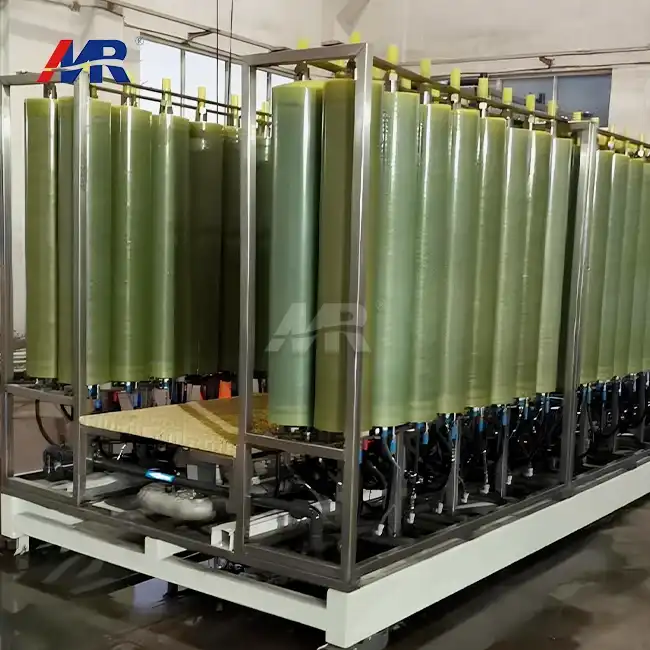
Guangdong Morui Environmental Technology has 19 years of experience in developing water treatment systems incorporating DTRO Technology lines for landfill, mining, and industrial customers around Asia, South America, and Africa. We have 20 engineers in-house. If a plant manager asks us to look at a water sample, we return back with a process design that’s tailor-made for that situation. That way, the plant management can compare actual data before they commit to a budget. Contact our staff at benson@guangdongmorui.com to get a DTRO Technology manufacturer estimate, learn about recovery-rate guarantees, and verify delivery times throughout our 14-plus branch network.
What Is DTRO Technology and How Does It Work?
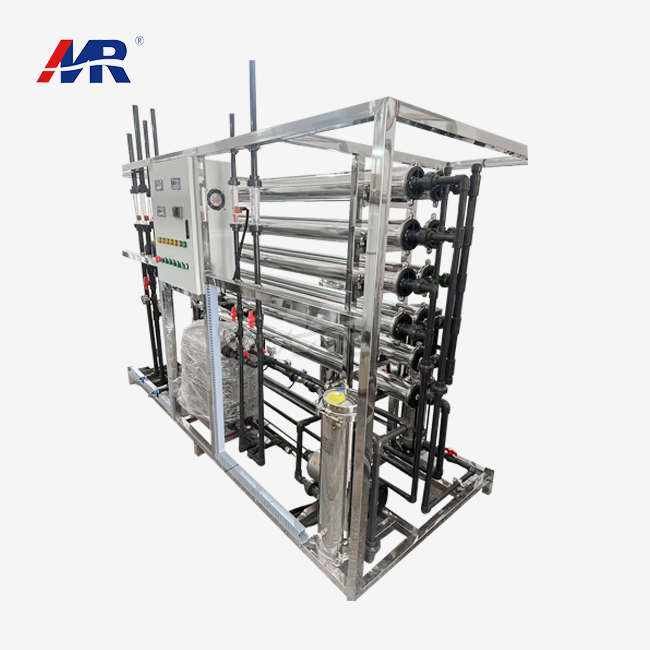
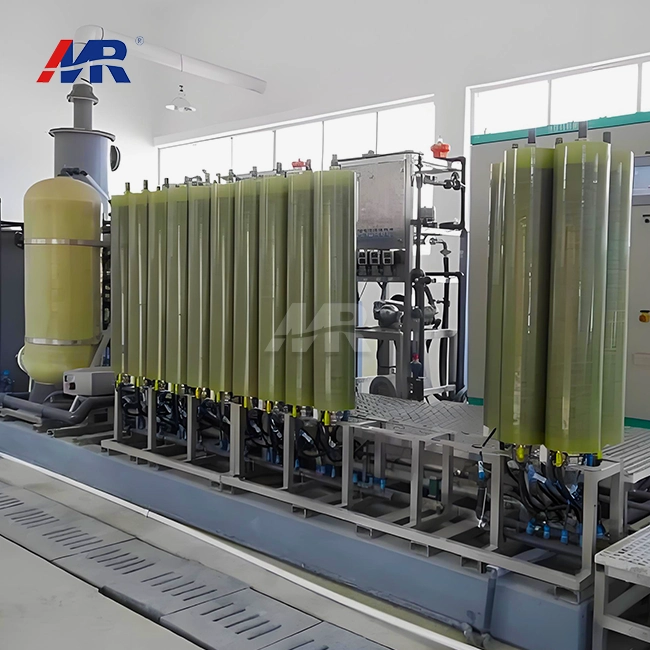
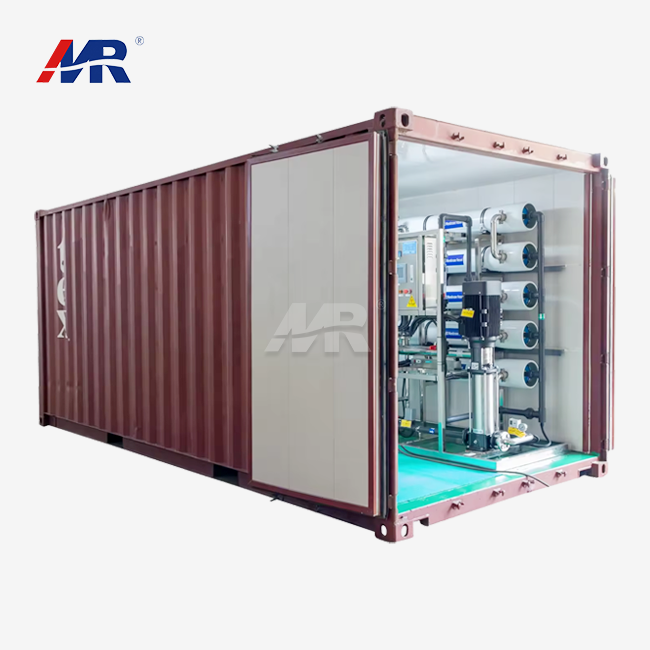
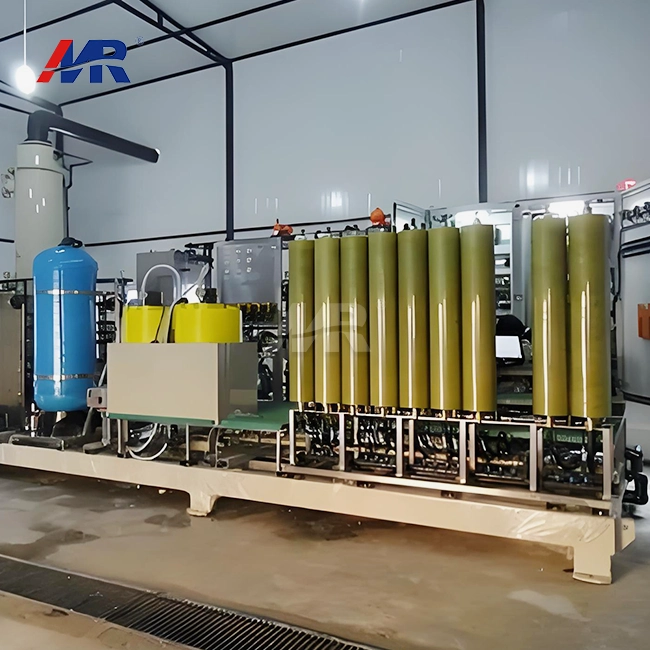
DTRO Technology uses a combination of octagonal membrane discs and hydraulic guide plates, all supported by a central tie rod within a pressure-rated shell. This is the disc-tube module, subsequently replicated by manufacturers throughout the globe, although the underlying engineering behind fouling resistance and pressure tolerance still varies greatly from supplier to supplier.
The Disc Stack Explained Simply
Imagine a stack of octagonal sheets of membrane divided by textured discs of plastic, as used in DTRO technology. Wastewater enters at one end and is passed via thin channels between each disc, which are spaced around 4 millimetres apart. As the water moves, the little raised bumps on the disc surface agitate the water, so particles do not settle on the membrane.
Why does the Open Channel Prevent Clogging?
Standard membranes have a thin mesh spacer that retains particles very quickly in unclean feed. The DTRO leaves that mesh out so suspended particles go through instead of clogging the flow stream. That single design option is why DTRO Technology can handle raw, high-solids wastewater with far less preparation than a typical membrane.
Operating Pressure and Membrane Chemistry
DTRO modules generally function at pressures from 75 to 160 bar, which is far higher than the working range of a normal thin-film composite membrane. That pressure drives pure water through pores too narrow to let dissolved salts and organic impurities pass, concentrating everything else into a dwindling brine stream.
How Does DTRO Compare With Conventional RO?
Conventional spiral-wrapped reverse osmosis still works effectively with clean, predictable input such as that used in bottled water manufacturing or boiler feed water cleaning. When salinity, turbidity, or organic load rises to industrial wastewater levels, DTRO technology becomes a more suitable option for handling these challenging feed conditions.
| Parameter | Conventional Spiral-Wound RO | DTRO Technology |
|---|---|---|
| Feed channel structure | Narrow spacer mesh, easily clogged | Open 4 mm channel, self-scrubbing |
| Typical operating pressure | Up to about 83 bar | 75–160 bar |
| Suspended solids tolerance | Low; needs fine pretreatment | High; tolerates raw, dirty feed |
| Best-fit feed type | Clean water, consistent chemistry | Landfill leachate, industrial brine, mining wastewater |
| Membrane cleaning cycle on tough feed | Weekly or more often | Every two to four weeks under normal load |
The divide is well seen in the table. Conventional RO wins on capital cost for mild, low-fouling feed. Whenever a stream has the kind of sediments, salt, or organic load that fouls a traditional membrane after a few weeks, DTRO Technology wins.
When does a Hybrid Setup Make Sense?
Some facilities use DTRO as a pretreatment concentrator upstream of a smaller, typical RO polishing stage. This arrangement keeps the capital cost lower on the polishing side but allows the disc-tube module to take the damage from the raw feed unpredictability. The hybrid arrangement also distributes risk over two membrane types, so a fouling event on one stage does not require a complete stoppage of the whole treatment line while parts or chemicals are acquired.
What Contaminants Can DTRO Remove From Wastewater?
The DTRO Technology rejects a broad spectrum of contaminants since the membrane holes are similar in size to numerous dissolved ions. That close separation makes it one of the most complete membrane technologies available for wastewater duty.
| Contaminant | Typical Removal Performance | Notes |
|---|---|---|
| Chemical oxygen demand | 95–99.95% | Reported across full-scale Chinese leachate plants |
| Total dissolved solids / salt content | Above 99.6% desalination rate | Two-stage coal mine water study |
| Ammonia nitrogen | 98–99.9% | Stable even during salinity spikes |
| PFAS compounds | High rejection across 11 monitored sites | Feed concentrations ranged widely, up to 32,491 ng/L |
| Heavy metals | Near-complete rejection | Concentrated into the brine stream rather than passed through |
Mining and electroplating customers are most concerned about the heavy metal line, since copper and nickel recovered from concentrate may sometimes be resold instead of being hauled away as trash. DTRO technology can help separate these concentrated contaminants, while organic pollutants that are resistant to biological degradation, such as the humic and fulvic compounds present in ancient leachate, also tend to remain mostly in the brine stream rather than moving into the treated permeate.
Why Is DTRO Effective for High-Salinity Wastewater?
However, rejection is a purely physical consequence of pressure and pore size, not a biological mechanism that suffers as salt concentration increases. This makes DTRO suitable for high-salinity streams. A digester of bacteria halts or dies under osmotic stress, while a membrane stack continues to reject ions as long as the pump continues to push.
I submitted this query to Bin Liu, who heads technical sales for Morui's DTRO Technology line. He puts it this way: "Clients wonder why we advocate disc-tube membranes over cheaper spiral-wound systems for difficult feed. To be very honest, spiral-wound RO was never designed for landfill leachate or mine water. It was designed for clean feed. "DTRO was made for the filthy things from day one. That difference impacts almost all of the equipment a plant selects as salinity rises by a few percent.
Case Study: Copper Mine Wastewater in Southern Peru
Morui took its cue from a copper mine in southern Peru where acidic, metal-rich process water was flooding a standard RO line installed three years ago. The salinity was excessive, and regular membrane replacement was running operational expenses way beyond budget. Analysing a water sample, our experts devised a disc-tube system using DTRO technology to match the real site flow.
The new system maintained salt rejection at 97% during an eight-month monitoring period, produced water consistently at 55%, and reduced the frequency of membrane replacement by about 60% compared to the previous spiral-wound configuration. Maintenance staff may now perform a regular cleaning cycle every three weeks rather than having to react to unscheduled fouling alarms multiple times a month. The copper recovered from the concentrate stream now balances some of the site’s disposal expenditures.
What does the published data confirm?
That result is consistent with published field studies. A two-stage DTRO study for coal mine water produced a desalination rate of over 99.6%, a recovery rate approaching 50%, and steady operation in three months without substantial membrane fouling. An assessment of full-scale dtro plants in China showed comparable significant COD and ammonia removal across dozens of installations processing challenging feed.
Compliance With Stricter Discharge Standards
Regulators in Asia, South America, and Africa continue to tighten discharge restrictions for chloride, sulphate, ammonia, and COD in industrial wastewater. DTRO technology provides a membrane process that continuously rejects > 99% of salts, giving the plant a greater compliance margin than biological treatment alone, which tends to move closer to the limit during salinity spikes or process disruptions.
What Are the Main Benefits of DTRO Treatment?
Plants that have migrated from traditional treatment to DTRO Technology often report a number of recurrent advantages after a few months of system operation.
- Less fouling, fewer shutdowns: The open-channel design allows suspended particles to move through rather than becoming trapped in the flow route, resulting in fewer unplanned cleaning cycles and the production delays they cause at the Morui facilities it supports.
- Longer membrane life on difficult feed: Disc-tube membranes, constructed of robust sheet stock, are known to outlive spiral-wound RO membranes on comparable high-salt, high-solid feeds by many years, according to field data our engineers monitor across mining and leachate projects.
- Modular scalability without a complete rebuild: As production develops, a plant may add disc stacks instead of replacing an undersized system just a few years into operation. This is important for the regional firms that are ramping up production slowly, not all at once.
- Resource recovery from the concentrate: Metals, salts, and other valuables remaining in the brine stream may occasionally be recovered and resold, converting a disposal expense into a partial revenue line for mining and electroplating customers.
Therefore, the advantages for facilities handling landfill leachate, mine water, or chemical rinse streams include specifying DTRO rather than traditional RO alone.
Where Is DTRO Technology Used Today?
DTRO appears in more sectors than most consumers imagine when they first start looking.
Landfill and Municipal Waste Management
The most widespread use of DTRO technology in the world is still the treatment of landfill leachate, since the aged leachate frequently exhibits salinity and organic load that alone may overwhelm biological processes.
Mining and Metals Processing
The DTRO process is used in coal mines, copper plants, and other metal sites to concentrate acidic, metal-laden effluent and recover potable water for site operations. In many mining applications, conventional reverse osmosis is used for impurity removal and desalination, while DTRO is used when the salinity, metal load or fouling potential exceeds the tolerance of a traditional membrane.
Zero Liquid Discharge Projects
Facilities targeting zero liquid discharge often install DTRO upstream of an evaporator or crystalliser so the membrane stage may inexpensively do the majority of the volume reduction before the smaller stream is processed in the more energy-intensive thermal phase. As prices come down, membrane-based pre-concentration is taking an increasing percentage of new zero liquid discharge installations across the world.
Seawater and Brackish Water Desalination
DTRO technology is used for coastal and offshore activities, e.g., ships providing drinking water at sea when water with a very high fouling potential is handled and would ruin a normal desalination membrane very fast.
Chemical, Electroplating, and Pharmaceutical Effluent
Some pharmaceutical industries use membrane concentration and evaporation together to concentrate high-strength process waste, while chemical plants and electroplating shops use DTRO to concentrate wastewater containing metals and acids before disposal or recovery.
Agriculture, Aquaculture, and Regional Water Reuse
In arid areas with agricultural irrigation schemes, brackish groundwater is sometimes treated using membrane systems prior to delivery to the field. Similar equipment is used in coastal aquaculture practices to filter circulating water and minimise disease pressure in dense stocking systems. These applications are often at lower salinity than landfill leachate; hence, it is common to find a smaller DTRO configuration or hybrid system with regular RO that will meet the demand without the need for the larger disc-tube modules developed for industrial concentration.
How Does DTRO Improve Wastewater Recovery Rates?
Recovery rate describes the share of incoming wastewater converted into usable permeate rather than sent on as concentrate. DTRO pushes this figure higher than many buyers expect from a system rated for such difficult feed.
| Parameter | MR-DTRO-120TD Specification |
|---|---|
| Application | Landfill leachate treatment |
| Power consumption | 80 kW/hour |
| Recovery rate | 50–70% |
| Inlet COD tolerance | Below 25,000 mg/L |
| Membrane cleaning cycle | Every two to four weeks under normal load |
Two-stage configurations and concentrate recirculation loops, often integrated with DTRO technology, both push recovery toward the upper end of what a single-pass system can achieve. Skipping these steps to save upfront cost usually means settling for a lower recovery rate and a larger concentrate volume to manage downstream.
Recirculation and Anti-Scalant Dosing
Recirculating a portion of concentrate back through the stack, blended with fresh feed, raises overall recovery without adding a full extra module. Dosing anti-scalant ahead of a later stage keeps calcium, sulfate, and silica from precipitating onto the membrane surface as salt concentration climbs toward saturation.
What Types of Wastewater Are Best Suited to DTRO?
Not every wastewater stream needs disc-tube membranes. Matching the technology to the right feed keeps costs proportional to the actual treatment challenge.
High-Salinity, High-COD Industrial Effluent
Landfill leachate, flue gas desulfurization wastewater from power plants, and concentrated chemical effluent all fit the profile DTRO was built for: salinity and organic load high enough to break conventional membranes or biological treatment.
Wastewater With Variable or Unpredictable Composition
Streams that swing in chemistry from batch to batch punish biological systems that need days to adapt, whereas DTRO technology reacts instantly because membrane rejection depends on pressure and pore size rather than a living population.
Feed Requiring Resource Recovery
Mining and electroplating wastewater carrying recoverable metals benefits from DTRO's ability to concentrate those metals into a smaller volume, making downstream recovery more economical than working with a large, dilute stream.
How Do You Choose the Right DTRO System?
Choosing a system starts with real feed data, not a catalog spec sheet pulled from a competitor's website.
Confirm COD, TDS, and Solids Ranges Against Rated Capacity
The MR-DTRO-120TD, for example, handles inlet COD below 25,000 mg/L. Feed that regularly exceeds a system's rated envelope shortens membrane life no matter how well the equipment is maintained.
Ask About Membrane Chemistry and Materials
Corrosion-resistant materials such as SS316L or titanium withstand pH extremes far better than standard components, which matters for acidic mining discharge or aggressive chemical effluent. DTRO technology can incorporate materials and system designs suited to demanding pH conditions, while a system rated for pH 2 to 12 gives an operator far more flexibility when feed chemistry shifts between batches or during upset conditions than one built around a narrower tolerance band.
Verify Local Service and Spare Parts Access
A DTRO Technology manufacturer with regional branches and stocked spare parts prevents weeks of downtime waiting on an overseas shipment. Guangdong Morui operates more than 14 branches with 500 employees and 20 in-house engineers supporting installations across three continents.
Request Reference Sites Before You Sign
Ask any DTRO Technology supplier for reference installations treating a similar feed stream. A supplier willing to share actual recovery rate and cleaning frequency data from an existing client is more trustworthy than one offering only brochure figures.
What Factors Affect DTRO Treatment Performance?
But there are other elements that determine the performance of a DTRO Technology system after it gets out into the field, not just the spec sheet.
Feed Chemistry and Pretreatment Quality
Even a strong membrane in the DTRO technology benefits from rudimentary pre-screening before the disc stack. The removal of large dirt preserves the pumps and allows longer periods between thorough cleaning sessions.
Operating Pressure and Pump Sizing
Operation at pressures below the specified pressure range will decrease salt rejection and recovery. If the system is currently working within its design window, then oversizing the pump is a waste of energy and will not significantly improve the output.
Cleaning Schedule and Automated Monitoring
The DTRO system has smart, AI-assisted monitoring that can identify scaling and fouling before they create a failure, so maintenance workers can plan cleaning proactively instead of responding to an alert. Plants that miss planned cleaning often see the recovery rate drifting lower months before a noticeable issue occurs.
Water Temperature and Seasonal Variation
Cold feed water increases viscosity and decreases flow across the membrane, resulting in a decreased throughput during winter months in temperate areas. In changeable climates, sites utilising DTRO technology may add feed heating to keep the production constant year-round.
Operator Training and Standard Procedures
A highly designed system is of little use if operated by an inexperienced workforce. Sites that do not record startup sequences, cleaning chemical dosage, and alarm response processes have more operator-caused failures than sites that do have informal knowledge transfer between shifts. Morui provides on-site training at the time of commissioning so that plant personnel can manage the system independently in the first few weeks of operation and do not need remote help for basic activities. Written checklists for daily readings, weekly cleaning triggers, and monthly membrane inspections assist in maintaining consistent performance as shift crew changes over time.
Concentrate Management Downstream
A DTRO system is just half a solution if there is no place to dispose of the concentrated brine. Plants must have a definite strategy for evaporation, crystallisation, deep-well injection, or approved off-site disposal before start-up. Some sites that consider concentration management an afterthought tend to store more brine at the site than the allowance allows, creating a compliance risk independent of the treatment system itself.
Conclusion
DTRO technology gives plants a way to treat wastewater that standard filters cannot touch, from landfill leachate to mining discharge to concentrated chemical effluent. The disc-tube design trades a delicate spacer mesh for an open, self-scrubbing channel that tolerates suspended solids, extreme pressure, and salinity swings. Field data from coal mine water studies, landfill leachate plants, and mining casework all point to the same pattern: recovery rates in the 50 to 90% range and contaminant removal above 95% on the toughest feed. A buyer evaluating options should request a real water analysis, compare recovery claims against independent field data, and confirm local service support before signing a purchase order.
FAQ
1. What does DTRO stand for?
DTRO, an acronym for disc-tube reverse osmosis, is a membrane technique that consists of stacked octagonal membrane discs and hydraulic guide plates within a pressure vessel. It was initially invented by Rochem in 1982.
2. Is DTRO Technology more expensive than standard RO?
Capital cost is greater up front, but total cost of ownership frequently comes out cheaper on difficult feed since DTRO requires less pretreatment and replaces membranes less often than a normal system subjected to the same fouling conditions.
3. Can DTRO treat mining wastewater with heavy metals?
Yes. DTRO targets heavy metals like copper, nickel, and zinc in the brine stream that mining and electroplating operations may recover and resell rather than dispose of as trash.
4. How often does a DTRO membrane need cleaning?
Most systems operate on a cleaning cycle of two to four weeks under typical load, although feed chemistry, pretreatment quality, and operating pressure can vary that time frame.
5. Does DTRO work for zero liquid discharge projects?
Yah. DTRO is often used as a pre-concentration step before an evaporator or crystalliser and reduces the amount of brine to be thermally processed downstream.
6. What is a realistic recovery rate for DTRO on landfill leachate?
Typical recovery rates for conventional installations range between 50% and 70%, while well-optimized multi-stage systems may achieve up to 90% depending on feed salinity and COD.
Ready to Replace a Membrane System That Keeps Failing on Tough Feed?
Guangdong Morui Environmental Technology designs, manufactures, and installs DTRO technology systems for landfill, mining, and industrial clients across our 14-plus branch network. Backed by 50-plus engineers and partnerships with established membrane and pump brands, we support every DTRO Technology manufacturer quote with a real recovery-rate projection from comparable sites. Email benson@guangdongmorui.com for a free water sample analysis and a tailored process design.
References
1. Rochem. "Rochem Invented DTRO in 1982." Rochem International, 2025. Cited for the origin of disc-tube reverse osmosis and its early desalination and leachate applications. https://rochem.com/rochem-dtro/
2. Zhang, W. et al. "Application of disk tube reverse osmosis in wastewater treatment: A review." Science of the Total Environment, 2021. Cited for full- and pilot-scale China application data and COD/ammonia removal rates. https://www.sciencedirect.com/science/article/abs/pii/S0048969721033623
3. "Study on Two-Stage DTRO System for Deep Concentration and Reduction of Coal Mine Water." Journal of Safety, Environment and Sustainability, 2024. Cited for the coal mine water desalination rate, recovery rate, and stability data. https://search.napstic.cn/literature/periodical/010jsps202408015
4. "Occurrence and efficient removal of PFAS from landfill leachates using on-site DTRO systems: A comprehensive analysis across 11 Chinese cities." Waste Management / ScienceDirect, 2024. Cited for PFAS concentration ranges and DTRO removal performance. https://www.sciencedirect.com/science/article/abs/pii/S0956053X24005385
5. Memsys. "DT (Disk Tubular) Membrane Technology." Memsys Technology Overview, 2025. Cited for disc spacing, operating pressure range, and membrane module structure.
6. "Zero Liquid Discharge Market to Reach USD 20.79 Billion by 2035 at 8.5% CAGR." Market Research Future, 2026. Cited for membrane-based pre-concentration trends ahead of thermal ZLD processing. https://www.wboc.com/online_features/press_releases/zero-liquid-discharge-market-to-reach-usd-20-79-billion-at-8-5/article_604a6028-ab00-5744-a9fd-8a4cb102d727.html
Author: Bin Liu, Technical Sales Director, DTRO Systems, Guangdong Morui Environmental Technology Co., Ltd. Bin has worked with mining, municipal, and industrial clients across Asia and South America on membrane system selection, water sample analysis, and on-site commissioning. He works directly with plant engineers to match feed chemistry to the right DTRO configuration and holds Certifications in industrial wastewater process design.