_1745823981883.webp)

Ultra Filter Membrane: Benefits and Uses
An membrane/ultrafiltration-membrane-system">ultra filter membrane is a pressure-driven separation barrier with pore sizes between 0.01 and 0.1 microns, capable of removing suspended solids, bacteria, viruses, colloids, and high-molecular-weight organic compounds from water. Unlike reverse osmosis, it allows essential minerals and salts to pass through, making it ideal for applications where partial purification is the goal. Across industries ranging from pharmaceuticals and food processing to municipal water treatment and power generation, ultrafiltration membranes deliver consistent, reliable water quality without excessive energy consumption — a balance that procurement professionals and plant engineers increasingly prioritize.
What Problem Does Ultrafiltration Actually Solve?
Imagine a beverage-making facility running on three shifts a day. As the turbidity increases, the quality of the feed water varies with the seasons. The downstream ro membranes are fouled earlier, the cleaning chemicals are more expensive, and the productivity is lowered. Why is that? Lack of preparation.
The same is true for manufacturing, medicines, electronics, and public water systems. Another major cause of discomfort is inconsistent feed water quality that starts a series of operational failures. This is immediately addressed by ultrafilter membranes, which provide steady, dependable permeate quality regardless of variability in the source water. This protects assets farther down the line and keeps manufacturing lines moving.
How Does an Ultra Filter Membrane Actually Work?
The Core Separation Mechanism
A principle called "size exclusion" describes how ultrafiltration works. Low transmembrane pressure, usually 0.1 to 1.0 bar, lets water pass through a semi-permeable barrier. Pollutants that are bigger than the membrane's pores are pushed out and gathered in the retentate stream. The process gets rid of 4–6 logs of bacteria and viruses without changing the phase or adding chemicals. This is a big improvement over methods that use heat or a lot of chlorine.
What Makes PAN Material Relevant Here
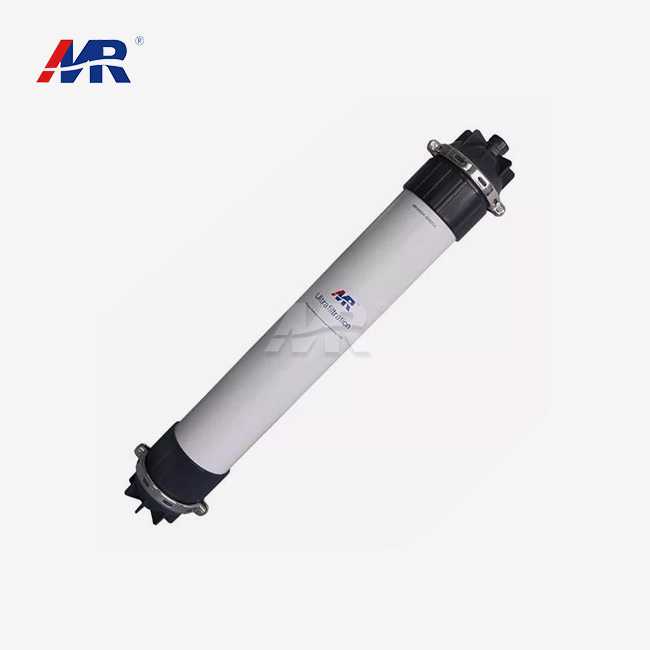
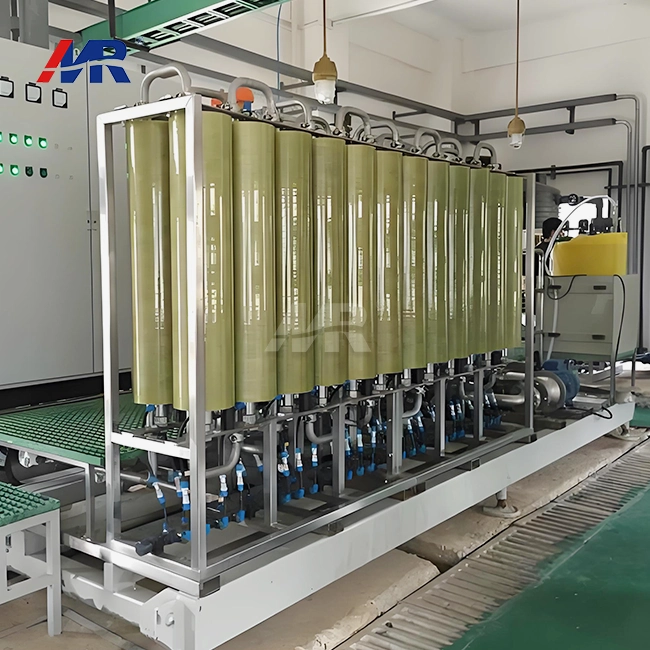
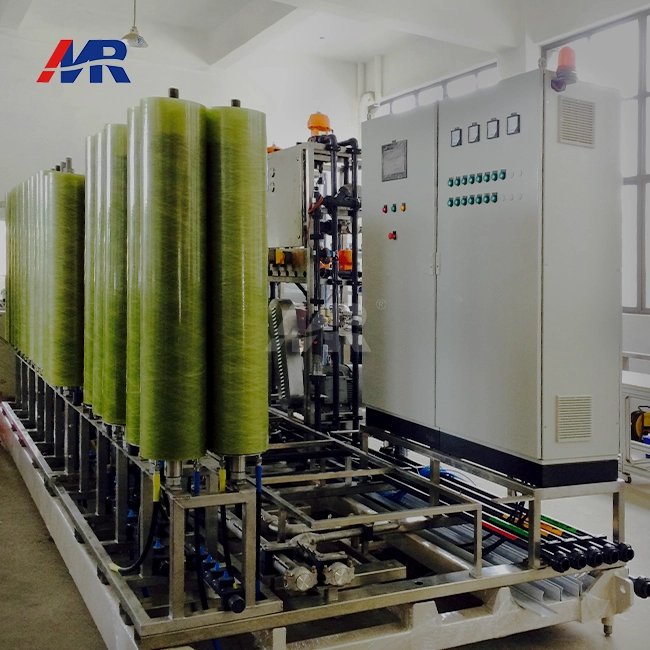
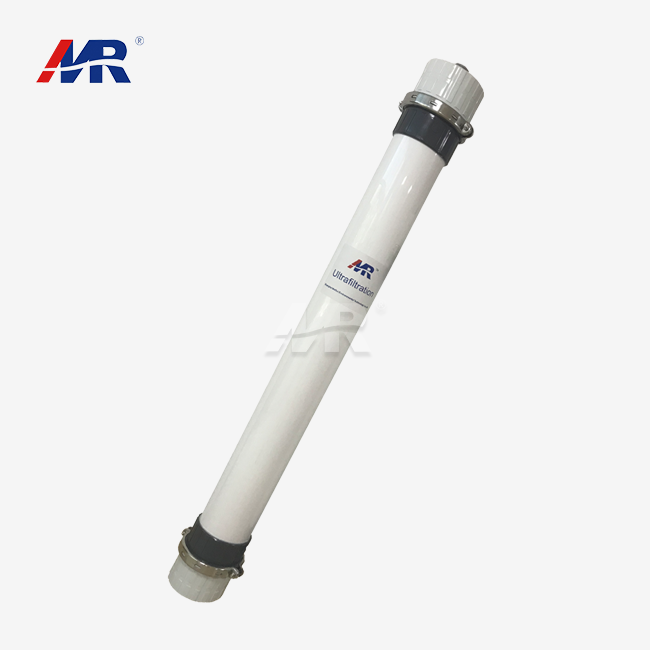
Polyacrylonitrile (PAN) is used as the ultra filter membrane material in Morui's MR-UF-8060 module. PAN has a high hydrophilicity, which means it doesn't get clogged up as easily and keeps its flux profile stable over time. The MR-UF-8060 is good for high-volume commercial systems that need to make sure they have consistent throughput. It has an effective filter area of 50 m², pores that are 0.02 μm in size, and a flux range of 40–120 LMH. PAN can also handle a wide range of pH levels, which means it can support harsh CIP (clean-in-place) methods when scaling or organic fouling happens.
What Are the Core Benefits of Ultrafiltration Membranes in Industrial Settings?
Ultrafiltration with membranes is useful for a lot more than just getting rid of particles. The main benefits that make it a top choice for B2B water cleaning tasks are listed below:
- Pathogen removal without chemicals: Ultrafiltration membranes consistently get rid of microbes like bacteria, protozoa, and viruses without leaving chlorination leftovers. This is very important in GMP pharmaceutical environments and hospital-grade water systems where chemical residues are not allowed.
- Low energy use: Ultrafiltration runs at a much lower pressure than reverse osmosis or thermal distillation, which lowers the cost of power used for operation. This difference in OPEX adds up over the 3–7 years that a membrane is used in large-scale municipal or industrial installations.
- RO pre-treatment protection: Adding an ultrafiltration stage before RO systems lowers the Silt Density Index (SDI) of the feed water to below 2.5, which is the generally agreed-upon level for safeguarding RO elements. This alone makes the RO membrane last longer and cuts down on how often it needs to be cleaned with chemicals, which is known to save money in systems that desalinate seawater and feed water to boilers in power plants.
- Wastewater reclamation compatibility: Ultrafiltration membranes can handle high concentrations of mixed liquor suspended solids in MBR configurations. This lets industries reclaim and reuse process water, which helps them reach their zero-liquid-discharge goals in electroplating, petrochemical, and textile operations.
All of these benefits add up to a lower total cost of ownership, fewer compliance risks, and more regular plant performance. These are results that matter to both expert engineers and people who make financial decisions.
How Does Ultrafiltration Compare to Other Filtration Technologies?
To choose the right membrane technology, you need to know where each one falls on the range of filtration. The following table shows a structured comparison that can help with purchasing decisions:
| Technology | Pore Size | Removes | Energy Use | Typical Application |
|---|---|---|---|---|
| Microfiltration (MF) | 0.1–10 μm | Suspended solids, large bacteria | Low | Clarification, pre-treatment |
| Ultrafiltration (UF) | 0.01–0.1 μm | Bacteria, viruses, colloids | Low–Medium | Municipal water, pharma, food |
| Nanofiltration (NF) | 0.001–0.01 μm | Divalent ions, organics | Medium | Softening, color removal |
| Reverse Osmosis (RO) | < 0.001 μm | Dissolved salts, TDS | High | Desalination, ultrapure water |
An ultra filter membrane is a good compromise because it is smaller than microfiltration but uses less energy than reverse osmosis. When pathogens need to be removed without full demineralization, this is the most cost-effective solution. Before RO or edi systems are used, UF is a safe and secure step that lets you get rid of all the TDS.
What Should Procurement Teams Know About Maintenance and Lifespan?
Cleaning Frequency and Fouling Management
When gunk builds up on the surface or inside the holes of an ultrafilter membrane, its performance goes down. A lot of industrial systems do hydraulic backwashing every day or every hour. When transmembrane pressure rises 10–15% above baseline, chemical-enhanced backwashing (CEB) with sodium hypochlorite, citric acid, or caustic solutions starts. Operators should keep consistent records of TMP trends—differences catch fouling early, before it turns into permanent compaction.
Lifespan Expectations
The lifespan of industrial UF modules is normally between 3 and 7 years if they are properly pretreated and cleaned according to rigorous guidelines. The quality of the feed water has the greatest impact on longevity. PES-based membranes are degraded in the presence of high concentrations of free chlorine by reactive chain scission. MR-UF-8060 has PAN-based membranes, which are more robust. Fiber degradation must be detected before the effluent quality is compromised, and this requires frequent integrity testing with the pressure hold or bubble point procedures (see ASTM F316).
Procurement Checklist
When purchasing ultrafilter membranes, procurement managers should make sure that the supplier has NSF/ANSI 61 certification for drinking water contact applications, check that the module's dimensions and connection compatibility with existing pipes are correct, ask the manufacturer for documented pure water flux data, and find out how good the supplier's Technical support is after the sale. When planning a total procurement, it's important to think about things like bulk ordering options, delivery lead times, and the ability to customize systems that don't come in standard configurations.
Why Do Industrial Operators Choose Morui Ultrafiltration Membranes?
Guangdong Morui Environmental Technology Co., Ltd. has its own membrane manufacturing base and various equipment processing plants. This offers the corporation complete control over selecting the materials, assembling the modules, and controlling the quality of the goods. There are 14 offices with 20 engineers working there in Morui. They are used in water treatment facilities, pharma manufacturers, food processing lines, offshore desalination systems, and projects that reuse wastewater from companies.
MR-UF-8060 is a PAN hollow fiber module with an effective filter area of 50 m2, pore size of 0.02 μm, and flux capacity of 40–120 LMH. It has this kind of depth of creation. It may be used as an ultrafilter membrane to filter water on its own or as an RO-preparation step in broader water treatment trains. Morui is also an authorized agent of Shimge Water Pumps, Runxin Valves, and Createc Instruments. This provides consumers with a single, reliable supplier for all the parts they require for a system.
In every phase of the project, we provide technical support: in the system design, commissioning, and continuous maintenance. This kind of comprehensive assistance makes projects significantly less risky for business-to-business customers considering ultrafilter membrane providers.
Conclusion
Ultra filter membranes provide a reliable and energy-efficient answer to one of the most recurring problems in industrial water treatment: keeping the quality of the water safe and uniform even when the feed conditions change. The technology has been used reliably for decades around the world, whether it's to protect downstream RO assets, meet GMP standards for pharmaceutical processing, or allow heavy industry to reuse wastewater. That stability will translate into real operating results for your facility, depending on how well you choose the right part, material, and provider.
FAQ
1. What is the difference between ultrafiltration and microfiltration?
The pores in ultrafiltration membranes are between 0.01 and 0.1 microns, which means they can get rid of viruses, bacteria, and colloidal particles that microfiltration, which has pores from 0.1 to 10 microns, can't always remove. Ultrafiltration gets rid of more microbes, so it can be used in places like pharmaceuticals, food processing, and drinking water where pathogen control is important.
2. Can an ultrafiltration membrane remove dissolved salts?
No, an ultrafiltration membrane only gets rid of proteins and particles. It doesn't lower TDS, hardness, or ionic contaminants. For uses that need to get rid of salt, nanofiltration or reverse osmosis is needed further down the line.
3. How often should CIP cleaning be performed?
How often chemicals are cleaned depends on the quality of the feed water and how the system is set up. CIP runs every month to three months in most industrial settings. A 10–15% rise in transmembrane pressure or a drop in standardized flow from the baseline is a good trigger point.
4. What certifications should I verify when sourcing UF membranes?
In the United States, any product that comes into contact with drinking water must have NSF/ANSI 61 certification. Manufacturing paperwork that is aligned with ISO standards and data from third-party integrity tests are also good ways to make sure that the quality of the Products is always the same.
Partner With Morui — Your Trusted Ultra Filter Membrane Supplier
Morui mixes its own ability to make membranes with a lot of technical knowledge to work on water treatment projects for businesses and cities. We offer expert support, help with custom setup, and reasonable bulk prices for the MR-UF-8060 and our full line of ultra filter membranes. You can email our engineering team at benson@guangdongmorui.com to get a quote or a sample of our products right away.
References
1. Baker, R. W. Membrane Technology and Applications. Wiley, 2012.
2. Metcalf & Eddy. Wastewater Engineering: Treatment and Resource Recovery. McGraw-Hill, 2014.
3. American Water Works Association. Microfiltration and Ultrafiltration Membranes for Drinking Water. AWWA Manual M53, 2005.
4. Cheryan, M. Ultrafiltration and Microfiltration Handbook. CRC Press, 1998.
5. NSF International. NSF/ANSI Standard 61: Drinking Water System Components — Health Effects. NSF International, 2023.
6. Judd, S. The MBR Book: Principles and Applications of Membrane Bioreactors for Water and Wastewater Treatment. Elsevier, 20116.