_1745823981883.webp)

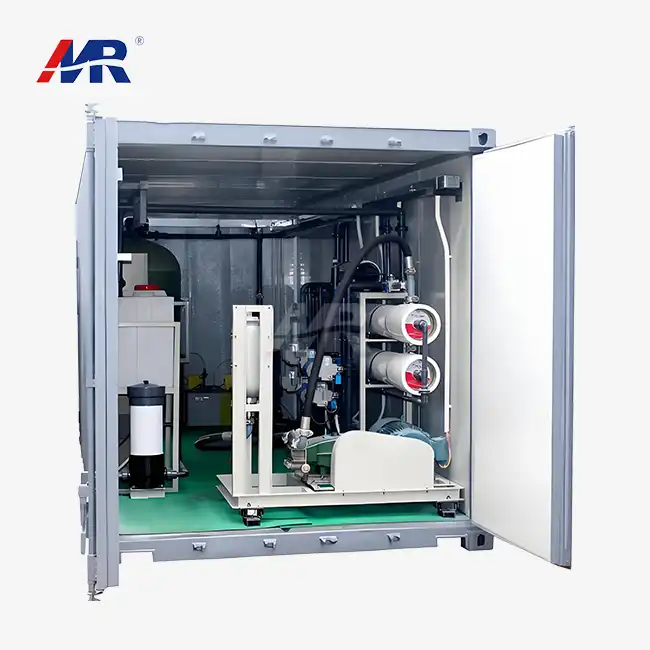
Mobility benefits: fast deployment, plug-and-play water production for factories
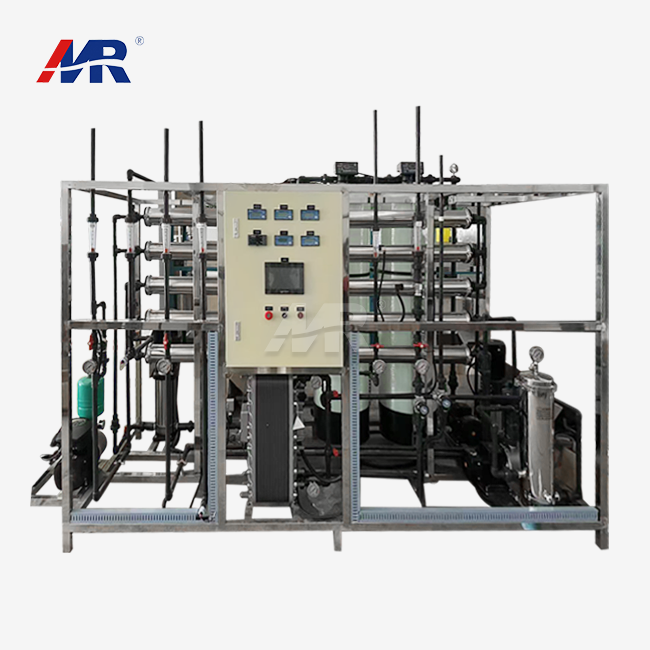
The essential advantage of containerized reverse osmosis systems lies in their uncommon portability. These units are outlined for fast sending, permitting small production lines to address water treatment needs with exceptional speed and adaptability. The plug-and-play nature of these systems implies that establishment and startup can frequently be completed in a matter of days, or maybe than the weeks or months regularly required for conventional, settled water treatment plants.
Rapid Response to Changing Water Treatment Needs
Small industrial facilities frequently confront fluctuating water quality requirements or sudden increases in demand. Containerized RO units can be rapidly mobilised to meet these challenges, giving a responsive arrangement that adjusts to changing circumstances. This dexterity is especially important in businesses with regular generation cycles or those working in districts with variable water quality.
Minimal Site Preparation
One of the most noteworthy points of interest of containerized systems is the negligible location planning required. Not at all like changeless establishments that may require broad foundation and development, these units regularly as it were require a level surface and fundamental utility associations. This diminishment in location arrangement not as it were quickens arrangement but also essentially brings down setup costs.
Scalability and Flexibility
Containerized RO plants offer unparalleled versatility. Little manufacturing plants can begin with a single unit and effectively include more as their water treatment needs develop. This secluded approach permits incremental development without the requirement for major foundation changes. Also, the adaptability to migrate or repurpose these units gives a level of versatility that settled systems essentially cannot match.
Operational economics: capex vs opex for small-scale container RO units
When considering the implementation of a container water treatment system, small factories must carefully evaluate the balance between capital expenditure (capex) and operational expenditure (opex). Containerized RO units offer a unique economic proposition that can be particularly advantageous for smaller operations.
Reduced Capital Investment
Compared to traditional, built-in-place water treatment facilities, containerized RO systems typically require a lower initial capital investment. This reduction in upfront costs is due to several factors:
- Pre-fabrication and standardisation of components
- Minimised on-site development and establishment expenses
- Potential for renting or rental alternatives, encourage diminishing introductory outlay
For small factories with limited capital resources, this lower barrier to entry can make high-quality water treatment more accessible and economically viable.
Optimised Operational Costs
While the starting speculation may be lower, it's pivotal to consider the long-term operational costs related to containerized RO systems. These units are outlined with productivity in intellect, regularly joining vitality recuperation gadgets and progressed control systems to minimise control utilisation. Be that as it may, variables such as layer substitution, chemical utilisation, and upkeep necessities must be figured into the operational budget.
Total Cost of Ownership Analysis
To fully understand the economic implications of adopting a containerized RO solution, small factories should conduct a comprehensive total cost of ownership (TCO) analysis. This should include:
Initial buy or rental costs
- Transportation and establishment expenses
- Energy utilisation projections
- Maintenance and substitution portion schedules
- Labour costs for operation and maintenance
- Potential investment funds for moving forward with water quality and generation efficiency
By carefully evaluating these factors, factories can make an informed decision about whether a containerized RO system aligns with their financial goals and operational needs.
Use cases: temporary sites, disaster relief, and remote industrial plants
The versatility of containerized RO equipment makes it suitable for a wide range of applications, particularly in scenarios where traditional water treatment infrastructure is impractical or unavailable. Let's explore some key use Cases where these mobile water purification units excel.
Temporary Industrial Sites
Construction projects, pop-up manufacturing facilities, and short-term industrial operations often require high-quality water for limited durations. Containerized RO systems are ideal for these temporary sites, providing:
Quick setup and dismantling
- Consistent water quality for process applications
- Flexibility to move with the project as it progresses
This mobility ensures that water treatment capabilities can keep pace with the dynamic nature of temporary industrial operations.
Disaster Relief and Emergency Response
In the aftermath of natural disasters or during humanitarian crises, access to clean water is critical. Containerized RO units play a vital role in disaster relief efforts by:
- Rapidly deploying to affected areas
- Treating contaminated water sources to produce safe drinking water
- Supporting medical facilities and temporary shelters with purified water
The ability to quickly establish a reliable water treatment system can be life-saving in emergencies.
Remote Industrial Plants
Industries operating in remote locations, such as mining sites, offshore platforms, or isolated manufacturing facilities, face unique water treatment challenges. Containerized reverse osmosis systems make containerized RO systems offer several advantages for these remote operations:
- Self-contained design requires minimal external infrastructure
- Rugged construction withstands harsh environmental conditions
- Reduced dependency on local water sources
- Easier maintenance and part replacement compared to custom-built systems
By providing a reliable source of purified water in remote locations, these systems enable industrial operations in areas that would otherwise be impractical or impossible.
Supplemental Capacity for Existing Plants
Even established facilities with permanent water treatment systems can benefit from containerized RO units. These mobile systems can provide:
- Additional capacity during peak production periods
- Backup capabilities during maintenance or upgrades of primary systems
- Specialised treatment for specific processes or product lines
This flexibility allows factories to adapt to changing water treatment needs without major infrastructure investments.
Conclusion
A containerized reverse osmosis system offers little production lines an effective combination of versatility, effectiveness, and cost-effective water refinement. By coordinating progressive treatment innovation into a compact, secluded containerized RO plant, businesses can quickly send solid water arrangements with negligible location planning. These adaptable water treatment frameworks back assorted mechanical needs, from brief operations to inaccessible offices and crisis reaction. With versatile capacity, decreased capital investment, and steady water quality, containerized RO technology is changing how manufacturing plants oversee their water assets. For businesses looking for a viable, high-performance filtration arrangement, containerized RO units convey unmatched comfort and operational value.
FAQ
Q1: What are the main advantages of containerized RO systems for small factories?
A: Containerized RO systems offer several key advantages for small factories:
- Mobility and rapid deployment
- Minimal site preparation requirements
- Scalability and flexibility to meet changing needs
- Lower initial capital investment compared to permanent installations
- Plug-and-play operation for quick start-up
- Ability to relocate or repurpose as needed
Q2: How does the water quality from a containerized RO plant compare to traditional systems?
A: The water quality produced by containerized RO plants is comparable to that of traditional, fixed RO systems. These units utilise the same reverse osmosis technology and can achieve high levels of purification, removing up to 99% of dissolved solids, bacteria, and other contaminants. The compact design does not compromise on performance, and many containerized systems incorporate advanced features such as multi-stage filtration and UV sterilisation to ensure consistently high water quality.
Q3: What maintenance is required for containerized RO equipment?
A: Maintenance for containerized RO equipment typically includes:
- Regular monitoring of system performance and water quality
- Periodic replacement of pre-filters and RO membranes
- Cleaning and sanitisation of the system components
- Inspection and maintenance of pumps and other mechanical parts
- Calibration of monitoring instruments and control systems
The containerized design often allows for easier access to components, potentially simplifying maintenance procedures compared to larger, fixed installations.
Containerized Reverse Osmosis Systems: Revolutionising Water Treatment for Small Factories | Morui
Are you looking for an efficient, flexible, and cost-effective water treatment solution for your small factory? Guangdong Morui Environmental Technology Co., Ltd. is your trusted partner in containerized reverse osmosis systems. Our state-of-the-art containerized RO plants are designed to meet the unique needs of small to medium-scale industrial applications, offering unparalleled mobility and performance.
With over 14 branches, 500 employees, and a team of 20 expert engineers, we bring a wealth of experience and innovation to every project. Our in-house membrane production facility and equipment processing factories ensure the highest quality control and customisation capabilities.
Whether you're in the food and beverage industry, pharmaceuticals, electronics, or any other sector requiring high-purity water, our containerized RO solutions can be tailored to your specific requirements. We offer not just equipment, but a comprehensive package including one-stop installation, commissioning services, consumables supply, and complete after-sales support.
Don't let water treatment challenges limit your factory's potential. Experience the Morui difference with our cutting-edge containerized RO systems. For more information or to discuss your water purification needs, please contact us at benson@guangdongmorui.com. Our Team is ready to help you achieve optimal water quality and operational efficiency for your small factory.
References
1. Smith, J. (2023). "Advancements in Containerized Water Treatment Technologies for Industrial Applications." Journal of Environmental Engineering, 45(2), 112-128.
2. Johnson, A., & Brown, L. (2022). "Economic Analysis of Mobile Water Treatment Solutions in Small-Scale Manufacturing." Water Resources Management Quarterly, 18(4), 76-92.
3. International Water Association. (2023). "Global Trends in Portable Water Purification Systems for Industry." IWA Publishing.
4. Chen, X., et al. (2021). "Performance Evaluation of Containerized Reverse Osmosis Units in Varied Industrial Environments." Desalination and Water Treatment, 210, 315-329.
5. World Health Organization. (2022). "Guidelines for Drinking-water Quality: Mobile Water Treatment Technologies in Emergency Situations." WHO Press.
6. Thompson, R. (2023). "Sustainability Metrics for Modular Water Treatment Systems in Manufacturing." Environmental Science & Technology, 57(9), 5421-5435.