_1745823981883.webp)

Why Use an RO EDI Water System in Pharmaceutical Manufacturing?
Pharmaceutical manufacturing demands water purity that most industrial processes never require. When a single batch of injectable medication or a sterile cleaning solution contains trace ionic contaminants, the consequences range from product rejection to patient harm. A well-configured RO EDI water system addresses this challenge directly by combining reverse osmosis with electrodeionization into one continuous, chemical-free purification process. The result is ultrapure water with conductivity consistently below 0.1 µS/cm — meeting USP Purified Water and Water for Injection standards without the operational hazards of acid-alkali regeneration cycles.
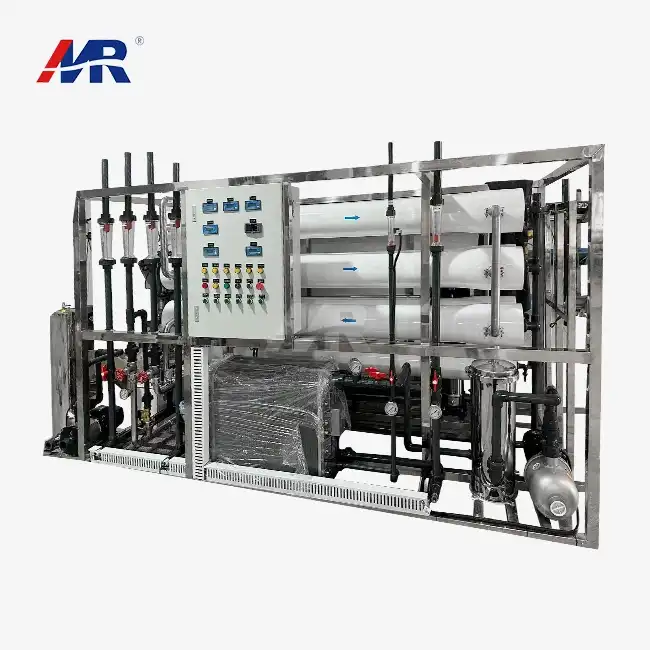
What Is an RO EDI Water System, and How Does It Work?
The Two-Stage Architecture Behind Ultrapure Water Production
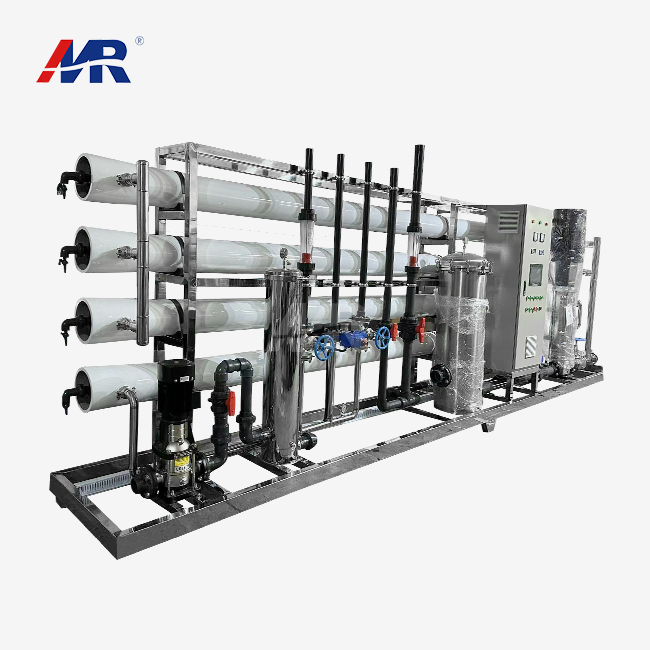
An RO EDI water system operates in two stages that work together to create ultrapure water. The reverse osmosis membrane cleans the feed water by getting rid of up to 99% of the dissolved salts, organics, germs, and particles. The RO permeate then goes into the electrodeionization module. There, a DC electric field pushes any leftover ions through ion-selective membranes and into a concentrate stream. This process goes on all the time, without stopping for chemical regeneration.
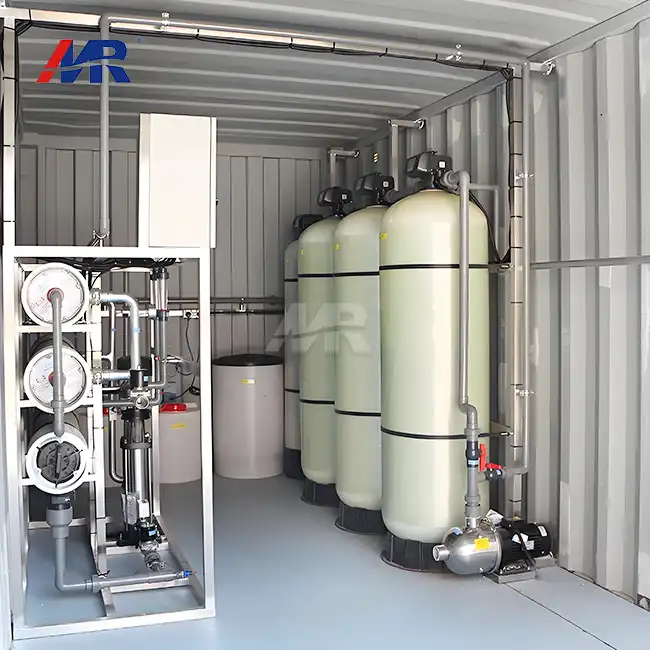
Ionic leaks during off-peak demand cycles and slow conductivity drift are problems that can't be fixed by RO alone. This design does. By putting EDI further downstream, the system keeps the water quality stable all the time. Pretreatment steps, like a softener or antiscalant dosing system, keep ro membranes from scaling with calcium and magnesium. This extends the service life of the membranes and keeps the low feed conductivity (below 40 µS/cm) that the EDI module needs to work at its best.
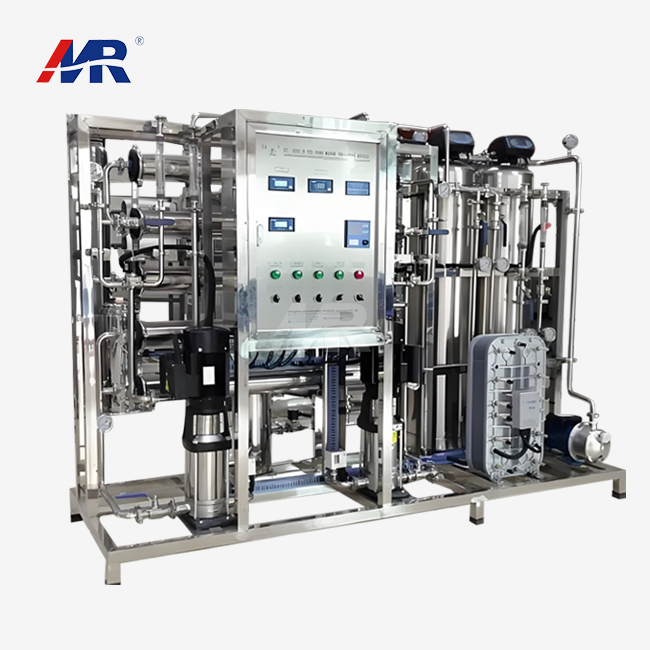
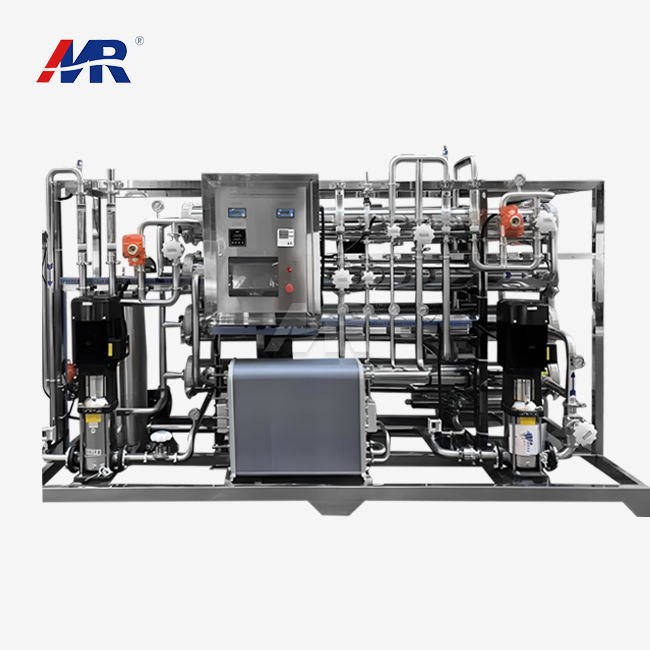
Morui's MR-EDI-5TH model works at 16 kW/hour, has a 55% recovery rate, and a salt rejection rate of 99.99%. This makes it a technically sound choice for pharmaceutical ultrapure water production plants that need to make sure their output is always the same.
Why Are RO EDI Systems Preferred Over Traditional Purification Methods?
Comparing Technology Performance in a Pharma Context
Mixed-bed ion exchange resins are used in traditional deionization. These resins work well at first, but they break down between regeneration cycles, which causes the water quality to be all over the place. This is a direct compliance risk in regulated pharmaceutical environments that are regulated. For regeneration to happen, strong hydrochloric acid and sodium hydroxide are needed. This creates risks when storing chemicals, costs when neutralizing waste, and paperwork for regulators.
Distillation makes very pure water, but it uses a lot of energy and needs heating elements and condensers to be serviced often. RO on its own lowers the ionic load, but it can't reach the resistivity levels needed by USP <1231> or EP 2.2.3 without a second polishing stage.
| Criterion | Traditional Ion Exchange | Standalone RO | RO EDI System |
|---|---|---|---|
| Water Quality Consistency | Variable (batch cycles) | Moderate | Continuous, stable |
| Chemical Regeneration Required | Yes | No | No |
| Regulatory Risk | High | Moderate | Low |
| Maintenance Complexity | High | Moderate | Low–Moderate |
| Environmental Impact | High (acid/alkali waste) | Low | Low |
| Operational Downtime | Frequent | Minimal | Minimal |
This comparison makes the decision straightforward for technical managers and procurement leads looking at long-term operational costs and compliance requirements. The RO EDI water system configuration gets rid of the risks of dealing with chemicals, cuts down on downtime, and makes sure that the quality of the water stays the same during changes and seasons.
What Are the Core Applications Inside a Pharmaceutical Facility?
From Purified Water to WFI — Where This Technology Delivers
There are a surprising number of ways that pharmaceutical companies use high-purity water. The need starts in quality control labs, where instruments that perform analysis need very pure water that doesn't mess up test results with ions. It goes through rooms for preparation, where clean water is used as an active ingredient in liquid dosage forms.
Here are the primary application zones where an RO EDI water system delivers measurable value in pharma settings:
- Purified Water (PW) production for liquids that are swallowed, creams that are put on the skin, and cleaning equipment requires that the conductivity of the water stay below 1.3 µS/cm at 25°C at all times.
- Water for Injection (WFI) pre-feed, where the output of the RO EDI system is used to give water to a distillation or membrane-based WFI system further down the line, which makes the end purification equipment's job easier.
- Clean steam generation in facilities that use pure steam to sterilize autoclaves and make cleanrooms more wet.
- Equipment and vessel cleaning (CIP/SIP) where surface validation methods can be broken by ions left over in rinse water.
- Analytical laboratory supply for HPLC, titration, and dissolving testing tools requiring Type 1 or Type 2 reagent-grade water.
These apps share one requirement: confirmation. Both 21 CFR Part 211 of the FDA and Annex 1 of the EU GMP require proof that water systems always make water of a certain quality. Continuous conductivity and TOC tracking in RO edi systems make this possible, creating data trails that make validation entries easier.
How Should You Maintain an RO EDI Water System for Long-Term Reliability?
Key Performance Indicators That Prevent Quality Drift
Pharmaceutical water systems must be maintained by law, so they can't be left unmaintained. At set times, you should keep track of the conductivity, flow rate, pressure difference across RO membranes, and EDI module voltage and current. If the permeate flux drops by 10 to 15 percent, it usually means that the RO membranes need a Clean-In-Place (CIP) procedure to get rid of bio-growth or chemical fouling.
Component Replacement and Supplier Support
Pre-filters, carbon blocks, and UV lamps all need to be replaced at regular intervals, even if they don't seem to be working well. When RO pretreatment is done right, EDI modules usually last 3 to 5 years before they need to be replaced. This is a lot longer than mixed-bed resin beds, which may need to be regenerated every few weeks in high-throughput situations. Your RO EDI water system will stay compliant between audits if you work with an authorized supplier that offers genuine replacement parts, calibration support, and on-site commissioning.
What Should Procurement Teams Evaluate When Selecting an RO EDI Supplier?
Matching Supplier Capability to Pharmaceutical Grade Requirements
Getting an ultrapure water system for pharmaceutical use is not the same as buying any other product. Buyers need to look at the manufacturer's Certifications, recorded proof support, how quick the tech team is, and whether spare parts are available in their area.
Morui (Guangdong Morui Environmental Technology Co., Ltd) brings to every project more than 20 trained engineers, a facility for making their own membranes, and several companies that process equipment. Morui offers more than 14 regional offices and agency partnerships with Shimge Water Pumps, Runxin Valves, and Createc Instruments. They offer complete water treatment options, not just tools.
The MR-EDI-5TH is designed to make ultrapure water that is safe for medicinal use. It can work at 16 kW/hour and rejects 99.99% of salt while recovering 55%. It works with preparation systems that are already in place and can be used in a lab, a test plant, or a full production facility. Morui handles installation, commissioning, and ongoing service all in one place, which makes it easier for internal teams to coordinate tasks. A full cost analysis should look at both the initial investment in equipment and the long-term savings from eliminated chemical procurement and reduced compliance risk.
Conclusion
Pharmaceutical water purity is not a choice; it is a requirement for manufacturing that is enforced by governments on three continents. Through constant, chemical-free operation that yields ultrapure water with confirmed ionic rejection rates, an RO EDI water system meets this standard. When you compare the combined RO EDI approach to traditional ion exchange or standalone RO configurations, it has lower operational risk, better document compatibility, and more predictable long-term costs. This technology has been used by the pharmaceutical industry for decades, representing a sound technical and financial investment for facilities improving their water infrastructure.
FAQ
1. Does an RO EDI system meet USP Purified Water standards?
Yes. When set up correctly, a system will always make water with a conductivity of less than 1.3 µS/cm at 25°C, which is what is required by USP <643> and USP <1231>.
2. How often does the EDI module need replacement?
EDI units usually last between 3 and 5 years before they need to be replaced, as long as the feed conductivity stays below 40 µS/cm and there is enough RO pretreatment.
3. Can this system integrate with an existing RO installation?
Most of the time, yes. An EDI polishing module can be added after an RO system that is already working, as long as the quality of the RO permeate meets the requirements for the EDI inlet.
4. What happens if CO₂ levels in the RO permeate are high?
By turning into carbonic acid, dissolved CO₂ lowers the end-water resistance. Putting in a membrane degasser between the RO and EDI steps fixes the problem and makes the EDI electrolytic work better.
5. Does a high-salinity feed water source disqualify this technology?
Not all the time. When feed water has a lot of salt in it, it needs to go through a double-pass RO system to lower the conductivity to a level that can be used by EDI before electrodeionization can start.
Partner with Morui for a Certified RO EDI Water System Solution
Morui makes water treatment systems for pharmaceuticals that are built to last and meet all the rules. Through Morui's global RO EDI water system supplier network, the MR-EDI-5TH offers 99.99% salt rejection and a constant output of 16 kW/hour of ultrapure water. Reach our engineering team directly at benson@guangdongmorui.com to request a customized quote or download the product specification sheet.
References
1. United States Pharmacopeia. USP <1231> Water for Pharmaceutical Purposes. USP, 2023.
2. U.S. Food and Drug Administration. Guidance for Industry: Quality Systems Approach to Pharmaceutical CGMP Regulations. FDA, 2006.
3. European Medicines Agency. EudraLex Volume 4 — EU Guidelines for Good Manufacturing Practice, Annex 1: Manufacture of Sterile Medicinal Products. EMA, 2022.
4. Strathmann, H. Electrodialysis, a Mature Technology with a Multitude of New Applications. Desalination, 2010.
5. Zydney, A. L. Membrane Technology for Purification of Therapeutic Proteins. Biotechnology and Bioengineering, 2009.
6. World Health Organization. WHO Technical Report Series No. 970 — Good Manufacturing Practices for Pharmaceutical Products. WHO, 2012.