_1745823981883.webp)

Containerized RO Systems: Fast, Compact, Cost-Effective
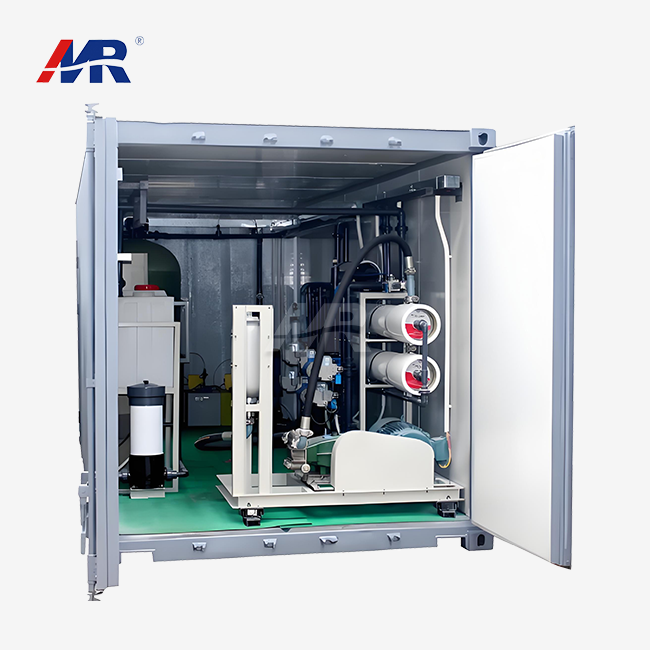
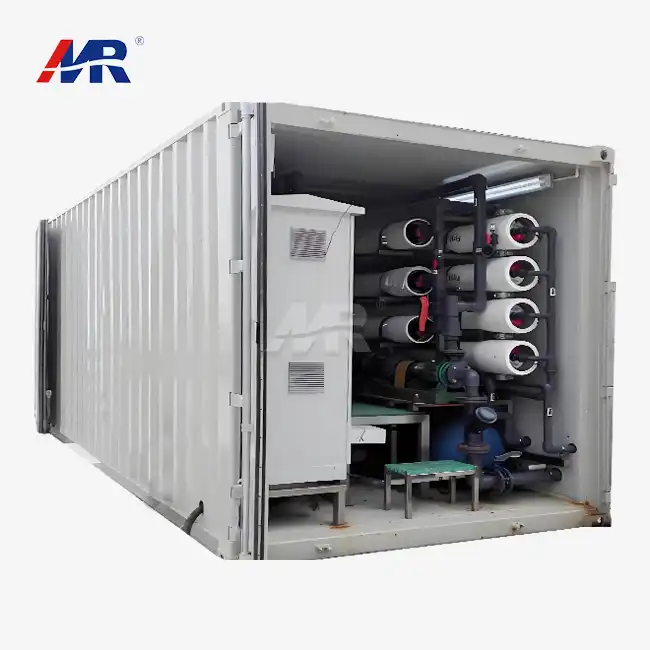
A containerized RO system is a fully self-contained reverse osmosis water treatment unit built inside a standard 20ft or 40ft shipping container. Every component — membranes, high-pressure pumps, pretreatment filters, and control panels — arrives pre-assembled and factory-tested. You connect power and a water source, and the unit runs. This plug-and-play design makes mobile RO systems the preferred choice for emergency response teams, remote mining camps, military operations, and construction sites. Morui's containerized units treat 50 to 1,000 m³ per day, remove up to 99% of TDS, and filter down to 0.0001 micron.
Understanding Containerized RO Systems
What Exactly Is Inside the Container?
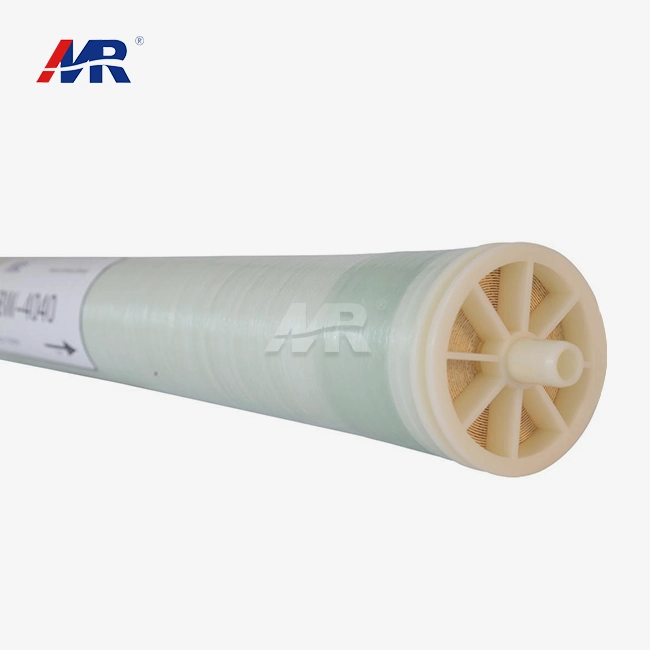
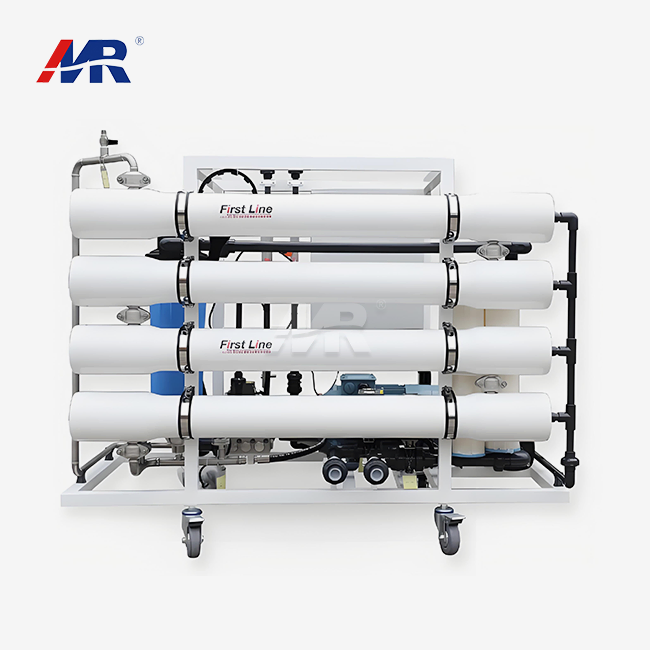
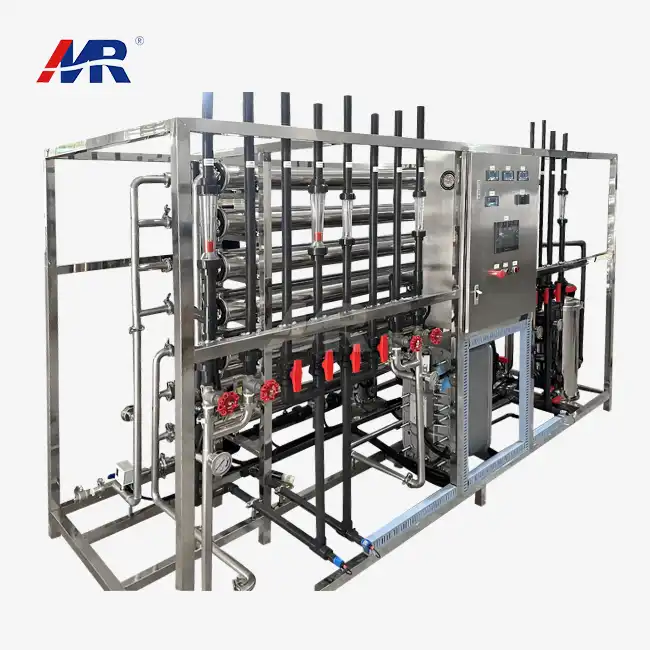
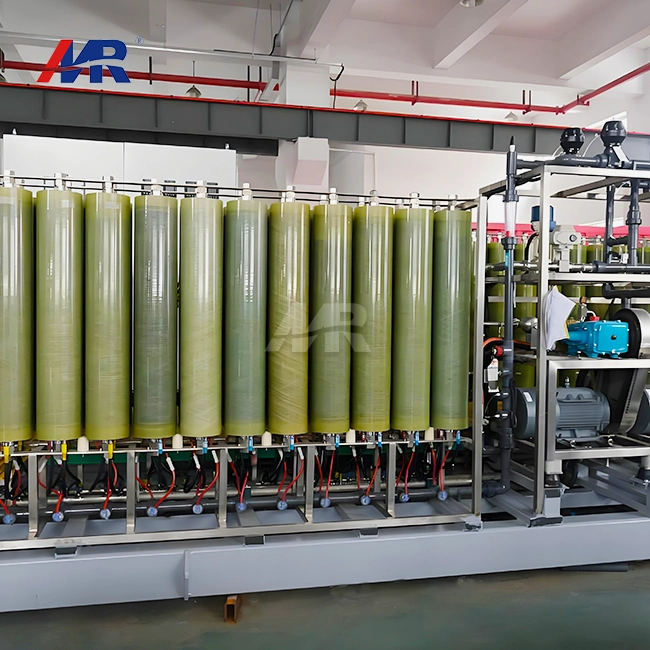
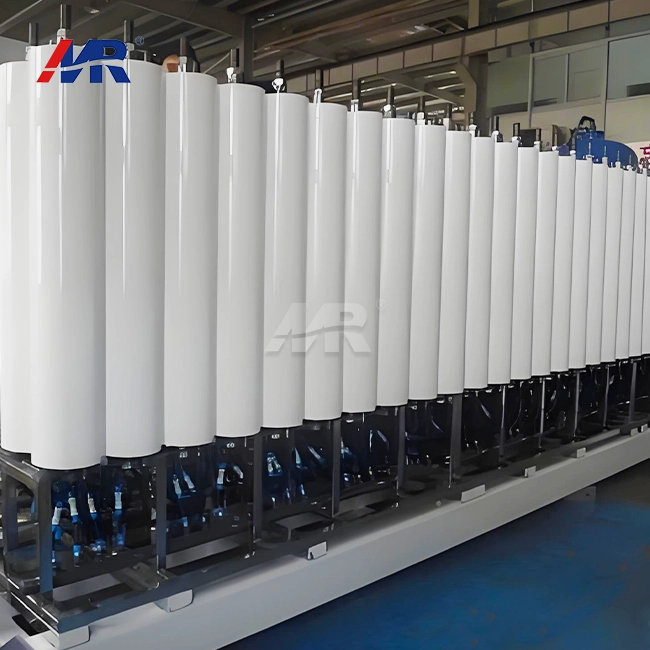
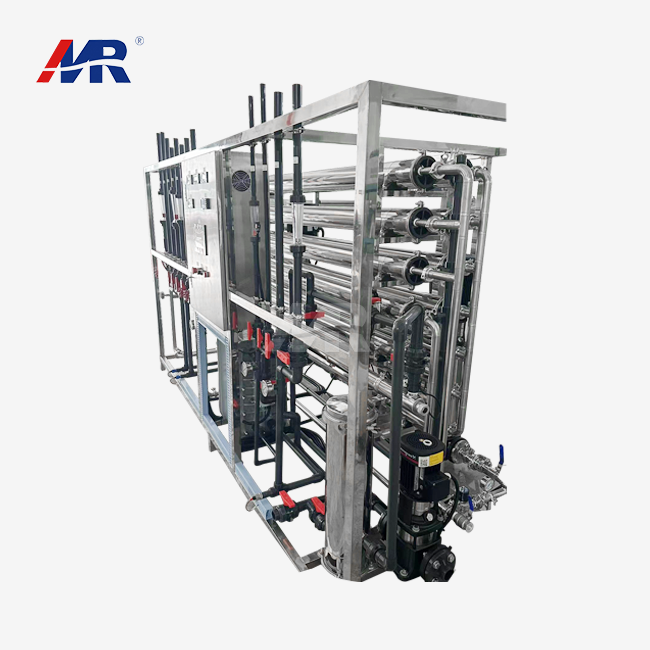
The whole process train is built into a single, safe area in every Morui mobile water treatment container. There are high-pressure pumps, ro membrane tanks, a permeate collection device, and an automatic PLC control panel on the inside. The lines and electrical wires are set up and checked before they are shipped. There is no way to change things right now.
How the Treatment Process Works
This hole lets cold water in. Solids that are floating in the water are removed during pretreatment, and membranes are kept from becoming dirty. A high-pressure pump then forces the water through RO membranes. This creates a wall between the clean permeate and the concentrated salt. After treatment, the pH may need to be changed, and minerals may need to be added again, depending on what the final use is. After that, the water is either kept somewhere or sent straight to people who need it. The whole process is tracked instantly, and any changes in pressure, flow, or water quality are shown right away.
Who Uses These Systems?
Many people like portable RO units. People who help with disasters and the military use them within hours of getting to the scene of an accident. They are used for both drinking water and process water in oil and gas camps and mines. Cities and towns bring them online when there isn't enough capacity or when equipment needs to be fixed. Some types of seawater desalination are used by resorts in remote coastal areas so they don't have to rely on unreliable local grids to power their guests.
Containerized RO Systems vs. Traditional and Alternative RO Systems
Portability and Site Flexibility
To build a stable RO plant, you need concrete engineering, strong supports, and weeks of putting in pipes. A building still needs to be ready for a system that is placed on a skid. A closed-off reverse osmosis system doesn't need either of them. The house is the ISO container itself. There you have it. Just lay it down on a flat surface and connect the power cord and two hoses. This difference is very important when a project site needs to be moved or when there is an emergency and water needs to be made right away.
Total Cost of Ownership
Building a traditional plant costs a lot up front, and those costs are never passed on to the next job. Boxed parts can be moved and used more than once. Over the course of three years, a rental company might use the same unit for five different jobs. The Global Water Intelligence Market Report (2023) says that the market for portable water treatment increased by over 12% from one year to the next. Most of the time, this was because containerized RO systems cost less per project than set installs.
Scalability Without Rebuilding
To add power to an existing plant, you have to build something new. A portable desalination system made of containers only needs one more container to work. As a customer grows, Morui's flexible design lets them start with a single 20-foot unit that can produce 50 m³/day and then add more containers to make 1,000 m³/day without having to change the infrastructure. This really helps with projects where the amount of water needed isn't clear or is going up.
Design Principles and Maintenance
What Good Design Looks Like
When Morui designs the inside, he makes sure that all the parts that need to be fixed, like filters, membranes, and pumps, can be reached without having to move other things around. This is important in small places. The container's shell keeps it safe from the weather, UV rays, and heavy loads. Versions made for cold places have heating features and screens that keep heat in. Designs for high temperatures use seals that don't melt in hot weather and materials that can handle temperatures above 45°C. They come in 20-foot and 40-foot sizes so that they can fit a variety of needs in terms of room and weight.
Routine Maintenance Tasks
A small RO unit that is well-designed has a repair plan. Most of the time, workers do these things:
- Cartridge filter replacement (every 1–3 months depending on feed water quality) keeps pretreatment effective and protects membranes from particulate damage.
- Membrane cleaning (CIP) removes scale and biofilm buildup, typically scheduled every 3–6 months, with cleaning chemicals circulated through the membrane vessels without removing them from the system.
- Antiscalant dosing system checks confirm that chemical injection rates match current feed water chemistry, preventing mineral scaling on membrane surfaces.
- Control panel and sensor calibration ensure flow meters, pressure transducers, and conductivity probes report accurately, which keeps automated shutdowns and alerts reliable.
Most of the time, membranes will last three to five years in brackish water if the workers follow the repair plan. As long as Morui's tech team has remote monitoring, they don't have to send experts to the site to keep an eye on how things are running.
Compliance and Water Quality Standards
Morui makes its goods in ways that are allowed by ISO 9001. Users in the US can get units set up with NSF-approved materials that can come into contact with water and documentation packages that can help them get local permits. Every unit comes with a report on the water quality that was made at the plant. Procurement teams can use this as proof that they follow the law and keep their contracts.
Procurement and Decision-Making Guide for B2B Clients
Defining Your Capacity and Water Source Requirements
What you should know before getting a quote are three things: how much water you need each day (in m³), where the water comes from (surface water, brackish groundwater, or seawater), and what kind of water you want it to be. Three things are used to figure out the pretreatment train, the membrane count, and the post-treatment needs. Morui's engineering team tells buyers what size to use based on feed water analysis data. Buyers can get this data from current site reports or by doing a basic site study.
Evaluating a Containerized RO Manufacturer
Price is important, but it shouldn't be the only thing you think about when you buy something. If a company that makes containerized ro systems for containers sends out a unit without any paperwork, spare parts, or remote support, they are risking more than they are saving by doing so. Morui has a global network of suppliers for spare parts, and every unit comes with an O&M manual in more than one language. Customers who buy as an OEM or private label get design files that are covered by an NDA. They also get help with getting local certification for the places they want to sell in.
Pricing Models and Lead Times
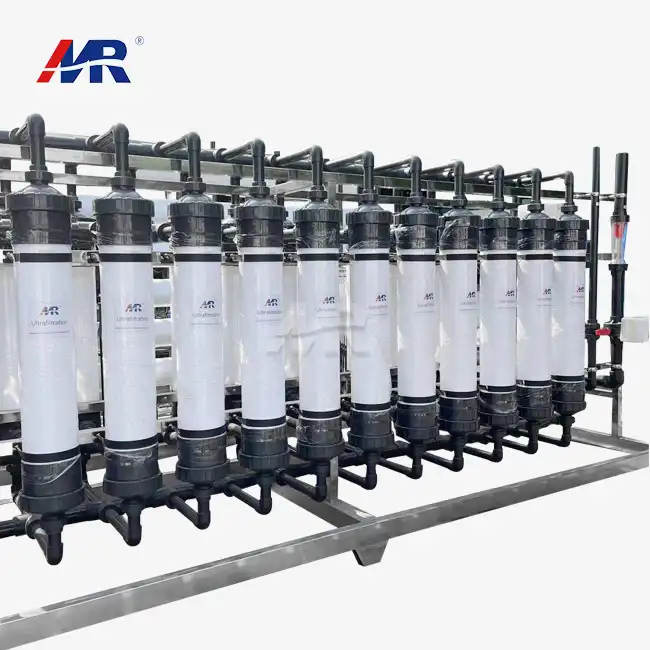
Standard units, which have a set output and container size, can be sent out faster than units that are fully personalized. When people buy in bulk, consolidated sea-freight packaging saves them money on the cost of shipping each item. It takes longer to get a custom OEM order, but the systems that come from the factory are already fully built and don't need any extra engineering on-site. Some of the things that might be ordered are generator integration, off-grid solar power, or non-standard process trains like UF+RO or RO+EDI. People who buy from Morui can see both options and be told which one is best for them based on their income and time frame.
Future Trends and Industry Outlook
IoT Monitoring and Predictive Maintenance
Now, people who clean water for a living have no choice but to use remote tracking. Morui includes monitoring modules that work with SCADA and send operational data to the cloud, where it can be viewed from any device. This data includes pressure, flow, conductivity, and energy draw. In this way, people who are in charge of more than one page can see when speed drops and fix the problem before it gets worse. This makes it much less likely that the system will go down quickly.
Sustainability and Energy Efficiency
Energy recovery devices (ERDs) take hydraulic energy back from the concentrate stream when the salt level is high. The total amount of power used is 30–50% less than with methods that don't recover energy. Morui's energy recovery configurations cut power use to levels that are about the same as those used by fixed installations. Clients who need to report on sustainability or who can't get power from the grid should pay attention to this.
Market Demand Projections
This is what Grand View Research says: the world market for equipment that cleans water was worth $72 billion in 2023 and will be worth $110 billion by 2030. Water cleaning systems that are flexible and modular are one of the parts of that market that is growing the fastest. This is because of the risk to water caused by climate change, the lack of infrastructure in developing areas, and the need from businesses that work in rural areas to extract resources.
Conclusion
A well-thought-out containerized ro system that fits in a container can bring clean water to places where permanent systems can't. It can do this more quickly and for less money per project than other plants. It can handle water from salty wells to the open ocean, and it can hold anywhere from 50 to 1,000 m³ per day. Containers that are 20ft and 40ft will fit. Plug-and-play units that have been tried by the factory get you up and running faster, whether you need one right away or a bunch for a rental fleet. The cost is worth it every time you move.
FAQ
1. What does a containerized RO system cost?
The cost is based on how much water is used, the size of the container, the type of water used, and how the process is set up. Most of the time, a 40-foot unit that treats ocean water and makes 500 m³/day costs more than a 20-foot unit that treats brackish water and makes 100 m³/day.
2. How long does installation take?
Most units are ready to use 24 to 48 hours after being shipped. It comes with pipes and wires already put in. Connecting the power source, the water feed, and the exit distribution line are all part of the work that is done on-site.
3. Can these units handle seawater?
High-rejection filters and high-pressure pumps are used by Morui to desalinate seawater. These parts can handle the high feed pressures that saltwater needs.
4. What power supply do the units use?
To work, most of them need 380V/50Hz. You can get custom power systems with generators and off-grid solar hybrid options if you ask for them.
5. Are replacement membranes easy to source?
Morui keeps extra parts and membranes that can fit normal vessel sizes in stock all over the world. The feed water quality and how well it is taken care of will determine how often they need to be replaced. Usually, they should be changed every three to five years.
Get a Quote from Morui — Containerized RO System Supplier
Morui sells containerized ro systems that have been tested and are made to work in real life. We send units that are ready to go from the source, complete with all the paperwork, extra parts, and remote support. Our own plant for making membranes, 20 engineers, and 14 offices help with projects all over the world. Get in touch with Our Team right away to talk about your project and get a personalized quote. Benson@guangdongmorui.com is his email address.
References
1. Grand View Research. Water Treatment Equipment Market Size, Share & Trends Analysis Report. 2023.
2. Global Water Intelligence. Mobile Water Treatment Market Report. 2023.
3. World Health Organization. Guidelines for Drinking-Water Quality. 4th ed., WHO Press, 2017.
4. Membrane Technology and Research. Reverse Osmosis Membrane Performance and Operational Considerations. 2022.
5. AWWA (American Water Works Association). Reverse Osmosis and Nanofiltration: Manual of Water Supply Practices. 2nd ed., 2018.
6. International Desalination Association. Desalination by the Numbers: IDA Water Security Handbook. 2022.