

_1745823981883.webp)

Containerized Reverse Osmosis vs. Traditional Plants: Key Differences
When selecting water purification infrastructure, industrial decision-makers face a pivotal choice between Containerized Reverse Osmosis systems and traditional fixed-site plants. Containerized solutions package complete RO treatment trains within standardized ISO shipping containers, offering mobility and rapid commissioning. Traditional plants, by contrast, involve permanent structures constructed on-site with extensive civil engineering. The primary distinctions lie in deployment speed, capital investment, scalability, and operational flexibility—each architecture addressing different procurement priorities and project timelines in pharmaceutical manufacturing, power generation, seawater desalination, and municipal water utilities.
Introduction
In pharmaceutical labs, food processing plants, semiconductor cleanrooms, and city drinking water systems, reverse osmosis technology is now the main way that high-purity water is made. The discussion between standard brick-and-mortar plants and containerized RO systems is getting stronger as procurement managers and technical decision-makers look for answers for new projects or facility expansions. Global B2B buying trends are moving toward water treatment methods that are more adaptable, scalable, and capital-efficient, and that cause less damage while improving performance. This article gives a full comparison of these two architectures, looking at their design theory, performance measures, cost structures, maintenance needs, and ability to work in a wide range of industrial settings. Whether you're in charge of a startup beverage company's tight budget or a multinational pharmaceutical company's technical operations, knowing these key differences will help you make sure that your investments in water treatment are in line with your company's long-term goals and day-to-day operations.
Understanding Containerized Reverse Osmosis and Traditional RO Plants
What Defines a Containerized Reverse Osmosis System?
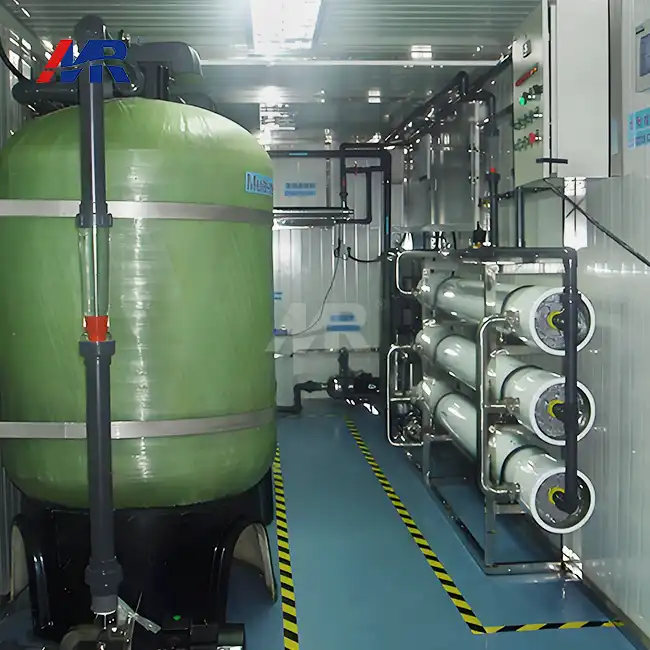
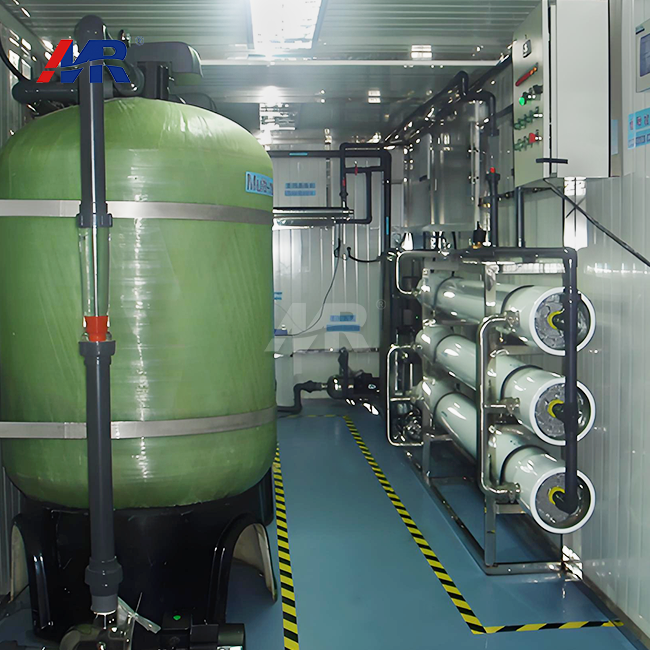
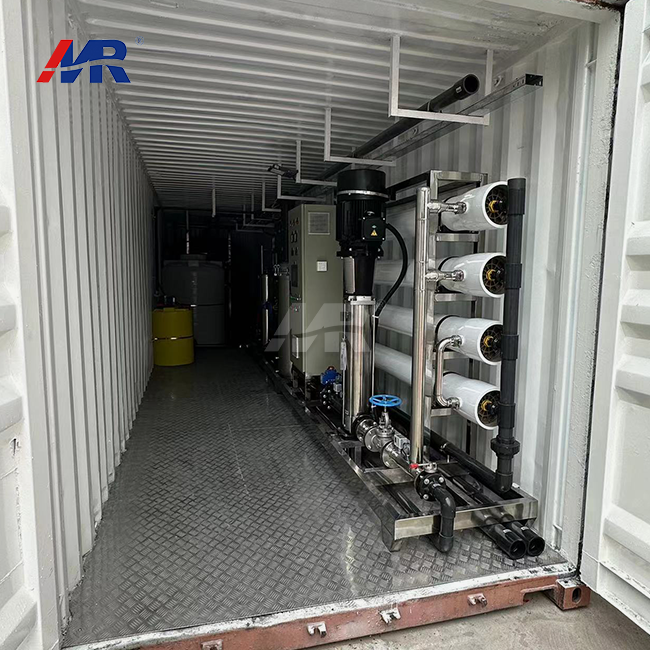
A Containerized Reverse Osmosis system is a complete, turnkey plant for cleaning water that fits inside a normal ISO shipping container, which is usually 20 or 40 feet long. These units combine pre-treatment parts, high-flux spiral-wound membranes, energy recovery devices, and post-treatment stages into a climate-controlled module that can be plugged in and used right away. By sending systems that are already put together in a plant and ready to connect to water and power sources, the engineering method gets around the usual problems that come up with civil construction. This modular design solves some of the most important problems, like long project timelines, high on-site installation costs, and the lack of permanent infrastructure in remote or temporary locations. This mobility advantage is very helpful for businesses that provide emergency water sources, run test desalination projects, or water crops during certain times of the year.
Characteristics of Traditional RO Plants
Traditional RO plants are huge, custom-built structures that are put together on-site with a lot of civil engineering. Permanent buildings at these sites house pre-treatment systems, chemical dosing stations, multiple membrane arrays, and control rooms that are connected to industrial processes that are already in place. Land acquisition, foundation work, structural engineering, and large pipe networks designed for continuous, high-volume operations are all parts of construction. Because it is fixed, it can be used for decades, and its capacity can be increased by adding more membrane racks instead of modular units. These fixed installations are usually bought by municipal water treatment authorities, pharmaceutical campuses that need GMP-compliant purified water, and petrochemical refineries that treat oilfield reinjection water because they value consistent throughput and process integration more than flexibility.
Architectural Philosophy and Design Approach
Every choice that comes after is based on the basic architectural difference. Containerized systems are designed to be easy to move, set up quickly, and require little site preparation. For example, an ISO container can arrive, connect to utilities, and start making water within days. Traditional plants focus on making the most of the site's conditions, integrating with complicated building infrastructure, and tailoring their solutions to specific water chemistry problems. Traditional designs make each part fit the needs of the site, while containerized units use standard parts to save time and money in the factory. This difference impacts everything from the time it takes to buy things to the money it costs to run them in the long run. Picking between systems is a strategic choice that goes far beyond the price of the tools themselves.
Performance and Efficiency Comparison
Operational Flexibility and Energy Consumption
Containerized RO systems like Containerized Reverse Osmosis work great in situations that need varying output and smart use of energy. Modern variable frequency drive pumps change flow rates on the fly, so they can match production to real-time demand without wasting energy when demand is low. Integrated energy recovery devices take pressure energy from the concentrate stream. This lowers the cost of operations by up to 40% in applications that desalinate seawater. Because the size is small, space has to be used efficiently, which usually means shorter pipe runs that reduce friction losses. These units are good for places where water needs change, like making seasonal drinks or providing water to a building site temporarily. Being able to adapt to changing needs keeps businesses from spending too much on capacity that isn't being used.
When it comes to stable, ongoing large-scale uses, traditional RO plants offer the best performance. Multistage membrane arrays can handle hundreds of cubic meters of material per hour, and they consistently reject more than 99% of the dissolved solids that come through. The permanent infrastructure can handle high-tech pre-treatment trains that improve the quality of the feedwater before it gets to the membranes. These trains include coagulation, flocculation, multimedia filtration, and activated carbon adsorption. This all-around method increases the membrane's useful life and keeps the water quality stable, which is important for making medicines or electronics-grade ultrapure water. However, the level of complexity means that more energy is used at the start, and skilled operators are needed to manage treatment stages that depend on each other.
Recovery Rates and Downtime Management
Recovery rate, which is the amount of feedwater that is turned into permeate, has a big effect on practical costs. Most containerized systems can recover 45–60% of the water they use in brackish water uses and 35–45% of the water they use to desalinate seawater. Their modular design makes it easy to change the membranes quickly during planned repair times. Because they are self-contained, backup units can be put in place along with operational containers. This means that when a component fails, there is almost no production downtime. Traditional plants get the most out of recovery by using multiple passes and smart brine management, which can get recovery rates as high as 75–85% in brackish situations. But because they are all connected, problems in one part of the system can affect other parts, which could stop whole production lines until the problems are fixed. Industries that need to be up all the time, like hospital treatment water or semiconductor fabs, need to think carefully about these stability issues.
Cost and Procurement Considerations
Capital Expenditure and Initial Investment
When we look at the starting costs, containerized RO systems are clearly better for projects that are on a tight budget or don't know how much demand will be. A containerized system that can handle 100 cubic meters per day usually costs between $150,000 and $350,000, but this depends on how complicated the feedwater is and what quality standards are set for the permeate. This investment covers everything: the equipment, testing in the factory, and delivery. It's a predictable, one-line budget item. With containerized solutions, the time it takes to go from buying the equipment to putting it into use is much shorter than with traditional plants, which can take anywhere from 12 to 18 months. This is because there is no need for civil construction, land acquisition, or long-term on-site labor. Startups in the craft beer business or small city utilities that serve 5,000 to 15,000 people often find that this low cost of capital makes projects possible that would not be possible with traditional plant economics.
Traditional RO plants need a big investment up front, and it's not just the cost of the tools. A permanent facility that can handle the same amount of 100 cubic meters per day might cost between $500,000. This is because of the costs of preparing the site, building the facility, installing complex pipe networks, electrical infrastructure, and control room facilities. Large companies that make medicines or power plants that process more than 500 cubic meters of waste every day can afford to spend this much because they can save money by buying in bulk and running their businesses for decades. The higher initial cost buys customization, flexibility in integration, and the ability to grow, which containerized units can't offer. Financial decision-makers need to figure out how to balance these cash needs with the expected lifespan of the project, the organization's capacity growth, and its balance sheet.
Total Cost of Ownership and ROI Analysis
A full total cost of ownership analysis for Containerized Reverse Osmosis looks at more than just the initial investment. It also includes energy costs, upkeep costs, membrane replacement rounds, and finally shutting down. Standardized parts and easier maintenance procedures make containerized systems' operational costs predictable. Many suppliers offer performance guarantees and fixed-price service contracts. Because it is flexible, it's possible to add small amounts of capacity that match the use of capital with income growth. This is especially helpful for food processing companies that want to add more Products or aquaculture operations that want to grow their fish production. Leasing options lower the initial cash needs even more, turning capital expenditures into operational expenses that make the financial ratios better.
At scale, traditional plants have lower production costs per cubic meter because they use less energy and their membranes last longer, which makes up for the fact that they need more upkeep workers. When production rates are higher than 200 cubic meters per day, a well-designed fixed facility that is used at 80% of its capacity for 15 years usually gives a better return on investment (ROI) than containerized options. Adding project uncertainty, possible moving needs, or phased deployment strategies changes the calculation in a big way. To find the design that maximizes shareholder value in their particular business situation, procurement professionals must create thorough financial models that include their operational parameters, discount rates, and risk tolerance.
Maintenance, Operation, and Technical Support
Simplified Protocols and Remote Monitoring
Containerised RO systems are easy to maintain, reducing the requirement for experienced labour and simplifying operations. Parts attach to easy-to-reach frames using tool-free quick-disconnect fittings. Technicians may replace filter cartridges, check valves and sensors at normal service periods without training. Advanced SCADA systems use IoT. The central monitoring facilities receive real-time flow rates, pressure differentials, and conductivity information from these systems via cellular or satellite networks. This functionality is beneficial for remote installations like island seawater desalination facilities or agricultural irrigation stations without Technical support. Operators get automatic notifications when membrane performance drops before water quality degrades. Maintenance now anticipates issues rather than responding to them.
Traditional plants require competent operational teams to manage numerous interdependent activities. Operators monitor numerous treatment stages at once, altering chemical rates, identifying the optimal backwash routines, and addressing instrument issues. The complexity permits fine-tuning, which enhances productivity but requires knowledgeable people, which might be a challenge in locations with few technical staff. Field support teams from suppliers may prolong outages if new parts need to be produced or transported overseas. To maintain productivity, 24-hour industries must spend on significant training and additional labour.
Supplier Partnerships and After-Sales Support
Choosing a trustworthy Containerized Reverse Osmosis provider has a huge effect on how well your business does in the long run. Leading makers offer full turnkey support that includes designing the system, helping with setup, teaching operators, and managing the inventory of extra parts. Established OEM partnerships with membrane makers like Toray, DuPont, or Hydranautics make sure that replacement parts are real and not fakes that don't work as well. Most warranties cover equipment for 12 to 24 months, but for critical applications, longer service agreements are available. Procurement managers should check a supplier's track record by calling current clients in related industries and asking about how quickly they can respond to emergencies and if they are ready to adapt their solutions to meet specific water chemistry challenges.
Applications and Suitability for Different Business Needs
Ideal Scenarios for Containerized Solutions
Containerised RO units are ideal for rapid deployment, operating flexibility, and infrastructure mobility. Emergency disaster relief organisations put up these systems within 48 hours following a natural catastrophe to supply clean drinking water until infrastructure is repaired. Remote mining businesses treat brackish groundwater with containerised desalination without establishing 5- to 10-year facilities. Multi-client pharmaceutical contract manufacturers employ modular water-cleaning systems to change capacity to production schedules without investing in permanent infrastructure. Field testing is possible with their plug-and-play design. Coastal cities and municipalities considering seawater desalination may employ containerised units for 12–24 months to gather performance data before building a permanent plant. Agricultural irrigation schemes that handle salty groundwater resemble moving systems across fields when crop rotations change.
When Traditional Plants Remain Optimal
For large, permanent sites with constant high throughput and significant industrial integration, traditional RO plant designs are still recommended. Semiconductor production operations that create ultrapure wafer cleaning water use RO systems, electrodeionization, UV sterilisation, and sub-micron filtering in complicated treatment trains in distinct buildings. Over 100,000-person municipal water utilities create permanent facilities that last 20–30 years and may add membrane arrays to boost capacity. Pharmaceutical businesses that must follow tight GMP requirements establish proven systems with plenty of documentation and change control. These systems benefit from permanent infrastructure. Petrochemical refineries need RO plants, wastewater treatment systems, heat recovery networks, and process control frameworks that temporary containerised solutions can't accomplish to treat generated water or boiler feedwater. This depends on how stable operations are, how much space is required, the laws and regulations, and how long-term facility planning takes.
Conclusion
The decision between traditional plants and Containerized Reverse Osmosis systems is based on more than just technical requirements. It also takes into account long-term business goals, operating flexibility, and financial limits. Containerized solutions offer unique benefits in terms of speed of deployment, cost-effectiveness, and adaptability for projects with uncertain demand estimates or short-term operating needs. For large, permanent installations where operational stability justifies a big initial investment, traditional plants offer the best performance, integration depth, and per-unit production costs. Total cost of ownership analysis must be used by procurement decision-makers to look at project duration, needed throughput, budget limits, site accessibility, and legal requirements. Knowing these basic differences in architecture gives technical and financial partners the power to make sure that investments in water treatment facilities are in line with the organization's goals and strategies for positioning itself in the market.
FAQ
1. How do containerized RO systems differ from skid-mounted units?
All the parts of a containerized system are kept inside weatherproof ISO shipping containers with climate control. On the other hand, skid-mounted units put equipment on open frames that need their own buildings or enclosures to keep the environment safe. Containerized designs are easier to move and don't get damaged by the weather as well.
2. What are typical delivery and installation lead times?
Once an order is confirmed, containerized RO systems are usually shipped within 8 to 12 weeks, and they are ready to be used on-site in 5 to 10 days. It usually takes between 12 and 18 months to build a traditional plant, but this can change depending on the site conditions and the need for permits.
3. Can containerized systems be customized for challenging water quality?
Modern containerized units can be customized in many ways, such as by using special pre-treatment for feedwater with a lot of suspended solids, fouling-resistant screens for difficult chemicals, and cleaning after treatment. Manufacturers come up with solutions that deal with specific conductivity, hardness, organics, and microbial factors while keeping the standard size of the containers.
4. What maintenance intervals should operators expect?
Depending on the quality of the feedwater, routine maintenance like replacing filters and cleaning membranes should happen every three to six months. Every three to five years, membrane elements need to be replaced. Traditional plants have similar schedules, but they have more complicated steps that need technical know-how.
Partner with Morui for Advanced Water Treatment Solutions
You can trust Guangdong Morui Environmental Technology Co., Ltd. to make high-quality Containerized Reverse Osmosis systems that are designed to work in a wide range of commercial settings. We know how to desalinate oceans, make pharmaceutical-grade filtered water, treat wastewater from factories, and make drinking water for cities. We offer full-service solutions from the initial design phase through installation and commissioning. Our 14 regional branches across China and over 500 dedicated professionals make this possible. Our integrated capabilities include our own facilities for making membranes and processing equipment, as well as official partnerships with top companies in the field, such as Shimge Water Pumps, Runxin Valves, and Createc Instruments. Our technical team can make solutions that fit your exact water quality needs and operational limitations, whether your project calls for a small 10 cubic meter daily system for making craft beers or a large 500 cubic meter installation for making semiconductors. Get in touch with our procurement experts at benson@guangdongmorui.com to talk about your project needs and get full technical offers with clear pricing and performance guarantees. Find out why some of the world's biggest drug companies, power plants, and public services trust Morui to build their most important water treatment structures.
References
1. American Water Works Association (2021). Membrane Technology for Water Treatment: Design and Implementation. Denver: AWWA Press.
2. International Desalination Association (2022). Desalination Yearbook 2022-2023: Global Market Analysis and Technology Trends. Topsfield: IDA Publications.
3. World Health Organization (2023). Guidelines for Drinking-Water Quality: Fourth Edition Incorporating the First and Second Addenda. Geneva: WHO Press.
4. Greenlee, L.F., Lawler, D.F., Freeman, B.D., Marrot, B., and Moulin, P. (2020). "Reverse Osmosis Desalination: Water Sources, Technology, and Today's Challenges." Water Research, 43(9), 2317-2348.
5. National Research Council (2021). Review of the Desalination and Water Purification Technology Roadmap. Washington: National Academies Press.
6. Voutchkov, N. (2022). Desalination Project Cost Estimating and Management. Boca Raton: CRC Press.
 VIEW MOREContainerized Mobile Water Treatment Systems
 VIEW MOREcontainerized ro system
 VIEW MOREindustrial ultrafiltration systems
 VIEW MOREreverse osmosis membranes
 VIEW MOREultrafiltration equipment
 VIEW MOREbrackish water reverse osmosis systems
 VIEW MOREro edi water system
 VIEW MOREDisc Tube Reverse Osmosis
