_1745823981883.webp)

Containerized Reverse Osmosis Systems Buying Guide for EPC Projects
When managing EPC projects across pharmaceutical plants, municipal water facilities, or remote seawater desalination sites, choosing the right water treatment infrastructure determines operational success. Containerized Reverse Osmosis Systems deliver a modular, fully integrated solution that addresses space limitations, accelerates deployment timelines, and meets stringent water quality standards. These turnkey units combine advanced membrane filtration with climate-controlled housing, enabling rapid commissioning without traditional civil construction. This buying guide equips technical managers, procurement officers, and project directors with practical criteria to evaluate suppliers, optimize lifecycle costs, and secure reliable water purification capabilities aligned with your project specifications.
Understanding Containerized Reverse Osmosis Systems
What Makes Containerized Units Different
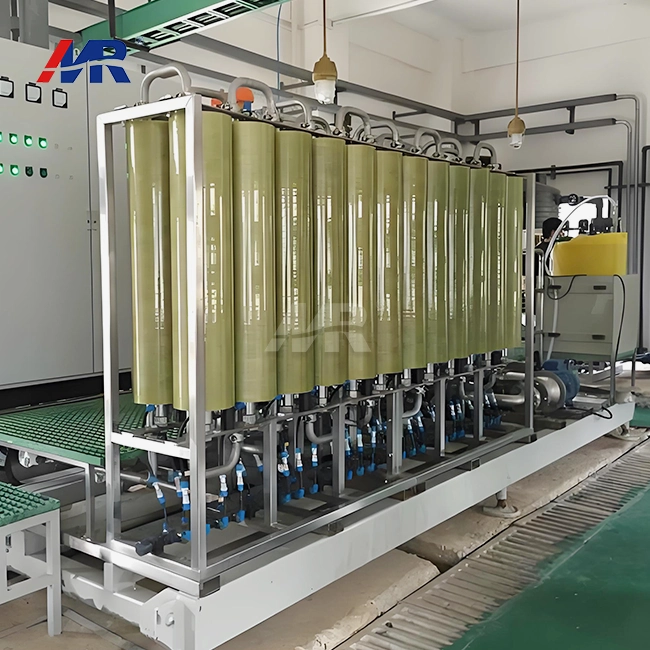
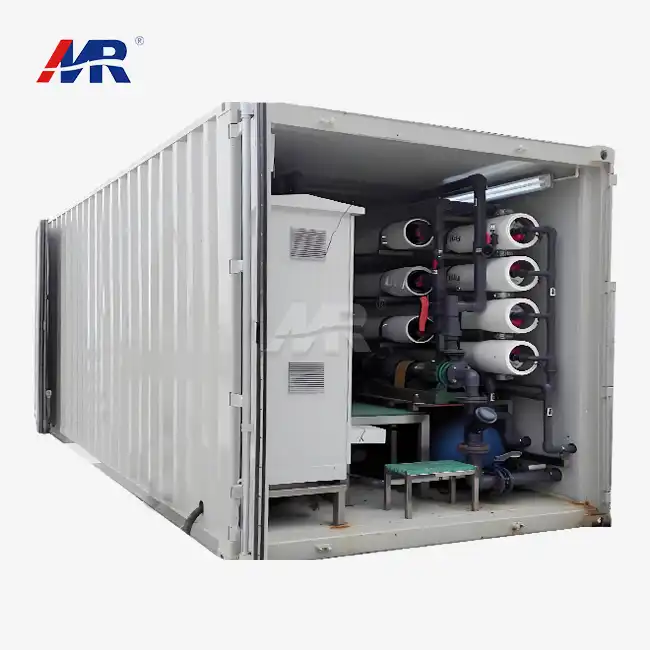
Containerized Reverse Osmosis Systems put pre-treatment, membrane filter arrays, and post-treatment parts inside normal ISO shipping containers, which are usually 20 or 40 feet long. These units come pre-assembled and checked at manufacturing sites, unlike most installations that need their own buildings and a lot of pipes. A multimedia filter preparation system that is built in gets the feed water ready before it goes through high-flux spiral-wound membranes, which remove sediment, chlorine, and small particles. Electrical parts listed at IP65 or higher are protected by thermal insulation and anti-corrosive coatings. This makes sure they work reliably in coastal areas and harsh temperatures.
Parallel rollout in the modular design helps with scalability. When a pharmaceutical plant increases its production capacity or a city's population grows, the new containers fit right in with the infrastructure that is already there. This plug-and-play feature cuts down on-site building time by up to 70% compared to traditional builds. This means that water can be produced right away in places where fixed structures aren't possible because of cost or location.
Core Technical Components and Performance Parameters
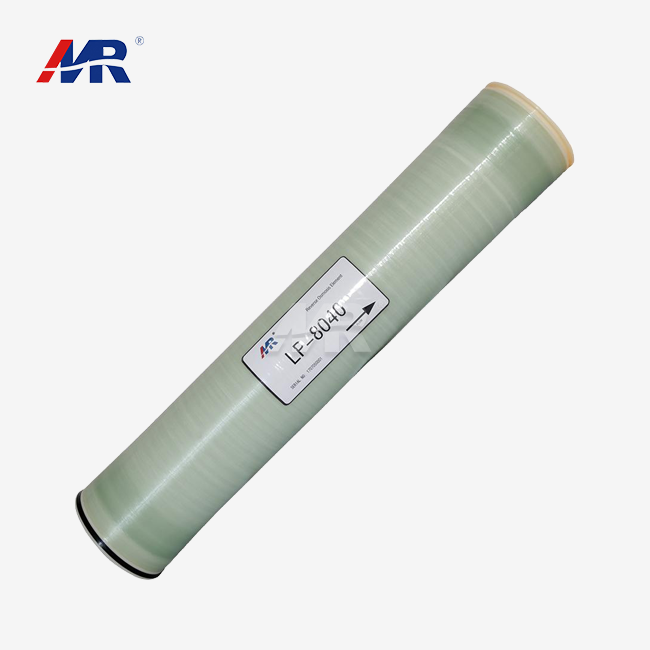
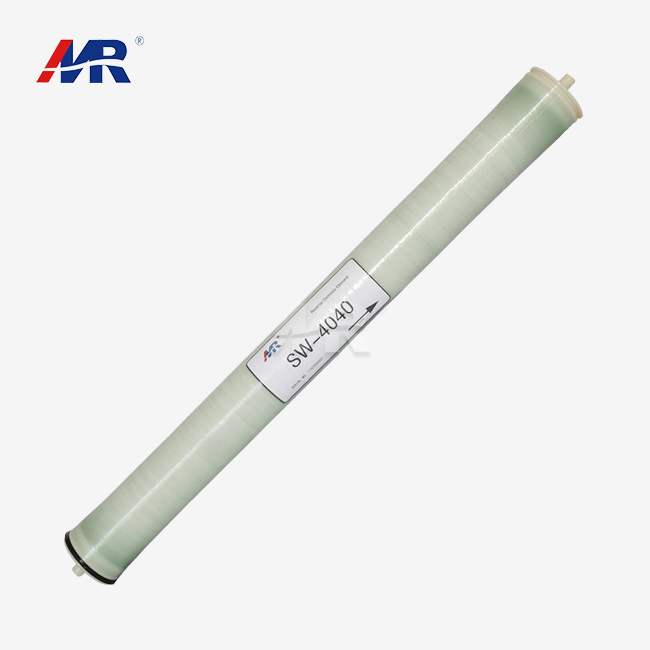
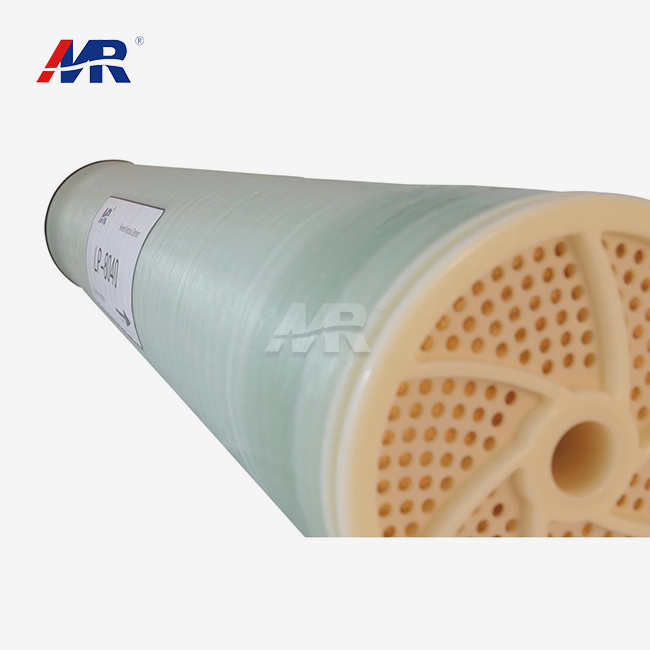
At the heart of these systems are high-performance ro membranes that can get rid of more than 99% of dissolved salts, heavy metals, and organic contaminants. When it comes to desalination, brackish water reverse osmosis (BWRO) works with brackish water sources, while seawater reverse osmosis (SWRO) uses energy recovery devices (ERDs) to get back up to 95% of the pressure energy. This makes the process much more cost-effective. Variable frequency drive (VFD) controlled pumps change flow rates on the fly, which makes the best use of energy during times when demand is changing.
In real time, advanced tracking tools keep an eye on conductivity, pressure differences, and membrane permeability. Chemical treatment that is done automatically keeps pH levels at the right level and stops scaling. Built-in safety interlocks stop operations when parameters go outside of safe limits. For making potable water, these systems meet the requirements of ISO 9001 manufacturing standards, ASME pressure vessel integrity codes, and NSF/ANSI 61 material safety Certifications. These are important compliance markers that everyone involved in the EPC project must check during procurement.
Comparing Containerized RO Systems with Other Water Treatment Solutions
Installation Speed and Operational Flexibility
It takes 12 to 18 months for traditional fixed RO plants to do site studies, pour foundations, build buildings, and install equipment. This time frame is cut down to 4–8 weeks for Containerized Reverse Osmosis Systems, from placing the order to producing the water. The self-contained design gets rid of delays caused by bad weather and cuts down on the need for skilled local labour, which is especially helpful for projects in rural areas or developing countries. Mobility makes it possible to move as project sites change, which is a huge benefit for mining operations, temporary building camps, and disaster aid situations.
Portable trailer-mounted systems aren't as durable or able to treat as many people as containerized units. While caravan systems are good for short-term uses with less than 50 cubic meters per day, container-based configurations can reliably make 100 to 200 cubic meters per day for years without any damage to the structure. The sealed case keeps fragile parts safe from dust, moisture, and theft, all of which are environmental problems that make caravan systems last much less long in industrial settings.
Total Cost of Ownership Analysis
When judging containerized RO systems, you have to look at both the initial investment and the ongoing costs over the expected service life. Lower construction costs make up for slightly higher equipment costs, and 40–60% less labour costs in the field when the work is done in the workplace. Utility bills go down with energy-efficient membranes and ERDs, and unplanned downtime costs factories an average of $22,000 an hour, according to new data from the production sector. Predictive maintenance features cut down on this.
Accessibility for maintenance is another economic factor. Containerized systems have paths, lights, and well-organised plans for parts that make regular maintenance faster than with traditional plants that are too crowded. When techs can change membranes in two hours instead of six, they save a lot of money on labour costs over the 15 to 20 years that the systems last.
How to Choose the Right Containerized Reverse Osmosis System for EPC Projects
Assessing Water Quality Requirements and Treatment Capacity
The buying process starts with a full source water study that checks for total dissolved solids (TDS), hardness, silica levels, and microbial loads. Pharmaceutical plants that make pure water for injection (WPI) need systems with conductivity below 1.3 microsiemens per centimetre. Food processing plants, on the other hand, may be able to handle 10 to 50 microsiemens, based on the needs of the product. Silica levels higher than 150 mg/L need special anti-scalant dosages and maybe even extra treatment stages.
When figuring out the flow rate, you have to take into account times of high demand instead of times of average usage. Electronics companies with three shifts need systems that keep output steady even when they're drawing the most water, which means they need capacity buffers of 20 to 30 percent. Recovery rates, which show how much of the feedwater is turned into clean product, usually fall between 65% and 85% for seawater and brackish water, respectively. Higher recovery saves more water, but it needs more complex membrane arrays and chemical pretreatment protocols.
Evaluating Supplier Capabilities and Support Infrastructure
Vertically integrated facilities that make membranes, pressure tanks, and control systems in-house are a sign of a reliable supplier's production depth. As well as running its own membrane companies, Guangdong Morui Environmental Technology also runs a number of equipment processing plants that make sure the quality of all of their Products. This production integration lets you make changes to fit the needs of each project without having to rely on outside suppliers, who could cause delays or poor quality.
Support networks for technology are just as important. Troubleshooting requests are answered faster by suppliers with regional service centers staffed by engineers trained on specific system configurations than by makers far away who rely on email chats. Check the warranty terms for membrane performance guarantees. Reliable providers usually cover 90% of nominal flux capacity for three years. Also, make sure you know who is responsible for replacing consumables if equipment breaks down. Suppliers that offer remote tracking can spot problems before they cause shutdowns. This is one way that professional makers are different from people who just sell tools.
Turnkey Solutions and Customization Options
Comprehensive EPC projects benefit from providers who offer full total delivery, which includes instructions on how to prepare the site, details on how to connect utilities, and instructions on how to start the project. Some pharmaceutical clients need to connect to current building management systems, and city water plants need to connect to SCADA so that all of their sites can be monitored from one place. Check to see if providers have specialised project managers who coordinate engineering teams during the planning, building, and installation stages.
Customisation goes beyond integrating the control system and includes setting up the physical components. Standard 40-foot Containerized Reverse Osmosis Systems work well for most uses, but jobs with very little room may need two 20-foot containers working together. For tropical deployments, better HVAC systems help keep temperatures stable inside, while for arctic deployments, extra insulation and heating systems are needed. Talking about these needs early on in the buying process makes sure that providers quote correctly configured systems instead of making changes after delivery.
Maintenance, Troubleshooting, and Lifecycle Management
Establishing Preventive Maintenance Schedules
Cleaning the membrane is the most important part of upkeep. How often it needs to be done depends on the quality of the feed water and the number of hours it is used. Pharmaceutical sites that use city feed water usually need to clean their membranes every three months, while industrial sites that use salty groundwater may need to do this every month. Each cleaning cycle restores 90–95% of the permeability to its original level. To remove mineral scale, cleaning methods switch between acidic solutions and alkaline cleaners.
As part of routine checks, the pre-filter cartridge is changed every 200 to 500 hours of operation, the high-pressure pump seal is checked every 2,000 hours, and the pressure vessel o-ring is checked during the yearly shutdowns. Predictive analytics can find performance degradation weeks before it affects production by keeping detailed logbooks that track changes in conductivity, normalised flux rates, and chemical consumption volumes. When looking at warranty claims or planning system expansions, these records are very helpful.
Addressing Common Operational Challenges
When feed water temperatures rise above 30°C, bacteria grow faster on membrane surfaces, which can cause sudden drops in output. Putting in UV cleaning units upstream is a better way to stop colonisation than adding more chlorine, which can hurt polyamide membranes. Increases in salt passage usually mean that the membrane is breaking down because of improper chemical exposure or hydraulic shock events. Affected vessels need to have their elements replaced while the root causes are being looked into.
Uneven pressures in different vessels are a sign of problems with how the flow is distributed that need to be fixed right away. Automated pressure tracking systems let workers know when problems are starting to happen, but to fix them, you need to know how multi-stage arrays work hydraulically. Professional technical help from experienced providers, like Morui's 20-engineer team, speeds up diagnosis compared to troubleshooters who don't know much about RO equipment.
Optimizing Energy Consumption and Planning Upgrades
In high-pressure SWRO uses, energy recovery devices lower running costs, but they make things more complicated and need special upkeep. Monitoring specific energy use (kilowatt-hours per cubic metre produced) sets performance baselines that show trends in efficiency. When consumption goes up 15% above the baseline despite regular maintenance, it makes financial sense to replace the membrane or fix up the pump.
In membrane science, technology changes very quickly. Next-generation elements that deliver 20% higher flux at the same pressure allow capacity to grow without the need for physical expansion. By working with suppliers who are committed to retrofit programs, you can be sure of getting access to efficiency improvements that will make the system last longer than the original 20-year estimate. Planning update budgets at 3–5% of the initial capital spending each year pays for these improvements while keeping running costs low.
Procurement, Installation, and After-Sales Support for EPC Projects
Selecting Appropriate Procurement Models
Direct buy works best for projects that know how much water they will need in the long run and have money set aside for capital costs. With ownership, you can make any changes you want and don't have to pay rent every month, so the total cost is the lowest over a 10-year period. Lease agreements give clients who want to keep their cash for key business activities or projects with unknown timelines more freedom. Some suppliers offer build-own-operate (BOO) contracts, which let them keep ownership of the assets while ensuring water service at agreed-upon per-cubic-meter rates. This means that the supplier takes on all operational risk.
Rental programs can help with short-term needs like getting water to a construction site or responding to an emergency. Even though the monthly costs are higher than the amortised purchase costs, renting means that you don't have to handle any leftover assets when the job is over. For people who are buying a Containerized Reverse Osmosis System for the first time, hybrid methods that combine rental during commissioning with purchase choices after good performance proof lower the risk of the purchase.
Professional Installation and Commissioning Services
Even pre-built containerized units need to be set up on the right site and connected to utilities. Foundation needs range from crushed gravel pads to reinforced concrete slabs, depending on the size of the container and the local building rules for earthquakes. Electrical service must meet system requirements, which are usually 380–480V three-phase power at 150–300 kW for mid-capacity units. Pipes for entering water and releasing products must fit into existing systems.
Before handing over to operations teams, commissioning procedures make sure that all automated steps work properly. To do this, tools need to be calibrated, interlock reactions need to be tested, and performance trials need to be run for 72 hours to compare real production rates to those that were planned. Complete documentation packages include electrical schematics, maintenance schedules, troubleshooting flowcharts, piping and instrumentation diagrams (P&IDs), and more. This gives facility staff the confidence they need to run operations smoothly.
Building Long-Term Supplier Partnerships
Consistent ties with suppliers are good for EPC projects that have more than one step. Morui's large infrastructure—14 branches and 500 employees working in manufacturing, engineering, and service—ensures continuity throughout the lifecycles of projects. In addition to providing equipment, value-added services include training programs for operators, management of spare parts, and yearly performance optimisation reviews that look for ways to make things run more efficiently.
Through authorised component inclusion, brand relationships make systems more useful. Working together with Shimge Water Pumps, Runxin Valves, and Createc Instruments, Morui makes sure that only original equipment manufacturer (OEM) parts that meet the original specs are used instead of iffy aftermarket parts. When looking at providers of Containerized Reverse Osmosis Systems, check to see if they keep these links with manufacturers that support long-term serviceability.
Conclusion
When choosing Containerized Reverse Osmosis Systems for EPC projects, it's important to think about the technical requirements, the supplier's skills, and the cost over the lifecycle. These modular options shorten the time it takes to set up while still providing solid water quality for emergency, city, industrial, and pharmaceutical uses. Choosing suppliers with a lot of experience in manufacturing, a strong Technical support infrastructure, and a history of success lowers the risk of procurement. When you look at the total ownership costs, which include the original capital expenditure, you can see that well-designed containerized systems have operational benefits like lower energy costs, easy access for upkeep, and the ability to be upgraded over 15 to 20 years.
Frequently Asked Questions
1. What is the typical lifespan of containerized RO units?
Containerized Reverse Osmosis Systems that are well taken care of work well for 15 to 20 years, with membrane changes every 3 to 5 years. When properly coated and ventilated, structural container parts and pressure tanks can last longer, often longer than 25 years, in conditions that are corrosive. As technology changes, electrical parts and control systems usually need to be upgraded every 10 to 12 years.
2. How do containerized systems compare in energy efficiency to traditional RO plants?
Modern containerized units with energy recovery devices and low-pressure membranes use 30 to 40 percent less energy than installations that were built the old way ten years ago. By optimising hydraulic paths in the factory, problems that happen when pipes are put together in the field can be avoided. Instead of going at a constant speed no matter what the load is, VFD-controlled pumps change how much power they use based on what they need.
3. Can these systems handle varying industrial water quality requirements?
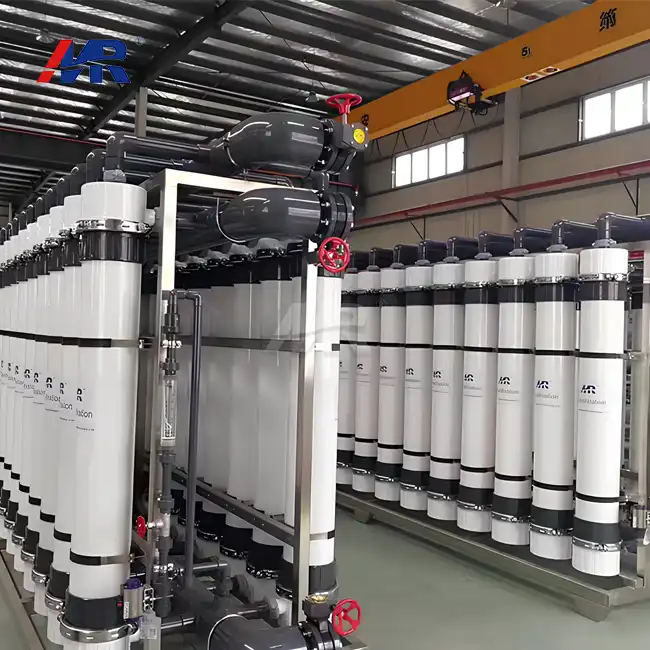
Containerized systems can handle a wide range of water sources, from city supplies to high-salinity seawater, thanks to their flexible pre-treatment designs. For ultrapure water uses, modular designs allow for extra treatment steps like ultrafiltration, UV cleaning, or electrodeionization (EDI) washing. Engineers create systems that meet certain standards in their field, like USP medicine grades or manufacturing specs for semiconductors.
Partner with Morui for Your Containerized Water Treatment Solutions
To solve the unique water purification problems of your EPC project, you need more than just equipment specification sheets. Morui has 14 branch locations, its own manufacturing process for membranes, and 20 years of experience treating water for pharmaceutical, municipal, and industrial clients around the world. Through pre-commissioning testing and full on-site support, our turnkey Containerized Reverse Osmosis Systems for sale work perfectly with project schedules. Email our expert team at benson@guangdongmorui.com to talk about your project plan, source water characteristics, and the amount of power you need. We give you detailed proposals with equipment specs, layout drawings, and performance guarantees within 48 hours. Our full installation and maintenance services back this up, so you can be sure that your water treatment investment will work well from the moment it's turned on for decades to come.
References
1. American Water Works Association. (2021). Membrane Technology for Water and Wastewater Treatment: Manual of Practice M53. Denver: AWWA Press.
2. Greenlee, L. F., Lawler, D. F., Freeman, B. D., Marrot, B., & Moulin, P. (2019). Reverse osmosis desalination: Water sources, technology, and today's challenges. Water Research, 43(9), 2317-2348.
3. International Desalination Association. (2022). Containerized Desalination Systems: Design and Deployment Guidelines. Topsfield: IDA Publications.
4. Wilf, M., & Bartels, C. (2020). The Guidebook to Membrane Technology for Wastewater Reclamation. Balaban Desalination Publications.
5. World Health Organization. (2022). Potable Water Reuse: Guidance for Producing Safe Drinking-Water Through Reverse Osmosis Treatment. Geneva: WHO Press.
6. Zhang, J., Loáiciga, H. A., & Shu, L. (2021). Modular reverse osmosis systems for remote and emergency water supply: Engineering considerations and case studies. Desalination, 498, 114-132.