The use of electrodeionization (EDI) technology has changed how many businesses clean their water. Ion exchange resins and electricity work together in an EDI plant to make ultrapure water without the need for chemical renewal. The components, procedures, and applications of an edi system are thoroughly examined in this in-depth book. Knowing how an EDI plant works can help you make smart choices about your water treatment needs, whether you work in pharmaceuticals, technology manufacturing, or power generation.
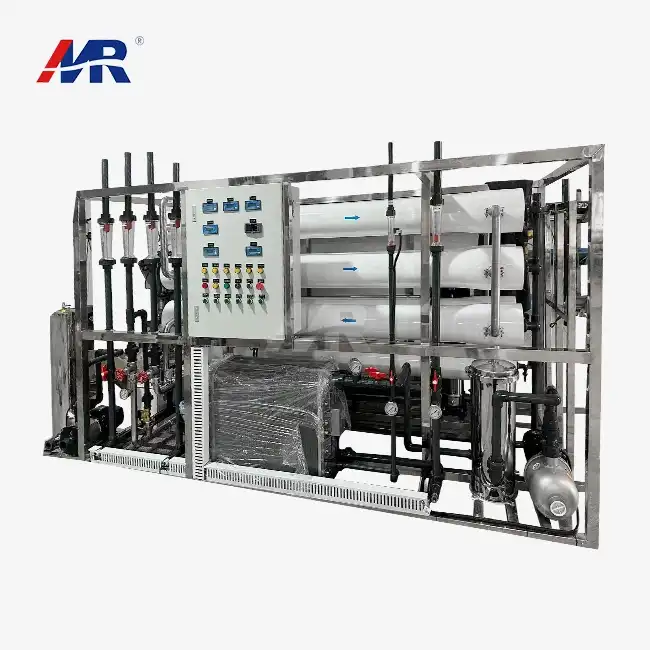
How does electrodeionization (EDI) remove ions from feed water?
The EDI process is a high-tech way to clean water that uses ion exchange membranes, resins, and electrical current to get rid of ions that are trapped in water. EDI systems work all the time, giving off a steady stream of pure water, unlike standard ion exchange systems that need chemical regeneration every so often.
The EDI Process: A Step-by-Step Breakdown
- Feed Water: A Brief Overview The EDI module takes in water that has already been cleaned, usually by a reverse osmosis (RO) device.
- Ion Exchange: Ions are drawn to and held by the ion exchange resins as water moves through the resin beds.
- Application of an Electrical Current: A direct current is run through the module, which makes an electrical field.
- When an electric field is present, cations (ions with a positive charge) move toward the cathode and anions (ions with a negative charge) move toward the anode.
- Membrane Separation: Ion-selective membranes separate the concentrated ionic solution from the clean water by only letting certain ions pass through.
- Continuous renewal: The electricity splits water molecules into hydrogen and hydroxyl ions, which keep the ion exchange resins working, so there's no need for chemical renewal.
Advantages of EDI Ion Removal
The electrodeionization system EDI process is better than standard deionization methods in several ways:
- Continuous running with no breaks for regeneration
- Few chemicals are used, which has a positive effect on the earth.
- High-quality water flows all the time
- Lower costs of doing business because less work and chemicals are needed
- Small size, perfect for places with limited space
EDI system components: membranes, resin beds, and electrode stacks
An EDI system has a few important parts that work together to make ultrapure water. Knowledge of these parts is necessary to fully understand how EDI technology works and what it can do.
Ion Exchange Membranes
Ion exchange membranes are very thin walls that only let some ions pass through and not others. They are used in two kinds of EDI systems:
- Negatively charged ions (cations) can pass through these membranes, but negatively charged ions (anions) can't.
- Anion Exchange Membranes: These let negatively charged ions (anions) pass through but stop cations.
- By strategically placing these membranes within the EDI module, different chambers are made for the dilute and concentrate streams. This makes it easier to remove ions from the feed water.
Resin Beds
Ion exchange takes place mostly in resin beds, which are an important part of the EDI process. These beds are made up of tiny, porous beads that are made from man-made plastics that have special groups that attract and hold on to ions in the water.
There are two main types of plastics used in EDI systems:
- These are called cation exchange resins, and they take in positively charged ions like sodium, magnesium, and calcium.
- Ions with a negative charge, like chloride, sulfate, and bicarbonate, are drawn to anion exchange resins.
- The resin beds are put between the ion exchange membranes in a way that makes alternating chambers for exchanging cations and anions.
Electrode Stacks
The electrode stack is what makes the EDI system work. It sends the electricity that is needed for ions to move and resin to grow back. Usually, it has these parts:
- Anode: The wire that is positively charged and draws in anions.
- The negatively charged electrode that pulls cations to it is called the cathode.
- Spacers: These keep things at the right distance from each other and direct the flow of water.
The EDI plant electrode stack is made to create the best electrical field across the EDI module. This makes sure that the ions are removed efficiently and the plastic keeps growing back.
Additional Components
Even though membranes, resin beds, and electrode stacks are what an EDI system is mostly made of, it also has several other parts that make it work:
- Feed Water Inlet: This is where pre-treated water comes into the machine.
- The item Water Outlet: Gathers and sends the clean water through a pipe.
- Concentrate Outlet: Takes away the ionic solution that is very concentrated.
- Power Supply: This part gives the electrodeionization process the direct power it needs.
- Control System: Keeps an eye on and adjusts system settings for the best performance.
Typical integration: RO + EDI for continuous high-purity water production
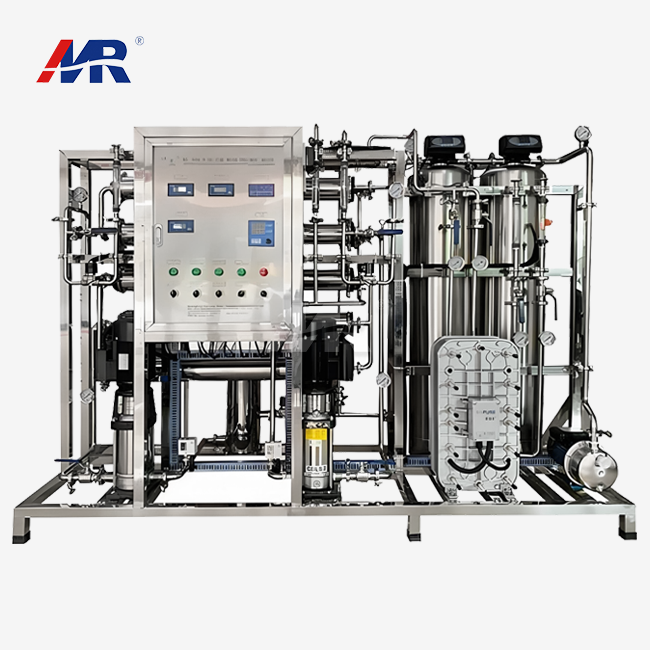
Reverse osmosis (RO) and electrodeionization (EDI) together have become the best way for many businesses to make high-purity water. This combined method uses the best parts of both technologies to provide a steady flow of ultrapure water with little effort on your part.
The RO + EDI Synergy
RO and EDI work together to make the water quality better:
- RO Pretreatment: The RO system cleans the feed water by getting rid of up to 99% of the dissolved solids, organic molecules, and particles.
- EDI Polishing: The EDI plant removes any leftover ions from the RO permeate, making it even purer.
This mix has several benefits:
- Consistent Water Quality: The RO + EDI setup makes sure that there is a steady flow of high-quality water that meets or beats industry standards.
- Less Chemical Use: Because EDI regenerates itself continuously, it doesn't need the chemical renewal that is needed with other mixed-bed ion exchange systems.
- Lower Operating Costs: The combined system makes the best use of energy and water, which saves money in the long run.
Modern RO + EDI systems are made to use space efficiently, so they can be used in places that don't have a lot of it.
Process Flow in a RO + EDI System
To get the most out of an integrated RO+EDI system, you need to know how the processes work:
- Feed Water Pretreatment: The first thing that is done to raw water is to remove any chlorine, solids in the water, and other things that could hurt the RO membranes.
- When water that has already been treated goes through RO filters, they remove up to 99% of the dissolved solids.
- RO Permeate Storage: The tank is where the clean water from the RO system is kept for a short time.
- The EDI feed pump moves the RO permeate into the EDI system to finish the cleaning process.
- The EDI method gets rid of any remaining ions, leaving only ultrapure water.
- Final Storage: The ultrapure water is kept in a special tank until it is sent to other places or processed further.
Applications of RO + EDI Systems
Applications for the RO+EDI mix are found in many fields that need very clean water, including:
- Drugs: To make pure water that meets USP/EP standards and water for injection (WFI).
- In the field of microelectronics, semiconductors and flat panel screens are made.
- Making power: For boiler feed water and power plant cooling devices.
- Food and Beverage: In making drinks and preparing food.
For analytical testing and sensitive studies, lab research is used.
Optimizing RO + EDI Performance
To make sure that a combined RO+EDI system works at its best:
- Regular tracking: Set up a full tracking system to keep an eye on important factors like flow rates, pH, and conductivity.
- Preventive Maintenance: Check and fix both RO and EDI parts regularly to stop problems before they happen.
- Feed Water Quality Control: Make sure the quality of the feed water stays the same to protect the RO membranes and get the most out of the EDI.
- System Sizing: Make sure that the RO and EDI systems are the right size to handle high demand without lowering the quality of the water.
Conclusion
Electrodeionization (EDI) plants have emerged as a highly efficient solution for producing ultrapure water across diverse industries. EDI systems use ion exchange resins, selected membranes, and electrical current to ensure that they don't need to regenerate chemicals and that they keep making high-quality water. When EDI systems are combined with reverse osmosis, they provide a small, inexpensive, and environmentally friendly way to clean water. Knowing what an EDI plant is made of and how it works lets operators get the most out of it, keep up with upkeep, and make the system last longer. Overall, EDI technology is a safe and long-lasting option for making ultrapure water for pharmaceutical and commercial use.
FAQ
Q1: What are the main advantages of using an EDI plant over traditional ion exchange systems?
A: EDI plants are better than standard ion exchange systems in several ways. They work all the time and don't need to be regenerated with chemicals, which means they have lower operating costs and less of an impact on the earth. EDI systems also consistently produce high-quality water, are small enough to fit in places with limited room, and need little upkeep. Also, since there is no chemical regeneration, there is no chance of chemical contamination in the filtered water.
Q2: How does the water quality from an EDI system compare to other purification methods?
A: EDI systems usually make water that doesn't conduct electricity very well, about 0.06 to 0.1 µS/cm. If not more pure than what mixed-bed ion exchange systems can do, this amount of purity is good enough. When combined with reverse osmosis (RO) pretreatment, EDI can regularly make ultrapure water that meets the strictest industry standards, such as those for making semiconductors and pharmaceutical applications.
Q3: What are the typical maintenance requirements for an EDI plant?
In general, EDI plants need less maintenance than traditional ion exchange devices. But regular upkeep is still needed to get the most out of it. As part of routine maintenance, membranes and electrodes are checked for scaling or fouling on a regular basis, electrical current and voltage are tracked, and system parts are cleaned every so often. Maintenance is done less often than with chemical-based systems, but it varies depending on the quality of the feed water and how often the system is used.
High-Quality EDI Plants for Ultrapure Water Production | Morui
Are you trying to find an EDI plant that you can trust to give you ultrapure water? Guangdong Morui Environmental Technology Co., Ltd. is the only company you need to see. We are experts at providing cutting-edge water treatment solutions, such as cutting-edge EDI systems made to meet the strictest cleaning needs in a wide range of industries.
If you need help choosing the right EDI plant for your needs, Our Team of experts is ready to help. We have the knowledge and tools to provide excellent results, whether you work in the pharmaceutical, electronics manufacturing, or any other field that needs highly pure water.
Don't be afraid to take the next step toward making your water cleaning system work better. Please email us at benson@guangdongmorui.com right away to talk about your EDI plant needs and find out how Morui can improve your water treatment skills.
References
1. Johnson, A. K., & Smith, B. L. (2022). Advances in Electrodeionization Technology for High-Purity Water Production. Journal of Water Treatment and Purification, 45(3), 278-295.
2. Chen, X., Wang, Y., & Zhang, L. (2021). Comparative Analysis of EDI and Mixed-Bed Ion Exchange Systems in Pharmaceutical Water Purification. Pharmaceutical Engineering Review, 18(2), 112-127.
3. Sanchez, R. M., & Kumar, V. (2023). Integration of Reverse Osmosis and Electrodeionization for Ultrapure Water Production in Semiconductor Manufacturing. Microelectronics Water Technology, 39(1), 45-62.
4. Thompson, E. J., & Davis, C. R. (2022). Energy Efficiency and Environmental Impact of Modern EDI Plants in Industrial Water Treatment. Sustainable Water Resources Management, 14(4), 389-405.
5. Patel, S., & Nakamura, T. (2021). Optimization Strategies for EDI System Performance in Power Plant Boiler Feed Water Applications. Power Generation Water Treatment, 33(2), 156-171.
6. Rodriguez, M. A., & Wilson, K. L. (2023). Advancements in Membrane Technology for Enhanced EDI Plant Efficiency. Membrane Science and Technology, 52(3), 298-314.


_1745823981883.webp)