_1745823981883.webp)

Can a Portable Desalination Machine Reduce Water Supply Risks?
Disruptions in the water system cost companies millions of dollars every year. Critical holes can be fixed with a portable desalination machine that turns salty or brackish water into safe, useful freshwater wherever it's needed. Fixed infrastructure that depends on city grids isn't as secure as these small systems, which provide instant water security during supply chain disruptions, natural disasters, or geographic limitations. In industries where water supply isn't always reliable, mobile desalination options are being used more and more to keep things running smoothly, keep production plans, and reduce their reliance on unreliable outside sources. When these units are strategically placed, water shortages go from being a practical danger to a manageable task. This gives decision-makers both financial predictability and real risk reduction.
Understanding Water Supply Risks and the Need for Portable Desalination
Identifying Vulnerabilities in the Modern Water Supply
Today, industrial operations face many problems with their water supplies that make it hard to keep up with regulations and keep production stable. California and Texas's farming irrigation is affected by water scarcity caused by changing climates, and pharmaceutical companies that need GMP-compliant water are at risk of contamination from old civic infrastructure. In coastal areas, hurricanes can cause problems for factories, and building sites that are far away often don't have access to any infrastructure for drinkable water. These weaknesses get worse when regular supply lines break down, stopping production in a way that affects delivery times and customer promises.
Why Traditional Solutions Fall Short
Traditional methods for water security have problems when it comes to businesses that are always changing. Large-scale desalination plants need a lot of money and are set up permanently, so they can't be used for short-term projects or when demand changes. Deliveries of water by truck make logistics more difficult, costs less predictable, and quality less consistent. Bottled water options don't work well for large amounts of water, and digging wells is hard because of geology and rules. When procurement teams look at business freedom and total cost of ownership, they see these gaps.
The Strategic Case for Portable Desalination Technology
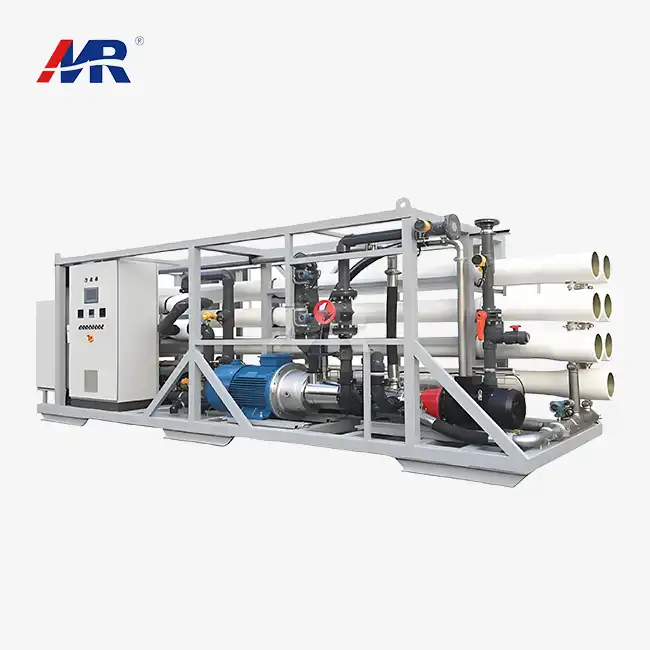
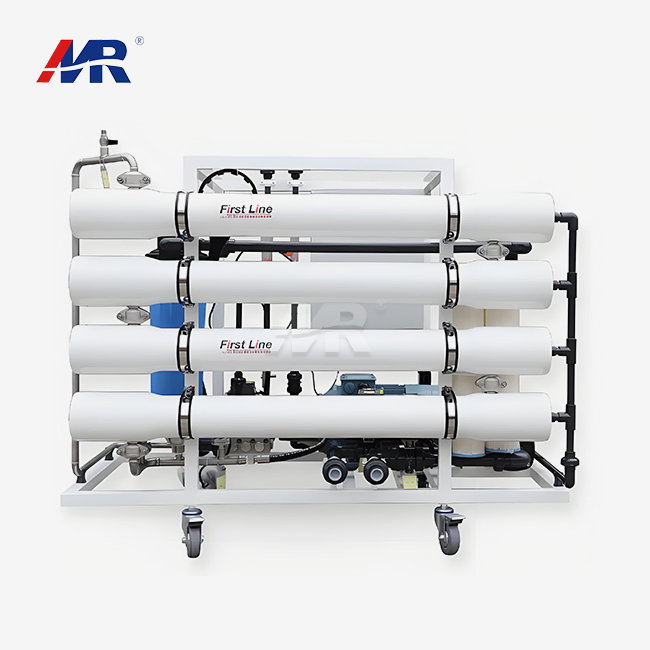
Mobile osmosis machines fill in the gaps between short-term water needs and long-term investments in infrastructure. A portable desalination machine can make fresh water on demand and doesn't care where it's used, so it can be used on anything from offshore drilling sites to hospital facilities, helping people after a disaster. These systems meet requirements for sustainability by reusing water in electroplating processes and cutting down on carbon emissions from shipping. The ability to quickly deploy—often within hours—changes how emergencies are handled and offers business survival security that fixed systems can't match.
How Portable Desalination Technology Works and Its Core Benefits
Operational Principles Explained
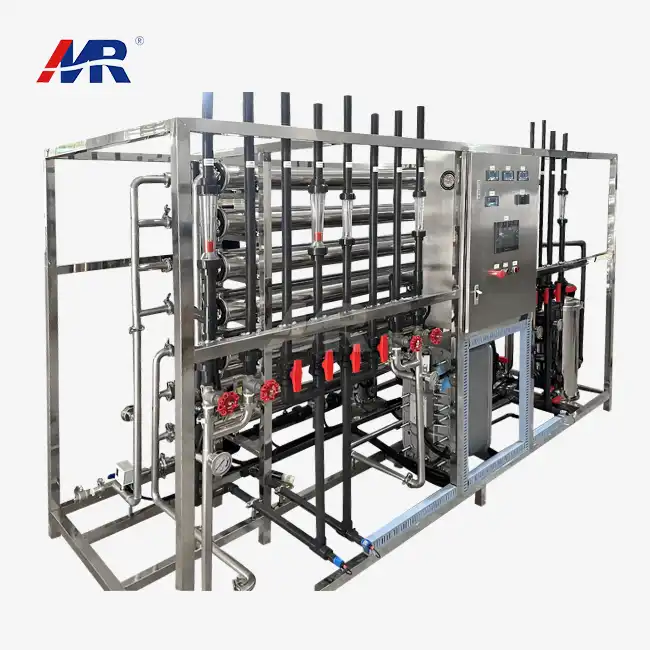
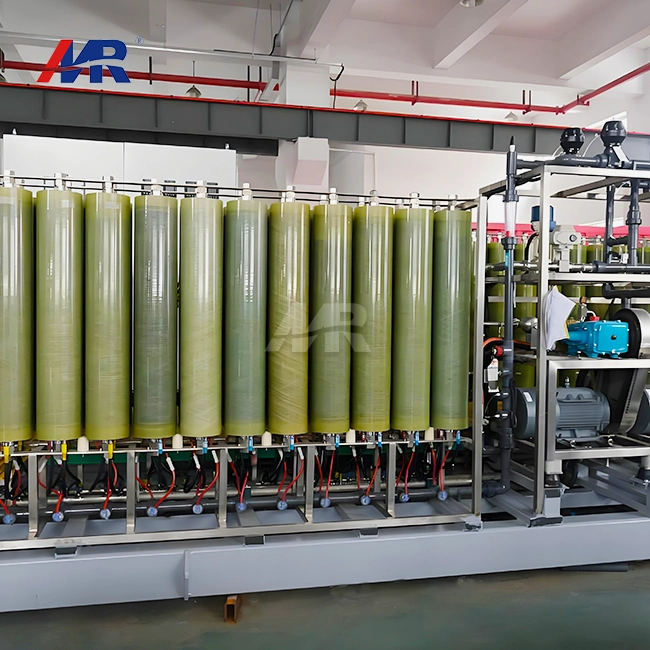
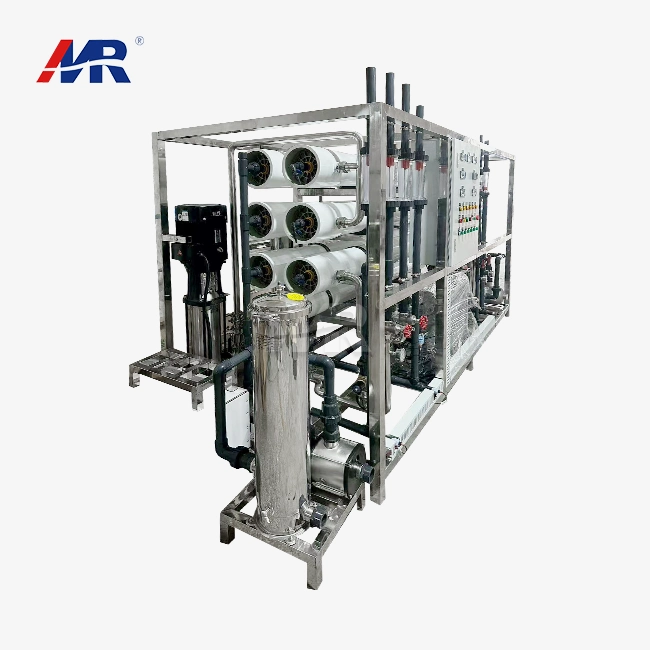
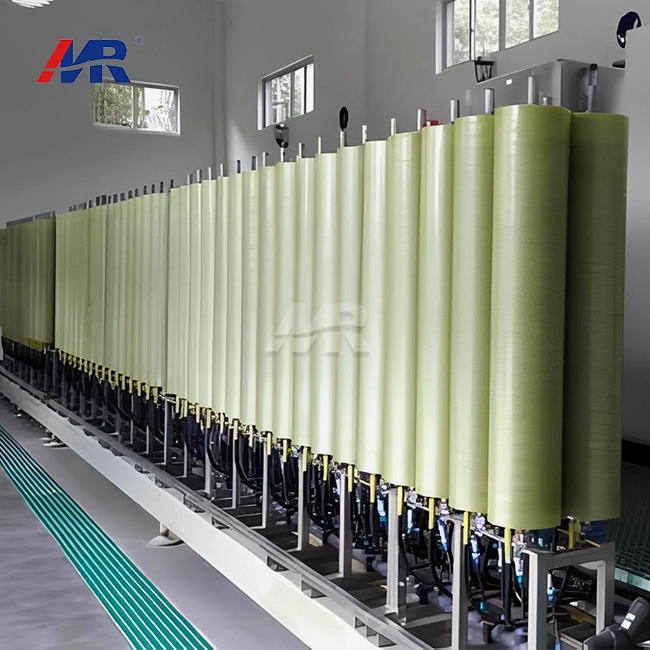
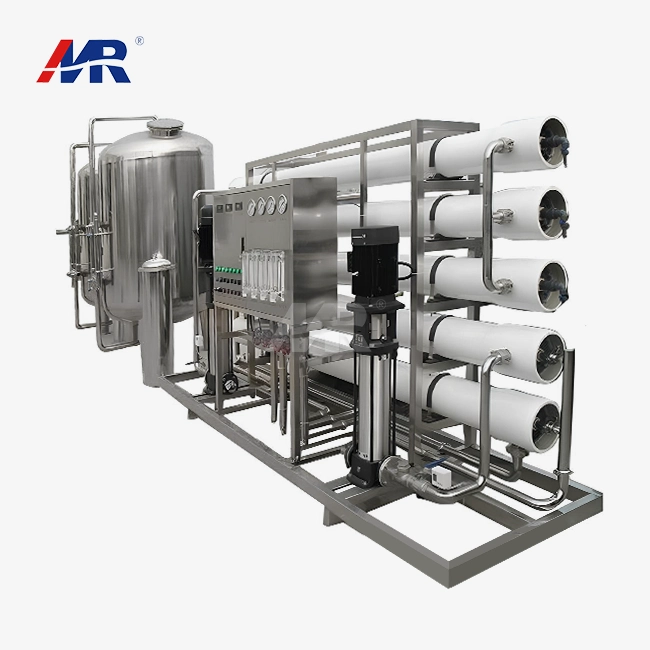
Reverse osmosis is the method used in most commercial portable desalination machines. High-pressure pumps push salty water through semi-permeable membranes. Dissolved salts, germs, and other contaminants can't get through these barriers, but pure water molecules can. The amount of energy needed depends on how salty the feedwater is. Desalinating seawater usually takes 3–6 kWh per cubic meter, but treating brackish water only needs 0.5–2 kWh per cubic meter. More advanced units have pre-filtration steps that keep membranes from getting clogged and extend their useful life. Energy recovery devices take back pressure from the release of brine to make the system work better.
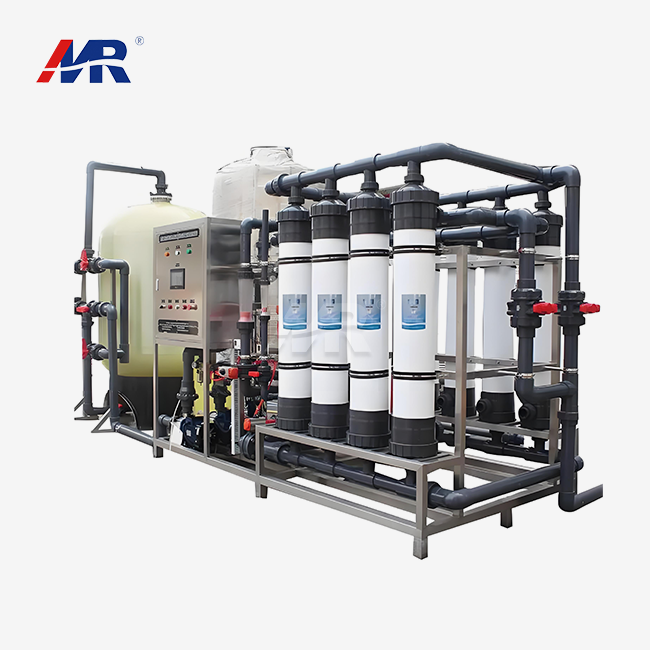
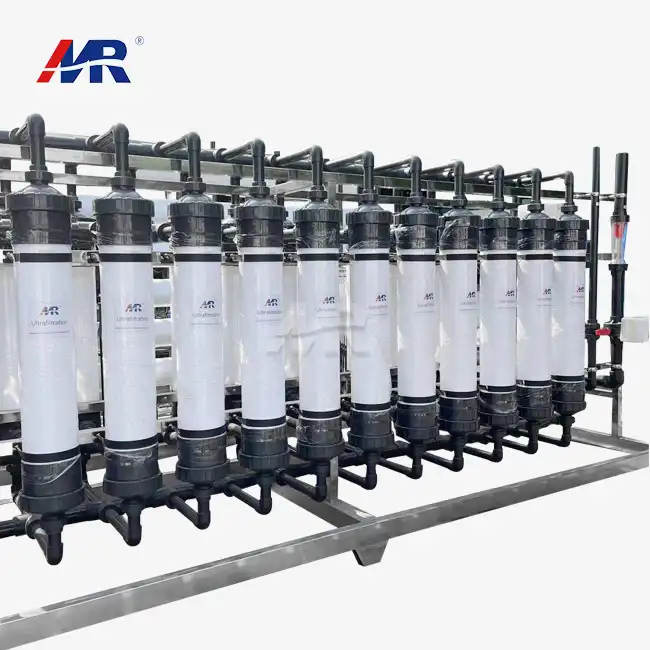
Solar-powered versions use solar panels and batteries to store power, so they can be used in remote areas without connecting to the power grid. Thermal distillation uses heat sources to evaporate and condense water, but movable versions of this method are not very common. It works well in situations where waste heat is available. During the pre-treatment steps of ultrafiltration, suspended solids and organic matter are removed. This makes sure that the membrane works the same way even when the quality of the feedwater changes.
Comparing Portable Versus Fixed Infrastructure
Mobile purification has benefits that go beyond being easy to move. These methods are better than permanent setups in the following ways:
- Capital Efficiency: Portable units need 40–60% less money up front than set plants with the same capacity. This lets businesses keep their working capital for other tasks while still meeting the same water quality standards.
- Deployment Flexibility: Standard freight containers make it possible to move between project sites, seasonal activities, or emergency response situations without having to give up capital assets or renegotiate site permits.
- Scalability On Demand: Modular designs let you change the capacity by adding or removing units. This way, you can make sure that water production exactly matches practical needs without having to spend too much on extra infrastructure.
- Reduced Permitting Complexity: Environmental approvals for temporary installations are often easier to get than for permanent buildings, which can cut project timelines by 6 to 12 months in many places.
These features make movable systems very useful for businesses that have unstable growth, seasonal demand changes, or operations that are based on projects. A company that makes drinks that wants to grow into new regional markets can try out movable desalination before committing to permanent water treatment infrastructure. Construction companies can move units to different job sites to meet the needs of mixing concrete and washing tools.
Mobile desalination helps reach bigger strategy goals, in addition to providing instant operational benefits. Manufacturers of electronics keep production going even when city supply lines are down, which keeps just-in-time delivery promises. Aquaculture activities near the coast clean saltwater for recirculating systems so that freshwater sources don't run dry. Power companies use backup units to make sure that burner feed water doesn't stop flowing while primary treatment systems are being serviced.
Evaluating Portable Desalination Machines: Market Overview and Comparison
Current Technology Landscape
By 2024, the market for small desalination equipment will have grown up a lot. Portable desalination machines can now handle anywhere from 50 gallons per day for small-scale uses to 50,000 gallons per day for commercial use. Electric systems are the most popular choice for businesses because they have stable energy costs and can connect to current power systems. Through better membrane chemistry and energy recovery systems, top makers have lowered the amount of energy needed for seawater uses to less than 2.5 kWh per cubic meter.
About 15% of business-to-business setups are solar-hybrid systems, which are preferred in off-grid situations or businesses that want to be carbon neutral. These units usually have solar panels with a power range of 5–20 kW and battery banks that can run on their own for 8–12 hours, so they can be used overnight or when it's dark. The total cost of installing solar panels is 25–40% higher than installing grid-tied panels of the same size. However, operating costs go down a lot in diesel engine settings, where the savings on fuel costs quickly cover the extra cost within 18–36 months.
Performance Metrics That Matter
When procurement teams compare providers, they should look at more than just the companies' stated ability. Recovery ratio, or the amount of feedwater that is turned into product water, has a direct effect on running costs. For seawater, efficient systems can recover 40–50% of it, and for brackish water, they can recover 75–85%. The membrane's life span is between 3 and 7 years, based on the quality of the feedwater and the upkeep schedule. This is a big part of the lifecycle costs.
Energy usage numbers need to be carefully interpreted because makers may give numbers based on perfect lab conditions instead of real-world performance, where feedwater quality can change. Benchmarks that come from tests done by a third party are more accurate. When compared to fixed-pressure systems, automated controls that change the working pressure based on real-time salinity readings can save 15 to 20 percent of the energy used.
Investment Considerations and Total Cost Analysis
Prices for business portable desalination machines vary a lot depending on how much they can handle and what features they have. Small units that make 500 to 2,000 gallons of water a day cost between $8,000 and $25,000. Mid-capacity systems that make 5,000 to 15,000 gallons of water a day cost between $45,000 and $120,000. Large mobile setups that process more than 30,000 gallons of water every day can cost between $250,000 and $500,000. These usually have housing in containers, computer systems, and spare parts to make sure they work all the time.
Besides the cost of buying the machine, it needs to be maintained, which usually takes 12 to 18% of the original capital every year. This includes replacing membranes and filter cells, cleaning chemicals, and buying supplies. For systems that need to be watched every day, service contracts or trained workers cost an extra $30,000 to $60,000. The most variable cost of running a business is energy. For example, a 10,000-gallon-per-day seawater unit that uses 4 kWh per cubic meter at $0.12 per kWh costs about $18 per day in power, or $6,570 per year when fully utilized.
Selecting and Procuring the Right Portable Desalination Machine
Aligning Technology with Operational Requirements
Accurately predicting demand is the first step to successful buying. Find the maximum amount of water that will be used in a day, plus a 20–30% safety cushion to account for changes in production or machine breakdowns. A pharmacy plant that cleans in place every day with 8,000 gallons of water should specify a minimum 10,000-gallon capacity. Think about the salt, temperature, turbidity, and biological makeup of the feedwater. These factors affect the right pre-treatment needs and membrane choice.
Constraints on the energy grid often force design choices. Sites that don't have a lot of electricity may need gas generators or solar-hybrid systems. The supply of three-phase power changes the size and efficiency of the motor. In cold climates, businesses need heated shelters and insulated pipes to keep things from freezing. In warmer climates, on the other hand, corrosion-resistant parts and better airflow are helpful.
Supplier Evaluation Criteria
Checking the qualifications of the maker guards against bad equipment and makes sure that replacement parts are available throughout the lifecycle of the system. Suppliers that have been around for a while should be able to show that they are certified to ISO 9001 quality control and that their materials meet NSF/ANSI Standard 61 for drinking water contact. Ask for proof of previous installations in similar situations, such as examples from site managers who can talk about how well the product actually worked compared to what was promised.
The terms of the warranty should be carefully negotiated, especially when it comes to membrane promises and what they don't cover when it comes to feedwater quality. If output drops more than 15% in the first three years under certain working conditions, the membrane should be replaced as part of the full coverage. The length of downtime during maintenance events is directly affected by the after-sales support infrastructure, which includes the availability of the technical lines, the locations of extra parts inventory, and the response times of field service technicians.
Navigating Procurement Logistics
The steps for ordering industrial water treatment tools usually happen in a set order. The first technical meeting makes sure everyone understands what is needed and creates rough specs. This is followed by a written quote and an engineering review. Lead times for normal setups are 8 to 16 weeks because they have to be customized for things like voltage, feedwater characteristics, and system integration that are unique to each site. Factory acceptance testing makes sure the portable desalination machine works well before it is shipped by keeping track of energy use, flow rates, and failure rates in a controlled environment.
Shipping procedures need to be coordinated because containerized systems can weigh between 5,000 and 15,000 pounds and may need to be unloaded by crane. Harmonized tariff codes and country-of-origin approvals should be included in the paperwork for foreign shipping of goods. For skid-mounted units, installation is as easy as connecting the water and power lines. For permanent-temporary installations, however, it's more complicated because the base needs to be prepared and pipes need to be integrated.
Case Studies and Use Scenarios Demonstrating Risk Reduction
Maritime Applications Ensuring Voyage Safety
A company that runs business ships in the Caribbean put portable desalination machines on all twelve of its cargo ships. Each unit makes 1,500 gallons of water every day. Before, the company relied on public water supplies that weren't always of good quality. This caused regular delays and health problems for the crew from using dirty sources. These risks were taken away by the mobile systems, which also cut the fleet's annual water costs by $180,000. Maintenance took an average of only four hours a month per vessel, and it was handled by engineers who already worked there and had little training. In just 26 months, the system paid for itself by saving money on port fees and operating delays.
Disaster Relief Demonstrating Rapid Response
After a storm damaged local water systems along the coast and made them dirty, the federal government sent out twenty trailer-mounted desalination units that could each make 5,000 gallons of water every day. Within 48 hours of arriving, these systems were able to provide clean drinking water to temporary shelters and medical emergency centers. Being able to handle floodwater and seawater got rid of the need for truck transports over damaged roads. During their 90-day mission, the units made 9 million gallons of drinkable water, which helped 15,000 people who had to leave their homes while permanent infrastructure was being fixed. Analysis done after the event said that the mobile systems helped stop the spread of waterborne diseases, which have generally made it harder to recover from disasters.
Industrial Continuity Protecting Production Schedules
When a local utility found contaminants that needed the treatment plant to be shut down, it caused a major supply slowdown at a semiconductor fabrication site in Arizona. As the production lines used 12,000 gallons of ultrapure water every hour, even short breaks could cost millions of dollars in lost chip production. During the 11-day local outage, 75% of regular production capacity was kept up by using rental portable desalination machines along with the facility's existing polishing systems. The lost income was more than $4.2 million, and the rental costs were $68,000. As a business survival measure, this event led to the permanent installation of backup portable units.
Conclusion
The dependability of the water supply affects the ability of many businesses, from pharmaceuticals to power generation, to keep running smoothly. This weakness can be turned into a controlled variable with portable desalination machine technology's flexible, quick-deployment solutions that don't need standard infrastructure to work. The strategic value goes beyond responding to emergencies and includes goals for project movement, scalability, and longevity that set systems can't meet. As changes in climate and old infrastructure make supply risks worse, buying teams are realizing that mobile water treatment is more like business interruption insurance than backup equipment.
For execution to go well, the system's capacity, energy configuration, and supplier's skills must all be carefully matched to the needs of the operation. The success that has been recorded in maritime, emergency, and industry settings shows that it reduces risks and saves money. Companies that use movable desalination as part of their water management plans have an edge over their competitors because they can be more flexible with their operations and are less likely to be affected by supply problems.
FAQ
1. What freshwater output can I expect from portable desalination machines?
Depending on their size and shape, commercial movable units can hold anywhere from 500 to 50,000 gallons of water per day. Small systems that are placed on trailers can make between 2,000 and 5,000 gallons of water every day, which is enough for building sites or small factories. Mid-sized containerized units can handle 10,000 to 20,000 gallons of water every day, which is useful for making drinks or for sea uses. Large mobile systems can hold more than 30,000 gallons of water every day, which is about the same as a small local plant but can still be moved. The actual output depends on how salty the feedwater is; systems with brackish water make 30–40% more than systems with seawater units of equal energy use.
2. How does energy consumption compare between solar and electric units?
Grid-powered systems use 3 to 6 kWh per cubic meter to treat seawater and have lower initial costs. They also produce the same amount of water no matter what the weather is like. Solar-hybrid setups lower running costs in diesel generator settings, but they need 25–40% more money up front for solar arrays and battery storage. In off-grid areas where fuel costs are avoided, the extra is usually paid back in 24 to 36 months. Grid-tied businesses rarely make the cost of solar panels worth it unless they have to meet renewable energy requirements or carbon reduction goals that put sustainability ahead of cost.
3. What maintenance requirements should I plan for?
As part of regular maintenance, working pressures and flow rates are checked every day, pre-filters are cleaned every week, and cleaning solutions are flushed through the membrane every month. Depending on the turbidity of the feedwater, cartridge filters need to be changed every three to six months. Each change costs $200 to $800. The membrane needs to be replaced every 3–7 years, which costs 40–60% of the total cost of the system. Service checkups by trained experts once a year cost $2,500 to $5,000 and check the performance of the pump, the health of the seals, and the calibration of the control system. Facilities with on-site maintenance staff can handle regular tasks after being trained by the maker. Remote sites, on the other hand, usually sign up for preventative maintenance agreements.
Partner with Morui for Reliable Portable Desalination Machine Solutions
There are 14 branch sites of Guangdong Morui Environmental Technology, which has 500 committed professionals and over 20 specialized engineers who work together to treat water. Our wide range of services includes desalinating seawater, treating industrial wastewater, and installing ultrapure water systems. We can do all of this thanks to our own facilities for making membranes and a lot of different kinds of equipment. We know how hard it is for industrial, pharmaceutical, and local clients who need to reduce the risk of a rapid water supply to find the right suppliers.
The portable desalination machines we sell use cutting-edge reverse osmosis technology and are built to last in tough industrial settings. No matter if you need backup power in an emergency, water production on a construction site, or permanent and temporary setups, our expert team can make solutions that fit your exact operating needs. We offer full turnkey services that include evaluating the site, designing the system, overseeing the installation, and fully completing the system. As an official seller of high-quality parts from Shimge, Runxin, and Createc, we make sure that equipment works well and parts are always available throughout the lifecycle of a system.
Email our engineers at benson@guangdongmorui.com to talk about your water supply problems and get thorough technical advice. As a top provider of portable desalination machines, we offer low prices for buying in bulk, open hire choices for short-term needs, and quick support after the sale to keep downtime to a minimum.
References
1. Global Water Intelligence (2023). "Desalination Market Overview: Technology Trends and Industrial Applications." Oxford: Media Analytics Ltd.
2. American Membrane Technology Association (2024). "Portable Water Treatment Systems: Performance Standards and Procurement Guidelines." Stuart: AMTA Publishing.
3. International Desalination Association (2023). "IDA Desalination Yearbook 2023-2024: Mobile and Containerized Systems Analysis." Topsfield: GWI Publishing.
4. National Academy of Sciences, Engineering, and Medicine (2022). "Desalination Technology for Water Security: Assessment of Emerging Solutions." Washington, DC: The National Academies Press.
5. United States Bureau of Reclamation (2023). "Brackish Groundwater Desalination: Technical and Economic Assessment for Industrial Applications." Denver: Desalination and Water Purification Research Program.
6. World Health Organization (2024). "Desalination for Safe Water Supply: Guidance on Use for Drinking-Water Quality." Geneva: WHO Press.