_1745823981883.webp)

Best ro machine price Options for Your Business
Choosing the right reverse osmosis system can transform your business operations, but understanding what drives ro machine price requires more than a quick online search. The cost of RO equipment reflects a complex interplay of filtration capacity, membrane technology, energy consumption, and long-term maintenance requirements. Whether you're managing a pharmaceutical plant, a food processing facility, or a municipal water treatment station, the RO machine price you encounter ranges from $2,500 for compact commercial units to over $150,000 for industrial-scale systems capable of processing 40,000 gallons per day. Smart procurement means looking beyond the initial investment to evaluate total ownership costs, including membrane replacement cycles, power consumption, and system downtime.
Understanding RO System Pricing: What Influences Your Investment
There are many ways to run a business that can change how much it costs to treat water. The main parts that make up the RO machine price are the high-pressure pumps, thin-film hybrid membranes, pre-filtration stages, and control systems. Usually, a medium-sized business system that deals with 5,000 to 10,000 gallons of water every day would cost between $8,000 and $25,000. Drug-grade tools, on the other hand, usually cost more than $50,000 and come with GMP-compliant paperwork and automated tracking.
Key Cost Drivers in Reverse Osmosis Equipment
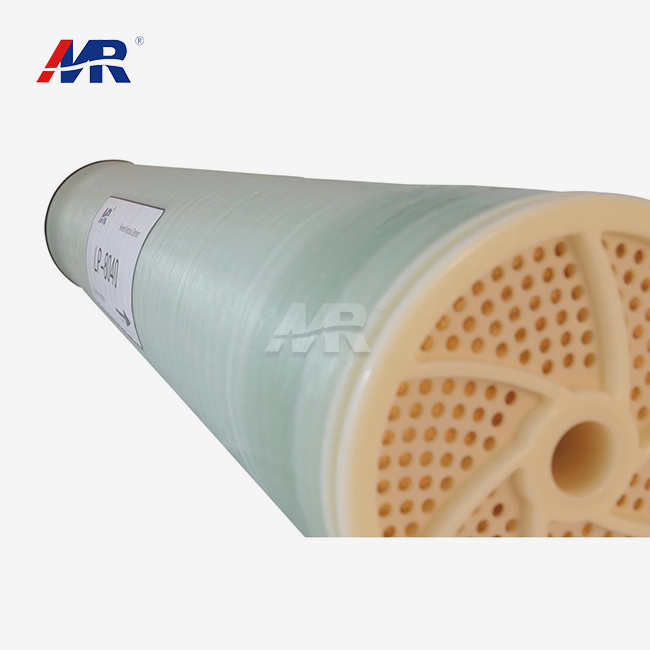
How well the membrane works and how much it costs are both directly related to the quality of the membrane. The best TFC (Thin Film Composite) filters can get rid of 99% of all dissolved solids and should last between 3 and 5 years in perfect conditions. When it comes to cheaper membranes, they might need to be changed every 18 to 24 months. The size of the booster pump has a direct effect on how well the system works. Some units, like those made for public water sources with low pressure, need stronger pumping systems that cost an extra $1,200 to $3,500 on top of the base price.
Ratings for how well something uses energy are now very important. New systems with variable frequency drives and energy return devices can save 30 to 45 percent of the cost of older models with fixed speeds. When looking at RO machine prices, you should figure out how much power you use each month based on the rates in your area. About 3 to 7 kWh are used for every thousand gallons that a 10,000 GPD machine makes.
Filtration Stages and Their Impact on Pricing
Configurations with more than one stage change how well they work and how much they cost. The sediment filter, the carbon block, and the ro membrane are all simple three-stage systems that work well for light business needs. Five-stage systems, on the other hand, clean and remineralize the water after filtering it. In the business world, 7-stage or custom sets are often needed.
This stops parts further down the line from wearing out too fast by getting rid of particles bigger than 5 microns. It removes chlorine, volatile organic molecules, and other impurities that change the taste of water and could damage RO membranes. Minerals, heavy metals, and bacterial pollutants that have been broken down are taken out in the reverse osmosis stage. With post-filtration, the water is cleaned one more time, making it better. If you choose, UV treatment can be added to protect it even more from germs and viruses.
The cost of the tools usually goes up by between $800 and $2,500 for each extra stage. However, the investment usually pays off because the membrane lasts longer and needs less upkeep. The pharmaceutical and tech production businesses often need these better designs to meet industry standards.
Matching RO System Capacity to Business Needs
If you figure out the right system size, you won't have to worry about not having enough capacity or spending too much on capital. Tools for a food processing plant that makes 200 Cases of bottled water every day are very different from tools for a hospital dialysis center or a plant that makes semiconductors.
Flow Rate Requirements Across Industries
Food and drink companies must often create plenty of Products. Installing a new machine may cost $35,000 to $65,000 for a medium-sized canning firm that uses 15,000 to 25,000 gallons of water daily. These systems must maintain water quality and fulfil FDA bottled water regulations by fixing the water's composition.
Drug production requires cleanliness. When RO is combined with electrodeionization (EDI), resistivity might exceed 10 megohm-cm. This helps make and utilise injectable medications in the lab. These custom settings range from $45,000 for tiny lab systems to over $200,000 for big installations with documentation and equipment. Technology assembly might be difficult. Semiconductor production requires pure water with a resistance over 18 megohm-cm and less than 1 ppb total organic carbon, making ro machine price an important consideration.
These stringent criteria may be met by a mixed-bed deionisation multi-pass RO machine with continual UV cleaning. These systems cost $75,000 to $300,000, depending on their capacity and backup needs.
Small-Scale vs. Enterprise Solutions
There are small machines that can make 1,000 to 5,000 gallons of water every day that work really well for restaurants, car washes, and fish farms. Most of the time, these units cost between $3,500 and $12,000. They're easier to keep up and don't cost as much to buy at first. Because they are small—often not much bigger than a business refrigerator—they are easy to set up in places with limited room.
Strong engineering and custom integration are needed for large-scale use in business and government. A coastal town might need a plant that can remove salt from seawater and treat 500,000 gallons of water every day. This would need a lot of RO trains running at the same time, as well as modern pre-treatment systems and energy return systems. These projects can cost up to a million dollars altogether, because they need thorough feasibility studies, environmental effect reviews, and building plans that last for years.
Advanced Features That Justify Premium Pricing
Newer RO systems have much better tracking and control features, which make them much safer to use. They can make better decisions when they know which features really make a difference and which ones are just marketing tricks.
Automation and Remote Monitoring
Systems made for industry are using programmable logic controllers (PLCs) and SCADA interaction more and more. This lets you keep an eye on performance in real time and be warned about repair needs before they happen. Feed pressure, permeate flow, conductivity, and membrane differential pressure are some of the important things that these systems keep an eye on. Set off alarms to let workers know when numbers go outside of acceptable levels so the system doesn't fail.
Facility managers can keep an eye on many systems in different places from a single screen that is based in the cloud. Companies in the area that treat water at a number of industrial sites can really use people with this skill. Studies in the field show that the technology can cut down on unplanned downtime by 40–60%. However, it usually costs between $2,500 and $8,000.
Energy Recovery and Sustainability Features
High-efficiency systems have parts that recover energy from the concentrate stream and send it to help the high-pressure pump. This technology cuts the energy needed by 25–35% for tasks that use salty water and by up to 60% for tasks that remove salt from seawater. Power costs usually go down over 18 to 36 months, making the extra $5,000 to $15,000 paid up front worth it.
As fears about running out of water grow, it becomes more and more important to recycle water in the best way possible. Most RO systems can get 50 to 75% of the feed water and send the rest down the drain as concentrate. Recovery rates of more than 85% can be reached with advanced systems that use stepped membrane designs and concentrate recycling. This is very important in places where water is expensive or where droughts are common.
Morui's Industrial RO Solutions: Performance Meets Value
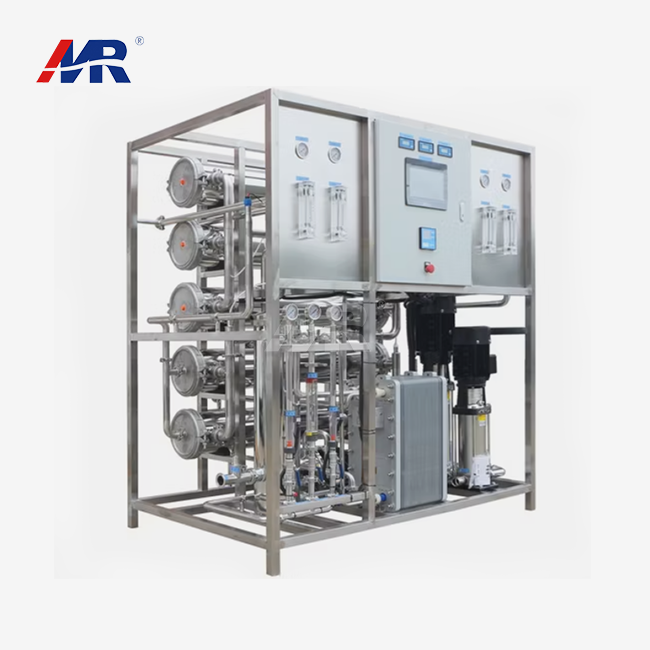
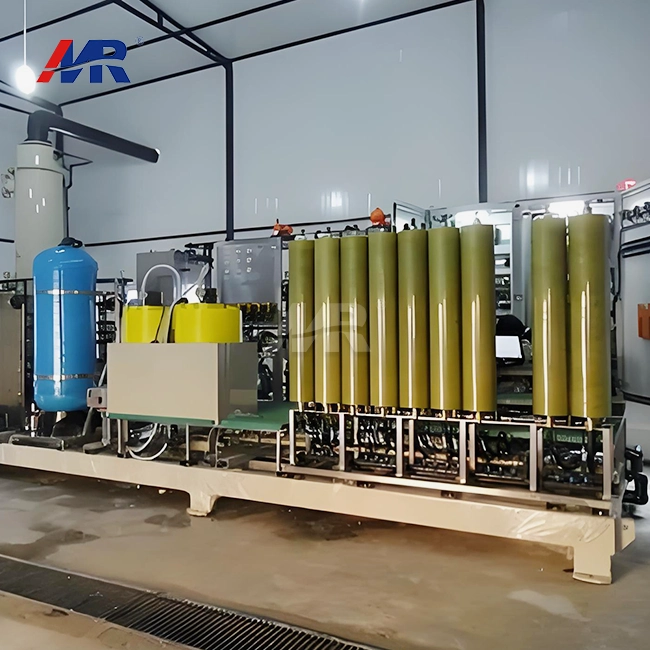
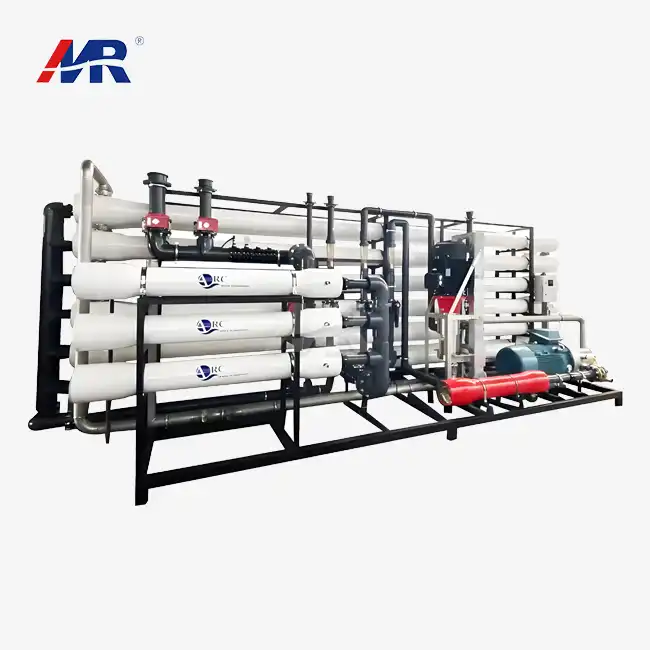
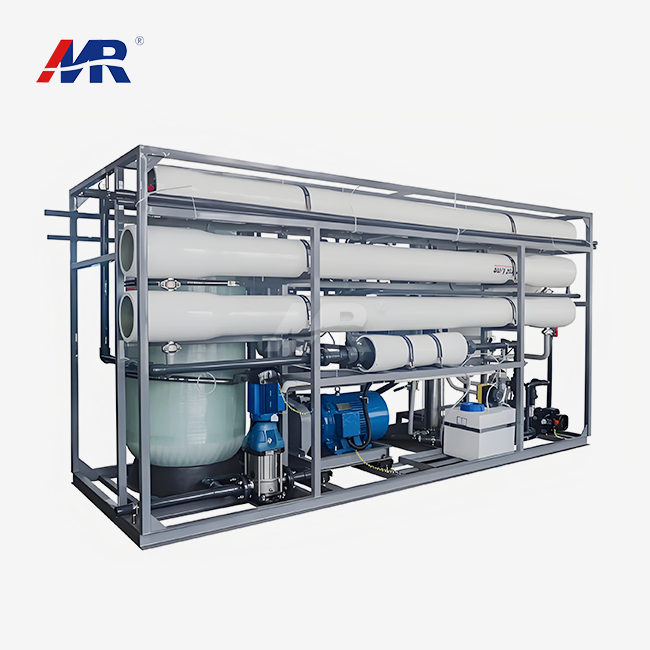
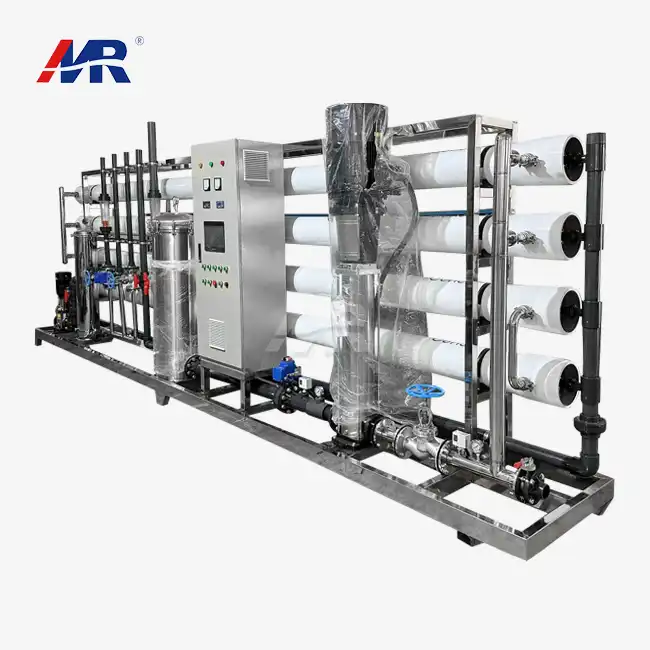
Our Morui tech team has built reverse osmosis tools that firms can use to get things done. The business RO system that we sell the most is a great example of the mix that purchasing managers look for between high performance and low costs. Up to 40,000 gallons of water can be used every day, and 99% of the total dissolved solids are thrown away. In other words, it can be used in healthcare, food processing, and gadgets. Between 150 and 220 PSI is the working pressure. The membrane will still do its best work even if the feed water changes. The temperature range of 40°F to 100°F lets the seasons change without changing how the device works.
Here are the core advantages of this system:
- Five high-efficiency filters clean water. After 5-micron silt filtering, activated carbon, thin-film hybrid membranes for molecular separation, polishing filters, and UV disinfection follow. High-flow removal removes heavy metals, pollutants, bacteria, and viruses.
- Energy-saving design: Demand-based variable frequency drive controls pump speed. Energy conservation. Smart gadgets consume 35% less power than fixed-speed ones. Using equipment for 15–20 years saves money.
- Compact space-saving. The 18" x 14" x 24" fits small equipment and production facilities. Vertical layout reduces floor area and permits all-piece maintenance.
- Plumbing-compatible connections and colour-coded parts simplify installation and maintenance. Maintenance staff may do regular maintenance in under 30 minutes without additional equipment since the parts are easy to change and connect.
- Companies can customise. Drug companies can automate port certification and sanitation. Food processors may use inline conductivity meters. Electronics producers may polish ultrapure water using EDI.
Our solutions save water-related production delays by 40–55 percent and annual maintenance costs by 30–45 percent. The procedure is clean. Pre-filtration eliminates silt and bigger particles that might damage subsequent stages. Products undergo carbon filtration to eliminate chlorine and organics. Reduces toxins and dissolved solids using reverse osmosis. After filtration, activated carbon polishing eliminates impurities and improves taste. Non-chemical UV sterilisation destroys germs.
Poor municipal water quality may allow homeowners to obtain cheaper, purer bottled water. Hotels, restaurants, and others may make amazing drinks without dishwashers or ice. Lab, dialysis, and surgical instrument sterilisation may need medical water. Craft brewers and soft drink makers need constant water chemistry. Pharmaceutical companies sanitise equipment and produce using GMP water. Irrigating desert crops using brackish groundwater.
Strategic Procurement: Maximizing Value and Minimizing Risk
To find the best ro machine price, a careful analysis looks at how reliable the equipment is, how knowledgeable the seller is, how easy it is to get repairs, and the total cost of ownership over the system's useful life.
Supplier Selection Criteria
Authorised manufacturers and distributors provide warranties, Technical support, and genuine parts. Third-party resellers may provide lower prices, but fake membranes, incompatible parts, and lack of technical support may cost more. Check a provider's credentials before employing. Companies with ISO 9001, NSF/ANSI 61, and FDA medicinal registration are ideal possibilities. Suppliers should offer membrane datasheets, electrical specifications, and hydraulic calculations.
Suppliers provide various tech support. Does the supplier commission and train operators on-site? Are spares kept to avoid downtime when parts fail? Are systems troubleshot and optimised after installation? These help firms without water treatment experts.
Negotiation Strategies and Volume Purchasing
There are a few things that B2B procurement professionals can do to get the best deals on RO machines. For example, companies with more than one location can save 8–15% when they buy more than one unit. Also, products that come with maintenance contracts or longer warranties can lower the total cost by 12–20%.
Ask for detailed quotes that include all the parts and services you need. The quotes should include shipping and freight, equipment, installation labor, startup commissioning, operator training, and initial spare parts kits. During installation, hidden costs can show up if the site needs more work or if the changes to the plumbing or electricity are bigger than expected. Making sure these things are clear during the negotiation process keeps the budget from going over.
You can manage your cash flow by looking at your payment terms and financing options. For example, many suppliers offer leasing plans that spread costs over 3–5 years. This frees up capital for core business investments. Government agencies and large corporations may be able to negotiate longer payment terms. Startups and small businesses may be able to get equipment financing from lenders who have experience with water treatment investments.
Warranty Coverage and Service Agreements
If there are problems with the materials or the work, most standard manufacturer warranties cover them for 12 to 24 months. Premium warranties that last 36 to 60 months offer more protection and are especially helpful for complex automated systems. Know what the warranty doesn't cover—usually, you have to buy new pre-filters and membranes separately—but high-pressure pumps and control systems are covered.
Service agreements include regular maintenance like checking the system, cleaning the membrane, testing its performance, and replacing parts that wear out. These checks and replacements make sure the system always works. The yearly service fees are around 4 to 8 percent of the initial equipment cost, but they are well worth it because they extend the system's life and keep expensive repairs from having to be done in an emergency.
Conclusion
To find the best reverse osmosis system, you have to compare the initial investment to the long-term operational costs and performance reliability. The RO machine price you see depends on the membrane technology, filtration capacity, automation features, and build quality—all of which are important factors in deciding if the equipment meets your specific industrial needs. By comparing the total cost of ownership, matching system capacity to production needs, and working with well-known manufacturers that offer full technical support, your company can secure water treatment infrastructure that provides consistent purity, operational efficiency, and regulatory compliance for years to come. Strategic procurement turns water purification from a commodity purchase into a competitive advantage with ro machine price considerations.
FAQ
1. What factors most significantly affect industrial RO system pricing?
Cost is mostly based on how much water the system has to process each day, in gallons. The price goes up as the throughput needs to go up. Membrane technology and material quality make up 25–35% of equipment costs. Automation, monitoring, and energy recovery features also raise the price. For industries like pharmaceutical GMP compliance or semiconductor ultrapure water standards, you need to pay a lot more for specialized parts.
2. How do I calculate the total cost of ownership beyond the initial purchase price?
When you buy equipment, you have to set it up and run it. You also have to pay for maintenance, replacing the membrane and pre-filter every 3 to 5 years, and any possible downtime costs. To find out how much energy you use, multiply the amount of water you make each day by the specific amount of energy you use (usually 3 to 7 kWh per thousand gallons) and your local electricity rate. Every year, maintenance costs about 5 to 8 percent of the price of the equipment.
3. Can small businesses justify the investment in commercial RO systems?
Businesses that spend more than $300 a month on bottled water delivery or have problems with the quality of their products because of unreliable municipal water usually get their money back within 18 to 36 months. When they do the math, they should include the cost savings on drinks, the elimination of equipment scaling, better product consistency, and the possibility of higher sales due to better quality. Small systems that produce 1,000 to 3,000 gallons per day offer manageable capital expenditure with substantial operational benefits.
Partner with Morui: Your Trusted RO Machine Manufacturer
Industrial water treatment investments are easier to understand when you work with experts who have been in the field for a while and know how to solve problems like yours. Guangdong Morui Environmental Technology has 14 branches, over 500 skilled employees, and 20 dedicated engineers who work together to provide customized reverse osmosis solutions to the pharmaceutical, food processing, electronics, and municipal sectors. Our in-house membrane production facility and equipment processing capabilities ensure quality control throughout manufacturing, and our strategic partnerships with brands like Shimge Water Pumps, Runxin Valves, and Createc Instruments let us get high-quality parts at low prices.
We can help with everything from the initial system design to installation, commissioning, operator training, and ongoing technical support, including ro machine price evaluation. Whether you need a small 5,000 GPD commercial unit or a large 40,000 GPD industrial system with full automation, Our Team can help. We offer clear, machine-priced quotes for suppliers, detailed performance documentation, and can make configurations that fit your needs. You can email benson@guangdongmorui.com to talk about your water treatment needs and get a custom equipment proposal that fits your budget and meets your needs.
References
1. American Water Works Association. (2023). Reverse Osmosis and Nanofiltration: Manual of Water Supply Practices M46. Denver: AWWA Publications.
2. Greenlee, L.F., Lawler, D.F., Freeman, B.D., Marrot, B., & Moulin, P. (2022). Industrial membrane system design and optimization for maximum water recovery. Journal of Water Process Engineering, 47, 102-118.
3. National Sanitation Foundation International. (2023). NSF/ANSI Standard 61: Drinking Water System Components - Health Effects Certification. Ann Arbor: NSF International.
4. Pharmaceutical Engineering Society. (2023). Water and Steam Systems for Pharmaceutical Manufacturing: Technical Monograph No. 15. Tampa: ISPE Publications.
5. United States Environmental Protection Agency. (2022). Membrane Filtration Guidance Manual. Washington, D.C.: EPA Office of Water.
6. Water Quality Association. (2023). Commercial and Industrial Water Treatment Systems: Selection, Specification, and Performance Verification Guidelines. Lisle: WQA Technical Publications.