_1745823981883.webp)

Benefits of a Containerized Reverse Osmosis Plant
When I first heard about RO plants that come in containers, I saw that containerized ro plant they were a completely new way to treat water. A containerised RO plant cleans water to an industrial level in a small, portable package that fits inside a normal shipping container. These mobile desalination units are great for a wide range of businesses, from pharmaceuticals to remote mining operations, because they are portable, can be set up quickly, and can do everything they're supposed to. Instead of building a permanent facility, companies can set up a full water treatment system in just a few weeks, which cuts down on capital costs and project timelines by a large amount.
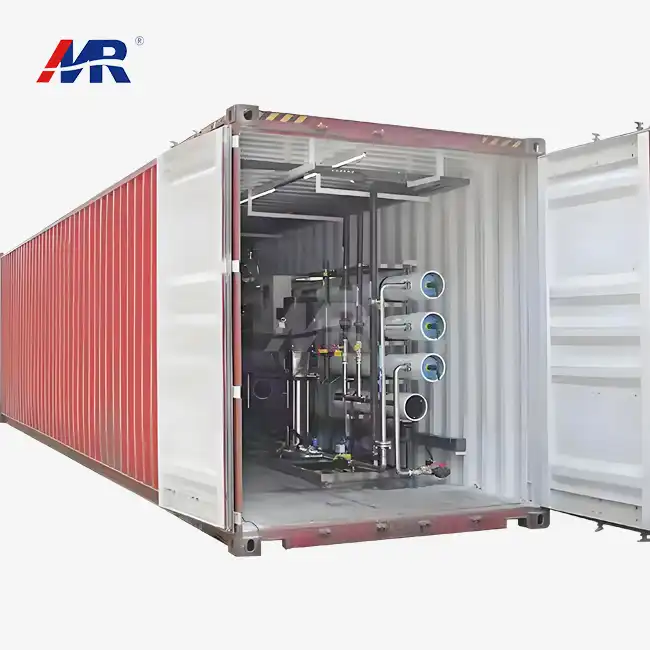
What Makes Containerized RO Systems Different?
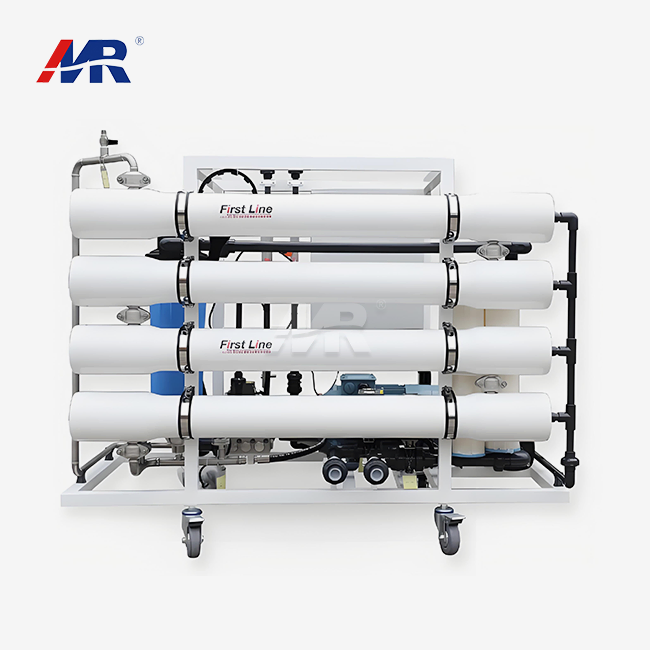
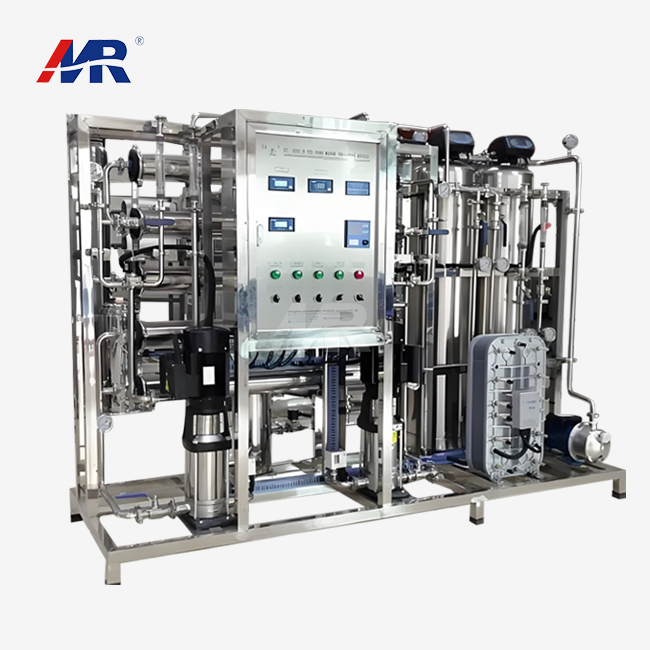
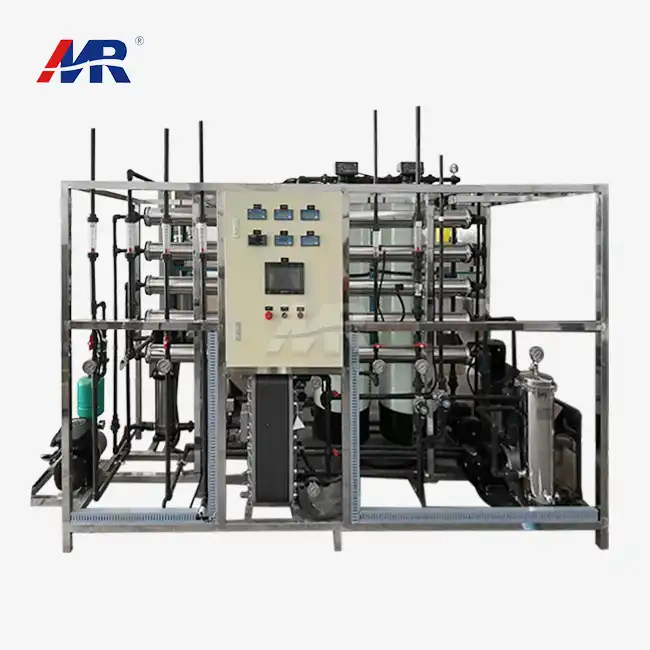
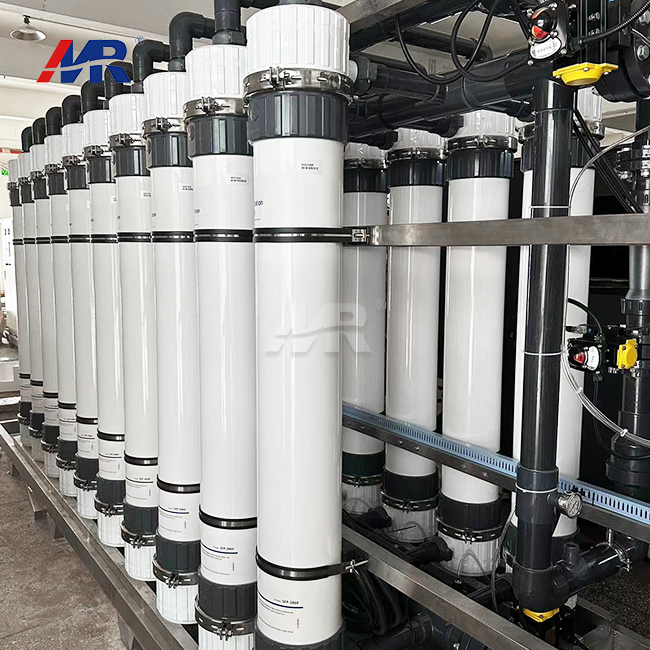
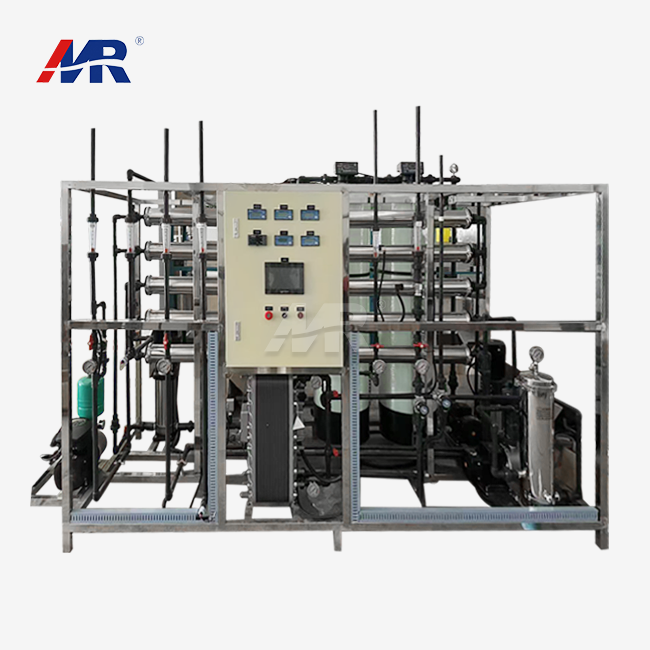
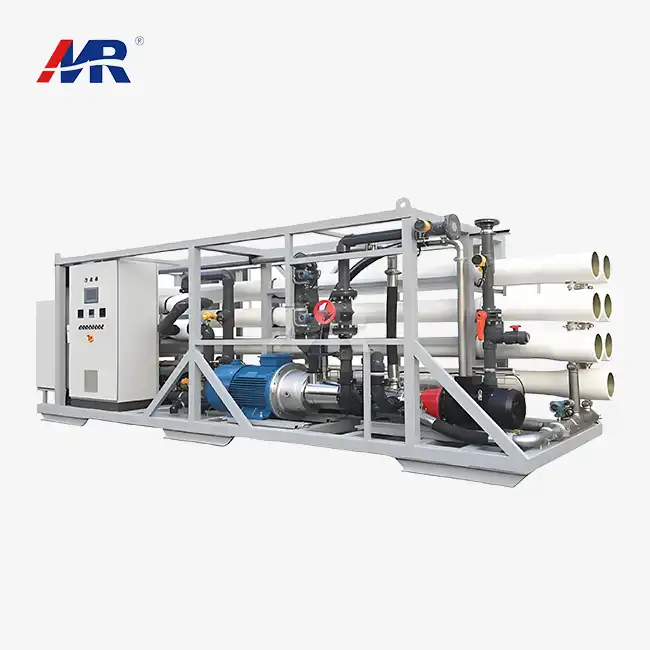
For traditional water treatment plants to work, they need a lot of civil building work, months of construction, and permanent infrastructure. That model is completely turned on its head by containerised reverse osmosis systems. These water plants are self-contained and come wired, plumbed, and ready to use. All the important parts of a skid-mounted RO plant—high-pressure pumps, membrane tanks, control systems, and pretreatment equipment—can fit inside a forty-foot container.
I've seen businesses have trouble with water quality in places where it seemed impossible to build a normal plant. This plug-and-play RO technology is useful for building sites in remote areas, platforms at sea, and areas that have been hit by disasters. With portable water treatment, you are not limited to one place or amount of space. Do you need more water? Add one more jar. Is the project done? Move the system to the next spot.
The small reverse osmosis design doesn't lower the quality of the water. Modern containerised filter systems can use just one unit to clean up to one million gallons of water every day. This output is on par with many permanent sites, but it keeps the flexibility that traditional plants don't have.
Key Performance Parameters You Should Know
Learning about the basic specs of a portable RO system can help you decide if it meets your needs for use. Depending on the design and quality of the source water, each container can usually produce between 10,000 and 250,000 gallons per day. For brackish water uses, recovery rates—the amount of feedwater that is turned into clean water—are usually between 50% and 75%.
Membrane rejection rates show how well the system gets rid of liquid solids. Total dissolved solids, metals, and chemical contaminants are rejected 96% to 99% of the time by good containerised water solutions. The operating pressure changes depending on how salty the source water is. Systems that work with brackish water need 150 to 400 psi, while systems that work with seawater need 800 to 1,200 psi.
The amount of energy used has a direct effect on running costs. Systems that work well use 2 to 6 kWh per thousand gallons of brackish water and 10 to 13 kWh per thousand gallons of seawater. The complete RO system has variable frequency drives that make the pumps work better and waste less energy when demand is low.
When room is limited, footprint efficiency is important. There are forty-foot containers that are 40 feet long, eight feet wide, and 8.5 feet high. Everything a permanent plant needs is in this small footprint: pretreatment, ro membranes, chemical dosing, control systems, a containerized RO plant, and post-treatment.
Core Benefits That Drive Real Value
When time is of the essence, the fast deployment RO benefit stands out. It takes six to eighteen months for traditional plants to go from being planned to being used. It takes four to twelve weeks to set up container water filter systems. This speed is important when the quality of the water affects work schedules or when following the rules.
The fact that water treatment infrastructure can be moved around changes how companies use it. These tools are moved from one dig site to another by mining companies. Companies that build things move them around as projects go along. They are taken to disaster zones by emergency reaction teams. This mobility gets rid of the "sunk cost" of permanent buildings that have been left empty.
Cost-effectiveness is more than just the original cost of capital. Compared to conventional plants, the initial investment is 30% to 50% less because there is less civil work to do, faster installation times, and less labour needed. Costs of operations stay low thanks to automated controls that use fewer chemicals and make the best use of membrane cleaning processes.
Space efficiency helps solve problems in industrial places that are already crowded. The self-contained water treatment plant takes up very little space on the ground while treating water completely. This small form works well for installations on roofs, temporary sites, and buildings that don't have a lot of room to grow.
Being able to adapt to different environments lets you work in harsh situations. The temperature, humidity, and weatherproofing of containers are all taken care of. They work effectively in high-altitude places, the arctic cold, the humid coastal areas, and the heat of the desert. Built-in HVAC systems keep sensitive equipment and screens at the best temperature for operation.
Morui's Containerized RO Plants vs. Competitors
After analyzing various suppliers, I've identified what sets Morui apart in the containerized water solution market. Our integrated manufacturing capability gives us control over quality and customization that pure assemblers lack. We produce our own membranes at our dedicated factory, ensuring consistent performance and competitive pricing.
Many suppliers source components from multiple vendors, creating compatibility issues and fragmented support. Morui's vertical integration means our engineering team designs systems around proven, tested components. We manufacture membrane elements, partner with established brands like Shimge Water Pumps and Runxin Valves, and assemble complete systems in our equipment processing facilities.
Technical support depth matters when systems operate in remote locations. Our Team includes twenty engineers with field experience across diverse applications. We've deployed mobile water purification systems in pharmaceutical plants, offshore platforms, agricultural operations, and municipal water facilities. This breadth of experience translates into practical designs that anticipate real-world challenges.
One-stop project delivery simplifies procurement and reduces coordination headaches. We handle equipment supply, installation supervision, system commissioning, operator training, and ongoing technical support. Single-source accountability means no finger-pointing between equipment suppliers and installation contractors when issues arise.
Maximizing Benefits Through Proper Implementation
Getting optimal performance from your container water recycling system requires thoughtful containerized RO plant planning before deployment. Source water analysis forms the foundation of successful implementation. Comprehensive testing identifies contaminants, scaling potential, and fouling risks. This data guides pretreatment selection and membrane type specification.
Site preparation remains minimal but essential. Level, compacted ground or a structural pad prevents settling and maintains alignment. Electrical service must match system requirements—typically three-phase power with adequate amperage for pump motors. Water inlet and outlet connections require appropriate piping and valving.
Commissioning procedures establish baseline performance and identify any installation issues before full operation begins. Trained technicians verify flow rates, pressure differentials, and water quality parameters. Control system programming is tested and adjusted to match your operational preferences.
Operator training ensures your team understands system operation, routine maintenance, and troubleshooting. While automated controls manage daily operation, operators need skills to recognize abnormal conditions and respond appropriately. We provide comprehensive training covering startup procedures, shutdown protocols, chemical handling, membrane cleaning, and basic troubleshooting.
Performance monitoring catches declining efficiency before it impacts production. Track permeate flow rates, salt rejection percentages, and normalized pressure drops. Trending these parameters over time reveals gradual fouling or scaling that requires intervention.
Important Operational Considerations
Water chemistry variability affects system performance and maintenance requirements. Seasonal changes in source water quality may require pretreatment adjustments. Temperature fluctuations impact membrane permeability and required operating pressure. Your containerized desalination system should include monitoring capabilities that alert operators to significant water quality shifts.
Chemical compatibility matters when treating industrial process water or wastewater. Some contaminants damage membrane materials or reduce rejection rates. Pretreatment must neutralize aggressive chemicals before they reach RO membranes. Our engineering team evaluates your specific water composition and recommends appropriate protective measures.
Concentrate disposal represents an often-overlooked consideration. RO systems produce a concentrated waste stream containing rejected contaminants. Disposal options include discharge to sewer (where permitted), evaporation ponds, deep well injection, or further treatment. Local regulations and site conditions determine the most appropriate method.
Winterization procedures protect systems in freezing climates. If the remote water treatment unit will experience temperatures below 32°F when not operating, complete drainage prevents freeze damage. Alternatively, heat tracing and insulation allow continuous operation in cold environments.
Applications Across Industries
Pharmaceutical and biotechnology facilities rely on containerized systems for validated water production meeting USP and EP specifications. The pre-assembled RO plant accelerates facility commissioning and simplifies validation documentation. Mobile units serve as backup systems, ensuring uninterrupted production during maintenance or emergencies.
Food and beverage processors use these systems for ingredient water, CIP cleaning, and boiler feedwater. Rapid deployment supports seasonal production facilities or temporary operations. The ability to relocate systems matches the flexible nature of food processing operations.
Electronics and semiconductor manufacturers require ultrapure water for chip fabrication and cleaning processes. Containerized units integrate RO with EDI (electrodeionization) to achieve 18-megohm resistivity. Compact installations fit within cleanroom environments or adjacent support spaces.
Power generation facilities deploy these systems for boiler feedwater treatment. The portable design supports construction phase requirements and provides emergency backup capacity. Mobile units quickly respond to increased demand or equipment failures.
Agricultural operations treat brackish groundwater for irrigation, enabling crop production in arid regions. Aquaculture facilities use these systems for makeup water and recirculating system purification. Mobile units serve seasonal operations or rotate between multiple farms.
Selecting the Right System Configuration
Capacity sizing requires accurate water demand projections. Account for peak usage, production schedules, containerized ro plant, and future growth. Undersized systems run continuously, accelerating wear and limiting flexibility. Oversized systems waste capital and energy.
Pretreatment complexity depends on source water quality. Clean municipal water requires minimal pretreatment—perhaps only cartridge filtration and antiscalant dosing. Surface water, groundwater, or wastewater demand more extensive treatment, including multimedia filtration, softening, and disinfection.
Membrane type selection balances rejection requirements, operating pressure, and fouling resistance. Brackish water membranes operate at lower pressure but don't handle seawater salinity. Seawater membranes tolerate high salt concentrations but consume more energy. Fouling-resistant membranes cost more initially but extend cleaning intervals.
Post-treatment options address specific water quality targets. UV disinfection eliminates microorganisms. pH adjustment stabilizes water for distribution. Remineralization improves taste for drinking water applications. Degasification removes dissolved gases that cause corrosion.
Control system sophistication ranges from basic on-off operation to fully automated systems with remote monitoring. Advanced controls optimize performance, log operating data, and enable predictive maintenance. Internet connectivity allows technical support staff to diagnose issues remotely.
Conclusion
Containerised RO plants are a revolutionary way to treat water because they offer industrial-grade cleaning in packages that are easy to move and set up quickly. Because they are small, fully functional, and scalable in different ways, these systems are perfect for a wide range of uses in industry, government, energy, and remote operations. You will get the most out of your investment if you understand key performance factors, best practices for implementation, and operational issues. Because Morui can do both integrated manufacturing and has a large engineering team and a large support network, we are the best company to work with for containerised water treatment options. It seems that flexible, efficient systems that can adapt to changing needs will be more popular in the future of water purification than fixed infrastructure. This means that now is a great time to look into containerised choices.
FAQ
Q1: How quickly can a containerized RO plant be operational after delivery?
A: Deployment timelines range from one day to three weeks, depending on site preparation and system complexity. Simple installations with pre-existing utilities and prepared pads can start producing water within 24 hours. More complex projects requiring electrical service upgrades, piping connections, and extensive commissioning typically take two to three weeks from delivery to full operation.
Q2: What maintenance skills do operators need for these systems?
A: Basic operation requires minimal training—monitoring displays, recording parameters, and performing routine checks. Most systems feature automated controls that manage daily operation. Operators should understand filter replacement procedures, chemical tank refilling, and when to contact technical support. We provide comprehensive training covering these tasks, typically requiring two to three days for competent operators to become proficient.
Q3: Can these systems handle varying water quality, or must source water remain consistent?
A: Well-designed containerized systems tolerate moderate water quality variations through automated adjustments. Control systems monitor conductivity, flow rates, and pressure, adjusting chemical dosing and operating parameters accordingly. Significant source water changes may require pretreatment modifications or membrane reconfiguration. Our engineering team can assess your specific variability concerns and recommend appropriate system features.
Partner with Morui for Your Containerized RO Plant Needs
Choosing the right containerized ro plant manufacturer determines long-term system performance containerized ro plant and support quality. Morui brings fourteen years of water treatment expertise, in-house membrane production, and comprehensive project capabilities to every installation. Our engineering team designs customized solutions matching your exact water quality requirements, production capacity needs, and site constraints.
We understand that water treatment directly impacts your operational success. Whether you need emergency drinking water, pharmaceutical-grade purified water, or industrial process water, our turnkey systems deliver reliable performance. Contact our technical team at benson@guangdongmorui.com to discuss your specific application and receive detailed specifications for a containerized ro plant tailored to your requirements.
References
1. Greenlee, L.F., Lawler, D.F., Freeman, B.D., Marrot, B., & Moulin, P. (2009). Reverse osmosis desalination: Water sources, technology, and today's challenges. Water Research, 43(9), 2317-2348.
2. Voutchkov, N. (2018). Desalination Project Cost Estimating and Management. CRC Press, Taylor & Francis Group.
3. Wilf, M., & Bartels, C. (2005). Optimization of seawater RO systems design. Desalination, 173(1), 1-12.
4. Karabelas, A.J., Koutsou, C.P., & Kostoglou, M. (2015). The effect of spiral wound membrane element design characteristics on its performance in steady state desalination. Desalination, 368, 44-56.
5. Al-Karaghouli, A., & Kazmerski, L.L. (2013). Energy consumption and water production cost of conventional and renewable-energy-powered desalination processes. Renewable and Sustainable Energy Reviews, 24, 343-356.
6. Fritzmann, C., Löwenberg, J., Wintgens, T., & Melin, T. (2007). State-of-the-art of reverse osmosis desalination. Desalination, 216(1-3), 1-76.