


8 Stage Reverse Osmosis System: What Should Buyers Check?
Buyers should check five things before choosing an 8 stage reverse osmosis system: the water source report, the real function of each stage, rated recovery and salt rejection, compliance documents, and supplier support after delivery. The number eight alone proves little, because makers count stages in different ways. Our MR-BWRO-10TH, built for potable water production, lists 98% salt rejection, 55–65% recovery, and 15 kW per hour of power consumption. Those figures give you a clear starting point for comparing quotes. Below, I explain how to test each claim and avoid common mistakes.
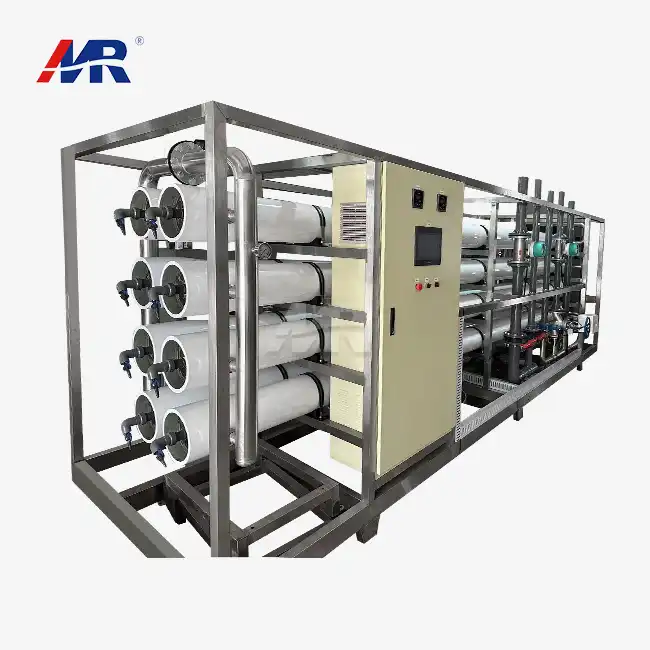
How an 8 Stage Reverse Osmosis Filtration Process Works
Before you compare prices, you need to know what happens inside the skid. These three points cover the basics.
The Typical Stage Sequence
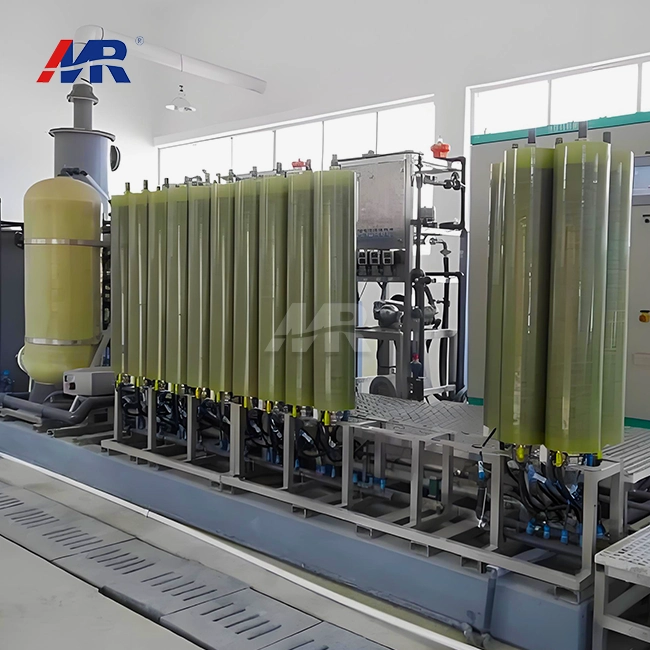
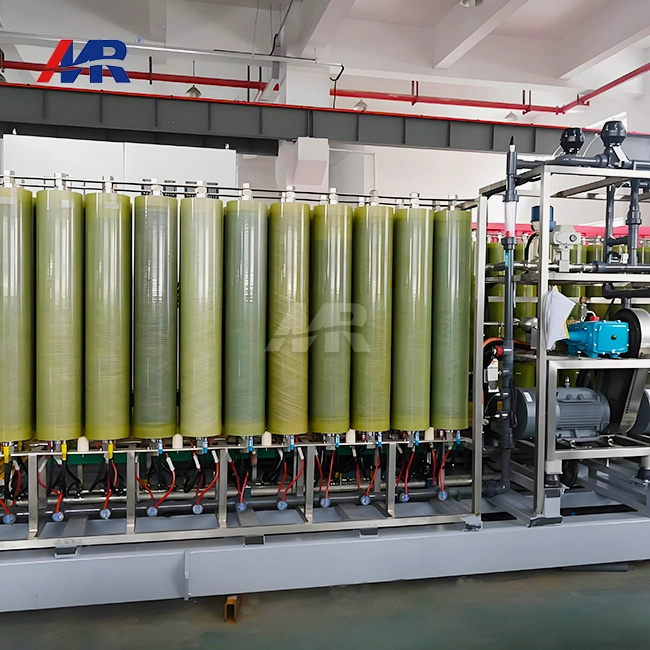
I always ask for a flow chart because there is no one way to number stages. When an industrial setting is used, the barrier is protected by a number of steps. Some of these are a cartridge filter, activated carbon for chlorine, and media filtration for suspended solids. A high-pressure pump then forces the water through the RO membrane. It gets rid of most of the salts that have been dissolved. The product water is ready to use after it has been treated, such as by changing the pH or killing germs. It is not always clear that a UV lamp is a stage. There should be names for all eight steps that explain what they do.
What the System Can Remove
This is where most of the work on dissolved ions is done. It makes TDS, rocks that are very hard, and many metals less dense. Carbon, on the other hand, works with chlorine and some organics. What shows up is based on the feed. This is a second rule set by the U.S. EPA for TDS in drinking water: 500 mg/L. Some groundwater, though, is salty and goes above that level. That is the reason RO works. It is necessary to treat membranes ahead of time because iron, manganese, hydrogen sulfide, or a high level of hardness can damage them. There should be TDS, pH, hardness, turbidity, chlorine, metals, bacteria, and turbidity in the full water analysis that you send. Without it, no one can get the right size of the pretreatment.
Eight Stages vs. Five or Seven Stages
More stages do not always mean better water. A five-stage machine can work with a low-TDS city feed well. An 8 stage reverse osmosis system is helpful when the feed water needs extra protection, or the product water needs extra treatment, like adding minerals or killing germs. If the extra stage doesn't add much, there doesn't need to be a long break between stages 7 and 8. These filters cannot be used instead of a ro membrane to lower the amount of dissolved solids because they change the pH level or add minerals. Not the number of cartridges, but the total cost, how much water it uses, how often it needs to be serviced, and the type of membrane it has.
Technical and Commercial Specifications Buyers Should Check
Rated numbers help only when you know how they were produced. Here is what to review.
MR-BWRO-10TH Performance Data
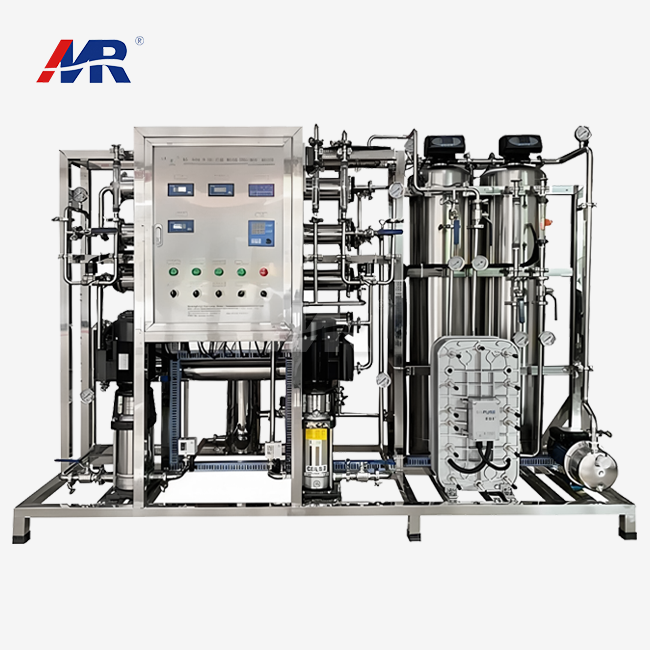
The MR-BWRO-10TH is approved to make water that can be drunk. It turns away 98% of the salt. It is easy to see that a feed with 2,000 mg/L TDS would make permeate that is about 40 mg/L at that rate. But the real effects will depend on the age, temperature, and pressure of the membrane. Out of every 100 gallons that are fed, 55 to 65 gallons are turned into product water. The rest is sent away as concentrate. 55% to 65% of people are getting better. 15 kW per hour is used, which is equal to 15 kWh per hour at full load. Anyone who sells you something will be happy to explain what tests were used to get those numbers.
Feed Water, Pressure, and Temperature
The flow through the membrane is slowed down by cold water, and the pump has to apply more pressure when the feed saltiness is high. You can only get so far. It can scale if you push it too high. Salts build up at the membrane. That is why I think of health as a design choice that depends on your water and not a number you need to reach. Our experts use the study you give them to choose the steps for pretreatment, membrane stages, recovery, and other things. Find out how they set the healing rate and what happens to output in the winter for each bid.
Documentation and Compliance
People in the U.S. usually need paperwork before they can buy something. Find out about the steps, the datasheet, test results for the treated water, how to do it, and the guarantee's terms. Making sure that parts that touch drinking water meet the requirements of NSF/ANSI/CAN 61 is important. Also, make sure that a list shows the whole system and not just select parts of it. NSF/ANSI 58 is mostly for 8 stage reverse osmosis systems that are used where they are needed, so a big skid might not fit. UL-related review may need to be done on electrical panels if your site and inspector ask for it. Start by telling us what you need in your area. Then we will let you know what documents we can give you.
Installation, Maintenance, and the Buying Process
A good machine still needs a good site plan and a clear budget. These points keep both on track.
Installation Planning
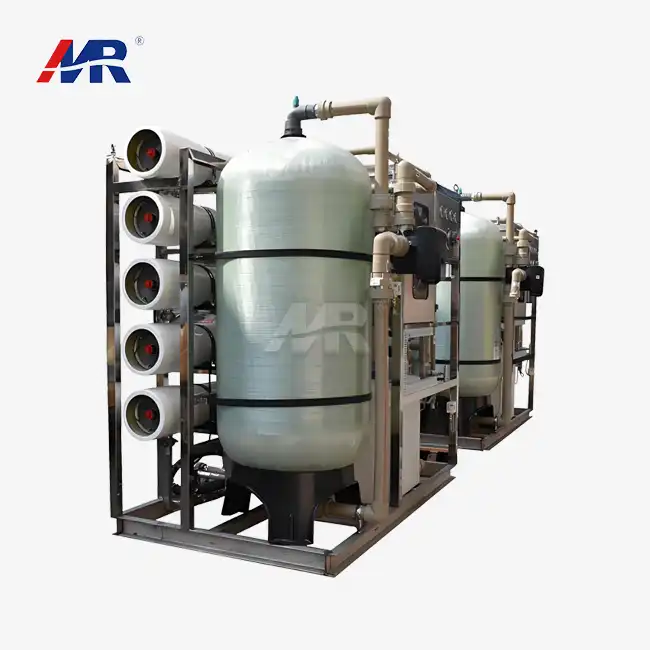
Good fitting protects performance. Making plans for raw water, getting rid of concentrates, a product tank, power for the 15 kW load, and floor space for the skid are all important. Water has to go through some steps before it can reach the barrier. No matter what you need, we can add or remove pumps, controls, tools, and pipe materials from our skids. We also sell brands like Createc tools, Shimge pumps, and Runxin valves that we use ourselves. We will not have to do as much work during commissioning if we share site plans early on.
Maintenance and Replacement Planning
An RO plant needs a plan for fixing things. For cartridge filters, they need to be checked often, and membranes need to be cleaned when pressure or flow shows that they are getting clogged. There is information in the AWWA M46 manual on how to build and run a RO, such as how to keep it from fouling. Every week, make sure you keep an eye on the feed pressure, product flow, and conductivity. There is more than one number that a slow shift can tell you. Make sure you have extra cartridges and seals on hand. Teams can order a skid with remote monitoring added to help them find drift faster.
Comparing Total Cost
A low price for a machine can hide high costs. It costs a lot to ship, set up, run, get rid of the concentrate, replace membranes and capsules, work, and have time off. This is a case of recovery. When the level is between 55 and 65%, the plant sends 35 to 45% of its feed to it. Where you live will affect how much water and trash cost. When getting quotes, make sure to ask about the model of the membrane, its output, its recovery, its warranty, its lead time, its spare parts, and how it is set up. They should also ask for MOQ and branding terms. Quotes that are all written in the same way are all the same.
Choosing a Manufacturer and Avoiding Common Mistakes
The supplier shapes how the plant performs years after delivery. These things will help you pick one out.
What to Check in a Supplier
Find a company that can say what it does and how it does it. We are Morui (Guangdong Morui Environmental Technology), a company that has been around for 25 years and has 500 employees, 20 engineers, 14 branch companies, its own membrane production plant, and several equipment processing plants. These facts are important because they put making skids and supplying membranes in the same group. A good supplier will help you with sample or pilot testing, sign an NDA if needed, and make sure that the specifications stay the same from batch to batch. They will also walk you through each step.
OEM and ODM Options
People who want to buy a house usually bring a water report and a rough sketch of the plan. You can use that report to help you pick the right parts and methods, and we can also make a finished skid based on your own plans. Pumps, controls, instruments, pipe materials, and online tracking can be added or taken away at any time. You can also ask us to handle private label, PLC modification, and container integration. You can find out what common machines are in stock, how long the wait time is, and what the warranty terms are if you buy in bulk.
Common Mistakes and a Simple Decision Path
Three things are very likely to go wrong if you only look at price, stage count, or skip the water test. They are not in the way of a quick way to make a choice. First, write down where your water comes from and any risks. Set goals for quality, output, and monitoring as the second step. Third, pick the setup and decide whether to clean or remineralize the water. Fourth, score suppliers on performance, papers, cost, wait time, modification, and support. Fifth, test a sample or part of the order to make sure the final design works before you place a big order. So, your choice will be based on facts.
Conclusion
In an 8 stage reverse osmosis system, what you should look at instead of the number of steps is what each stage does. The first step is to study the water because TDS, hardness, and fouling agents show how to clean the water before it gets worse. If you know how the tests were done, numbers like 98% salt rejection and 55% to 65% recovery can help you buy. A claim may only cover parts of a system or the whole thing if test records, stage maps, and approvals for parts are shown. Even though prices are important, what is even more important are upkeep plans and the total cost, which includes power, concentrate, and parts. Some of the things that affect how well a plant works over time are how well the seller makes membranes, helps with planning, and tests samples.
FAQ
1. What is an 8-stage reverse osmosis system?
The 8-stage reverse osmosis system is a line that cleans with more than one step. To protect a RO membrane, it is treated before and after it is used. These steps are different for each supplier, so ask for a picture of them.
2. Does a higher stage count mean better water?
Not at all. The feed water, the membrane, the pretreatment, and the upkeep all have an effect on the water quality.
3. What are the key figures for the MR-BWRO-10TH?
It is said to be able to produce potable water with 98% salt rejection, 55–65% recovery, and 15 kW per hour of power use.
4. Can Morui customize the system?
Yes, depending on your water report, you can add or remove pumps, controls, instruments, pipe materials, and online tracking.
5. What should I send for a quote?
This is to ask that you send us your water analysis, daily demand, site conditions, and compliance needs.
Contact Morui Today — Send Your Water Analysis & Get a Custom 8-Stage RO System Proposal
Send Morui an email at benson@guangdongmorui.com with your daily demand and water analysis, and our engineers will look over your project. If you are looking for an 8 stage reverse osmosis system maker, we make OEM/ODM boxes based on the quality of your water and are backed by our own membrane plant and 20 engineers.
References
1. U.S. Environmental Protection Agency, Secondary Drinking Water Standards: Guidance for Nuisance Chemicals, 1992
2. U.S. Environmental Protection Agency, National Primary Drinking Water Regulations, 2009
3. American Water Works Association, Manual M46: Reverse Osmosis and Nanofiltration, 2007
4. Crittenden et al., MWH's Water Treatment: Principles and Design, 2012
5. Cotruvo et al., Desalination Technology: Health and Environmental Impacts, 2010
6. NSF International, NSF/ANSI/CAN 61: Drinking Water System Components – Health Effects, 2023