



What maintenance is required for a 2 stage reverse osmosis system?
After years of receiving maintenance calls from plant managers, EPC contractors, and city engineers who run RO skids for brackish water and process water in Asia, Africa, and Latin America, I wrote this guide to help them maintain their 2 stage reverse osmosis systems.
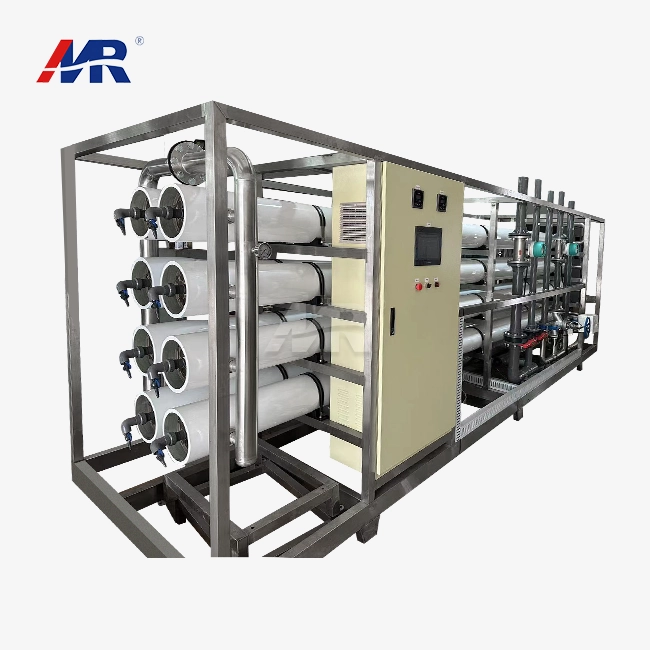
Answer Engine Summary / TL;DR
- Additionally, a sediment or carbon prefilter and a RO membrane are typically included in a two-stage reverse osmosis system. The RO membrane allows some water to pass through, but not all of it.
- When performing routine maintenance, it is necessary to perform tasks such as cleaning, replacing filters, testing for membrane rejection, checking for leaks, flushing, and replacing filters using a predetermined schedule.
- In well-operated systems, the majority of prefilters have a lifespan of between six and twelve months, and membranes have a lifespan of between two and five years.
- It is the feed water that has high total dissolved solids (TDS), high hardness, high chlorine, high iron, low pressure, and irregular hours that causes the parts to wear out the quickest.
- It is important to keep a close eye on the signs of leaks, pressure, permeate flow, salt rejection, and conductivity that you can observe on a weekly basis, and not just when the water is being serviced.
- It is necessary for buyers in the industrial and municipal sectors to have written logs of preventative maintenance, sanitation procedures that have been tested, and records that can be tracked for compliance audits.
A 2-stage reverse osmosis system needs to have its prefilters changed on a regular basis, its membranes tested for performance, its leaks and pressures checked, its system flushed, and it needs to be cleaned or sanitized on a regular basis. The actual times depend on the quality of the feed water, the number of hours the system is running, the pressure, the temperature, and the manufacturer's instructions.
How Does a 2 Stage Reverse Osmosis System Work?
You must understand what's inside a 2-stage reverse osmosis system before you can properly maintain it. People who buy in this field often get confused because they think "two-stage" means something different.
What a 2 Stage RO System Is—and Is Not
In some homes, sediment and carbon are put in series inside two filter housings. This is not the same as a system with an extra post-filter, remineralizer, UV lamp, or storage tank added on. "Two-stage" tells you how the treatment is set up.
Typical 2 Stage RO System Filtration Process
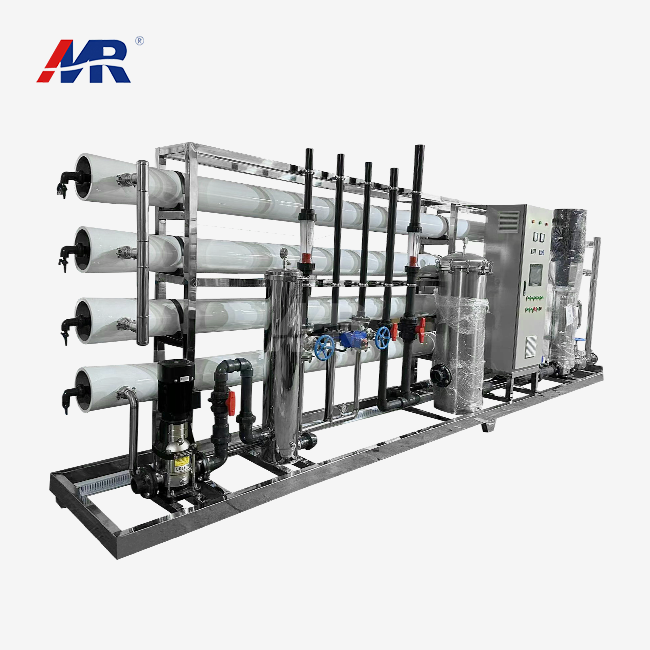
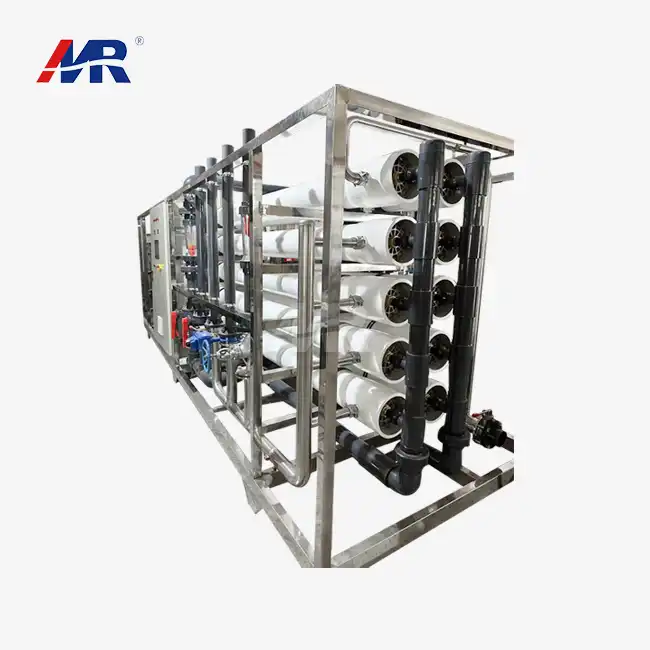
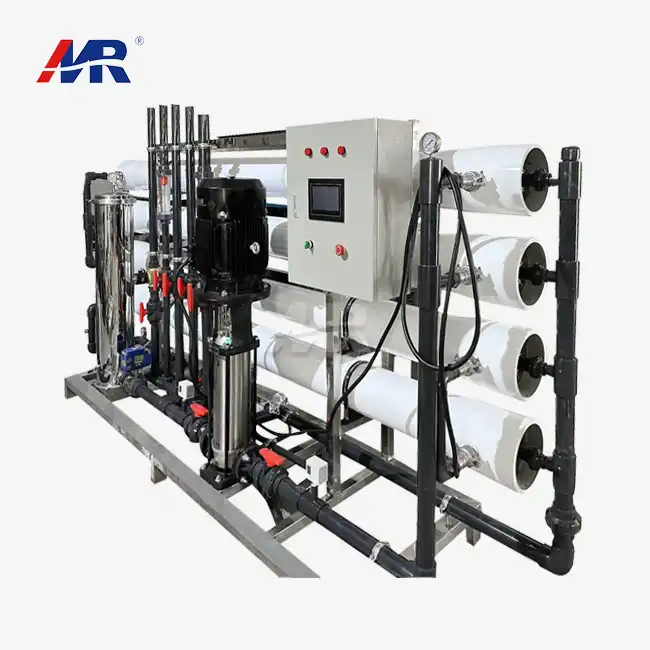
In a business setting like our MR-BWRO-50TH skid, a 2 stage reverse osmosis system uses Stage 1 to take care of the sediment and sometimes activated carbon pretreatment to keep particles and chlorine from getting into the membrane. In the second step, the ro membrane, water is pushed through a semipermeable barrier that blocks dissolved salts and most dissolved solids. This is how it works:
Feed Water
↓
Sediment / Carbon Prefilter
↓
RO Membrane
├── Permeate Water → Storage Tank or Process Line
└── Concentrate Water → Drain or Recovery Loop
This layout doesn't change whether you're running a small countertop unit or a 50-ton-per-hour city plant. The only things that do change are the size and the controls.
Main Contaminants Removed and Water Quality Results
In normal brackish water conditions, our MR-BWRO-50TH rejects 99% of the salt that comes in. This number depends on the condition of the membrane, the feed pressure, the temperature, and how well the pretreatment is working.
Which Filters Need Regular Replacement in a 2 Stage RO System?
You can avoid unplanned shutdowns if you know which parts wear out first and in what order. I've seen plants lose a whole day of work because no one noticed a simple drop in pressure across the prefilter cabinet.
Sediment and Carbon Prefilters
Particles in the fluid are caught by sediment filters before they reach the membrane surface, where they would foul it up and shorten its life. Over time, chlorine and organic compounds that can break down thin-film composite membrane material can be cut down by carbon filters. It's time to replace these when the pressure drop across the housing goes up, the flow goes down at the same inlet pressure, the treated water changes in smell or taste, the cartridge gets dirty, or the service interval you've written down runs out.
Reverse Osmosis Membrane Replacement
If salt rejection falls below your target level, permeate flow drops too low for cleaning to fix, or fouling sets in for good, you need to replace the membrane. When you order a replacement, write down the type and size of membrane, the maximum temperature, the operating pressure range, the salt rejection specification, and the compatibility between the housing and seal. When plants skip this step, they end up with a membrane that doesn't fit the pressure vessel they already have.
Additional Components Commonly Confused With RO Filters
A standard RO filter kit does not include maintenance for storage tanks, post-carbon filters, remineralization cartridges, UV lamps, dosing pumps, and flow restrictors. Each of these parts needs its own schedule of care. To fix a 2 stage reverse osmosis system, a "replacement filter kit" usually only includes the prefilter and membrane, not the whole skid that gets wet. Before placing an order, check with your supplier to make sure that the part numbers, housing dimensions, connection sizes, and OEM compatibility are correct. This one check stops more installations from being late than anything else on this list.
How Often Should Each RO Filter and Membrane Be Replaced?
It's not a guess how long something needs to be replaced; it's based on trends in pressure, water chemistry, and running hours. These are the kinds of things we usually see in industrial settings.
| Component | Typical replacement interval | Main replacement trigger |
|---|---|---|
| Sediment prefilter | 6–12 months | Pressure drop or visible loading |
| Carbon prefilter | 6–12 months | Chlorine breakthrough or odor |
| RO membrane | 2–5 years | Low rejection or reduced permeate flow |
| Postfilter or remineralizer | 6–12 months | Taste, odor, or service limit |
| UV lamp, if fitted | Annually | Lamp operating hours |
Typical Replacement Intervals
These numbers are planning ranges, not 100% sure things. A coastal plant using high-turbidity groundwater and a 2-stage reverse osmosis system might need to change the prefilter every four months, while a plant using treated municipal water might not need to be changed for more than twelve. Not a random calendar, but logged feed-water test results compared to the manufacturer's instructions should help you make your final schedule.
How to Measure RO Membrane Performance
Salt rejection is the best way to tell if a membrane is healthy, and it's easy to figure out.
Salt Rejection (%) = [1 − (Permeate TDS ÷ Feed TDS)] × 100
Every time you test, make sure that the conditions are the same for all of the following: pressure, temperature, flow, feed TDS, and permeate TDS. Changes in temperature can change readings by several percentage points. Use a conductivity or TDS meter that has been calibrated, and write down the date of calibration along with the reading.
Cost Planning for Replacement Parts
A cheap membrane that fails in 18 months instead of 4 years usually costs more than a higher-spec one when you add up the cost of labor, water waste during ramp-up, and production downtime. Compare quotes by looking at the annualized cost of the filter, the cost of replacing the membrane, the number of hours worked, the cost of disposal, and whether the supplier has parts in stock in your area.
What Factors Cause a Two-Stage RO System to Require More Maintenance?
The same membrane is used for five years in some plants. Some people use one every eight months. The difference is usually caused by the feed water and how the machine is run.
Feed-Water Conditions
Carbon pretreatment is crucial for municipal water supplies in a 2 stage reverse osmosis system because membrane materials shouldn't be exposed to chlorine or other oxidants all the time. Manganese, iron, turbidity, and suspended solids clog prefilters and membranes before they reach the end of their useful life.
Operating Conditions
Low inlet pressure can slow down the flow of permeate and push more dissolved solids to the product side. A high feed temperature, running recovery rates above the design specification, irregular operating hours, and a lot of start-stop cycles all put stress on the membrane that it wasn't made to handle. If the flow restrictor is the wrong size, it throws off the whole recovery balance, and there may not be any clear warning until performance has already dropped.
Risks, Pitfalls, and Mitigation
If you know what to look out for, you can avoid a lot of maintenance issues. The most common mistakes I see in the field are shown below, along with the right way to fix them.
| Risk or pitfall | Likely effect | Mitigation |
|---|---|---|
| Replacing filters only after failure | Membrane damage, poor water quality | Set a preventive schedule based on pressure trends |
| Installing the wrong cartridge size | Leakage, reduced performance | Verify dimensions against the OEM spec sheet |
| Ignoring low inlet pressure | Low output, unstable rejection | Check pump, inlet valve, and line pressure monthly |
| Using untested well water | Rapid fouling, unsafe output | Run a full feed-water lab analysis before startup |
| Overstating contaminant removal claims | Compliance and liability exposure | Base all claims on validated test reports |
These mistakes cost a lot of money. On a 50-ton-per-hour skid, replacing a membrane without planning to can cost thousands of dollars and cause lost production time. This is why condition-based monitoring pays for itself in the first year.
How Do You Clean and Sanitize a 2 Stage Reverse Osmosis System?
Cleaning and sanitizing are two different tasks. People often mix them up, which hurts membranes or doesn't get rid of microbial contamination.
Recommended Cleaning and Sanitation Sequence
Turn off the feed water, separate the electrical equipment, and fully depressurize the system before opening any housing. Remove the used cartridges and dispose of them according to your site's waste rules. Clean the housings, tubing, fittings, and tank connections with fresh water to remove loose dirt and dust. Only use cleaning or sanitizing chemicals that have been tested for your membrane type, seals, and tubing material.
Membrane Cleaning Versus System Sanitization
Cleaning membranes with acidic or alkaline solutions appropriate for the fouling removes scale, organic fouling, and particles stuck on the membrane surface. Sanitization stops microbe growth in the storage tank, plumbing, and other wet areas.
Validation After Cleaning
Before putting the system back into service after a cleaning or sanitation cycle, make sure there are no leaks and that the pressure stays stable. Also, check for permeate flow and TDS rejection. If microbiological testing is needed for food, medicine, or drinking water, add it. Date of cleaning, chemicals used, lot numbers, name of operator, test results, and any steps taken to fix the problem should all be written down. If a regulator or customer ever asks how the system is run, this record will serve as an audit trail. Most ISO 9001-aligned quality systems require this (ISO, 2015).
What Water Quality Indicators Should You Monitor During Maintenance?
You can't handle something that you don't track. The good news is that a 2 stage reverse osmosis system only requires a few readings tracked consistently to find most problems early.
Routine Operating Measurements
Check the feed-water pressure and the permeate pressure every day if you can, as well as the TDS or conductivity of the feed water and the permeate water. Keep an eye on both concentrate flow and permeate flow at the same time, as the ratio between them tells you the real-time rate of your recovery. Log the temperature of the water because colder feed water naturally slows flow and can hide a problem that is starting to form. Check the difference in pressure between the prefilters and write down any leaks, changes in smell, taste, or color right away, instead of waiting until the next inspection.
Water Quality Testing
The number of tests you do should match the level of risk in your application. When the water is meant to be used for drinking or food, common tests include TDS and conductivity, pH, hardness, free chlorine, iron and manganese, nitrate, and microbiological indicators. The WHO's drinking-water guidelines are still a good place to start when figuring out what levels of contaminants are acceptable in municipal and industrial settings (WHO, 2022). When results are needed to back up a safety or regulatory claim, use instruments that have been calibrated and send samples to a good lab.
Quality Verification and Traceability Checklist
If you keep good records, you can defend your maintenance program in case of an audit or customer inspection. As a minimum, we ask all of our clients to keep track of the following things.
- Before you place an order, make sure that the part numbers for the cartridges and membranes match the original equipment specification sheet. This way, you can be sure that the replacement parts will fit the housing and work with the system's rated flow and pressure.
- It is very important to write down the batch or lot number of each filter and membrane that is installed. This will help you figure out why performance dropped all of a sudden in several units in the same building.
- Before adding a shipment to your inventory, look over the test reports, certificates of analysis, and material declarations that the manufacturer of your membrane and parts has sent you.
- Write down when it was installed, how it was running at startup, every maintenance step that was taken, and the final verification test results that go with each step.
- Most ISO-certified buyers need traceability documents to be kept for a certain amount of time, so make sure you keep all of your records according to your company's quality management system.
This level of attention to detail in writing is what sets apart a plant that finds small issues quickly from one that finds a broken membrane after the water quality has already gone too low.
How Can You Reduce Maintenance Costs and Extend RO Membrane Life?
To get lower maintenance costs with a 2 stage reverse osmosis system, you can't cut corners. You need to do better pretreatment and make smarter scheduling decisions early on.
Improve Pretreatment and Operating Control
Use the feed-water conditions from your lab report to calculate sediment and carbon capacity. If the water analysis shows metals or hardness above what is safe for your membrane type, you may need to add softening, iron removal, or antiscalant dosing. Maintain pressure and recovery within the manufacturer's range.
Use Condition-Based Maintenance
Instead of just replacing parts on a set date on the calendar, look at actual pressure drop, flow decline, and rejection trends. If you look at the trends of your readings over weeks and months, you can see that performance is slowly going down before it fails. Keep important spares like seals, O-rings, and at least one backup membrane on hand so that production can keep going even if one part is late for weeks.
Case Study: Cutting Downtime at a Textile Dyeing Plant in Vietnam
A textile dyer in northern Vietnam installed an MR-BWRO-50TH skid to reuse process water in 2023. Because their groundwater source didn't treat iron and hardness, they had to replace the membranes every 10 months in their old single-stage setup. After switching to our two-stage configuration with iron removal pretreatment and antiscalant dosing, their membrane life increased to 34 months on the first set.
What Is the Recommended Maintenance Schedule for a 2 Stage RO System?
A written schedule is always better than remembering it, especially when there are shift changes in a 24-hour factory.
Daily or Weekly Checks
At the start of each shift, check for leaks, strange noises or smells, and any flow patterns that don't seem right. Make sure the inlet pressure is in the normal range for the system and compare it to your baseline. If your application needs regular monitoring, check the TDS or conductivity readings. Make sure that the drains, tubing, and valves stay clear and unblocked. A partially blocked drain line can quietly throw off your whole recovery.
Monthly to Quarterly Checks
Check for corrosion or wear on the filter housings, fittings, tubing, pumps, and electrical connections. In stable conditions, check the pressure, flow, and quality of the permeate, and then compare the results to the data you used for commissioning. Look at the trend line instead of just one reading. A slow drop over three months tells you more than a single reading. Check the cleanliness of the areas where these parts are installed, the air pressure in bladder tanks, and the storage tanks.
Annual or Event-Based Maintenance
Instead of guessing, replace the sediment and carbon filters in a 2 stage reverse osmosis system based on their actual condition and the manufacturer's instructions. Clean the whole system and make sure the quality of the rinse water meets your standards before starting up again. As part of the same service visit, check or replace the seals, O-rings, flow restrictors, and postfilters. If the membrane's performance falls below what it's supposed to be, you should replace it. You should also always revalidate the system after moving it, shutting it down for a long time, suspecting contamination, or swapping out major parts.
2 Stage RO System vs. Single-, 3-, and 4-Stage Systems
People who want to buy often ask if more stages automatically mean better water. The honest answer is that it depends on the water you use and how it is used.
Configuration Comparison
| System type | Typical configuration | Best suited for | Main limitation |
|---|---|---|---|
| Single-stage filter | Sediment, carbon, or specialty cartridge | Basic particulate or chlorine reduction | No real dissolved-solids reduction |
| Two-stage RO | Pretreatment plus RO membrane | Compact process water or light municipal use | Limited polishing flexibility |
| Three-stage RO | Prefilter, carbon filter, RO membrane | More demanding commercial or industrial use | Higher cost, more parts to replace |
| Four-stage RO | Pretreatment, RO membrane, postfilter/remineralizer | Drinking water with taste or mineral adjustment | More maintenance complexity |
Selection Checklist for Industrial, Municipal, and OEM Use
How you choose the right configuration depends on where your water comes from and how much maintenance you can do on-site. Before I suggest a setup, I always ask every new client this question.
- Before you size a system, make sure you know where the water is coming from and get a full lab analysis. This is because brackish groundwater and treated municipal water need very different ways to be pretreated.
- Figure out the flow rate you need, the amount of production you need each day, the rate of recovery you want, and whether you need extra storage space for times when demand is high.
- Choose whether the base two-stage design needs to have remineralization, UV disinfection, softening, or chemical dosing added to it.
- Before you decide on the final skid dimensions, make sure you know what the available inlet pressure, ambient temperature range, drainage capacity, electrical supply, and installation space are.
- You can pick between a tank-based design for demand that comes and goes or a tankless design for continuous process-line feed. This determines both the footprint and the maintenance schedule.
Use-Case Scenarios Across Industries
A Southeast Asian PCB maker that reuses rinse water with a 2 stage reverse osmosis system prioritizes stable rejection rate and a small footprint over raw flow capacity. An expanding municipal utility in a Middle Eastern coastal town that treats brackish groundwater needs a high-salinity-tolerant design that can be assembled quickly and withstand harsh local temperatures.
Supplier Capability & Evaluation for Industrial 2 Stage RO Systems
Picking the right supplier is just as important as picking the right membrane configuration. It doesn't matter how good the specs are if the company that made them can't help you after you install it.
How to Evaluate a 2 Stage RO System Manufacturer
Check the supplier's quality controls, which include inspecting goods as they come in, testing for pressure and leaks, and final functional testing before shipping. Check their production capacity, batch tracking, replacement part support, and warranty.
OEM, Private Label, and Wholesale Requirements
Guangdong Morui Environmental Technology has a 25-year history, 500 employees, 20 engineers, and 14 branch companies around the world. We can handle standard orders for agents who need stock and fast lead times, and OEM/ODM projects for buyers with their own raw-water report and custom process needs.
Procurement, Compliance, and Documentation Checklist
Talk about these points of documentation with the supplier before you sign a contract with them. If you miss even one of them, the project will likely be behind schedule later on.
| Procurement item | Questions to document |
|---|---|
| Commercial terms | Price basis, payment terms, currency, quotation validity |
| Logistics | Incoterms, packaging, export documents, shipping method |
| Lead time | Sample lead time, production lead time, replenishment time |
| Warranty | Coverage period, exclusions, replacement process |
| Quality | Inspection plan, leak test, pressure test, performance report |
| Compliance | Applicable CE, RoHS, REACH, FDA food-contact, or NSF/ANSI requirements |
| Records | User manual, SDS, material declaration, certificates, traceability records |
According to the European Commission (2024), CE marking is only required when the whole product meets EU regulations. Make sure of this with your supplier before assuming that every unit needs it. RoHS and REACH compliance is important for the electrical parts and materials on the skid, especially for people who are shipping the goods into the EU. FDA food-contact rules cover wet materials used with any kind of food or drink, and NSF/ANSI standards are still the standard to use when claims about drinking water performance need to be backed up.
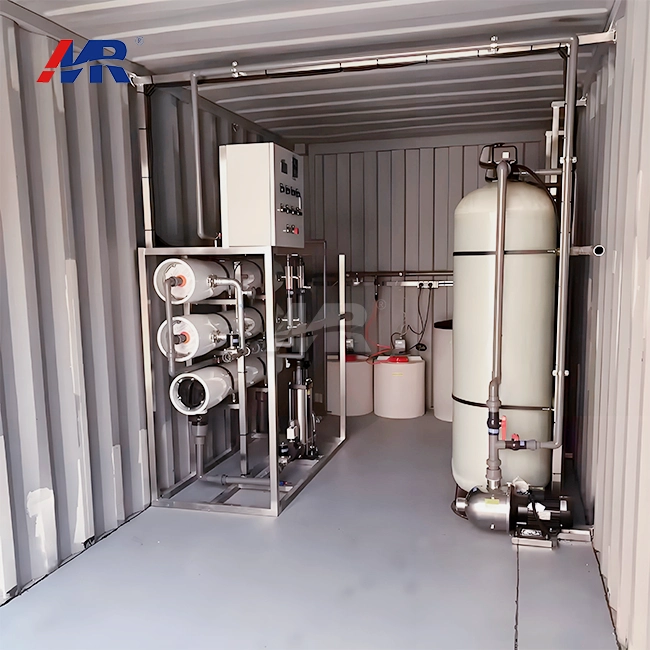
The OEM/ODM 2-stage reverse osmosis system builds that Guangdong Morui Environmental Technology does include putting the system together on a skid or in a container, customizing the PLC and remote monitoring, and adding instruments that are right for each client's water report. Our MR-BWRO-50TH model uses 55kw/hour of power, recovers 55–65% of the water it takes in, and rejects 99% of the salt. It was made to be portable and used in industrial, municipal, and process-water projects.
Conclusion
A two-stage reverse osmosis system usually needs to have its prefilter replaced, its membrane performance checked, its leaks checked, it flushed, and it cleaned every so often. How often you should do maintenance depends on the quality of the feed water, the system pressure, the number of hours the membrane is used, and the water quality needs of your application.
When comparing suppliers, don't just look at the price of the initial 2 stage reverse osmosis system. You should also look at the total cost of ownership, the flow capacity, the storage configuration, the certification needs, and the service support after the sale. These things will determine whether your system works well for five years or becomes a pain to maintain in the first twelve months.
FAQ
1. What is a 2-stage reverse osmosis system?
It is common for a two-stage RO system to have both a sediment or carbon filter and a reverse osmosis membrane. Before comparing units, always look at the actual process diagram for each product because some have extra post-treatment parts that aren't counted as primary RO stages.
2. How often should 2-stage RO system filters be changed?
Most of the time, sediment and carbon filters need to be changed every 6 to 12 months. The number of pressure drops, chlorine breakthroughs, actual water quality data, operating volume, and written instructions from the manufacturer should all be used to set the real interval, not just a fixed date on the calendar.
3. How long does a 2-stage RO membrane last?
Under normal conditions, an RO membrane should last between 2 and 5 years. That service life can be cut down by a lot, sometimes to less than a year, if it is exposed to chlorine, fouling, low inlet pressure, or bad pretreatment.
4. Is a 2-stage RO system suitable for well water?
Well water needs to be checked for hardness, iron, manganese, turbidity, bacteria, and nitrate before the system is sized. If it passes those tests, the system should work well. Before the RO membrane is added, the water usually needs to be treated in some other way, like getting rid of iron or softening.
Ready to Spec Your Next RO Project?
Please send us your raw water report and target flow rate if you are looking for a 2 stage reverse osmosis system manufacturer for a project in industry, government, or OEM. Guangdong Morui Environmental Technology makes custom and standard skids, like the MR-BWRO-50TH, and helps with installation and start-up all over Asia, Africa, and Latin America. Email our technical team at benson@guangdongmorui.com to get a proposal and a schedule for pilot testing your site.
References
1. NSF International — NSF/ANSI 58: Reverse Osmosis Drinking Water Treatment Systems (2024). https://www.nsf.org/knowledge-library/nsf-ansi-58-reverse-osmosis-drinking-water-treatment-systems
2. U.S. Environmental Protection Agency — Ground Water and Drinking Water (2024). https://www.epa.gov/ground-water-and-drinking-water
3. World Health Organization — Guidelines for Drinking-water Quality, 4th edition (2022). https://www.who.int/publications/i/item/9789241549950
4. ASTM International — Water Standards and Test Methods (2024). Products-services/standards-and-publications/standards/water-standards.html">https://www.astm.org/products-services/standards-and-publications/standards/water-standards.html
5. International Organization for Standardization — ISO 9001:2015 Quality Management Systems (2015). https://www.iso.org/standard/62085.html
6. European Commission — CE Marking (2024). https://single-market-economy.ec.europa.eu/single-market/ce-marking_en
About the Author – Renjie Kuang
Renjie Kuang is an experienced water treatment professional specializing in reverse osmosis systems and industrial water purification. With practical knowledge of RO system operation, maintenance, and troubleshooting, he shares insights to help plant managers, EPC contractors, and procurement teams improve system reliability, reduce downtime, and make informed equipment decisions.
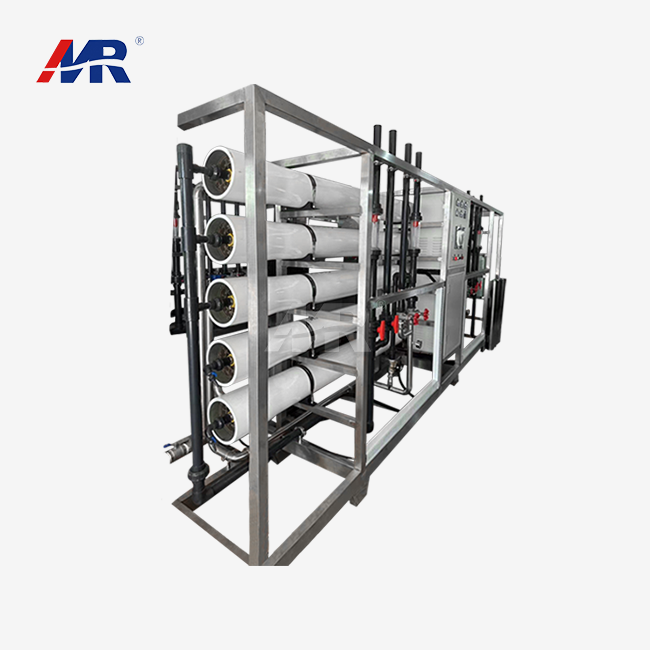 VIEW MOREhighest rated reverse osmosis system
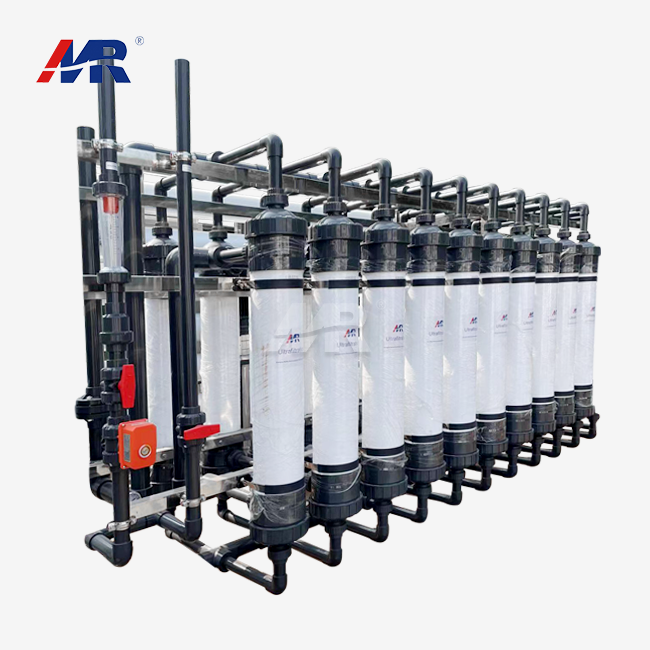 VIEW MOREultrafiltration drinking water system
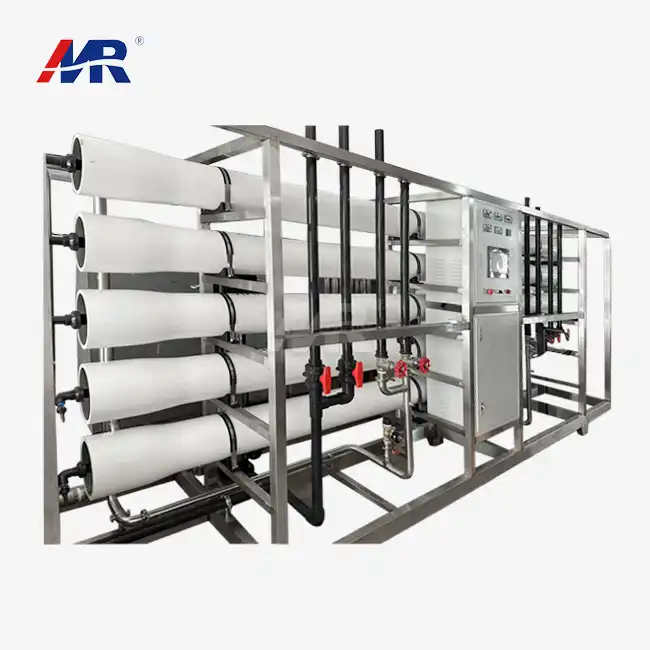 VIEW MORE25m3/hour reverse osmosis equipment
 VIEW MOREreverse osmosis plant
 VIEW MORE50m3/hour reverse osmosis equipment
 VIEW MOREcontainerized water treatment systems
 VIEW MORE12m3/hour reverse osmosis BWRO system
 VIEW MORE90T/H ultrafiltration equipment