_1745823981883.webp)

Cities need low-energy desalination tools for their water systems and desalination equipment. This is important as shortages become more common in cities around the world. These advanced-art systems use energy recovery devices and the newest in reverse osmosis technology to make seawater drinkable. They also save money and protect the environment. To meet the needs of cities' water People who plan cities and buy things for the government are using these solutions more and more to get supplies in an environmentally friendly way.
Introduction
As more people move to cities and things get worse because of climate change, the need for reliable city water supply solutions around the world is growing. Long-term water management depends on energy-efficient water treatment systems because they are better for the environment and save money. Modern desalination processes have greatly changed the way they use energy thanks to better membrane technology and process optimisation. This helps them work better in cities all over the world.
Guangdong Morui Environmental Technology Co., Ltd. makes new energy-saving desalination systems that are meant to be used in public projects. We help cities use the newest tools that find a balance between performance, cost, and sustainability. We are ready to help. We have over 500 employees, 14 locations worldwide, and 20 engineers. We offer all kinds of water treatment services, from industrial wastewater treatment to seawater desalination.
Understanding Energy Efficient Desalination Equipment
Today’s technology makes it possible to get salts and other unwanted materials out of seawater or brackish water. Reverse osmosis is still the most popular method for municipal applications. It uses semi-permeable membranes to keep the contaminants separate from the water molecules. Thermal distillation and mechanical vapour compression are other methods that each have their own benefits for certain situations.
Important Performance Measurements
Energy efficiency metrics are important standards for measuring how well a system works for desalination equipment. These include how much energy is used for each cubic metre of water that is made, how quickly salt is rejected, and how much water is recovered. Our high-tech systems are very efficient; they only need as little as 3 kWh/m³ while keeping recovery rates as high as 45%. Energy recovery devices use a lot less power and can get back up to 95% of high-pressure energy that would have been lost if they were not used.
Perks for the Environment
Using systems that don't waste energy lowers costs and helps the environment by lowering greenhouse gas emissions. This alignment helps the environmental goals of municipalities while also making long-term operational sustainability better. According to research, using newer technologies can lower carbon footprints by as much as 40% when compared to older systems.
Types of Energy-Efficient Desalination Equipment for Municipal Use
Municipal water treatment facilities depend on a number of different technologies that are each designed to meet certain needs and water quality standards. Understanding these choices helps procurement teams make smart decisions about what to buy.
Osmosis Systems in Reverse
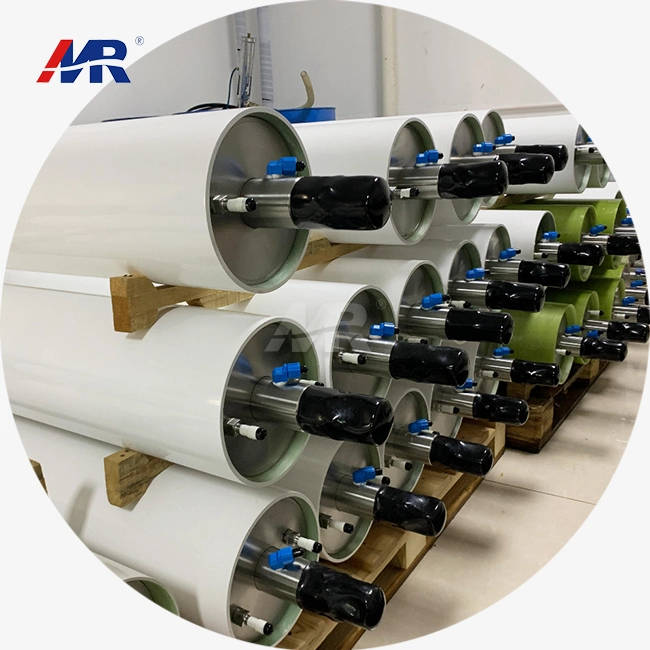
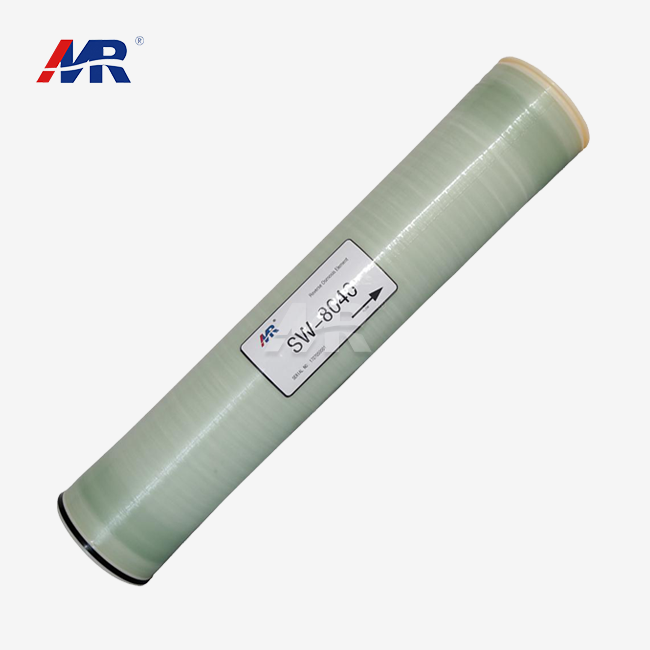
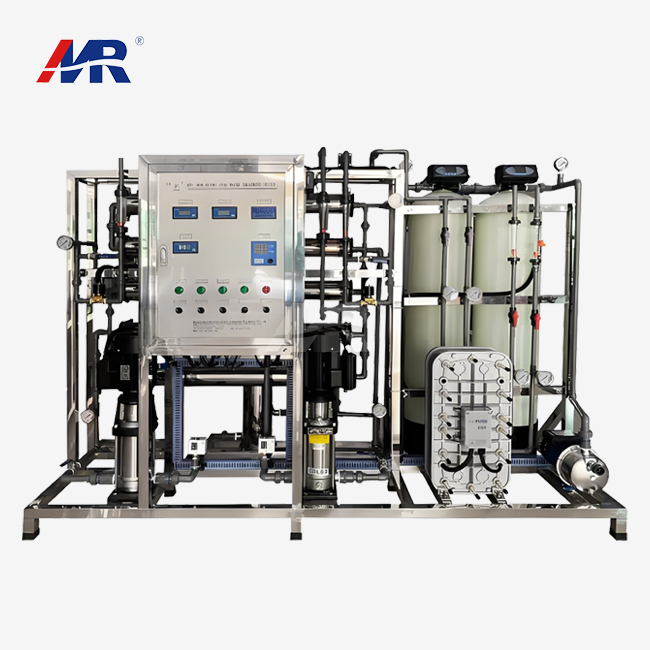
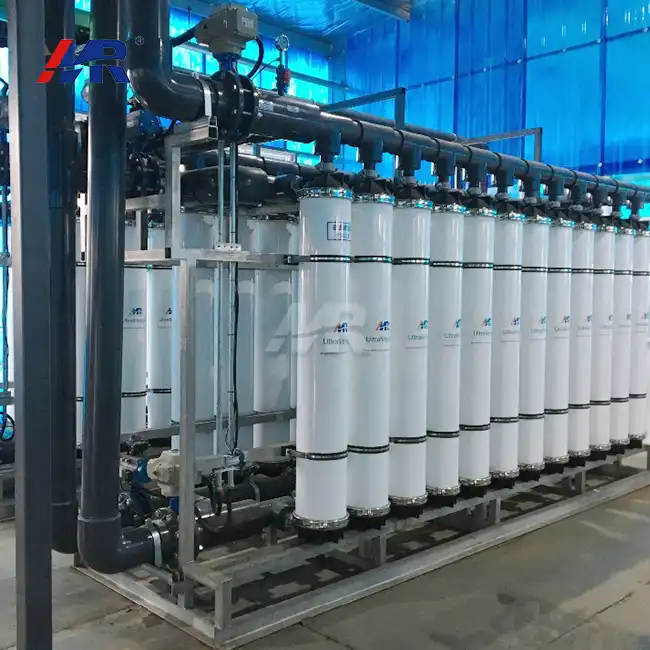
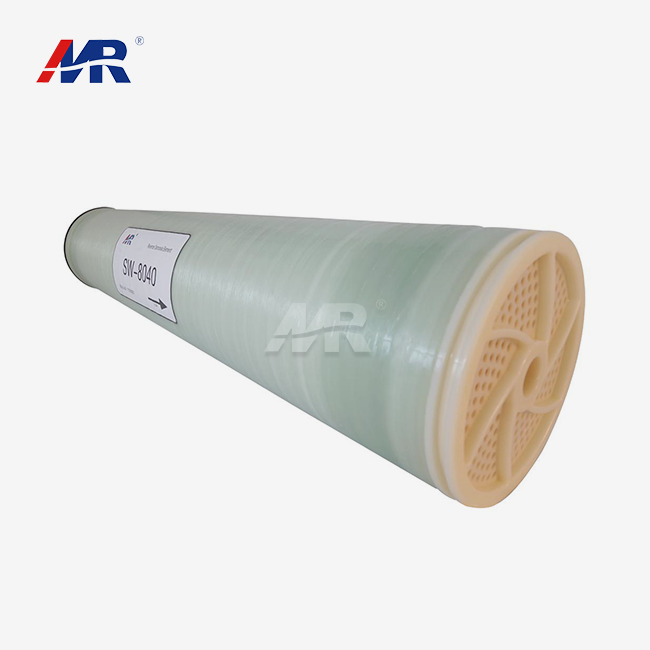
Municipal desalination most commonly uses technology that is similar to our reverse osmosis systems. These systems use advanced membrane technology with high-pressure pumping to get better water quality. The modular design makes it easy to scale up or down to fit capacities from 1,000 to 100,000 m³/day. Recently, energy profiles have been greatly improved by new membrane materials and energy recovery devices. Because of this, RO is now the most popular choice for most municipal applications.
Thermal Methods for Desalination
Multi-effect distillation and mechanical vapour compression are other ways to do things in certain situations for desalination equipment. Thermal methods, on the other hand, are better than RO when dealing with feedwater with a lot of salt or when there are chances to combine waste heat. These systems work best in places where the cost of energy is low, or there are a lot of sources of heat that don't harm the environment.
New Technologies
New inventions keep making the next generation of solutions possible. Forward osmosis, capacitive deionisation, and solar-powered desalination technologies are becoming more popular and could be used by cities in the future to save a lot of energy. These new ways work well with older ones, and as technology gets better, they might become the most popular options.
How to Choose the Right Energy-Efficient Desalination Equipment for Your Municipality?
Choosing the right water treatment technology requires a deep analysis of many things that affect long-term success and cost-effectiveness.
Standards for Technical Evaluation
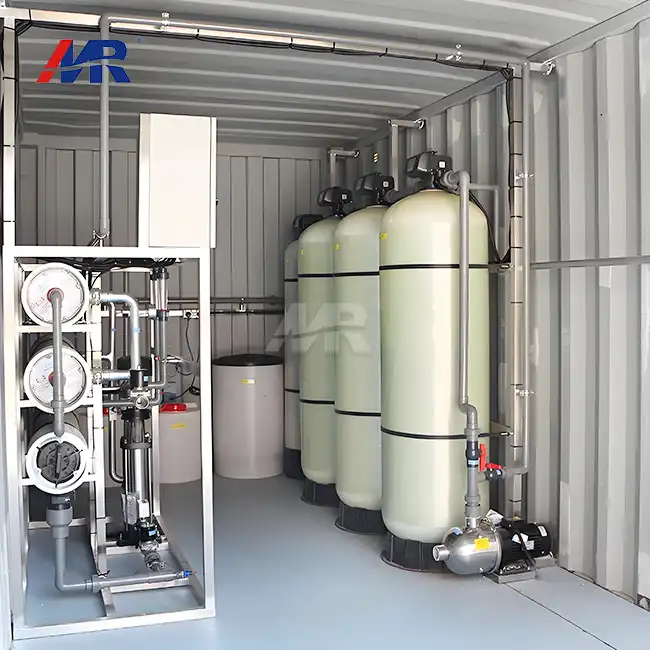
Engineers and procurement managers need to carefully study things like temperature changes, contamination profiles, and salinity levels in feedwater for desalination equipment. Our systems can handle different types of water because the pre-treatment settings can be customised. The compact footprint design makes the best use of space, which is especially useful for installations in cities where land is expensive.
Supplier Evaluation Factors
To keep the system up and running and to save energy, the supplier's reputation, installation knowledge, and after-sales support are very important. Our ISO-certified ways of making things guarantee steady quality, and our committed tech support team offers ongoing maintenance and optimisation services. Buyers can find Products that meet their town's sustainability and budget goals when they compare well-known makers.
Optimising Performance and Reducing Operational Costs
To get the best operational efficiency, you need to manage the things that affect energy use and system performance before they cause a problem. Understanding these factors helps cities get the most out of their investments.
Systems for Keeping an Eye on Performance
Our fully automated operational systems, which can be monitored remotely, give us real-time data so we can stay on top of issues with our operations. Based on feedwater conditions and production needs, smart control systems automatically adjust settings to get the best performance. This automation keeps the water quality up to standard and lowers the cost of labour at the same time.
Best Ways to Maintain
Energy efficiency and system longevity are greatly affected by routine maintenance protocols. Our materials that don't corrode make equipment last longer and need less maintenance. Strategies like replacing membranes on time and cleaning the system regularly have been shown to make the system work better. When the right maintenance is done on city equipment, energy costs go down by 15–25%.
Environmental and Regulatory Considerations
As rules change, municipal installations must continue to protect the environment and follow the new rules for desalination equipment. These factors are having a bigger impact on how people buy things and plan for operations.
Managing Brine Solutions
Good brine disposal methods protect the environment and follow the rules. Our concentrate management systems are more advanced than others. They lower the amount of waste that gets discharged, which is better for the environment. A lot of towns and cities either use brine treatment in combination with other industrial processes or make use of evaporation ponds for zero liquid discharge operations.
Following the Rules
Following environmental rules at both the local and global levels is still important for getting projects approved and keeping them running. Energy efficiency is in line with green procurement policies that want to lower carbon footprints and encourage investments in long-lasting infrastructure. Many areas give Certifications and rewards for using energy-efficient technologies that can make projects more financially viable.
Morui's Advanced Water Treatment Solutions
Guangdong Morui Environmental Technology Co., Ltd. provides complete water treatment solutions that are designed to be used in cities. We are experts in all stages of a project, from the first meeting with the client to ongoing support after the project is finished.
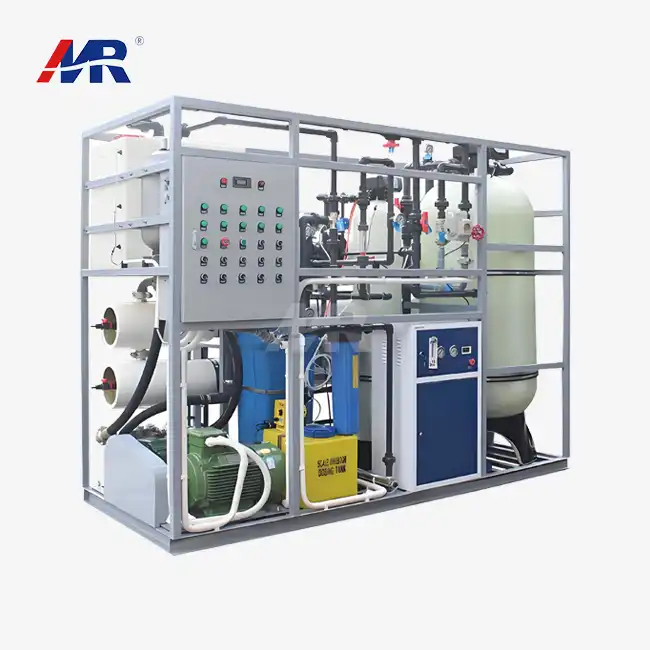
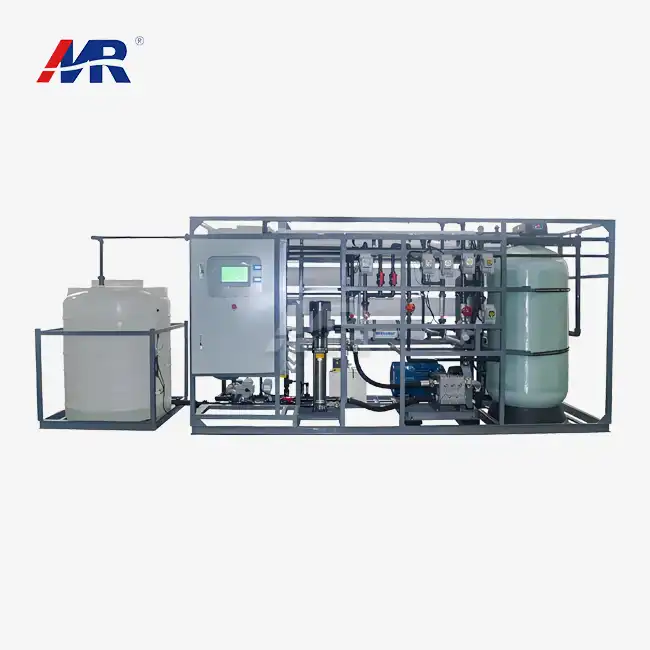
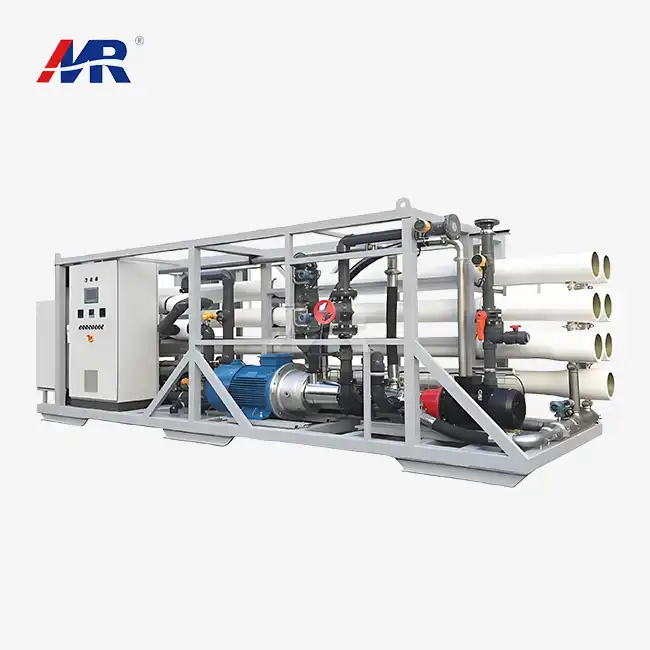
The advanced reverse osmosis systems in our product portfolio are great at turning seawater into drinking water for desalination equipment. These systems are built to last and work as well as possible. They use new technologies that have been customised to meet the needs of different businesses and cities. The workflow includes taking in and pre-treating seawater, pumping it at high pressure, filtering it with reverse osmosis membranes, post-treating and re-mineralising it, and finally delivering clean water to drink.
We run our own membrane production facility and a few equipment processing factories, which lets us fully oversee quality at every stage of production. We also work as licensed representatives for well-known brands like Shimge Water Pumps, Runxin Valves, and Createc Instruments, and we can combine different systems so they work together.
Conclusion
Cities that want to be environmentally friendly and make sure they have safe water should buy energy-efficient desalination tools. With the help of modern technologies, water production can be done at very high levels of efficiency and at low costs, making it possible to keep doing it over the long term. The use of advanced membrane technology, energy recovery systems, and smart process control together ensures dependable performance and lowers costs. As more people move to cities and climate patterns change, these technologies will be even more important for making sure that cities have enChoosing the right tech partners who help you throughout the entire system lifecycle is key to getting through tough times.
FAQ
Q1: What are the most important things that impact the energy efficiency of municipal systems that remove salt from water?
A: Energy efficiency is greatly affected by the type of membrane technology used, the quality of the feedwater, how well the energy recovery device works, and how well the operational parameters are optimised. Before treatment, proper pre-treatment lowers membrane fouling. At the same time, energy recovery systems that are more advanced can get back as much as 95% of pressure energy that would have been wasted if they weren't used.
Q2: How does thermal desalination compare to reverse osmosis for use in urban areas?
A: Reverse osmosis uses less energy than thermal processes most of the time. It needs about 3–4 kWh/m³, but thermal methods need about 8–12 kWh/m³. On the other hand, thermal technologies might work well for feedwaters that have a lot of salt in them or when it is possible to use waste heat sources.
Q3: What are the capacity ranges for municipal desalination projects?
A: These days' systems can handle many different sizes, from small community setups that do 1,000 m³/day to big city ones that do 100,000 m³/day or more. You can build the project in stages and add to it later if you use modular designs.
Partner with Morui for Your Municipal Water Solutions
Use Morui's advanced water treatment technology to turn your problems with city water into long-lasting fixes. Our all-inclusive method uses cutting-edge reverse osmosis systems, professional engineering help, and committed after-sales service to make sure your system works well for as long as it can. We know the public water systems needs because we are a top desalination equipment maker with public project experience. To help you get the most out of your investments, Our Team offers full project advice, custom design engineering, and ongoing Technical support. Emailing benson@guangdongmorui.com will allow you to talk about your needs and get a custom proposal. Go to moruiwater.com to see all of our products and find out why cities around the world trust Morui for their important water infrastructure needs.
References
1. Miller, J.E. (2021). "Energy Efficiency in Seawater Desalination: Technologies and Best Practices." Journal of Water Process Engineering, Vol. 42, pp. 102-118.
2. Thompson, R.K. & Davis, L.M. (2020). "Municipal Desalination Systems: Performance Analysis and Economic Evaluation." Desalination and Water Treatment, Vol. 198, pp. 45-62.
3. International Desalination Association. (2022). "Global Desalination Market Report: Municipal Applications and Energy Trends." IDA Technical Publications, Singapore.
4. Chen, W.Y., Rodriguez, P.A., & Ahmed, S.H. (2021). "Reverse Osmosis Technology Advances for Large-Scale Municipal Water Treatment." Water Science and Technology, Vol. 84, No. 8, pp. 1892-1906.
5. European Desalination Society. (2023). "Energy Recovery in Municipal Desalination Plants: Case Studies and Performance Metrics." EDS Annual Conference Proceedings, Barcelona.
6. Kumar, A., Singh, R., & Lee, K.J. (2020). "Environmental Impact Assessment of Energy-Efficient Desalination Technologies for Municipal Water Supply." Environmental Science & Policy, Vol. 114, pp. 298-307.