_1745823981883.webp)

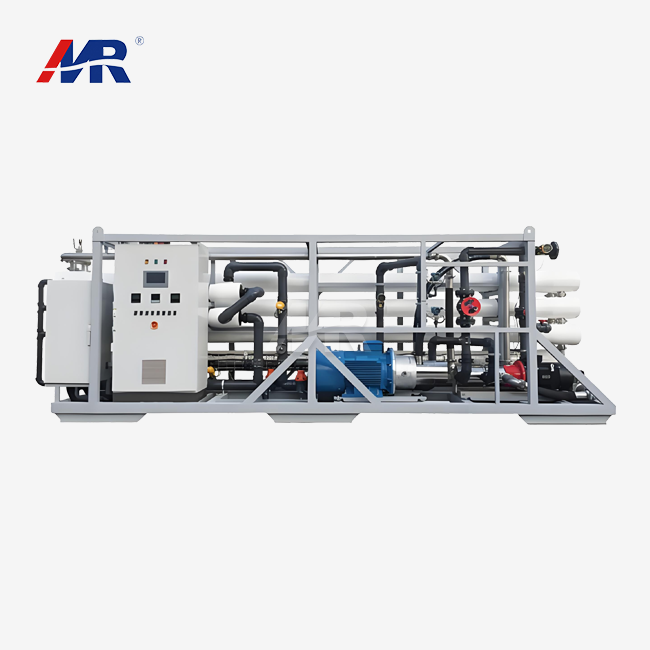
The principle of reverse osmosis technology for purifying seawater
In reverse osmosis, semipermeable membranes separate salts that have dissolved in water from other impurities. This is a complicated process. We can change a few important things about this process to make it work better:
Changes for the better in membrane technology
These days, ro membranes are made to reject as much salt as possible while using as little power as possible. Some membranes, like thin-film composite membranes, work better than older cellulose acetate membranes. These high-tech membranes can get rid of over 99.8% of salt, which makes the desalination process much more effective as a whole.
Systems that get pressure and energy back
There are high-pressure pumps that can get around the osmotic pressure of seawater for a seawater desalination system. But in the past, the process has had trouble getting the energy it needs. Energy recovery devices (ERDs) are now much more efficient thanks to changes that have been made to them. There is up to 60% energy in the high-pressure brine stream that can be used again by pressure exchangers and turbochargers. In general, this makes the system use a lot less energy.
Making the pretreatment work better
RO needs to be properly treated before it can keep working well. You can get rid of particles and organic matter that might get stuck in the RO membranes with new pretreatment methods, such as ultrafiltration and dissolved air flotation. The membrane will last longer and work more consistently after this pretreatment. This will help the desalination plant work well in the long run.
How well does reverse osmosis work for desalination?
We need to compare reverse osmosis to other ways of getting salt out of seawater to figure out how well it works:
RO vs. Heat-Based Desalination
Multi-stage flash (MSF) and multiple-effect distillation (MED) have been used for a long time to desalinate large amounts of water using heat for seawater desalination systems. But RO works better than these other methods:
- Energy Needed: Thermal methods can need 15–25 kWh/m³, while RO methods only need 3–4 kWh/m³.
- Water Return: RO can return 45–50% of the seawater, which is more than most thermal processes can do.
- Owing to their ability to be easily scaled up or down, RO plants can better adapt to changing water needs.
Using brand-new tools and RO
RO is still the best way to remove salt from large amounts of water, but scientists are still looking into other options:
- Forward osmosis: It could be useful in some situations, but it's not quite as good as RO at getting rid of salt from large amounts of seawater yet.
- Capacitive deionization is good at cleaning up brackish water, but it's not ready for seawater with a lot of salt in it yet.
- It is possible to combine membrane distillation with waste heat sources, but at the moment, it needs more energy to process seawater than RO.
RO is still the best and most useful way to remove salt from large amounts of seawater, even though these new technologies are coming out.
RO efficiency and what it means for the environment and the economy
It is very good at getting salt out of seawater, which is good for both the economy and the environment:
Protect the environment
Even though RO is great, we need to be aware of how it impacts the outdoors:
- Power: Newer RO plants use less power, which helps lower the CO2 that is released when salt water is taken out.
- To protect marine ecosystems, getting rid of brine the right way is important. However, RO systems that work well make less brine per unit of freshwater.
- Chemicals Used: Harsh chemicals aren't needed as much now that there are pretreatment and membrane technologies. This is better for the environment.
Being able to get paid
RO is more efficient, which is great for the economy in many ways:
- Because less energy is used, production costs go down. This makes desalinated water more affordable.
- RO plants can be made in a range of sizes to meet a range of needs. This helps people figure out how to put money into water infrastructure.
- Changes in Technology: Prices keep going down because membrane technology and energy recovery are always getting better.
It's getting cheaper to desalinate seawater for seawater desalination systems, which could help coastal areas around the world that don't have enough water.
Conclusion
Reverse osmosis (RO) remains the most effective technology for seawater desalination systems, offering high salt rejection rates of 99.5–99.8% while consuming only 3–4 kWh/m³, far lower than traditional thermal methods. Advances in membrane materials, energy recovery devices, and pretreatment technologies have enhanced efficiency, longevity, and environmental sustainability. Modern RO systems reduce chemical usage, lower brine discharge, and minimize energy consumption, making desalinated water more affordable and environmentally responsible. With scalable designs suitable for municipal, industrial, and offshore applications, RO desalination continues to be the preferred solution for addressing global freshwater shortages and supporting long-term water security.
FAQs
1. What are some better ways than reverse osmosis to clean water?
Reverse osmosis is usually the best way to get rid of salt in water, especially seawater. You can get more water back than with thermal methods like multi-stage flash distillation, and you need less power. One way to clean water sources that aren't very salty is through nanofiltration. Another way is through electrodialysis. RO is still the best way to remove salt from seawater, though, because it does so with very little energy.
2. How does RO work better now that there are new technologies?
Some new features have made RO work better. An easy way to do this is to make membranes that let water pass through very quickly. It took less energy to do this. Things that get energy back have also gotten better and can now use up to 98% of the energy in the high-pressure brine stream. It also works better and costs less to run because the systems are better designed and the pretreatment technologies are more advanced.
3. How long does reverse osmosis last?
As technology improves, reverse osmosis desalination is becoming better for the environment. Long-term desalination plants are more likely to last because they get their power from more renewable sources. Yes, but they still need a lot of power. To help the environment, people are also coming up with better ways to deal with brine and making pretreatment methods that are better for the environment. RO desalination is becoming a better and more practical way for many places to make sure they have enough water in the long term as the water shortage gets worse.
Innovative ways to remove salt from seawater for long-term water needs | Morui
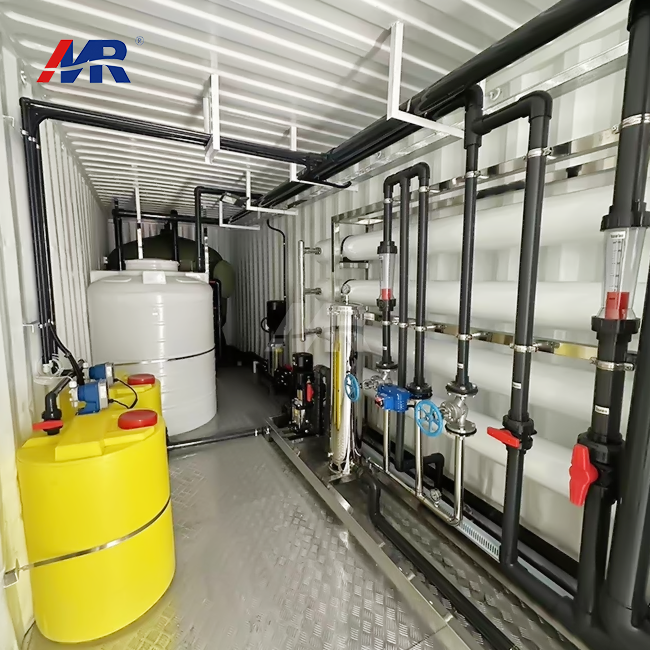
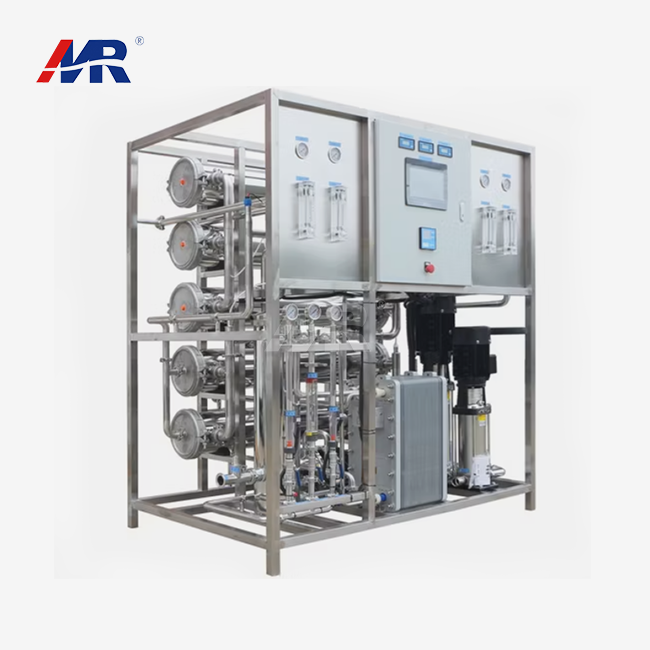
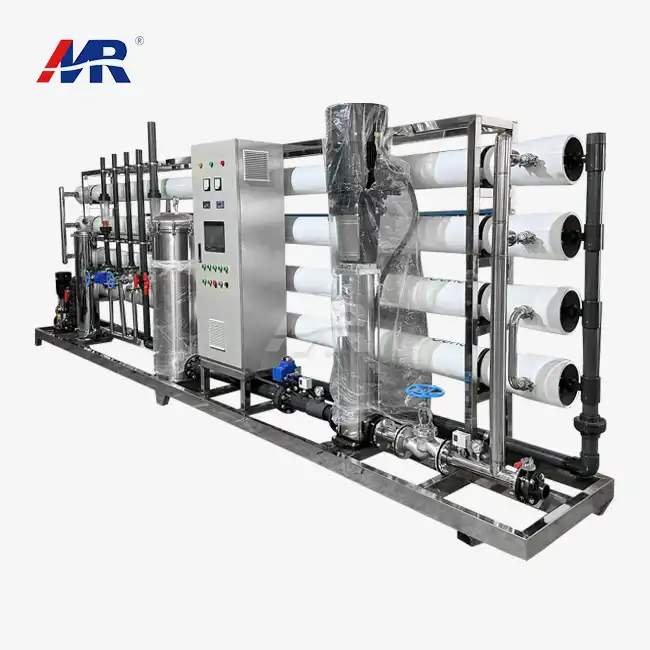
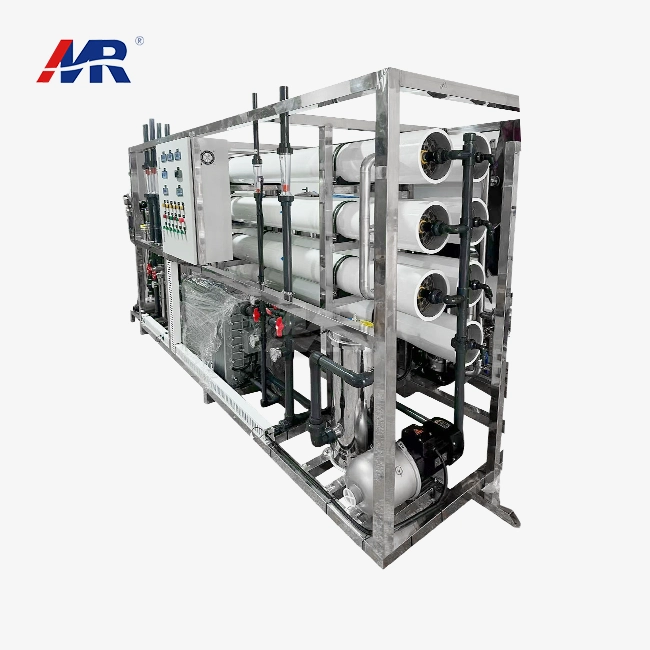
Are you trying to find a reliable and strong way to get salt out of seawater for a seawater desalination system? You only need to look at Guangdong Morui Environmental Technology Co., Ltd. Our cutting-edge reverse osmosis systems are designed to meet the needs of a wide range of companies, from those that make things to those that clean city water. We offer flexible, high-performance desalination solutions that make sure there is always fresh water available. This is because we are committed to excellence and know a lot about water purification technology.
Our systems for desalinating seawater are made to work well in tough conditions, whether you're in charge of a beach resort, a city's water project, or a platform out at sea. It is important to have reliable and effective desalination technology because we know how important it is to have safe water.
Don't let not having enough water stop your business or your neighborhood from growing. Contact us right away at benson@guangdongmorui.com to find out how our state-of-the-art reverse osmosis technology can help you make your water clean. Our Team of experts is ready to help you come up with a custom solution that works best for you and doesn't cost too much. Get in touch with Guangdong Morui Environmental Technology Co., Ltd. to learn how our state-of-the-art desalination systems can help your project. This is the first step toward managing water in a way that lasts.
References
1. Johnson, R. A., & Elimelech, M. (2015). "Seawater Reverse Osmosis Desalination: Recent Advances and Future Challenges." Journal of Membrane Science, 480, 15-28.
2. Ghaffour, N., Missimer, T. M., & Amy, G. L. (2013). "Technical review and evaluation of the economics of water desalination: Current and future challenges for better water supply sustainability." Desalination, 309, 197-207.
3. Voutchkov, N. (2018). "Energy use for membrane seawater desalination – current status and trends." Desalination, 431, 2-14.
4. Elimelech, M., & Phillip, W. A. (2011). "The Future of Seawater Desalination: Energy, Technology, and the Environment." Science, 333(6043), 712-717.
5. Gude, V. G. (2016). "Desalination and sustainability – An appraisal and current perspective." Water Research, 89, 87-106.
6. Fritzmann, C., Löwenberg, J., Wintgens, T., & Melin, T. (2007). "State-of-the-art of reverse osmosis desalination." Desalination, 216(1-3), 1-76.