_1745823981883.webp)

Ultrafiltration Water System Cost and Performance Guide
When choosing the right ultrafiltration water system, you need to weigh the original cost against how well it will work in the long run. Prices change a lot depending on how much they can handle. Small units that can handle 1,000 m³/day cost $15,000, while industrial-scale setups that can handle 100,000 m³/day cost over $500,000. Your total cost of ownership is directly affected by performance factors such as membrane hole size, removal efficiency, and energy use. Figuring out these factors helps people make choices about systems that provide clean water while also giving the best return on investment for uses in medicine, food processing, and city government.
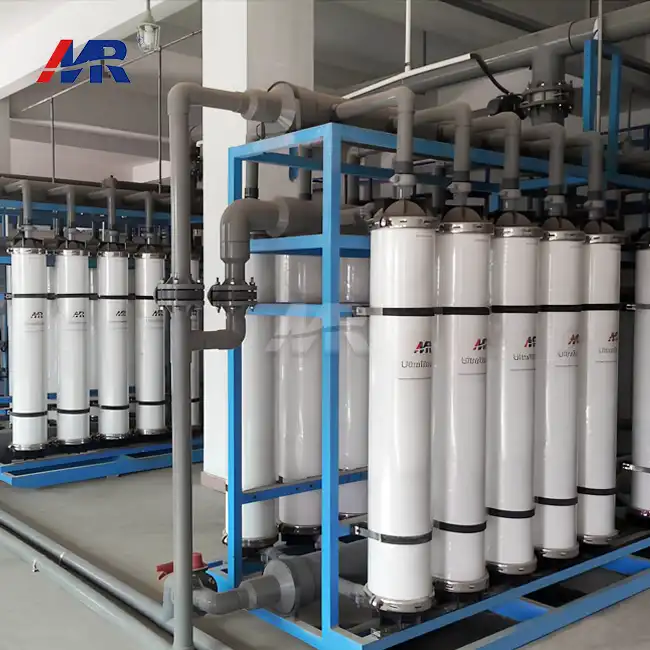
Understanding What Drives Ultrafiltration System Investment
Technical managers usually only look at the price of water purification equipment when they rate it. This narrow view leaves out important factors that affect how much a job really costs. A full evaluation looks at the quality of the membrane, the amount of automation, and how hard it is to install.
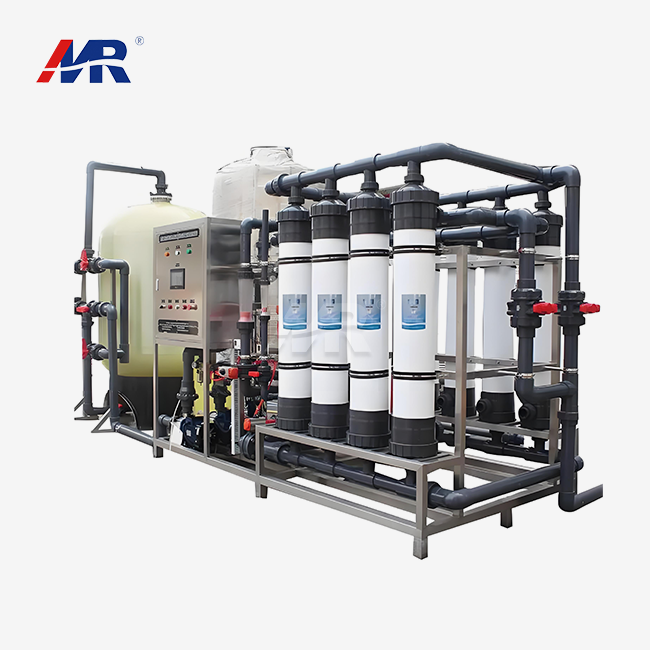
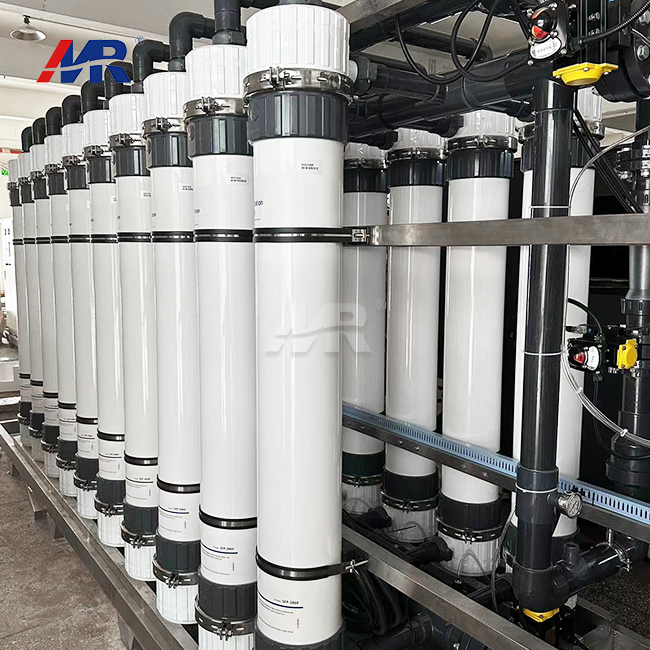
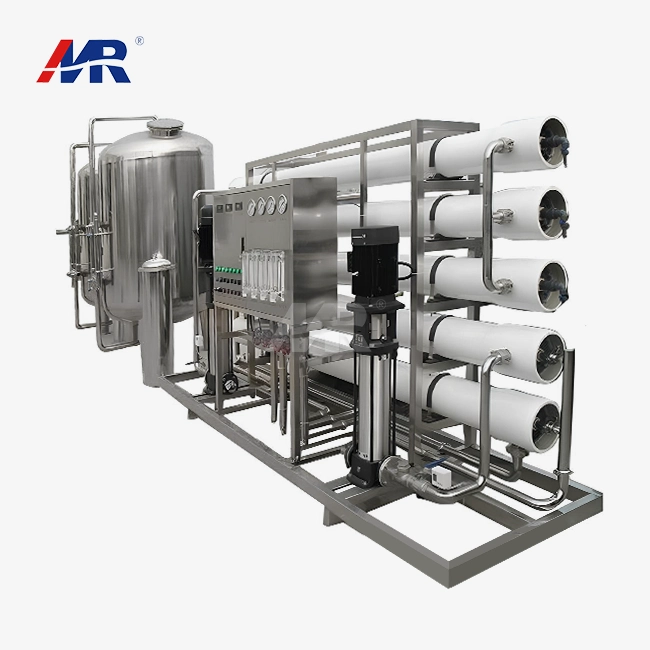
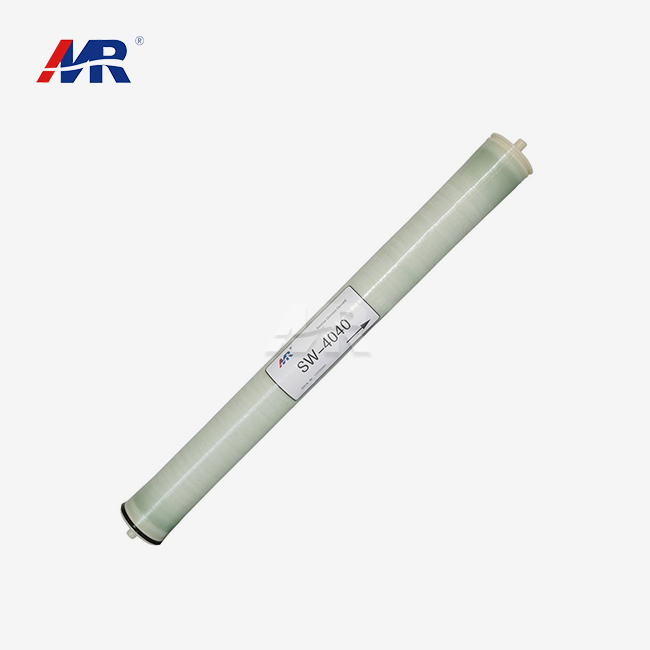
Membrane filtering is what every system is built around. Pores in hollow fibre membranes that are between 0.01-0.1 microns in size can successfully trap bacteria, viruses, and suspended particles while still letting minerals that are dissolved pass through. Higher-quality screens made with special polymers last longer, but they cost more up front. These high-quality parts often lower the number of times they need to be replaced from three years to five to seven years, which moves costs from routine budgets to capital budgets.
Pricing structures are directly linked to system performance. For $8,000 to $12,000, small drinking water systems for labs could handle 50 to 100 litres of water per hour. Industrial water cleaning systems that can handle 10,000 m³/day usually cost between $80,000 and $150,000. Custom engineering is needed for large municipal systems, which cost more than $500,000 to build. Businesses can increase capacity as demand rises without having to replace the whole system because modular designs allow for staged growth.
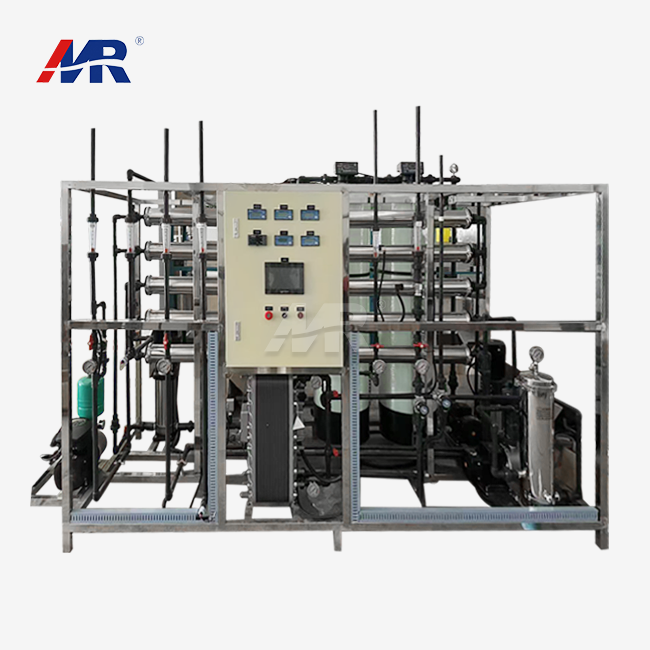
Features of automation have a big effect on both costs and the amount of work that needs to be done for an ultrafiltration water system. For backwashing processes and pressure checks, basic manual systems need the operator's full attention at all times. Automated operating with programmable logic controllers (PLCs) costs an extra $10,000 to $40,000, but it cuts down on labour costs and mistakes made by people. Modern systems include tracking in real time, automatic valve control, and maintenance alerts that are planned ahead of time. This level of complexity is often required to keep GMP compliance and product consistency in the pharmaceutical and electronics industries.
Performance Metrics That Matter for Your Operation
For contaminant removal applications, removal efficiency is the most important measure of success. Ultrafiltration technology that works well gets rid of more than 99.9% of germs, protozoa, and suspended solids. Because of this, these systems are necessary for making food and drinks where bacterial contamination could affect the safety of the Products. Plants that make drinks like this are consistent a lot because even small changes in quality can affect the taste and shelf life of the drinks.
The amount of energy used has a direct effect on the system's running costs over its 15–20-year life. Modern designs use only 0.1 to 0.3 kWh per cubic metre of water that is handled, which is a lot less than many other reverse osmosis setups. At $0.12/kWh, a plant that processes 20,000 m³ per month spends about $240 to $720 per month on electricity. This edge in efficiency stands out more in continuous operations, like wastewater treatment plants that are open 24 hours a day, seven days a week.
The membrane flow rate tells us how much water moves through the membrane surfaces in a given amount of time. Higher flux rates allow sites with smaller footprints, which is very important for facilities that don't have a lot of room, like offshore platforms or water treatment plants in cities. Rates are usually between 50 and 100 litres per square metre per hour, and the normal working pressure is between 0.1 and 0.3 MPa. During operation, flux naturally decreases as foulants build up on membranes. This makes backwashing regularity an important maintenance issue.
Improving the cleanliness of the water is more than just getting rid of particles. Ultrafiltration screens lower turbidity to less than 0.1 NTU, making water that is clear for use in precision manufacturing. Electronics companies that clean semiconductor chips can't have any particles in the air that could cause problems. In the same way, drug companies that make injected medicines need to process water that is always clean and meets strict pharmacopoeia standards. These demanding applications support spending more on systems because they lower the number of problems with the products.
How Different Industries Calculate System Value?
When factories look at new tools, they figure out the total cost of ownership over 10 to 15 years. A chemical company that wants to buy a $15,000 m³/day system for $200,000 compares the costs of replacing the membranes ($30,000 every 4 to 5 years), the energy used ($15,000 a year), and the labour needed for regular maintenance ($8,000 a year). This all-around view shows if a cheaper initial buy leads to expensive running costs. This study is especially helpful for electroplating businesses because making deionised water has a direct effect on the quality of the coating and the cost of getting rid of waste.
When it comes to balancing public health needs with taxpayer funds, municipal water systems have their own problems. A city that wants to improve its water treatment systems so that they can serve 50,000 people might spend $800,000 on ultrafiltration. This cost gets rid of pathogens in drinking water and lowers the need for chemical disinfectants. As rules get stricter on getting rid of cryptosporidium and giardia—contaminants that can't be killed by chlorination—more and more small towns are turning to membrane technology.
Food processing plants figure out their worth by keeping quality high and cutting down on waste using an ultrafiltration water system. Ultrafiltration Equipment costs about $120,000 for a dairy that treats 5,000 m³ of water every day for clean-in-place systems. With this investment, seasonal changes in water quality that used to mess up production plans will no longer happen. In the same way, beverage makers rely on stable water chemistry to keep the taste of their products consistent. The power to change water from different sources into water of the same quality justifies spending a lot of money on it.
Agricultural businesses in areas with little water see these systems as tools that help them make more food, not as costs that they have to pay for. When brackish freshwater is treated in irrigation projects, resources that couldn't be used are turned into useful crop inputs. A $180,000 agricultural system that can work for 10,000 m³/day could make it possible to grow $2 million worth of crops every year on land that wasn't used for farming before. Ultrafiltration for recirculating systems in aquaculture sites lowers the number of diseases that occur, which increases survival rates and harvest weights that quickly pay for the equipment.
Comparing Compact Versus Large-Scale System Economics
Businesses that are trying new ways to treat water can benefit greatly from small installations that serve labs, clinics, or pilot production lines. Installing a small 1,000 m³/day system that costs about $35,000 is not hard at all. These units come on skid frames already put together; all that's needed are electrical hookups and pipe integration. This is a common way for hospitals to set up medical-grade water for dialysis centers because it can be used right away without a lot of building.
The volume range where customisation is useful is between 10,000 and 30,000 m³/day for medium-sized businesses. There are standard catalogue systems, but application-specific tech is what most buyers need. A factory that makes semiconductors needs ultrapure water that is made by preparation with UF, reverse osmosis, and EDI polishing. Particles that would otherwise damage expensive RO filters are taken out in the ultrafiltration stage. This safety feature makes it worth spending $150,000 to $250,000 on the right-sized filter capacity that makes downstream equipment last longer.
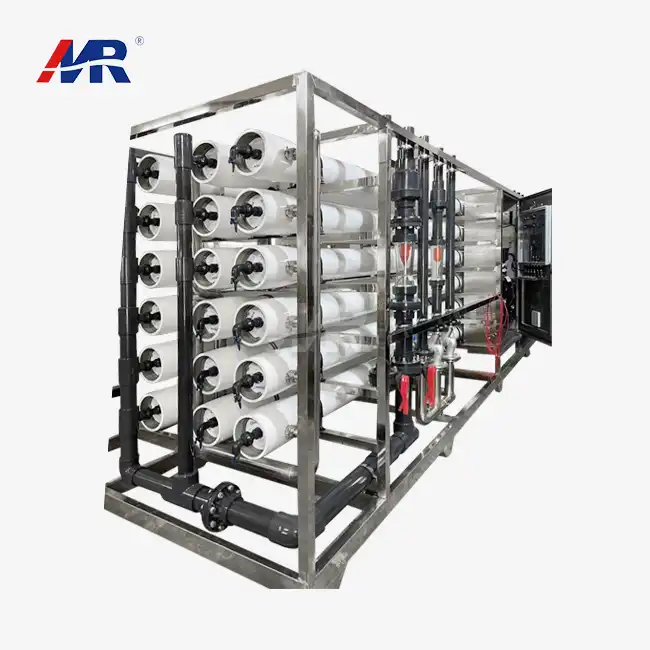
Large industrial sites that process more than 50,000 m³/day need full project management that includes building the infrastructure, wiring, and integrating the control system. A petrochemical plant that is treating oilfield water to use again might spend between $600,000 and $1.2 million just on membrane systems. From planning to commissioning, these projects take 8 to 14 months and involve a lot of different engineering fields. Some buyers are scared off by how complicated it is, but well-known companies that sell water treatment equipment handle these kinds of installations all the time. With turnkey methods, design, procurement, and installation are all handled by a single vendor, which makes the process easier for facility owners.
Maintenance Requirements and Their Cost Implications
Backwashing is an important part of maintaining a water system, but it uses 3–7% of the water that is created. Every 30 to 60 minutes, based on the quality of the feed water, an automated backwash cycle lasts 30 to 90 seconds. This process changes the direction of flow, which moves particles that have built up on barrier surfaces. When backwashed correctly, the membrane lasts five to seven years instead of three, which saves a lot of money. Better upkeep saves $40,000 on replacing a membrane module, which gives investors in automation a quick return on their money.
When backwashing alone can't bring flux rates back to normal, chemical cleaning is needed. Chemical-enhanced backwashing (CEB) is usually done once a week or once a month. It uses acidic and basic solutions to get rid of organic waste and mineral scales. Cleaning chemicals range in price from $500 to $2,000 a month, based on the size of the system and the type of water used. Facilities that deal with heavily polluted industrial wastewater clean up more often than local facilities that deal with water that has already been settled. Because of this, pilot testing is helpful before finalising the system's requirements.
The most expensive part of regular upkeep is replacing the membrane. The price of a module is between $150 and $400 per square metre of filtration space. Every 4 to 6 years, a medium-sized system with a 500 m² membrane area will need to be replaced, which will cost $75,000 to $200,000. Operators who carefully maintain their membranes and extend their life save a lot of money. Some drug companies test the quality of their products every three months using the bubble point or pressure decay methods. This proactive method finds membranes that are failing before they stop working completely, which stops production.
Like other industrial tools, pump and valve parts need to be serviced on a regular basis. Every 18 to 24 months, feed pumps that are always running need to have their seals replaced, which costs $800 to $1,500 per service. Every month, automated control valves cycle thousands of times, which wears out motors that need to be replaced every three to four years. These planned repair events let budgets be accurately predicted. Keeping spare parts on hand helps facilities avoid downtime when parts break down suddenly.
Regional and Application-Specific Cost Variations
Coastal places with seawater desalination projects have unique problems that affect how the systems are designed and how much they cost. Ultrafiltration is an important step before reverse osmosis because it gets rid of algae, bacteria, and suspended solids that quickly clog RO filters. This two-step process is used by island settlements and offshore platforms. A UF pretreatment system for 5,000 m³/day of saltwater costs between $180,000 and $250,000, which is about 20 to 30 per cent of the total cost of the desalination project. This cost is worth it because it extends the life of the expensive ro membrane from 3 years to 5–7 years.
Power plants need very pure water for the boiler feedwater to keep scale from forming and rust from happening. Thermal plants and nuclear power plants use ion exchange or edi systems along with ultrafiltration to make water that has a conductivity of less than 0.1 μS/cm. The UF step gets rid of particles that would clog ion exchange resins. This cuts the amount of regeneration chemicals needed by 30 to 40 per cent. A 20,000 m³/day system for a 500 MW power plant costs between $300,000 and $450,000, but it protects boilers worth tens of millions of dollars.
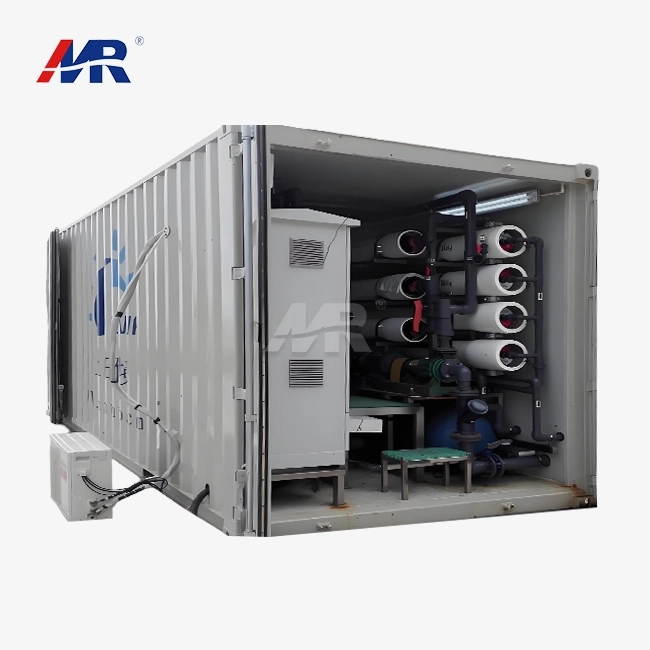
Construction sites and mining activities that are far away use an ultrafiltration water system, like mobile or containerised systems that can be set up without permanent infrastructure. A 40-foot container that holds a 2,000 m³/day unit costs $90,000 to $130,000 and can be set up quickly. These methods are useful for short-term tasks like keeping dust down, cleaning equipment, or setting up worker camps. When a project is finished, the units are moved to new locations, which spreads the cost of capital over more than one use. This mobility is appealing to workers and mining companies that work in tough places.
Making Your Investment Decision With Confidence
Choosing between competing ultrafiltration options requires evaluating your specific water challenges, quality targets, and budget constraints. Decision-makers benefit from pilot testing that reveals how different membrane configurations perform with actual feed water. A three-month trial processing 1-5% of target capacity costs $8,000-$15,000 but eliminates expensive specification errors.
Requesting detailed proposals from multiple equipment suppliers reveals important capability differences. Compare not just equipment pricing but also membrane brand reputation, automation sophistication, and post-installation support. Companies offering turnkey responsibility for design, installation, and commissioning simplify project execution compared to coordinating multiple subcontractors. This integrated approach proves particularly valuable for organisations lacking in-house water treatment expertise.
Financing structures significantly affect project feasibility. Capital purchases suit organisations with available funds and depreciation capacity. Operating leases convert large capital requirements into predictable monthly expenses, preserving credit lines for core business needs. Some equipment suppliers offer performance-based contracts where payment correlates with delivered water quality and quantity. These innovative structures align vendor and customer interests while reducing buyer risk.
Total cost of ownership calculations extending 10-15 years provide realistic financial projections. Include membrane replacements, chemical cleaning, energy consumption, and operator labour in your analysis. Systems with 15% higher initial cost often deliver lower total ownership expenses through superior energy efficiency and longer membrane life. Smart buyers recognise that the cheapest purchase price rarely represents the best value.
Partner With a Trusted Ultrafiltration Water System Manufacturer
Guangdong Morui Environmental Technology delivers integrated water purification solutions, including an ultrafiltration water system, backed by 20 specialised engineers and in-house membrane production capabilities. Our ultrafiltration systems serve pharmaceutical, food processing, and municipal clients across 14 regional branches. Whether you need a compact laboratory system or a 100,000 m³/day industrial installation, Our Team provides equipment selection, installation, and commissioning support. Contact Benson at benson@guangdongmorui.com to discuss your water quality requirements and receive a customised performance assessment.
References
1. American Water Works Association. (2022). Membrane Technology Research Committee Report on Ultrafiltration Performance Standards. Denver: AWWA Publications.
2. Chen, V., Li, H., & Fane, A.G. (2021). Membrane Fouling and Cleaning in Ultrafiltration Systems: Industrial Applications and Case Studies. Singapore: Water Treatment Press.
3. International Desalination Association. (2023). Global Water Reuse and Membrane Technology Market Analysis 2023-2030. Topsfield: IDA Publications.
4. Patel, S.K. & Thompson, M.A. (2022). Cost-Benefit Analysis of Advanced Filtration Systems in Industrial Water Treatment. Journal of Environmental Engineering, 148(4), 112-128.
5. United Nations Industrial Development Organization. (2021). Best Available Techniques for Water Purification in Pharmaceutical Manufacturing. Vienna: UNIDO Technical Reports.
6. Water Environment Federation. (2023). Membrane Bioreactor and Ultrafiltration Systems: Design, Operation, and Economic Evaluation. Alexandria: WEF Press.