

_1745823981883.webp)

Ultra Filtration Plant Design: Key Steps for Better Water Quality
Designing an ultra filtration plant requires precision engineering and strategic planning to consistently deliver contaminant-free water. At its core, an effective membrane filtration system must address feed water characteristics, operational parameters, and downstream quality requirements. Whether treating municipal drinking water, pharmaceutical process streams, or food-grade applications, the architecture of your UF system determines filtration efficiency, energy consumption, and long-term maintenance costs. Proper plant design transforms raw source water into high-purity output with minimal chemical intervention, ensuring compliance with industry regulations while safeguarding your operational budget.
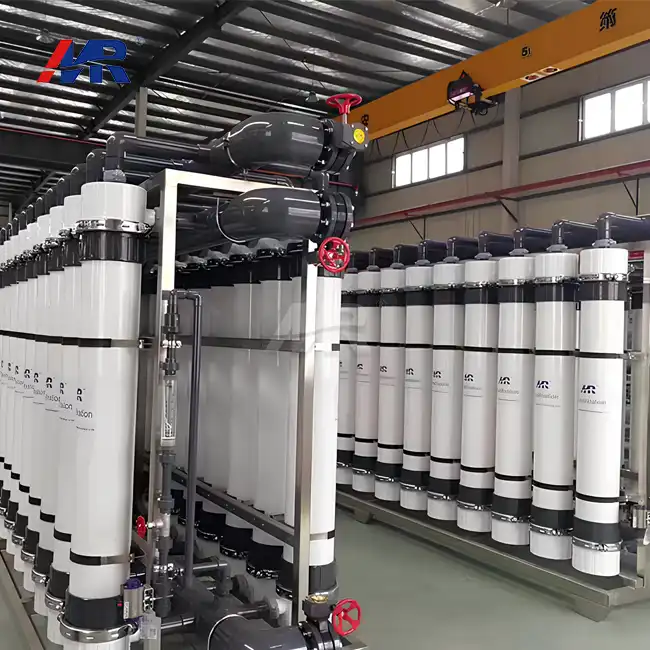
Understanding Ultra-Filtration Technology
What Constitutes an Ultra Filtration Plant?
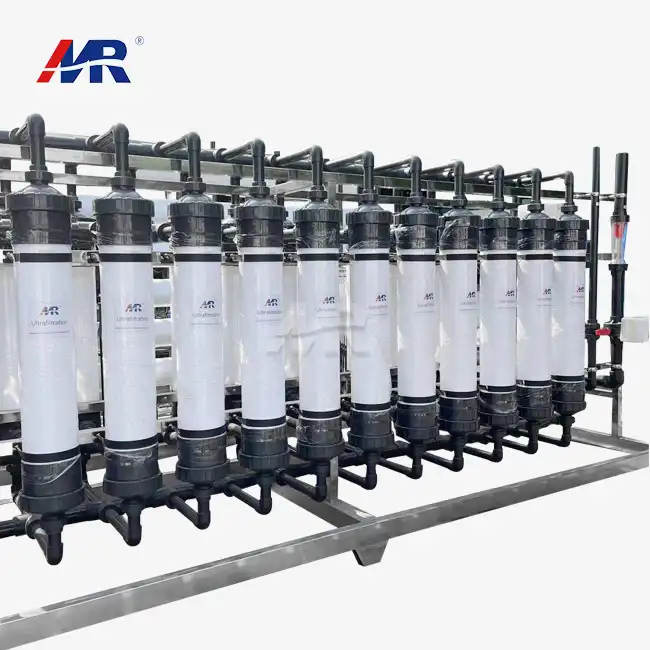
An ultrafiltration system uses hollow fiber or flat sheet membranes with precisely controlled pore sizes between 0.01 and 0.1 microns to separate things using pressure. These advanced membrane modules are different from regular sand filters because they create a physical barrier that blocks bacteria, viruses, proteins, and floating solids while letting dissolved salts and small molecules pass through. The structure of the plant usually has pre-treatment units, high-pressure feed pumps, membrane racks, automatic control systems, and backwash recovery units that all work together. This setup keeps the quality of the permeate the same even if the turbidity of the raw water changes or the amount of contaminants changes with the seasons.
Membrane Filtration Hierarchy and UF's Unique Position
When it comes to membrane technologies, ultrafiltration is a good compromise between microfiltration and nanofiltration. Microfiltration can handle particles bigger than 0.1 microns, but it can't always get rid of germs. Nanofiltration and reverse osmosis, on the other hand, work at much higher pressures to get rid of dissolved contaminants at the molecular level. UF removes pathogens at a rate equal to 4 log reductions of viruses and 6 log reductions of bacteria, which are important standards for potable water, while using only 0.1 to 0.3 kWh per cubic metre. This energy economy means that it saves 40 to 60 percent of the energy needed to run compared to RO systems in situations where demineralisation is not needed.
Environmental and Economic Advantages
Chemical coagulants like chlorine, alum, and others that were once used to clear water are not as important in modern membrane filtration systems. This change cuts down on the production of sludge by up to 70% and gets rid of the disinfecting byProducts that come with chlorine treatment. Membrane modules have a small footprint—usually 25–40% smaller than regular clarifiers—which makes them great for adding treatment capacity to existing facilities or placing them in industrial areas with limited room. Because it is modular, it is possible to gradually increase capacity. This lets companies that make medicines, drinks, and electronics plan their capital investments to match their production growth paths.
Key Design Steps for an Effective Ultra Filtration Plant
Comprehensive Feed Water Analysis
To be successful, you must carefully describe the quality parameters of the source water. Before choosing the membrane chemical, our engineering team does SDI testing, TOC measurement, and microbial plate counts to get a sense of the average fouling potential. Surface water often has algae and humic substances that need extra cleaning before it can be used, while groundwater may have iron and manganese that build up on barrier surfaces. We look at yearly changes over 12-month rounds to make sure that the design parameters take into account the worst-case scenarios instead of the average readings. This keeps the system from not working well during times of high contamination.
Selecting Appropriate Membrane Technology
Picking the right membrane means finding a mix between how well it stops fouling, how long it lasts mechanically, and how well it works with cleaning routines. Here are the main criteria we use for evaluation:
- Hydrophilic Modified PVDF Membranes: These materials don't get clogged up with organic matter in high-TOC settings like those found in food processing and reusing wastewater from cities. When compared to membranes that haven't been changed, the hydrophilic surface modification makes protein binding 35–50% less likely.
- PES Membranes for Pharmaceutical Use: Polyethersulfone is very resistant to reactive cleaners and keeps its shape even after being cleaned many times with hot water and caustic solutions, which is what USP and EP water standards say should happen.
- PTFE Membranes for Aggressive Chemistry: Fluoropolymer membranes offer the best chemical stability across pH ranges of 1 to 14, making them ideal for cleaning electroplating wastewater or chemical processing streams that contain acids or solvents.
If you choose the right materials for an ultra filtration plant, you can increase the time between membrane replacements from 3 to 5 years to 7 to 10 years under the same operating conditions. The cost savings from not having to change membranes and deal with system downtime make the detailed material assessment step worthwhile.
Process Flow Configuration and Integration
We set up the treatment train with multiple barriers to protect it, starting with coarse screens (1-3 mm) and cartridge pre-filters (20-50 microns) that get rid of debris that could damage the membrane fibers physically. The feed pump station keeps the pressure between 0.1 and 0.3 MPa, which is high enough to beat transmembrane resistance without causing compression, which would lower permeability. Every 20 to 45 minutes, our systems have automatic backwash processes that reverse the flow to get rid of solids that have built up and bring flux rates back to 95 to 98 percent of clean water levels. This fluid cleaning cuts down on the use of chemicals while keeping production going.
To connect to current infrastructure, hydraulic connections, electrical compatibility, and the design of the control system must all be carefully looked at. We create PLC-based automation that talks to client SCADA platforms using Modbus or OPC protocols. This lets us keep an eye on transmembrane pressure, permeate flow, temperature, and conductivity from one place. This connectivity lets you plan preventative maintenance based on how things are working instead of making repairs when they break down.
Establishing Maintenance and Troubleshooting Protocols
Preventive repair plans make things last longer and cut down on unplanned downtime by 60–75%. Every three months, we test the stability of the membrane using either the pressure decay or bubble point methods to find fiber breaks before they affect the quality of the permeate. Chemical cleaning-in-place (CIP) cycles use a series of alkaline and acidic solutions to get rid of different types of dirt. The alkaline solutions break down biofilm and organic deposits, and the acidic cleaners get rid of mineral scale. Keeping accurate records of how often the membrane is cleaned, how much chemical is used, and how much flux is recovered after cleaning provides a performance standard that lets you find permanent fouling early and replace the membrane.
Comparing Ultrafiltration with Alternative Technologies for Industrial Use
Precision and Contaminant Removal Capabilities
Microfiltration gets rid of particles and some bacteria, but it lets viruses through, so it can't be used for tasks that need pathogen-free water. Nanofiltration, on the other hand, gets rid of divalent ions and small organic molecules, which makes the process more complicated than it needs to be when demineralisation is not needed. Ultrafiltration strikes the best balance for clarifying drinks, making pharmaceutical-grade water, and rinsing semiconductors when controlling microbes is important, but keeping dissolved salts is okay or even preferred.
Operational Cost Analysis
All the time, we look at the total cost of ownership of different systems side by side. Activated carbon adsorption needs to have its media replaced every 6 to 18 months, and it creates toxic waste that costs between $800 and $1,500 per tonne to get rid of. For sand filtration to work, you need big clarification tanks with chemical feed systems. This raises the price of both the chemicals and the tanks themselves. When our food processing companies switched from traditional treatment to membrane filtration, their running costs dropped by 30–45 percent. This was mostly because they didn't have to buy as many chemicals and didn't have to hire as many people to change the media.
Performance Under Variable Conditions
When the quality of the raw water changes quickly, like during spring runoff, algae blooms, or industrial flow, chemical treatment systems may not be able to keep up, which can lead to non-compliance events. Membrane systems keep their removal efficiency constant even if the input changes. This is because filtration performance is based on the size of the pores, not the speed of chemical reactions. This dependability is very important for food producers who need to keep their HACCP certification and pharmaceutical companies that have to follow continuous GMP validation requirements.
Procurement Considerations and Cost Breakdown
Evaluating Ultra Filtration Plant Suppliers
Long-term business success depends on choosing the right factory partner for your ultra filtration plant. We suggest that you look at vendors in a number of different areas. For example, ISO 9001 certification shows that the company has quality management systems, and NSF/ANSI 61 certification shows that the materials meet standards for drinking water safety. What kind of expert support does the supplier offer? Can they help with setup, train operators, and fix problems 24 hours a day, seven days a week? Check their spare parts inventory and the resilience of their membrane supply chain to avoid long outages while they wait for replacement parts. Ask for examples from clients in the same field as you to check the claims of performance and service reliability.
Capital and Operational Expenditure Structure
Industrial-scale systems with a 500–1,000 m³/h capacity usually take an initial investment of $850,000 to $1,500,000, but this depends on the amount of automation, the materials used, and the work that needs to be done to prepare the site. These are membrane modules (35% to 40% of the total), pumps and pipes (20 to 25%), control systems (15 to 20%), and installation labor (15 to 20%). Operating costs include power use (0.1 to 0.3 kWh/m³ at $0.08 to 0.12/kWh), cleaning chemicals ($0.02 to 0.05/m³), membrane replacement reserves ($0.03 to 0.06/m³ spread out over 7 years), and labor for upkeep and monitoring.
Flexible Procurement Models
We offer solutions that are tailored to your financial plan. For businesses that are already up and running and have the money, buying the business outright has the lowest total cost of ownership. Startups and mid-sized businesses that want predictable monthly costs and maintenance support can benefit from lease agreements with service contracts. With build-operate-transfer models, cities and big factories can get treatment capacity right away while delaying capital expenditures until operating proof is complete. To meet your production needs, each method can be changed to fit flow rates between 50 and 1,000 m³/h.
Maximizing Ultra Filtration Plant Performance and Longevity
Proactive Maintenance Strategies
Instead of fixed-interval repair plans, we use condition-based monitoring. Tracking normalised permeability and transmembrane pressure trends in real time shows that fouling builds up over time, starting CIP cycles when performance drops by 15-20% instead of waiting for scheduled times. This method, which is based on data, cuts chemical use by 20–30% while keeping ideal flux rates. All of our systems' operational factors are saved on cloud-based platforms. This lets us provide online diagnostic help and use predictive analytics to find performance issues weeks before they cause production problems.
Diagnosing and Resolving Fouling Issues
Membrane fouling shows up in different ways: a sudden rise in pressure and stable permeate flow means that particles are blocking; a slow drop in flux and stable pressure means that biofilm is building up; and a rise in pressure and drop in flux at the same time means that pores are getting smaller because of colloidal fouling. We give our customers decision trees that show how fouling signs are linked to the right cleaning methods, such as enzyme cleaners for biofilm, chelating agents for iron fouling, and surfactants for organic deposits. With the right diagnosis, the cleaning cycle can be cut from 4 to 6 hours to 2 to 3 hours, which increases production uptime.
Sustainability and Resource Recovery
In addition to cleaning water, membrane technology makes it possible to get resources back from garbage streams. In an ultra filtration plant, UF is used by beverage makers to remove proteins and sugars from processed, clean water. This turns the cost of getting rid of trash into product value that can be recovered. Electroplating plants focus wastewater that contains metals so that nickel, copper, and zinc can be selectively recovered. This cuts down on the cost of raw materials and the cost of getting rid of dangerous waste. This circular economy method combines working efficiency with caring for the environment, helping businesses meet their sustainability goals while also making them more money.
Conclusion
Implementing an ultra filtration system successfully depends on precise engineering that is tailored to your specific production needs and water quality issues. The design process includes fully characterising the feed water, choosing the right membrane, making sure the hydraulics work best, and making sure there are strong upkeep rules. When done right, membrane filtration consistently removes contaminants, uses fewer chemicals, has less of an effect on the environment, and saves money in the long run compared to other cleaning methods. Our experience in the pharmaceutical, food processing, and industrial manufacturing sectors shows that investments in strategic plant design pay off in the form of higher product quality, better compliance with regulations, and more reliable operations.
FAQ
1. How often should membrane cleaning occur?
The amount of cleaning depends on the quality of the feed water and the conditions of operation. Every 20 to 45 minutes, most industrial systems backwash, and every 30 to 90 days, they clean with chemicals. When treating pre-filtered municipal water, CIP processes may need to be done every three months instead of once a month for high-fouling uses. To get the most out of your chemicals and membranes, we suggest setting cleaning schedules based on normalized flux decline thresholds (15–20% reduction) instead of fixed calendars.
2. Can UF membranes remove viruses and bacteria effectively?
When membranes stay in place, ultrafiltration gets rid of 4 log (99.99%) of viruses and 6 log (99.9999%) of bacteria. This result meets the standards of the EPA's Surface Water Treatment Rule without chlorination. Regular integrity testing with pressure decay methods checks the state of the membrane, making sure that pathogens are always removed throughout the operating life. UF works the same way no matter what the water temperature or pH is. Chemical treatment doesn't.
3. What factors determine total installation cost?
How much capital is needed depends on the flow rate, the type of membrane material chosen, the level of automation, the amount of site preparation needed, and how difficult it is to connect to existing infrastructure. A 500 m³/h system with simple automation costs around $1,000,000, while systems with advanced tracking and remote diagnostics cost around $1,500,000. The costs of running the system are usually between $0.08 and $0.15 per cubic metre cleaned. These costs include energy, cleaning chemicals, and spare membranes.
Partner with Morui for Advanced Ultrafiltration Solutions
Morui Environmental Technology in Guangdong offers complete water treatment solutions. They have their own factory for making membranes and have over 500 dedicated employees spread out across 14 regional branches. As an expert ultra filtration plant maker, we offer full system design, equipment supply, on-site installation, and testing services to customers in North America in the pharmaceutical, food and beverage, municipal, and industrial sectors. Our engineering team is made up of 20 specialised engineers who know how to make high-purity semiconductors, GMP-compliant pharmaceutical water systems, and HACCP-certified food processing applications. Get in touch with us at benson@guangdongmorui.com to talk about your water quality goals and look into custom membrane filtration systems that can handle flows of 50 to 1,000 m³/h.
References
1. American Water Works Association. (2021). Membrane Filtration Guidance Manual. Denver: AWWA Publishing.
2. Crittenden, J.C., Trussell, R.R., Hand, D.W., Howe, K.J., & Tchobanoglous, G. (2022). MWH's Water Treatment: Principles and Design (4th ed.). Hoboken: John Wiley & Sons.
3. Judd, S. & Judd, C. (2023). The MBR Book: Principles and Applications of Membrane Bioreactors for Water and Wastewater Treatment (3rd ed.). Oxford: Butterworth-Heinemann.
4. Mulder, M. (2020). Basic Principles of Membrane Technology (3rd ed.). Berlin: Springer Science.
5. Singh, R. (2022). Membrane Technology and Engineering for Water Purification: Application, Systems Design, and Operation (3rd ed.). Cambridge: Academic Press.
6. U.S. Environmental Protection Agency. (2021). Membrane Filtration Technologies for Drinking Water Treatment. Washington, DC: EPA Office of Water.
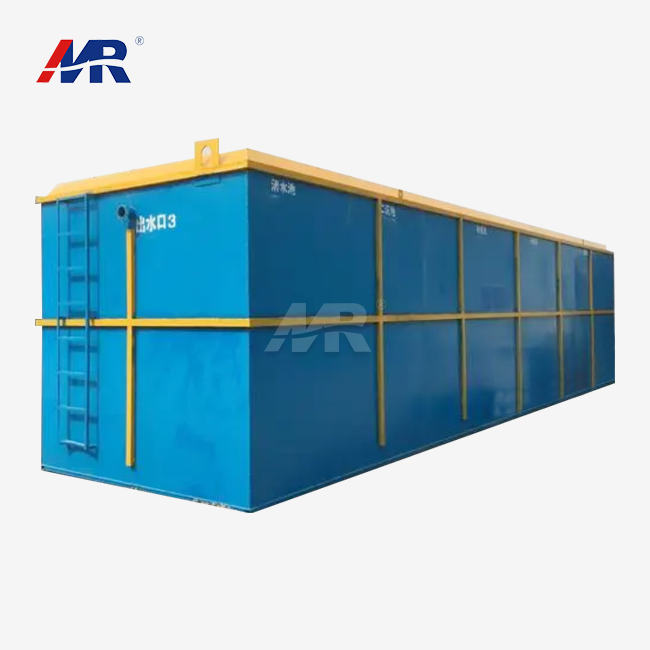 VIEW MOREwaste water treatment plant
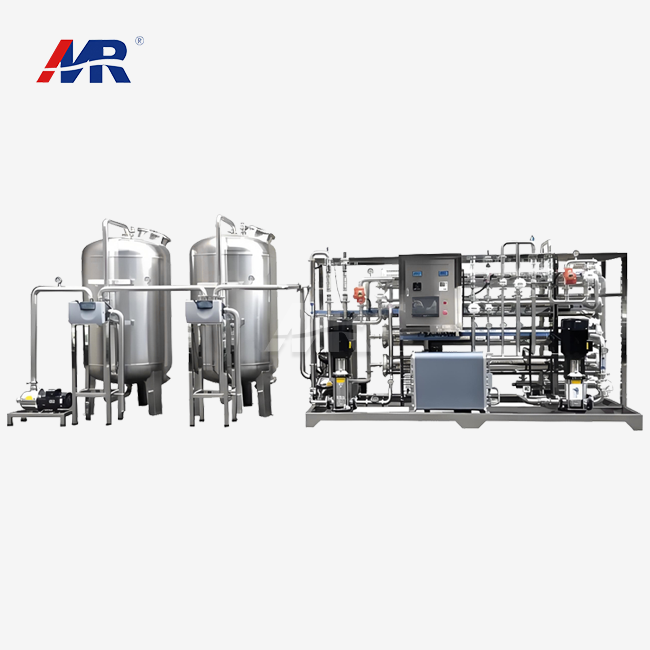 VIEW MORE2000LPH EDI system
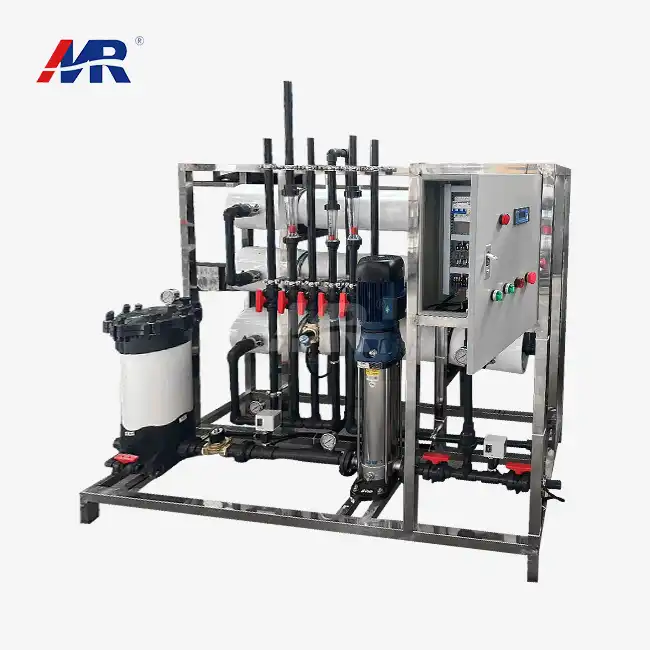 VIEW MORE3T/H reverse osmosis equipment
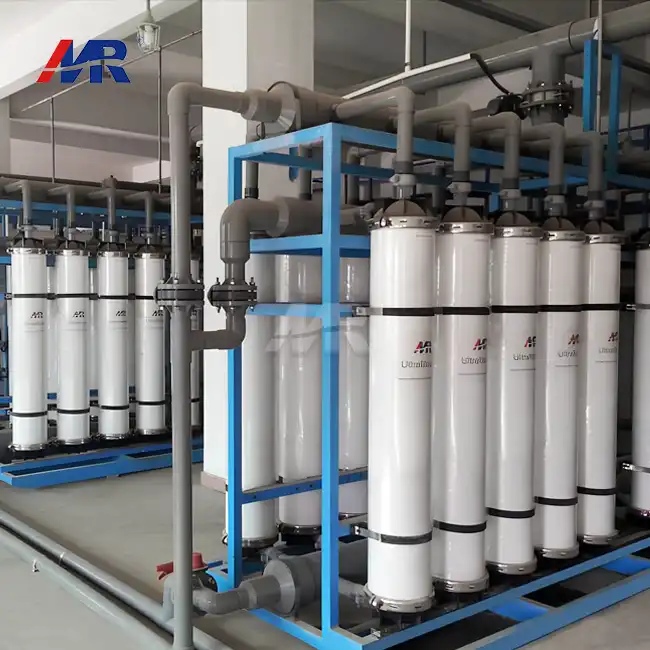 VIEW MORE20m3/hour ultrafiltration equipment
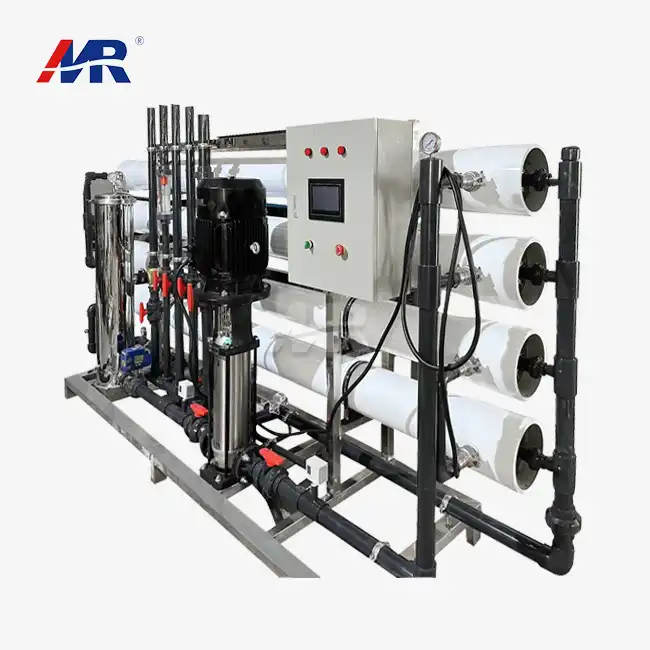 VIEW MORE12m3/hour reverse osmosis BWRO system
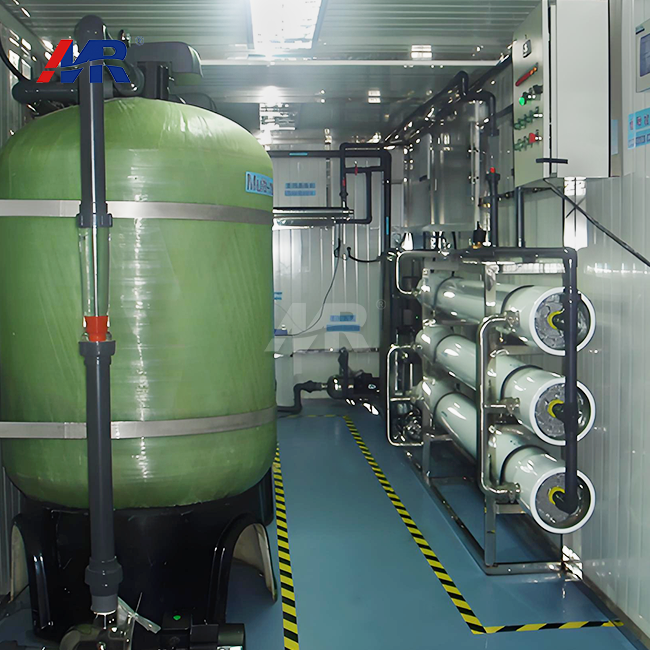 VIEW MOREContainerized Mobile Water Treatment Systems
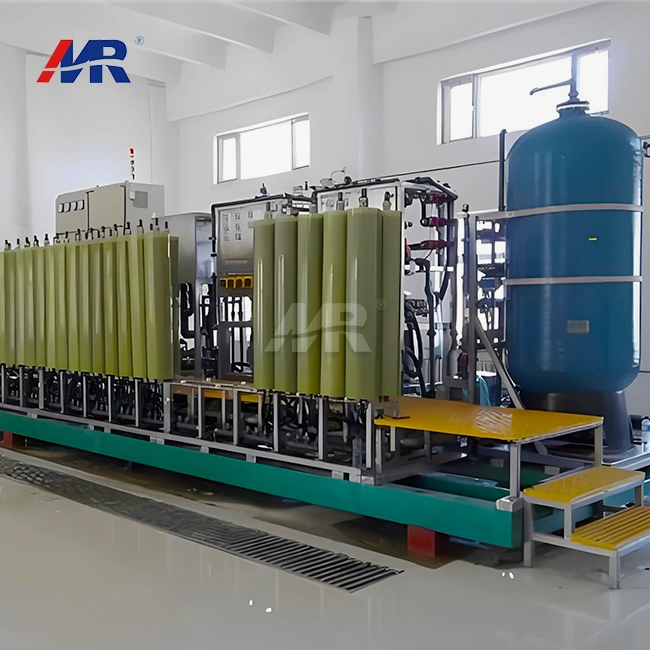 VIEW MOREDTRO system
 VIEW MORE30m3/hour ultrafiltration equipment
