



RO EDI Running Cost per m3: 0.5-1.5 kWh and No Chemical Spend
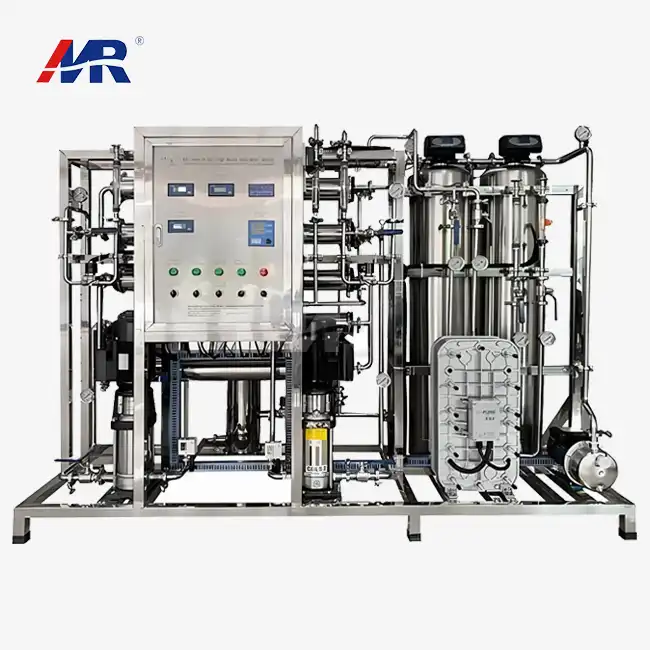
A typical RO EDI train pairs reverse osmosis with electrodeionization. With low-salinity feed water and sound sizing, it can run near a reference range of 0.5–1.5 kWh per m³ of product water. The EDI stage removes ions with electric current instead of acid and caustic regeneration, so routine regeneration chemical spend at that step is zero. The range is a planning guide, not a guarantee. Feed quality, pressure, temperature, recovery, and product specifications all move the final number. Below, I show how to calculate, verify, and lower your own cost.
Introduction: What Does RO EDI Running Cost per m³ Really Mean?
Reading the 0.5–1.5 kWh Range
I plan the whole train to use between 0.5 and 1.5 kWh/m³, from the feed pump to the waste tank. It works well with feeds that don't have a lot of salt, like city supply. According to Elimelech and Phillip (2011), seawater RO needs around 3–4 kWh/m³ by itself. In our EDI stage, there is less than 0.1 kWh/m³ of power, so most of it goes to RO pumping and other loads like UV and transfer pumps.
Why "No Chemical Spend" Needs Careful Reading?
EDI's plastic is always being made fresh. An electric field splits water into hydrogen and hydroxide ions. These ions keep the resin in place (Alvarado and Chen, 2014). That gets rid of the tanks for acid and caustic that are usually part of ion exchange. Also, the bigger plant can still use descalers, RO cleaners, pH adjustments, or disinfectants. This is how I explain the claim: at the polishing stage, there are no regular regeneration chemicals. Not all chemicals are used in this plant.
Who Uses It and What the Term Means?
"RO-EDI" on the right stands for reverse osmosis plus electrodeionization. It's not the kind of electronic data sharing that you might see in Romanian business ads. Companies that make medicines use it to make very pure water. Power plants use it to make boilers, and companies that make medicines use it to clean water. Labs, food and drink lines, OEM makers, and tech companies also use it.
How RO EDI Works: From Pretreated Feed Water to High-Purity Water?
Pretreatment and Reverse Osmosis
Bleach, suspended solids, and hardness are some things that can damage membranes or foul resin in a ro edi system. These things are taken care of before treatment. After that, RO gets rid of most of the particles, microorganisms, organics, and salts that have been dissolved. So, the EDI stage stays busy. This is important to know because EDI can't handle a lot of salt. One of the first things I always ask for is a full feed-water study. This is because hardness, silica, carbon dioxide, iron, and organics can all mess up a stack.
Electrodeionization Polishing
An EDI stack holds the ion-exchange resin in place between the cation and anion membranes. A direct current (DC) pulls ions through the membranes and into concentrate channels. The resin, on the other hand, stays in a state of renewal. The resistance at our Morui EDI water plant is above 18 M··cm because of this. The pressure ranges from 2 to 6 bar, and the flow rate is between 1 and 100 m³/h. The recovery rate is up to 95%. The highest point of clear water at 25 °C is 18.2 M··cm.
Final Polishing, Storage, and Monitoring
The water is cleaned one last time after EDI, then kept and sent to different places. No matter what the use is, designers add UV, ultrafiltration, final filtration, and return loops. Conductivity, resistance, silica, TOC, and bacteria are just some of the things that online tools look for. The USP gives advice on pharmaceutical water based on conductivity and TOC tracking (USP, 2023) and ASTM D5127 grades ultrapure water for electronics. I believe you should set the alarm's limits before you begin.
RO EDI Energy Consumption and Total Cost per m³
What Drives Energy Use per m³?
It depends on the feed conductivity, the amount of dissolved solids, the temperature, the RO pressure, the state of the membrane, the recovery, and the quality goal. When the salt level is high, the pressure must also be high. It gets stronger for membranes when it's cold. It is possible for the EDI current to rise if the goals are low on resistance or silica. It's important to keep track of all the loads, like UV lamps, controls, instruments, and high-pressure pumps. Then, divide the total number of kWh by the amount of water that was made.
Building the Full Cost Formula
There is just one power line for a ro edi system. Take kWh/m³ and multiply it by the rate in your area. Then add the pH control, the antiscalant, and the chemicals that clean and kill germs. EDI modules, filters, UV lamps, and seals should all be spread out over the course of their useful lives. If you treat the RO water right, an EDI module should last between 5 and 7 years. Finally, include the cost of feed water, waste removal, staff, calibration, and downtime.
RO EDI vs. Conventional Ion Exchange
Most of the time, two-bed or mixed-bed ion exchange costs less up front. It needs to store acid and caustic, neutralize, have safety limits, do regeneration work, and have breaks. RO-EDI works all the time, doesn't need to handle chemicals, and is easy to automate. The downsides are that it costs more to build and is sensitive to the quality of the feed. Because chemistry and labor lines go down over three years, the total cost usually works out better for EDI. Look at both choices with the same level of product quality and system.
Verifying and Lowering RO EDI Running Costs
Verifying a kWh/m³ Claim
Ask the provider to describe the boundary: RO pumps, EDI power supply, pretreatment, recirculation, UV, controls, and backup load. Keep track of the working hours, source temperature, conductivity, recovery, flow, and resistivity. Do a site acceptance test after getting factory test data that was gathered in a similar setting. Put in flow and energy meters to keep track of kWh/m³ every month and see if the pressure is going up, the quality of the permeate is going down, or the EDI current is going up.
Practical Ways to Cut Running Cost
When you do a strong pretreatment, you can stop scaling and pressure loss. It is important to keep RO in the recovery, pressure, and temperature ranges that were set. As soon as the performance data tell you to, clean the membranes. RO may need to be cleaned every 3–6 months, depending on the water that goes into it. It is best not to have too many processes that start and stop. The water from reject and flush can be used again. By keeping an eye on pressure, flow, resistance, and EDI current from afar, problems are found quickly.
Mistakes That Skew the Numbers
A lot of people think that 0.5–1.5 kWh/m³ is always true for a ro edi system, which is not the case. Others think that "no chemicals" means that there are no chemicals in the plant at all. They compare it to ion exchange at different levels of water quality and don't get rid of the rejects. People also often make the mistake of sizing equipment before testing the feed water in a lab. Both your budget and your performance guaranty are safe when you do a full study before you size.
Selecting and Implementing an RO EDI System
Questions for Your Supplier
Whether you're using it for food, pharmaceuticals, semiconductors, the lab, boiler feed, or something else, make sure the design works for you. Learn how the system works with other systems, how much energy it uses, how much extra load it can handle, how long the modules last, and if there is any guaranty on the quality of the product. In the United States, buyers often ask for test reports on treated water, validation documents such as IQ/OQ, and material certificates for clean pipe. Get these in writing before you place your order.
A Four-Step Project Plan
The first thing that needs to be done is to find out about the feedwater by season, as well as the flow, utilities, footprint, and wastewater limits. In the second step, the data is used to plan for RO, EDI, storing, automation, and preparation. The third step is to look over the scope, what it doesn't cover, performance assumptions, consumables, warranty, and spares. In the fourth step, factory acceptance, commissioning, and cost-per-m³ reviews every month after handover are covered.
What Morui Brings to the Project
There are over 14 offices of Guangdong Morui Environmental Technology Co., Ltd., with more than 500 workers and 20 engineers. We have our own factory that makes membranes and a number of factories that work on equipment. All of our RO, EDI, and UF lines are in one place. That lets you check the quality from the membrane to the system from a single point, add remote monitoring, and change things to fit the needs of applications that are meant to be used with electronics or drugs. Createc instruments, Runxin valves, and Shimge pumps are some of the other brands we work with.
Conclusion
RO EDI combines RO with electrodeionization to make very pure water that doesn't need regular acid or caustic regeneration at the polishing stage. The range of 0.5 to 1.5 kWh/m³ is a guideline for low-salinity feeds. It is affected by pressure, temperature, recovery, and product goals. The total cost of running the business also includes chemicals for cleaning and pretreatment, supplies, trash, labor, and downtime. EDI has a higher start-up cost than ion exchange, but it can run continuously and requires less chemical handling. With clear system boundaries, checked meters, and a full feed-water analysis, the cost per m³ stays fair and comparable.
FAQ
Q1: What is a realistic energy range for RO EDI?
A: For the whole train on low-salinity feed, I use 0.5 to 1.5 kWh/m³ as a guide. The real number changes depending on the conductivity, pressure, temperature, recovery, and quality of the product.
Q2: Does EDI remove all chemical use?
A: No. EDI takes the place of regular acid and caustic renewal. It is still possible for the plant to use sanitizers, antiscalants, RO cleaning agents, or to control the pH.
Q3: How does RO EDI compare with ion exchange?
A: It costs more up front for RO-EDI. Handling chemicals, regeneration work, and downtime are all cut down, and the quality stays stable as long as the RO permeate does too.
Q4: What information do you need for a quote?
A: Send your feed-water analysis, working plan, utilities, site conditions, and the flow rate you need.
Request a Site-Specific RO EDI Running-Cost Evaluation from Morui
Are you ready to set your own RO EDI train price? Morui is happy to hear from people who are looking for a RO-EDI provider for projects in the food, electronics, pharmaceuticals, or power industries. Please email benson@guangdongmorui.com with your feed-water analysis, flow, target resistivity, and schedule. Our engineers will figure out how much energy will be used, compare ion exchange, and make a model of the total cost of ownership.
References
1. Alvarado, L., and Chen, A. – Electrodeionization: Principles, Strategies and Applications, Electrochimica Acta, 2014
2. Elimelech, M., and Phillip, W. – The Future of Seawater Desalination: Energy, Technology, and the Environment, Science, 2011
3. Wood, J., Gifford, J., Arba, J., and Shaw, M. – Production of Ultrapure Water by Continuous Electrodeionization, Desalination, 2010
4. United States Pharmacopeia – General Chapter <1231> Water for Pharmaceutical Purposes, 2023
5. ASTM International – D5127 Standard Guide for Ultra-Pure Water Used in the Electronics and Semiconductor Industries, 2013
6. Crittenden, J., et al. – MWH's Water Treatment: Principles and Design, 2012
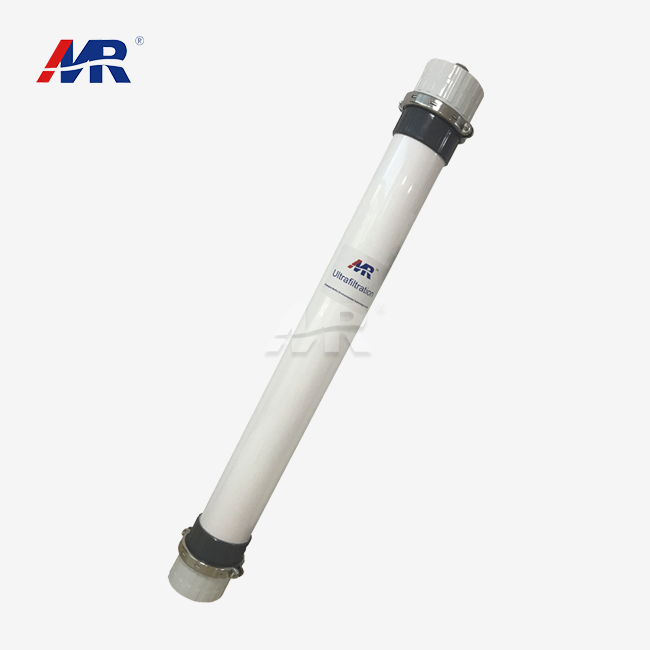 VIEW MOREultrafiltration membrane for wastewater treatment
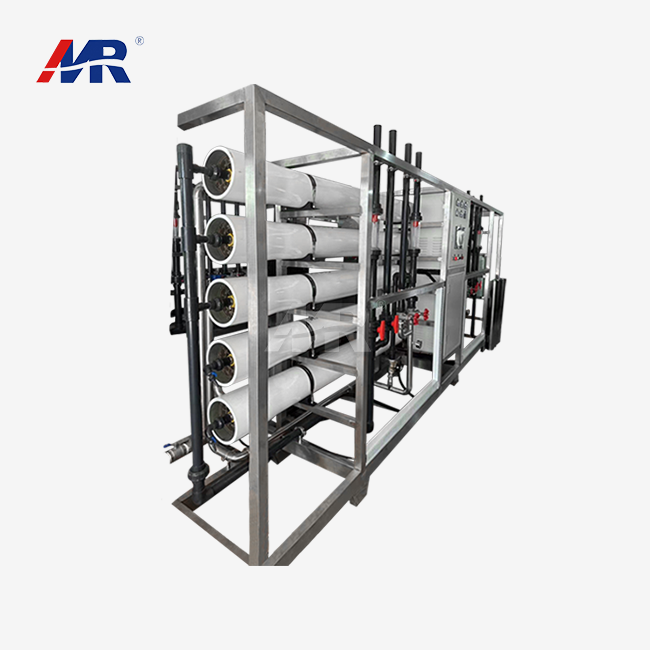 VIEW MOREhighest rated reverse osmosis system
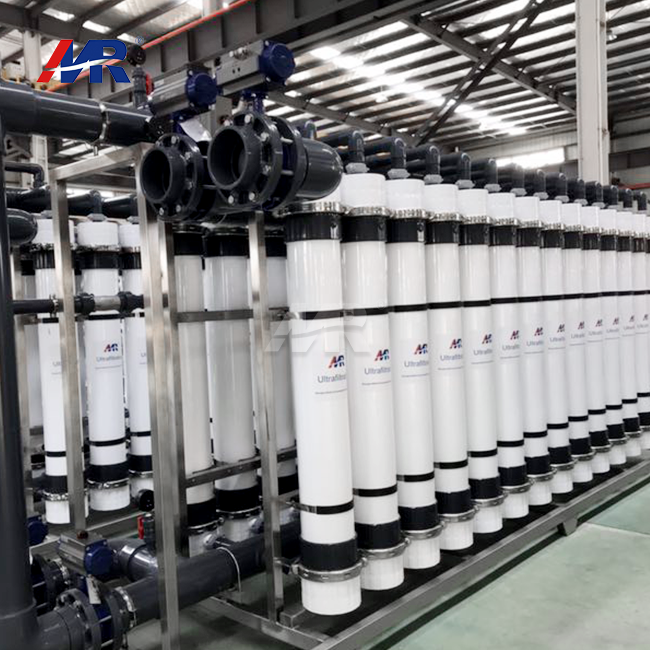 VIEW MOREultrafiltration machine
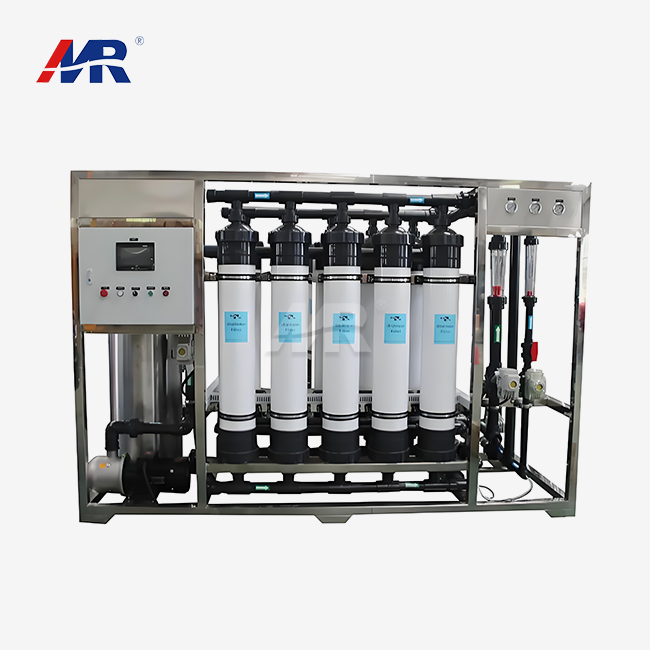 VIEW MOREultrafiltration skid
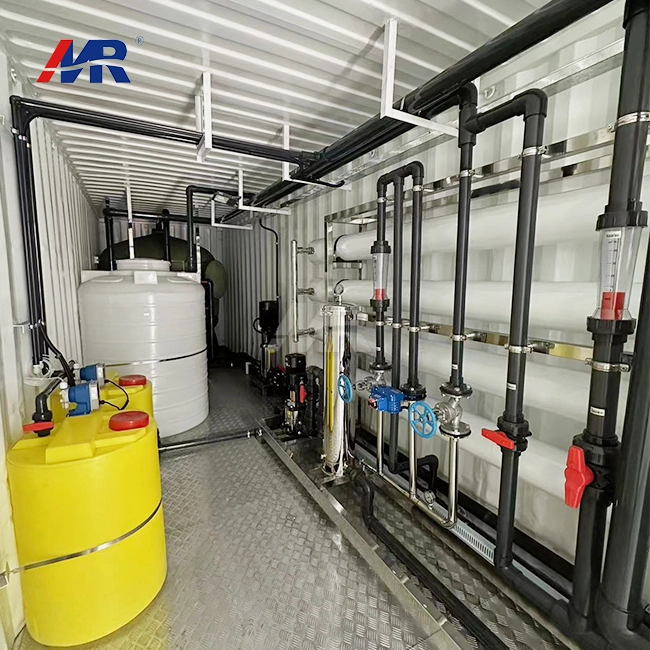 VIEW MOREcontainerized desalination plant
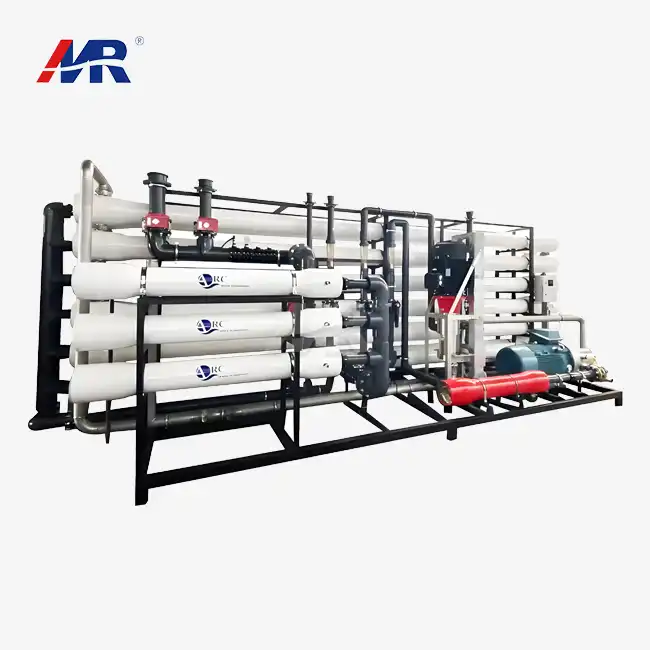 VIEW MORE25m3/hour seawater desalination plant
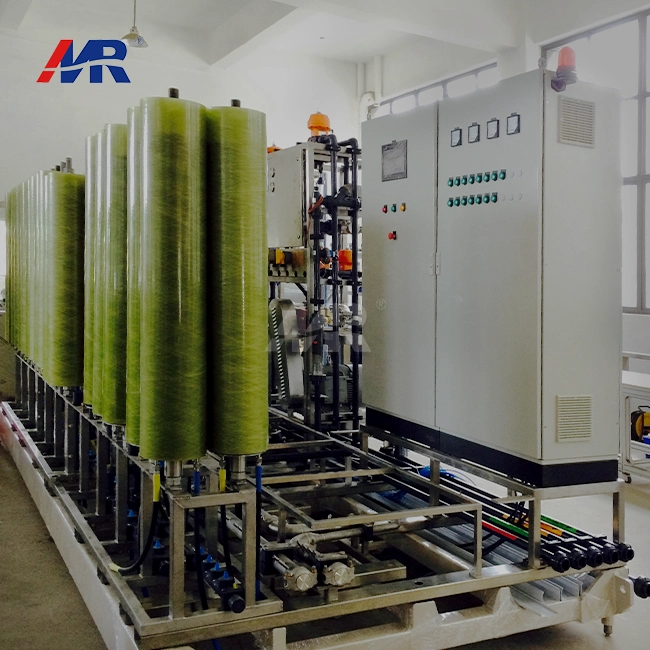 VIEW MOREDTRO Elements
 VIEW MORE200m3/hour UF plant