_1745823981883.webp)

Technical Specifications That Matter When Choosing a Landfill Leachate Collection System
Choosing a leachate collection system in landfill operations requires careful consideration of technical elements that directly affect environmental protection and landfill management. These devices capture trash-breaking liquid pollution. This prevents land and river pollution and enforces restrictions. The right specs will tell you if your investment will last and be dependable or become a pricey, practical burden. From lining materials to monitoring and pumping power, every scientific portion is crucial to the system's effectiveness. Procurement teams can preserve environmental assets and cash flow by understanding these requirements.
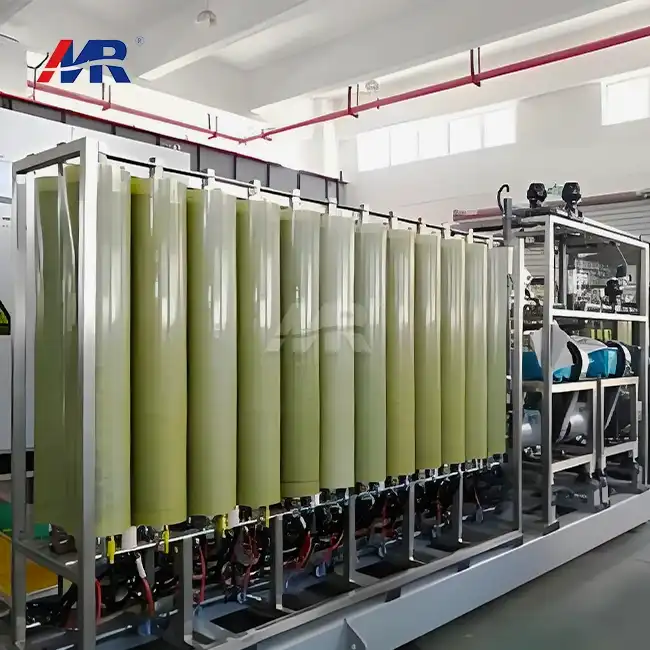
Understanding Landfill Leachate Collection Systems: Core Components and Functions
Learn about the landfill leachate collection system in landfill components and functions.
How Leachate Collection Systems Work
Precipitation penetrates into landfill waste layers and gathers up dissolved heavy metals, organic compounds, and pollutants, creating leachate. Without adequate management, this toxic liquid endangers adjacent habitats and violates environmental regulations.
Modern collection systems employ layered engineering. Geomembrane dividers block drainage from reaching the native soil. This barrier is covered by a soil or geocomposite drainage layer that sends leachate to collecting lines. Gravity or mechanical pumps transport the liquid to cleaning facilities. This unified strategy ensures capture even in heavy rain.
Key Components That Define System Integrity
The geomembrane liner is your last protection against environmental pollutants. Chemical-resistant HDPE liners are typically 60–100 mm thick. Permeable drainage layers must resist tiny particles and biological development to retain waste loads above. Collection lines must resist rusting. In severe leachate, HDPE pipes perform well. Pumping systems must manage predicted flow rates. Submersible pumps are dependable and withstand severe conditions. Leachate and flow rate monitoring devices alert the system before its capacity exceeds its design limitations.
Essential Technical Specifications to Evaluate When Choosing a System
You must fulfill site circumstances, garbage kind, and operating timeframe criteria for the leachate collection system in landfill to buy something.
Passive vs. Active Collection System Design
Passive systems move objects using gravity, they don't need energy or mechanical breaking points. These function best in smaller landfills with flat ground where leachate drains to sumps. Active systems remove leachate with pumps, making them effective in areas without natural drainage slopes. Active designs cost 15–25% more but manage flow precisely and function well on flat terrain. Consider the terrain and long-term expenses while choosing a location.
Liner Material Selection: Durability and Chemical Resistance
Many contemporary landfills are lined with synthetic materials. Acidic runoff doesn't chemically break down HDPE lids, which are flexible at many temperatures. Thickness specifications matter. Industrial waste facilities require 100-mil or reinforced coverings, whereas local solid waste sites use 80-mil. In sharp garbage areas, linear low-density polyethylene (LLDPE) protects better against punctures. We recommend verifying liner Certifications per ASTM D5199 to ensure quality.
Performance and Regulatory Compliance: What Technical Specs Ensure Success?
Technical specs become more valuable when compared to performance requirements and regulatory laws.
Measurable Efficiency Metrics
Checking the flow rate shows if your system is collecting leachate properly. If a system is running well, the collection efficiency (leachate collected to generated) should exceed 95%. Maintenance dependability numbers measure part failures and maintenance needs. Systems that need monthly repairs indicate unclear specs. We follow these parameters across sites and find that well-designed systems last 18–24 months without substantial maintenance.
North American Regulatory Framework Requirements
Local solid waste landfills must collect and dispose of leachate under EPA Subtitle D. The procedure must maintain cover leachate below 30 cm. Monitoring wells must be monitored for groundwater quality indicators every three months. State laws normally apply more strictly. Title 27 of California requires double-liner systems with leak monitoring in some garbage plants. Your technical information must fulfill federal and state requirements.
Comparing Leading Landfill Leachate Collection Solutions and Suppliers
Many alternatives for the leachate collection system in landfill are available, each with its unique technology and performance.
Notable Industry Providers
Many well-known firms provide leachate management solutions. GSE Environmental specializes in geosynthetic containment systems and has proven liner Products from thousands of deployments. Their hybrid drainage solutions combine filtration and flow for easier installation. Leachate pumps are available from Xylem. Certain pumps can withstand high solids levels that would disable others. Veolia and SUEZ provide integrated treatment systems. These technologies are ideal for huge metropolitan projects. Even though these well-known firms have been in the sector for decades, their solutions don't always provide enough customization to meet each site's needs.
Evaluating Total Cost of Ownership
Only 30–40% of lifetime expenditures are upfront capital costs. Passive collecting is low-cost but requires adequate site conditions. Pumping energy costs medium-sized locations $8,000–$15,000 annually for active systems. Maintenance costs vary, but systems with readily available parts have reduced downtime. Treatment integration greatly impacts operating costs. Collection systems that feed homogenous leachate to downstream processes utilize 25–35% less treatment chemicals. We locate the most cost-effective specifications using 20-year running cost projections.
Maintenance, Monitoring, and Lifecycle Management
System maintenance and adaptation must be planned for efficiency.
Preventive Maintenance Best Practices
Inspections every three months on the leachate collection system in landfill detect issues before they fail. Clogging patterns in the drainage layer of the leachate collection system in landfill can be detected using observation wells, allowing cleaners to respond before flow capacity declines. Pump maintenance schedules for the leachate collection system in a landfill based on run-time hours prevent unexpected breakdowns. CCTV checks for pipe stability and discovers joint separations or root invasions in gathering lines of the leachate collection system in the landfill. Annual liner examinations for the leachate collection system in landfill detect stress fractures and seam integrity issues. Organizational maintenance procedures for the leachate collection system in landfill require 60% fewer emergency solutions than reactive techniques.
Advanced Monitoring Technologies
Modern sensor networks alter system management. Ultrasonic level monitors immediately restart pumps when leachate levels rise. Flow meters measure extraction for government reporting and treatment plant coordination. pH and conductivity monitors detect leachate variations that may indicate liner breakage or waste composition change. These tracking devices connect to central control platforms for remote monitoring of various waste cells. The data obtained enables predictive analytics to determine what repairs are needed before a part breaks and disrupts procedures.
Scalability and System Upgrades
Landfills require flexible collecting methods because of their long lifespan. Modular designs allow collecting cells to be added when landfill portions open, spreading project costs over multiple phases. Pump capacity should be increased without replacing systems. Choosing pumps with speed-changing drives provides you with additional flexibility. Treatment merging points must support future processing technologies. We made sure collecting equipment had the proper pre-treatment characteristics from the outset to assist locations' upgrade from biological to membrane systems.
Conclusion
When choosing a leachate collection system in a landfill, consider technical efficiency, regulatory compliance, and lifetime costs. The interior materials and tracking methods you pick will determine whether your investment preserves the environment or requires maintenance. Choosing passive or active design affects running expenses long-term. Current and future expansion requirements must be met by pump and pipe standards. Regulations set minimum requirements, but environmental protection and commercial efficiency can justify exceeding them. You may equip your facility for long-term compliance and cost-effective performance by carefully comparing these technical criteria to your site's characteristics and operational goals.
FAQ
1. What liner thickness should I specify for municipal solid waste landfills?
Municipal solid waste dumps need 60- to 80-mil HDPE liners for principal containment. Toxic chemical or industrial garbage sites need 100-mil or stronger liners. Trash kind, projected working life, and regulatory regulations determine thickness. In difficult settings, thicker liners are more puncture- and chemical-resistant and survive longer, justifying their increased cost.
2. How do I calculate the required pump capacity for my collection system?
Use the landfill's size, rainfall rate, and garbage water to calculate the daily leachate production. For storms and seasonal variations, make sure the pumps can handle 120–150% of this rate. Continuous-running submersible pumps and backup units keep the system functioning during repairs. Professional hydraulic modeling maximizes capacity in complex cell installations.
3. What monitoring frequency satisfies regulatory requirements?
Federal EPA guidelines require Subtitle D dumps to examine groundwater every three months. Many locations utilize automated techniques to assess leachate levels weekly. Documenting flow helps with discharge permits and disposal plant coordination. Contact your local environmental agency to determine if state regulations demand more regular tracking.
Partner with Morui for Comprehensive Leachate Collection System Solutions
Guangdong Morui Environmental Technology offers an integrated leachate collection system in landfill usage. Our 14 regional offices provide local assistance and centralized expertise. We produce membrane products and process equipment and collaborate with Shimge Water Pumps and Runxin Valves as a leading water treatment firm. With this unified strategy, we can design collecting systems that suit your location, waste type, and treatment goals. Our 20 engineers provide design assistance, equipment selection, installation monitoring, and testing to ensure your system functions properly from the outset. Whether you run a city dump that must obey the rules or an industrial site that needs skilled leachate control, we offer choices. How can our full-service water treatment equipment maker's experience help you maximize your leachate collecting and treatment system? Contact our technical team at benson@guangdongmorui.com.
References
1. Rowe, R. K., & Hosney, M. S. (2021). "Performance of GCLs in Landfill Liner and Cover Applications." Journal of Geotechnical and Geoenvironmental Engineering, 147(3), Article 03120002.
2. Tchobanoglous, G., & Kreith, F. (2020). Handbook of Solid Waste Management (3rd ed.). McGraw-Hill Education.
3. United States Environmental Protection Agency. (2019). Criteria for Municipal Solid Waste Landfills (40 CFR Part 258). Government Printing Office.
4. Qian, X., Koerner, R. M., & Gray, D. H. (2018). Geotechnical Aspects of Landfill Design and Construction. Pearson Education.
5. Reinhart, D. R., & Townsend, T. G. (2019). Landfill Bioreactor Design and Operation (2nd ed.). CRC Press.
6. Bagchi, A. (2017). Design of Landfills and Integrated Solid Waste Management (4th ed.). John Wiley & Sons.