

_1745823981883.webp)

Maintenance guide for 150m3/hour reverse osmosis plant
For a 150m3/hour reverse osmosis plant, the absence of a planned maintenance plan is one of the quickest ways to lose production capacity. This guide explains precisely what a 150m3/hour reverse osmosis plant requires, week by week, to keep producing at its rated output and safeguard its membrane investment. There are daily inspections, cleaning triggers, cost statistics, and a maintenance plan you can simply deliver to your operations staff.
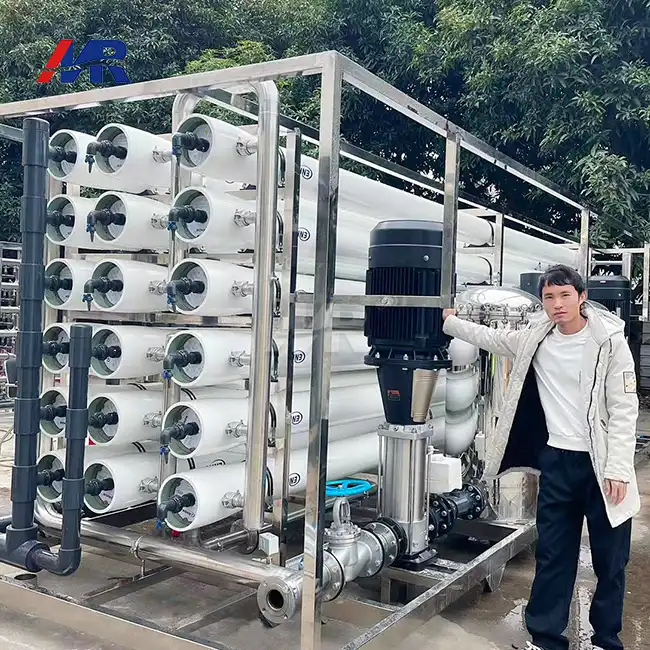
What is a 150 m³/hour RO plant maintenance schedule?
A maintenance schedule for a 150m3/hour reverse osmosis plant is a written list of daily, weekly, monthly, and yearly chores to maintain the system functioning at its design capacity. This includes pretreatment service, instrument calibration, pump inspection, and membrane upkeep. Without this framework, tiny issues multiply themselves. Clogged cartridge filter causing pump cavitation. A missing antiscalant refill becomes calcium carbonate scale that no chemical wash can completely remove.
Core Components Covered in the Schedule
The schedule needs to cover all the steps in the treatment train, not just the membrane housings. That entails multimedia filtration, activated carbon beds, cartridge filters, chemical dosing systems, high-pressure pumps, the membrane array itself, and instrumentation. Each stage has its unique failure pattern and service interval; therefore, a single generic checklist is never appropriate for all plants.
Why do 150 m³/hour Plants Need Tighter Control?
A facility with this throughput supplies a continuous manufacturing line, whether it is bottled water filling, pharmaceutical filtered water loops, or boiler feed water for a power block. Downtime of this magnitude is costly, since it interrupts downstream processes, not simply the water system. Operators of a 150m3/hour reverse osmosis plant for food and beverage or GMP pharmaceutical usage also have regulatory documentation requirements, and so every maintenance activity has to have a paper trail.
| Component | Task | Frequency | Key Indicator |
|---|---|---|---|
| Multi-media filter (MMF) | Backwash and air scour | Daily to every 2 days | Feed turbidity, SDI < 3 |
| Activated carbon filter | Backwash, chlorine breakthrough test | Daily backwash, weekly chlorine test | Free chlorine < 0.1 ppm |
| Cartridge filter (5 or 1 micron) | Replace element | When ΔP exceeds 1.0-1.5 bar | Differential pressure gauge |
| Antiscalant dosing pump | Calibrate stroke rate | Weekly | Dosing accuracy vs. flow rate |
| High-pressure pump | Vibration and leak check | Daily visual, quarterly vibration analysis | Bearing temperature, seal leakage |
| RO membrane elements | CIP wash | When normalized flow drops 10-15% | Normalized permeate flow, ΔP |
| Instrumentation (pressure, conductivity, pH) | Calibration | Every 3-6 months | Deviation from reference standard |
How Often Should a 150m³/hour RO Plant Be Serviced?
The maintenance of any 150 m³/hour reverse osmosis system is based on daily checks, weekly reviews, and monthly deep inspections. Operators should record feed, membrane intake, permeate, and reject pressures each shift, as well as permeate flow rate and total water output. Feed and permeate TDS or conductivity measurements; pH needs the same regular care.
Daily Operator Checks
The operator should check the antiscalant tank levels, check for leaks in the piping and pump seals, and observe for abnormal vibration or noise from the high-pressure pump at the beginning of each shift. A few minutes of inspection nip most issues in the bud before they become pricey.
Weekly and Monthly Reviews
Weekly evaluations compare normalized permeate flow and salt passage to the starting baseline, since raw values vary with feed temperature and may obscure true fouling trends. For a 150m3/hour reverse osmosis plant, monthly assessments include a comprehensive walk-down: pressure vessel end caps, O-ring condition, dosing pump calibration, and a review of chemical use versus production volume. Factories running on brackish well water normally require a CIP every 3–6 months, whereas saltwater systems with strong pretreatment may push the time between chemical cleans to 6–12 months. These are not goals, but typical ranges seen throughout working installations.
Which RO Components Need the Most Frequent Maintenance?
The pretreatment components wear out quicker than the membrane array itself, since these are the components that trap the particles, chlorine, and hardness that the membranes can’t handle. The single most important way to increase membrane life on any 150 m³/hr reverse osmosis system is to do the pretreatment maintenance correctly.
Cartridge and Media Filters
The cartridge filters protect the high-pressure pump and membranes from fine particles. When the pressure difference reaches the limit set by the manufacturer (typically 1.0 to 1.5 bar), they have to be replaced. The multimedia filters need periodic backwash and air-scan cycles to keep the silt density index low and the turbidity under control.
Dosing Systems and Pump Seals
Antiscalant and coagulant dosage pumps go out of calibration after weeks of continuous operation. On a 150m3/hour reverse osmosis plant, a pump operating at 10% under-dosing will enable scale to build up over time on the membrane array. Pump seals and mechanical couplings also need regular examination, since a gradual leak may empty grease reservoirs and lead to premature bearing failure.
The parts of a plant of this size that need the most careful maintenance are
- Cartridge filters: These are the last line of defense before water hits the membrane housings, and they load with particulate at a rate faster than any other component in the train, especially during seasonal turbidity spikes in surface water sources. Weekly ΔP monitoring is non-negotiable for consistent membrane protection.
- Antiscalant dosing pumps: The single biggest cause of preventable calcium carbonate and calcium sulfate scaling on membrane surfaces is incorrect dosing pump calibration. Pumps should be recalibrated against actual flow rate on a weekly basis rather than an arbitrary monthly basis, especially when feed water hardness varies with season or switching of source.
- High-pressure pump seals: Pumps are turned on and off often to meet a changing production demand, and this increases mechanical seal wear. Daily visual leak checks coupled with quarterly vibration analysis detect bearing wear well in advance of a catastrophic seal failure requiring an unscheduled shutdown.
These three categories account for the majority of the unscheduled service calls we get at customer locations with similar throughput.
Regional Considerations Across Asia, South America, and Africa
Feed water conditions vary greatly by area, and that alters what a maintenance plan should focus on. A coastal African desalination project with a 150m3/hour reverse osmosis plant that draws brackish groundwater with larger salinity fluctuations during the dry season puts a strong premium on the precision of antiscalant dosage. A South American mining or agricultural facility employing river water for irrigation-support RO normally sees increased turbidity following seasonal rains and must adjust the frequency of pretreatment backwash based on rainfall patterns, rather than maintaining it at a set rate. Southeast Asian food and beverage factories near coastal or estuary water sources sometimes experience month-to-month variations in chloride and hardness levels, which may cause dosing pumps calibrated at start-up to lose accuracy more quickly than those at plants supplied by steady municipal water.
These geographical disparities are not trivial. A maintenance plan replicated from a reference site in a temperate environment seldom survives exposure to tropical humidity, seasonal monsoon turbidity surges, or high ambient temperatures that drive feed water over 30°C. Morui’s engineering team doesn’t use one template for all regions but rather changes pretreatment size, dosing chemistry, and inspection frequency according to the actual climate and water supply at each client location.
How Do You Clean Membranes in a 150 m³/hour RO Plant?
Cleaning-in-place, or CIP, restores membrane function without removing pieces from their pressure vessels. The chemical solution is pumped across the membrane array at low pressure and regulated temperature to dissolve scale, organic fouling, and biofilm.
Standard CIP Procedure
A typical CIP for a 150m3/hour reverse osmosis plant begins with preparing the right acid or alkaline solution depending upon the prevalent foulant type. The solution is heated to within the limits of membrane tolerance and then cycled at low pressure for about 30 minutes. The system is then extensively flushed with permeate water until the return runs clean and pH-balanced after a soak time.
Choosing Acid vs. Alkaline Cleaners
Low-pH acid cleansers are effective on inorganic scales like calcium carbonate and iron. Alkaline cleaners with high pH, frequently heated, are used to treat organic fouling and biofilm. Many plants require a tiered clean, doing the acid step first while scale is dominant and then following with an alkaline step. Polyamide membranes may be cleaned short-term between pH 1 and pH 13. However, continuous operation should be between pH 2 and 11 to prevent hydrolysis of the active layer of the membrane. Exposure beyond this range causes irreversible and permanent loss of rejection function.
Autoflush and Startup Protection
Each 150m3/hour reverse osmosis plant should, in addition to planned CIP, undergo an automated low-pressure flush whenever the unit is started up or stopped down. The autoflush sequence flushes concentrated feed water from the membrane housings, reducing scale nucleation during idle times.
What Causes Pressure and Flow Changes in RO Systems?
Changes in pressure and flow are the first indications of an apparent decrease in output from a 150m3/hour reverse osmosis plant. The first components of the membrane array are hydraulically restricted by particles and biofilm. The differential pressure across the membrane array normally increases before the flow or salt rejection declines.
Fouling vs. Scaling vs. Mechanical Issues
Fouling results from the deposition of particles, colloids, and biological growth on the membrane surface. Scaling—caused by crystallization of dissolved minerals when the limit of their solubility is exceeded — commonly involves calcium carbonate, calcium sulfate, or silica. Mechanical problems such as a bad pump or torn O-ring show up as a quick pressure decrease rather than the steady loss you would expect from fouling.
Temperature and Seasonal Effects
Swings in feed water temperature might masquerade as fouling symptoms in raw measurements. Colder water is more viscous and reduces the permeate flow even over an absolutely clean membrane. That’s why every choice you make during cleaning should be based on normalized data, not raw data. A facility that runs raw flow data will ultimately clean membranes that weren’t really contaminated, squandering chemicals and membrane life.
How Can You Prevent RO Membrane Scaling and Fouling?
Prevention costs far less than recovery. A well-run 150m3/hour reverse osmosis plant leans on pretreatment quality, correct antiscalant dosing, and disciplined operating limits to avoid most fouling and scaling before it starts.
Pretreatment Quality Targets
Feed water entering the membrane stage should hold a silt density index below 3, and most manufacturers insist on a value under 5 as an absolute ceiling to avoid excessive fouling risk, a benchmark widely applied across reverse osmosis plants regardless of feed source. Multi-media and cartridge filtration, tuned to the feed water's actual turbidity profile, is what gets a plant to that target consistently.
Antiscalant Dosing and Recovery Rate Control
Correct antiscalant chemistry, matched to the feed water's hardness and silica content, keeps dissolved minerals in solution well past their normal solubility point. Operating recovery rate also matters: pushing recovery too high concentrates the reject stream and raises scaling risk on the tail elements of the array.
A short list of practical prevention habits keeps scaling and fouling risk low across daily operations:
- Match antiscalant dose to the actual feed chemistry in a reverse osmosis plant: Generic dosing rates rarely fit every water source, so a lab-verified saturation index calculation for calcium carbonate, calcium sulfate, and silica should guide the dosing pump setpoint rather than a rule-of-thumb percentage carried over from a different site.
- Hold recovery rate within design limits: Operators under production pressure sometimes push recovery above the design value to squeeze out more permeate, but this concentrates scale-forming ions on the last elements in the array and shortens their working life significantly.
- Track SDI and turbidity trends, not just single readings: A single passing SDI test can mask a slow upward trend caused by seasonal source water changes, so weekly trend charts catch pretreatment degradation before it reaches the membrane stage.
Following these habits consistently is what separates a plant that runs three years between element replacements from one that needs new membranes every twelve months.
What Maintenance Data Should RO Operators Monitor?
Data monitoring turns membrane maintenance from guesswork into a predictable schedule. Every 150m3/hour reverse osmosis plant should track a consistent set of parameters, normalized against startup baseline conditions.
The Core Metrics
Normalized permeate flow is the most sensitive early indicator of fouling. A drop signals particulate or organic buildup on the membrane surface, while a rise can point to membrane degradation from oxidative damage, since the calculation strips out the effect of feed temperature and driving force changes, so operators compare true membrane condition over time. Normalized salt passage and differential pressure round out the three metrics that matter most.
Original Case Data: Vietnam Beverage Plant
Morui's engineering team tracked a client's 150m3/hour reverse osmosis plant supplying a bottled beverage line in Vietnam across eighteen months of operation. Before structured data logging began, the plant ran three unplanned CIP cycles in six months, each costing roughly two days of reduced output. After Morui introduced daily normalized flow tracking and a strict cartridge ΔP threshold, unplanned cleanings dropped to one every five months, and average membrane life extended from an estimated 3.2 years to a projected 5.1 years based on fouling rate trends. Chemical cleaning spend fell by around 38% over the same period, based on the plant's own purchasing records.
Building a Monitoring Dashboard Operators Actually Use
Raw data logged in a notebook rarely gets reviewed consistently. Plants that stay ahead of fouling tend to build a simple dashboard, even a shared spreadsheet, that plots normalized flow, salt passage, and differential pressure against the startup baseline over rolling 30-day windows. Operators can spot a slow downward trend in normalized flow weeks before it would trigger an alarm on raw readings alone. This kind of trend visibility is what separates plants that clean on a predictable, planned schedule from plants that only react once output has already dropped and a production manager is asking questions.
Instrumentation accuracy matters just as much as the logging habit itself. A pressure transmitter drifting out of calibration by even a few percent can mask a real ΔP rise for weeks, delaying a CIP that should have happened sooner. Quarterly calibration against a reference standard, documented with a signed record, keeps the data trustworthy enough to base cleaning decisions on.
How Does CIP Compare With Routine RO Maintenance?
Routine maintenance and CIP solve different problems in a reverse osmosis system. Routine tasks, like backwashing filters and calibrating dosing pumps, prevent fouling from building up. CIP is a corrective response once fouling or scaling has already reduced performance past an acceptable threshold.
When Routine Maintenance Isn't Enough?
Even a well-run 150m3/hour reverse osmosis plant needs CIP eventually, because pretreatment can reduce the fouling rate but rarely eliminates it. Cleaning should be triggered by data, not a calendar date, using thresholds such as a 10-15% drop in normalized permeate flux or a meaningful rise in differential pressure, rather than waiting for a fixed number of operating months to pass.
| Parameter | Trigger Range | Likely Cause |
|---|---|---|
| Normalized permeate flow | Drops 10-15% | Particulate, organic, or biological fouling |
| Normalized salt passage | Rises 5-10% | Membrane surface fouling or minor scaling |
| Differential pressure (ΔP) | Rises 10-15% | Particulate loading on lead elements |
Post-CIP Verification
A successful CIP should return normalized flux and salt rejection to at least 90-95% of baseline values, with operators comparing results directly against the recorded baseline rather than an assumed target. If those thresholds aren't met, the cleaning chemistry or contact time needs adjustment before the plant restarts full production.
How Much Does 150 m³/hour RO Plant Maintenance Cost?
Maintenance cost for a plant at this scale breaks into three buckets: consumables, chemicals, and labor. Cartridge filters, media replacement, and dosing chemicals form the recurring baseline. CIP chemicals and membrane replacement form the larger, less frequent expenses.
Typical Cost Drivers
Cartridge filter replacement frequency depends heavily on feed water turbidity, so a plant on a variable surface water source spends noticeably more here than one on stable well water. Membrane replacement is the single largest line item over a multi-year horizon, which is why extending membrane life through disciplined pretreatment pays back quickly.
| Cost Category | Typical Share of Annual Spend | Main Driver |
|---|---|---|
| Cartridge and media filter consumables | 20-30% | Feed turbidity, SDI variability |
| Antiscalant and CIP chemicals | 25-35% | Feed hardness, cleaning frequency |
| Labor and instrument calibration | 15-20% | Staffing model, automation level |
| Membrane element replacement (amortized) | 25-35% | Pretreatment quality, operating discipline |
Reducing Cost Without Cutting Corners
The lowest-cost path over a plant's lifetime isn't skipping maintenance; it's front-loading investment into pretreatment and monitoring when designing and operating a reverse osmosis system. Every dollar spent tightening SDI control and dosing accuracy tends to reduce membrane replacement frequency, which is the most expensive line on the sheet.
What Is the Best Maintenance Plan for a 150 m³/hour RO Plant?
The strongest maintenance plans combine daily operator discipline, data-driven CIP triggers, and a pretreatment system sized correctly for the actual feed water. There isn't a single template that fits every industry, since a semiconductor ultrapure water loop and a municipal desalination plant carry different risk tolerances.
Building a Plan Around Your Industry
Pharmaceutical and food and beverage operators need documented, auditable maintenance logs to satisfy GMP requirements. Power plant operators feeding boiler water need especially tight silica control, since silica scale is one of the hardest deposits to remove chemically. Municipal and desalination operators often run larger seasonal feedwater variations, which push pretreatment sizing and SDI monitoring higher on the priority list.
Documentation and Training as Part of the Plan
A maintenance plan only works if the operators running an industrial RO plant understand why each step matters, not just what to check off. Training should cover why normalized data beats raw readings, how to read a differential pressure trend, and what a healthy CIP return looks like versus one that signals a bigger problem. Sites that rotate operators frequently need written procedures with photos, not just verbal handovers, since a missed step during a shift change is a common cause of preventable membrane damage. Building this documentation once, then updating it as equipment or feed water conditions change, pays off over years of operation.
Working With a Full-Service Partner
Guangdong Morui Environmental Technology Co., Ltd. designs and services 150m3/hour reverse osmosis plant systems for industrial wastewater treatment, seawater desalination, and drinking water production. Morui runs more than 14 branches with over 500 staff, including 20 engineers, and operates its own membrane production facility alongside several equipment processing plants. As the authorized agent for Shimge water pumps, Runxin valves, and Createc instruments, Morui can supply, install, and commission a complete 150m3/hour reverse osmosis plant with matched components rather than a mix of incompatible parts sourced separately.
Conclusion
Keeping a 150m3/hour reverse osmosis plant at full output comes down to consistent daily checks, disciplined pretreatment, and CIP triggered by real data instead of a fixed calendar. The plants that avoid expensive membrane replacement cycles are the ones logging normalized flow and differential pressure every day, not the ones with the newest equipment. Build your maintenance plan around your specific feed water and industry requirements, and review it every quarter as production demand shifts, since a plan that fit last year's water source may not fit this year's.
FAQ
1. How long do membranes last in a 150 m³/hour RO plant?
Membrane elements typically last three to seven years, depending on pretreatment quality, feed water source, and how consistently CIP thresholds are followed, since the typical lifetime of a reverse osmosis membrane element runs three to seven years based on the application.
2. What is normalized permeate flow, and why does it matter?
Normalized permeate flow adjusts raw flow readings for temperature and pressure changes, giving operators a true picture of membrane fouling rather than a number skewed by seasonal water temperature swings.
3. Can a 150 m³/hour RO plant run without daily monitoring?
It can run short-term without daily checks, but fouling and scaling build up unnoticed, leading to sudden output drops and higher CIP costs once problems become visible.
4. What's the difference between fouling and scaling?
Fouling comes from particulates, organics, and biological growth settling on the membrane surface, while scaling comes from dissolved minerals crystallizing once feed water concentration exceeds their solubility limit.
5. How can operators reduce unexpected downtime?
Operators can reduce unexpected downtime by combining daily equipment inspections, trend-based performance monitoring, timely filter replacement, accurate chemical dosing, and preventive pump maintenance. Recording normalized permeate flow, differential pressure, conductivity, and chemical consumption helps identify developing problems early, allowing planned maintenance before membrane fouling, scaling, or mechanical failures interrupt production.
Building a Maintenance Partnership That Protects Your Investment
Guangdong Morui Environmental Technology Co., Ltd. supports clients across the manufacturing, food and beverage, pharmaceutical, and municipal water sectors with full-service 150m3/hour reverse osmosis plant design, installation, and long-term maintenance support. Reach the technical team at benson@guangdongmorui.com to review your feed water data and build a maintenance schedule matched to your actual operating conditions, not a generic template.
Sourcing a reliable 150m3/hour reverse osmosis plant supplier matters just as much as the maintenance plan itself, since mismatched components drive most premature failures we see in the field. Morui's own membrane production facility and authorized distribution of Shimge pumps, Runxin valves, and Createc instruments mean every component in your system is verified to work together from day one. Contact benson@guangdongmorui.com for a site-specific maintenance audit and cost projection.
References
1. Water Technology, "Membrane Cleaning Fundamentals: Cleaning Criteria and Normalization of Reverse Osmosis Systems" (2026)—cited for CIP trigger thresholds and normalized performance criteria. https://www.watertechonline.com/home/article/14171904/membrane-cleaning-fundamentals-cleaning-criteria-and-normalization-of-reverse-osmosis-systems
2. Xylem, "The Importance of Silt Density Index in Seawater RO Applications" (2024)—cited for SDI target values in pretreatment. https://www.xylem.com/en-bg/resources/articles/the-importance-of-silt-density-index-in-seawater-ro-applications/
3. ASTM International, "D4189 Standard Test Method for Silt Density Index (SDI) of Water" (2023)—cited for SDI testing methodology and applicability. https://store.astm.org/standards/d4189
4. AQUALITEK, "CIP Procedures for Industrial Reverse Osmosis" (2026)—cited for CIP trigger data and post-cleaning acceptance criteria. https://www.aqualitek.com/article/cip-procedures-industrial-reverse-osmosis.html
5. Loyalmem, "ro membrane Cleaning: CIP Procedure & Chemicals" (2026)—cited for membrane pH tolerance and seawater vs. brackish CIP intervals. https://loyalmem.com/ro-membrane-cleaning-guide/
6. United States Patent and Trademark Office, "Method of Monitoring Membrane Separation "Processes"—cited for the definition and purpose of normalized permeate flow monitoring. https://image-ppubs.uspto.gov/dirsearch-public/print/downloadPdf/6821428
About the author
Renjie Kuang has spent more than a decade commissioning and servicing industrial RO systems across Asia, South America, and Africa. He works directly with plant operators in the food and beverage, pharmaceutical, power, and municipal water sectors, helping teams build maintenance programs that protect membrane life and keep production water on spec. His work draws on hands-on CIP audits, pretreatment redesigns, and membrane autopsy reports from live client sites.
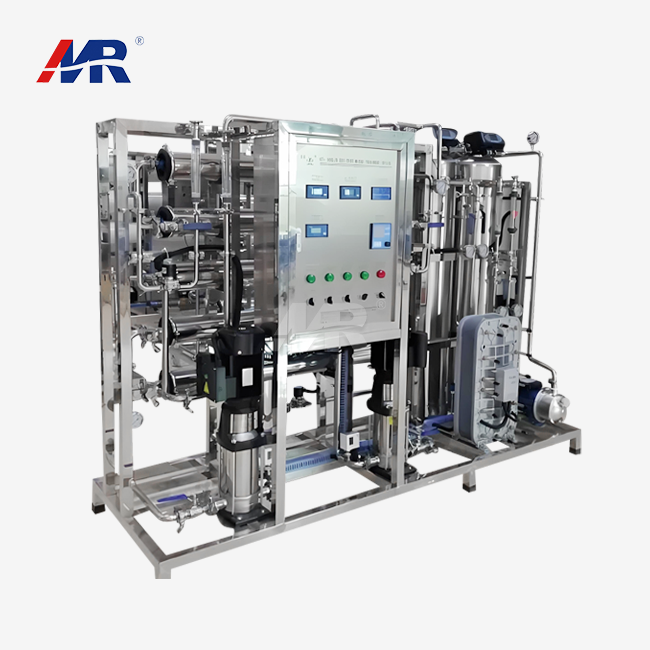 VIEW MORE1000LPH EDI equipment
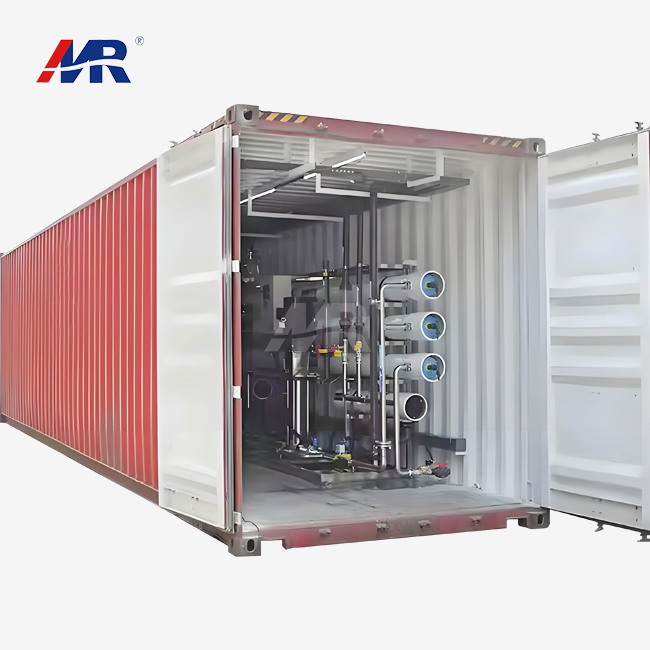 VIEW MOREContainerized Reverse Osmosis Systems
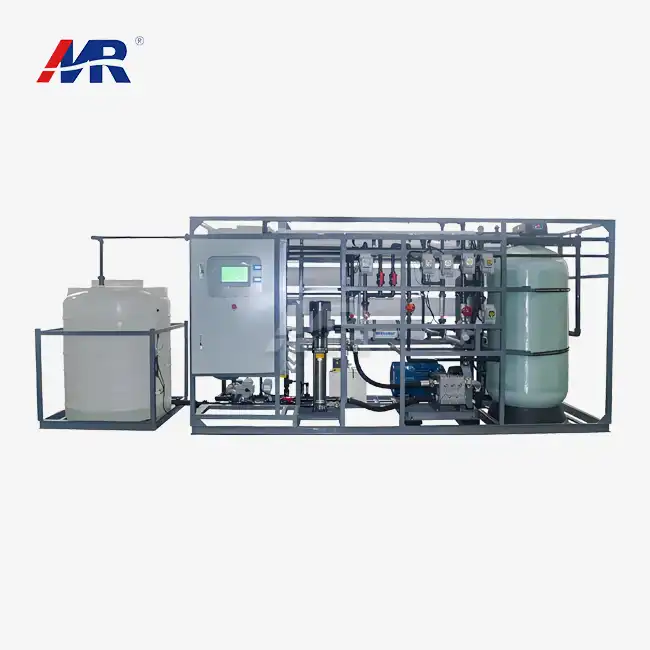 VIEW MORE5m3/hour seawater desalination equipment
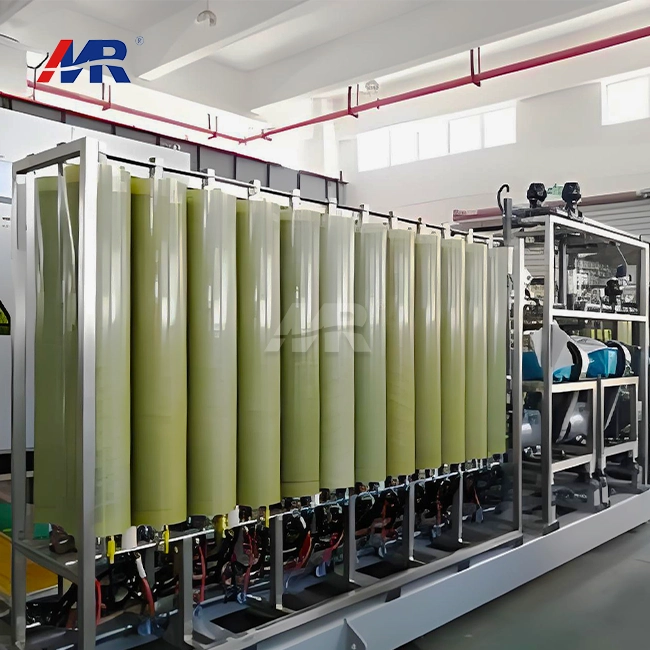 VIEW MOREDTRO plant
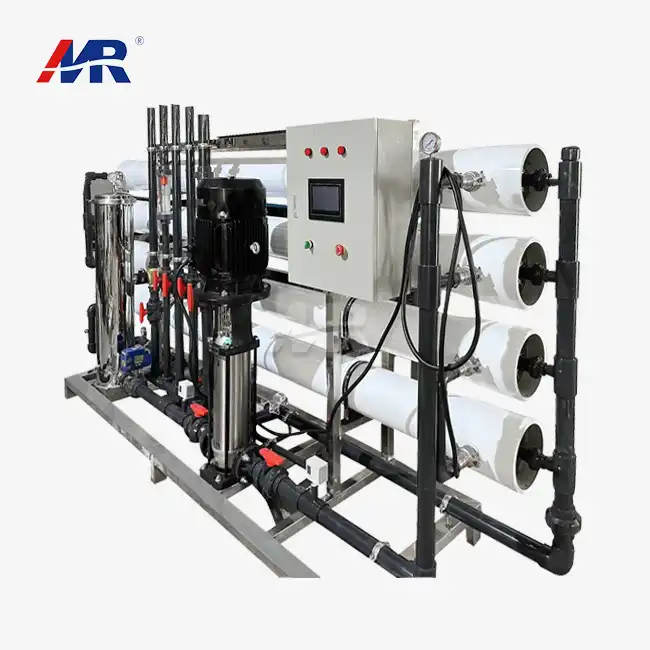 VIEW MORE12m3/hour reverse osmosis BWRO system
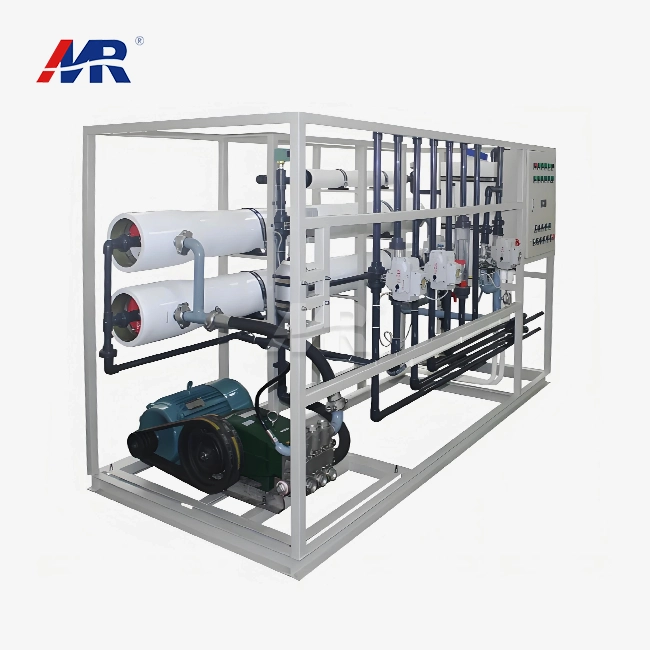 VIEW MOREseawater desalination pre-treatment
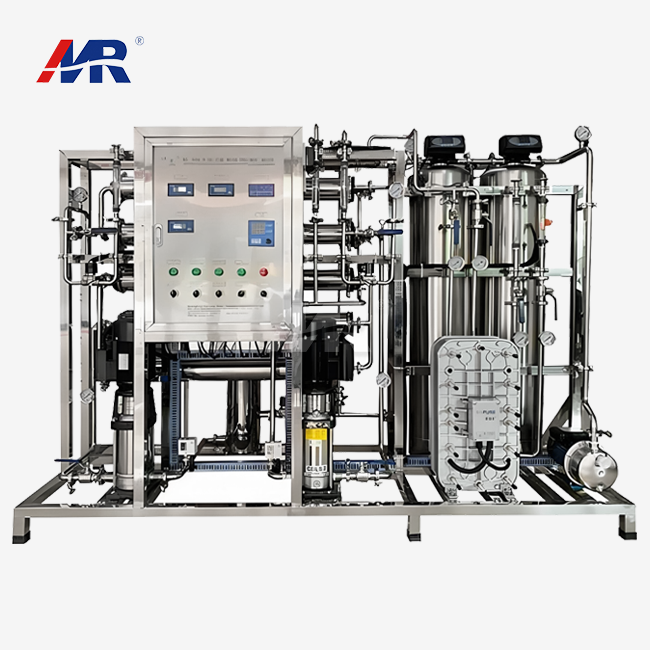 VIEW MOREElectrodeionization system
 VIEW MORE50m3/hour ultrafiltration plant
