


industrial ro membrane Replacement: Cost and Maintenance Guide
If you manage a water treatment facility or source membranes for commercial systems, you already know that getting the replacement cycle and cost structure right can mean the difference between smooth operations and expensive downtime. This guide walks through everything a B2B procurement professional needs to know about industrial ro membrane replacement — from recognizing failure signs to controlling long-term costs — with practical insight grounded in real operational experience.
Understanding Industrial RO Membrane Replacement
How Industrial RO Membranes Work
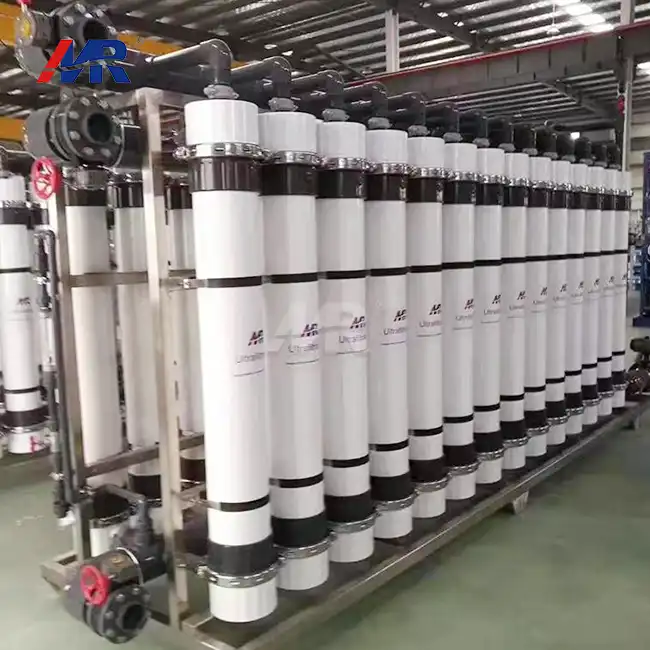
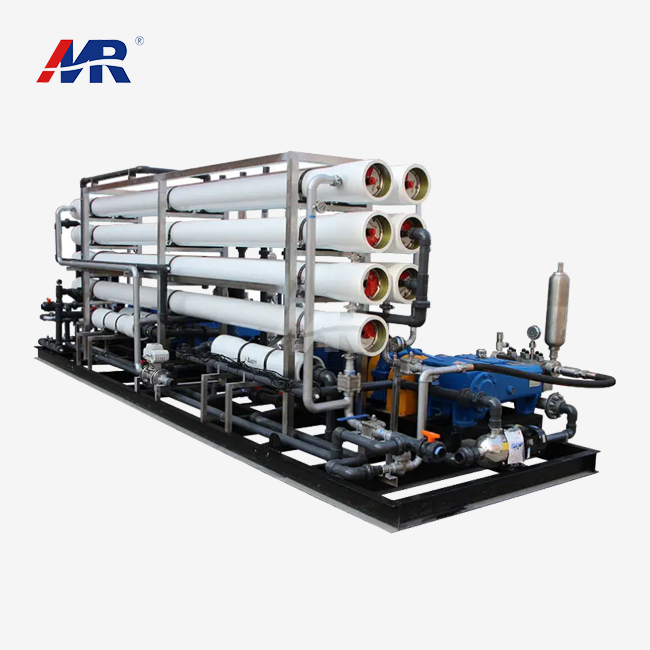
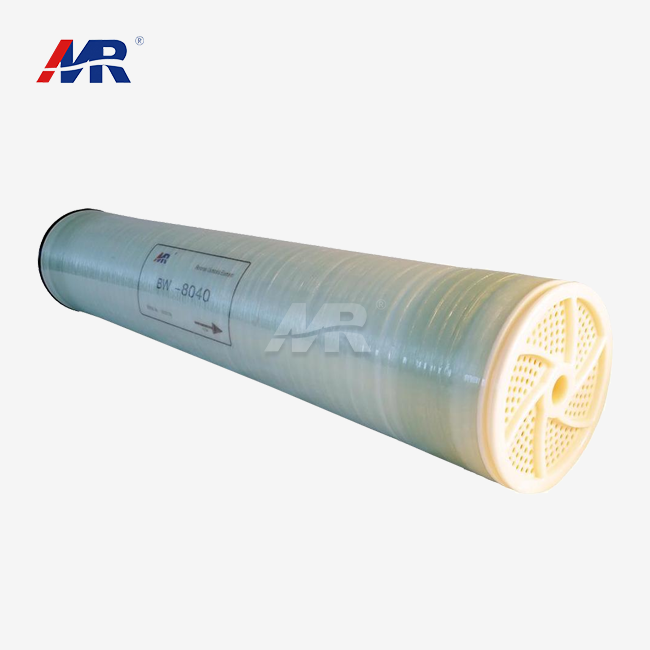
An industrial RO membrane is made of a polyamide Thin-Film Composite (TFC) element that is wound in a spiral shape and lets some things pass through it. Dissolved salts, organic matter, germs, and silica are removed from the feed water by high-pressure cross-flow filtration. Standard sizes, such as the 8040 (8-inch diameter, 40-inch length) and 4040 formats, are made to work continuously and in large amounts in places like those that treat water, process food, feed boilers, and make drugs.
Signs That Replacement Is Overdue
If the user waits until the whole system breaks down before changing the membranes, it will cost them a lot of money. Watch for these changes in how people act:
It means that the membrane is getting clogged or packed down when the normalized permeate flow drops by 10–15% from the set baseline.
- Normalized permeate flow drops by 10–15% from the established baseline, signaling membrane compaction or fouling
- Salt rejection falls below acceptable limits — for a high-rejection element, any reading below 98% warrants immediate investigation
- Differential pressure across the array rises by 15% or more, which often points to biological fouling or scaling in the lead elements
In the working directions that come with membranes, these levels are often listed. They are also in line with industry standards for tracking. You can save the membranes from permanent damage if you catch them early.
Key Factors That Affect Membrane Lifespan
A lot of things affect how long industrial RO membrane elements last. The range is from 3 to 7 years, but it depends on the feedwater quality, the operating pressure, the temperature range, and how well the pretreatment system works. It fouls up a lot faster when the Silt Density Index (SDI) value is above 3. Free chlorine can damage the polyamide layer permanently, even if it's only for a short time. This lowers rejection rates within days. Limiting the membrane's estimated pressure range and following the same chemical dosing rules are the two most direct ways to make it last longer.
Cost Analysis of Industrial RO Membrane Replacement
Membrane Element Pricing Across Formats
Membrane elements have different prices based on their size, rejection grade, and where the brand is placed for an industrial RO membrane. Prices for standard 4040 elements range from $80 to $200 per unit. Prices for 8040 elements range from $200 to over $600 per unit, depending on the flux rating, the amount of salt that needs to be rejected, and the need for NSF or other Certifications. Some brands, like Dow Filmtec, Hydranautics, Toray, and DuPont, charge more. This is because they need more licensing paperwork and help from experts. One way for procurement managers to cut costs without sacrificing quality is to buy from self-manufacturing suppliers that offer OEM-grade parts with the same performance data.
Labor, Downtime, and Ancillary Costs
The membrane piece is not usually the most expensive part of a repair job. Think about what's important:
- Six-vessel, six-element arrays can take an expert four to eight hours to work on and set up.
- Labor and installation for a 6-vessel, 6-element array can take 4–8 hours per trained technician
- System downtime in a continuous production environment carries an opportunity cost that often exceeds the hardware expense
- Pretreatment upgrades — such as replacing exhausted carbon media or adding antiscalant dosing equipment — may be required before new membranes deliver full rated performance
- Spent membrane disposal must comply with local environmental regulations, which adds logistics and documentation costs
The cost of transportation and paperwork goes up because of local rules about the environment that must be followed when getting rid of used membranes.
Bulk Procurement and Long-Term Supply Agreements
When people buy in bulk, they always get better deals. This is especially true for people who run more than one site or for distributors who stock for customers in the area. You can save money on each unit when you plan a replacement deal and order a container load of standard 8040 or 4040 elements. Batch specifications stay the same, and you don't have to buy things quickly at a bad price. People who sign long-term supply agreements can also get technical data files and a guarantee that never ends. This is especially important for people in the U.S. market who need to show proof of NSF approval or comply with the whole system.
Maintenance Best Practices to Extend Membrane Life
Cleaning-in-Place (CIP) Protocols
Chemical cleaning should be based on facts about how well it works, not just the date on the calendar. It is common to do a CIP procedure when the normalized permeate flow drops by 10–15%, the salt passage rises by 5–10%, or the difference in pressure rises by 15% above the starting baseline. Getting rid of carbonate and sulfate scaling is easy with acids (pH 2–4), such as citric or hydrochloric acid. Cleaning with an alkaline solution (pH 11–12, like sodium hydroxide mixed with a detergent) gets rid of biological and organic waste. If you wash in the wrong order or with the wrong steps, foulants might stick back on instead of coming off.
Continuous Performance Monitoring
For newer RO systems, it's not enough to just take readings by hand every so often. It's good for operators to measure key factors at every stage limit because:
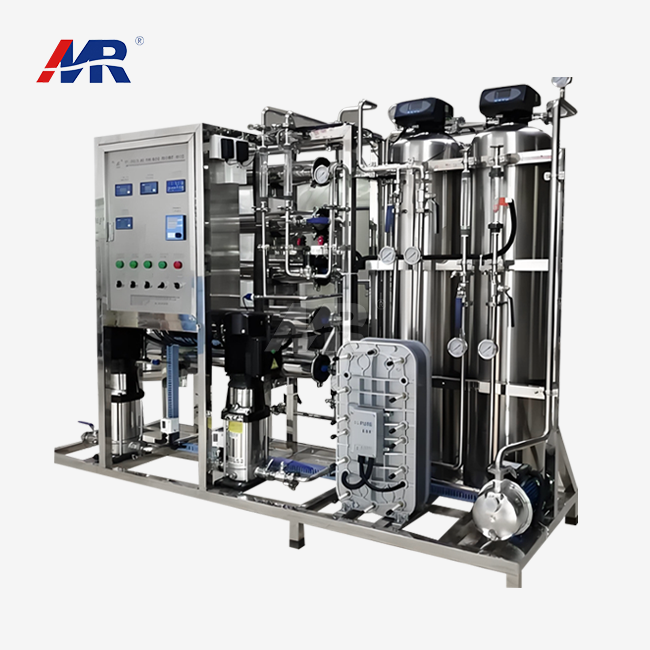
- Feed, concentrate, and permeate pressure gauges measure differential pressure in real time.
- Feed, concentrate, and permeate pressure gauges confirm differential pressure in real time
- Conductivity sensors on the permeate line track salt rejection trends before they reach threshold levels
- Flow meters normalized against temperature give accurate comparisons across seasonal feed water variations
- Flow meters that are set to correct for temperature make it possible to accurately compare changes in seasonal feed water
Preventing Fouling, Scaling, and Biofouling
Fixing problems costs a lot more than keeping them from happening for an industrial RO membrane. When you use the right amount of antiscalant for the water, carbonate and sulfate don't build up on the membrane surfaces. It is possible to lower the biological load without harming the polyamide layer by adding chlorine upstream and then dechlorination (with sodium bisulfite or activated carbon). Scaling and biological attachment are less likely to happen if the feed water has a pH level between 6.5 and 7.5. All of these steps work together to keep the active membrane area safe and allow for more full CIP cycles.
Choosing the Right RO Membrane for Your System
Matching Membrane Specifications to Application
There are times when a spiral-wound part doesn't work the same way. A salty water part that was made for city water supplies works differently when put in an industrial wastewater return loop with a lot of silica. It works at 1.55 MPa, has an active area of 7.2 m², lets 2,500 GPD of permeate flow through, and keeps a 99.5% salt rejection rate. A polyamide TFC brackish water element called the Morui MR-BW-4040 is made for the mid-range commercial bracket. Based on these specs, it looks like it would be good for treating well water, desalinating salty water, using industrial filter cartridges, and setting up ZLD concentration pre-stages.
Evaluating Suppliers: What Actually Matters
A supplier's ability to deliver consistent batch quality is more important than how well a single sample works. You should ask industrial ro membrane providers the following questions when you look at them:
- Standard test settings were used to record how much flow and rejects were there for each run on production test sheets.
- Production test sheets for each batch, showing measured rejection and flow at standard test conditions
- Documented pretreatment recommendations for your specific feedwater chemistry
- Availability of technical support for failure analysis if membrane performance drops unexpectedly
- Clear lead time commitments and minimum order quantity terms for your procurement cycle
Aside from making tools, Morui also has its own plant that makes membranes. These changes mean that quality checking is done by the same group, not by an assembler and a membrane provider from outside the company. This model of direct production cuts down on differences between batches and speeds up the process of fixing issues.
When to Consider Alternative Filtration Options
Ultrafiltration or nanofiltration might work well with some types of feedwater, like surface water that is low in salt or process streams that only need to get rid of particles while using less force and energy. But reverse osmosis is still the best way to get rid of TDS that is dissolved above 90%. Managers of buying should know what the water quality goal is before they choose a membrane type. This is very important when you are adding on to a system that is already there.
Conclusion
To replace and maintain commercial industrial RO membrane filters, you need to pay close attention to details, use the same providers, and plan ahead. If the right steps are taken before they are used, membrane parts should last between 3 and 7 years. That range, on the other hand, breaks down quickly if the feedwater is bad or the cleaning cycles are late. To keep the full cost of replacement in check, procurement teams need to look at more than just the unit price. This includes work, free time, and paperwork. If a medium- to large-sized business wants to save money in the long run, it's better to work with a membrane provider that owns the production process and can give expert help for as long as the membrane is in use than to compare prices in a catalog.
Frequently Asked Questions
1. How often should industrial RO membranes be replaced?
Most elements perform well for 3 to 5 years under normal brackish water conditions with effective pretreatment. High-fouling feedwaters or inadequate SDI control can cut this to 1 to 2 years.
2. How does maintenance affect membrane replacement frequency?
Consistent CIP cycles, accurate antiscalant dosing, and real-time performance monitoring can extend service life toward the upper end of the expected range and reduce the total number of replacement events per decade.
3. What is the difference between fouling and scaling?
Scaling refers to inorganic salt precipitation — typically calcium carbonate or barium sulfate — caused by concentration exceeding solubility limits. Fouling refers to the accumulation of organic matter, colloids, or microbial biofilm on the membrane surface. Each requires a different cleaning chemistry.
4. Can industrial membranes handle chlorinated feed water?
No. The polyamide TFC layer degrades on contact with free chlorine. Feed water must be dechlorinated before entering the RO array, either through sodium bisulfite dosing or activated carbon filtration.
Get a Quote from Morui — Industrial RO Membrane Supplier
One of the industrial RO membrane parts that Morui makes and sells from its own plant is the MR-BW-4040. Our engineering team is ready to help you with any project, whether you need a lot of parts, parts with your own brand name on them, or help with setting up a system. Email benson@guangdongmorui.com right now to get specs, batch test data, or a project price.
References
1. Metcalf & Eddy. Water Reuse: Issues, Technologies, and Applications. McGraw-Hill, 2007.
2. Crittenden, J.C. et al. MWH's Water Treatment: Principles and Design, 3rd ed. Wiley, 2012.
3. American Water Works Association (AWWA). Reverse Osmosis and Nanofiltration Manual of Water Supply Practices, 2nd ed. AWWA, 2007.
4. Hydranautics. Technical Service Bulletin: Foulants and Cleaning Procedures for RO/NF Membranes. Nitto Group Company, 2014.
5. U.S. Department of the Interior, Bureau of Reclamation. Desalting Handbook for Planners, 3rd ed. 2003.
6. Water Research Foundation. Membrane Biofouling in Drinking Water Systems: Assessment and Control. Water Research Foundation, 2016.