_1745823981883.webp)

Industrial reverse osmosis membrane Selection Guide
Choosing the right membrane/8040-reverse-osmosis-membrane">industrial reverse osmosis membrane is one of the most consequential procurement decisions a water treatment engineer or plant manager will make. The wrong membrane means premature fouling, inflated energy bills, and compliance failures. The right one delivers consistent permeate quality, predictable operating costs, and multi-year service life. This guide walks you through every factor that matters — from core technology to supplier qualification — so your next ro membrane purchase is grounded in data, not guesswork.
What Is an Industrial Reverse Osmosis Membrane, and Why Does It Differ From Residential Units?
The Core Technology Behind Industrial RO Membranes
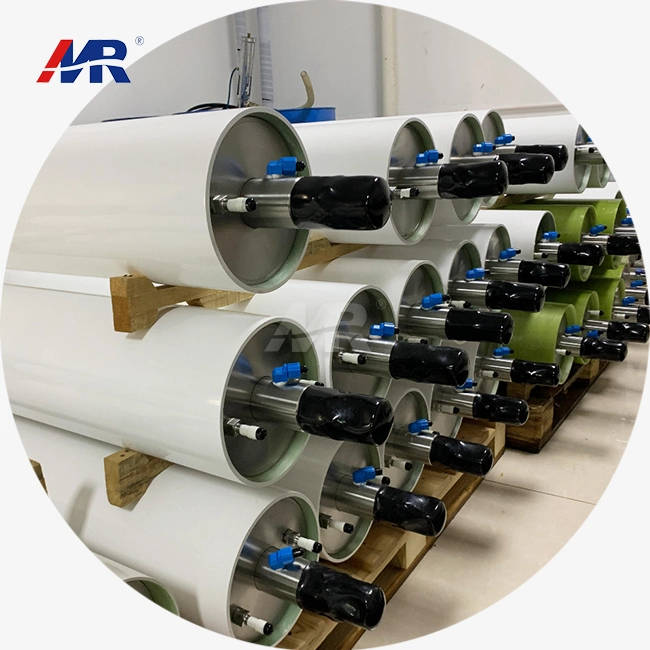
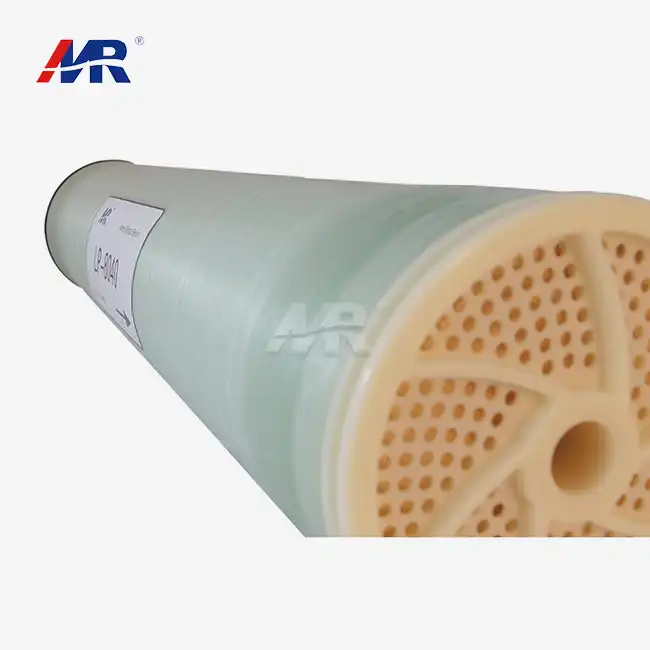
An industrial reverse osmosis membrane is a thin-film composite (TFC) filter that lets some things through but not others. It is usually made with cross-linked aromatic polyamide chemistry. Under hydraulic pressure, feedwater is pushed through this barrier at the molecular level. Dissolved salts, organics, colloids, and pathogens are pushed back, but clean permeate goes through. Industrial elements are spiral-wound, and most of the time come in 4040 (4-inch circle, 40-inch length) or 8040 shapes. They are designed to withstand pressures of up to 1,200 psi when desalinating seawater.
Residential membranes make a few gallons of water every day at low pressure. On the other hand, industrial brackish water elements can supply thousands of GPD at high pressure for a long time, and their salt rejection rates stay between 99.5% and 99.7%. There is a big difference between the strength, active membrane area, and hydraulic longevity.
Where Industrial RO Membranes Are Deployed
These membranes are used in a very large number of areas, including:
- Food & beverage manufacturing uses RO to make sure that the process water used in making food and drinks is clean, meeting FDA 21 CFR guidelines for bottled water and beverage lines.
- Pharmaceutical and biotech facilities use RO as their first step in water purification to meet USP Purified Water and GMP standards.
- Semiconductor fabs add RO to ultrapure water (UPW) loops, combined with EDI polishing, to meet the 18.2 MΩ·cm resistivity needs for chip cleaning.
- Power plants depend on RO preparation to keep silica scaling from building up in high-pressure boilers, which is a failure mode that can seriously damage turbines.
- Municipal water plants and wastewater reuse facilities use RO to improve the quality of their effluent and meet the requirements of stricter discharge permits.
RO membrane technology can be used in a lot of different areas because it has a main benefit: it can precisely and scalably remove dissolved contaminants without adding heat energy.
What Are the Key Criteria for Selecting the Right RO Membrane?
Performance Parameters You Cannot Compromise On
When making decisions about purchases, you should start with four performance metrics that you can't change:
- Salt rejection rate — Aim for a stable 99.5% rejection rate for brackish water applications. Elements in seawater need ≥99.8%. Over the life of the system, lower rejection rates build up TDS in the permeate.
- Permeate flux (GFD) — More flux per unit area means fewer elements are needed, which lowers capital costs, but too much flux speeds up fouling. Balance is very important.
- Operating pressure tolerance — Match the pressure rating of the element to the way your system is designed. The membrane leaf structure is permanently damaged by too much pressure.
- Fouling resistance — Changes to the surface of hydrophilic membranes keep organics and biofouling agents away, which increases the time between Clean-In-Place (CIP) steps.
Comparing Membrane Types: Brackish Water vs. Seawater vs. Low-Energy
| Parameter | Brackish Water (BW) | Seawater (SW) | Low-Energy (LE) |
|---|---|---|---|
| Feed TDS Range | 500–10,000 ppm | 35,000–45,000 ppm | 200–2,000 ppm |
| Operating Pressure | 150–225 psi | 800–1,200 psi | 80–150 psi |
| Salt Rejection | 99.5%–99.7% | 99.7%–99.8% | 98.0%–99.5% |
| Typical Application | Municipal, industrial | Coastal desalination | Polishing, light duty |
| Energy Consumption | Moderate | High | Low |
The most important choice in system design is matching the industrial reverse osmosis membrane type to the chemistry of the feedwater. If you use a low-energy element on salty feedwater with more than 5,000 ppm TDS, it won't reject enough water and will wear out faster.
What Innovations Are Reshaping Industrial RO Membrane Technology?
Fouling Resistance and Smart Monitoring
Biofouling and scaling have been the main problems for TFC membranes in the past, reducing flux and raising operating costs. These problems can be fixed with neutral or slightly negative hydrophilic coatings on the membrane's surface and bigger 34-mil feed gaps that stop differential pressure from building up across the vessel. New environmentally friendly industrial reverse osmosis membrane materials, including bio-inspired aquaporin channels and graphene oxide composites, are moving forward with commercial trials.
Besides materials, adding real-time tracking tools has made it possible for repair to be planned ahead of time. Normalized permeate flow, differential pressure, and conductivity are tracked by sensors that let workers know before a 10–15% drop in flux requires mandatory CIP. This method, which is based on data, cuts down on unexpected downtime and raises the membrane's useful life toward the 5–7-year mark. The International Desalination Association (IDA) says that specific energy consumption (SEC) is the most important factor in long-term economics, and these new technologies promise 30–50% reductions in SEC.
How Do You Maintain Industrial RO Membranes for Maximum Longevity?
Recognizing the Warning Signs Early
Fouling (the buildup of organic or biological matter), scaling (the buildup of minerals, especially CaCO₃ and SiO₂), and reactive breakdown are the three main ways that industrial reverse osmosis membranes fail. By spotting early signs, you can avoid expensive replacements:
- Normalized permeate flow drops 10–15% from baseline → schedule CIP immediately.
- Normalized salt passage rises 5–10% → inspect for industrial reverse osmosis membrane degradation or bypass.
- Differential pressure across the vessel increases 15% → suspect particulate fouling in the feed spacer.
Chlorine cannot get through polyamide TFC membranes. Feedwater chlorine levels must stay below 0.1 ppm, which can be done by dosing sodium bisulfite or pretreatment with activated carbon. If they are not, oxidative damage will happen within hours and cannot be fixed.
Pretreatment Quality Determines Membrane Life
There is no upkeep procedure that can make up for bad pretreatment. A Silt Density Index (SDI) below 3 at the membrane opening is the standard in the business for making elements last 5–7 years longer. If the SDI is above 5, it means that colloidal particles are loading and will pack down on the membrane surface no matter how often it is cleaned. Adding antiscalant, adjusting the pH, and filtering through a 5-micron cartridge are all common pretreatment steps that protect the money spent on membrane elements.
How Should You Procure Industrial RO Membranes With Confidence?
Supplier Qualification and Quality Verification
When businesses buy RO membranes from sources they can't verify, they risk getting fake parts, performance that doesn't meet specifications, and warranties that aren't honored. A strict process for qualifying suppliers addresses this risk through key proof steps:
- Wet test validation — Sampled elements should be tested at Standard Test Conditions (2,000 ppm NaCl, 225 psi, 25°C). When flux and rejection deviations are more than ±15% and ±0.2%, respectively, it means that production isn't consistent.
- Integrity testing — Bubble point and vacuum decay tests find pinholes or adhesive-line failures that can't be seen with the naked eye.
- Preservation compliance — Certified elements are sent in oxygen-barrier packaging that is vacuum-sealed and contains a 1.0% sodium bisulfite solution to keep microbes from growing while they are being shipped and stored.
Spotlight: Morui MR-BW-4040 Brackish Water Element
The MR-BW-4040 from Morui is a 4040-format brackish water element designed for medium-sized commercial systems that need stable permeate quality and save energy. Key parameters that have been checked:
- Operating pressure: 1.55 MPa
- Active membrane area: 7.2 m²
- Permeate flow: 2,500 GPD
- Salt rejection rate: 99.5% (stabilized)
This element works well in places where the TDS of salty feedwater is between 500 and 5,000 ppm, like in food-grade process water, pharmaceutical pretreatment trains, and city upgrade projects. With 14 branch offices, 20 in-house engineers, and Morui's own membrane production facility, the element will always be able to get supplies and Technical support throughout its service life.
Conclusion
Any business that chooses an industrial reverse osmosis membrane without carefully looking at the feedwater chemistry, flux needs, and supplier references could experience unplanned downtime and cost increases. The ideas in this guide — matching membrane type to application, ensuring pretreatment standards, keeping a close eye on normalized performance data, and carefully screening suppliers — apply whether you are in charge of a city desalination plant or a pharmacy water system. Elements like the MR-BW-4040 show that it is possible to achieve 99.5% rejection and 2,500 GPD output within useful working ranges. If you make the selection process organized, your investment in the membrane will be safe.
FAQ
1. How long do industrial RO membranes typically last?
When systems have enough pretreatment (SDI < 3) and regular CIP, brackish water elements usually last between 3 and 7 years. This is cut down to 1–3 years for harsh wastewater reuse uses with high COD and changing pH. The quality of the preparation has a direct effect on the membrane's life, not just how often it is cleaned.
2. How often should CIP cleaning be performed?
CIP is set off by a change in behavior, not by a set date and time. Start cleaning when the normalized flow of permeate drops by 10 to 15 percent, the normalized flow of salt increases by 5 to 10 percent, or the differential pressure rises by 15 percent from the starting point.
3. Can industrial RO membranes handle high-TDS seawater?
The MR-BW-4040 and other standard brackish water elements can handle feedwater up to 10,000 ppm TDS. For seawater with a TDS level above 35,000 ppm, you need special seawater-grade (SW) elements that can handle up to 1,200 psi of pressure and reject 99.7% of it.
4. Why does water temperature affect membrane output?
Because water becomes less viscous, permeate flux drops by about 3% for every 1°C drop in feedwater temperature. To make sure that the minimum rated output is always met, system designs must be sized for the coldest seasonal feedwater temperature.
Partner With Morui for Verified Industrial RO Membrane Supply
Morui specializes in industrial reverse osmosis membrane systems backed by 20 engineers and a global supply network. We are a reliable provider of industrial RO membranes, and the MR-BW-4040 is just one of many Products we offer to fit your feedwater conditions, flow goals, and safety needs. You can email our engineering team at benson@guangdongmorui.com to ask for details, samples, or a plan for a custom solution.
References
1. Elimelech, M., & Phillip, W. A. (2011). The Future of Seawater Desalination: Energy, Technology, and the Environment. Science, 333(6043).
2. International Desalination Association (IDA). (2022). IDA World Congress on Desalination and Water Reuse: Proceedings and Technical Papers.
3. Kucera, J. (2015). Reverse Osmosis: Industrial Processes and Applications (2nd ed.). Wiley-Scrivener.
4. American Water Works Association (AWWA). (2020). Reverse Osmosis and Nanofiltration Manual of Water Supply Practices (M46) (3rd ed.).
5. NSF International. (2023). NSF/ANSI 61: Drinking Water System Components — Health Effects. NSF International Standards Publication.
6. Fritzmann, C., Löwenberg, J., Wintgens, T., & Melin, T. (2007). State-of-the-Art of Reverse Osmosis Desalination. Desalination, 216(1–3), 1–76.