


How to Maintain 500LPH EDI Equipment for Stable Water Quality Long Term?
So if you're a factory that relies on consistent ultrapure water, you realize how expensive an EDI failure can be. This article describes how to maintain 500LPH EDI equipment such that it continues to produce 18.2 MΩ·cm class water year after year. Daily inspections, feedwater limitations, cleaning triggers, scale prevention, and indicators for module replacement are covered using actual operational data from pharmaceutical and electronics factories around Asia, South America, and Africa. No matter whether you operate a conventional module or a bespoke RO+EDI train, the same operational discipline safeguards your flow rate, resistivity, and electrical load.
Key Takeaways
- The 500LPH EDI device generates around 500 liters per hour of deionized water. Actual production varies with input conductivity, temperature, pressure, and recovery.
- Long-term stable performance is a function of three controls: constant RO permeate quality, daily parameter monitoring, and data-driven, not calendar-driven, cleaning.
- Operators should record conductivity, resistivity, flow, pressure, voltage, current, and temperature every shift to identify early indicators of scaling or fouling.
- Replacement choices should be based on trend data such as growing voltage, declining resistivity, or pressure decrease rather than on guessing.
Maintain 500LPH EDI equipment in good condition by correctly feeding it with treated RO permeate, recording water quality and electrical measurements regularly, cleaning only when performance trends warrant it, and replacing modules before product quality wanders out of specification.
What Is 500LPH EDI Equipment?
Definition and Operating Scope
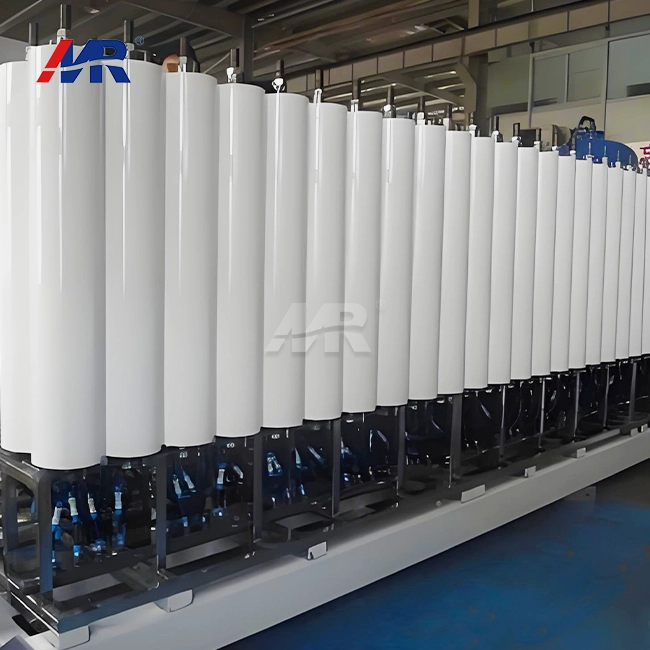
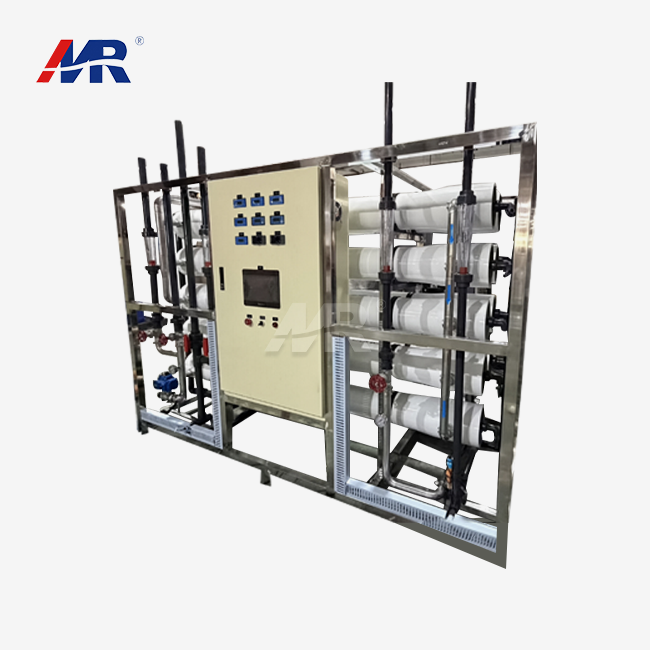
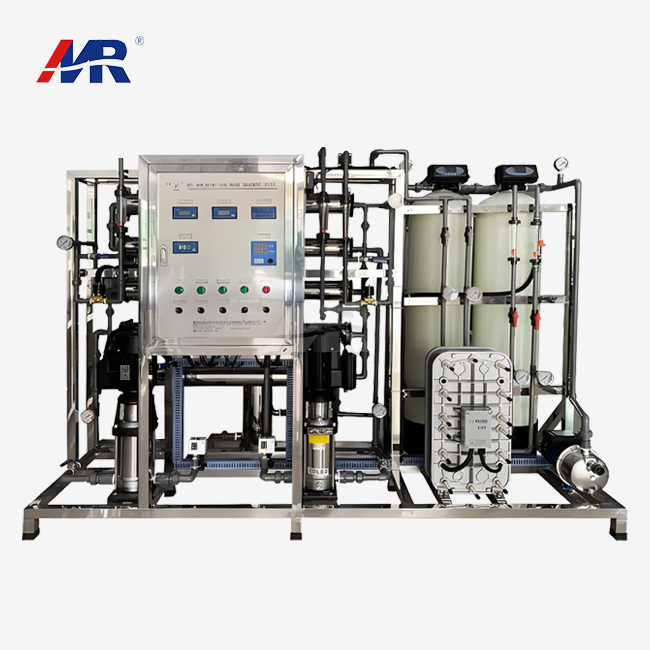
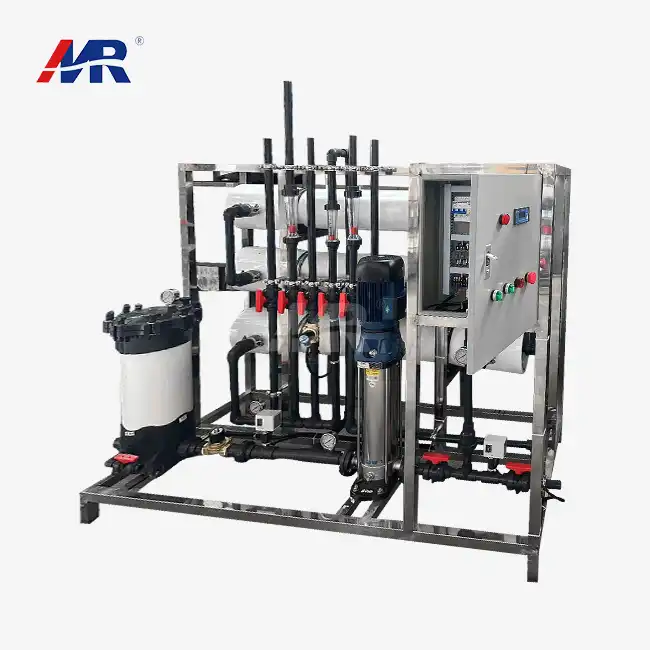
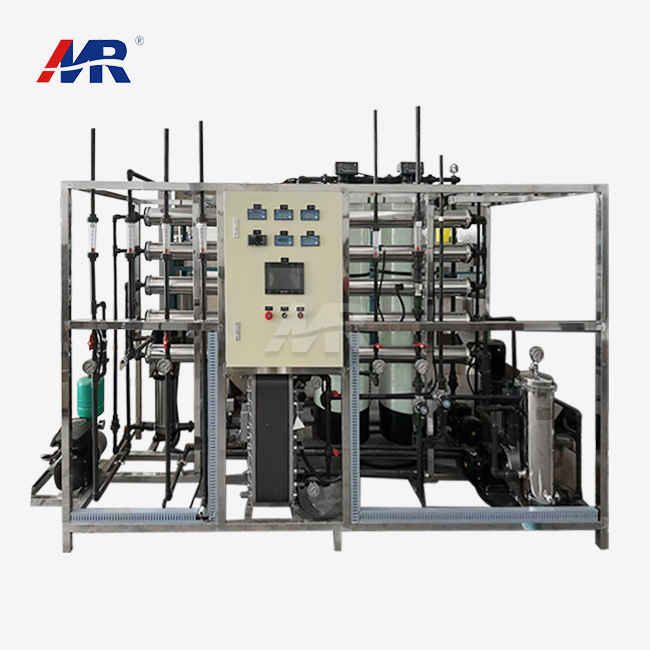
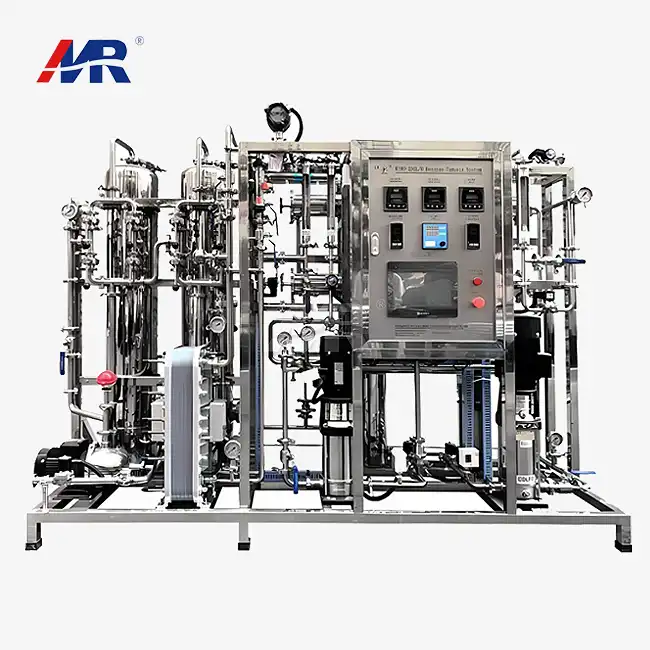
Electrodeionization (EDI) is a continuous water purification method that uses ion-exchange resin, ion-selective membranes, and a direct electrical current to remove dissolved ions from water without the use of acid or caustic regeneration chemicals. A 500LPH EDI equipment unit is rated for around 500 liters per hour of deionized output, positioned after a reverse osmosis (RO) stage in what the industry terms a RO+EDI train.
500 LPH is a notional figure. The actual output varies with input water conductivity, intake pressure, recovery rate, and water temperature. A unit operating on low-TDS RO permeate at 25°C will do better than the identical module on warmer, harder feedwater. This is why I usually ask customers to provide their real feed analysis before I can promise a flow, rather than giving a one-off figure.
EDI is different from mixed-bed deionizers and typical ion-exchange columns because it regenerates itself electrically, constantly, with no resin tanks to switch, and no on-site storage of acid/caustic. It is also different from distillation in that it takes significantly less energy per liter generated – often under 0.1 kWh/m³ for a properly constructed 500 LPH skid.
How a 500LPH EDI System Works
Water goes through four phases before it is finally used. Pretreatment to remove big particles, chlorine and hardness. Reverse osmosis removes 95-99% of total dissolved solids. The 500LPH EDI equipment then passes direct current over ion-exchange membranes to draw the residual cations and anions into a concentrate stream, while product water departs at 18.2 MΩ·cm-class resistivity. Post-treatment returns pH to normal or adds back minerals for a particular procedure if needed.
Typical 500LPH EDI Equipment Specifications
| Specification | Typical Value |
|---|---|
| Nominal capacity | 500 L/h (≈0.5 m³/h) |
| Product resistivity | ≥18 MΩ·cm |
| Recovery rate | Up to 95% |
| Power consumption | <0.1 kWh/m³ |
| Operating pressure | 0.3–0.7 MPa |
| Feed source | RO permeate |
| Wetted materials | PVC, PP, or PVDF |
| Controls | PLC, conductivity meters, flow and pressure sensors |
The system combines ion exchange and membrane separation to give high-purity water without chemical regeneration, which is why it is increasingly being specified above traditional mixed-bed polishing by electronics, pharma, and power facilities throughout Southeast Asia and the Middle East.
What Daily Checks Keep 500LPH EDI Equipment Stable?
Daily Operating Checklist
Most EDI failures may be prevented by a simple daily practice. Operators must record product conductivity, intake pressure, concentrate flow, and voltage each shift and compare them to the commissioning baseline at the same time. It is important to perform it at the same time, as temperature changes over the day may hide an actual fouling pattern if the data are collected at various times.
- Product and feed conductivity: Record readings at the start of the shift and at noon. One of the first signs of scaling inside the ion-exchange compartments is generally a growing gap between RO permeate conductivity and EDI product conductivity, and this occurs before any flow loss is seen.
- Flow and pressure readings: Check product, concentrate, and reject flow against the commissioning sheet. A flow decline above 10% without a valve adjustment generally indicates partial obstruction or resin compaction inside the module.
- Electrical load: Follow the voltage and the current together. Rising current with consistent feed conductivity normally indicates scaling; rising voltage with declining current typically signals an electrical connection defect rather than a water quality issue.
- Visual Inspection: Walk the skid looking for leaks, unusual vibration, or heat in the area of the electrode compartments. These inspections will identify seal and fitting problems weeks before they create unwanted downtime.
These inspections provide operators with an early warning system that costs almost nothing other than a few minutes every shift. Skipping emergency service visits is the single most prevalent reason I see plants needing them.
Shift-Start Trend Log
| Parameter | Baseline | Warning Sign | Action |
|---|---|---|---|
| Product conductivity | Commissioning value | +15% over 3 days | Test feedwater, check instrument calibration |
| Differential pressure | Baseline | Steady rise over a week | Inspect for fouling or scaling |
| EDI current | Commissioning range | Sudden jump | Check flow and feed TDS |
Which Water Quality Parameters Should Operators Monitor?
Feedwater Parameters Entering the EDI Module
RO permeate quality influences almost everything downstream. I tell every customer the same thing: your 500LPH EDI equipment will only be as reliable as the water you give it. The main feed characteristics are conductivity, hardness, silica, residual chlorine, iron, total organic carbon, pH, and temperature. Most module manufacturers indicate maximum feed conductivity in the range of 10-40 µS/cm. Even a few hours beyond that can increase fouling.
Product-Water Parameters to Verify
Finished water must be tested for resistivity at a specified reference temperature (typically 25°C), silica, boron, and sodium for electronics applications, or total organic carbon and microbial counts for pharmaceutical purified water in accordance with USP General Chapter <1231> (United States Pharmacopeia, 2023). But resistivity alone is not proof of microbiological safety; thus, pharma users require an electrical and a biological test strategy.
Calibration and Data Integrity
Conductivity and resistivity meters wander with time, and an uncalibrated sensor might mask a serious quality fault. I propose that you at least quarterly calibrate meters against a traceable standard and document the temperature compensation settings and the sample flush time before each reading. Most calibration laboratories use the standard techniques for conductivity and resistivity testing outlined in ASTM D1125 (ASTM International, 2023; https://www.astm.org/d1125-14r19.html).
How Often Should 500LPH EDI Equipment Be Cleaned?
Cleaning Triggers, Not Calendar Dates
A defined monthly or quarterly cleaning plan is neat but frequently cleans a healthy module too soon or misses a fouled one too late. I encourage my customers to trigger cleaning based on measurable trends: growing product conductivity, declining resistivity, falling flow, rising pressure drop, or rising current with constant feed quality. Even if it is not scheduled, visible deposits or biofilm are still triggers.
Cleaning Procedure Steps
- Before opening any panel, isolate the unit and perform a defined lock-out process.
- Refer to the manufacturer's data sheet for permitted cleaning chemicals and concentrations.
- Flush the system with product-grade water before and after the cleaning cycle.
- Control temperature, contact duration, and flow direction during the cleaning cycle.
- Dispose of cleaning waste according to local discharge regulations.
- Check the product resistivity before putting the unit back into regular production.
- Record chemical batch numbers, operator name, test results, and any variation from plan.
Chemical Compatibility and Cleaning Risks
The module should only be in contact with chemicals allowed for the kind of membrane and resin. Strong oxidants, solvents, or over-concentrated acid irreversibly destroy membranes, electrodes, and seals. A cleaning error is usually more costly than the module replacement it was designed to prevent. Follow the manufacturer’s validated cleaning procedure: [Insert approved EDI cleaning SOP].
How Does Feed Water Quality Affect EDI Lifespan?
Why RO Permeate Quality Matters
EDI is a polishing step, not a replacement for good pretreatment. High ionic loading increases the electrical work of the module, which increases the energy consumption and reduces the membrane life. Hardness and silica precipitate in the flow channels. Chlorine and organics damage resin and membrane material over time. I've seen modules lose half of their estimated service life due to a missed replacement on an upstream softener.
Pretreatment Requirements
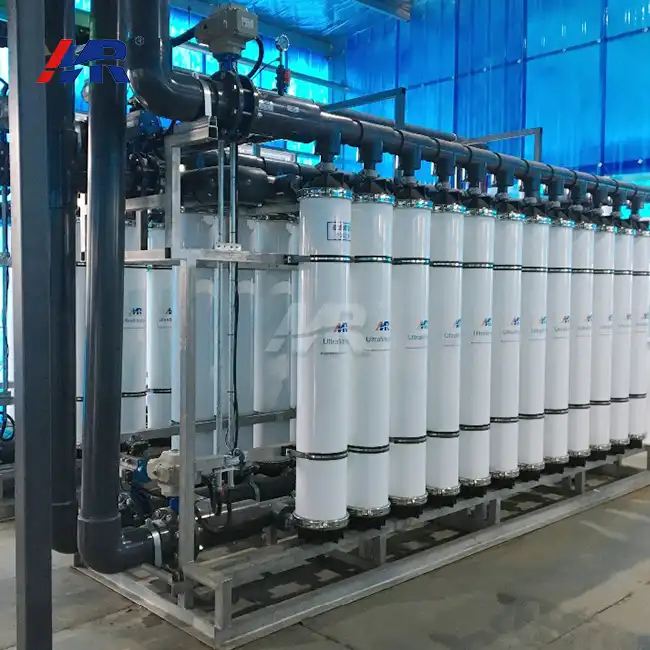
A well-designed pretreatment train normally comprises multimedia or cartridge filtering, activated carbon for dechlorination, softening or antiscalant dosing, reverse osmosis, and occasionally degassing or ultrafiltration depending on the source water. Each step safeguards the next, and bypassing a stage to reduce costs nearly always shows up later as a lower EDI module life expectancy.
Feedwater Excursion Response Plan
If feed quality goes out of range, I do the following. Stop or redirect product water. Check RO permeate conductivity and pressure. Test hardness and silica. Inspect pretreatment consumables. Document the occurrence, then continue regular production. Skipping documentation results in the same excursion happening again and nobody notices the pattern.
When Should EDI Membranes or Modules Be Replaced?
Degradation Symptoms Worth Watching
Replacement is required when performance cannot be restored by cleaning. After a confirmed cleaning cycle, look for excessive conductivity in the product, voltage or current that deviates significantly from the baseline range, growing pressure drop without external obstruction, or physical damage such as cracked housings and failing seals.
Replacement Versus Cleaning Decision Table
| Observation | Likely Cause | Recommended Action |
|---|---|---|
| Rising conductivity, normal flow | Feedwater excursion or scaling | Test RO permeate first, clean if approved |
| Low product flow | Blockage, pump, or valve issue | Check hydraulics before touching the module |
| High current | Ionic loading or scaling | Verify feed quality and electrical settings |
| Quality fails after cleaning | Internal membrane or resin damage | Schedule module replacement |
Lifecycle Cost Planning
The total cost of ownership comprises module replacement, ro membrane replacement, pretreatment media, cleaning chemicals, instruments, electricity, water disposal, and manpower. For clients that monitor these expenditures over 24 months, module replacement is often just 15-20% of overall spend, with the remainder consumed by pretreatment consumables and energy. “Planning around full lifecycle cost (instead of unit price) generally leads to better sourcing decisions.”
How Can Operators Prevent Scaling in EDI Equipment?
Main Causes of Scaling
In 500LPH EDI equipment, the root cause of scaling is almost always one of a few things: 1. Excessive hardness or silica in RO permeate. 2. Incorrect recovery or concentrate flow. 3. Low flow through the product channel. 4. High operating temperature. 5. Extended operation after an alarm that should have caused a shutdown.
- Hardness and silica excursions: Even a brief time of high hardness may result in deposits that take weeks to clear up completely; hence, I advocate continuous hardness monitoring upstream of the EDI step, rather than just occasional spot checks.
- Flow and recovery variations: If the operating concentrate flow is below the commissioning setpoint, the ions will be concentrated more quickly than the design limit, and the system will scale long before the feed conductivity limit is met.
- Temperature extremes: Operating the module over its specified maximum temperature alters the solubility limits of silica and calcium compounds. This causes scale to develop at a lower concentration than it normally would.
Early Warning Indicators
The first and most obvious indicators are slow increases in pressure drop, decreases in product flow, increases in voltage at constant feed conductivity, and the appearance of white or crystalline deposits. If caught early enough in the outset, a simple cleaning generally takes care of the issue rather than a module replacement.
What Performance Changes Indicate a Maintenance Issue?
Trend Analysis Against Baseline
I constantly examine current measurements against four points of reference: the numbers from the factory acceptance test, the values from the site commissioning, the preceding 30-day average, and the specified operating limitations from the manufacturer. One negative reading is not much to worry about, but a steady drift over many days is usually an indication of a true problem, either mechanical or in the water quality.
Troubleshooting Matrix
| Performance Change | Possible Cause | First Check |
|---|---|---|
| Conductivity increases | Poor RO water or sensor drift | Test feed, calibrate instrument |
| Flow decreases | Pump, valve, or fouling | Check pressure and flow path |
| Current increases | High ionic load or scaling | Review feed conductivity history |
| Quality fluctuates | Air in system or unstable feed | Check tank level and control valves |
Corrective-Action Documentation
For each deviation, a concise written record should be maintained that includes: date, observed value vs. specification, prompt action performed, root cause, verification test results. Plants that miss this stage generally repeat the same failure within months because no one related the previous incident to the pattern.
How to Evaluate a 500LPH EDI Equipment Supplier?
Supplier Capability Checklist
The correct partner is as important as the proper equipment. My recommendation would be to look at vendors based on their proven capacity under certain feed circumstances, module brand and availability, expertise with integration of RO and pretreatment, electrical and automation assistance, spare-parts stock, and references from previous projects in your area of interest.
Field Case: Pharmaceutical Plant in Southeast Asia
A Morui customer operating a pharmaceutical purified-water line in Southeast Asia approached us after their initial EDI module failed to maintain resistivity over 15 MΩ·cm eight months after beginning. We looked at their feedwater data and saw that in the rainy season, when the raw water hardness went up, the RO permeate conductivity was running beyond the module’s rated limit.
After installation of a specialized softening system and downsizing of the RO stage, their 500LPH EDI equipment maintained resistivity over 18.1 MΩ·cm for 14 consecutive months, and cleaning frequency was reduced by almost 35% compared to the first year. The power usage stabilized at little around 0.08 kWh/m³, somewhat below the design objective. This is a typical scenario. Most early EDI issues were feedwater-related, not the module.
500LPH EDI Solution Comparison
| Solution | Advantages | Limitations | Best Fit |
|---|---|---|---|
| EDI after RO | Continuous, no chemical regeneration | Needs stable RO feed | Pharma, electronics, labs |
| Mixed-bed DI | Simple, high polishing capacity | Resin needs regeneration | Intermittent polishing |
| RO + DI cartridges | Flexible, modular | Cartridge costs add up | Smaller variable-demand plants |
Procurement Checklist
Please provide the complete 500LPH EDI equipment specification sheet, feedwater assumptions and guaranteed product quality, P&ID and wiring diagrams, bill of materials with country of origin, lead time and warranty conditions, and a suggested two-year spare-parts list before we place an order. Morui consolidates RO, EDI, and UF manufacturing into one plant, providing a single source of module traceability and warranty support, rather than relying on various suppliers.
How Can 500LPH EDI Equipment Deliver Stable Quality Long Term?
A Realistic Maintenance Calendar
Instead of depending on one yearly service visit, long-term stability is achieved via stacking inspections at varied intervals. Sudden issues are picked up by daily reads. Weekly reviews catch sluggish drift. Instruments are calibrated and their electrical condition verified by monthly tests. Quarterly evaluations are done to see whether preventative cleaning is needed. Full validation and documentation updating are included in the Annual service.
Use-Case Scenarios
System integrators constructing standardized skids want repeatability of module performance, interface designs, and PLC communications protocols from batch to batch they supply to customers. Distributors and export partners are more interested in the packaging, multi-language documentation, and the spare part turnover than the chemistry within the module. In the power generating or food processing sector, end-user companies often consider not only sticker price but total cost of ownership and local service responsiveness in evaluating equipment. The core 500LPH EDI equipment is the same, yet each buyer type requires a different interaction.
Compliance Considerations
Equipment may need CE marking (European Union machinery and low voltage directives), RoHS and REACH substance declarations, UL or NRTL listing for installations in the US, or FDA current Good Manufacturing Practice alignment for pharmaceutical process water (U.S. Food and Drug Administration, 2023. Supplier declarations are not a replacement for a project-specific compliance study, since requirements change according to configuration and end use.
Long-Term Verification Plan
A strong quality program comprises a commissioning baseline, a calibration schedule, a documented water-quality test plan, change-control processes, and a nonconformance process. Plants that skip the baseline phase often lack something solid to compare against 6 months later when performance begins to vary.
Conclusion
The 500LPH EDI equipment has stable performance based on three habits: feeding it RO permeate within spec, monitoring parameters every shift, and acting on facts, not guessing, when scheduling cleaning or replacement. Plants that prevent unscheduled downtime usually are not the ones with the newest equipment, but the ones with the most constant monitoring routine. Don’t choose your next system based on nominal flow rate but on proven specs, lifespan cost, and supplier documentation.
FAQ
1. How does a 500LPH EDI system work?
A 500LPH edi system uses direct current, ion-exchange resin, and ion-selective membranes to remove dissolved ions continuously from RO permeate. It produces deionized water without acid or caustic regeneration chemicals.
2. What feedwater does 500LPH EDI equipment require?
It generally needs stable RO permeate within the module's rated limits for conductivity, hardness, silica, chlorine, and temperature. Exact limits vary by module brand and should be confirmed on the technical datasheet.
3. How often should a 500LPH EDI system be cleaned?
Cleaning frequency should follow measured trends in conductivity, flow, pressure drop, and current rather than a fixed calendar interval. Visible fouling or a verified feedwater excursion are also valid triggers.
4. Is EDI better than a mixed-bed deionizer?
EDI runs continuously without routine chemical regeneration but needs consistent RO feedwater and steady power. Mixed-bed systems can suit intermittent use or final polishing but often carry higher regeneration or replacement costs over time.
5. What causes scaling in 500LPH EDI equipment?
Scaling usually results from excess hardness or silica, incorrect recovery, low concentrate flow, or operating above the rated temperature. Regular feedwater testing and flow verification reduce this risk significantly.
6. How long does 500LPH EDI equipment last?
Service life depends on feedwater quality, operating hours, and cleaning discipline. Proper pretreatment and trend-based maintenance can extend module life well beyond the baseline warranty period, though replacement timing should always follow measured performance data.
Looking for a Dependable 500LPH EDI Equipment Partner?
Sourcing the right 500LPH EDI equipment manufacturer saves months of troubleshooting later. Morui builds RO, EDI, and UF lines under one roof, covering module design, electronic-grade and pharma-grade customization, and remote monitoring integration from a single factory. If yOur Team needs a specification review, pilot-run timeline, or spare-parts plan for an upcoming RO+EDI project, reach our technical team directly at benson@guangdongmorui.com for a feed-water-based quotation.
References
1. United States Pharmacopeia — General Chapter <1231>, Water for Pharmaceutical Purposes (2023). https://www.usp.org/
2. ASTM International — ASTM D1125, Standard Test Methods for Electrical Conductivity and Resistivity of Water (2023). https://www.astm.org/d1125-14r19.html
3. U.S. Food and Drug Administration — Current Good Manufacturing Practice (cGMP) Regulations (2023). https://www.fda.gov/drugs/pharmaceutical-quality-resources/current-good-manufacturing-practice-cgmp-regulations
4. International Organization for Standardization — ISO 9001, Quality Management Systems (2023). https://www.iso.org/iso-9001-quality-management.html
5. European Commission — CE Marking and Product Safety Requirements (2023). https://single-market-economy.ec.europa.eu/sectors/legislation/ce-marking_en
6. International Organization for Standardization — ISO 14001, Environmental Management Systems (2023). https://www.iso.org/iso-14001-environmental-management.html
Written by Renjie Kuang, Senior Overseas Water Treatment Technical Manager at Guangdong Morui Environmental Technology Co., Ltd. Renjie has spent over a decade supporting RO, EDI, and UF system commissioning for electronics, pharma, and power-plant clients across more than 30 countries, with direct field experience in feedwater troubleshooting and module lifecycle planning.