_1745823981883.webp)

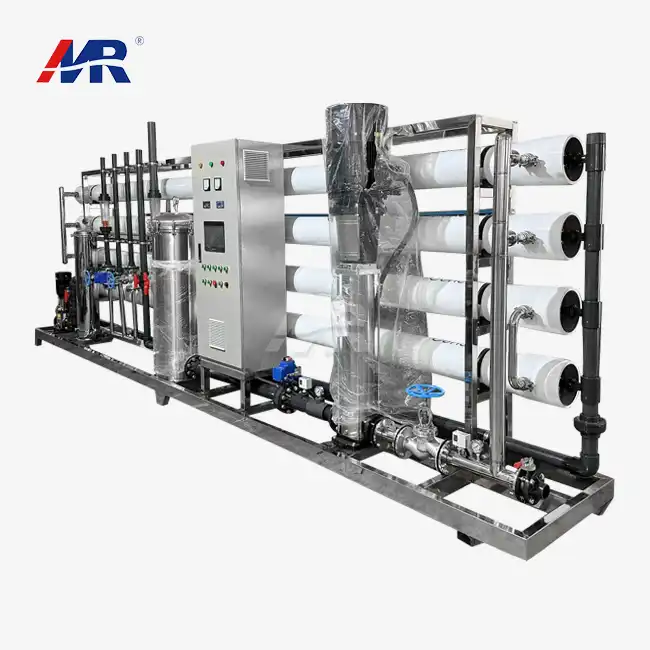
| Parameter | Standard Specification |
|---|---|
| Production capacity | 12 m³/hour (~288 m³/day) |
| Recovery rate | Up to 75% |
| Salt rejection | Greater than 98% |
| Power consumption | Less than 1 kWh/m³ |
| Feed water TDS range | 1,000–10,000 ppm |
| Operating pressure | 10–25 bar |
| Membrane type | High-rejection, low-fouling TFC |
Recovery Rate and What It Means for Your Water Bill
The recovery rate is the quantity of useful permeate generated relative to the total volume of feed water consumed. A plant with 75% recovery will produce 12 m³ of cleaned water from 16 m³ of raw water, the remainder being concentrate. Higher recovery rates translate to decreased raw water demand, an immediate advantage for places with groundwater limitations or seasonal depletion of wells.
Power Consumption Compared to Older Systems
Modern pumps use less than 1 kWh per cubic meter, and for brackish water, the pressure needed is less. Older or poorly constructed systems operate at 1.5-2 kWh/m³, and hence a facility might spend 50-100% more on power expenditures for the same water production during a year of continuous operation.
Salt Rejection Versus Feed Water Salinity
An above 98% rejection rate sounds great on paper, but permeate quality still relies on input water TDS. When 8,000 ppm feedwater is treated at 98% rejection, the permeate is around 160 ppm, and when 2,000 ppm feedwater is treated at the same rejection rate, the permeate is about 40 ppm. Knowing what is in your source water can help you to set your expectations correctly and avoid disappointment after you install.
Key Components Inside a 12 m³/hour BWRO System
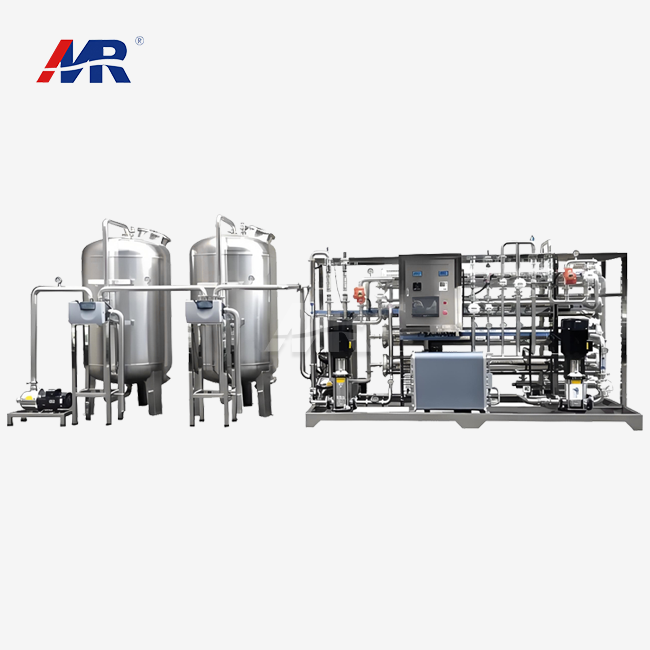
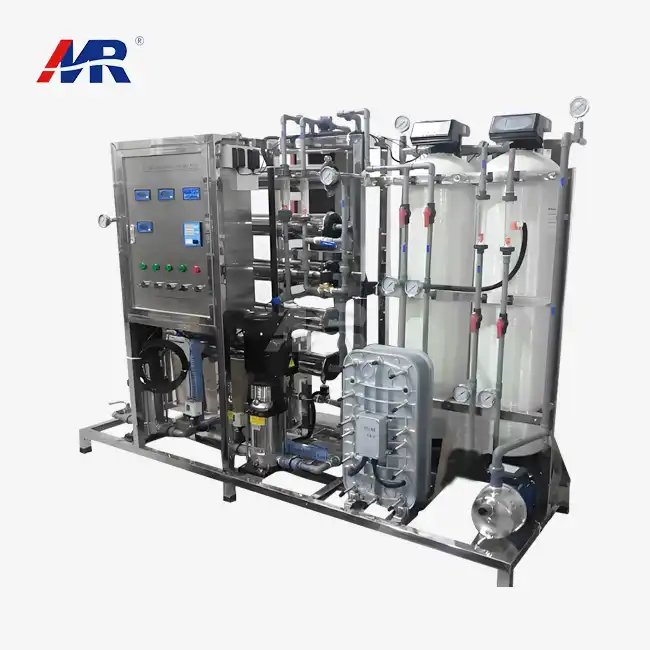
All reliable 12m3/hour reverse osmosis BWRO system solutions rely on five synchronized steps. Missing or undersizing any one step reduces membrane life and raises operational expenses.
- Pre-treatment Filtration: Removal of suspended particles and turbidity using multimedia or sand filters before contact with sensitive membrane surfaces. Activated carbon filters remove chlorine and organic contaminants, protecting thin-film composite membranes from oxidation degradation that may violate manufacturer warranties in a matter of weeks.
- Cartridge Filtration – A 5-micron security filter collects tiny suspended particles that are missed by the main filtration stages and provides a last line of defense before the high-pressure pump and membrane array.
- High-pressure pumping: Multistage vertical stainless steel pumps, usually from renowned manufacturers like Grundfos or Shimge, provide the pressure required to overcome osmotic resistance and effectively force water through the membrane parts.
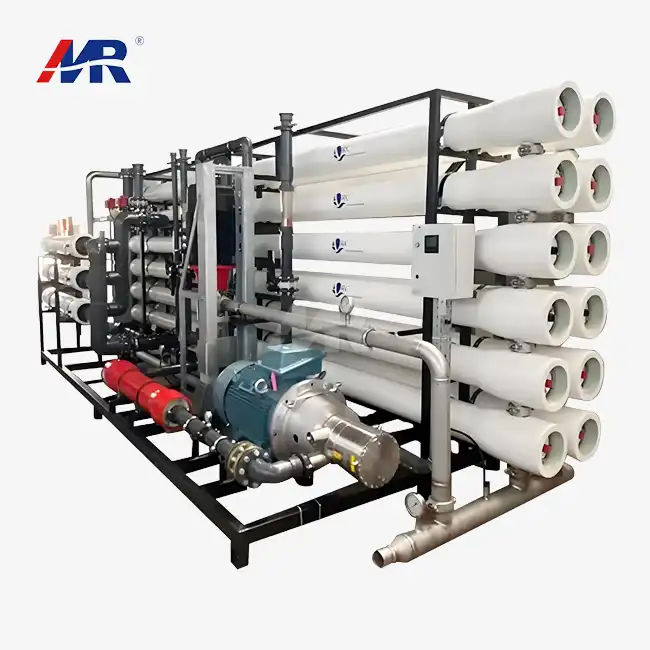
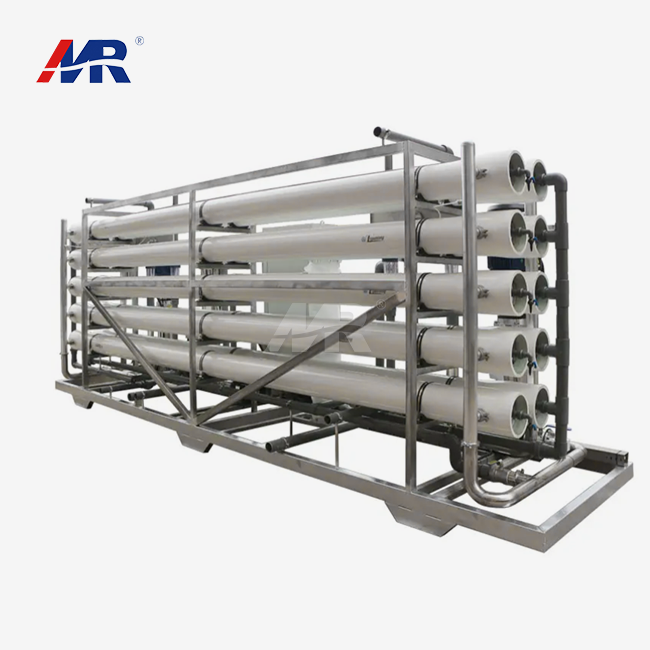
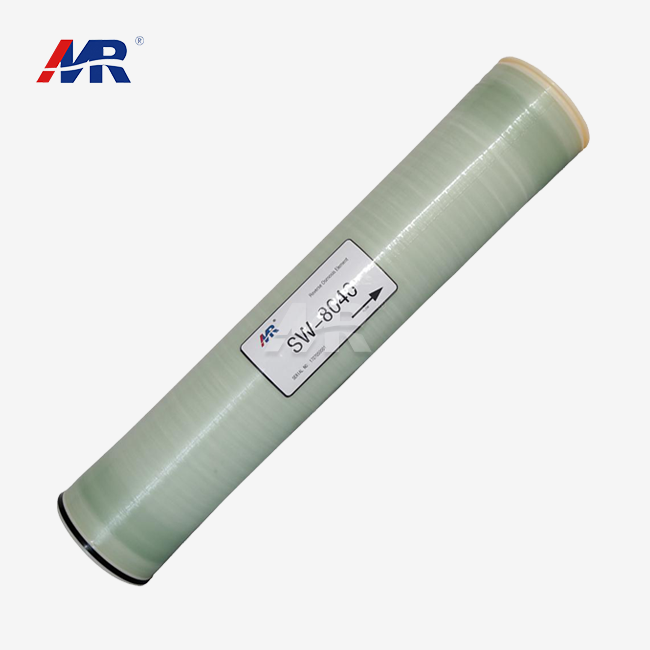
- RO membrane array: The actual separation takes place on eight-inch TFC spiral-wound polyamide membranes contained in FRP or stainless steel pressure vessels, which reject more than 98 percent of the dissolved salts and enable the passage of pure water.
- Control and monitoring: The PLC control panel automates flushing cycles, monitors conductivity and pressure in real time, and initiates safety switches in low- or high-pressure events to safeguard the whole system.
These five steps act as one integrated system. Even the best membrane may be let down by a poor pretreatment stage or an inadequate pump. That’s why the quality of all the components in the chain is more important than any one standard, especially in a 12m3/hour reverse osmosis BWRO system where each component must work together to maintain stable performance and water quality.
Why Antiscalant Dosing Gets Underestimated?
A lot of consumers think pretreatment is over after filtering. Antiscalant dosage avoids calcium carbonate and silica precipitation on membrane surfaces, a gradual process that leads to flow reduction and increased pressure requirements over time. Skipping proper dose calibration is one of the most common reasons for early membrane replacement that we observe in field service reports.
Membrane Technology: Why TFC Matters for Brackish Water?
The choice of membrane will affect the quality of the water produced and the life-cycle cost of running a 12 m³/hr BWRO reverse osmosis system.
Thin-Film Composite Membrane Structure
TFC membranes consist of a thin polyamide barrier layer and a polysulfone support structure to achieve high rejection rates with significant water flow. It is also more durable and chemically resistant than previous cellulose acetate membranes, especially to chlorine, which is a consideration during cleaning cycles.
Low-Fouling Membrane Coatings
Modern TFC membranes with minimal fouling are surface-modified to resist organic and biological accumulation so as to extend the duration between cleaning cycles. For example, a 12m3/hour reverse osmosis BWRO system equipped with advanced low-fouling membranes can help reduce maintenance frequency. Facilities utilizing conventional membranes typically clean every 4–6 weeks in high organic feedwater, but low-fouling membrane designs may prolong the cleaning period to 10–12 weeks under the same circumstances.
Membrane Housing Configuration
The membrane elements are housed in pressure vessels of stainless steel or fiberglass-reinforced plastic, in single- or two-stage designs depending on the desired recovery rate. Recovery is improved by passing the concentrate from the first stage through a second membrane bank in two-stage arrays.
Membrane Lifespan Under Real Operating Conditions
Membrane longevity is commonly quoted by manufacturer datasheets under ideal lab conditions. In the field, in Southeast Asia, the systems we’ve serviced have shown a real-world lifetime 10-15% less than the lab estimates when you add in real-world fouling, seasonal TDS spikes, and irregular maintenance schedules. A cautious estimate in budgeting prevents unpleasant shocks.
Control Systems and Automation Features
For the constant need for industrial water, it is not possible to operate manually. A good RO-BWRO system of 12 m³/hour is equipped with PLC automation with a touch screen interface for real-time control.
Automated Flushing and Cleaning Cycles
Automatic flushing on a schedule eliminates salts that build up on the surfaces of membranes during shutdown times and so reduces the frequency of manual cleaning. In a 12m3/hour reverse osmosis BWRO system, this function has been demonstrated to prolong membrane service intervals by 15-20% over systems that depend only on manual flush processes.
Remote Monitoring Capabilities
Facility managers may get conductivity, pressure, and flow data from a mobile device using touchscreen PLC panels with remote connection. It’s no longer required for multi-site operators running numerous small plants to make needless site visits, and reaction time is accelerated if measurements drift outside of typical limits.
Safety Interlocks and Pressure Switches
Low-pressure and high-pressure safety switches turn the pump off before the membranes or pipework are damaged. These interlocks safeguard the membrane parts that represent an investment of 25 to 30 percent of the overall system cost.
Data Logging for Regulatory and Internal Records
PLC systems that track conductivity, pressure, and flow history over rolling periods are a boon for facilities in regulated industries like pharmaceuticals and food processing. It is not only useful for internal quality audits but also makes it easier to report during a health inspection or client quality review.
Real-World Applications Across Industries
Demand for a 12m3/hour reverse osmosis BWRO system spans several sectors across Asia, South America, and Africa, each with distinct water quality requirements.
Hotels and Resort Properties
Mid-sized hotels and resorts in coastal or arid regions use this capacity to treat brackish well water for guest room supply, laundry, and pool systems, avoiding dependence on unreliable municipal connections during peak tourist seasons.
Hospitals and Healthcare Facilities
Regional hospitals and clinics need purified water for dialysis, sterilization, and general medical use. This capacity comfortably serves a 100-150 bed facility's combined water treatment needs while meeting the quality thresholds required for dialysis-grade water.
Food and Beverage Production
Small to mid-sized bottling operations and food processors rely on consistent, low-mineral water for product formulation. A properly sized BWRO system prevents the batch inconsistencies that come from fluctuating raw water mineral content.
Agricultural Irrigation
Farms in arid regions increasingly use brackish groundwater treated through a BWRO plant for irrigation, extending cultivable land where fresh water access is limited. The Food and Agriculture Organization notes that agricultural water scarcity affects over 40% of the global rural population, driving demand for this exact application (FAO, 2023).
Small Municipal and Community Water Stations
Small towns and rural communities dealing with saline groundwater intrusion sometimes install a 12 m³/hour system as a shared community resource, serving several hundred households through a centralized distribution point rather than relying on individual household filtration.
Case Study: Stabilizing Water Supply for a Resort in Northern Kenya
A mid-sized safari resort near Lake Turkana, Kenya, contacted Guangdong Morui Environmental Technology in mid-2024 with a persistent water quality problem affecting guest operations.
The Challenge
The resort's well water carried TDS levels around 4,500 ppm, causing scale buildup in plumbing and unpleasant taste in drinking water. Their previous small-scale filtration setup couldn't handle the mineral load, leading to frequent guest complaints and rising maintenance costs on water heaters and pipes.
The Installation
Our Team installed a compact 12m3/hour reverse osmosis BWRO system with multimedia pretreatment and antiscalant dosing calibrated for the site's specific mineral profile. The PLC control system included remote monitoring, letting the resort's maintenance team track performance without needing a dedicated water treatment specialist on staff full time.
Measured Outcomes
Within two months, the BWRO plant achieved consistently lower permeate TDS levels below 80 ppm. Guest complaints related to water taste and quality dropped to zero over the following quarter. Scale-related plumbing maintenance costs fell by roughly 60% compared to the prior twelve months, based on the resort's facilities budget records.
| Metric | Before Installation | After Installation |
|---|---|---|
| Feed water TDS | 4,500 ppm | 4,500 ppm (unchanged, treated) |
| Permeate TDS output | Not applicable | Under 80 ppm |
| Guest water complaints/quarter | 14 | 0 |
| Plumbing maintenance cost | Baseline | 60% reduction |
The resort's operations director noted, "We stopped budgeting for constant pipe repairs and started budgeting like a normal hotel." That shift from reactive maintenance to predictable operating costs is often the real value behind a properly specified BWRO system, beyond the water quality numbers alone.
Lessons From This Installation
The resort's original plan called for a smaller unit sized only to guest room demand, ignoring laundry and kitchen water use. Our engineering review revealed total daily consumption nearly 40% higher than initial estimates, a common gap when facility managers calculate water demand without including support operations like laundry and food service.
Comparing Top BWRO Systems: What Separates Reliable Units From Weak Ones?
Not every system sold at this capacity performs consistently once installed. Three factors repeatedly separate strong performers from disappointing ones.
Membrane Grade and Expected Lifespan
Premium TFC membranes typically last 5-7 years with routine maintenance, while budget alternatives often need replacement within 2-3 years. The 15-20% upfront price difference usually pays for itself through reduced replacement frequency alone.
Pump Material and Corrosion Resistance
Stainless steel pump construction in a BWRO plant resists corrosion far better than lower-grade alloys, particularly when treating brackish water with elevated chloride content. Corrosion failures in cheaper pumps are among the most common service calls we handle across installations in coastal regions.
Pretreatment Customization
Sites with unusual mineral profiles, high iron content, or organic contamination need pretreatment stages calibrated to actual water chemistry, not a generic configuration. Systems offering customizable pretreatment options adapt far better to site-specific conditions than fixed designs.
Warranty Terms and What They Actually Cover
Some suppliers advertise long warranties that exclude membrane elements, the most expensive and failure-prone component. Reading warranty documents closely and asking directly what's excluded prevents a false sense of security when evaluating competing quotes.
These factors explain why two systems advertised at the same 12 m³/hour capacity can produce completely different five-year cost outcomes.
Total Cost of Ownership: What to Budget Beyond Purchase Price?
Purchase price represents only part of the real cost of operating a 12m3/hour reverse osmosis BWRO system over its working life.
Annual Energy Cost Estimate
At under 1 kWh per cubic meter, a reverse osmosis system running at full 12 m³/hour capacity for 20 hours daily consumes roughly 240 kWh per day, or about 87,600 kWh annually. This figure helps facility managers budget accurately rather than relying on vague efficiency claims from sales materials.
Membrane and Chemical Replacement Planning
Budgeting for membrane replacement every 5-7 years alongside monthly antiscalant and cleaning chemical costs gives an accurate five-year total cost projection. Skipping this calculation is one of the most common reasons buyers underestimate long-term operating expenses by 20-30%.
Labor and Service Contract Costs
Facilities without in-house technical staff often rely on service contracts for routine maintenance and troubleshooting. Factoring in annual service contract fees, typically 5-8% of equipment value, gives a more complete picture of true ownership cost than equipment price alone.
Common Mistakes When Selecting a 12 m³/hour BWRO System
Reviewing installations across multiple markets reveals a consistent pattern of avoidable errors.
Ignoring Seasonal Feed Water Variation
Groundwater TDS can shift 20-30% between wet and dry seasons. Systems designed around a single water sample often underperform once seasonal conditions change, leading to unexpected quality drops during peak demand periods.
Skipping Local Power Stability Assessment
Voltage inconsistencies common across parts of Africa and South America can damage unprotected PLC components. A properly specified reverse osmosis system includes surge protection and voltage stabilization as standard, not optional, equipment.
Underestimating After-Sales Support Needs
A system without accessible spare parts and responsive local service support turns a routine membrane fouling issue into weeks of costly downtime. Confirming supplier response times before purchase avoids this common and preventable problem.
Choosing Capacity Based on Current Needs Only
Facilities planning any expansion within the next three to five years should consider modular systems that allow capacity increases without full replacement. Buying strictly to current demand often forces an expensive second purchase sooner than expected.
Conclusion
A well-engineered 12m3/hour reverse osmosis BWRO system delivers dependable, consistent water quality for hotels, hospitals, food processors, and agricultural operations working with brackish water sources. The gap between a top-performing system and a disappointing one comes down to membrane grade, pump durability, and pretreatment customization, not just the headline capacity figure. Buyers who calculate total cost of ownership and confirm local service support before purchasing consistently report fewer breakdowns and lower long-term costs.
FAQ
1. How much does a 12 m³/hour BWRO system cost?
Complete systems typically range from $18,000 to $40,000 USD depending on automation level, pretreatment complexity, and pump materials selected for the installation.
2. What feed water TDS range does this system handle?
These systems treat brackish water with TDS between 1,000 and 10,000 ppm, though membrane configuration should be matched to the specific salinity of your source water.
3. How long does installation take?
Most installations take 2-4 weeks from delivery to commissioning, assuming site power and plumbing connections are already prepared before equipment arrival.
4. How often do membranes need replacement?
Quality TFC membranes last 5-7 years with proper pretreatment and cleaning schedules, while lower-grade alternatives may require replacement every 2-3 years.
Request a Technical Quote for Your Facility
Sourcing a dependable 12m3/hour reverse osmosis BWRO system manufacturer starts with confirming in-house membrane production and documented installation history. Guangdong Morui Environmental Technology Co., Ltd. operates its own membrane factory and multiple equipment processing plants, backed by 14 branches, 500 employees, and 20 in-house engineers. We serve as the authorized agent for Shimge Water Pumps, Runxin Valves, and Createc Instruments, giving clients trusted components within one integrated quote. Email our team at benson@guangdongmorui.com to request a proposal built around your feedwater analysis.
Every facility has different water chemistry, space constraints, and production goals. Morui provides customized system design, complete installation and commissioning, operator training, and preventive maintenance programs across Asia, South America, and Africa. Whether you're comparing a 12m3/hour reverse osmosis BWRO system for sale from several vendors or planning your first brackish water treatment installation, request a written performance guarantee and site-specific water test before making a final decision.
References
1. World Health Organization. "Guidelines for Drinking-water Quality," 2022. https://www.who.int/publications/i/item/9789241549950
2. Food and Agriculture Organization of the United Nations. "Water Scarcity Overview," 2023. https://www.fao.org/land-water/water/water-scarcity/en/
3. U.S. Environmental Protection Agency. "Membrane Filtration Guidance Manual." https://www.epa.gov/dwreginfo/long-term-2-enhanced-surface-water-treatment-rule-documents
4. International Desalination Association. "Desalination Yearbook 2024." https://idadesal.org/
5. Journal of Membrane Science. "Fouling Resistance in Thin-Film Composite Membranes," 2023. https://www.sciencedirect.com/journal/journal-of-membrane-science
6. UN Water. "World Water Development Report 2023." https://www.unwater.org/publications/un-world-water-development-report-2023
Author: Shihai Su, Senior Water Treatment Process Engineer
Shihai Su has spent over 12 years designing industrial RO, UF, and desalination systems across Southeast Asia, South America, and West Africa. He holds a degree in Chemical Engineering and has led commissioning projects for hospitality, healthcare, and agricultural clients across three continents. Visit moruiwater.com to learn more about our professional engineering team.