_1745823981883.webp)

Membrane Bioreactor Technology Benefits for Industrial Wastewater
membrane/bioreactor-wastewater-treatment">Membrane bioreactor technology delivers transformative solutions for industrial wastewater challenges by seamlessly integrating biological treatment with advanced membrane filtration. This hybrid approach addresses critical operational pain points, including limited footprint availability, inconsistent effluent quality, and stringent discharge regulations that conventional systems struggle to meet. By replacing traditional clarifiers with ultrafiltration or microfiltration membranes, the technology produces consistently high-quality treated water suitable for reuse or safe discharge, making it an indispensable asset for industries facing tightening environmental compliance requirements and water scarcity pressures.
Understanding Membrane Bioreactor Technology and Its Industrial Applications
How MBR Systems Work
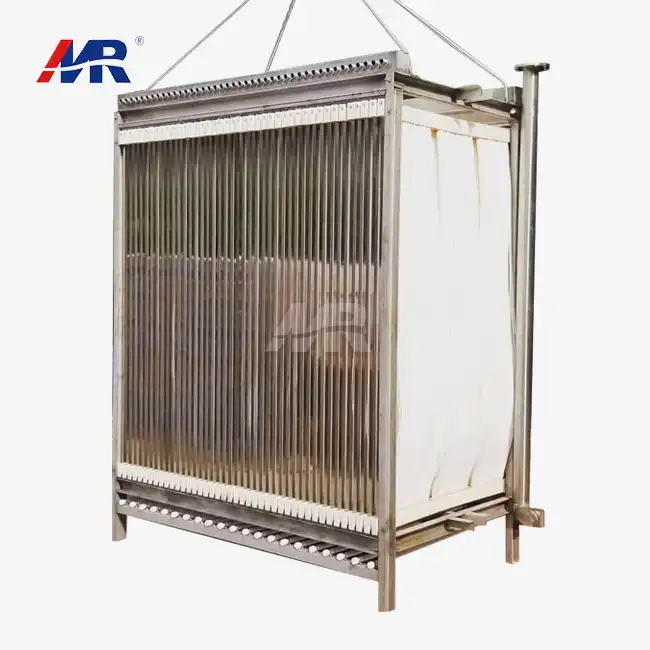
Membrane bioreactor technology is essentially the coupling of activated sludge processes with submerged or exterior membrane modules for solid-liquid separation. The traditional activated sludge process relies on secondary clarifiers for gravity settling, while the MBR process utilizes semi-permeable membranes with pore diameters typically ranging from 0.03 to 0.4 microns. This system ensures that all suspended sediments, germs, and viruses are completely retained while the water being treated flows through. The biological reactor maintains high mixed liquor suspended solids concentrations, between 8,000 and 15,000 mg/L, almost three times higher than conventional systems, which results in greater biodegradation of organic contaminants and better shock load resilience.
Industrial Sectors Benefiting from MBR Applications
MBR systems are used in pharmaceutical and biotechnology facilities for the treatment of process wastewater, including complex organic compounds, active medicinal ingredients, and pathogens, in conformity with GMP regulations. In the food and beverage industry, this technology is used to treat high-strength organic wastewater from production lines while collecting precious water for reuse in non-product-contact uses such as cooling towers and equipment washing. The system’s resilience to hazardous shocks and its capacity to handle variable influent characteristics without sacrificing treatment efficiency are advantages for chemical manufacturing plants. In textile processes, MBR setups are employed to remove colors, surfactants, and sizing chemicals that would overload traditional clarifiers. This strategy is being applied increasingly for facility improvements at municipal wastewater treatment plants where expansion is not possible due to space constraints, but capacity increases are required.
Targeting Complex Pollutant Profiles
The technology is great at eliminating tough pollutants that are common in industrial processes. Biochemical Oxygen Demand and Chemical Oxygen Demand Demand removal rates are in excess of 95% routinely, and effluent concentrations are in compliance with the most restrictive discharge permits. Pathogen elimination methods log 6 for bacteria and log 4 for viruses, therefore reducing the need for further disinfection in many applications. Nutrient removal capabilities solve nitrogen and phosphorus problems with improved biological processes and higher sludge retention times that can be separately regulated from hydraulic retention times.
Advantages of Membrane Bioreactor Technology for Industrial Wastewater
Superior Effluent Quality and Reuse Potential
The MBR systems provide permeate of excellent clarity with turbidity values below 0.1 NTU, which is appropriate for direct reuse in industrial processes, landscape irrigation, and cooling applications. This ability directly tackles water scarcity issues, reduces expenditures for freshwater imports, and reduces discharge fees. This reclamation capability is particularly valuable for facilities in water-stressed areas or those subject to zero-liquid-discharge requirements. The quality of the treated water meets or surpasses the requirements established in the EPA's Guidelines for Water Reuse and EU Urban Wastewater Treatment Directive standards, providing confidence for regulatory compliance.
Compact Footprint and Modular Scalability
Here are the core spatial and operational advantages that make MBR systems attractive to industrial decision-makers:
- Space Efficiency: MBR configurations require only 25 to 50 per cent of the footprint needed for conventional activated sludge systems with equivalent treatment capacity. The elimination of secondary clarifiers, sand filters, and extensive settling tanks frees valuable real estate for production expansion or future facility development.
- Modular Design: Systems can be deployed in standardized modules that allow phased implementation aligned with production growth trajectories. This staged approach reduces initial capital outlay while maintaining treatment capacity flexibility.
- Retrofit Capability: Existing overloaded municipal or industrial plants can integrate MBR modules within their current infrastructure footprint, often doubling treatment capacity without civil construction expansion.
These advantages collectively enable industrial facilities to optimize land use while maintaining treatment performance, addressing two competing priorities that traditional systems cannot reconcile effectively.
Enhanced Operational Stability and Reduced Sludge Production
Membrane bioreactor technology demonstrates remarkable resilience against hydraulic and organic shock loads that would destabilize conventional biological treatment systems. The high biomass concentration creates a robust buffer that maintains treatment performance during production surges or upset conditions. Sludge production rates decrease by approximately 30 to 50 percent compared to traditional activated sludge processes due to extended sludge retention times and enhanced microbial activity. This reduction translates directly into lower sludge disposal costs, reduced dewatering requirements, and decreased chemical conditioning needs.
Environmental Compliance and Sustainability Alignment
With discharge permits becoming progressively stricter across industrial sectors, membrane bioreactor technology provides a compliance pathway that anticipates rather than reacts to regulatory evolution. The consistent production of high-quality effluent eliminates the variability associated with settling-based clarification, reducing permit violation risks. Energy consumption per unit of treated water continues to improve through technological refinements in membrane materials and aeration optimization, narrowing the gap with conventional systems while delivering superior treatment outcomes. The technology's water reuse capability supports corporate sustainability initiatives, greenhouse gas reduction targets, and circular economy principles increasingly valued by stakeholders and supply chain partners.
Comparing Membrane Bioreactor Technology with Traditional Wastewater Solutions
Performance and Efficiency Contrasts
Conventional activated sludge systems are gravity clarifiers where the settling velocity is the key for the solid-liquid separation efficiency. This constraint makes such systems prone to sludge thickening, pin floc development, and other settling disorders affecting the quality of the effluent. Membrane bioreactor technology provides perfect physical separation independent of the settling characteristics of the biomass and guarantees performance. Comparisons of treatment efficiencies indicate that MBR systems are able to generate effluent BOD and TSS concentrations less than 5 mg/L, while traditional systems are normally in the range of 10 to 30 mg/L even under ideal conditions.
Cost-Effectiveness Evaluation
MBR systems often require a higher initial capital expenditure (20 to 40 percent) than conventional options, mostly because of the expense of membrane modules. But the total cost of ownership statistics tell a different story. Reduced footprint requirements reduce civil construction costs and land acquisition costs, critical in urban or limited areas. Sludge output is reduced, lowering the cost of disposal, which is a major operating expense in many jurisdictions. Revenues from water reuse or costs avoided by not buying fresh water might produce positive cash flow that speeds up payback times. Life-cycle assessments show that MBR systems frequently provide good economic returns when considering 15 to 20-year operational spans, rather than only the initial capital outlay.
Selection Criteria for Industrial Applications
The choice of membrane bioreactor technology or conventional treatment options should not be based on basic cost comparisons alone. Influent qualities matter—wastewater with poor settling properties or inhibitory substances benefits disproportionately from MBR designs. MBR installations. Site constraints like available land area and closeness to sensitive receptors are in favor of compact MBR The regulatory environment is a critical factor; facilities in jurisdictions with stringent discharge limitations, or those anticipating stricter permit requirements, gain a strategic advantage by employing MBR technology. The context of water shortage affects the decision calculus—operations in arid regions or those paying premium freshwater rates appreciate greater value from reuse-capable effluent quality.
Key Considerations for Procurement and Maintenance of Industrial MBR Systems
Investment and Operational Cost Structure
Capital expenditure for industrial MBR systems typically ranges from 1,500 to 3,500 USD per cubic metre of daily treatment capacity, varying with influent complexity, desired treatment level, and site-specific factors. Membrane modules represent 30 to 40 per cent of total system cost but require periodic replacement on cycles ranging from five to ten years depending on operating conditions and maintenance practices. Operational expenses include energy consumption for aeration and permeate extraction, chemical costs for membrane cleaning, and routine maintenance labour. Energy represents the largest operational cost component, consuming approximately 0.5 to 1.5 kWh per cubic metre treated, though ongoing technological improvements continue driving this figure downward.
Membrane Fouling Prevention and Maintenance Protocols
Effective fouling management determines long-term system performance and economic viability. Strategies employed across successful installations include:
- Air Scouring: Continuous coarse bubble aeration creates turbulence across membrane surfaces that prevents particulate deposition and maintains permeability. Optimal air flow rates balance fouling prevention against energy consumption.
- Backwashing: Periodic reversal of permeate flow dislodges accumulated materials from membrane pores. Automated backwash cycles typically occur every 15 to 45 minutes depending on feedwater characteristics.
- Chemical Cleaning: Chemically enhanced backwash procedures using sodium hypochlorite, citric acid, or proprietary formulations remove organic and inorganic scales that resist physical cleaning. Maintenance cleaning occurs weekly to monthly, while recovery cleaning addresses more severe fouling episodes.
Pretreatment remains critical for minimising membrane fouling potential. Fine screening with openings between 0.5 and 2.0 mm removes hair, fibres, and debris that could damage membrane integrity or accelerate fouling rates.
Supplier Evaluation and Partnership Considerations
Selecting the right membrane bioreactor technology supplier extends beyond equipment specifications to encompass long-term support capabilities. Evaluation criteria should include:
Technical expertise demonstrated through successful installations in similar industrial applications provides confidence in system design appropriateness. Manufacturing quality affects membrane longevity and system reliability—suppliers with ISO 9001 certification and established quality management systems offer greater assurance. After-sales support, including troubleshooting assistance, spare parts availability, and emergency response capabilities, proves essential during operational challenges. Membrane material quality, particularly PVDF construction known for chemical resistance and mechanical strength, influences replacement frequency and life-cycle costs. Partnerships with established component manufacturers such as Shimge Water Pumps for reliable fluid movement and Runxin Valves for automated control enhance overall system dependability.
Future Outlook and Innovations in Membrane Bioreactor Technology
Emerging Technological Advancements
The use of next-generation membrane materials, including graphene oxide, ceramic composites and biomimetic surface changes, is expected to boost fouling resistance and lengthen operating life. Configurations that are energy efficient using gravity-driven filtering, anaerobic MBR variants that produce biogas and low-pressure operation lower the energy penalty historically associated with membrane systems. Smart monitoring integration delivers real-time transmembrane pressure tracking, flux monitoring and predictive maintenance alerts that optimise cleaning schedules and avoid catastrophic fouling events before they impair performance with IoT-connected sensors.
Regulatory Drivers and Market Evolution
Environmental legislation is tightening discharge requirements worldwide even as water reuse and resource recovery are being promoted. California’s Title 22 guidelines for water recycling, European Union rules for industrial emissions, and China’s ever-tougher wastewater standards all benefit from modern treatment systems that can fulfil higher performance demands. Industrial water reuse laws in water scarcity countries offer strong incentives for membrane bioreactor technology adoption, turning an environmental compliance expenditure into a strategic water security investment.
Strategic Planning for Future-Ready Systems
Industrial procurement teams should think about system flexibility and upgrade paths when selecting technology. Modular architectures avoid obsolescence by permitting capacity growth without total replacement. Compatibility with improved oxidation processes, nutrient recovery systems and other complimentary technologies allows for evolutionary development when treatment requirements or reuse applications alter. As membrane bioreactor technology continues to mature, the dedication of providers to continued research and development offers opportunities for performance enhancements and efficiency advantages. The planning horizon should not only meet immediate compliance needs but also include regulatory trajectory, corporate sustainability obligations and future water supply as it relates to the operational life of the asset.
Conclusion
Membrane bioreactor technology represents a proven solution for industrial operations seeking reliable wastewater treatment that delivers consistent compliance, compact footprint, and water reuse potential. The combination of biological treatment efficiency with absolute membrane separation addresses limitations inherent in conventional clarification-based systems while positioning facilities to meet evolving regulatory standards and sustainability objectives. Although initial capital investment exceeds traditional alternatives, the total cost of ownership becomes favourable when accounting for space savings, reduced sludge disposal, operational stability, and reuse value creation. As membrane materials improve, energy consumption decreases, and smart monitoring capabilities expand, the technology's competitive position strengthens across diverse industrial applications from pharmaceutical manufacturing to food processing and chemical production.
FAQ
1. Which industries benefit most from membrane bioreactor technology implementation?
Chemical manufacturing, pharmaceutical production, food and beverage processing, textile operations, and petrochemical facilities gain substantial advantages from MBR systems. These sectors typically generate wastewater with complex organic content, variable flow patterns, and challenging pollutant profiles that overwhelm conventional treatment approaches while facing stringent discharge requirements or water scarcity pressures that make reuse economically attractive.
2. How does membrane bioreactor technology compare financially to conventional treatment over time?
While capital costs run 20 to 40 per cent higher initially, life-cycle economic analyses demonstrate a competitive total cost of ownership. Savings from reduced footprint requirements, decreased sludge disposal expenses, lower chemical consumption, and water reuse revenues offset the membrane replacement costs and energy consumption over typical 15 to 20-year evaluation periods, particularly in jurisdictions with high land costs or water scarcity.
3. What operational challenges should facilities anticipate with MBR systems?
Membrane fouling represents the primary operational consideration, requiring consistent attention to pretreatment, regular cleaning protocols, and flux management. Energy consumption for aeration and permeate extraction exceeds conventional systems, though technological improvements continue narrowing this gap. Proper operator training and established maintenance procedures effectively manage these challenges, with well-operated systems demonstrating exceptional reliability and performance consistency that justifies the additional operational attention required.
Partner with Morui for Advanced Membrane Bioreactor Technology Solutions
Guangdong Morui Environmental Technology stands ready to support your industrial wastewater treatment objectives with comprehensive membrane bioreactor technology systems tailored to your specific operational requirements. Our integrated approach encompasses equipment supply, complete installation, and commissioning services backed by a team of 20 specialised engineers with deep expertise across pharmaceutical, chemical, food processing, and manufacturing applications. As an established membrane bioreactor technology supplier, we maintain our own membrane production facility ensuring quality control and competitive pricing while offering turnkey solutions that include partnerships with industry-leading brands such as Shimge Water Pumps and Runxin Valves. Our 14 regional branches and 500-person workforce provide responsive local support throughout project implementation and long-term operation. Reach out to our technical team at benson@guangdongmorui.com to discuss how our proven MBR solutions can help you achieve regulatory compliance, reduce operational costs, and unlock water reuse potential that strengthens both environmental performance and bottom-line results. Visit moruiwater.com to explore our complete capabilities in membrane bioreactor technology and discover why leading industrial operations trust Morui for their most demanding water treatment challenges.
References
1. Water Environment Federation (2018). Membrane Bioreactors for Wastewater Treatment: Design, Operation, and Maintenance Manual of Practice No. 36, Alexandria, VA: Water Environment Federation Press.
2. Judd, S. & Judd, C. (2020). The MBR Book: Principles and Applications of Membrane Bioreactors for Water and Wastewater Treatment, Third Edition. Oxford: Butterworth-Heinemann.
3. United States Environmental Protection Agency (2012). Guidelines for Water Reuse, EPA/600/R-12/618. Washington, DC: U.S. Environmental Protection Agency.
4. Metcalf & Eddy, Inc., Burton, F.L., Stensel, H.D., & Tchobanoglous, G. (2014). Wastewater Engineering: Treatment and Resource Recovery, Fifth Edition. New York: McGraw-Hill Education.
5. European Commission (1991). Council Directive 91/271/EEC Concerning Urban Wastewater Treatment. Official Journal of the European Communities, L 135/40.
6. Kraume, M. & Drews, A. (2019). Membrane Bioreactors in Waste Water Treatment: Status and Trends. Chemical Engineering & Technology, 42(7), 1251-1262.